The Last Gift
The call came on a Tuesday morning while I was drinking coffee on my back deck, watching the Seattle skyline emerge through the fog over Lake Washington.
Robert Hayes didn’t waste time with pleasantries.
“James, I need you in my office today. It’s about Will.”
My hand tightened around my mug until my knuckles went white. “Will’s been gone two months, Robert. Exactly sixty days. What do you mean it’s about Will?”
“He left instructions. A package I was forbidden to give you until this exact date.”
Twenty minutes later, I was in my Lexus heading down I-405 toward downtown Bellevue, hands gripping the wheel too tightly, traffic flowing around me like I was the only car that didn’t belong.
William Bennett had died on a Tuesday too. Pancreatic cancer, stage four. Six weeks from diagnosis to death. I’d watched my best friend of forty-three years waste away in that hospice bed, his architect’s hands turning skeletal, his brilliant mind drowning in morphine. We’d met sophomore year at Stanford, two scholarship kids in a sea of trust-fund babies. We’d built Harrison Tech out of a Silicon Valley garage—his designs, my code—and sold it fifteen years later for forty-three million dollars. We’d been best men at each other’s weddings, godfathers to each other’s kids.
Now his lawyer was calling about a “package.”
Robert’s office occupied a corner suite high enough that the windows turned Bellevue into a moving map. His secretary ushered me in with a sympathetic look.
Robert walked to the large painting of Mount Rainier behind his desk, swung it open like a door, and revealed a wall safe.
“Will recorded something three weeks before he passed,” he said. “He made me swear not to give it to you until exactly sixty days after his death.”
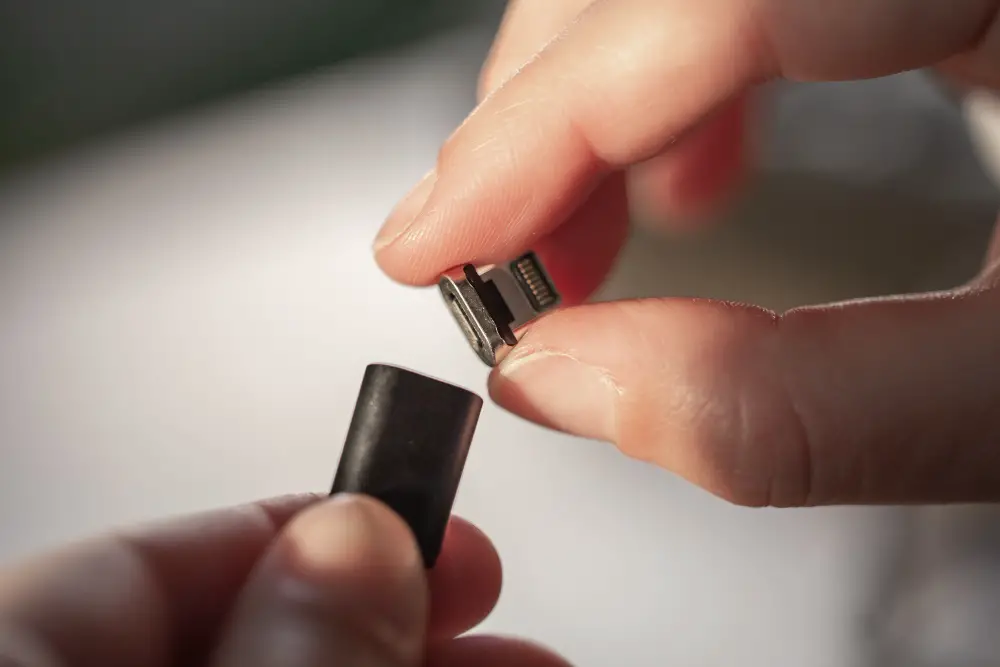
Inside the safe was a manila envelope. My name was written on the front in Will’s precise architect’s handwriting, the letters steady even as he was dying. Inside: a single USB drive.
“Watch this at home, alone,” Robert said. “Then call me.”
My life had been normal. Too comfortable, if I’m honest. Even after Catherine died four years earlier—a massive stroke, instantaneous, at fifty-seven. We’d just started planning retirement adventures. Tuscany and Prague, a photography course in Barcelona, road trips through the national parks.
The grief almost killed me. Eighteen months of existing rather than living. Then came the charity gala—a children’s hospital fundraiser in downtown Seattle. That’s where I met Sophia Reed.
She’d been standing by the silent auction, studying an abstract painting. “My ex-husband was a painter,” she said when I commented on the piece. “C-plus work at best. Before he left me for his twenty-five-year-old assistant.”
We talked for an hour. She was forty-two, divorced, struggling financially. Her son Dylan was nineteen, studying business at a community college. When I talked about Catherine, she didn’t offer empty clichés. She listened like she understood the particular kind of hole that death leaves in a house.
We married fourteen months later. Will had been the only one who hesitated.
At our engagement party, he’d pulled me into his study and closed the door.
“Jim, you’re sure about this? You barely know her.”
“I know I can’t live alone anymore, Will. I can’t keep rattling around that empty house like some ghost.”
He held my gaze for a long beat, then squeezed my shoulder. “If you’re happy, I’m happy.”
He never brought it up again.
The house was empty when I got home. Sophia was at her Tuesday book club. Dylan was at his apartment near the University of Washington—an apartment I paid twelve hundred a month for and had visited exactly twice.
I went straight to my study, locked the door, and plugged in the USB drive.
Will’s face filled the screen, and my breath stopped.
This was Will from three weeks before the end. Gaunt, hollow-cheeked, forty pounds gone. Oxygen tubes snaked under his nose. But his eyes were clear. Sharp. Burning with the same intensity I’d seen when he stayed up three nights perfecting our first product design.
“Jim,” he said. “If you’re watching this, I’m gone, and I need you to listen very carefully.”
He paused, took a breath from the oxygen.
“Your wife, Sophia, and her son, Dylan, are planning to murder you.”
The words hit like a physical blow.
My hand moved toward the mouse, hovering over pause. Will had been on heavy medications—morphine, fentanyl, experimental painkillers. This had to be some drug-induced hallucination.
But his eyes weren’t confused or feverish.
“I know what you’re thinking,” Will said. “That I was drugged out of my skull, seeing conspiracies where there aren’t any. God, brother, I wish that were true. I spent the last good weeks I had wishing I was wrong.”
He coughed, a wet, painful sound.
“Six weeks ago, something started bothering me about Sophia. Small things. The way she steered every conversation toward money. How she knew details about your accounts she shouldn’t. How Dylan watched you like my cat watches birds through the window. Patient. Hungry.”
He steadied himself.
“I asked Patricia’s nephew, Sam Parker, to look into things. You remember Sam? Quiet guy, former Marine, does private investigation now.”
I remembered him. Fourth of July barbecues at Will’s house, always facing the door.
“What he found is on this drive,” Will said. “Sophia’s first husband, Michael Reed. Dead. Fell down the stairs six months after making her his life insurance beneficiary. Seven hundred fifty thousand dollars. Ruled accidental.”
My stomach turned.
“Husband before that, Thomas Carlson. Dead at forty-six from a heart attack three months after their wedding. Five hundred thousand in insurance. He was a marathon runner with no history of heart disease. But the autopsy said natural causes.”
Will’s hands trembled as he sipped water through a straw.
“There’s a folder labeled ‘Current Plot,'” he continued. “Sam got audio recordings. Dylan talks on his phone like he’s invisible. They’ve been setting something up—insurance policies, timelines, someone named Victor.”
He said the name like it tasted bad.
“Second folder shows financial records. Sophia’s been stealing from you, Jim. Small amounts—three thousand here, five thousand there. Offshore accounts in the Cayman Islands. Over three years, she’s moved two hundred thirty thousand dollars.”
Three years. Our entire marriage.
“She’s getting ready to run after you’re gone.” Tears slid down his wasted cheeks. “I’m sorry, brother. Sorry I didn’t push harder when you started dating her. I saw something wrong, but you seemed happy for the first time since Catherine died.”
He wiped his eyes roughly.
“Take this to the police, to Robert, to anyone who will listen. But don’t let them know you know. Not until you’re safe. These people are dangerous. Sophia’s done this at least twice. She knows how to play the grieving widow.”
His hand rose in a weak salute—our old gesture from Army ROTC days.
“Love you, brother. Now go protect yourself.”
The screen went black. White text appeared: Additional files in folders below. Stay alive. —W.
I sat in the darkening study and opened every file.
Michael Reed, dead August 2015. Stairs in Spokane. Sophia’s statement: I was at the grocery store. Sam’s note: Timeline tight but possible. Insurance payout: $750,000.
Thomas Carlson, dead January 2012. Heart attack, natural causes. Marathon runner, perfect health. Sam’s notes: Medical examiner didn’t test for cardiac drugs. Widow requested cremation 48 hours after death. Body unavailable. Insurance payout: $500,000.
Then: Margaret Sullivan. Dylan’s victim.
Sixty-eight years old, dead in a single-car accident outside Tacoma. Her Toyota left the road, struck a tree, caught fire. Brake failure—inconclusive, car too damaged. The will had been changed three weeks before, leaving three hundred thousand dollars to “my dear friend Dylan Reed, who has brought such joy to my final years.”
Dylan had volunteered at her senior center. Everyone described him as sweet, like the grandson she never had. His alibi was airtight—in class forty miles away at the time. Case closed.
The last folder: “Current Plot – Urgent Evidence.”
Dylan’s voice on audio: “Dude, I’m serious. Few more weeks and I’m set for life. The old man’s loaded. Mom’s got it all planned out. Once it’s done, we split everything fifty-fifty. I’m buying that Porsche—the 911, black on black.”
Another file: “She’s smart. Got him to update his will, consolidate his accounts. And he thinks she actually loves him. It’s kind of sad. But seven-million-sad I can live with.”
Photos showed Sophia meeting a large man outside a bar in Renton. Victor Ramirez, age forty. Armed robbery conviction, aggravated assault, eight years in prison.
And the final document: a life insurance application. Two million dollars. Beneficiary: Dylan Reed. The signature at the bottom was mine.
I remembered it now—Dylan showing up with beer and pizza, getting me drunk, pulling out “training papers” for his insurance job. I’d signed without reading.
I pushed back from my desk and walked to the master bathroom. The vitamin bottle sat by the sink where Sophia had placed it three years ago. “For men your age. Heart health. I researched the best ones.”
Brown gel capsules, no markings, no recognizable brand.
I photographed the bottle, dumped six pills into a ziplock, hid them in my dresser. Drove to Walgreens, bought generic multivitamins, swapped them into the original container.
I called Robert from the parking lot.
“Will made me promise to tell you something,” Robert said. “He said: ‘Tell Jim to be smart, not brave. Being brave got us startup funding. Being smart made us millionaires. I need him smart now.'”
“Give me Sam’s number,” I said.
Sam Parker arrived ninety minutes later in a gray Honda Civic. Compact, early thirties, moved with the precision of someone trained to notice everything. We sat in my locked study.
“The vitamins need testing,” he said immediately. “I know a lab.”
The results came back three days later. Digoxin—a cardiac glycoside extracted from foxglove. In the wrong doses, lethal. Low concentration: enough to cause fatigue, irregular heartbeat, nausea. To make me look like I was developing heart problems.
“So when I actually die,” I said, “it looks natural.”
“Exactly. A man your age with a bad heart? Nobody questions it.”
A cardiologist Sam trusted confirmed the damage—irregular rhythm, tissue stress consistent with long-term digoxin exposure. Another year and it could have caused sudden cardiac arrest. She documented everything for legal purposes.
Playing normal at home got harder. The first morning I didn’t take the pills, Sophia noticed.
“You forgot your vitamins,” she said at breakfast, sliding the bottle toward me. Sunlight slanted through the kitchen windows, catching the steam from our coffee mugs. Everything looked like a magazine spread—clean countertops, fresh flowers she’d arranged the day before, the smell of bacon and toast curling through the air. The perfect domestic scene, staged by a woman who’d been slowly killing me for three years.
“Took them upstairs already,” I lied.
Her eyes lingered a moment too long. “The bottle was full yesterday.”
My heart rate spiked. I picked up a piece of toast, forced myself to chew casually. “I’ve been taking two a day. Doctor said my iron was low.”
She smiled, but it didn’t reach her eyes. “You saw a doctor? When?”
“Last week. Annual checkup. Didn’t seem important.”
Another lie. Another card on the wobbling house I was building. Every conversation with her now felt like walking through a minefield wearing clown shoes.
That afternoon, on surveillance cameras Sam had disguised as smoke detectors, I watched Sophia open the cabinet and count the pills. She held the bottle up to the window light, tilted it, and counted again. She was checking my story.
I was the one slipping, too. Catching myself staring at her across the dinner table, trying to reconcile the woman who laughed at my jokes and rubbed my shoulders after a long day with the woman who had quietly been reshaping my death certificate. Some nights I’d lie beside her in the dark, listening to her breathe, and wonder how many other men had listened to that same breathing, trusting it, while she calculated their expiration dates.
Sam installed cameras everywhere—living room, kitchen, bedroom, study. Audio pickups in every major room. Everything fed into a secure system only we could access.
Sophia was careful. She made calls about money from the patio or her car. Dylan barely visited. The first week yielded nothing.
One evening she brought me tea at bedtime. “You look tired. This will help you sleep.”
I poured it into the plant by my bed after she left. The plant died three days later.
The breakthrough came on day seventeen.
I’d told Sophia I was golfing. Instead, I sat in a surveillance van two blocks from my house, watching my own home on monitors beside Sam.
At 2:00 p.m., Dylan arrived—unusual for midweek.
“I think he’s suspicious,” Dylan said on camera. “He asked me about Margaret last week. Out of nowhere.”
My blood ran cold. I’d asked that question thinking I was being subtle.
Sophia was quiet, then: “When’s the last time he took his vitamins in front of you?”
“I don’t know.”
“I do. The bottle’s barely gone down in two weeks.”
“Mom, if he knows—”
“He doesn’t know. He suspects. There’s a difference.” Her voice turned calculating. “But we need to move up the timeline.”
“To when?”
“The Seattle trip. He visits Emma, we have our alibis, Victor does the job while the house is empty.”
“That’s three weeks.”
“Then we wait three weeks. Rushing is how people get caught.”
Sam and I exchanged a look. We had conspiracy and clear intent.
But then Dylan asked, “And after, we split everything?”
A pause. Too long.
“Of course,” Sophia said.
Something in her tone made Dylan’s smile fade.
That night, Sam pulled Dylan’s financials and found something that changed everything.
“Dylan has two hundred fifty thousand in a private account,” Sam said. “From Margaret Sullivan and two other women. Jennifer Walsh, seventy-two—he’s been dating her eight months, she’s already changed her will. Lisa Freeman, fifty-eight—just took out a life insurance policy with Dylan as beneficiary.”
He pulled up another recording: Dylan on his cell, talking to someone.
“Two weeks. The old man and the old lady. Both. The house, the insurance, everything. Victor can handle it. She won’t see it coming.”
“He’s planning to kill you both,” Sam said quietly. “Take the insurance on you, eliminate his mother so he doesn’t split a cent.”
“Does Sophia know?”
“I don’t think so. But Victor’s playing both sides. Sophia’s paying him two hundred thousand to kill you. Dylan’s paying him two hundred thousand to kill both of you. Victor doesn’t care who dies as long as he gets paid.”
Three scorpions in a bottle, each planning to be the last one standing.
Detective Sarah Chen arrived that evening. Late forties, Korean American, twenty years in homicide. She went through everything—audio, surveillance, digoxin report, insurance fraud, offshore accounts.
“This is enough for conspiracy charges,” she said. “But if we arrest them now, we might not get Victor.”
“So we let it play out,” I said. “I go to Seattle like they’re expecting. You set up here. When Victor makes his move, you grab him.”
“That’s using you as bait,” Sam said.
“I’ll actually be at Emma’s. Safe.”
Sarah nodded. “Twenty officers in and around the house. The second Victor shows up, we take him. Then we play Sophia and Dylan against each other. They’re already suspicious of each other—we’ll tear that trust apart in an interview room.”
“What about Jennifer and Lisa?” I asked. “Dylan’s other targets.”
“Welfare checks done quietly. We can’t warn them directly without tipping Dylan off, but uniformed officers will keep eyes on them.”
It was risky. It required trusting the police, the timing, and hoping nothing went wrong between a door opening and an arrest. But Will had trusted me with his last weeks of life. I could trust this.
“One more thing,” Sarah said. “When this goes down, it’ll get ugly. Are you prepared? Seeing your wife and stepson in handcuffs?”
I thought about the plant that died from poisoned tea. About Margaret Sullivan, dead at sixty-eight because a charming twenty-one-year-old befriended her. About Will spending his last good hours saving me instead of resting with Patricia.
“They stopped being my family when they decided to kill me,” I said.
I booked the Seattle trip. Told Sophia I’d be gone for the weekend.
“Call me when you land,” she said, kissing my cheek. “Give Emma my love.”
Her smile was warm, affectionate, completely convincing. Oscar-worthy.
What the airport cameras didn’t show was me walking back out twenty minutes after checking in, getting into Sam’s van in the parking garage. We drove to a Hampton Inn off I-90. Room 237, booked under a fake name. Monitors on the desk showed live feeds from every camera in my home.
Sarah was next door with plainclothes officers. A SWAT van sat two blocks away disguised as a plumbing truck.
At 3:00 p.m., Sophia met Victor at a Starbucks in Renton. She slid an envelope across the table. Final payment, final instructions.
At 6:00 p.m., she left for book club in Kirkland. An unmarked car confirmed she actually went. Alibi established.
But at 7:30, before Victor was supposed to arrive, movement on the monitors.
Dylan. Back door. He carried a shopping bag from a sporting goods store.
We watched him unwrap a revolver, roll it in a dishcloth, and place it at the back of the kitchen utensil drawer.
“He’s planting it,” Sarah said. “For someone to find after the shooting. He wants it traced to Sophia. Victor kills me, police find the weapon, Dylan gets the insurance, his mother goes to prison.”
“Unbelievable,” one of the officers muttered over the radio.
“Call in more units,” Sarah said. “This just got more complicated than we planned.”
On screen, Dylan pulled out his phone and paced the kitchen while he talked—smiling, exaggeratedly casual. He’d learned not to say anything incriminating inside the house, but the body language told us everything. He hung up after two minutes and left through the back door as carefully as he’d entered.
At 9:45 p.m., I strapped on a bulletproof vest—heavier than I expected, the canvas stiff against my ribs—and slipped into my own house through the garage. Officers took positions quietly. Two in the master closet. Sarah in the bathroom. Sam across the hall. More outside covering every exit. I lay on my bed under the covers, vest pressing hard into my chest, streetlight glow casting faint lines across the ceiling.
The house I’d shared with Catherine, where we’d talked about grandchildren and retirement trips, was now a trap. Every creak of the settling wood sounded like a footstep. I could hear my own heartbeat, loud and irregular—three years of digoxin damage making itself known even now.
At 10:07, we heard it through Sarah’s earpiece. A window sliding open downstairs. The kitchen window. We’d left it unlocked on purpose.
Careful footsteps on the hardwood. Climbing the stairs. Slow. Patient. Professional. The kind of steps that belonged to a man who’d broken into houses before and knew how to move through the dark.
Victor stepped into the bedroom. I could smell cigarettes and cheap cologne. He moved toward the bed, arm extended, holding a long serrated knife. The blade caught the streetlight for just a second—a thin silver line in the dark.
“Police! Freeze! Drop your weapon!”
The lights blazed on. Sarah burst from the bathroom. Two officers exploded from the closet. The room went from silent darkness to blinding chaos in half a second.
Victor spun toward them. His hand twitched—just a fraction, just enough.
Sarah fired once.
The shot was deafening in the small bedroom. Victor dropped, clutching his shoulder, the knife clattering across the hardwood. Officers were on him in a heartbeat—cuffing, reading rights, calling for medical. My ears rang. My breath came in shallow bursts. I was alive.
Then the front door opened downstairs. Footsteps pounded up the stairs, faster and lighter than Victor’s.
Dylan appeared in the bedroom doorway holding the revolver from the kitchen drawer.
“Police! Drop the weapon!”
His face went sheet-white. He saw Victor bleeding, the officers, me sitting up in bed wearing a vest.
“You’re supposed to be in Seattle,” he breathed.
“Drop the gun, Dylan.”
“I heard shots. I came to—”
“To what?” I said, my voice steady in a way I barely recognized. “Shoot Victor after he killed me? Make yourself the hero? We have everything, Dylan. Your phone calls. Margaret Sullivan’s will. Jennifer Walsh. Lisa Freeman.”
His mask slipped. Something cold and calculating flickered behind his eyes.
He raised the gun.
Sam tackled him from behind. The shot blew a hole in the ceiling. Officers wrenched the revolver away, shoved him face-down, cuffed him.
Then Sophia’s voice cut through it all from downstairs.
“What’s happening? James? Why are there police cars?”
She appeared in the doorway, held back by two officers. Eyes wide when she saw Victor bleeding, Dylan in handcuffs, me in a vest.
“We have everything, Sophia,” I said. “Audio of you hiring Victor. Bank records. The offshore accounts. The digoxin in the vitamins. Three years of poison, dressed up in a brown bottle and a smile.”
I took a step closer. For three years I’d looked at this woman and seen my second chance at happiness. Now I saw what Will had seen from the beginning—a predator, patient, methodical, lethal.
“And Dylan’s plan. He was going to kill both of us tonight. Frame you for my murder. Your own son. Did you know that?”
Her gaze snapped to Dylan. He stared at the floor.
“You little traitor,” she hissed. “I taught you everything, and you were going to—”
“You used me!” Dylan shouted. “My whole life. Every con. I was just your prop—”
“Enough,” Sarah cut in. “Sophia Reed, you’re under arrest for conspiracy to commit murder, attempted murder, insurance fraud, and wire fraud. Dylan Reed, same charges plus multiple counts of fraud.”
I walked past all of them, past Victor on a stretcher, out the front door into flashing red and blue lights.
Sam found me at the edge of the lawn.
“Victor’s already talking,” he said. “Confirming everything. Three scorpions in a bottle.”
“The other women?”
“Officers are with them. Safe.”
The trial took eight months.
Victor pleaded guilty quickly, facing a mountain of evidence. He agreed to testify against both Sophia and Dylan in exchange for thirty years instead of life. His testimony was damning—every meeting in Renton, every phone call with Dylan, the promised payments, the plan to kill me and stage the aftermath. He’d intended to betray them both anyway, he admitted. Take four hundred thousand total, kill me, then claim Dylan attacked him so he could eliminate Dylan too. Three scorpions in a bottle.
Dylan tried to claim diminished capacity. His defense painted him as a broken kid raised around schemes, too damaged to know right from wrong. But the prosecution dismantled that story piece by piece. They showed how Dylan had befriended Margaret Sullivan at the senior center, isolated her from family, convinced her to change her will, then tampered with her car’s brakes. They showed texts to Jennifer Walsh and Lisa Freeman—declarations of love juxtaposed against emails to insurance agents asking about payout timelines.
He was twenty-three by the time the trial started. He’d already crossed every line there was.
The jury deliberated less than a day. Life without parole.
Sophia never testified. She sat through everything in a tailored pantsuit, posture perfect, face carefully composed—the same composure she’d worn while kissing my cheek and encouraging me to visit my daughter so her hitman could work in peace. Her lawyer argued the evidence was circumstantial. But the jury heard the audio of her discussing “timelines” and “final payments” with Victor. They saw the offshore bank records. They heard the cardiologist testify about digoxin, explaining to twelve ordinary jurors how a man in his sixties could be slowly poisoned toward “natural causes.”
When the verdict came back—guilty on all counts, life without parole—Sophia’s mask finally cracked. She turned and found me in the gallery. Our eyes met one last time. Her eyes were empty. No apology. No remorse. Just cold calculation brought to a dead end.
A week after sentencing, Patricia Bennett called.
“Will left two USB drives,” she said. “The lawyer had the first. I had this one. He said: ‘If James is safe, give him this.'”
I took it home to my new house—smaller, quieter, without ghosts—and plugged it in.
Will’s face appeared, but different. This was Will before the cancer got truly bad. His eyes held hope.
“Jim. If Patricia gave you this, it means I was right and you’re safe. Thank God.”
He shifted in his chair.
“Forty-three years, brother. We built Harrison Tech from nothing. Remember that apartment in Palo Alto? Ramen for dinner, code until three a.m. We changed the world a little.”
His eyes glistened.
“But that’s not what I’m proudest of. I’m proud that in all those years, we never stopped being brothers. You held my hand when my dad died. I held yours when Catherine passed. That’s what matters.”
He wiped his eyes.
“Don’t let what Sophia did define the rest of your life. Don’t let it make you bitter. You’ve got good years left. Use them.”
He smiled. “And for God’s sake, if you start dating again, call Sam first. Have him run a background check. I’m serious.”
He laughed, which turned into a cough.
“Live well, Jim. Live for both of us. That’s an order.”
He raised his hand in a salute. The screen went dark.
Three months later, I stood in a small office in downtown Bellevue, watching a sign go up above the door.
The Bennett Justice Foundation. Protecting seniors from financial abuse.
Sam Parker helped set up the last computer. Emma had flown down with her husband and my grandkids. Patricia arranged flowers in simple vases. We’d hired five staff—lawyers, investigators, an administrator. Our mission: help elderly victims of romance scams, financial exploitation, and predatory schemes. Free legal support and investigation services at senior centers from Tacoma to Everett.
The money came from restitution—Sophia’s offshore accounts, the stolen insurance, settlements from defrauded companies. Over three million dollars dedicated to helping people like Margaret Sullivan.
At the opening, I gave a short speech. Local press came—a Seattle TV station, reporters from the Seattle Times and the Bellevue Reporter. I stood behind a simple podium, hands steady for the first time in months.
“My best friend spent his last weeks alive protecting me,” I said. “He could have been resting, spending time with his wife, making peace with what was coming. Instead, he hired an investigator, gathered evidence, and saved my life.”
I looked at Patricia. Tears slid silently down her cheeks. Sam stood near the back wall, arms crossed, watching the exits out of habit.
“The best way I can honor Will is to do for others what he did for me. To protect people who can’t protect themselves. Because predators like the ones who targeted me don’t just go after millionaires. They go after grandmothers. Widowers. Lonely people who just want someone to care about them. And they count on nobody paying attention.”
Over the next two years, the Foundation helped one hundred forty-seven victims. We exposed romance scams and shut down fake investment schemes. We recovered stolen funds, got restraining orders against predatory caregivers and manipulative con artists. We worked with police departments from Seattle to Spokane, with county prosecutors, with Adult Protective Services. Every case we won, I thought of Will.
I never dated again. I didn’t need to. The loneliness that had driven me into Sophia’s arms—the terrible emptiness of a house without Catherine—had been replaced by something warmer and more durable. Purpose.
Emma visited every month with the grandkids. We went to Mariners games, Pike Place Market, hiking trails in the Cascades. Patricia and I had dinner every Sunday night, trading stories about Will, keeping him alive in words and laughter. Sam became more than our head of investigations—he became a friend, the kind you trust to watch your back and tell you the truth even when it stings.
On the third anniversary of Will’s death, I drove to the cemetery in Seattle where he was buried. The headstone read: William Bennett. Beloved husband, loyal friend. 1958–2023.
I sat on the bench nearby and watched the sunset bleed gold and orange over the Puget Sound. The sky turned the kind of colors that make you feel small and grateful at the same time.
“We helped thirty-seven people last month,” I told the stone. “Stopped a guy in Spokane scamming four different widows. Recovered two hundred thousand for a woman in Tacoma whose son had been stealing from her.”
The wind rustled through the trees, carrying the faint sounds of the city—distant traffic, a dog barking, someone laughing in a parking lot. Normal sounds from a world that kept going, the way it always does.
“I’m living well, like you told me to,” I said. “Living for both of us.”
I stood and touched the cold granite with my fingertips.
“Thank you, brother. For the company. For the friendship. For those last weeks. You gave me a second chance. I won’t waste it.”
As I walked back to my car, my phone buzzed.
A text from Sam: New case. Woman in Seattle thinks her boyfriend is scamming her. Can you take it?
I texted back: On my way.
Because that’s what Will would’ve done. His last gift wasn’t just the warning on that USB drive. It was the reminder that a life worth living is a life spent protecting the people who need it most.
And I intended to keep living it—every single day I had left—for both of us.
THE END.

Lila Hart is a dedicated Digital Archivist and Research Specialist with a keen eye for preserving and curating meaningful content. At TheArchivists, she specializes in organizing and managing digital archives, ensuring that valuable stories and historical moments are accessible for generations to come.
Lila earned her degree in History and Archival Studies from the University of Edinburgh, where she cultivated her passion for documenting the past and preserving cultural heritage. Her expertise lies in combining traditional archival techniques with modern digital tools, allowing her to create comprehensive and engaging collections that resonate with audiences worldwide.
At TheArchivists, Lila is known for her meticulous attention to detail and her ability to uncover hidden gems within extensive archives. Her work is praised for its depth, authenticity, and contribution to the preservation of knowledge in the digital age.
Driven by a commitment to preserving stories that matter, Lila is passionate about exploring the intersection of history and technology. Her goal is to ensure that every piece of content she handles reflects the richness of human experiences and remains a source of inspiration for years to come.