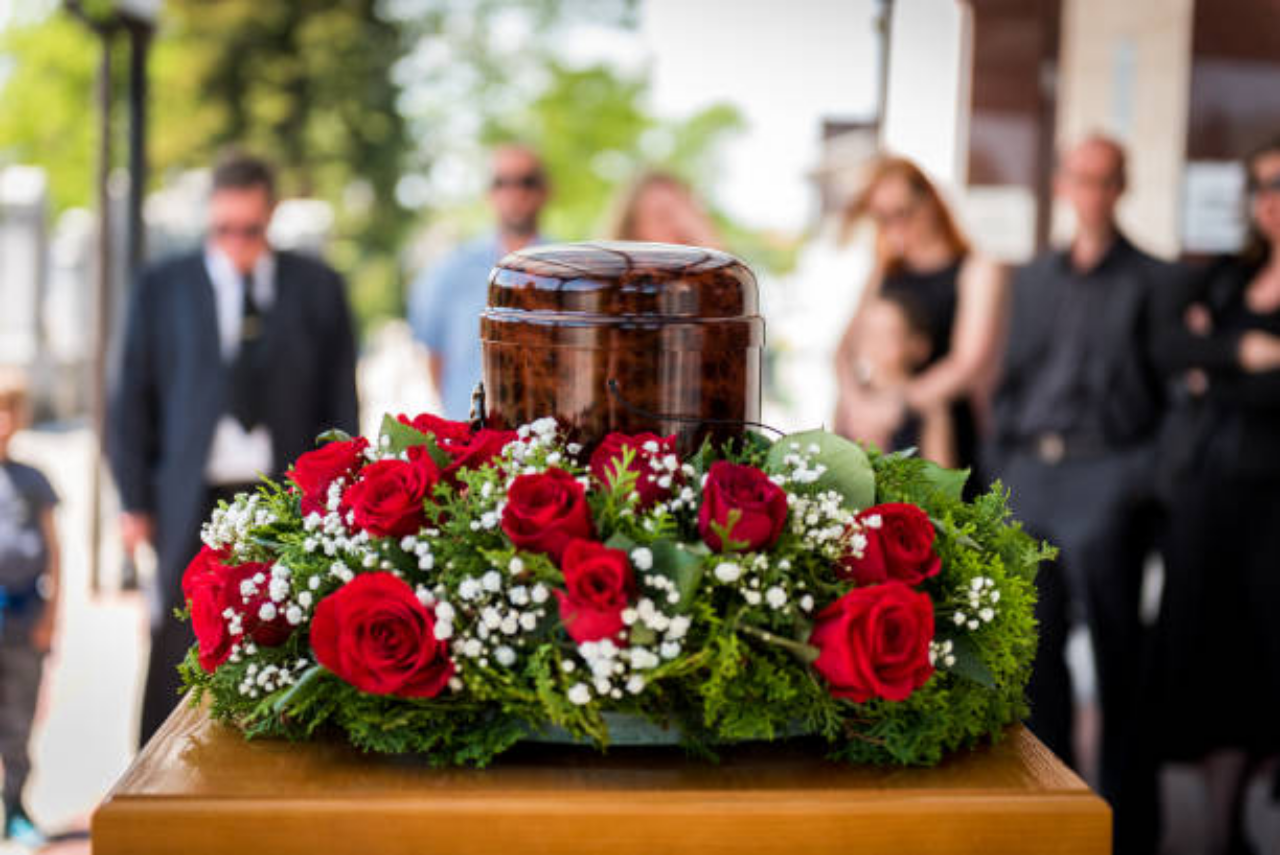
My name is Cassandra Mitchell, and I learned what the word “family” really means on the day I stood alone at my husband’s memorial service, staring at three empty chairs in the front row where my parents and best friend should have been sitting.
Bobby died at sunrise on a Tuesday morning in April, his hand warm in mine as a cardinal landed on our bedroom windowsill—his favorite bird, appearing at the exact moment he took his last breath. I’d like to think it was him already, free from the tumor that had been crushing his brain for eleven months, saying goodbye one final time. But I don’t know if I believe in signs like that, or if grief just makes us desperate to find meaning in coincidence.
What I do know is that the people who promised to stand beside me “in sickness and in health” disappeared long before Bobby did. And the betrayal that followed his death taught me more about love, loyalty, and the true nature of family than any wedding vow ever could.
Bobby and I met five years ago at a coffee shop downtown, though “met” is a generous description of what happened. I crashed into him while rushing to my nursing shift at the hospital, exhausted after a double and moving too fast to notice anyone in my path. My latte exploded across his jacket in a spectacular arc of foam and espresso, and I stood there mortified, stammering apologies while calculating how much a professional dry cleaning would cost.
He laughed—actually laughed—and said, “Well, that’s one way to warm up on a cold morning.”
That was Bobby. Always finding light where other people found problems. He asked for my number while I was still frantically dabbing at his jacket with inadequate napkins, and I surprised myself by giving it to him. There was something about his warm brown eyes and the easy way he smiled that made me feel safe, seen, like I could breathe fully for the first time in years.
On our first date, we talked for four hours at a tiny Italian restaurant until the staff started stacking chairs around us. Bobby told me about his work as a firefighter, how he’d wanted to help people since he was six years old watching fire trucks race past his grandmother’s apartment. I told him about my path to critical care nursing, and we discovered this shared understanding of what it meant to work with life and death, to carry other people’s worst days home with you.
We fell in love quickly and completely. Within six months we were inseparable. Bobby proposed on a hike to our favorite lookout point, the city sprawled below us like a promise. The ring was simple—a solitaire that had belonged to his grandmother—and I loved it more than any diamond from a jewelry store.
“I don’t have much,” he said, his voice catching slightly, “but everything I am is yours.”
My parents weren’t thrilled when I called with the news. My mother’s first question—before congratulations, before happiness—was about Bobby’s income. “Firefighting isn’t exactly a lucrative career, Cassandra,” she said in that particular tone that had been correcting me since childhood. My father was more direct: “You could do better.”
They’d always expected me to marry someone with prestige—a doctor from the hospital, maybe, or a lawyer, someone who could provide the kind of lifestyle they believed I deserved. But Bobby gave me something infinitely more valuable: unconditional love and the freedom to be exactly who I was.
My best friend Stephanie seemed supportive initially. She was my maid of honor at our small ceremony, though she did mention—more than once—that she was surprised I’d chosen such a modest venue when my parents had offered to pay for something more elaborate. What she didn’t understand was that Bobby and I wanted something intimate and honest, not a production designed to impress people we barely knew.
We bought a small craftsman house that needed work but had the perfect front porch where Bobby promised we’d grow old together, drinking coffee and watching seasons change. We spent weekends painting walls and refinishing floors, turning that house into our home one careful project at a time, each improvement a small investment in the future we believed we’d have.
We talked about children someday, but we wanted to enjoy being newlyweds first. Bobby would come home from the firehouse with stories that made me laugh until I cried, and I’d share the small victories and heartbreaks from my ICU shifts. We understood each other’s work in ways many couples don’t—the irregular hours, the emotional weight, the way certain patients haunt you forever.
It was during our second year of marriage that the headaches started. Not ordinary headaches—blinding pain that would wake Bobby in the night, that made him hold his head like he was trying to keep it from splitting apart. He dismissed them at first as stress or dehydration, typical of Bobby to minimize anything that might worry me.
Then came the morning he called from the firehouse, his speech slurred, saying he felt “a little off” and was coming home. It was so unlike him to leave mid-shift that I knew immediately something was terribly wrong.
The diagnosis came three days later, delivered by a neurologist whose expression told me everything before she spoke: glioblastoma, grade four, the most aggressive form of brain cancer. With treatment, twelve to fifteen months. Without it, maybe six.
I remember the way the room seemed to tilt sideways, how my vision narrowed to a pinpoint. Twelve to fifteen months. Less than the time we’d been married. Not even enough time to have the children we’d planned.
Bobby took the news with characteristic bravery. When I was finally allowed into his room after the biopsy, surgical staples visible across his scalp, his first words were, “Hey, beautiful. Don’t look so worried. We’ve got this.”
The first few weeks after diagnosis were a blur of appointments and treatment plans—radiation, chemotherapy, experimental protocols, second opinions that confirmed the first. Bobby approached each option with determination, researching and asking intelligent questions that impressed his medical team.
Stephanie initially stepped up in ways I’ll always be grateful for, even knowing what came later. She brought meals that filled our freezer, sat with Bobby so I could shower or sleep, handled phone calls when I couldn’t form words. “That’s what best friends do,” she said, hugging me tight.
My parents made one uncomfortable hospital visit. My mother visibly flinched at Bobby’s surgical scars, and my father immediately began discussing practical matters: insurance coverage, disability benefits, mortgage payments. “Have you considered how you’ll manage financially if this continues?” he asked, not unkindly but with a pragmatic focus that felt wrong somehow, like he was already planning for Bobby’s death while we were still fighting for his life.
I took leave from the hospital to become Bobby’s full-time caregiver. Our living room transformed into a medical space—hospital bed, oxygen equipment, medication schedules taped to the refrigerator. I learned to administer treatments, manage symptoms, and translate medical jargon while watching the man I loved disappear piece by piece.
The radiation made him violently ill. The steroids to reduce brain swelling caused his face and body to bloat until he barely resembled the strong firefighter I’d married. Through it all, he remained unfailingly kind, apologizing when he couldn’t make it to the bathroom in time or when pain made him irritable.
“You shouldn’t have to do this,” he said one night as I changed his sheets for the third time. “You should be out living your life, not playing nurse to a dying man.”
I climbed carefully into bed beside him, mindful of his IV lines. “This is exactly where I want to be. For better or worse, remember?”
The financial strain became evident quickly despite Bobby’s decent insurance. Co-pays, specialized medications not fully covered, adaptive equipment—it all added up faster than we could manage. Bobby’s firefighter crew organized fundraisers, but expenses seemed endless.
One evening, Stephanie noticed me calculating costs at the kitchen table. “I got that bonus last month,” she said. “Let me help. You can pay me back when things settle down.”
I accepted her offer of three thousand dollars gratefully, though something about borrowing money from her made me uncomfortable in ways I couldn’t articulate then. It was the first time in our friendship I’d ever needed that kind of help, and it shifted something between us that I didn’t recognize as dangerous until much later.
As weeks turned into months, I noticed a shift. Stephanie’s daily visits became every few days, then weekly, then sporadic. Her texts filled with excuses—work stress, car trouble, family obligations that always seemed to materialize at the exact moment I needed support.
My parents called less frequently, their questions always about practical matters rather than how we were coping emotionally. They never asked what Bobby needed, what I needed, whether we were scared or sad or angry.
Six months into treatment, the tumor was growing despite everything. Bobby’s oncologist recommended a more aggressive chemotherapy protocol, but her eyes held little hope. Bobby remained determined to fight, but I could see the realization settling into his features—we were running out of time and options.
That night, as he slept fitfully beside me, I allowed myself to weep silently for everything we were losing: the children we’d never have, the anniversaries we wouldn’t celebrate, the growing old together that had been stolen from us.
What I didn’t understand yet was that cancer wasn’t the only thing destroying my world. The real betrayal was just beginning.
I first noticed something wrong when I borrowed Stephanie’s phone to call the pharmacy. A text notification from my mother appeared: “Have you talked to Cassandra about what we discussed? Time is running out.”
My finger hovered over the message, stomach churning. I returned the phone without opening it, telling myself it was probably about planning some kind of surprise to lift our spirits.
But a week later, I overheard Stephanie on our back porch taking a call, not realizing the window was open. “I’ve tried bringing it up,” she was saying quietly, “but it’s never the right time. She’s completely devoted to him. No, I don’t think she’s thinking clearly about the future at all.”
The word “after” hung in the air like smoke. After Bobby died. They were already planning for his death as if it were inevitable, a foregone conclusion, while we were still fighting with everything we had.
That night I checked our joint savings account and found withdrawals I didn’t remember making—including one for exactly the amount Stephanie had “lent” me, dated the day after she’d given me the cash. Had I made these transactions and forgotten in my exhaustion? It seemed possible, but doubt gnawed at me.
The next day, Stephanie arrived with coffee and pastries—something she hadn’t done in weeks—and seemed unusually interested in our financial situation. “Have you thought about what you’ll do with the house?” she asked casually. “It’s a lot of space for just one person.”
“Bobby’s still here,” I said sharply. “We’re not having this conversation.”
She backpedaled quickly. “Of course. I just meant eventually. Your parents mentioned you might move back home after.”
There it was again: after. And now I knew my parents were involved in whatever plans were being made behind my back.
Two days later, an envelope of cash disappeared from Bobby’s desk—money his department colleagues had collected. When I mentioned it to Stephanie, she suggested I’d misplaced it or used it without remembering. “Caregiver fatigue is real,” she said with a sympathetic smile. “Maybe it’s time to consider a care facility. You could get your life back.”
Get my life back. As if my life with Bobby, even in his illness, was something to escape rather than the most important thing in my world.
Eight months after diagnosis, I finally confronted Stephanie about the money. She’d canceled three consecutive visits, each with increasingly elaborate excuses. When she finally appeared, I asked her directly about the withdrawal from our savings.
Her expression flickered between surprise and guilt before settling into practiced concern. “Cassandra, what are you talking about? Why would I do that? You’re not thinking clearly. The stress is affecting you.”
“And the envelope that disappeared from Bobby’s desk? And the support check that vanished from our mail?”
Her face hardened. “Are you accusing me of stealing from you? After everything I’ve done to help?”
Before I could respond, Bobby called weakly from the bedroom. Stephanie gathered her purse. “I think we both need some space,” she said coldly. “Call me when you’re feeling more yourself.”
She didn’t visit again for three weeks.
During one of Bobby’s increasingly rare lucid moments, three days after hospice care began, he asked me to bring him the lockbox from his closet. Inside were documents I’d never seen—updated insurance papers, revised wills, and a sealed envelope with my name written in his careful handwriting.
“I made some changes last month,” he said, his voice barely above a whisper. “When you visited your aunt. I updated everything. The house is paid off now.”
I stared at him in confusion. “Paid off? Bobby, how?”
A ghost of his old smile crossed his face. “Firefighters take care of their own. The benevolent fund. I didn’t want you to worry about the house after I’m gone.”
“We don’t need to talk about after,” I said, tears streaming down my face.
“We do, love. I need to know you’ll be okay.” He gestured weakly toward the envelope. “Read this when I’m gone. Promise me you’ll read it alone.”
I promised.
Bobby slipped away at sunrise on a Tuesday, the cardinal appearing on the windowsill just as his breathing stopped. The hospice nurse helped me wash his body one final time, an ancient ritual of love and respect. When the funeral home arrived, I kissed his forehead and whispered, “Thank you for loving me.”
In the terrible silence that followed, I called my parents and Stephanie. My mother answered with controlled sympathy immediately followed by: “Have you called the insurance company? These matters need prompt attention.”
Stephanie’s response was similar: “I’ll be right over. Do you have the policy information?”
Instead of accepting their offers, I called Bobby’s captain, who sat with me while I made the necessary arrangements. Bobby had wanted a firefighter’s service at Oak Tree Memorial Park. The department handled everything with reverence and care.
I reserved front-row seats for my parents and Stephanie.
That evening, alone for the first time in our house, I opened Bobby’s letter. His careful handwriting blurred through my tears as I read about concerns he’d had for months—conversations he’d overheard between my mother and Stephanie about “what happens after,” Stephanie going through our financial papers when she thought he was sleeping, his discovery that she’d taken the cash from his desk.
“I made changes to protect you,” he’d written. “The house is yours, free and clear. The insurance names only you with provisions that prevent anyone from managing it on your behalf. I’ve arranged a financial adviser to help. Trust your instincts about who deserves a place in your life. You deserve people who love you for your beautiful heart, not for what they can get from you.”
Attached were bank records showing attempted transfers that Bobby had blocked, all traceable to information Stephanie had accessed. There were screenshots of messages between my mother and Stephanie discussing the “sizable payout” and how to “guide Cassandra toward smart decisions.”
I wept that night not just for Bobby’s death but for the burden he’d carried, knowing people who should have supported us were planning to exploit his absence.
The memorial service took place on a perfect spring morning. I arrived early with the funeral director, wearing the black dress Bobby had always liked and his wedding ring on a chain around my neck. My parents had called the night before promising to arrive early to help greet people. Stephanie had texted: “See you tomorrow. Stay strong.”
As the start time approached, I kept watching the parking lot for my parents’ sedan or Stephanie’s hatchback. The chairs filled with firefighters in dress uniforms, my nursing colleagues, neighbors from our street. Captain Miller approached and embraced me. “We’re here for you. Whatever you need.”
At five minutes before the service, I checked my phone. A text from Stephanie: “Emergency at work. Can’t get away. So sorry.”
A voicemail from my mother: “Cassandra, your father’s car is making a strange noise. We have to turn back. So disappointing.”
No real emergency. No actual crisis. Just excuses, delivered at the last possible moment to avoid accountability.
“We should begin,” I told the chaplain quietly, looking at the three empty chairs beside me.
The service was beautiful. Bobby’s captain spoke about his bravery and kindness. Colleagues shared stories that made everyone laugh through tears. When my turn came to speak, I approached the podium on surprisingly steady legs.
“Bobby once told me that love isn’t what you say, it’s what you do,” I began. “It’s showing up. It’s being present in the hard moments, not just the celebrations.”
I looked at the uniformed firefighters, the nurses who’d covered my shifts, the neighbors who’d mowed our lawn. “Each of you demonstrated that kind of love throughout the hardest year of our lives.”
I didn’t mention the empty chairs. Their absence spoke loudly enough.
After the service, a man I didn’t recognize approached hesitantly. He had Bobby’s eyes and the same cleft in his chin. “Cassandra, I’m Jason. Bobby’s brother.”
I stared in shock. Bobby had mentioned his estranged brother only once or twice, saying they hadn’t spoken in years over some family conflict he never fully explained.
“I know this is strange,” Jason continued. “We weren’t in touch, but when I saw the notice, I had to come.”
Tears filled my eyes as I embraced this stranger who carried pieces of Bobby in his face. “He would have been so glad you came.”
Jason glanced at the empty chairs. “Your family couldn’t make it?”
“They chose not to,” I said simply.
Understanding crossed his face. “Bobby always said you were the strongest person he knew. Now I see why.”
A week after the funeral, my doorbell rang. Through the peephole, I saw Stephanie flanked by my parents, all wearing appropriately somber expressions. I considered not answering, but Bobby’s voice seemed to whisper: “Face it head-on, Cass.”
I opened the door without greeting them.
“Darling,” my mother said, stepping forward to embrace me. I remained stiff in her arms.
“We’ve been so worried,” she continued. “You haven’t been answering calls.”
They filed into the living room, my father carrying a foil-covered dish, Stephanie clutching a gift bag—as if this were a normal condolence call rather than an appearance after abandoning me at my husband’s memorial.
“Why are you here?” I asked flatly.
My mother looked taken aback. “We’re here to check on you, of course.”
“So concerned that none of you came to Bobby’s memorial?”
Uncomfortable silence fell. My father cleared his throat. “That was unfortunate. Car trouble, as your mother explained.”
“Don’t,” I interrupted. “Don’t insult me with more lies.”
My mother sat down uninvited. “Darling, we’re here now to help you make arrangements and move forward.”
“This house is too big for just you,” my father said, looking around with assessing eyes. “We think you should sell while the market is good.”
Stephanie nodded enthusiastically. “And I’ve been researching financial advisers for when everything comes through.”
There it was—the real purpose revealed. Not comfort, but positioning themselves to benefit from Bobby’s death.
I walked to Bobby’s desk and pulled out the folder he’d left me—bank records, printed messages, evidence of their betrayal. I spread it across the coffee table.
“Would you like to explain these?”
Color drained from Stephanie’s face. My mother’s mouth opened and closed soundlessly.
“Bobby knew what you were doing,” I said quietly. “He protected me from you.”
“That’s absurd,” my mother protested. “We were trying to protect you from questionable decisions Bobby made while medicated.”
“Bobby was more clearheaded on his worst day than you’ve ever been,” I replied, my voice shaking with anger. “He saw exactly who you were.”
Stephanie began crying—manufactured tears that might have moved me once. “You’re twisting everything. We were worried about you being taken advantage of.”
“Is that why you took the cash from his desk?” I asked. “To protect me?”
My father stood abruptly. “This is ridiculous. That firefighter filled your head with paranoid nonsense.”
“That firefighter was my husband,” I said, my voice deadly calm. “And he made sure you couldn’t manipulate me when I was grieving.”
I showed them Bobby’s updated will and provisions. “The house is paid for. Everything is set up for me alone, with specific protections so no one can pressure me to hand it over.”
My mother gasped. “He can’t do that.”
“He did.”
My father’s face darkened. “That’s gratitude for you.”
“Bobby was worth a hundred of you,” I said quietly. “He understood what family really means. It’s showing up. It’s love without conditions.”
Stephanie made one last attempt. “Cass, you’re not thinking clearly. We care about you.”
“What’s best for me is never seeing any of you again,” I interrupted. “Bobby left me everything I need, including the clarity to see who truly loved me.”
I walked to the door and held it open. “Please leave and don’t come back.”
They left in stunned silence. As I closed the door behind them, instead of the crushing loneliness I’d expected, I felt something remarkably like freedom.
The months that followed brought unexpected grace. I returned to work part-time, where colleagues who’d attended Bobby’s memorial welcomed me with understanding. Captain Miller and the firefighters remained present, showing up to help with house repairs or simply share meals and stories.
I met regularly with Jason, Bobby’s brother, who shared stories of Bobby as a child—his fearlessness, his protective nature, his determination to help people. Jason’s family—his wife Rachel and twin boys—incorporated me into their lives with natural ease, showing me what genuine family looked like.
Three months after the funeral, I established a foundation in Bobby’s name providing scholarships for firefighters’ children. “It feels right to honor his legacy of service,” I told the financial adviser Bobby had chosen for me.
I began volunteering at a grief support group for young widows and widowers, discovering that sharing my story helped others navigate their own losses. The work was healing in ways I hadn’t anticipated.
I purchased a small cottage near the lake where Bobby and I had dreamed of retiring, keeping our main house but creating a sanctuary for weekend solitude. I shifted to hospice nursing, using my experience to comfort families through their own journeys with terminal illness.
Two years after Bobby’s death, I sat on our front porch watching a summer thunderstorm approach, feeling the electric possibility in the air. A letter had arrived that morning from Stephanie—an apology of sorts, saying she’d learned what truly mattered and would spend the rest of her life trying to be worthy of the trust she’d squandered.
I didn’t respond, but I didn’t throw it away either. It represented acknowledgment, at least.
My parents never apologized, maintaining through mutual acquaintances that I’d pushed them away during grief. I felt no need to correct the narrative. Their absence from my life was its own form of peace.
The betrayal had taught me profound lessons: that family isn’t defined by blood but by presence, that love is demonstrated through actions not words, that loss can clarify what truly matters. Bobby had seen the truth about my parents and Stephanie before I was ready to acknowledge it, and his final act of protection had given me the freedom to rebuild on my own terms.
I still missed him every day. But when I thought of Bobby now, my first emotion wasn’t loss—it was gratitude for the love we’d shared and the lessons that continued to guide me.
The measure of a life well lived, Bobby once told me, isn’t in possessions or achievements but in the love we give freely, expecting nothing in return. By that measure, his short life was richer than most that span decades.
I learned what “family” really means standing alone at Bobby’s memorial, staring at empty chairs. It means the firefighters who kept showing up. The colleagues who covered my shifts. The estranged brother who drove three hours to honor a sibling he’d been separated from. The hospice nurse who held my hand. The neighbors who mowed our lawn without being asked.
Family is the people who show up when it’s hard, who stay when it’s messy, who love without keeping score.
And by that definition, I was never alone at all.

Ethan Blake is a skilled Creative Content Specialist with a talent for crafting engaging and thought-provoking narratives. With a strong background in storytelling and digital content creation, Ethan brings a unique perspective to his role at TheArchivists, where he curates and produces captivating content for a global audience.
Ethan holds a degree in Communications from Zurich University, where he developed his expertise in storytelling, media strategy, and audience engagement. Known for his ability to blend creativity with analytical precision, he excels at creating content that not only entertains but also connects deeply with readers.
At TheArchivists, Ethan specializes in uncovering compelling stories that reflect a wide range of human experiences. His work is celebrated for its authenticity, creativity, and ability to spark meaningful conversations, earning him recognition among peers and readers alike.
Passionate about the art of storytelling, Ethan enjoys exploring themes of culture, history, and personal growth, aiming to inspire and inform with every piece he creates. Dedicated to making a lasting impact, Ethan continues to push boundaries in the ever-evolving world of digital content.