The Envelope on the Plate
At Thanksgiving, my parents quietly removed my place at the table. My mother looked straight at me and said, “There isn’t space tonight.” The words landed with the practiced neutrality of someone who’d rehearsed them, who’d anticipated this moment and prepared exactly how to deliver the message with minimal drama and maximum efficiency.
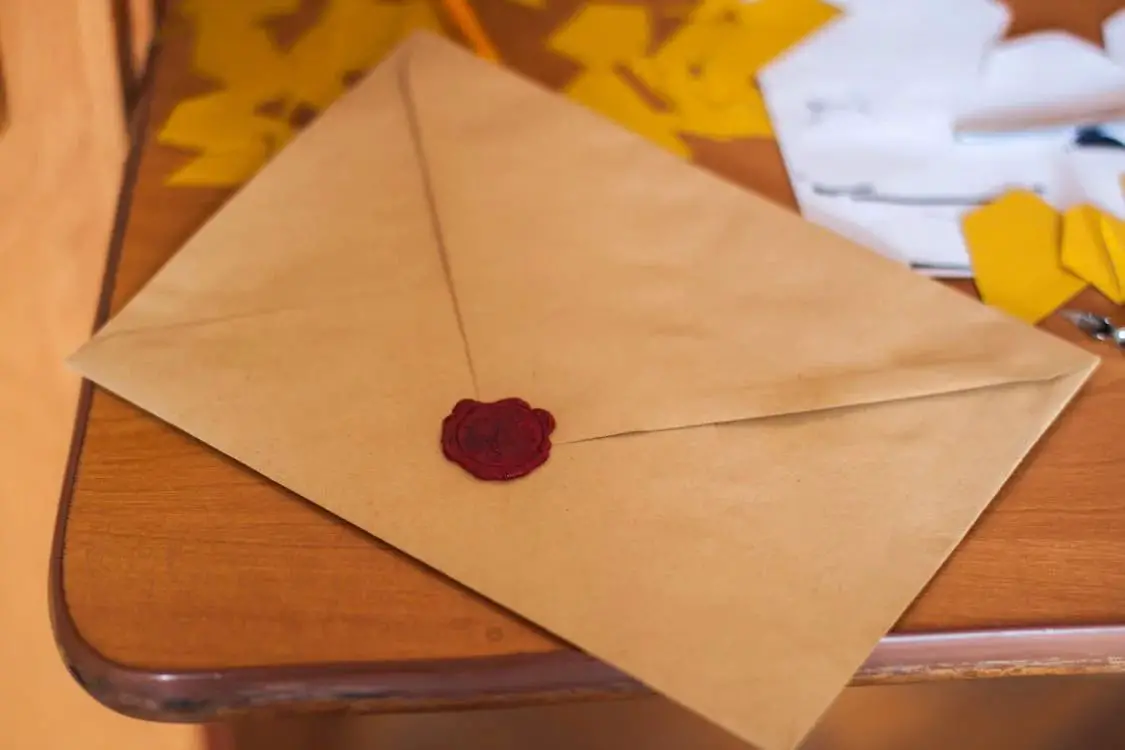
As I turned to leave, I placed an envelope on my father’s plate and said, “Happy Thanksgiving. I finally understand something important.”
The room fell completely still—not with the shocked silence of people witnessing something unexpected, but with the heavy quiet of people who’d suspected something was coming and had just watched it arrive.
My name is Regina Hartwell. I’m thirty-two years old, and the moment I turned onto my parents’ quiet street in the carefully manicured suburb outside Philadelphia where I’d grown up, my body reacted before my thoughts did. My shoulders tensed. My breathing went shallow. My hands gripped the steering wheel harder than necessary. Same trimmed lawns stretching in identical rows. Same seasonal decorations displayed with competitive precision. Same wreath on my parents’ door—this year’s version carefully chosen from a catalog to suggest warmth and welcome, even when the house itself had never quite felt that way to me.
I parked behind my sister’s white SUV—the newer model, the one with the third-row seating for the children she’d had exactly on schedule—and sat for a moment, gathering whatever internal resources I’d need to walk through that door. In the passenger seat beside me sat Grandma Ruth’s pecan pie, the tin still warm through my oven mitts, made from the recipe she’d taught me when I was twelve and had written out for me in her careful handwriting that got shakier every year until she died eight months ago.
I carried the pie up the walkway, my feet knowing every crack in the concrete from decades of repetition. Inside, the house smelled exactly like Thanksgiving was supposed to smell—roasted turkey, cinnamon candles, that distinctive scent of stuffing and gravy and sweet potatoes. But underneath it all was that sharp citrus cleaner my mother always used before guests arrived, as if order and acceptability could be sprayed into place, as if the right products could transform a space into something it fundamentally wasn’t.
Everything looked arranged with the precision my mother brought to all gatherings. Party trays lined the kitchen counter in careful progression from appetizers to desserts. Paper plates stacked neatly beside the cloth napkins that were reserved for appearances. Soft conversation drifted from the living room where early arrivals were gathered. Laughter bounced easily through the space, practiced and familiar, the sound of people who knew their roles and played them well.
Then I walked into the dining room and saw the table.
Twenty-three relatives were already seated or standing nearby, waiting for the meal to begin. Glasses filled with wine or cider or water. Chairs drawn close around the extended table that my parents brought out only for major holidays. Place cards written in my mother’s careful script, each name positioned precisely according to some hierarchy I’d never fully understood but had always felt.
The table was balanced perfectly, like the entire evening depended on symmetry and equal numbers on each side.
I looked for my name.
Once, scanning quickly. Then again, more carefully, thinking perhaps I’d missed it, perhaps it was positioned somewhere unexpected.
There were twenty-four place settings visible—plates and silverware and folded napkins. But only twenty-three names on the place cards.
The missing space wasn’t accidental. This wasn’t an oversight or a simple mistake that would be corrected with an embarrassed laugh and a quick rearrangement.
My mother didn’t turn around at first. She was adjusting the centerpiece—a harvest arrangement of artificial leaves and small pumpkins—with the focused attention of someone deliberately not looking at something they knew was there.
“We didn’t set one for you,” she said calmly, her voice carrying that particular flatness that suggested the decision had been made and discussion wouldn’t be welcomed.
I kept my voice even, matching her tone, refusing to give her the emotional reaction she might have been expecting or preparing to manage. “There’s an extra plate. I can see it from here.”
She finally looked at me, her expression controlled and distant, the way you look at someone who’s interrupting a carefully choreographed event, someone who doesn’t belong in this particular moment of family togetherness.
“There isn’t space tonight,” she said, as if this explained everything, as if this simple statement of spatial logistics made the situation reasonable rather than cruel.
The words didn’t surprise me. They didn’t shock me or wound me in the way they might have years earlier. They only confirmed something I’d been learning slowly, painfully, over the course of a decade—that my place in this family had been conditional all along, dependent on my usefulness rather than my belonging, maintained only as long as I stayed in the role they’d assigned me without demanding recognition or reciprocity.
This pattern of quiet exclusion wasn’t new. It had just never been quite this explicit before, this publicly demonstrated in front of the entire extended family.
It had begun a decade earlier, when I was twenty-two and fresh out of college with a degree in social work and plans to move to Seattle for a graduate program I’d been accepted into, scholarship secured, future mapped out in front of me like a road I was finally ready to travel. Then circumstances had shifted at home—my grandmother’s health declined, my mother claimed she was overwhelmed, my father said the family needed help—and a decision was made around the kitchen counter, discussed in tones that made it sound like a collaborative conversation even though the conclusion had clearly been predetermined.
Someone needed to stay close. Someone needed to adjust their plans. Someone needed to be flexible and put family first.
Everyone looked at me.
Not at my sister, who was established in her career and newly married. Not at my brother, who was in medical school and whose education was considered too important to interrupt. Just me, the youngest, the one whose dreams were apparently most negotiable, most expendable, most easily sacrificed on the altar of family obligation.
I agreed, because in our family, being dependable mattered more than being seen, and because saying no would have made me selfish, and because I’d been raised to believe that good daughters put family needs ahead of personal ambitions.
I deferred the graduate program. One year, I told myself. Just one year to help out, and then I’d reapply.
One year became two, then five, then ten.
Responsibilities filled my time in ways that felt important in the moment but never quite led anywhere. I helped care for my grandmother while working full-time at a local social services agency. I attended family events and helped organize holidays. I was the one who drove elderly relatives to appointments, who stayed late to clean up after gatherings, who could be called upon for emergencies because I didn’t have children or a demanding career or a life that was considered important enough to protect from interruption.
Other people’s paths continued uninterrupted. My sister had children, got promoted, bought a bigger house. My brother finished medical school, started his practice, got married. Celebrations happened regularly—birthdays, graduations, promotions, anniversaries. Milestones were marked with parties and toasts and photographs.
I was always present, always useful, always in the background of photos but rarely mentioned in the toasts, rarely acknowledged as someone with my own dreams deferred or my own sacrifices made.
The one person who noticed was Grandma Ruth.
Every week, I visited her in the assisted living facility where she’d moved after her stroke made independent living impossible. I’d sit at her small table in her small apartment and we’d talk—really talk, not the surface-level conversation that passed for communication in my family, but actual discussions about books and politics and the disappointments we carry.
She paid attention to details no one else seemed to notice or care about. She asked about my postponed graduate school plans. She remembered the Seattle program I’d given up. She listened when I talked about feeling invisible in family gatherings, about how my contributions were expected but never quite appreciated.
One afternoon about six months before she died, she squeezed my hand with fingers that had gone thin and papery but still held surprising strength, and she said quietly, “Some people avoid uncomfortable truths by redirecting their discomfort onto others. You’re not the problem, Regina. You’ve never been the problem.”
I’d cried then, allowing myself the vulnerability I never permitted in front of my parents or siblings, and she’d held my hand and told me that sometimes the kindest thing you can do for yourself is stop waiting for people to see you and start seeing yourself instead.
Three months after she passed, her attorney contacted me to say Grandma Ruth had left specific instructions about her estate. Most of it was divided among her children and grandchildren in predictable ways. But there was one envelope, sealed and labeled in her handwriting that had gotten shakier toward the end but was still distinctly hers.
“For Regina. When you’re ready.”
I didn’t open it right away. I kept it in my desk drawer for months, knowing somehow that once I read whatever was inside, something would change permanently. Some information, once known, can’t be unknown. Some truths, once faced, demand action.
Standing in my parents’ dining room now, watching my absence from the Thanksgiving table treated like a simple logistical issue rather than a profound statement about my value to this family, I felt something settle inside me—not anger, not sadness, but a clear, cold clarity about exactly what I was looking at.
I didn’t ask for a chair. I didn’t argue or plead or make a scene. I simply reached into my coat pocket and felt the edge of the envelope I’d finally opened two days earlier, the envelope that had contained a letter from my grandmother and copies of documents that explained so much about the family dynamics I’d never quite understood.
Across the room, my father was raising his glass, preparing to make the traditional pre-meal toast. He thanked my mother for preparing the feast. He praised my sister for her professional achievements. He acknowledged my brother’s successful medical practice. He spoke about family as if it were a blessing evenly shared, as if everyone present had equal claim to the warmth and belonging he was describing.
That’s when I understood with absolute certainty that staying quiet, accepting this exclusion, walking away without saying anything would only perpetuate the pattern that had defined my adult life—the pattern of my needs being invisible, my sacrifices going unacknowledged, my presence being taken for granted while my absence was barely noticed.
So when my mother repeated herself—this time loud enough for everyone in the room to hear, wanting witnesses to what she probably thought was justified boundaries—
“There isn’t space tonight, Regina.”
—I walked forward, placed the envelope gently on my father’s plate, directly in front of where he was standing with his glass raised, and spoke in a voice that was even and calm and carried clearly through the suddenly quiet room.
“Happy Thanksgiving,” I said. “I finally understand something important.”
His hand, which had been lifting toward his mouth for the toast, paused over the envelope. His eyes dropped to look at it, then rose to meet mine with confusion that was just beginning to shift toward concern.
The room went silent—not the dramatic, gasping silence of soap operas, not explosive or theatrical, but the heavy, weighted quiet of people who sensed that a line had been crossed, that something significant was happening even if they didn’t yet understand what.
“What is this?” my father asked, his voice carefully neutral in that way he had of trying to control situations through tone.
“It’s from Grandma Ruth,” I said. “She left it for me with her attorney. I opened it two days ago. I think you should read it. All of you should read it.”
My mother moved closer to the table, her face tight with something that looked like fear poorly disguised as irritation. “Regina, this isn’t the time or place—”
“For what? For truth? For honesty about how this family actually functions?” I kept my voice steady, refusing to match whatever emotion she was trying to provoke. “When would be the right time, Mom? When you’ve successfully erased me completely? When I’ve finally internalized the message you’ve been sending for ten years—that I don’t matter unless I’m useful?”
My sister spoke up, her voice carrying that particular quality of someone trying to play peacemaker while also protecting the status quo. “Regina, you’re being dramatic. Nobody’s trying to erase you. We just didn’t think you’d want to come this year since you’ve seemed so distant lately—”
“I’ve been distant?” I actually laughed, a short, bitter sound that surprised me. “I’ve been here. I’ve been present for every event, every crisis, every moment this family needed something. I gave up graduate school to help care for Grandma Ruth. I’ve spent ten years of my life on hold because you all decided my dreams were more expendable than yours. And now you didn’t think I’d want to come to Thanksgiving? Or did you just hope I’d get the message and stay away so you wouldn’t have to explicitly exclude me?”
My father set down his glass and picked up the envelope, opening it with hands that were beginning to shake slightly. Inside was my grandmother’s letter—three pages in her handwriting, getting shakier toward the end but still legible—and copies of documents she’d kept meticulously over the years.
He started reading, and I watched his face change, color draining, expression shifting from confusion to shock to something that might have been shame.
“What does it say?” my mother demanded, trying to take the letter from him, but he held it away from her, continuing to read.
“It says,” I answered for him, my voice steady despite the rapid beating of my heart, “that Grandma Ruth documented everything. Every time I was asked to sacrifice my plans for family needs. Every time my contributions were dismissed or minimized. Every time achievements were celebrated for some grandchildren and ignored for others. Every conversation she had with you, Dad, and with you, Mom, about how you were treating me unfairly, and every time you dismissed her concerns.”
I pulled out my own copy of the letter, the one I’d been carrying in my pocket like armor. “She writes about the graduate school scholarship I turned down—the one you told me was ‘just a program, there would be others,’ even though it was a fully funded opportunity at one of the best schools in the country. She writes about the job offer in Seattle I declined because you said the family needed me here. She documents the years I spent as Grandma’s primary caregiver while you all continued your lives uninterrupted, and how you thanked my sister for ‘organizing’ Grandma’s care even though I was the one there every day.”
My brother started to speak—”Regina, I didn’t know—”
“You didn’t ask,” I cut him off, my voice harder now. “None of you asked. You just assumed I was fine, that I didn’t have dreams or plans or needs, that I existed to make your lives easier while mine stayed perpetually on hold.”
My mother’s face had gone pale, then red, cycling through emotions too quickly to track. “We appreciated everything you did—”
“Appreciation without acknowledgment is just exploitation with better PR,” I said, quoting something my therapist had told me months ago. “And even the appreciation was private, whispered in passing, never public, never in front of the family, never in a way that might suggest I deserved actual credit for actual work.”
My father was still reading, page two now, and I could see him getting to the part about the money—the part that explained so much about why certain grandchildren received financial support for education and housing and business ventures while others didn’t.
“She documents the financial support too,” I continued, watching his reaction. “The $50,000 you gave Sarah for her house down payment. The $80,000 for James’s medical school tuition that wasn’t covered by loans. The $30,000 for Sarah’s business startup. All presented as ‘family helping family,’ all positioned as investments in your children’s futures. But somehow my future never qualified for investment. Somehow my needs were always less urgent, less worthy, less important.”
“We would have helped you too,” my father said weakly, “if you’d asked—”
“I shouldn’t have had to ask,” I said, my voice breaking slightly for the first time. “Sarah didn’t ask. James didn’t ask. They were offered support because you valued their goals. But my dreams of graduate school? My plans for a career in Seattle? Those were treated as optional, as things I could just set aside because family needed me. Because being needed was supposed to be enough for me.”
Grandma Ruth’s letter had one more section, the part I’d read over and over in the two days since opening the envelope, the part that had finally given me permission to stop accepting unacceptable treatment.
“She ends the letter,” I said quietly, “by explaining why she’s leaving me her house. The house in Vermont that you all assumed would be sold and the proceeds divided. She’s leaving it to me specifically, exclusively, with instructions that it cannot be contested, because—and I quote—’Regina deserves a space that is unconditionally hers, a place where her presence is not contingent on her usefulness, where she can finally build the life she deferred for a family that took her for granted.'”
The silence now was different—deeper, heavier, full of the weight of truths that couldn’t be unsaid or unknown.
“She left you the Vermont house?” my mother whispered, and I could hear in her voice that she’d been counting on that asset, had been making plans that involved its sale.
“She left me the house, and a separate cash bequest that’s enough to fund the graduate program I never got to attend. She apologizes in the letter for not intervening more directly while she was alive, for not calling you out more forcefully on how you were treating me. But she says she was afraid that public confrontation would only make things worse for me, that you’d punish me for her interference. So instead, she documented everything and made sure that when she was gone, I’d have resources and options and a way out.”
I looked around the room at family members who were staring at me like I’d become a stranger, like the quiet, accommodating Regina they’d known had been replaced by someone they didn’t recognize.
“So no, Mom, there isn’t space for me tonight at your table. There hasn’t been space for me in this family for years—not real space, not space that acknowledges me as a person with needs and dreams and a life that matters. There’s only been space for the version of me that serves your purposes, that makes your lives easier, that stays small and grateful and doesn’t ask for anything in return.”
I picked up Grandma Ruth’s pecan pie from where I’d set it on the sideboard. “I’m leaving. I’m going to Vermont this weekend to see the house, to start planning what comes next. I’m applying to graduate programs for next fall. I’m building the life I should have built ten years ago, before I let you convince me that my dreams were negotiable and your needs were paramount.”
My father found his voice, thin and uncertain. “Regina, we can talk about this. We can—we made mistakes, we can acknowledge that and do better—”
“You had ten years to do better,” I said quietly. “You had countless opportunities to see me, to value me, to treat me like I mattered as much as my siblings. You chose not to. And now I’m choosing to stop waiting for you to change and start building a life where I don’t need you to.”
I walked toward the door, past relatives who parted silently to let me through, past the table where my place had been deliberately excluded, past the life I’d been living in service to people who’d never valued the service enough to see the person providing it.
At the threshold, I turned back one more time. “I don’t hate you. I’m not trying to punish you. I’m just finally understanding what Grandma Ruth tried to tell me before she died: that sometimes the most loving thing you can do for yourself is stop participating in your own diminishment. Thank you for making it so clear tonight that there isn’t space for me here. It makes it much easier to stop trying to fit into a place that was never really mine.”
I left my parents’ house for the last time as their daughter in the way I’d been their daughter for thirty-two years—quiet, accommodating, making it easy for them by walking away without a scene.
But this time, I was walking toward something instead of just away from pain. Toward Grandma Ruth’s house in Vermont. Toward the graduate program I’d deferred. Toward a life where my presence wasn’t conditional on my usefulness, where there would always be space for me at the table, where I wouldn’t have to earn belonging by making myself small.
The last thing I heard as I closed the door behind me was my mother’s voice, strained and angry: “How could she do this? On Thanksgiving? How could she ruin everything?”
And I smiled, because of course that’s what she would focus on—not the ten years of hurt, not the systematic exclusion, not the cruelty of removing someone’s place at the table. Just the inconvenience of having her carefully arranged holiday disrupted by someone refusing to stay quietly erased.
I drove away from that house, from that life, from that version of myself who’d believed that if she was just useful enough, accommodating enough, quiet enough, she’d eventually be valued.
And I drove toward Vermont, toward a house that Grandma Ruth had made unconditionally mine, toward a future I was finally allowing myself to claim.
There wasn’t space for me at their table.
But there was space in the world—wide and open and full of possibilities—for the person I was finally becoming.
THE END

Adrian Hawthorne is a celebrated author and dedicated archivist who finds inspiration in the hidden stories of the past. Educated at Oxford, he now works at the National Archives, where preserving history fuels his evocative writing. Balancing archival precision with creative storytelling, Adrian founded the Hawthorne Institute of Literary Arts to mentor emerging writers and honor the timeless art of narrative.