The Boundary I Built in Silence
My name is Ray Nelson. I’m sixty-seven years old, newly retired after forty-three years of working jobs that required me to show up before dawn and stay late because someone else’s emergency always became mine. I didn’t come out here to the woods of Wyoming to reinvent myself or find some mystical connection with nature or any of that romanticized nonsense people talk about when they’re trying to justify running away from their problems. I came out here to finally stop living on other people’s clocks, to finally exist in a space where the only schedule that mattered was the one dictated by sunrise and sunset and my own damn preferences.
For years—decades, really—my mornings began exactly the same way. Keys in hand before my coffee was even poured, a lanyard badge hanging by the door like a leash I fastened around my own neck every single day, the soft elevator ding that meant another day of fluorescent lights and other people’s expectations, then a long stream of headlights on the interstate that felt like a second job before the first one even started. I worked in facility management for a hospital system, which meant I was responsible for everything that wasn’t directly medical—maintenance, supplies, vendor relations, emergency preparedness. Forty-three years of making sure other people could do their jobs without ever thinking about who made that possible.
Even after I retired six months ago, after the mandatory party with the sheet cake and the plaque thanking me for my “dedicated service,” my body still woke up at five-fifteen every morning, still braced for the phone to ring with some crisis that needed immediate attention, still waiting for someone to tell me what they needed from me next.
So I bought a cabin. Not a vacation home, not a weekend retreat—a cabin. Small, deliberately so, about forty miles outside a town in Wyoming that barely shows up on maps, far enough that the air actually tasted clean instead of like exhaust and the nights went quiet in a way the city never allowed. The kind of quiet where you can hear individual pine needles moving in the wind, where silence isn’t the absence of noise but the presence of peace.
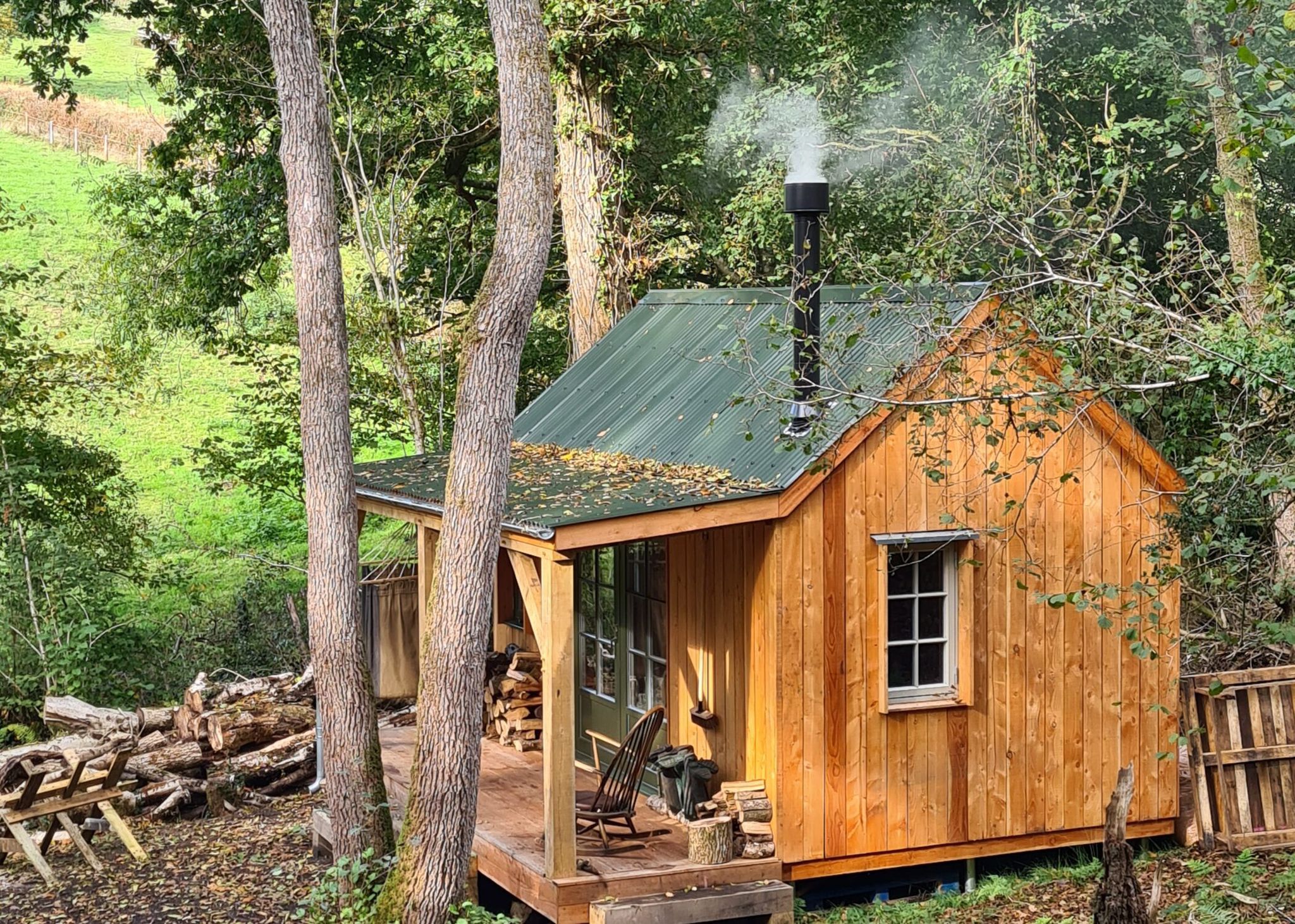
The cabin itself was simple: one bedroom, one bathroom, a kitchen that opened into a living area with a wood-burning stove, and a porch that faced east toward a wall of pine trees that seemed to stand guard like they were protecting something sacred. It was small on purpose—eight hundred square feet, maybe—because I’d spent my entire adult life in spaces that had to accommodate other people’s needs, other people’s schedules, other people’s expectations of what my life should look like. This space was going to be different. This space was mine.
I closed on the property on a Tuesday in late September, when the aspens were just starting to turn gold and the air had that particular crispness that meant winter was coming but hadn’t arrived yet. I drove up from Denver with everything I owned that mattered—which turned out to be surprisingly little once I actually sorted through forty-three years of accumulated possessions. A truck bed full of essentials: clothes, books, tools, kitchen equipment, bedding, the rocking chair that had been my father’s, and a file box containing the important documents that prove you exist in the eyes of bureaucracy.
The first morning in my cabin, I woke up naturally—not to an alarm, not to anxiety, not to the phantom sensation of my phone vibrating—just woke up when my body decided it was ready. I made coffee slowly, the old-fashioned way with a percolator on the stove, and I sat on my porch in the rocking chair and drank it while watching the sun come up through the pines. I listened to the wind moving through the treetops, that particular sound like the world breathing. No car horns. No voices bleeding through thin apartment walls. No buzzing phone telling me I owed someone my time or attention or emotional labor.
I spent that first week unpacking and organizing the way I’d lived my whole life—orderly, methodical, everything in its place. Tools lined up on hooks in the shed, pantry stacked with canned goods and dried foods organized by type, furniture arranged so that every room had good light and clear pathways. Everything put where my hands could find it without thinking, because I’d learned over decades that peace is fragile, especially when you’ve spent most of your life earning the right to it in tiny increments that other people could take away whenever they felt entitled to your time.
I wasn’t isolated—the nearest neighbor was about a mile down the road, an older couple named Frank and Carol who’d lived out here for twenty years and understood the unspoken etiquette of rural living, which is basically: wave when you see each other, help in genuine emergencies, and otherwise respect the fact that people chose to live out here because they value space and privacy. The town was close enough for groceries and supplies, but far enough that I wouldn’t run into people constantly, wouldn’t have to make small talk in checkout lines, wouldn’t have to perform the social rituals that had exhausted me for so long.
That first Friday afternoon, after I’d finished organizing the kitchen and setting up my small office area where I planned to finally read all the books I’d been accumulating for years, I called my daughter Bula. She lived in Denver with her husband Trevor and their two kids—my grandchildren, who I loved but who’d also been used as leverage more times than I wanted to count. “If you want to see the kids, you need to…” followed by whatever demand or guilt trip was being deployed that week.
Bula answered on the third ring, her voice bright but with that undertone of exhaustion I’d been hearing more and more over the past few years. “Dad! How’s the cabin? Are you all settled in?”
“Getting there,” I said, looking around at my small, perfect space. “It’s quiet. Really quiet. I think I’m going to like it.”
“I’m glad. You deserve it. You worked hard your whole life—you should get to enjoy your retirement however you want.” She paused, and I could hear voices in the background—her kids arguing about something, Trevor saying something I couldn’t make out. “Hold on, Dad, let me go to another room.”
I waited, listening to the sounds of her moving through her house, a door closing, sudden relative quiet on her end. When she spoke again, she sounded more tired than before. “Sorry. It’s just been a crazy week. Mason has a project due, and Lily has this recital coming up, and Trevor’s parents are… well, they’re talking about visiting for Thanksgiving, which is fine, but his mom already has all these opinions about how we should do things, and I just—” She stopped herself. “Sorry. I don’t mean to dump on you. You called to tell me about your cabin.”
“It’s okay, honey. How are you doing? Really doing?”
“I’m tired, Dad. I’m just really tired. But that’s parenting, right? And Trevor’s been working late a lot, so I feel like I’m handling everything solo most of the time, but he says his job is really demanding right now, so I’m trying to be understanding.”
We talked for another twenty minutes. I told her about the cabin, about the porch and the pine trees and the way the light came through the windows in the morning. She told me about the kids’ activities and school and the latest drama with Trevor’s family, who apparently had Very Strong Opinions about how Bula and Trevor should be raising their children. I listened, made appropriate sympathetic sounds, and didn’t offer advice unless specifically asked because I’d learned over the years that sometimes people just need to be heard, not fixed.
Before we hung up, she said, “I’m really happy for you, Dad. You deserve this. You deserve peace.”
“Thanks, sweetheart. Love you.”
“Love you too.”
An hour later, my phone rang again. Trevor’s name on the caller ID. I almost didn’t answer—Trevor and I had a complicated relationship that basically consisted of him tolerating me because I was Bula’s father and me tolerating him because he was my daughter’s husband, with both of us maintaining a surface-level politeness that fooled exactly no one. But I answered because not answering would create drama, and I’d had enough drama to last several lifetimes.
“Ray.” Not “Hi, Ray” or “Hey, how are you”—just my name, flat and businesslike, like he was calling an employee.
“Trevor.”
“So, I heard you bought a cabin. Bula mentioned it.”
“That’s right. Just moved in this week.”
“How big is it?”
The question set off alarm bells immediately, the same alarm bells that had been warning me about Trevor since he’d first started dating my daughter eight years ago. I’d ignored them then, told myself I was being overprotective, that every father thinks no one is good enough for their daughter. But the alarm bells had been right—Trevor was the kind of person who viewed relationships as transactions, who calculated what he could get from every interaction, who confused other people’s kindness with weakness and their boundaries with suggestions.
“It’s small,” I said carefully. “One bedroom. Just enough for me.”
“Hmm. Well, here’s the thing. My parents are planning to visit the area in a couple weeks—they want to do some hiking, see the fall colors, that kind of thing. Hotels out there are expensive and pretty booked up this time of year, so I told them they could stay with you.”
The words hung in the air between us, so presumptuous and entitled that for a moment I couldn’t quite process them. He hadn’t asked. Hadn’t requested. Had simply decided and informed me, like I was a hotel he’d booked without checking availability.
“You told them they could stay with me,” I repeated slowly.
“Yeah. It’s just for a few days. Maybe a week. They’re easy guests—they won’t be any trouble. And you’ve got that whole cabin to yourself, so you have the space.”
“I have one bedroom, Trevor. My bedroom. Where I sleep.”
“They can sleep on the couch or bring air mattresses. It’s fine. Look, they’re already planning on it. They’ve booked their flights. So if you have a problem with it, you can just move back to your apartment in Denver for the week. Problem solved.”
The casual cruelty of it took my breath away. Move back to the city—the place I’d just escaped from, the place that had been slowly suffocating me for decades—because he’d decided to use my home as free lodging for his parents without bothering to ask my permission. And if I objected, I’d be the unreasonable one, the difficult father-in-law who wouldn’t help family, who was too selfish to share his space for a few days.
I didn’t argue. I didn’t raise my voice. I didn’t give him the satisfaction of a reaction he could later recount to Bula or his parents, painting me as the angry old man who’d overreacted to a simple request. Instead, I let the silence sit there for a moment, heavy and deliberate, then said quietly, “Okay.”
The word clearly surprised him—he’d been gearing up for an argument, probably had more justifications and guilt trips prepared. “Okay? So they can stay?”
“We’ll talk later, Trevor. I need to go.” I hung up before he could say anything else.
That night, I sat in my rocking chair on the porch long after dark, staring at my cabin—my refuge, my hard-earned peace—and felt something shift inside me. Not anger, exactly, though there was anger there. Not resignation, though I’d spent enough of my life resigned to other people’s expectations. What I felt was clarity. The kind of clarity that comes when you finally stop making excuses for people’s behavior and see it exactly for what it is.
Trevor had looked at my retirement, my cabin, my deliberate choice to create a life of peace and solitude, and had seen an empty guest room he could claim. Had seen resources he could exploit. Had seen an old man who’d spent his whole life accommodating other people and assumed that pattern would continue indefinitely because I’d never drawn a hard line before.
I went inside, pulled out a small notepad from my desk, and started writing. Not feelings—I’d processed enough feelings over sixty-seven years to fill volumes. Just steps. Practical, methodical steps to address a situation that required action, not emotion.
The next morning, I drove into town. The drive took about thirty minutes through winding mountain roads, past the kind of scenery that normally would have made me feel peaceful but that morning just felt like the calm before necessary action. The town—if you could even call it that, population maybe 1,200—consisted of one main street with a gas station, a grocery store, a hardware store, a diner, and a few other small businesses that served the scattered population of people who’d chosen to live out here.
I parked in front of the hardware store and went in. Earl, the owner, looked up from behind the counter and nodded. “Morning. You’re the new fellow up on Timber Ridge, right? Ray?”
“That’s right.”
“Settling in okay?”
“Getting there. I need to talk to you about installing a smart lock on my front door. The kind with a keypad and remote access.”
Earl raised his eyebrows slightly but didn’t ask questions—another advantage of small-town mountain culture, people minded their own business. “Sure. I can do that. You want one with a camera too? Got a package deal on a doorbell camera and smart lock combo.”
“That would be good.”
“I can come by tomorrow morning if that works. Takes about an hour to install.”
“Perfect. I appreciate it.”
From there I went to the grocery store. I didn’t need much—I’d already stocked the cabin for my own needs—but I grabbed a few items that would send a very specific message: coffee filters, a stack of disposable plates and cups, and one of those family-sized trays of lasagna you can heat up quickly, the kind of thing you serve to guests you’re feeding out of obligation rather than welcome.
On my way out of town, I stopped at the post office, where a bulletin board advertised various local services. I copied down the number for a property management company that apparently handled short-term rentals in the area. Not that I planned to rent anything, but I wanted the option in my back pocket.
Back at the cabin, I spent the afternoon working methodically, not frantically. I moved personal items—family photos, important documents, my father’s rocking chair, the few things that held genuine sentimental value—into my bedroom and closed the door. I cleared the living area of anything that made it feel like my home rather than a generic rental space. I didn’t do anything dramatic, didn’t do anything cruel, but I did make sure the space could answer for Trevor’s assumptions before I ever had to raise my voice.
Earl showed up the next morning as promised, installed the smart lock and doorbell camera with efficient competence, showed me how to program codes and access the camera feed from my phone. “You’ll have a record of everyone who comes to your door,” he said. “And you can lock or unlock from anywhere. Some folks like the security. Some folks like having control over who gets in.”
“I like both,” I said.
After he left, I programmed the lock with a temporary access code and sent it to Trevor in a text message, along with brief instructions: “Code for front door. Valid for one week starting [date]. Lock will deny access after that.”
No warmth. No “hope they enjoy their stay.” Just information, delivered in the same flat, transactional tone Trevor had used when he’d informed me his parents were coming.
He didn’t respond to the text. I didn’t expect him to.
The next week passed quietly. I fell into a rhythm that felt more natural than any schedule I’d maintained in the previous four decades: wake with the sun, make coffee, sit on the porch, read, work on small projects around the cabin, cook simple meals, watch the light change through the pine trees, go to bed when I was tired rather than when the clock said I should. It was the kind of life I’d been dreaming about for years but had never quite believed I’d achieve.
Thursday evening, a week and a half after my conversation with Trevor, my phone buzzed with a notification from the doorbell camera. I’d been reading on the porch, wrapped in a wool blanket against the October chill, and I pulled out my phone to check the feed.
A car I didn’t recognize—a rental, probably—was pulling up my driveway, tires crunching on the gravel in that particular way that makes every arrival feel like an intrusion when you’re used to silence. Two people got out: a man in his late sixties, tall and barrel-chested with silver hair, and a woman about the same age, dressed in expensive casual clothing that looked absurdly out of place in the Wyoming woods.
Leonard and Grace, I assumed. Trevor’s parents. I’d met them maybe three times over the years—quick encounters at holidays or family events where we’d exchanged pleasantries and maintained the fiction that we were all one big happy family. I remembered Leonard as loud and opinionated, the kind of man who mistook volume for authority. Grace had been quieter but had perfected the art of the backhanded compliment, the subtle dig disguised as concern.
They paused at the bottom of my porch steps, looking around with expressions that suggested they were evaluating the property and finding it wanting. I could see them through the window but stayed where I was, sitting still, watching through the camera feed on my phone.
Leonard climbed the porch steps like he owned them, with that particular stride of entitlement that comes from a lifetime of having doors opened for you. He reached for the door handle like access was a given, like “my son told me I could stay here” was equivalent to “I have been invited and welcomed.”
The porch light clicked on automatically—Earl had set it to motion sensor—and Leonard stopped, his hand on the handle, because the old simple lock was gone. In its place was the keypad with its tiny red indicator light, and a plastic-sleeved card taped neatly beside the frame.
Grace leaned in to read the card, her eyes moving line by line. I couldn’t see her expression clearly from my position, but I’d written the card carefully:
“TEMPORARY ACCESS CODE: [code] Valid through [date] only. This is a private residence, not a hotel. No visitors or guests beyond registered party. Quiet hours: 9 PM – 8 AM. No alterations to property or furnishings. Owner reserves right to revoke access at any time. Questions: Contact Trevor Hoffman directly.”
Grace’s mouth tightened in that way that suggested she’d tasted something sour. Leonard tried the handle anyway, found it locked, then punched in the code I’d sent to Trevor with enough force that I could almost hear his irritation through the screen.
The lock clicked open. They went inside.
I stayed on the porch, watching through the window as they moved through my living space. I could see Leonard looking around with undisguised disdain—the cabin was small, simple, not the kind of place he was probably used to. Grace was opening cabinets, checking the refrigerator, her body language broadcasting disapproval of the minimal amenities I’d left available.
I’d put exactly four items in the fridge: a gallon of milk, a dozen eggs, butter, and the pre-made lasagna, still in its aluminum tray. The message was clear: you can survive here, but you won’t be comfortable. This is not your home. You are not welcome.
In the living room, I’d left the couch—an old but sturdy piece from my apartment—and a coffee table. The TV was unplugged and sitting in a corner, screen facing the wall. No books on the shelves. No decorative items. No photographs. No personality. Just the bare minimum furniture required for a space to technically qualify as livable.
Leonard said something to Grace. I couldn’t hear it, but I could read his body language: irritation, confusion, the beginning stages of anger. Grace responded, gesturing at the sparse surroundings, and I imagined she was saying something about how rude I was being, how unwelcoming, how this wasn’t what Trevor had led them to expect.
My phone rang. Trevor’s name. I let it go to voicemail.
It rang again immediately. Again, voicemail.
A text: “My parents just arrived. What the hell is this? Where’s your furniture? Where are your things? This place looks abandoned.”
I responded: “The cabin contains everything necessary for temporary lodging. Your parents have shelter, running water, electricity, and basic amenities. The code you were given provides access for the agreed-upon duration.”
Another call. This time I answered.
“Ray, what the fuck—”
“Trevor,” I interrupted, my voice calm and even, “I provided exactly what you demanded: a place for your parents to stay. I never agreed to host them. I never agreed to make them comfortable. I never agreed to vacate my own home. I simply ensured they had access to shelter. As for my personal belongings and furniture, I don’t leave them accessible to people I didn’t invite.”
“This is ridiculous. Where are you even staying?”
“That’s not your concern.”
“You’re being completely unreasonable—”
“Trevor, let me be very clear. You informed me that your parents were coming to stay at my cabin. You didn’t ask. You didn’t request. You demanded, and you implied that if I had a problem with it, I should leave my own property. So I made arrangements that allow them to stay while also protecting my space and belongings. They have what they need. If that’s not sufficient for their comfort, there are several hotels in the area I’d be happy to recommend.”
“You’re punishing them because you’re mad at me.”
“I’m not punishing anyone. I’m maintaining boundaries. There’s a difference.”
Silence on his end, then: “Bula is going to hear about this.”
“I expect she will. Goodbye, Trevor.”
I hung up and silenced my phone.
Inside the cabin, through the window, I could see Leonard on his own phone now, probably calling Trevor back, probably describing the unconscionable conditions they’d found. Grace was still inspecting everything with the air of someone conducting a hostile audit.
After about twenty minutes, they came back out. Leonard punched the code into the keypad to lock the door with unnecessary force—the kind of gesture that’s supposed to communicate anger but really just communicates impotence. They got in their rental car and drove away, presumably to find a hotel, leaving my driveway empty and quiet again.
I sat on my porch until full dark, wrapped in my blanket, listening to the wind in the pines, feeling something I hadn’t felt in a very long time: the satisfaction of having drawn a line and held it without apology.
My phone had accumulated messages while it was silenced. Three voicemails from Trevor, increasingly angry. Two texts from Bula, confused and concerned: “Dad, Trevor says his parents drove all the way to your cabin and you weren’t there? What’s going on?” and then “Can you please call me? I’m worried.”
I called her.
“Dad? What happened? Trevor says you essentially kicked his parents out of your cabin.”
“That’s not accurate. Trevor informed me—didn’t ask, informed me—that his parents were coming to stay at my cabin. When I pointed out that I have a one-bedroom cabin and wasn’t planning to host guests, he told me I could move back to Denver if I had a problem with it. So I made arrangements that would allow them access to shelter while protecting my property and privacy.”
“What kind of arrangements?”
“I installed a smart lock and gave them a temporary access code. I removed my personal belongings and furniture to secure storage. I left the space functional but minimal. They had everything they needed to stay there—they simply didn’t have the level of comfort your husband apparently promised them without consulting me.”
Silence. Then, quietly: “He didn’t ask you?”
“No, honey. He called me and told me his parents were coming and that if I didn’t like it, I could leave my own home.”
More silence. I could hear her processing this, recalibrating her understanding of the situation. “Dad, I didn’t know. He told me he’d talked to you and you’d said it was fine. He said you were happy to help.”
“I’m sorry he lied to you. But Bula, I need you to understand something. I spent forty-three years accommodating other people’s demands. I spent decades being available, being flexible, being the person everyone could count on to say yes even when I wanted to say no. I’m done with that. I bought this cabin to have peace, to have space, to finally live on my own terms. And Trevor decided—without asking, without considering that I might have my own needs and boundaries—that my retirement was an opportunity for him to exploit. That my home was a resource he could allocate. I won’t accept that.”
“I understand,” she said, and she sounded tired. So tired. “Dad, I’m sorry. I’m sorry Trevor did this. I’m sorry his parents showed up expecting something you never agreed to provide. I’m sorry you’re being painted as the bad guy when you’re just trying to protect your peace.”
“Thank you.”
“Can I ask where you’re actually staying? Are you somewhere safe?”
“I’m sitting on my porch right now. I never left, honey. I just made sure my living space and personal belongings were secured before his parents arrived. I’ve been here the whole time.”
She laughed, a surprised sound that was part relief and part admiration. “You were there? You were there while they showed up and found an empty cabin?”
“I watched them arrive on the doorbell camera. I watched them go inside, realize the space wasn’t what they expected, and leave. The whole visit lasted about twenty minutes.”
She laughed again, harder this time. “Oh my God. Dad, that’s brilliant. That’s absolutely brilliant.”
“I thought so.”
“Trevor is furious.”
“Trevor will survive. His parents will survive. They have money—they can afford a hotel. What they can’t afford, what Trevor can’t afford, is to keep assuming they can make decisions about my life without my consent.”
“You’re right. You’re absolutely right. I’m going to have a conversation with Trevor about this. About boundaries and respect and not volunteering other people’s homes without asking them first.”
“I appreciate that. How are you, sweetheart? Really?”
“I’m okay. Tired. Overwhelmed. But okay. And honestly, seeing you stand up for yourself like this—it makes me think maybe I need to do more of that too.”
“You do. You should. Your time and space and energy are valuable. Don’t let anyone—including your husband—convince you otherwise.”
We talked for another thirty minutes, about her, about the kids, about things that had nothing to do with Trevor or his parents or my cabin. When we finally hung up, I felt lighter than I had in weeks.
The next morning, my phone showed a voicemail from an unfamiliar number. I played it while making coffee.
“Hello, this is Grace Hoffman. I’m calling about the… situation… at your cabin yesterday. I wanted to let you know that we found accommodations at a hotel in town, and we’ll be staying there for the remainder of our visit. I also wanted to say…” She paused, and when she spoke again her tone was different, less indignant and more thoughtful. “I wanted to say that I understand. What you did. My son called and demanded you provide lodging without asking if you were willing or able. That was wrong. And I’m sorry we showed up expecting hospitality you never offered. You have every right to your privacy and your peace. I hope you enjoy your retirement, Mr. Nelson. You’ve clearly earned it.”
The message ended. I stood in my kitchen, coffee mug in hand, and felt something that might have been respect for Grace Hoffman, who’d apparently figured out what her son had done and had chosen to acknowledge it rather than double down on entitlement.
Trevor never called to apologize. I didn’t expect him to. But the following week, when I called Bula, she mentioned that Trevor’s parents had cut their visit short and gone home, and that there had been what she diplomatically called “some difficult conversations” in their household about boundaries and respect.
“Trevor’s not happy,” she said. “But honestly, I think this needed to happen. I think he needed to understand that he can’t just make decisions for other people and expect them to go along with it.”
“How are you handling it?”
“I’m setting some boundaries of my own. Starting with telling Trevor that he needs to actually ask before volunteering my time or energy for things. And that he needs to respect when I say no.”
“Good for you, honey. I’m proud of you.”
“I learned from the best.”
The cabin stayed quiet after that. No more surprise visitors. No more demands disguised as requests. Just me, my porch, my pine trees, and the peace I’d finally claimed for myself.
Frank and Carol, my neighbors down the road, stopped by one afternoon with fresh-baked bread and a genuine invitation to dinner sometime. “Heard you had some unwelcome guests,” Frank said with the kind of tact that suggested small-town gossip networks were alive and well. “Just wanted to make sure you knew that real neighbors don’t show up uninvited and demand your spare room.”
“I appreciate that.”
“You need anything—and I mean anything—you let us know. That’s what neighbors are for. Not what family sometimes pretends they’re for.”
I spent that winter in my cabin, watching snow accumulate on the pines, reading by the wood stove, cooking meals for one, and learning what it felt like to live without constantly bracing for the next demand on my time or space or energy. It was the most peaceful winter of my life.
Spring came, and with it a text from Bula: “Trevor and I are separated. I’m staying with Mom for a while, sorting things out. The kids are okay. I’m okay. I just wanted you to know. And to say thank you.”
“For what?” I texted back.
“For showing me that it’s okay to protect your peace. Even from family. Especially from family.”
I called her that evening, and we talked for two hours about her marriage, her fears, her hopes, and the future she was trying to imagine for herself and the kids. I listened mostly, offered support when asked, and didn’t say “I told you so” even though I’d never particularly trusted Trevor’s character.
“Can we visit sometime?” she asked at the end of the call. “The kids and me? Not to stay—I know the cabin is small. But just to see it? To see where you are, to spend some time together?”
“I’d love that. Let me know when, and I’ll make sure I have the air mattresses and extra supplies. Real guests, invited guests, are always welcome.”
“Thanks, Dad. I love you.”
“Love you too, sweetheart.”
They visited in June, when the wildflowers were blooming and the weather was perfect for hiking. The kids ran around the property like they’d discovered another planet, fascinated by the trees and rocks and wildlife. Bula sat on my porch with me in the evenings after the kids were asleep in their tent in the yard, and we talked about everything and nothing while the stars came out in quantities you can’t see in the city.
“This place is perfect,” she said on their last night. “I can see why you fought to protect it.”
“It’s not just the place,” I said. “It’s what it represents. The right to say no. The right to prioritize my own needs. The right to exist on my own terms instead of everyone else’s.”
“I’m learning that too. It’s harder than I thought it would be.”
“It is. But it’s worth it.”
They left the next morning with hugs and promises to visit again soon. I stood on my porch and watched their car disappear down my driveway, then turned back to my cabin—my refuge, my hard-won peace—and felt profound gratitude for every difficult decision I’d made to get here.
Leonard and Grace sent me a card later that summer. Inside was a brief note: “Thank you for the lesson in boundaries. We’ve had some conversations with our son about respect and entitlement. We hope you’re enjoying your retirement and your beautiful cabin. With respect, Leonard and Grace.”
I put the card on my refrigerator, not because I was friends with Trevor’s parents now, but because it represented something important: the acknowledgment that standing your ground, even when it makes others uncomfortable, is sometimes the most honest thing you can do.
Trevor and Bula eventually divorced. She got a small house closer to her mother, shared custody of the kids, and started rebuilding her life on her own terms. The kids visited me twice a year, and I taught them about the woods, about self-reliance, about the difference between being alone and being lonely.
I’m seventy-two now, still in my cabin, still watching the sunrise through the pines, still drinking my coffee on the porch in the rocking chair that was my father’s. Still living on my own clock, by my own rules, with my own boundaries firmly in place.
People sometimes ask if I ever feel guilty about how I handled Leonard and Grace’s visit. If I think I was too harsh, too unwelcoming, too ungenerous.
I don’t.
Because what I did wasn’t harsh—it was honest. I didn’t make them homeless. I gave them exactly what Trevor had demanded: access to shelter. They simply didn’t get what they’d assumed they deserved: my hospitality, my comfort, my willingness to be inconvenienced.
And in doing so, I taught them—and more importantly, I taught myself—that quiet doesn’t mean empty, that retirement doesn’t mean available, and that peace is something you have to protect actively, deliberately, without apology.
My cabin stands in the Wyoming woods, small and perfect, surrounded by pines that guard it like a promise. Inside is everything I need and nothing I don’t. Outside is space, silence, and the hard-won right to exist on my own terms.
And when I sit on my porch in the evenings, wrapped in a blanket, listening to the wind move through the trees, I feel something I spent most of my life chasing but never quite catching until now:
Complete, uncompromised peace.
THE END

Ethan Blake is a skilled Creative Content Specialist with a talent for crafting engaging and thought-provoking narratives. With a strong background in storytelling and digital content creation, Ethan brings a unique perspective to his role at TheArchivists, where he curates and produces captivating content for a global audience.
Ethan holds a degree in Communications from Zurich University, where he developed his expertise in storytelling, media strategy, and audience engagement. Known for his ability to blend creativity with analytical precision, he excels at creating content that not only entertains but also connects deeply with readers.
At TheArchivists, Ethan specializes in uncovering compelling stories that reflect a wide range of human experiences. His work is celebrated for its authenticity, creativity, and ability to spark meaningful conversations, earning him recognition among peers and readers alike.
Passionate about the art of storytelling, Ethan enjoys exploring themes of culture, history, and personal growth, aiming to inspire and inform with every piece he creates. Dedicated to making a lasting impact, Ethan continues to push boundaries in the ever-evolving world of digital content.