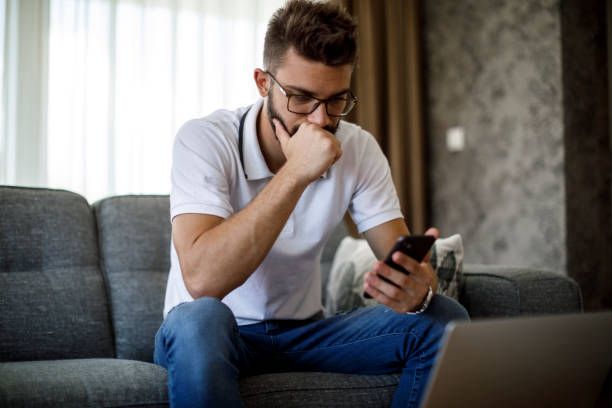
The Truth Marcus Left Behind
Tuesday started like every other quiet American morning and ended with my hand shaking over a laptop, my entire understanding of my life cracking open like an egg revealing something rotten inside. I was on my back deck in our neighborhood just outside Seattle, sitting in the weathered Adirondack chair I’d bought at Costco three years ago, holding a warm mug of coffee that had gone lukewarm while I’d been staring at nothing. The fog was peeling back from the Seattle skyline in the distance, that particular Pacific Northwest morning routine where gray gives way to gray-blue and you’re supposed to feel grateful for the gradual revelation of sky. Our cul-de-sac was still and perfect in that carefully maintained suburban way—lawns mowed to identical heights, driveways pressure-washed, decorative planters positioned with the precision of people who’ve never questioned whether conformity equals contentment.
Somewhere down the street, a sprinkler clicked on and off with mechanical regularity, that rhythmic tss-tss-tss that becomes white noise after enough mornings of hearing it. The HOA mailbox at the curb was stuffed with grocery store flyers and coupon booklets and credit card offers, the accumulated debris of consumer existence that I’d been meaning to sort through for days. I remember sitting there thinking about nothing more serious than my afternoon commute and whether Interstate 405 would be a parking lot again, whether I should leave early to avoid the worst of it, whether the podcast I’d been listening to had released a new episode yet.
These were the thoughts of a man who believed his life was settled, understood, safely contained within known boundaries.
Then the phone rang.
I almost didn’t answer. The number was unfamiliar, probably spam, probably someone wanting to discuss my car’s extended warranty or a fantastic investment opportunity I couldn’t afford to miss. But something made me swipe to accept—muscle memory, boredom, the same impulse that makes you open junk mail even though you know it’s junk.
“Thomas Brennan?” The voice was professional, carefully modulated, the voice of someone who delivers significant information for a living.
“Speaking.”
“This is Robert Hayes. I’m Marcus Chen’s attorney. I need you to come to my office today. It’s about Marcus.”
I sat down so fast the Adirondack chair scraped across the deck boards with a sound like a warning. “Marcus has been gone two months,” I said, my voice coming out strange and tight. “The will was already settled. We were at the reading. What else could there possibly be?”
“Exactly sixty days,” Robert replied with precision that suggested he’d been counting. “Marcus made me swear I wouldn’t hand this over until today. Until exactly sixty days after his death. He was very specific about the timing, Thomas. Very specific about everything, actually. Can you be here by eleven?”
I looked at my watch—9:47 AM. “I can be there. But Robert, what is this about?”
“I can’t discuss it over the phone. Marcus’s instructions were explicit. Just… come alone. Don’t bring Vanessa. Don’t tell her where you’re going. Just come.”
The line went dead before I could ask any of the thousand questions suddenly flooding my mind.
Marcus Chen had been my best friend for twenty-three years. We’d met as broke scholarship students at the University of Washington, two kids from working-class families who’d somehow gotten the golden ticket to a future that had seemed impossible from where we’d started. We’d been roommates in that terrible apartment in the U-District where the heat barely worked and we could hear every conversation through the paper-thin walls. We’d built our lives in parallel—him becoming a software engineer at Microsoft, me going into commercial real estate. We’d been best men at each other’s weddings, had stood together at the funerals of parents and dreams, had held each other up when the world got heavy in the way it does when you’re trying to build something meaningful from nothing.
Marcus was the person who never softened the truth just to make it easier to swallow. If you asked him a question, you got the real answer, not the comfortable answer. It was one of the things I loved about him and occasionally resented, because sometimes you want someone to tell you what you want to hear instead of what you need to know.
Two months ago, the pancreatic cancer that had been eating him from the inside finally won. He’d known it was coming for six months, had refused most treatment after the first brutal round of chemotherapy left him so sick he couldn’t function. “I’m not spending my last months poisoning myself to buy another few weeks,” he’d said with characteristic bluntness. “I’d rather have less time feeling like myself than more time feeling like death.”
So we’d spent those six months talking. Long conversations about life and regret and the things that matter when you know your time is finite. He’d gotten his affairs meticulously in order—Marcus approached dying the same way he approached everything, with systematic attention to detail. The will had been straightforward: his assets split between his sister in California and several charities he’d supported for years. There had been personal items distributed to friends. I’d received his collection of first-edition science fiction novels, books we’d bonded over in college, and his vintage Omega watch that he’d bought himself when he made his first six-figure salary.
I’d thought that was the end of it. The final accounting of a life, divided and distributed, grief parceled out in the form of objects that could never replace the person.
But apparently Marcus had one more thing to say.
Downtown Bellevue was bright in that clean, glass-and-steel way that makes grief feel out of place, like sorrow is too messy for these carefully designed spaces of commerce and efficiency. Robert Hayes’s office was on the eighteenth floor of a building overlooking Lake Washington, everything sleek and expensive in the way that successful attorneys cultivate to project competence and discretion. His secretary—a woman in her fifties with kind eyes and a professional smile—walked me through the reception area decorated with abstract art that probably cost more than my first car.
“Mr. Hayes is expecting you,” she said, gesturing to the heavy wooden door with his name in brass letters. “Can I get you anything? Water? Coffee?”
“I’m fine, thank you.”
Robert Hayes was in his early sixties, silver-haired and distinguished in the way of men who’ve spent decades navigating other people’s crises with calm authority. We’d met several times during Marcus’s final months, during the will preparation and estate planning sessions. He’d struck me as thorough, careful, someone who took his responsibilities seriously. Now he stood when I entered, coming around his desk to shake my hand with both of his—a gesture that suggested condolence and conspiracy simultaneously.
“Thomas. Thank you for coming on short notice. Please, sit.”
I sat in one of the leather chairs facing his desk, my hands gripping the armrests harder than necessary. “Robert, what is this about? What couldn’t wait for a phone call?”
He didn’t answer immediately. Instead, he walked to the wall behind his desk where a large landscape painting hung—one of those generic mountain scenes that populate professional offices. He swung it aside on hidden hinges, revealing a small wall safe. My stomach dropped in that way it does when you realize something is about to change and you can’t stop it.
“This isn’t part of Marcus’s official will,” Robert said as he worked the combination. “It’s something separate. Something he asked me to hold in strict confidence until exactly sixty days after his death.” He pulled out a manila envelope, standard legal size, with my name written across it in Marcus’s precise handwriting—the careful printing of someone who’d been trained as an engineer, every letter uniform and deliberate.
“Do you know what’s on it?” I asked, my voice sounding distant to my own ears.
Robert’s jaw tightened in a way that suggested he did know and didn’t want to. “Yes. Marcus showed me. It’s why I need you to hear me very carefully right now.” He set the envelope on the desk between us but didn’t push it toward me yet. “You need to watch this at home. Alone. Absolutely alone. Do not tell Vanessa you have it. Do not mention it to her. Do not give her any indication that you came here today. Watch it completely by yourself, in a private space where you won’t be interrupted. Then call me immediately after. Do you understand?”
My mouth had gone dry. “Why? What’s on it that I can’t tell my wife?”
“I can’t tell you that. Marcus was very specific—you need to see it yourself, form your own conclusions without anyone else’s interpretation. But Thomas, I need you to trust him one more time. Can you do that?”
I stared at the envelope. Marcus’s handwriting. Marcus’s final words, apparently. Marcus, who had never lied to me, never steered me wrong even when the truth was hard. “Yes. Okay.”
Robert handed me the envelope. Inside was a single USB drive, no letter, no explanation, just that small piece of plastic and metal containing whatever Marcus had thought was important enough to seal away for sixty days. “One more thing,” Robert said as I stood to leave. “After you watch it, you may want to take certain actions. Legal actions. If you do, call me. I’ve already done some preliminary work at Marcus’s request. There are things in place, waiting to be activated if needed.”
“What kind of things?”
“Watch the video first. Then we’ll talk.”
The drive home felt unreal in the way profound moments often do, like I was watching myself from outside my body, going through the motions while my mind spun in useless circles trying to anticipate what I was about to learn. Traffic flowed in its ordinary patterns around me—people sipping iced coffee at red lights, delivery trucks rolling past, a FedEx driver running packages to doorsteps, the normal Tuesday machinery of life continuing without permission or awareness that anything significant was happening. I merged onto 405, found myself in the left lane going exactly the speed limit, and realized my hands were shaking on the steering wheel.
Marcus and I had built our lives in that same kind of ordinary time, accumulating days and experiences until they added up to something that felt like stability. We’d gone from broke college students eating ramen and studying until 2 AM to successful professionals with mortgages and retirement accounts. We’d navigated the death of his father and my divorce from my first wife, Sarah, who’d decided after eight years of marriage that she’d married the wrong version of me and wanted to find herself with a yoga instructor named Devon. That divorce had hollowed me out in ways I hadn’t fully appreciated until it was over.
Vanessa had come into my life two years later, at a barbecue hosted by a mutual friend. She was ten years younger than me—thirty-four to my forty-four—beautiful in an effortless way that didn’t seem to require the constant maintenance some women invested in. She was a freelance marketing consultant, smart and funny, with a way of making a room feel warmer just by being in it. She listened without interrupting, laughed at the right moments, held my hand when I got quiet in that way I sometimes did when memories of Sarah ambushed me.
I’d told myself I wasn’t rushing into anything. That I was being careful. That loneliness can look like love if you stare at it long enough, and I was aware of that trap. But Vanessa had seemed genuine. Present. Interested in building something real.
We’d been married for eighteen months now. Eighteen months of what I’d thought was happiness, or at least contentment, which seemed like enough after the wreckage of my first marriage.
Marcus had been supportive but quiet about Vanessa. Not disapproving, exactly, but not enthusiastically endorsing either. Once, about six months before his diagnosis, we’d been having drinks at a bar in Fremont and he’d asked one of his careful questions, the kind he asked when he saw a crack in a foundation but wasn’t sure if he should point it out yet.
“Are you happy, Thomas? Really happy? Or are you just relieved not to be alone?”
I’d brushed it off. “I’m happy. She’s good for me. Why?”
He’d looked at his beer for a long moment before answering. “I don’t know. There’s something I can’t put my finger on. Maybe it’s nothing. Maybe I’m being paranoid. Just… keep your eyes open, okay?”
“My eyes are open.”
“Okay. Good. I hope I’m wrong.”
At the time, I’d filed it away as Marcus being overprotective, maybe projecting his own relationship issues—he’d been through a brutal divorce five years earlier and had stayed single since. But now, driving home with a USB drive containing his final message burning a hole in my pocket, that conversation replayed in my mind with new weight.
What had he seen that I’d missed?
When I pulled into our driveway, the house was empty. Vanessa had mentioned over breakfast that she was going to her Tuesday book club in Kirkland—a group of women she’d met through a Meetup group who got together weekly to discuss literary fiction I’d never heard of. She’d be gone until at least three, maybe later if they decided to grab lunch after.
I went straight to my study, the small room off the main hallway that I’d claimed as my home office. It still had boxes I hadn’t unpacked from the move, my desk cluttered with paperwork from work and unread books I kept meaning to get to. I closed the door, turned the lock, and sat down at my desk with the USB drive in my palm.
It was so small. Such an insignificant physical object to contain whatever truth Marcus thought was important enough to encrypt and time-release like a bomb with a sixty-day fuse.
I stared at it for a full minute, listening to the ambient sounds of the house—the hum of the refrigerator through the wall, the soft distant sound of a lawn mower outside, the creak of the house settling. Normal life running on its normal schedule, oblivious to the fact that something was about to crack open.
Then I plugged the drive into my laptop.
A single video file appeared. No other files, no documents, just one MP4 labeled “FOR THOMAS – WATCH ALONE.” I double-clicked it.
Marcus appeared on my screen, and my breath caught. This had been recorded recently, maybe only weeks before his death. He was dramatically thinner than I remembered, his cheeks hollow, his skin that particular gray-yellow that comes with liver failure. An oxygen tube ran under his nose, presumably connected to a portable concentrator just out of frame. He was in his bedroom at the hospice facility—I recognized the generic beige walls and utilitarian furniture. But despite the physical deterioration, his eyes were clear, sharp, focused. The same eyes that used to catch details everyone else missed, patterns in code that no one else saw, problems that needed solving before anyone else recognized they were problems.
He leaned closer to the camera, adjusting something, then settled back with visible effort. When he spoke, his voice was weak but steady, each word carefully measured.
“Thomas. If you’re watching this, I’m gone, and I need you to listen carefully. You need to trust me one more time.”
He paused, taking a slow breath through the oxygen tube. “I know this is going to be hard to hear. I debated for months whether to tell you at all. But I can’t let you walk into something blindfolded. You’re my best friend. You’ve been my brother in everything but blood for twenty-three years. So I’m going to tell you the truth, and I’m going to show you the evidence, and then you’re going to have to decide what to do with it.”
Another pause. He looked directly into the camera with an intensity that made my skin prickle. “Thomas, Vanessa is not who you think she is. She targeted you deliberately. Your marriage is a con.”
The words hit me like ice water. I reached for the spacebar to pause, but my hand froze. Marcus continued.
“I know how that sounds. I know you’re probably thinking I’m paranoid, that the medication is messing with my judgment, that dying makes people see conspiracies that aren’t there. So I’m going to show you exactly what I found, step by step, so you can verify every detail yourself.”
He shifted slightly, wincing with pain. “About eight months ago, I started getting suspicious. Little things that didn’t add up. Vanessa’s stories about her past were vague, inconsistent. She claimed to be a freelance marketing consultant, but I never saw evidence of actual clients or projects. Her online presence was surprisingly limited for someone supposedly in marketing. Her social media went back only about three years. Everything before that was just… absent.”
My heart was pounding now. I wanted to stop the video, to not hear this, to preserve the reality I thought I understood. But I couldn’t move.
“So I started looking,” Marcus said. “Carefully. Quietly. I hired a private investigator. What we found…” He shook his head slowly. “Thomas, her real name is Vanessa Hartley. She’s originally from Arizona. And she’s done this before. Three times before you.”
He clicked something off-screen, and the video cut to a different screen capture—what looked like a private investigator’s report. Marcus’s voice continued as narrator. “Her first marriage was to Robert Chen in Phoenix. No relation to me, different spelling. He was a widower, mid-forties, comfortable financially. They were married for two years. During that time, she systematically drained his accounts, took out credit cards in his name, and forged his signature on refinancing documents. By the time he figured it out, she’d disappeared with roughly $340,000. He filed charges, but she was gone. Changed her name, moved states.”
The screen changed to another report. “Second marriage was to David Pritchard in Denver. Same pattern. Widower, successful, lonely. She convinced him to put her name on bank accounts, to ‘invest’ in opportunities that turned out to be fronts she controlled. She cleared out $280,000 and vanished. This time David didn’t press charges—he was too embarrassed, too broken.”
Another screen. “Third was Jeffrey Moss in Portland, just three years ago. He was the closest pattern match to you—divorced, not widowed, but the same age range, same financial profile. She took him for $410,000 over eighteen months before he got suspicious and confronted her. She disappeared that night. By the time he could freeze accounts, she’d cleaned them out.”
The video cut back to Marcus in his hospice bed. “Thomas, you’re number four. The investigator tracked her movements, her pattern. She targets men who’ve lost someone, who are lonely, who have assets but aren’t particularly financially sophisticated. She builds trust slowly, gets access to accounts gradually, and then when the timing is right, she extracts everything and disappears.”
He leaned forward again, his voice dropping. “I confronted her. Six weeks before I died. I told her I knew what she was doing, that I had evidence, that if she didn’t leave you alone I’d go to the police. You know what she said?” Marcus’s expression was grim. “She said, ‘You’re dying. You’ll be gone in weeks. No one’s going to believe accusations from a man on morphine. And by the time Thomas figures anything out—if he ever does—I’ll be long gone with everything he has.'”
My hands were shaking so badly now I could barely keep them still. This couldn’t be true. This couldn’t be real. Vanessa was… she was my wife. She loved me. We were building a life together.
Weren’t we?
“I couldn’t tell you while I was alive,” Marcus continued. “She was watching too closely. Any warning would have tipped her off and she’d have accelerated her timeline. But I made arrangements. I’ve documented everything. Robert Hayes has the full investigator’s report. There are sworn statements from two of her previous husbands. There are financial records showing the pattern. Bank accounts she opened in your name that you don’t know about. Credit cards. Forged signatures on loan applications.”
He took another labored breath. “Thomas, check your accounts. All of them. Check what she has access to. I guarantee you’ll find discrepancies. Money moved, accounts drained, credit extended without your knowledge. She’s been working on you for eighteen months. She’s probably nearly ready to make her move.”
The video cut to another screen—a spreadsheet showing what looked like my own financial accounts, but with transactions I didn’t recognize. Withdrawals. Transfers. New accounts opened. It was dated from two weeks ago.
Marcus’s voice: “I got access to your accounts through the power of attorney you gave me when you thought I might need to handle things while you were traveling. I’m sorry for the invasion of privacy, but I needed proof. Look at the dates. Look at the amounts. Look at where the money’s going. Shell corporations that don’t exist. ‘Investment opportunities’ that are fronts. It’s all there.”
The video cut back to Marcus. He looked exhausted now, the effort of recording taking a visible toll. “I’m giving you a sixty-day delay because that’s how long Robert estimates it will take to get all the legal documentation in order. By the time you see this, everything will be ready. Robert has contacts with the FBI’s financial crimes unit. They’ve been briefed. They’re ready to move when you are.”
He paused, his expression softening. “Brother, I’m so sorry. I’m sorry I didn’t catch this earlier. I’m sorry I couldn’t protect you from this while I was still alive. I’m sorry you have to find out this way. But I couldn’t leave without giving you a chance to save yourself.”
Tears were running down his face now. “I love you, Thomas. You’re the best friend I ever had. You deserve so much better than this. Please, be smart. Don’t confront her directly. Don’t tip her off. Call Robert. Follow his instructions. Let the professionals handle this.”
He reached toward the camera. “And Thomas? Don’t blame yourself. These people are professionals at deception. They study their targets. They know exactly what to say, how to act, what vulnerabilities to exploit. You weren’t stupid. You were human. You were lonely. And she used that against you.”
The screen went black.
I sat staring at nothing, my mind completely blank, like a computer that’s crashed and can’t process new input. The house was silent around me. Outside, that lawn mower had stopped. The afternoon light slanted through the window at a different angle than it had when I’d started watching.
How long had I been sitting here?
I looked at the clock. 2:47 PM. Vanessa would be home in fifteen minutes or less.
With shaking hands, I ejected the USB drive and shoved it in my desk drawer under a stack of papers. Then I opened my laptop browser and logged into my bank account—the main checking account that held most of my liquid assets.
The balance was wrong. Significantly wrong. It should have been around $47,000. It showed $31,000.
I pulled up the transaction history. Transfers I didn’t recognize. On dates I didn’t remember making them. To account numbers I’d never seen before.
My heart was slamming against my ribs now. I opened my brokerage account. My retirement savings. The balance showed $156,000. It should have been closer to $220,000.
More transfers. More accounts I didn’t recognize. Withdrawals marked as “rebalancing” that I’d never authorized.
I opened my credit report—something I did annually but hadn’t checked in about eight months. Three new credit cards I’d never opened. All maxed out. Total debt: $94,000.
The room was spinning. I gripped the edge of my desk to steady myself.
My phone buzzed. A text from Vanessa: “Book club running late, probably another hour. Love you!”
Love you.
The words looked like a foreign language now, symbols whose meaning I’d forgotten.
I called Robert Hayes with hands that could barely hold the phone.
“Thomas?” His voice was careful. “Did you watch it?”
“I watched it.” My voice sounded hollow. “I just checked my accounts. Robert, she’s taken hundreds of thousands. I don’t even know the full extent yet.”
“I know. Marcus’s investigator documented most of it. Thomas, listen to me very carefully. Do not confront her. Do not let on that you know anything. We need to move fast, but we need to move smart. Can you act normal when she gets home?”
“I don’t know. I don’t know if I can be in the same room with her.”
“You have to. Just for tonight. Just until we can get everything in place. Tomorrow morning, nine AM, my office. I’ll have the FBI there. We’ll have agents ready to move. But tonight, you act like nothing is wrong. Can you do that?”
Could I? Could I sit across the dinner table from her, talk about her book club, pretend I didn’t know that every smile was a lie, every “I love you” was part of a script she’d used on three other men before me?
“I’ll try.”
“Thomas, I’m serious. If she suspects you know, she’ll run. Tonight. And she’ll drain whatever she hasn’t already taken. We need one more night of her thinking she’s safe. One more night of normal. Can you give me that?”
“Yes. Okay. Yes.”
“Good. I’ll see you at nine tomorrow. Don’t bring anything. Don’t take any documents from the house. Just come. We’ll handle everything.”
After I hung up, I sat in my study for another ten minutes, trying to compose my face, trying to remember how to look like a man whose world hadn’t just shattered. I washed my face in the bathroom, stared at myself in the mirror—when had I gotten so old? So tired? So blind?
Vanessa came home at 3:45. I heard her car in the driveway, her key in the lock, her voice calling out cheerfully, “Honey? I’m home!”
I walked out of my study, and there she was. Beautiful. Smiling. My wife. A stranger I’d been sleeping next to for eighteen months who’d been systematically destroying my financial life while I was too infatuated or too stupid or too desperate not to be alone to notice.
“Hey!” She came over and kissed me, her lips warm, her hands on my shoulders. “How was your day?”
“Fine. Quiet. Worked from home. How was book club?”
“Oh my God, so good. We’re reading this incredible novel about a woman who reinvents herself after leaving an abusive marriage. Really powerful stuff. Made me grateful for what we have, you know?” She squeezed my hand. “I’m so lucky I found you.”
Every word was poison. Every gesture was performance. But I smiled and nodded and asked about the other women in her book club—fictional women, probably, just like everything else about her.
We made dinner together. Pasta, salad, wine. She talked about a potential new client, some startup that needed marketing consulting. I made appropriate sounds of interest while my mind screamed.
We watched TV. Some crime procedural where the detectives always caught the bad guy in forty-two minutes. She leaned against me on the couch, her head on my shoulder, and I had to physically resist the urge to shove her away.
At ten, we went to bed. She kissed me goodnight and fell asleep within minutes, her breathing slow and even, the sleep of someone without guilt or conscience.
I lay awake until almost three, staring at the ceiling, replaying every moment of our relationship through the new lens Marcus had given me. How had I missed it? How had I been so blind?
But I knew how. I’d been lonely. I’d been damaged from my divorce. I’d been eager to believe that someone could love me again. And she’d known exactly how to exploit all of that.
At 8:45 the next morning, I told Vanessa I had an early meeting downtown. She barely looked up from her coffee and laptop. “Okay, babe. Have a good day.”
Robert’s office was fuller than yesterday. Four people waited in his conference room—Robert, two FBI agents in dark suits, and a woman who introduced herself as a forensic accountant.
They laid it all out over two hours. The full scope of Vanessa’s—or whatever her real name was—operation. She’d taken $387,000 from me so far. She’d opened accounts in my name, taken out loans, maxed out credit cards, forged my signature on refinancing documents for the house. She’d been planning to disappear within the next two weeks, once she’d extracted everything she could.
The FBI had been tracking her for eighteen months, since Jeffrey Moss had finally pressed charges. But she’d been careful, always staying just ahead of them. Marcus’s evidence was the break they’d needed.
“We’re going to arrest her this afternoon,” the senior agent said. “We have a warrant for her arrest, warrants to search your home and seize her computer and documents. We’ll need you to stay somewhere else for a few days while we process everything. Do you have somewhere you can go?”
“Yes. My brother’s place.”
“Good. Mr. Hayes will help you begin the process of recovering what can be recovered. I won’t lie to you—you won’t get everything back. She’s spent or moved a lot of it. But we’ll do what we can.”
At 3:00 PM, from my brother’s apartment across town, I got the call that Vanessa had been arrested. She’d been home when the agents arrived, apparently packing—Robert had been right about her timeline. She’d tried to run out the back door but was caught in the yard.
The trial took eight months. Vanessa—real name Vanessa Hartley, age thirty-seven, with a criminal history going back fifteen years under five different names—was convicted on nineteen counts of fraud, identity theft, and money laundering. She got twelve years in federal prison.
I eventually recovered about $140,000 of what she’d taken—the rest was gone, spent or hidden in accounts we couldn’t trace. I sold the house because I couldn’t stand to live in it anymore. Moved to a smaller place in Fremont. Started therapy to process the betrayal and my own culpability in not seeing it.
But mostly, I thought about Marcus. About his final gift to me. About him using his last weeks, when he should have been resting, making peace, letting go—instead spending that time investigating, documenting, protecting me from a threat I’d been too blind to see.
About a year after Vanessa’s conviction, I went to Marcus’s grave. It was a quiet cemetery in Kirkland, overlooking the lake. His headstone was simple: “Marcus Chen. Friend, Brother, Engineer. He Saw What Others Missed.”
I sat on the grass next to his grave for a long time, not really saying anything, just being there. Finally, I spoke out loud, feeling ridiculous but needing to say it anyway.
“Thank you. Thank you for seeing her when I couldn’t. Thank you for not giving up on me even when you were dying. Thank you for loving me enough to tell me the hardest truth I ever had to hear. You saved my life, Marcus. One more time.”
The wind moved through the trees. A bird called from somewhere nearby. The lake glittered in the distance. And I could almost hear Marcus’s voice, that dry tone he used when stating obvious truths: “That’s what brothers do, Thomas. That’s what brothers do.”
I’m older now. Warier. I date occasionally but keep people at a distance, maybe too much distance. I’m still working through the aftermath of what Vanessa did, the financial damage and the deeper damage to my ability to trust.
But I’m alive. My life is my own. I didn’t lose everything.
Because sixty days after his death, from beyond the grave, Marcus Chen reached back and saved me one last time.
THE END

Adrian Hawthorne is a celebrated author and dedicated archivist who finds inspiration in the hidden stories of the past. Educated at Oxford, he now works at the National Archives, where preserving history fuels his evocative writing. Balancing archival precision with creative storytelling, Adrian founded the Hawthorne Institute of Literary Arts to mentor emerging writers and honor the timeless art of narrative.