The Lake House We Finally Earned
We bought the house by the lake on a Tuesday in late September, when the leaves were just beginning to turn and the summer crowds had already packed up their boats and their noise and returned to wherever people go when the season ends. It wasn’t a grand house—not the kind you’d see featured in magazines or envied from the road—but it was ours in a way that mattered more than square footage or granite countertops ever could.
After forty-three years of marriage, thirty-seven years of raising children, and countless holidays spent hosting, cleaning, cooking, and smiling through exhaustion, Henry and I had finally done something just for us. We’d bought a place where we could wake up to the sound of water lapping against the dock instead of alarm clocks. Where we could drink our coffee on a porch that overlooked something beautiful instead of a neighbor’s fence. Where we could be quiet together without feeling guilty about it.
My name is Margaret, though most people call me Maggie. I’m sixty-eight years old, a retired elementary school teacher with hands that still smell faintly of chalk and patience. Henry is seventy-one, a former contractor whose back complains more than it used to but whose mind is still sharp as the tools he used to carry. We’d spent our entire adult lives building something for other people—a home for our children, a business that employed neighbors, a life that looked successful from the outside because we’d worked ourselves thin to make it so.
And now, finally, we were building something for us.
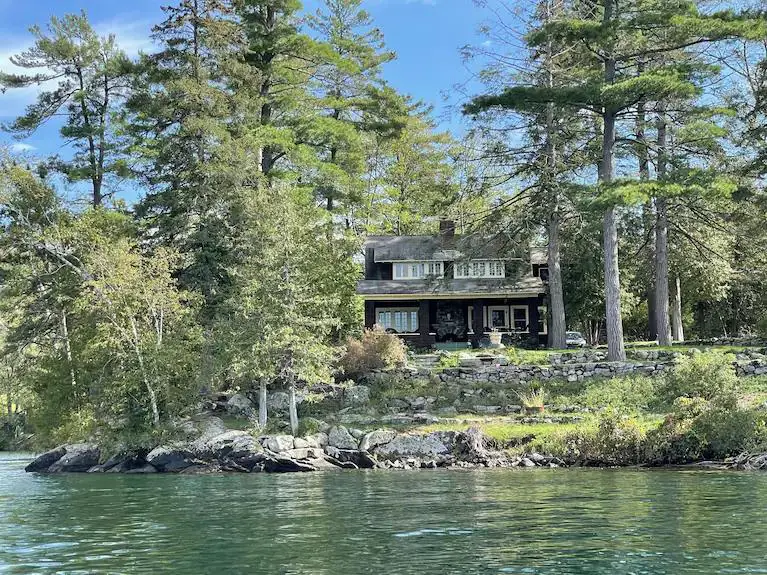
The lake house sat at the end of a gravel road that wound through pine trees and past a handful of other cottages, most of them seasonal, most of them empty now that autumn had arrived. It was a modest two-bedroom cottage with cedar siding that had weathered to a soft gray, a stone fireplace that still smelled faintly of smoke from previous owners, and windows that faced the water from almost every room.
The realtor had called it “cozy.” Henry called it “manageable.” I called it perfect.
We’d closed on the property that morning, signed the papers in a lawyer’s office that smelled like old books and furniture polish, and driven straight here with a borrowed truck full of boxes we’d been packing for weeks. Essential things only—clothes, books, kitchen supplies, the quilts my grandmother had made, photographs that meant something.
The plan was simple: spend the fall settling in, the winter learning how the house breathed and settled, the spring planting a garden by the shore. We’d host our children for holidays if they wanted to come, but on our terms, in our time, without the assumption that our space was automatically their space whenever they decided they needed it.
It was a boundary we’d never successfully set before. But this house, we’d agreed, would be different.
Henry carried boxes with the careful determination of a man who’d learned to pace himself, setting them down in rooms we hadn’t quite figured out yet. I moved through the space with a dishcloth and a sense of purpose, wiping down counters, opening windows to let the lake air chase out the closed-up smell.
The afternoon light came through the windows in golden slants, catching dust motes and making the old hardwood floors glow warm. Outside, the lake was so still it looked like glass, reflecting the trees and the sky in perfect mirror image. A loon called somewhere in the distance, that haunting sound that belongs only to wild places and quiet moments.
I set my coffee mug on the kitchen counter—we’d unpacked the coffee maker first, priorities being what they were—and stood looking out at the water, feeling something unfamiliar settle in my chest.
Peace. Actual, genuine peace.
Then my phone rang.
I almost didn’t answer. We’d told our children we’d be unreachable for the first few days, that we needed time to settle, that we’d call them once we were ready. But the screen showed Laura’s name—my daughter-in-law, married to our oldest son Marcus for the past eight years—and some outdated instinct made me pick up.
“Hello?”
“Margaret! Perfect timing. I’m so glad I caught you.” Laura’s voice came through bright and energetic in that way that always made me slightly tired. Everything with Laura was enthusiastic, fast-paced, organized with the efficiency of someone who’d never learned that not everything needed to be scheduled.
“Hi, Laura. We’re just settling into the new place—”
“I know, Marcus told me! That’s actually why I’m calling. We’re all so excited about the lake house. It’s going to be perfect for family gatherings.”
Something in her tone made my fingers tighten on the phone. “Well, eventually, yes. We’re thinking maybe next summer we could host a weekend—”
“Oh, we’re not waiting that long,” she interrupted, laughing like I’d made a joke. “I’ve already organized everything. Tomorrow morning, nine a.m., we’ll be there. I’m bringing my parents, my brother and his wife, their three kids, my sister and her family—that’s her husband and their four children—my aunt Carol, and a few cousins. Everyone’s so excited to see the new place!”
I stood very still, watching the lake through the window, but no longer seeing it.
“Laura,” I said carefully, “that sounds like… how many people exactly?”
“Twenty!” she said proudly. “I know, it’s a lot, but it’ll be so fun. Like a family reunion. We’re planning to stay for two weeks. Don’t worry about food or anything—I made a whole meal plan. I’ll just need you to pick up the groceries. I’ll text you the list tonight. Oh, and make sure the rooms are ready. The kids will need to double up, obviously, but I figured you and Henry won’t mind giving up the master bedroom since Marcus and I will need the space for our things.”
The words kept coming, rolling over me like a wave I hadn’t seen approaching. She was talking about room assignments now, about activities she’d planned, about how Travis—her brother—was bringing his dog and we’d need to make sure the yard was fenced.
I looked at Henry, who’d stopped unpacking and was watching me with growing concern. He could hear Laura’s voice through the phone, that particular pitch and pace that meant she was in full organizational mode, a freight train of enthusiasm with no brake system.
“Laura,” I tried again, “we literally just arrived today. We haven’t even unpacked our own things yet. This is not a good time—”
“Exactly!” she said brightly. “You’re already there, so you’re all settled. You don’t need all that space for just the two of you anyway. This is perfect. Family helps family, right? That’s what you always say.”
She’d used my own words, the ones I’d repeated for years when I was the one showing up early to help with grandchildren, the one clearing my schedule when they needed childcare, the one saying yes because that’s what mothers and grandmothers did.
Now those words were being fed back to me like a contract I’d signed without reading the fine print.
“Oh, and Margaret?” Laura continued, barely pausing for breath. “The kids are really into water sports right now, so if you could look into renting some kayaks or maybe a jet ski, that would be amazing. I’ll Venmo you for half.”
Half. For equipment to entertain her family at our house that we’d owned for less than twelve hours.
“Laura, I need to talk to Marcus—”
“He’s at work, but he’s totally on board. He said you’d be thrilled to have everyone. Look, I have to run—conference call in five—but we’ll see you tomorrow at nine! Get some rest tonight, it’s going to be a busy two weeks!”
She hung up before I could respond.
I stood in my new kitchen, in my new house, in the peaceful sanctuary Henry and I had spent forty-three years earning, holding a phone that had just been used to turn all of that into someone else’s vacation resort.
Henry was beside me now, his hand warm on my shoulder. “What did she say?”
I told him. All of it. The twenty people, the two weeks, the room assignments that included our bedroom, the grocery list that would arrive by text, the expectation that we’d not only host but fund and organize entertainment for an invasion we hadn’t invited.
Henry’s jaw tightened in that particular way it did when he was working very hard to stay calm. “Did she ask? Or did she tell?”
“She told,” I said quietly. “She announced it like it was already decided. Like we don’t get a say in what happens in our own home.”
We stood there together, looking out at the lake that was supposed to represent our freedom, our earned rest, our finally-just-for-us space. The loon called again, that wild lonely sound, and I felt something shift inside me.
I’d spent so much of my life saying yes. Yes to hosting holidays. Yes to babysitting on short notice. Yes to changing my plans to accommodate other people’s schedules. Yes to being flexible, accommodating, understanding. Yes to prioritizing everyone else’s comfort over my own needs.
I’d said yes so many times that people had stopped asking. They just assumed. They just announced. They just showed up.
Not this time.
Henry pulled out a small notebook from his shirt pocket—he always carried one, a habit from his contracting days when he needed to track measurements and materials. He set it on the counter and pushed it toward me, then handed me a pen.
“We’ve got about twenty hours,” he said calmly. “Let’s make a plan.”
I picked up the pen, and together we started writing.
We didn’t write in anger. We didn’t write in spite. We wrote with the clarity that comes when you’ve finally had enough, when a line gets crossed that you didn’t even know you’d drawn until someone stepped over it.
Henry made calls. I made lists. We worked through the evening with the methodical precision of two people who’d learned long ago how to manage complex projects, except this time the project was protecting our own peace.
By midnight, everything was arranged.
I texted Marcus, not Laura. Told him we needed to talk in the morning before anyone arrived. He responded immediately, confused, saying Laura had already organized everything and everyone was excited.
I replied: “Nine a.m. You and Laura only. We need to discuss some things before anyone else comes.”
He sent back a thumbs up emoji, probably assuming we wanted to go over logistics.
I slept better that night than I had in months.
The next morning, Henry and I were up at six. We made coffee, scrambled some eggs, and sat on the porch watching the mist rise off the lake. The air was cool and clean, the morning absolutely still except for the occasional bird call and the gentle lap of water against our dock.
“You ready?” Henry asked, his hand finding mine.
“I’ve been ready for forty years,” I said. “I just didn’t know it.”
At exactly nine a.m., we heard the crunch of gravel. Not one car, but five, pulling up our driveway in a convoy that suggested military precision. Doors started opening, voices carrying across the yard, children already running despite probably being told not to.
Laura emerged from the lead vehicle looking like she was arriving at a resort—oversized sunglasses, expensive athleisure wear, a rolling suitcase that suggested she’d packed for a month rather than two weeks. Marcus climbed out of the driver’s seat looking tired in the way young fathers often do, hauling bags while trying to corral a six-year-old who was already making a break for the lake.
Behind them, the other vehicles were disgorging people and luggage and noise. Laura’s parents, looking confused but game. Her siblings and their various spouses and children, ranging from toddler to teenager. Someone’s dog—a large golden retriever who immediately started investigating our unfenced yard.
Laura spotted us on the porch and waved enthusiastically. “We made it! And we’re right on time. I told everyone nine sharp.”
She started walking toward the house like she owned it, her family following like ducklings, already discussing room assignments and who wanted to go swimming first.
Henry and I stood up. We didn’t move off the porch.
“Marcus, Laura,” I called out, my voice carrying clearly across the yard. “Come here, please. Just you two.”
Laura’s smile faltered slightly. “But everyone’s here, we should get them settled—”
“Just you two,” Henry repeated, his contractor voice emerging—the one that had managed crews and didn’t accept negotiation on safety protocols.
Marcus and Laura exchanged a glance, then walked over while the rest of the family milled around the cars, uncertain.
“What’s going on?” Marcus asked, looking between us. “Everyone’s kind of waiting…”
I handed him a piece of paper. “This is a copy of the property deed. You’ll notice both of our names on it. This is our house, not a family vacation property.”
Laura laughed nervously. “Well, obviously, but family shares—”
“This is also,” Henry interrupted, handing her another paper, “a copy of the text Laura sent yesterday, announcing—not asking, announcing—that twenty people would be arriving today to stay for two weeks in a house we’ve owned for less than twenty-four hours.”
“I thought you’d be happy to have everyone—” Laura started.
“You didn’t think about what we’d be happy with,” I said quietly. “You thought about what you wanted and assumed we’d comply. That’s not how this works anymore.”
Marcus was reading the papers, his face cycling through confusion and dawning realization. “Mom, I thought you knew they were coming. Laura said she’d talked to you—”
“She talked at me,” I corrected. “She announced plans and hung up before I could respond. That’s not the same as asking permission.”
Laura’s face was reddening, her voice rising. “This is ridiculous. We’re family. You’re being incredibly rude to everyone who drove all this way—”
“You’re absolutely right,” Henry said calmly. “It would be rude to make people drive all this way under false pretenses. Which is why we’ve handled that situation.”
He pointed to the driveway, where a small bus was pulling up—one of those charter vehicles you can rent for events. The driver stepped out, clipboard in hand.
“What is that?” Laura demanded.
“That,” I said, “is transportation to the Lakeview Resort, about twenty miles from here. I called them yesterday. They have a group rate for families. They have twenty rooms available. They have a pool, a playground, water sports equipment, and a restaurant so no one has to cook. I’ve paid for three nights. After that, you can decide if you want to extend your stay on your own dime, or if perhaps two weeks was longer than anyone actually wanted to commit to a family vacation.”
Laura’s mouth opened and closed without sound. Marcus looked stunned.
“You’re kicking us out?” he finally managed.
“You were never invited in,” Henry said gently but firmly. “You can’t kick someone out of a place they were never welcomed into. We love you, Marcus. We love our grandchildren. But we will not be steamrolled in our own home.”
“I cannot believe how selfish you’re being,” Laura said, her voice shaking with anger or tears or both. “All we wanted was to celebrate your new house with you—”
“No,” I interrupted. “You wanted to use our new house for a free vacation. There’s a difference. If you wanted to celebrate with us, you would have asked when would be convenient. You would have suggested a weekend, not two weeks. You would have offered to stay at a hotel. You would have treated us like people whose time and space and plans mattered.”
I pulled out one more paper and handed it to Marcus.
“This is a calendar,” I said. “On it, I’ve marked a weekend in June when we would genuinely love to have you, Laura, and the kids come stay. Just your immediate family. For three days. We’ll plan it together, we’ll make it special, and we’ll all enjoy it because it will be done with mutual respect.”
Marcus took the paper, his hands shaking slightly. “Mom, I didn’t know she’d—I mean, I thought you were okay with—”
“I know,” I said more gently. “And that’s partly my fault. I’ve been ‘okay with’ things for so long that everyone assumed I always would be. But that stops today.”
Laura was looking at the bus, at her family standing confused in the driveway, at the situation spiraling away from her control. “You’re really going to send everyone away? My parents, my siblings, the children?”
“I’m going to honor the arrangements they thought they were making,” I said. “Laura, you told them they were coming to the lake for a vacation. They are. Just not at our expense and not in our home without our invitation.”
Henry walked down to talk to the bus driver, then to Laura’s family, explaining the situation calmly. I watched various reactions cross various faces—embarrassment from Laura’s mother, irritation from her brother, confusion from the kids.
But notably, no one seemed surprised that this had been sprung on us. Which meant Laura had probably pulled similar maneuvers before, just with other people.
It took forty-five minutes to get everyone loaded onto the bus. The kids were excited about the pool at the resort, which helped. Laura’s parents apologized to me, quietly, looking mortified. Her brother just shrugged and said, “Sounds like a nice resort, actually.”
Laura herself was silent, staring at me with something between betrayal and shock.
Marcus lingered after everyone else had boarded. “Mom, I’m sorry. I should have asked you directly instead of just going along with Laura’s plan.”
“Yes,” I agreed. “You should have. You’re forty-five years old, Marcus. Old enough to ask instead of assume.”
“Are we okay?” he asked quietly.
“We will be,” I said. “But things are going to be different from now on. Your father and I have earned this space. We love being grandparents, we love seeing you, but we’re not a free hotel and we’re not available on demand. If you can respect that, we’ll be more than okay.”
He nodded, hugged me briefly, and climbed onto the bus.
Laura didn’t get off to say goodbye.
Henry and I stood in the driveway, watching the bus pull away, listening to the gravel crunch and then the silence that followed as the sound faded down the road.
Then we turned and looked at our house. Our quiet, peaceful, still-mostly-unpacked house.
“Well,” Henry said. “That went better than I expected.”
I laughed, surprising myself. “Really?”
“Nobody cried. Well, except maybe Laura. And nobody yelled. I call that a win.”
We walked back inside, poured fresh coffee, and returned to the porch. The lake was still there, exactly as we’d left it. Still and reflective and ours.
My phone buzzed an hour later. A text from Marcus: “Just checked into the resort. It’s really nice actually. Laura’s mom says thanks for booking it. Sorry again, Mom. Love you.”
Another text came through twenty minutes after that, from a number I didn’t recognize at first. Then I realized it was Laura’s mother: “Margaret, I’m mortified. I had no idea Laura hadn’t cleared this with you. Thank you for handling it gracefully. Enjoy your beautiful home. You’ve earned it.”
I showed the texts to Henry, who smiled. “See? Reasonable people exist.”
Laura herself didn’t text. Didn’t call. The silence from her was loud, and I was okay with it.
Over the next few days, we fell into the rhythm we’d imagined when we bought the place. We unpacked slowly, taking breaks to sit on the porch or walk along the shore. We drove into the small town nearby and introduced ourselves at the general store, the library, the diner where locals gathered for breakfast.
We were becoming part of the landscape instead of visitors to it.
A week later, Marcus called. “Hey, Mom. Can I come by myself this weekend? Just me, Saturday morning to Sunday afternoon? I’d like to help you unpack some stuff and just… talk.”
“I’d love that,” I said, and meant it.
He came alone, as promised, arriving with bakery donuts and an apology that felt more genuine than his rushed words in the driveway had been.
“I’ve been thinking a lot,” he said as we sat on the porch with coffee and donuts, watching a family of ducks paddle past. “About how we—how I—have been taking you and Dad for granted. Using ‘family’ as an excuse to not have boundaries.”
“It’s easy to do,” I said. “Especially when the people you’re taking advantage of keep saying yes.”
“You’ve been saying no more though,” he observed. “Not just with this. Laura mentioned you said no to watching the kids last month when we wanted to go to that concert.”
“I had plans,” I said simply. “Book club. I’d been looking forward to it.”
“And you should get to do that,” Marcus said. “I should have asked earlier, or found another sitter, or just not gone. It wasn’t your responsibility.”
We talked for hours that day. Real talk, not the surface conversation of holiday dinners and quick phone calls. He told me about the pressure he felt to keep Laura happy, to meet her expectations of what their life should look like. I told him about the years of saying yes until I’d forgotten how to say no, and how buying this house had somehow given me permission to redraw lines I’d let get erased.
“Is Laura okay?” I asked eventually, because despite everything, I didn’t want her to be hurting.
Marcus sighed. “She’s embarrassed. Angry at herself more than at you, I think, though she won’t admit that yet. Her mom had some words with her about the whole thing. About assuming rather than asking, about treating your home like a vacation rental.”
“I don’t hate her,” I said carefully. “I just can’t let her run over me anymore.”
“I know,” Marcus said. “And honestly? I think this was good for her. For both of us. We’ve gotten lazy about boundaries because you’ve always been so accommodating.”
Before he left Sunday afternoon, he helped Henry install a small gate at the end of the driveway. Not locked, just a simple wooden gate that clearly marked private property.
“So people know to ask before pulling in,” Henry explained.
Marcus nodded. “Good idea.”
Three weeks later, I received a handwritten letter in the mail. Laura’s handwriting, careful and a little shaky.
Dear Margaret,
I’ve been trying to write this letter for weeks and kept throwing away drafts because I couldn’t figure out how to say what I needed to say without sounding like I was making excuses.
So I’ll just say it: I’m sorry. You were right. I was treating your home like it was mine to manage, your time like it was mine to schedule, your life like it was there to support mine. I told myself I was being helpful, organizing family time, bringing everyone together. But really, I was being controlling and presumptuous.
My mother pointed out that I did the same thing to my parents last year—announced a visit without really asking if it was convenient, then got hurt when they seemed less than thrilled to have us. I didn’t see the pattern until she spelled it out.
I think I’ve been so focused on creating the perfect family gatherings that I forgot to treat the actual family members with respect.
I’m working on it. Marcus and I are working on it together. And I hope that eventually, when you’re ready, we can visit your lake house the right way—by asking first, by respecting your answer, and by remembering that it’s your sanctuary, not our vacation property.
Thank you for setting a boundary. I hated it in the moment, but I needed it.
With respect and apology, Laura
I read the letter twice, then showed it to Henry.
“She’s learning,” he said.
“We all are,” I replied.
I wrote back, keeping it short: Thank you for the letter. Apology accepted. We’re looking forward to June, if you still want to come. Just your family, three days, and we’ll make it wonderful together.
She responded with a single text: We’ll be there. And Margaret? Thank you.
June came with warm days and cool nights, with the lake turning from gray to blue-green and the trees filling in with leaves that filtered the sunlight into dancing shadows.
Marcus, Laura, and our two grandchildren arrived on a Friday evening, bags packed for exactly three days, having called ahead to confirm the time was still good for us.
The weekend was lovely. Not perfect—the kids fought over the kayak, Laura got a little controlling about meal timing before catching herself and apologizing—but real. Genuine. Built on respect rather than assumption.
When they left Sunday afternoon, Laura hugged me at the door. “Thank you for having us. Your home is beautiful.”
“Thank you for asking to come,” I said, and I meant it.
After they left, Henry and I sat on the porch in our usual spots, watching the sun set over water that had become as familiar to us as our own heartbeats.
“You know what I realized?” I said.
“What’s that?”
“We could have done this years ago. Set boundaries, said no, demanded respect. We didn’t need the lake house to do it.”
“No,” Henry agreed. “But maybe we needed it as a symbol. A line in the sand. This far and no further.”
“This far and no further,” I repeated, liking the sound of it.
Over the next year, we settled into our life by the lake. We hosted our children occasionally, always by invitation, always with clear start and end times. We said no to requests that didn’t work for us, and yes to ones that did, and found that the world didn’t end when we prioritized our own peace.
We made friends in the small town—other retirees who’d escaped to quieter lives, younger families who’d chosen small-town living over city chaos. We joined a book club, volunteered at the library, became regulars at the Saturday farmer’s market.
We became people again, not just roles. Not just Mom and Dad, Grandma and Grandpa, the accommodating ones who always had room and time and resources for everyone else.
We became Maggie and Henry, people who’d earned their peace and were finally brave enough to claim it.
One evening in late summer, sitting on the porch in the golden light that came just before sunset, I thought about that morning when Laura had called. When twenty people had shown up expecting to take over our home and our lives without asking.
I thought about the bus we’d chartered, the boundary we’d set, the cascade of changes that had followed.
“Do you ever regret it?” I asked Henry. “How we handled that first day?”
He was quiet for a moment, considering. “I regret that it had to happen. I regret that we’d let things get to a point where such a dramatic statement was necessary. But do I regret making the statement itself? Not for a second.”
“Me neither,” I said.
The loon called across the water, that wild lonely beautiful sound. The lake reflected the sky in perfect stillness. Our house—our sanctuary, our earned reward, our finally-just-for-us space—glowed warm with lights we’d chosen and placed ourselves.
We’d spent forty-three years building a life for other people.
And now, finally, we were living one for ourselves.
THE END

Lila Hart is a dedicated Digital Archivist and Research Specialist with a keen eye for preserving and curating meaningful content. At TheArchivists, she specializes in organizing and managing digital archives, ensuring that valuable stories and historical moments are accessible for generations to come.
Lila earned her degree in History and Archival Studies from the University of Edinburgh, where she cultivated her passion for documenting the past and preserving cultural heritage. Her expertise lies in combining traditional archival techniques with modern digital tools, allowing her to create comprehensive and engaging collections that resonate with audiences worldwide.
At TheArchivists, Lila is known for her meticulous attention to detail and her ability to uncover hidden gems within extensive archives. Her work is praised for its depth, authenticity, and contribution to the preservation of knowledge in the digital age.
Driven by a commitment to preserving stories that matter, Lila is passionate about exploring the intersection of history and technology. Her goal is to ensure that every piece of content she handles reflects the richness of human experiences and remains a source of inspiration for years to come.