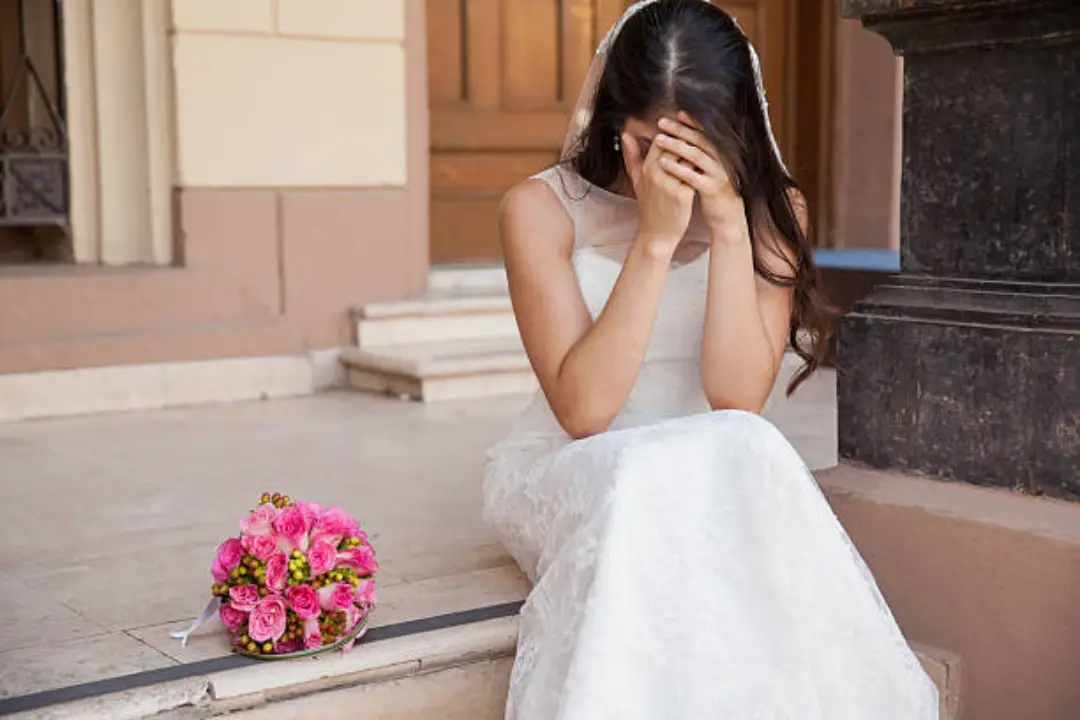
At My Sister’s Wedding, She Laughed and Said “Waste Good Food on You?”—Then the CEO Stood Up
The chandeliers were throwing light everywhere like diamonds someone had tossed in the air. Everything sparkled—the champagne flutes, the sequined dresses, the polished marble floor that probably cost more than my car.
I sat in the back corner of the ballroom, tucked behind a massive pillar, staring at my empty table.
No centerpiece. No folded napkins shaped like swans. No gleaming silverware. Just a bare tablecloth, a single empty plate, and me.
Around me, waiters glided between tables loaded with food, filling wine glasses, setting down bread baskets. Guests laughed and clinked glasses. The string quartet played something romantic and sweet.
My table got nothing.
I watched my sister Brooke work the room in her white dress, veil floating behind her like she’d captured a cloud. She looked perfect. She always did.
Then she saw me.
Her smile changed—went from bright to sharp in half a second. She detached from her bridesmaids and walked over, perfume hitting me before her voice did.
She leaned down, close enough that nearby guests could hear.
“You really thought I’d waste the good food on you?” Her teeth were showing in that bridal smile. “That’s adorable.”
My throat went tight.
“You can drop your gift off and head home,” she added. “No need to hang around.”
I didn’t say anything. I looked past her, searching for my parents.
My mother stood a few feet away in her lavender dress, suddenly fascinated by the flower arrangement. My father adjusted his cufflinks and took a long sip of wine, eyes anywhere but on me.
For one crazy second, I thought maybe one of them would step in. Say something. Anything.
Instead, my father muttered into his glass, “Well… maybe she should go.”
That was it.
No drama. No thunderclap. Just a casual sentence that landed like a verdict.
Something inside me went very still.
I stood up slowly. The chair scraped against the floor, louder than it should’ve been.
“Okay,” I said, my voice calm. “I’ll go.”
Brooke’s smile brightened. She thought she’d won.
But I wasn’t finished.
I straightened my navy dress—I’d chosen it because it felt like armor—and looked my sister directly in the eyes.
“You will regret this,” I said quietly. “All of you will.”
A ripple moved through the room. Heads turned. Conversations stopped.
Then a chair scraped from somewhere near the front.
I turned.
A tall man in a slate-gray suit had stood up. Dark hair, sharp eyes, jaw set.
“I care,” he said.
His voice cut through the noise like a knife.
Brooke blinked. “I’m sorry, who are you?”
He stepped forward, hands in his pockets. “Grant. Lucas’s brother.”
Lucas—the groom—went stiff at the head table, fingers tightening around his champagne glass.
Grant’s gaze moved from Brooke to my parents, then back to me. There was something like apology in his eyes.
“I’ve kept quiet because I didn’t want to ruin your day,” he said. “But it looks like that ship sailed without my help.”
Nervous laughter rippled through the crowd, then died.
He turned to address the room.
“Since we’re all so invested in appearances today, maybe it’s time we tear a few down.”
Brooke let out a brittle laugh. “This is wildly inappropriate. Security—”
“Lucas,” Grant interrupted calmly. “Tell her.”
Lucas’s face had gone pale. “Grant. Not now.”
Grant ignored him. His eyes were on Brooke.
“You think you’re marrying into a dynasty. You think my father’s company is some endless fountain of wealth.”
He paused.
“Our father’s company filed for bankruptcy six months ago. It’s gone. And this man”—he jerked his head at Lucas—”has been unemployed that entire time.”
The silence that followed was full of tiny sounds. Glass clinking. Fabric rustling. Gasps pulled in and not released.
Brooke stared at Lucas like she was waiting for the punchline.
“What?” she whispered. “He’s lying. Tell me he’s lying.”
Lucas’s jaw worked. “I never said I was unemployed. I’m between roles. It’s a transition.”
“You implied you were taking over,” she shot back, voice rising. “You said—”
“You heard what you wanted to hear, Brooke,” he cut in.
Grant snorted. “He also didn’t tell you whose name is on the condo lease. And whose number is on the debt collectors’ lists.”
A murmur moved through the room.
Brooke’s breath hitched. “My condo. You told me your parents—”
“Didn’t have the credit anymore,” Grant supplied. “He left that part out.”
My parents had gone completely still. My mother’s hand trembled around her wine glass. My father’s face flushed dark.
Then another voice cut through the chaos. Older, deeper.
“That’s enough.”
Everyone turned.
Mr. Dalton stood slowly, adjusting his jacket. Silver hair, straight posture, unreadable expression. I recognized him instantly—I’d spent hours on Zoom calls with him, reviewing spreadsheets, tracing the origins of his company’s near-collapse, restructuring their recovery plan piece by piece.
I’d never seen him in person before.
“Mr. Dalton?” Brooke said breathlessly. “Thank you so much for coming. I didn’t know you knew Lucas’s family.”
He ignored her completely.
His gaze landed on me.
“I came out of respect,” he said, voice carrying easily. “Not for you.” His eyes flicked to Brooke, then to my parents, then back to me. “For her.”
He pointed.
Straight at me.
“Madison. Your daughter saved my company six months ago.”
The words detonated in the room.
“She found what our entire board missed. She traced the leak, identified the vulnerabilities, gave us a plan to stop the bleeding. Quietly. Efficiently. Brilliantly.” A small smile touched his mouth. “You’re all standing here enjoying your stable jobs, your investments, your comfortable lives… You can thank her for that.”
I didn’t move. I couldn’t.
Every eye in the room shifted to me. My parents stared like I’d just been pulled out from behind a curtain they hadn’t known was there.
My mother’s lips parted. “What?”
My father looked like someone had removed a supporting beam from his world. “You never said—”
“I did,” I said quietly. “You didn’t listen.”
Grant stepped closer to my side, solid and steady.
Mr. Dalton scanned the room. “She doesn’t need your approval. She doesn’t need a seat at your table, apparently.” His gaze lingered on the bare table behind me, jaw tightening. “She only needed to be heard. You might want to consider what else you’ve refused to hear from her.”
Whispers erupted. Not gossip whispers. The frantic computation kind.
“Did they really make her sit without food?”
“Imagine treating your own child like that.”
“She saved their friend’s company?”
“My God…”
Somewhere near the gift table, someone muttered, “Are refunds allowed on wedding presents?”
Brooke’s face had gone paper-white. She swayed, catching herself on the back of a chair.
“This is my wedding day,” she said hoarsely. “You’re all ruining it.”
“No,” Grant said quietly. “You did that when you decided humiliation was good entertainment.”
Lucas looked between us all, eyes darting like a trapped animal’s.
My mother finally moved. Not toward me. Toward Brooke. “Sweetheart, let’s just… can we take a moment?”
Brooke jerked away from her. “Everyone just leave! Get out if you’re not here to support me!”
A glass tipped over somewhere. Champagne spilled across linen.
The orchestra, apparently not instructed on what to do during a social implosion, kept playing softly in the corner.
I drew a slow breath.
For the first time all day, I felt like I could actually fill my lungs.
Grant’s hand brushed my elbow. “Let’s go. This place is going down, and you don’t owe it another second.”
I nodded.
I picked up my clutch from the edge of the barren table. My gift—an envelope with a check I suddenly wanted to rip in half—I left where it lay.
We walked toward the doors together.
Nobody tried to stop me.
Not my mother. Not my father. Not my sister in her perfect white dress, trembling in the ruins of the fairy tale she’d scripted.
When the ballroom doors swung shut behind us, the ocean breeze hit my face.
Not cold. Just clean.
Behind us, the wedding burned. Ahead of me, for the first time in a very long time, there was nothing but open air.
My name is Madison. I’m twenty-six years old. And for most of my life, I’ve been invisible.
Not literally. I showed up in family photos—always slightly to the side, always in the second row. I was at the dinner table, in the hallway, in the house. Physically present.
But I was never really seen.
My sister Brooke was the star. Blond hair that always fell just right. Loud, easy laugh. The kind of confidence that made other kids orbit her without knowing why.
In every soccer team photo, she hoisted the trophy. In every school concert picture, she was center front, mouth open in a perfect smile.
And me? I was the one holding the outer corner of the composition.
My mother’s voice changed when Brooke walked into a room. “Brooke! Honey, you’re home!” Bright, warm, lifted.
For me, it was usually, “Oh. Madison. Do you need something?”
My father measured value in degrees, promotions, salaries. By the time we were teenagers, he’d already decided Brooke was the success story.
“Brooke’s captain this year,” he’d tell anyone at neighborhood barbecues. “Top of her class. Already talking about law school.”
If anyone asked about me? He’d wave a hand. “Madison’s… figuring it out.”
Even when I wasn’t.
Even when I was quietly building something entirely my own just outside the range of their recognition.
The funny thing is, I might have believed their version of me—uncertain, fragile, not quite enough—if it weren’t for the one thing I could never ignore.
My mind noticed things.
Patterns. Details. Edges of behavior that didn’t fit. I felt wrongness like a cold draft under a closed door.
No one at home wanted to hear about that.
Until the day it nearly cost us everything.
I was eleven when my father brought home Victor. A “business friend” with a bouquet of supermarket flowers and a smile that looked ironed onto his face.
My mother fluttered around him. My father laughed too loudly. Brooke asked him questions with wide, adoring eyes.
I sat at the table, lining up peas along my plate, and watched.
Victor’s smile never reached his eyes. His hands moved too fast. His gaze slid over surfaces—our cabinets, my mother’s jewelry, my father’s watch—with quick, assessing flicks.
He laughed a fraction of a second too late after my dad’s stories.
The longer he sat there, the colder my stomach felt.
When my mother stepped into the pantry, I followed.
“Mom,” I whispered, tugging her sleeve. “I don’t like him.”
She opened the cabinet, stacking plates. “You don’t have to like everyone your father works with.”
“No. Something is wrong with him. He’s lying.”
She paused, plates hovering. She turned to look at me. Her expression wasn’t worried. It was tired.
“Madison,” she said softly but firmly, “this again?”
Again.
As if paying attention was misbehavior.
“I’m not making it up.”
Her shoulders sagged. “You’re sensitive. You read into things. It’s called being dramatic. Go help set the table.”
She stepped past me, leaving my words hanging in the stale pantry air.
Two months later, I woke to shouting.
The house was full of it. Doors slamming. Drawers yanked open. My mother’s frantic questions. My father’s low, furious curses.
My father was in his office, desk drawers pulled out, papers scattered.
“He emptied it,” my father was saying, voice rough. “That entire account. Gone. The investments, the reserve, everything.”
“How?” my mother gasped.
“That contract he insisted on managing. God, how could I have been so stupid?”
He slammed his fist on the desk. A framed photo crashed to the floor, glass shattering.
Later, the words filtered through in fragments—embezzled, investigation, almost lost the house.
Nobody came to my room.
Nobody said, “You were right. We should have listened.”
The subject slid into that tense, heavy silence families reserve for things they cannot erase but refuse to examine.
After that, I learned to keep my warnings to myself.
At least, until middle school.
It was eighth grade when someone finally listened.
We had a substitute coach. Young, overly enthusiastic. The other girls thought he was funny.
I noticed the way he watched us, gaze dipping just a little too low, lingering too long. The way his eyes flicked away fast whenever another teacher walked by. The way the locker room felt different when he was “nearby.”
The wrongness hummed like static.
One afternoon, I went to Ms. Harris, my English teacher.
“I think something’s wrong with the substitute coach,” I said, voice barely a whisper.
Most adults would have smiled, patted my shoulder, assured me I was imagining things.
Ms. Harris didn’t.
She set her pen down carefully.
“What makes you say that?” she asked.
So I told her. The way he looked at us. The way he positioned himself near doorways. The way my skin crawled whenever he smiled.
She didn’t interrupt. She didn’t wave it off. She nodded slowly.
“Thank you for telling me,” she said.
The next day, he wasn’t there.
A week later, whispers began. Something about a hidden camera in the locker room. Police. Investigation.
Ms. Harris pulled me aside after class.
“You were right,” she said quietly. “Because you spoke up, they caught him before he could do more damage.”
My throat closed. “You believe me?”
“Of course. Some people are better at seeing the cracks. That’s not a flaw, Madison. It’s a gift.”
A gift.
No one had ever called it that before.
A few months later, she introduced me to her aunt Evelyn at a school career night. Silver hair cut short and sharp, dark eyes that weighed everything.
“People pay me to notice problems before they explode,” Evelyn said when I asked what she did. “Or to figure out how it happened and how to keep it from happening again.”
My heart thudded. That sounded like what my brain already did.
Under Evelyn’s guidance, starting in high school, I learned how to turn raw instinct into something sharper. She taught me how to gather data. How to map behavior. How to separate fear from intuition.
By college, I was quietly doing small jobs for small businesses—nearly missed bankruptcies, data leaks, internal thefts.
The work thrilled me.
At home, though, it translated into exactly nothing.
“Madison’s doing some kind of computer thing from home,” my mother would say, forcing a smile. “We keep telling her she needs a real job.”
I paid them rent. I paid for groceries. When the AC unit needed replacing one brutal summer, I transferred money without comment. When my father’s car needed expensive repairs, I quietly covered the difference.
They thanked me the way people thank someone for passing the salt.
“You know,” my father would say without looking at me, “it wouldn’t hurt you to get a proper job at an office. Working from your room on that laptop doesn’t count.”
“I’m contracted with three companies,” I’d reply. “They send wire transfers every month.”
He’d make a noncommittal noise as if I’d beaten another level in a video game.
My mother would sigh. “We just worry about you. Don’t you want stability? Colleagues? Brooke says her firm might be hiring assistants.”
Assistants.
I stopped trying after that.
And then Brooke brought home Lucas.
I met him at a family dinner my parents threw in his honor. My mother went all out—fresh flowers, best china, the roast chicken recipe reserved for Very Special Occasions.
He was handsome in that cologne-ad way. Sharp jawline, artfully messy hair, tailored blazer. His watch looked expensive but not flashy. His smile was wide and practiced.
Most people would have seen confidence.
I saw rehearsal.
The laughter that flickered just a millisecond too late. The way his eyes flicked around the room, measuring. The way he touched Brooke’s shoulder when she spoke—not tenderly, but like a politician acknowledging a donor.
Every time my father mentioned careers, Lucas sat forward with stories about his family company, about “expanding markets” and “taking on more responsibility soon.”
My father ate it up.
“Where exactly is your family’s company based?” I asked eventually.
He glanced at me, surprised. “Atlanta. We’ve got holdings in a few other places.”
“And what do you do there? Specifically.”
He hesitated in the tiniest way. “Just… overseeing things. Transitioning into a leadership role.”
Brooke laughed and squeezed his arm. “He’s being modest. He’s practically an heir.”
My skin itched.
After dinner, I pulled Brooke aside in the kitchen.
“How long have you been seeing him?”
“A few months. It’s been amazing. He’s so driven.”
“That’s fast for something so serious.”
She rolled her eyes. “Please don’t start. Not everyone has to analyze everything to death.”
“I’m just saying slow down. Make sure you know what you’re walking into.”
She snapped the faucet off. “There it is. The doom and gloom. The ‘something’s wrong’ speech.”
“Brooke—”
“I’m not you. I don’t want to live my life waiting for the other shoe to drop. Lucas is good to me. Just because your ‘gut’ twitches doesn’t mean everything is a disaster.”
She made air quotes around the word gut, like it was a joke.
“Just be careful,” I said.
She snorted. “You know what would be nice? For once, if you could just be happy for me.”
The door closed.
Until the ring appeared.
The night Brooke announced her engagement, the living room was a stage. She timed it perfectly—Saturday evening, everyone home, wine already open.
She walked in with Lucas, fingers laced. Her left hand positioned with surgical precision, diamond catching the lamplight.
My mother screamed. My father stood up so fast his recliner nearly flipped. Hugs, tears, endless repetitions of “We knew it!”
They called relatives. They FaceTimed friends. They popped champagne I’d never seen before.
I sat on the couch, hands folded around my water, watching.
Something cold slid down my spine every time Lucas spoke about the future. “Our condo.” “My family’s contributions.” “Expanding the portfolio.”
At one point, Lucas caught me watching. It wasn’t curiosity in his eyes. It was wariness. Like he’d recognized me as the only person not buying the illusion.
When I tried to suggest to Brooke that maybe they were rushing, she laughed.
“I know you think you see things other people don’t. But not everything is a conspiracy. Some things are just… good.”
Fine. But patterns don’t disappear because you refuse to look at them.
They wait for the right moment to reveal themselves.
The first sign came in a group email about wedding logistics.
Midway down: “Due to limited seating and costs, we’re asking that no one bring unapproved plus-ones. We want to avoid any unnecessary… freeloaders.”
The word sat there like a tiny bomb.
Every cousin had a partner. Every aunt and uncle was bringing someone.
I was the only one attending alone.
Which meant we all knew exactly who that line was meant for.
A few nights later, over dinner, my mother cleared her throat.
“You won’t make a scene at the wedding, right? You know how you get. With your feelings. Your moods.”
“I’m not the one writing about freeloaders in group emails,” I said evenly.
Brooke smirked. “It wasn’t about you. You’re so self-centered sometimes.”
I stabbed a piece of broccoli. “I’ll behave. Wouldn’t want to ruin your optics.”
The wedding preparation became its own ecosystem of tension.
At the dress fitting, I stood off to the side with a box of pins while my mother cried actual tears when Brooke stepped out in her mermaid gown.
When Lucas walked in, the first thing he did was reach for the tag inside the dress to check the brand and price.
My father laughed. “Smart man. You’ll want to know what you’re getting into.”
Everyone chuckled.
I watched Lucas’s face. The flicker of calculation. The way he squeezed Brooke’s waist just a fraction too tight.
When she asked me, “What do you think?” I answered automatically.
“It’s beautiful.”
She frowned. “You said that too fast. You never try, Madison. You just sit there. It’s weird.”
That’s when I felt it—I wasn’t just an afterthought. I was a prop. A foil to make her shine brighter.
The week of the wedding, the house felt like a champagne bottle someone had shaken but not opened yet.
I’d chosen my navy dress carefully—simple, tailored, plain enough that no one could accuse me of trying to draw attention.
The venue was exactly the kind of place that exists for Instagram. White stone balconies, floor-to-ceiling windows, glass railings overlooking the ocean.
During the rehearsal walkthrough, the cracks widened.
Brooke snapped at the coordinator about candle placement. Lucas blamed a groomsman for missing a cue—even though he was the one who’d messed up.
While everyone lined up to practice again, I wandered toward the reception hall.
I found my name on the chart. Table 12.
Near the back. Tucked against a wall. Partially hidden behind a marble pillar.
No centerpiece. No water pitchers. No place card.
Just a bare table with an empty chair.
A server passed by.
“Excuse me, is there a delay setting this table?”
She glanced at her folder, then back at the table. Her brow creased.
“Um… I was told this one is self-managed.”
“In a fully catered ballroom?”
She flushed. “I’m really sorry. I’m just following instructions.”
This wasn’t an accident. It was a message.
You don’t belong here.
That night in my hotel room, I lay on the bed staring at the ceiling.
I thought about the numbers in my parents’ bills, the quiet transfers I’d made, the late-night emails from clients thanking me for catching things no one else spotted.
I thought about how my family could hold both truths at once: that I was convenient when money was tight, and inconvenient when image was at stake.
The morning of the wedding, I woke to a sky that looked deceptively soft.
I put on my dress. It slid over my skin like armor. I stared at myself in the mirror.
Dark hair pulled back. Simple earrings. Nothing flashy. Nothing that would draw the eye.
I walked to the ballroom alone.
Inside, everything shimmered. Chandeliers. Mirrored surfaces. A string quartet playing something romantic.
I found my table. Still bare. Still tucked away. Still pointedly different.
People took their seats elsewhere. Waiters circulated with champagne. Water glasses clinked. Bread baskets landed.
No one came to my corner.
I sat, hands folded, back against the cool wall. The ceremony began. Brooke appeared at the far end, dress blindingly white.
She looked stunning. Or at least very good at performing happiness.
Lucas stood at the front, jaw clenched, shoulders squared like a man walking into a board meeting instead of a marriage.
They exchanged vows about “adventures” and “building an empire together.”
When they kissed, everyone cheered.
I clapped too. From some numb, automatic place.
After the ceremony, guests spilled back into the reception hall. Champagne flowed. Plates filled.
I remained at my lonely table.
Then Brooke saw me.
Her expression shifted—delight sliding into irritation.
She excused herself and glided toward me.
She leaned down.
“You do know there’s no meal for you, right?”
“I’d noticed. Your staff called it a ‘self-managed’ table.”
Her smile sharpened. “Honestly, what did you expect? You barely participate. You never bring anyone. You sulk in corners. Why waste money on someone who doesn’t really engage?”
There it was. The translation of freeloaders into my face.
People nearby had gone quiet, tuning in.
“You think I don’t engage because I don’t perform the way you do,” I said slowly.
“Oh, please. This is my wedding. The least you could do is not make things about you.”
My heart pounded. “I’m not the one who assigned herself a banquet and her sister an empty table.”
She tilted her head. “You can leave the gift and go. Really. No one will mind.”
Something inside me cracked.
“Mom?” I called lightly. “Dad?”
They glanced over, already irritated.
“Brooke’s telling me to go home. Any thoughts?”
My mother’s fingers tightened around her clutch. “Don’t start, Madison. Not today.”
My father shrugged, eyes skittering away. “If you’re going to cause trouble, maybe you should go.”
There it was.
The final confirmation.
The hurt sliced through me—but beneath it, something else rose.
Clarity.
I stood, chair scraping back. The sound sliced through conversations. A fork clinked. Someone coughed.
“Okay,” I said. “I’ll go.”
Brooke’s smile widened, triumphant.
“But before I do,” I added, “I want you to understand something.”
The room held its breath.
“You will regret this. Maybe not today. Maybe not tomorrow. But you will.”
The words came from cold, clear certainty that patterns have consequences.
For a moment, everything was silent.
Then that chair scraped from the front.
Grant stood.
And everything that had been carefully hidden came crashing into the light.
The fallout began before I even made it back to Charleston.
On the drive home, my phone buzzed nonstop. Group chats exploded. Cousins who’d never texted me suddenly slid into my messages with “Are you okay?” and “Holy crap, that was insane.”
Someone sent me a link. A video. Grainy, shaky, recorded on a phone from the corner of the ballroom.
Caption: “Bride humiliates sister at wedding, gets exposed by groom’s brother and CEO.”
It had thousands of views already.
I watched myself on the tiny screen—standing at my empty table, Brooke leaning over me, my parents looking away. I watched myself stand. Watched Grant rise. Watched Mr. Dalton’s speech.
The comments were a mixed bag.
“Imagine treating your own sister this way.”
“Madison deserves better than that family.”
“So the ‘freeloader’ is the one keeping all these people afloat? Yikes.”
By Monday, the video had split into several versions, reposted across platforms. My name wasn’t always correct, but the story was unmistakable.
Brooke and Lucas locked their social media down. My parents deleted old posts showing “the perfect family.”
Real life was messier than the narrative being shared.
The wedding didn’t destroy Brooke’s life in a single blow. It fractured it.
The condo she’d signed for—the one Lucas convinced her was “their” place—started swallowing her whole. The payments were massive.
Lucas did what men like him do when the shine wears off.
He disappeared. Slowly. Blocked numbers. Unanswered texts. Vague updates about “staying with a friend” that turned into total silence.
He left the city within weeks.
Brooke was left with the bills.
My parents tried to help. They cut back on dinners. My mother started “downsizing”—selling jewelry, antique furniture.
For years, they’d had my invisible safety net—my quiet contributions to their mortgage, repairs, emergencies.
After the wedding, I stopped.
The effects weren’t immediate. But slowly, bills started piling up. Late notices slipped through the mail slot.
They didn’t call to apologize.
They called to ask if I could help Brooke.
“Your sister is going through a hard time,” my mother said. “She’s struggling.”
“Is she? Or is she being held accountable for choices she made while ignoring every warning?”
“She’s family.”
“So am I.”
Long silence.
“You’ve always been so dramatic. We just want everyone to get past this.”
She didn’t use the word sorry. Neither did my father.
“We’re not asking for much. Just a little help for your sister.”
“She still has both of you,” I said. “She still has your unconditional defense, whether she deserves it or not. That’s more than I ever got.”
I didn’t slam any doors. I simply stepped out and didn’t go back.
My new apartment was small. One bedroom. Exposed brick. Creaky floors. Windows looking out over a narrow street.
It wasn’t luxurious. It wasn’t “impressive.”
But it was mine.
The first night I slept there, I woke up around 3 AM, heart pounding, body tense.
Years of living where the emotional weather could change without warning had trained me to listen for storms.
I lay there expecting raised voices, footsteps, slammed doors.
Nothing.
Just the ceiling fan and distant rumble of a car.
I realized the silence wasn’t frightening.
It was peaceful.
The day after the video made its rounds through business circles, my inbox filled like someone had turned on a tap.
Subject lines: “Referred by Dalton.” “Saw your work—interested.” “Potential engagement.”
Evelyn met me for coffee and nearly cried when I showed her my calendar.
“This is what happens when the right eyes finally see what you can do,” she said. “Not because you changed. Because they caught up.”
We built proper structure around my work—contracts, schedules, rates that actually reflected value. For years, I’d undercharged because some small, battered part of me believed I should be grateful anyone trusted me.
No more.
My days filled with the work I loved—untangling knots, spotting weak spots, helping companies steer away from cliffs they didn’t know they were approaching.
Every now and then, I’d receive a new video link. A fresh repost. A think-piece using my family’s implosion as a case study.
I watched a few. Not all.
This was my life, not just content.
The noise eventually died down. People moved on to fresher drama.
In the quiet that followed, real consequences remained.
Brooke’s social media went dark for a while. When she resurfaced, the posts were different. Less filtered. No more lavish brunches. Mostly vague quotes about “growth” and occasional plates of budget pasta.
We didn’t talk. Not for months.
Then one Friday afternoon, someone buzzed my apartment.
I checked the camera.
Brooke stood outside, hair in a messy knot, eyes shadowed. No heels. No designer bag. Just jeans and a hoodie.
I opened the door.
“Hi,” she said.
“Hi.”
She shifted her weight. “I’m not here for money. I swear. I just… didn’t know where else to go.”
Her voice cracked.
Something inside me softened. Not entirely. But enough.
I pressed the buzzer. “Third floor. First door on the right.”
We sat at my small kitchen table with mismatched chairs. Sunlight slanted across the tabletop.
She took a sip of water, then set the glass down.
“I kept waiting for you to call,” she said. “I kept thinking you’d yell, or demand an apology.”
“That’s interesting. Because I kept waiting for you to call to apologize without being prompted.”
She winced. “I deserve that.”
Silence stretched.
“How bad is it?” I asked. “The condo. The fallout.”
She let out a breath that was half laugh, half sob.
“Worse than you think. The payments are killing me. Lucas was behind on more bills than I realized. His parents can’t help. Mine… they’re trying. But they’re not in the position I thought.”
“They never were,” I said softly.
She looked up sharply. “What do you mean?”
“You think their retirement accounts padded everything? They’ve been one surprise expense away from panic for years. They just had me.”
“Had you?”
“Who do you think paid for the new AC? The roof patch? The car repair?”
She stared at me, color draining. “They never said—”
“Of course they didn’t. It didn’t fit the narrative.”
She flinched. “I said awful things to you.”
“Yes. You did.”
Silence again.
“I don’t know how to fix this.”
I sighed. “There are some rules if you want to be in my life. Non-negotiable.”
She straightened. “Okay.”
“No lies. Not about what you knew, not about money, not about how you feel.”
She nodded. “Okay.”
“No insults. You don’t get to weaponize my personality because it makes you uncomfortable.”
Her eyes shone. “Okay.”
“And no excuses. You can explain. But you don’t get to say ‘I had no choice’ or ‘It was my wedding.’ You had choices. You made them. We deal with that, or we don’t deal at all.”
A tear spilled over. She swiped it away.
“I thought if I kept everything perfect, no one would see how scared I was. Of failing. Of not being enough. And Lucas made it so easy to believe I’d done it.”
I believed that. Not to excuse her, but to understand.
“I can’t go back to their house,” she said suddenly. “Not yet. Everything there reminds me of who I thought I was.”
“You don’t have to. But you can’t live here.”
She let out a startled laugh through tears. “I didn’t ask to move in.”
“I know. I just need you to understand this isn’t me swooping in to save you. I’ll help you look at your finances. We can figure out subletting or downsizing. I’ll help you plan.”
“I do want that. God, I do.”
“But I am not your emotional punching bag anymore. You don’t get to shove me aside when things look shiny and drag me out when they fall apart.”
Her shoulders slumped. “I know. I’m so, so sorry, Maddie. For all of it.”
The apology wasn’t perfect.
It didn’t undo years of being the background character. It didn’t erase the empty table or the taste of humiliation.
But it was real.
And it was a start.
We spent the rest of the afternoon spreading her bills out between us, turning chaos into spreadsheets and lists.
At one point, she stared at me and shook her head.
“How did I never realize you did this?”
I smiled wryly. “You never wanted to look.”
Grant kept in touch.
It started with a simple text the day after the wedding.
Grant: Just wanted to make sure you got home safe.
Me: I did. You?
Grant: Survived the aftermath. Not sure about my relationship with my brother, though.
Me: Was it good before?
Grant: Not particularly. So no great loss.
A few days later: Grant: Your Mr. Dalton is terrifying and impressive.
Me: He’s not “my” anything.
Grant: He talked about your work for twenty minutes. I almost hired you out of habit.
Me: You wouldn’t be able to afford me.
Grant: Good. You’re learning.
We met for coffee when he had business in Charleston. It was surprisingly easy. He listened more than he talked.
“What tipped you off about Lucas?” he asked.
“Which time?”
He grinned. “Start at the beginning.”
So I told him. About the too-smooth stories. The timing of his laughs. The vagueness around his job. The way his eyes flickered when talk turned to specifics.
“I tried to warn Brooke. But she didn’t want to hear it.”
“That’s not on you. That’s on her.”
“I know. Knowing doesn’t always make it feel better.”
We didn’t define anything between us. We didn’t have to.
For the first time in my life, I wasn’t desperate to slap a label on something to prove it was real.
Maybe it would grow. Maybe it would remain a gentle, unexpected friendship born from shared fire.
For once, I was okay not knowing.
I had enough certainty in other areas. I didn’t need to predict everything.
Sometimes it’s okay to let some stories unfold at their own pace.
One night, months after the wedding, I stood by my apartment window, mug of tea warming my hands, watching the city lights flicker on.
My phone buzzed. A new client inquiry. A message from Evelyn. A meme from Grant.
I didn’t rush to answer.
I just stood there, feeling the weight of my own life settle around me like a coat I’d finally grown into.
For years, I’d believed the unspoken story my family told—that I was fragile, difficult, somehow less capable because I didn’t fit their idea of success.
They weren’t entirely wrong about one thing.
I was quiet.
But quiet doesn’t mean weak.
Quiet means watching. Noticing. Remembering. Quiet means holding space to see what everyone else is too busy performing to acknowledge.
Being the overlooked one gave me a strange advantage: they never saw me coming when I finally chose myself.
They didn’t expect the girl at the forgotten table to stand up, walk out, and build a life that didn’t require their approval to be real.
I set my mug down, picked up my notebook, flipped it open.
There were still shadows to map. Cracks to spot. Patterns to trace.
Not because I owed it to anyone.
Because it was who I was.
If you’ve ever been the one in the corner, the one whose warnings were brushed aside, the one whose presence was tolerated but never valued, I’ll tell you this:
You are not wrong for noticing what other people refuse to see.
You are not broken because your instincts make people uncomfortable.
And one day, whether in a glittering ballroom or a quiet apartment with mismatched chairs, you may find yourself standing up, smoothing the fabric over your ribs, and realizing the truth that took me far too long to claim:
You were never meant to live your life at the edge of someone else’s picture.
You were always the main character.
You just needed to step into your own frame.

Lila Hart is a dedicated Digital Archivist and Research Specialist with a keen eye for preserving and curating meaningful content. At TheArchivists, she specializes in organizing and managing digital archives, ensuring that valuable stories and historical moments are accessible for generations to come.
Lila earned her degree in History and Archival Studies from the University of Edinburgh, where she cultivated her passion for documenting the past and preserving cultural heritage. Her expertise lies in combining traditional archival techniques with modern digital tools, allowing her to create comprehensive and engaging collections that resonate with audiences worldwide.
At TheArchivists, Lila is known for her meticulous attention to detail and her ability to uncover hidden gems within extensive archives. Her work is praised for its depth, authenticity, and contribution to the preservation of knowledge in the digital age.
Driven by a commitment to preserving stories that matter, Lila is passionate about exploring the intersection of history and technology. Her goal is to ensure that every piece of content she handles reflects the richness of human experiences and remains a source of inspiration for years to come.