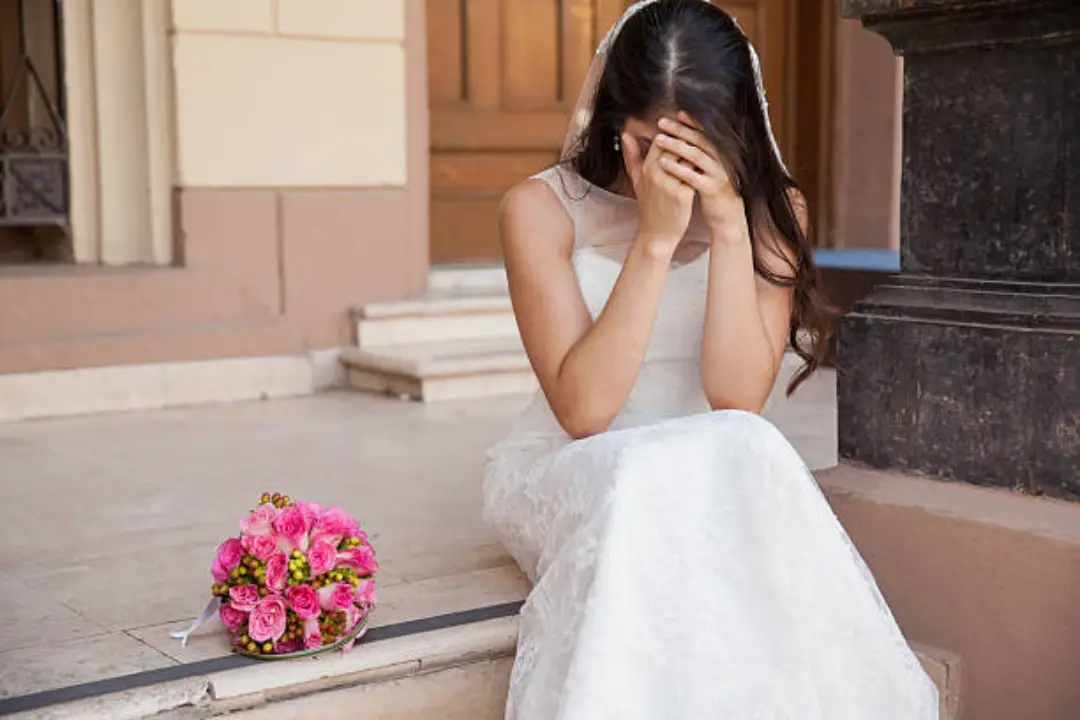
The white roses in my bouquet trembled as I stood alone in the church vestibule, staring through the narrow opening in the heavy wooden doors. Beyond them, the sanctuary glowed with soft afternoon light filtering through stained glass windows, casting colored patterns across the polished pews. Two hundred guests filled the seats—friends from college, Jack’s extended family, colleagues from work, neighbors who’d watched our relationship blossom over five years. The church hummed with anticipation and joy, exactly as I’d imagined during the twelve months of careful planning that had brought us to this moment.
But the front row—the seats I’d carefully reserved with silk ribbons and hand-lettered cards reading “Reserved for Family of the Bride”—sat completely empty.
Not a single person from my immediate family had come.
Not my mother Linda, who I’d imagined helping me into my dress and fixing my veil with tears in her eyes. Not my younger sister Stephanie, who I’d asked to be a bridesmaid before she declined, citing pregnancy discomfort. Not my father Thomas, who had promised me with actual tears streaming down his face just two weeks ago that he would walk me down the aisle “come hell or high water.”
Every single one of them had chosen to attend my sister’s baby shower instead—scheduled deliberately, I was now certain, for the exact same day as my wedding.
Through the crack in the door, I could see Jack standing at the altar in his perfectly tailored navy suit, his hands clasped in front of him as he smiled at guests who were finding their seats. Even from this distance, I could read the concern in his posture, the way his eyes kept drifting to that empty front row, probably wondering if my family was just running late, stuck in traffic, caught in some innocent delay that would resolve itself before the ceremony began.
I knew better. They weren’t coming. They had made their choice, and it wasn’t me.
My maid of honor Tara appeared beside me, her emerald dress rustling softly as she placed a gentle hand on my shoulder. “Gracie,” she said quietly, using the nickname that had followed me since childhood, “it’s almost time. Have you decided who’s going to walk you down the aisle?”
The question hung in the air between us, heavy with implication. Because we both knew the answer should have been simple, should have been decided a year ago when Jack first proposed during that weekend trip to Lake Michigan and I’d called my father immediately afterward, crying happy tears as I told him I was engaged.
“I’ll be there, Gracie girl,” he’d said, his voice thick with emotion. “I promise you, nothing in this world will keep me from walking my daughter down the aisle.”
But here we were, thirty minutes before my ceremony was scheduled to begin, and my father was somewhere across town helping set up balloon arches and arrange baby-themed centerpieces for Stephanie’s shower.
I grew up in Riverdale, a small Midwestern town where Friday night football games were community events and everyone knew your business before you did. Our family appeared close-knit on the surface—the kind that posed for Christmas cards in matching sweaters and attended church together every Sunday. My father Thomas managed construction projects, leaving before dawn and returning after dark with sawdust in his hair and tired eyes that brightened when he saw his daughters. My mother Linda taught kindergarten, her classroom walls covered with finger paintings and motivational posters about kindness and sharing—values she excelled at teaching other people’s children.
And then there was Stephanie, my younger sister by three years, who from the moment she drew her first breath seemed to pull all available oxygen toward herself with magnetic force. She had the kind of effortless charm that made adults melt and peers gravitate toward her without conscious decision. Teachers loved her spontaneity where they’d criticized my careful planning. Coaches praised her natural athleticism where they’d politely acknowledged my determined effort. Boys stumbled over themselves to carry her books while barely noticing I existed.
I loved her fiercely anyway, the way older sisters do—with a complicated mixture of genuine affection and quiet resentment that I was never quite able to examine too closely. I told myself the disparate treatment didn’t bother me, that I didn’t need the spotlight she seemed to occupy effortlessly. I was the responsible one, the dependable one, the daughter who didn’t require constant attention because she had her life together.
Looking back now, I can see how I’d been groomed for exactly this moment—trained from childhood to accommodate, to understand, to be grateful for whatever scraps of attention remained after Stephanie had taken her fill.
I met Jack during my sophomore year at State University, both of us enrolled in Introduction to Psychology and bonding over terrible vending machine coffee during study sessions that gradually transformed into something more. He was studying architectural design; I was pursuing marketing. We fit together with surprising ease—his analytical approach to problems complementing my creative solutions, his steady calm balancing my occasional anxiety spirals, his genuine interest in my thoughts and feelings so different from the polite disinterest I’d grown accustomed to at home.
After graduation, we both found jobs in the city two hours from Riverdale. I joined a mid-sized marketing firm; he started at an architectural company specializing in sustainable design. We built a life together—Sunday farmers market visits, trying new restaurants, exploring hiking trails, learning each other’s rhythms and habits and dreams. Five years into our relationship, during a weekend trip to Lake Michigan, Jack proposed on a quiet beach at sunset with a ring he’d designed himself.
I’d never been happier, and I was absolutely certain my family would share that joy.
The wedding planning began immediately. We set the date for June 15th, giving ourselves a full year to organize everything properly. I called my mother the same day we made the reservation at our chosen church, making absolutely certain the date worked for everyone before moving forward with any other arrangements.
“That sounds perfect, honey,” my mother had assured me. “Your father and I will help however we can. This is so exciting!”
I threw myself into planning with characteristic thoroughness—researching venues, comparing caterers, creating detailed spreadsheets tracking every decision and deadline. Jack’s family embraced the process with touching enthusiasm. His mother Carol called weekly to check in and offer assistance. His father Robert insisted on covering the rehearsal dinner entirely. His sister Amanda flew in twice from Seattle just to help with dress fittings and venue visits, treating each trip like an adventure we were sharing together.
The contrast with my own family became increasingly stark as months passed. They were happy for me in theory, offering vague congratulations and promising to help “when things settled down,” but their attention always seemed to be focused elsewhere, their energy reserved for other priorities.
Then came the announcement that would fundamentally shift the entire dynamic.
Six months before my wedding, during a routine Sunday dinner at my parents’ house, Stephanie arrived glowing with news she could barely contain. She’d been dating her boyfriend Todd for exactly three months—a detail that would have concerned me if I’d been her parent, but seemed to delight my mother and father instead.
“We have an announcement,” Stephanie said, practically vibrating with excitement as Todd held her hand. “We’re pregnant!”
The dining room erupted in celebration. My father popped champagne for everyone except Stephanie, of course, toasting to his first grandchild with tears in his eyes. My mother immediately began planning nursery themes, researching strollers, discussing baby names with the kind of focused enthusiasm I’d watched her devote to every milestone in Stephanie’s life. No one seemed remotely concerned about the abbreviated timeline or the fact that my sister barely knew her boyfriend. The pregnancy was simply accepted as wonderful news deserving of complete family focus.
“I’m so happy for you,” I told Stephanie, hugging her genuinely despite the small sharp twist of something that felt uncomfortably like jealousy in my chest. I pushed the feeling down immediately, ashamed of myself for experiencing anything other than pure joy for my sister’s news.
But as weeks turned into months, Stephanie’s pregnancy dominated every single family conversation. My wedding became an afterthought, briefly mentioned at the end of phone calls after extensive discussions about morning sickness, ultrasound appointments, and registry selections. When I tried to discuss centerpiece options or timeline concerns, my mother would listen with polite distraction before redirecting to baby-related topics that clearly engaged her more fully.
I stayed supportive anyway, because that’s what I’d always done. I accompanied Stephanie on maternity shopping trips even when I needed to meet with our florist. I helped research childcare options when I should have been finalizing our seating chart. I did all of this while watching my own to-do list grow longer and more overwhelming, while vendors sent increasingly urgent emails requiring decisions and confirmations.
“It will balance out,” Jack reassured me one evening when I finally broke down crying over the laptop, exhausted from trying to plan a wedding that only seemed to matter to his family and our friends. “They’re just excited about the baby right now. When the wedding gets closer, they’ll refocus.”
I wanted desperately to believe him, but a quiet voice inside me whispered that this was simply how things had always been—that I’d always been expected to understand, to accommodate, to make room for Stephanie’s needs while my own remained perpetually secondary.
The bridal shower my future mother-in-law Carol organized with Tara’s help should have been a warning sign I couldn’t ignore. The event was beautiful—an elegant afternoon tea at a local garden venue with delicate sandwiches and a champagne toast and gifts wrapped in silver paper. Carol had gone to enormous effort making everything perfect, and I felt genuinely cherished as I opened presents and laughed with Jack’s relatives and my college friends.
My mother and Stephanie arrived forty-five minutes late, missing the opening toast and the gift presentation entirely.
“So sorry we’re running behind,” my mother said, kissing my cheek quickly before finding a seat. “Stephanie wasn’t feeling well this morning, and you know how unpredictable pregnancy can be.”
They left an hour early too, Stephanie citing exhaustion and my mother jumping immediately to accommodate her comfort. As they were gathering their things to leave, I overheard my mother telling Carol about the adorable baby boutique they’d discovered that morning, describing tiny outfits and nursery decorations with animated enthusiasm.
They hadn’t been late because of morning sickness. They’d been late because they’d chosen shopping for Stephanie’s baby over being present for my shower. And they’d left early not because my sister was unwell, but because they simply didn’t prioritize staying.
The realization hit me with physical force—they weren’t distracted by the pregnancy. They were simply more interested in Stephanie’s life than mine, exactly as they’d always been.
Two months before the wedding, my father asked me to lunch—just the two of us, which was unusual enough to make me both hopeful and nervous. We met at a diner we’d gone to throughout my childhood, sliding into a familiar booth with cracked red vinyl seats.
“How are you holding up, Gracie girl?” he asked, using the nickname he’d had for me since I was small enough to sit on his shoulders.
“Honestly? Overwhelmed,” I admitted carefully. “There’s still so much to organize, and I feel like I’m managing most of it alone.”
He reached across the table and squeezed my hand, his construction-roughened palm warm against mine. “I know we’ve been distracted with Stephanie’s news. Your mom’s first grandchild—you know how excited she gets about these things.”
“I know, Dad.”
“But I want you to understand that your wedding day is incredibly important to me,” he continued, his expression serious in a way that made me lean forward. “And I promise you, Gracie—come hell or high water, I will be there to walk you down that aisle. Nothing could keep me away from that moment.”
Tears blurred my vision as I squeezed his hand back. “Thank you, Daddy. That means everything to me.”
“That’s what fathers do,” he said simply. “We show up for our daughters when it matters.”
Those words would replay in my mind countless times over the following weeks, becoming both a comfort and eventually, a bitter reminder of how easily promises can be broken when more appealing alternatives present themselves.
Two weeks before the wedding, my mother called insisting we needed a “special family dinner” before everything changed. I assumed she meant before I became a married woman, before I officially joined Jack’s family, before the dynamic shifted in ways we couldn’t predict. I was touched by the gesture, hoping it signaled renewed focus on my upcoming wedding.
The dinner was pleasant enough initially—my mother had made pot roast, my childhood favorite, and the conversation flowed easily through safe topics like work and weather and neighborhood gossip. We were halfway through dessert when Stephanie set down her fork with purpose.
“I have news about the baby,” she announced, and everyone turned toward her with immediate attention.
“Todd and I have finally settled on a date for the baby shower,” she said, her hand resting on her barely-visible baby bump. “We’re having it June 15th.”
The spoon in my hand clattered against my plate with a sharp sound that seemed to echo in the sudden silence.
June 15th. My wedding day.
“That’s my wedding day,” I said, my voice coming out smaller than intended, almost questioning—as if maybe I’d somehow gotten my own date wrong, as if surely this must be some kind of misunderstanding.
Stephanie had the grace to look slightly uncomfortable, but she pushed forward anyway. “I know the timing isn’t ideal, but it’s the only weekend that works for Todd’s family. They’re traveling from California, and his sister can only get that specific weekend off from work. Her vacation was already approved months ago.”
“But it’s my wedding day,” I repeated, struggling to process what I was hearing, waiting for someone—anyone—to point out how absurd this was.
My mother jumped in quickly, her voice taking on that particular soothing tone she used when she wanted everyone to stop making things difficult. “Honey, is there any possibility you and Jack could move your date? Just by a week or two? Everything would be so much easier.”
I stared at her, unable to believe what she was suggesting. “Mom, everything is booked. We have guests traveling from out of state, we have vendors contracted and paid for, we have hotel room blocks reserved. We can’t just change the date two weeks before the wedding.”
“Well, Stephanie can’t exactly change when the baby arrives,” my father interjected, as if that logic made any sense. “And the shower really needs to happen before she gets too far along in her third trimester.”
“But why this exact day?” I asked, hearing my voice rise despite my best effort to stay calm. “Why not the day after? Why not the following weekend? Why not literally any other day in June?”
“It’s complicated,” Stephanie sighed, her hand making slow circles on her stomach in a gesture that seemed calculated to remind everyone of her condition. “Todd’s family has their annual reunion the weekend after, and the weekend after that puts me too close to thirty weeks for comfort. The timing just works out better this way.”
“So you’re all planning to miss my wedding?” The question came out sharper than I intended, edged with panic and disbelief.
An uncomfortable silence settled over the table like a heavy blanket. Finally, my mother spoke, her words careful and tentative. “We’re trying to figure out how to make both events work. Maybe your father and I could split up—one of us could go to your ceremony and the other to the shower. Or perhaps we could attend your ceremony and then go to the shower afterward…”
Her voice trailed off as she registered my expression, the way my face must have shown exactly how insulting I found these half-measures, these suggestions that I should be grateful for whatever scraps of attendance they could manage.
I felt physically sick, like the floor had dropped out from under me. “I need some air,” I said, standing abruptly, my chair scraping loudly against the floor.
Jack, who had been silent throughout this entire exchange, stood with me immediately. We walked outside together into the cool evening air, and the moment the door closed behind us, I broke down completely.
“They can’t seriously be considering this,” I sobbed against Jack’s chest as he held me. “They can’t actually miss our wedding for a baby shower that could be held any other day. It’s insane.”
“It is,” Jack agreed, and I could hear genuine anger in his voice, which was rare for him. “This is completely unacceptable. Do you want me to go back in there and say something?”
I shook my head, pulling back to look at him. “No. This is something I need to handle myself.”
After collecting myself and repairing my tear-stained makeup as best I could, I returned inside. My family was still sitting at the table in uncomfortable silence, plates of half-eaten pie forgotten in front of them.
“I understand that Stephanie’s pregnancy is exciting and important,” I said, forcing my voice to stay level and clear. “But I am only getting married once. Jack and I have spent an entire year planning this day. I cannot and will not change the date, and I expect my family to be there.”
The tension in the room was suffocating, but I held my ground, looking each of them in the eye. No one explicitly said they wouldn’t come—they were too practiced at avoiding direct conflict for that kind of honesty. Instead they offered vague reassurances and promises to “figure something out” that left me feeling unsettled and uncertain.
As Jack and I left that night, my stomach was churning with anxiety. For the first time, I allowed myself to seriously consider the possibility that my family might actually choose a baby shower over my wedding.
The week leading up to my wedding should have been filled with joyful anticipation, final preparations, and excited butterflies. Instead, it became a series of increasingly desperate phone calls as I tried to confirm whether my own family would actually attend.
I called my mother first, hoping for reassurance and finding only evasion. “Mom, I need a direct answer. Will you be at my wedding?”
“Oh, Gracie,” she sighed in that particular way that immediately set my teeth on edge. “I’m in such a difficult position here. Stephanie really needs me at the shower, but of course I want to be at your wedding too.”
“It shouldn’t be difficult at all,” I said, fighting to keep my voice steady. “I’m your daughter. It’s my wedding day. That should be the priority.”
“I know, sweetie. Let me talk to your father again and see what we can work out.”
Next I called my aunt Susan, my mother’s sister, hoping for support from extended family. Instead I got more disappointing news.
“I was actually planning to call you,” she said, her voice uncomfortable. “Stephanie sent out shower invitations, and I noticed it’s the same day as your wedding. That’s correct, isn’t it?”
“Yes,” I confirmed, my heart sinking. “She scheduled her shower for my wedding day even though she knew it would create this conflict.”
“Oh, Gracie, what a mess,” she sighed. “I honestly don’t know what to do. I already committed to helping host the shower since I’m splitting the catering costs with your mother.”
“So you’re choosing her shower over my wedding?” I asked directly, needing to hear her say it clearly.
“I wouldn’t put it that way exactly,” she hedged. “It’s just complicated with the baby coming and everything…”
One by one, I called extended family members—aunts, uncles, cousins—and received similar responses. Excuses, hesitation, vague promises to “try to make both” that we all knew meant they were choosing Stephanie. The only exception was my cousin Taylor, who said bluntly, “This is completely messed up, Gracie. Of course I’m coming to your wedding. A baby shower can happen any time.”
My final call was to my father, clinging to his promise from our lunch, believing he at least would keep his word.
“Dad,” I said, not bothering to hide the desperation in my voice, “please tell me you’ll be at my wedding.”
“Gracie girl,” he began, and my heart sank at his tone, “you know I want to be there more than anything. I’m still trying to figure out how to make both events work.”
“Both,” I repeated flatly. “Dad, you promised me. You specifically said you would walk me down the aisle no matter what.”
“And I meant it when I said it,” he insisted. “But things have gotten complicated now. Your sister needs support too, you know.”
“She scheduled her shower on my wedding day deliberately,” I said, the truth crystallizing as I spoke it aloud. “She knew exactly what she was doing when she picked that date.”
“Now that’s not fair,” my father snapped, his voice taking on a defensive edge. “Stephanie wouldn’t do something like that. She’s just trying to coordinate around Todd’s family’s schedule.”
“Dad, please,” I said, my voice breaking. “Please just tell me you’ll be there to walk me down the aisle like you promised.”
There was a long pause before he answered. “I’ll do my very best. That’s all I can commit to right now.”
The rehearsal dinner should have included my family. We had reserved a private room at our favorite restaurant with place settings for thirty people. When the designated time arrived, only fourteen chairs were occupied—Jack’s family, my maid of honor, my bridesmaids, a few close friends. The seats reserved for my parents, my sister, my extended family sat conspicuously empty.
“Traffic must be terrible tonight,” Carol suggested kindly, but we all knew that wasn’t the reason.
I called my father’s cell phone repeatedly throughout the evening. Each call went straight to voicemail, which meant he’d deliberately turned off his phone.
At eleven-thirty that night, as Jack and I were saying goodbye before our traditional separation for the last night before our wedding, my phone finally rang.
“Dad,” I answered immediately, hope and dread warring in my chest.
“Gracie,” he said, and I knew from that single word what was coming. “I’m so sorry to do this to you, but I won’t be able to make it tomorrow. Stephanie is really counting on me to help set up for the shower, and I just can’t let her down.”
“But you can let me down,” I whispered, tears already streaming down my face. “You can break your promise to me.”
“You’ve always been the stronger one, Gracie,” he said, as if that justified anything. “You have Jack and his wonderful family. You’ll be fine. Stephanie needs us right now—she’s about to become a mother, and that’s a vulnerable time.”
“I need you too, Dad,” I said, my voice cracking completely. “I need my father to walk me down the aisle.”
“I’m so sorry, sweetheart. I really am. Maybe someday you’ll understand that I was in an impossible position.”
The call ended, and I stood there staring at my phone, unable to fully process what had just happened. Jack wrapped his arms around me as I collapsed against him, sobbing so hard I could barely breathe.
“They’re not coming,” I gasped between broken breaths. “None of them. Not even my dad.”
“I’m so sorry, Gracie,” Jack said, holding me tighter. “So incredibly sorry.”
“Who’s going to walk me down the aisle?” I asked, the practicality of the question somehow making everything feel more real.
Jack pulled back enough to look into my eyes. “You can walk yourself—beautifully and powerfully. Or my father will walk with you. Or I’ll meet you halfway. Whatever you want, we’ll make it work. This doesn’t change us, Gracie. Tomorrow we’re getting married, and it’s going to be meaningful and real because we’ll be together.”
His words steadied me, but they couldn’t erase the raw, gaping wound of knowing that on what should have been the happiest day of my life, my family had chosen to abandon me completely.
I woke on my wedding day to aggressive pinging from my phone. Still half-asleep, I reached for it with a flutter of hope—maybe they’d changed their minds, maybe someone had realized how wrong this was.
Instead, my social media feeds were flooded with photos from Stephanie’s baby shower preparations. My mother had posted pictures of elaborate decorations with a caption about “celebrating our first grandbaby.” My aunt shared her excitement about the special day ahead. Even my father, who rarely posted anything online, had uploaded a photo of himself constructing an elaborate balloon arch, proudly showcasing his handiwork.
Not a single person acknowledged that it was also my wedding day. Not one post, not one message, not even a perfunctory “congratulations” text. It was as if I had ceased to exist entirely.
“Don’t look at that,” Tara said firmly, taking my phone away. “Today is about you and Jack, and we’re not letting anything ruin it.”
My bridesmaids—Tara, Hannah, and Jess—surrounded me with love and support throughout the morning preparations. Jack’s mother Carol arrived with gourmet coffee and fresh pastries, pulling me into a long, warm hug.
“I want you to know how proud Robert and I are to be gaining you as a daughter today,” she said, her eyes sincere and kind. “If there’s anything—anything at all—that you need, we’re here for you.”
The hair and makeup artists arrived, and for a few hours I managed to lose myself in the process of transformation. The photographer captured beautiful images of us laughing together, helping each other with jewelry, toasting with mimosas in delicate champagne flutes.
But when it came time to put on my dress—a beautiful A-line gown with delicate lace details that I’d spent months selecting—the absence of my mother hit me with renewed force.
“I always imagined her helping me with this,” I said softly as Tara and Hannah carefully lifted the gown and helped guide my arms through the sleeves.
“I know,” Tara said gently, squeezing my hand. “But we’ve got you.”
The ceremony was scheduled for four o’clock. At three-thirty, we gathered in the bridal suite at the church—a small, elegant room with soft lighting and comfortable furniture. The wedding coordinator knocked politely on the door.
“Gracie, we need to start lining up,” she said with professional gentleness. “Do you know who will be escorting you down the aisle? The pastor needs to know for his announcements.”
The question—so practical, so necessary—made reality crash back over me. My father wasn’t coming. No one from my family was coming. In thirty minutes, I would be expected to walk down an aisle past two hundred guests toward my future husband, and I would be making that journey completely alone.
“I need a minute,” I choked out, rushing into the adjoining bathroom and locking the door behind me.
The sobs came hard and fast, my carefully applied makeup running in dark streaks down my face as I gripped the marble countertop for support, my white dress pooling around me on the floor.
A gentle knock interrupted my breakdown. “Gracie, it’s me,” came Jack’s voice. “Please let me in.”
“You’re not supposed to see me before the ceremony,” I managed through tears, clinging to tradition like a lifeline.
“I don’t care about that superstition,” he said firmly. “Let me in. Please.”
I unlocked the door with shaking hands, and there he was—my soon-to-be husband in his perfectly tailored suit, his face creased with concern and love.
“I’m so sorry,” he said immediately. “I know this isn’t how you pictured today.”
“They really didn’t come,” I whispered, stating the obvious because somehow saying it aloud made it marginally more real, more processable. “Not a single one of them chose me.”
Jack took my hands in his, his grip warm and steady. “I don’t have an explanation for their choice. I can’t make sense of it because it doesn’t make sense. But what I can tell you is this: there’s a church full of people out there who did choose to be here. People who love you and want to celebrate with you. And most importantly, I’m here. I will always be here, Gracie. That’s what today is really about.”
I looked into his eyes and saw nothing but complete honesty and devotion.
“I’m going to walk myself down the aisle,” I announced, the decision crystallizing even as I spoke. “On my own.”
“Are you sure?” Jack asked gently. “My father would be honored to walk with you.”
“I’m sure,” I said, feeling something shift inside me—a painful kind of strength. “This is my wedding day. I’m going to hold my head up and walk toward my future. I don’t need anyone’s permission or support for that.”
Jack smiled, brushing away one of my tears with gentle fingers. “That’s my brave girl. I’ll be waiting at the altar, counting every second until you become my wife.”
After he left, my bridesmaids helped repair my makeup and straighten my dress. When the coordinator returned, I told her my plan with steady voice.
“I’ll be walking myself down the aisle.”
The ceremony began. My bridesmaids proceeded one by one down the aisle in their emerald dresses, each one squeezing my hand as they passed. Then the wedding march started—that familiar, significant music that I’d heard at countless weddings, never imagining how it would feel when it was my own.
The doors opened wide, and every face turned toward me.
The first few steps were the hardest. My legs felt unsteady, my hands gripped my bouquet so tightly the stems probably bruised. But with each forward movement, something inside me strengthened. I was choosing this path—literally and metaphorically. I was choosing Jack, choosing love, choosing a future built on partnership and mutual respect rather than the conditional acceptance I’d always accepted as normal from my family.
The aisle seemed endless and also too short. I saw friends from college mouthing encouragement. I saw Jack’s grandmother dabbing at her eyes with a lace handkerchief. I saw the wedding party assembled at the front, every face reflecting support and celebration.
And I saw Jack, his expression a beautiful mixture of awe and pride and pure love that made every difficult step worth taking.
When I finally reached him, he whispered so only I could hear, “You are the most beautiful, bravest woman I’ve ever known.”
The ceremony itself was perfect in its simplicity and significance. We exchanged vows we’d written ourselves—Jack promising to be my partner in all things, to celebrate my successes and support me through challenges, to build a life where I would never doubt my worth or importance. I promised to bring honesty and creativity to our partnership, to love him through every season, to build something lasting and real.
When the pastor pronounced us husband and wife, the church erupted in genuine celebration. Our first kiss as a married couple was met with applause and cheers from two hundred people who had chosen to witness and celebrate our commitment.
The reception was held at a beautifully restored barn on the outskirts of town. Jack’s family had gone extraordinary lengths to ensure every detail was right. His father gave a touching toast, welcoming me officially into their family with words that made me cry happy tears. Friends from every stage of our lives filled the dance floor. There was laughter and joy and so much love surrounding us that the absence of my family—while still painful—didn’t get to define the day.
Late that evening, as Jack and I slow-danced under strings of twinkling lights to a song we’d selected months earlier, I realized something profound. Family isn’t just blood and shared DNA. Family is who shows up. Who celebrates your joy. Who steadies you when everything feels unsteady. And by that definition, I was surrounded by family—genuine, chosen family who valued me enough to be present.
Before we left the reception to begin our honeymoon, I checked my phone one final time. Still no missed calls. No messages from my parents or sister. No acknowledgment whatsoever that one of the most significant days of my life had occurred.
“Ready to start our adventure, Mrs. Bennett?” Jack asked, using my new married name with a soft smile.
I slipped my phone into my purse and took his hand. “More than ready, Mr. Bennett.”
As we drove away amid showers of rose petals and well-wishes from our guests, I made a silent promise to myself. This day had taught me something crucial about my worth and about standing up for myself—and it was a lesson I would carry forward into every aspect of my new life.
The morning after our wedding, Jack and I were preparing for our flight to Hawaii—two weeks of beaches and relaxation and celebrating our new marriage. We had an afternoon departure, giving us time for leisurely breakfast and final packing.
“How are you feeling?” Jack asked carefully as we shared coffee in our hotel room, both of us still somewhat stunned by everything that had transpired.
“Complicated,” I admitted honestly. “So happy about us, about being your wife. But underneath that joy there’s this ache that won’t go away.”
He nodded, understanding without needing explanation.
As we finished packing, I received an email from our photographer—she’d worked through the night to provide a preview collection as “a gift for your honeymoon.” We sat together on the bed scrolling through images that captured the beauty of our day: our first dance, cutting the cake, candid laughter with friends.
Then I saw the photograph that made my breath catch painfully in my chest.
It showed me walking down the aisle alone, captured at the exact moment I stepped through the church doors. The photographer had somehow managed to capture the complex mixture of emotions on my face—vulnerability and pain and determination all visible simultaneously. You could see the empty front row where my family should have been sitting. But you could also see the straight set of my shoulders, the purposeful way I held my bouquet, the forward momentum of someone choosing their path.
And in the background, slightly blurred but unmistakably clear, was Jack waiting at the altar, his face illuminated with such pure love it seemed to light the entire frame.
“This one,” I whispered. “This captures everything.”
Jack studied the image quietly. “You look powerful. Like you’re conquering something.”
I stared at the photograph for a long time, understanding gradually crystallizing. Then I opened Instagram and uploaded the image. My finger hovered over the caption field as I considered what to say, how to frame this truth I’d been taught to keep private.
Finally, I wrote: “Yesterday I married the love of my life. I walked myself down the aisle because my father—who promised he would be there—chose to attend my sister’s baby shower instead. Not a single member of my immediate family came to my wedding. The front-row seats reserved for them sat empty. But taking that solitary walk taught me something important: sometimes the family you’re born into fails you. But the family you choose lifts you up. Thank you to everyone who showed up, who celebrated with us, who filled our day with genuine love. To those who didn’t come—I hope the baby shower was worth missing this.”
I tagged my parents, Stephanie, and several other family members who had chosen the shower. Then, before I could second-guess myself, I hit share and deliberately put my phone away.
“Are you sure about posting that?” Jack asked, concern flickering across his face.
“I’m sure,” I said firmly. “I’m done pretending everything is fine when it’s not. They made their choice public by posting shower photos everywhere. People can know about my day too.”
We headed to the airport, and I put my phone on airplane mode per Jack’s suggestion, choosing to disconnect and focus on beginning our marriage properly. It wasn’t until we landed in Maui six hours later that I turned my phone back on.
The notifications were overwhelming—the phone buzzed continuously for what felt like minutes as messages flooded in. Thirty-seven missed calls. Sixty-two text messages. Hundreds of Instagram notifications.
My post had apparently struck a nerve in our community, generating the kind of response that happens when people feel they’re witnessing something raw and real.
My father’s texts came first: “Gracie, call me immediately. What you posted was extremely unfair and inappropriate. You’re embarrassing the entire family. This isn’t like you to air private matters publicly.”
From my mother: “I cannot believe you would humiliate your sister like this. Take that post down right now. People are calling asking questions. Your father is absolutely devastated.”
From Stephanie: “How could you ruin my baby shower by making everything about you? You’re being incredibly selfish. I didn’t force anyone to come to my shower instead of your wedding.”
But other messages told a different story.
From my cousin Taylor: “I’m so proud of you for standing up for yourself finally. I love you and Jack so much.”
From my uncle Dave—my father’s brother—whose message made my throat tight: “I had absolutely no idea the shower and wedding were scheduled for the same day. Your father told me you had postponed your wedding due to venue issues. If I’d known the truth, I would have been there without question. I’m so sorry, kiddo.”
From extended family members expressing shock, from old friends offering support, from people I hadn’t spoken to in years suddenly rallying to my defense. The Instagram comments were overwhelmingly supportive, filled with variations of the same question: How could they?
“Jack,” I said, showing him the flood of responses. “I think I just detonated my entire family.”
He scrolled through the notifications and whistled low. “Looks like people have strong opinions about what happened.”
“What do I do now?”
“Nothing,” he said firmly. “We’re on our honeymoon. Your family made their choice. You shared your truth. Whatever consequences emerge can wait until we’re home.”
He was right. I silenced my phone, keeping it active only for genuine emergencies, and we immersed ourselves in Hawaii—hiking to waterfalls, snorkeling in impossibly clear water, watching sunrises from volcanic peaks, letting the ocean air clear away the noise and hurt.
For two weeks, we existed in a beautiful bubble of newly-married happiness, letting the complications wait.
But as our return flight approached, anxiety crept back. I couldn’t hide from reality forever. My post had forced a confrontation that was probably long overdue, and now I had to face whatever consequences had accumulated.
The night before leaving Hawaii, I finally reviewed my phone comprehensively. The calls had multiplied to over a hundred. Text messages kept arriving. There were emails, voicemails, direct messages across every platform. My family was in full crisis mode—not because they regretted their choice, but because I had made that choice publicly visible.
“They’re more upset about appearing bad than about actually being bad,” I observed to Jack as I scrolled through increasingly frantic messages.
“Does that surprise you?” he asked gently.
“No,” I admitted. “And that’s the saddest part—I’m not surprised at all.”
We returned home on a Sunday afternoon, and I sent a brief message to my parents: I would meet them the next day to discuss everything. I specified I wanted everyone present—both parents, Stephanie, and Todd.
“Do you want me there with you?” Jack offered as I prepared to leave Monday morning.
“No,” I said, though facing them alone made my stomach churn. “This is something I need to handle myself.”
“I’ll be right here when you get back,” he promised, kissing me goodbye.
The drive to my childhood home felt surreal—the same route I’d traveled countless times, but never with such dread and determination twisted together.
Everyone’s cars were already in the driveway when I arrived. I took a deep breath, straightened my shoulders, and walked in without bothering to knock.
The living room practically vibrated with tension. My mother perched on the sofa edge, rigid and anxious. My father paced near the window with angry energy. Stephanie curled defensively in an armchair, her pregnancy now visibly prominent, with Todd positioned awkwardly beside her looking like he’d rather be anywhere else.
“Gracie, thank God,” my mother began immediately, her voice high and strained. “We’ve been so worried about you.”
“Worried about what exactly?” I asked, remaining standing deliberately.
“About you,” she said as if it should be obvious. “That post you made. The things people are saying. It’s not like you to create such unnecessary drama.”
“I didn’t create the drama,” I said calmly. “I simply stopped hiding it.”
My father stopped pacing to face me directly. “Do you have any idea what you’ve done? People are calling us terrible parents. Your mother can barely show her face at work because of the gossip.”
“I told the truth,” I said evenly. “Not one person from my immediate family attended my wedding because you all chose a baby shower instead. Is that not accurate?”
“You’re twisting everything,” Stephanie interjected, her hand protective over her belly. “You’re making it sound like we deliberately set out to hurt you.”
“Didn’t you?” I asked, meeting her eyes directly. “You scheduled your shower on my wedding day when you could have literally picked any other date. That was a deliberate choice.”
“It was the only day that worked for everyone,” she insisted weakly.
“Everyone except me,” I pointed out. “And apparently my attendance at my own wedding didn’t factor into your planning.”
“Of course it mattered,” my mother said desperately. “We tried finding solutions that would work for everyone.”
“No,” I corrected her firmly. “You tried finding solutions that would prioritize Stephanie while expecting me to accommodate whatever scraps of attention remained. Just like always.”
The room fell silent, my words hanging heavy in the air.
Todd surprised everyone by speaking up. “Listen, I feel partially responsible here. If I’d realized this would create such conflict, I would have insisted we pick a different date for the shower.”
Stephanie shot him a look sharp enough to draw blood, but I appreciated his honesty.
“It’s not your fault, Todd,” I said. “You weren’t making the decisions.”
“Can we please just move forward?” my mother pleaded. “What’s done is done. We can’t change the past.”
“You’re right,” I agreed. “We can’t change what happened. But before moving forward, I need you to understand something.”
I pulled out my phone and opened a recording app, playing back conversations I’d had with relatives after my post went viral. One by one, I played recordings of extended family members expressing shock and confusion—people who claimed they’d been told I’d postponed my wedding, or that I was fine with them attending the shower, or various other fabrications designed to make my family look less culpable.
When the last recording ended, silence pressed down on us like a physical weight.
“You didn’t just miss my wedding,” I said quietly. “You lied to people about it. You created a narrative where I was supposedly fine with everything, where some of you even claimed my date had changed. That’s why people are angry—not because of my post, but because the truth finally came out.”
My mother had gone pale. My father couldn’t maintain eye contact.
“That’s not fair,” Stephanie tried, tears gathering in her eyes. “You’ve always been jealous of the attention I receive. Now you’re weaponizing my pregnancy to turn everyone against me.”
“This isn’t about jealousy,” I said firmly. “This is about respect. About being treated like I matter as much as you do.”
I took a steadying breath before continuing. “My entire life, I’ve adjusted my needs to accommodate this family. I’ve been understanding and patient and supportive. And the one day—the single day—that should have prioritized me, you couldn’t manage it.”
“We made a terrible mistake,” my father finally said, his voice breaking. “A horrible, inexcusable mistake.”
“Yes,” I agreed simply. “You did. And I’m not sure I can forgive it yet.”
“What are you saying?” my mother asked, face stricken.
“I’m saying things need to change fundamentally,” I explained. “I’m not going to keep pretending everything is fine when it isn’t. I won’t accept being an afterthought anymore. I need time and space to figure out what kind of relationship I want with all of you moving forward.”
“But we’re family,” my mother protested weakly.
“Family should celebrate each other’s important moments,” I said. “Family should keep their promises. What you did wasn’t family behavior.”
I stood, feeling strangely calm despite the emotional intensity. “I’m going home to my husband. When you’re ready to have real conversations—when you can acknowledge what happened without excuses or defensiveness—then we can start rebuilding. Until then, I need distance.”
“Gracie, please,” my father started.
I held up my hand, stopping him. “I’ve said what I needed to say. The next move is yours.”
As I walked out, I heard my mother begin crying and Stephanie’s voice turn sharp with accusations, but I didn’t turn back. For the first time in my life, I was choosing myself, my boundaries, my emotional health—and it felt simultaneously terrifying and necessary.
Jack was waiting when I got home, exactly where he’d promised to be.
“How did it go?” he asked as I walked through the door.
“Better than expected in some ways,” I said, letting out a long breath. “I said what I needed to say. I set boundaries. Now we see if they can actually respect them.”
He pulled me into a hug. “I’m so proud of you.”
That night as we lay in bed, I felt an unfamiliar sense of peace settling over me. The confrontation hadn’t magically fixed everything—family wounds this deep don’t heal quickly. But it had been a crucial first step toward either rebuilding our relationships on healthier terms or accepting their limitations and moving forward without them.
Either way, I knew I would be okay.
Three months passed before my father reached out with a handwritten letter—actual pen on paper, not an email or text. With trembling hands, I opened it and read words that felt genuine in their pain and accountability.
He apologized without excuses. He acknowledged the pattern of prioritizing Stephanie throughout my childhood. He admitted to lying to relatives about my wedding. He took responsibility for breaking his promise to walk me down the aisle. He described seeking counseling to understand why he’d made those choices. Most importantly, he didn’t demand immediate forgiveness—he simply asked if I would be willing to begin rebuilding trust slowly, on my terms.
I showed the letter to Jack, who read it thoughtfully before saying, “It’s a start. A genuine one. But whether it’s enough is entirely your decision.”
After several days of consideration, I called my father. “I got your letter. And I’m willing to try—slowly and carefully.”
We agreed to meet for coffee weekly, just the two of us. Those early conversations were awkward, both of us navigating unfamiliar territory. But gradually we found our footing. He told me about the counseling he’d started, both individually and with my mother. I shared insights from my own therapy sessions with Dr. Martinez, who had helped me process the grief of losing the family I’d wished for while protecting the person I actually was.
My mother joined eventually, asking if I’d participate in family therapy sessions. I agreed, with the condition that Jack could attend for support. Those sessions were difficult but productive, creating space for honest conversations we’d never managed to have before.
The real surprise came from Stephanie. After her daughter Clara was born in September, she sent an unexpected text: Clara would like to meet her Aunt Gracie, if you’re willing.
I visited when Todd was at work, wanting to keep the reunion simple. Holding my tiny niece in my arms, I felt the complicated tangle of love and hurt that characterized my relationship with her mother.
“She’s absolutely beautiful,” I said sincerely.
“Thank you,” Stephanie replied, watching me carefully. After a pause, she added something I never expected: “Being a mother has made me see things differently. I keep imagining Clara grown up—and how devastated I’d be if someone hurt her the way we hurt you. I don’t want to teach her that kind of behavior is acceptable.”
It wasn’t a perfect apology, but coming from Stephanie, it mattered.
“I appreciate you saying that,” I responded. “She’s lucky to have a mom willing to learn and grow.”
Stephanie’s voice became small. “I am sorry, Gracie. About the wedding. About everything.”
I nodded, not quite ready to say I forgave her but acknowledging what she’d offered. “One step at a time.”
Six months after our wedding, my parents invited Jack and me to dinner—our first time all together since the confrontation. I was anxious, but Jack squeezed my hand reassuringly as we knocked on the familiar door.
The evening wasn’t perfect. Old patterns threatened to emerge at times. But there was also genuine laughter, real conversation, and visible effort from everyone. My parents asked about our lives with authentic interest, listening without immediately redirecting to other topics.
After dessert, my father stood and cleared his throat. “I want to make a toast. To Gracie and Jack—I failed you both catastrophically on your wedding day, a mistake that will haunt me forever. But I see your marriage now. I honor it. And I promise to support it properly from this day forward. Better late than never, I hope.”
Tears blurred my vision as I raised my glass. “To second chances.”
Over subsequent months, our family slowly rebuilt itself—not into the same dysfunctional pattern we’d always known, but into something healthier and more honest. My parents continued therapy and actually began treating me like I mattered. Stephanie and I developed a different kind of relationship: more cautious, less competitive, occasionally genuinely supportive.
For our one-year anniversary, Jack and I planned a quiet dinner at our favorite restaurant. But when we arrived, we were led to a private room where a surprise waited—our friends, Jack’s family, and to my amazement, my family too.
The room was decorated like a miniature wedding reception, complete with a small tiered cake.
“What is this?” I asked, turning to Jack in confusion.
“This wasn’t me,” he said, smiling. “This was their idea.”
My father stepped forward, his voice thick with emotion. “We can’t undo the past or give you back your wedding day. But we can celebrate your marriage now—together, properly, all of us. Consider it a do-over of sorts.”
My mother joined him. “We’re so incredibly proud of the woman you are, Gracie. And we’re sorry for every single time we made you feel less important or less loved than you actually are.”
Even Stephanie, holding baby Clara, added quietly, “You deserved so much better than what we gave you. We want to do better moving forward.”
As Jack and I cut the anniversary cake surrounded by people who genuinely loved us, I reflected on the extraordinary journey of the past year. It had been painful and messy and difficult—but also profoundly transformative.
I’d learned that standing up for yourself isn’t selfish—it’s necessary. That true family celebrates you even when it’s inconvenient. That forgiveness doesn’t require forgetting, but it can mean moving forward. And most importantly, that it’s never too late to break harmful patterns and build healthier ones.
Looking around at the family I was born into and the family I’d chosen, I felt something I hadn’t experienced in a very long time: genuine peace.
The empty chairs at my wedding had taught me one of life’s most valuable lessons: the hardest paths often lead to the most meaningful destinations. Walking down that aisle alone had been the most difficult thing I’d ever done. But it had also been the moment I finally chose myself, my worth, my right to be celebrated and cherished.
And that choice had changed everything—not just for me, but for my entire family, forcing us all to confront patterns we’d accepted for too long and build something better in their place.
I would never get back the wedding day I’d imagined, with my father beside me and my family in the front row. But I’d gained something perhaps more valuable: the knowledge that I could survive being let down by the people I loved most, that I could set boundaries and demand respect, and that real love—the kind Jack and his family offered, the kind my family was slowly learning to provide—doesn’t require you to shrink yourself or accept scraps.
As I stood there surrounded by celebration, holding my husband’s hand and accepting my family’s belated but genuine efforts, I realized the empty chairs had given me an unexpected gift: the strength to fill them—or not—entirely on my own terms.

Ethan Blake is a skilled Creative Content Specialist with a talent for crafting engaging and thought-provoking narratives. With a strong background in storytelling and digital content creation, Ethan brings a unique perspective to his role at TheArchivists, where he curates and produces captivating content for a global audience.
Ethan holds a degree in Communications from Zurich University, where he developed his expertise in storytelling, media strategy, and audience engagement. Known for his ability to blend creativity with analytical precision, he excels at creating content that not only entertains but also connects deeply with readers.
At TheArchivists, Ethan specializes in uncovering compelling stories that reflect a wide range of human experiences. His work is celebrated for its authenticity, creativity, and ability to spark meaningful conversations, earning him recognition among peers and readers alike.
Passionate about the art of storytelling, Ethan enjoys exploring themes of culture, history, and personal growth, aiming to inspire and inform with every piece he creates. Dedicated to making a lasting impact, Ethan continues to push boundaries in the ever-evolving world of digital content.