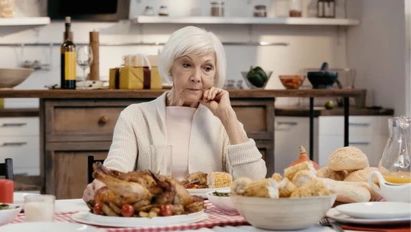
The Thanksgiving They Forgot to Include Me
On Thanksgiving morning, I woke up to a quiet, empty house. My son, his wife, and their two kids had flown to Hawaii—on a luxury getaway without me. I didn’t cry. I called the movers. Five days later, I had eighteen missed calls.
But let me start at the beginning, in that strange suspended moment between sleep and waking when your brain hasn’t quite remembered all the reasons to be worried yet.
No tiny feet thundering down the hallway, announcing the day with the subtle grace of a small herd of elephants. No cartoons blaring from the living room at a volume that suggested the TV was hard of hearing. No coffee brewing in the kitchen, even though my son David always started the first pot before his interstate commute, like it was his way of saying I’ve got you, Mom without actually having to say the words.
I pulled my robe tighter against the November chill and headed downstairs, expecting the usual holiday morning clutter. A Costco appetizer tray cracked open on the counter, cheese cubes already sweating under the kitchen lights. Paper plates stacked by the sink because “it’s easier this way, Mom.” A quick to-do list on the fridge in Amanda’s neat handwriting—pick up rolls, remember the good napkins, don’t forget the pie. Maybe even a joke about the HOA mailbox row at the end of our suburban cul-de-sac “judging us” from the curb.
But the kitchen was spotless. Too spotless. The counters looked staged, like a model home ready for a showing, nothing out of place, nothing that suggested actual humans lived here. Through the window above the sink, the driveway sat empty except for faint oil marks where two cars should have been parked.
I stood there in my robe and slippers, still half-asleep, long enough for my brain to register the wrongness of the silence. That’s when my eyes found the note.
Folded neatly. Pinned under a little decorative turkey magnet, positioned exactly where I’d see it when I came downstairs, like a reminder to buy cranberries or pick up the dry cleaning.
My daughter-in-law’s handwriting, effortless and confident, the kind of script that looks like it should be selling you luxury resort packages.
Mom, don’t worry. We decided to spend Thanksgiving in Hawaii this year. You wouldn’t have liked the flight anyway—you know how your back gets on long trips. We’ll be back in a week. Enjoy the quiet! Love, Amanda
I read it once. Then twice. Then a third time, because surely I was misunderstanding something fundamental about the words on the page.
The phrases that stuck weren’t Hawaii or back in a week. They were we decided and you wouldn’t have liked it anyway.
Not we were thinking about or we wanted to ask you or even we’re sorry but this opportunity came up.
Just we decided. Past tense. Done deal. Fait accompli.
As if my presence at Thanksgiving—at my own family’s Thanksgiving, in the house I lived in, with the grandchildren I helped raise—was optional. Negotiable. Something that could be decided without my input and communicated via kitchen note like I was the cleaning service being informed of a schedule change.
For a second, I waited for tears. For that familiar ache in my chest, the one that shows up when you’re left out but still try to keep the peace, still try to understand, still try to be the bigger person who doesn’t make waves.
Instead, my body went quiet. Calm in a way that surprised me. Like something inside had been holding its breath for years and had finally, quietly, let it out.
My name is Margaret Holloway, though everyone calls me Maggie. I’m sixty-three years old, a widow of four years, and until that Thanksgiving morning, I’d been living with my son David, his wife Amanda, and their two children—Sophia, eight, and Lucas, six—in what was technically their house but had been funded largely by my financial contributions over the past three years.
I sat down at the kitchen table—the expensive farmhouse-style table I’d bought when Amanda mentioned she “really needed something more Pinterest-worthy for family photos”—and looked around at the life I’d helped build in that house.
The stainless-steel refrigerator with the ice maker I’d purchased because Amanda wanted “a more modern look.” The oversized flat-screen TV I’d paid for “as a gift” that had somehow become a household essential no one thanked me for anymore. The plush sectional sofa that photographed beautifully for Amanda’s Instagram but never quite felt comfortable to actually sit on. The kitchen renovation I’d funded because “the resale value would be so much better, Mom, and we’re all living here anyway.”
Little upgrades that had piled up over three years, one casual mention at a time, until generosity had started feeling less like love and more like a monthly line item in an unspoken contract I’d never agreed to.
It had been like this since my husband Robert passed away. When grief made me soft, made me say yes to anything that sounded like family, made me desperate for connection even when that connection came with a price tag attached.
Move in with us, Mom. The kids will love having Grandma around. We’ll take care of you. Daycare is so expensive and you’re retired anyway—wouldn’t it be nice to spend time with the grandkids?
And I’d believed it. Because believing it felt warmer than eating dinner alone in the quiet house Robert and I had shared for thirty-seven years. Because the alternative was admitting that my son was offering me a business arrangement disguised as family care.
I’d sold my house—the house where I’d raised David, where Robert and I had built our life, where every room held memories I wasn’t ready to let go of but did anyway because “it made sense” and “we’re family” and “wouldn’t it be better to have everyone together?”
The proceeds from that sale had gone into their household expenses, their renovations, their “investments.” Not officially, of course. Just gradually. A few thousand here for the kitchen. Ten thousand there for the new roof they “desperately needed.” Help with the mortgage when David’s job had a “temporary rough patch” that lasted six months.
Then the warmth had shifted. Requests had become assumptions. Gratitude had become routine. And I’d started hearing the same sentence everywhere: We were counting on you.
Counting on me to watch the kids every day while they worked, eliminating their childcare costs. Counting on me to cook dinner most nights, do the grocery shopping, manage the household while Amanda focused on her “wellness brand” Instagram account. Counting on me to contribute financially while pretending my contributions were generous gifts rather than expected subsidies.
That morning, sitting at that expensive table with that note under that decorative magnet, something finally clicked into place.
They hadn’t invited me to Hawaii because I was never really part of the family vacation. I was the free childcare, the household manager, the financial backup plan. And when they’d planned a getaway, it had never occurred to them to include me because my value wasn’t in my company—it was in my services.
Services they didn’t need on a Hawaiian vacation.
I made myself coffee. I sat in the early morning light, watching it move across the floor in the same pattern it had moved across the floor of every kitchen I’d occupied over the past sixty-three years. I didn’t argue with an empty house. I didn’t compose a long, hurt text message full of questions they’d answer with excuses. I didn’t call David to demand explanations that would come wrapped in reasonable-sounding words designed to make me feel guilty for being upset.
Instead, I went upstairs to the guest room—my room, though we all pretended it was just temporary, that I could leave any time I wanted, that I was here by choice—and opened the bottom drawer of my dresser.
Inside was an old folder I’d kept since Robert died. Financial documents. Bank statements. Copies of checks I’d written. Records of every contribution I’d made to this household over three years, because some part of me had known, even while I was writing those checks, that I might need proof someday.
I spread the documents across my bed and started adding numbers. The house sale proceeds that had “helped” with their down payment. The kitchen renovation. The new roof. The car repair. The credit card debt I’d paid off because “we’re struggling, Mom.” The monthly “contributions” to household expenses that had started at five hundred dollars and gradually climbed to fifteen hundred.
Eighty-seven thousand dollars over three years.
Eighty-seven thousand dollars that I’d given believing I was investing in family, in connection, in being needed and wanted and loved.
I sat on my bed—the bed I’d bought for this room because the one they’d offered me was a twenty-year-old futon—and felt something shift in my chest. Not anger exactly. Clarity.
Then I made a call I hadn’t expected to make when I woke up that morning.
“Sullivan Moving and Storage, this is Patrick.”
“Yes, hello,” I said, surprised by how steady my voice sounded. “I need to schedule a move. How quickly can you get here?”
Patrick and his crew arrived on Friday afternoon with a truck and the kind of professional efficiency that suggested they’d moved plenty of people out of situations they didn’t ask questions about.
“Everything in the guest room,” I told him. “And these items here”—I handed him a list—”that I purchased. I have receipts.”
The items on my list: the TV, the sectional, the kitchen table and chairs, the new refrigerator, several pieces of artwork, the expensive coffee maker Amanda had “really wanted,” the stand mixer I’d bought for holiday baking that Amanda had used approximately twice.
Patrick raised his eyebrows but didn’t comment. “Where are we taking everything, ma’am?”
“Storage facility for now,” I said. “I’ll give you the address.”
I’d rented a storage unit that morning. I’d also done something else that morning: called a real estate agent and arranged to look at condos the following week.
It took them four hours to load everything. Four hours to pack up three years of my life in this house, to remove every trace of my presence except for the financial contributions they couldn’t load onto a truck.
I left a note of my own. Positioned it carefully on the kitchen counter—the counter I’d paid to renovate—pinned under a different magnet.
David and Amanda,
I’ve decided to make some changes in my living situation. You’ll notice some items are missing—everything I purchased is now in storage as I prepare to move into my own place. I’ve attached a full accounting of my financial contributions to your household over the past three years. I’m not asking for repayment, but I did want you to have a clear record of what “living together as family” has cost me.
I won’t be available for childcare going forward, so you’ll need to make other arrangements for Sophia and Lucas. I won’t be contributing to household expenses anymore, so please adjust your budget accordingly.
I’m not angry. I’m just done being convenient.
I hope Hawaii was wonderful. I hope the kids enjoyed the trip. I hope you’re all well-rested and ready to handle your household responsibilities yourselves.
I’ll be in touch about picking up my remaining items next week.
Mom
I attached the financial records—three years of contributions, totaled, itemized, undeniable.
Then I walked out of that house, got into my car—paid for with my money, titled in my name—and drove to the extended-stay hotel I’d booked for the next two weeks while I found a permanent place to live.
For the first time in three years, I felt light.
They got home on Sunday evening. I know because I’d left a camera—a security camera I’d installed in the guest room months ago when I’d had a feeling I might need evidence of something someday—that showed me when they walked into the house.
I watched on my phone from my hotel room. Watched David stop in the doorway, looking around with confusion. Watched Amanda’s face cycle through disbelief, anger, shock. Watched them find the note. Watched them read it.
Watched Amanda’s mouth move in what I assumed were expletives.
The calls started twenty minutes later.
David first. Then Amanda. Then David again. Then Amanda’s number, then David’s number, then unknown numbers that were probably them calling from the kids’ tablets or friends’ phones.
Eighteen missed calls by Monday morning.
I didn’t answer any of them.
The voicemails were a progression:
“Mom, what’s going on? Call me back.” (Confused)
“Mom, this isn’t funny. Where are you? Why did you take the furniture?” (Annoyed)
“You can’t just leave like this. We need to talk. This is ridiculous.” (Angry)
“Mom, please. The kids are asking for you. Amanda’s upset. Can we please just talk?” (Manipulative)
“What am I supposed to do about childcare? I have work. You can’t just abandon us like this.” (Entitled)
“I can’t believe you’re being this selfish. After everything we’ve done for you.” (Delusional)
That last one almost made me laugh. After everything they’d done for me. Like letting me live in their house while paying their bills and raising their children was an act of charity I should be grateful for.
On Monday afternoon, I sent a single text to David:
I need space. I’ll contact you when I’m ready to talk. In the meantime, please respect my decision and stop calling.
His response came immediately: Mom, this is insane. You’re acting crazy. Just come home and we’ll forget this happened.
I turned off my phone.
Over the next two weeks, I did what I should have done three years ago: I built a life for myself.
I found a condo—a beautiful two-bedroom unit in a fifty-five-plus community with a pool and a clubhouse and neighbors who were retired and active and not particularly interested in exploiting each other. I furnished it simply, carefully, choosing things I actually liked instead of things that looked good in photographs.
I hired a lawyer and had him write a formal letter to David and Amanda outlining that while I wasn’t seeking repayment of my financial contributions, I also wouldn’t be making any further contributions and needed clear boundaries going forward.
I joined a book club. I started volunteering at the library. I reconnected with friends I’d lost touch with during my years of being full-time childcare and household help.
And I started therapy, because I needed to understand how I’d let myself become so small, so convenient, so afraid of being alone that I’d accepted being used.
Three weeks after Thanksgiving, I finally agreed to meet David and Amanda for coffee.
They showed up looking exhausted, stressed, like people who’d suddenly realized how much unpaid labor they’d been receiving and now had to figure out how to function without it.
“Mom,” David started immediately, “this has been really hard on us. The kids miss you. We miss you. Can’t we just move past this?”
“Move past what?” I asked calmly. “Move past you taking me for granted? Move past you leaving me behind on Thanksgiving without even asking if I wanted to come? Move past three years of me funding your lifestyle while you treated me like hired help?”
Amanda’s face flushed. “That’s not fair. We gave you a place to live—”
“I paid for that place to live,” I interrupted. “I paid for your kitchen, your roof, your furniture. I provided free childcare that would have cost you at least two thousand dollars a month. I cooked, I cleaned, I managed your household. What exactly did you give me, Amanda?”
She opened her mouth and closed it again.
David tried a different approach. “You’re our family. We thought you wanted to help. You never said anything about it being a problem.”
“I shouldn’t have had to,” I said quietly. “You should have noticed. You should have appreciated it. You should have, at the very least, asked before booking a family vacation and leaving me behind with a note.”
“It was a last-minute deal,” Amanda said defensively. “The package was only for four people and you don’t even like flying—”
“You could have asked,” I repeated. “You could have included me in the decision. You could have acknowledged that leaving me alone on Thanksgiving might be hurtful. But you didn’t, because it genuinely didn’t occur to you that my feelings mattered.”
Silence.
“What do you want from us?” David finally asked. “An apology? Fine. We’re sorry. We should have invited you to Hawaii. Now can we move on?”
“I don’t want an apology you don’t mean,” I said. “I want you to understand that our relationship is going to be different now. I love you, David. I love Sophia and Lucas. But I’m not your free childcare anymore. I’m not your financial safety net. I’m not your household manager.”
“So what are you?” Amanda asked, and there was something sharp in her voice.
“I’m your mother,” I told David. “And I’m going to be a grandmother to your children. But on my terms. With boundaries. With mutual respect. I’ll babysit sometimes, when I’m asked in advance and when it works for my schedule. I’ll attend family dinners and celebrations. But I won’t be taken for granted anymore.”
“This is because we hurt your feelings,” Amanda said. “You’re punishing us over one vacation.”
“No,” I said. “This is because you showed me who you are when you think no one’s watching. And I’m finally paying attention.”
David looked stricken. “Mom, I never meant—we never meant to make you feel used.”
“But you did use me,” I said gently. “Maybe not maliciously. Maybe you even convinced yourselves it was mutually beneficial. But when I was no longer convenient, when I couldn’t provide something you needed, you left me behind without a second thought. That told me everything I needed to know.”
“So that’s it?” Amanda said. “You’re just done with us?”
“I’m done being convenient,” I corrected. “I’m not done with my family. But I need you to decide what kind of family you want to be. One that respects boundaries and treats each other with appreciation? Or one that takes advantage until there’s nothing left to take?”
I stood up, left money on the table for my coffee, and walked out before either of them could respond.
That was eight months ago.
David and I talk now, though our relationship is still healing. He’s started to understand, I think, how the years of casual extraction had eroded something fundamental between us. He apologized—a real apology, not the performative kind—and we’re slowly rebuilding trust.
Amanda and I maintain a polite distance. She’s never apologized, and I don’t expect her to. But she also doesn’t ask me for favors anymore, which is its own kind of progress.
I see Sophia and Lucas twice a month, on scheduled visits where I pick them up and take them for adventures that are about them, not about providing free childcare. They’re learning that Grandma has her own life, her own home, her own boundaries.
And I’m learning how to be myself again. The woman I was before grief made me vulnerable, before loneliness made me convenient, before I confused being needed with being valued.
I’m sixty-three years old. I live alone in a condo I love. I have friends, hobbies, a life that belongs entirely to me. I’m not lonely. I’m not bitter.
I’m free.
And when Thanksgiving rolls around this year, I’ll be spending it exactly how I want to spend it—with people who choose to include me because they want me there, not because I’m useful.
That Thanksgiving morning, when I woke up to an empty house and a note telling me I’d been left behind, I thought it was the end of something.
It was. But it was also the beginning.
The beginning of a life where I finally, after sixty-three years, chose myself.
THE END

Lila Hart is a dedicated Digital Archivist and Research Specialist with a keen eye for preserving and curating meaningful content. At TheArchivists, she specializes in organizing and managing digital archives, ensuring that valuable stories and historical moments are accessible for generations to come.
Lila earned her degree in History and Archival Studies from the University of Edinburgh, where she cultivated her passion for documenting the past and preserving cultural heritage. Her expertise lies in combining traditional archival techniques with modern digital tools, allowing her to create comprehensive and engaging collections that resonate with audiences worldwide.
At TheArchivists, Lila is known for her meticulous attention to detail and her ability to uncover hidden gems within extensive archives. Her work is praised for its depth, authenticity, and contribution to the preservation of knowledge in the digital age.
Driven by a commitment to preserving stories that matter, Lila is passionate about exploring the intersection of history and technology. Her goal is to ensure that every piece of content she handles reflects the richness of human experiences and remains a source of inspiration for years to come.