The Locks They Changed and the Letter They Didn’t Know Existed
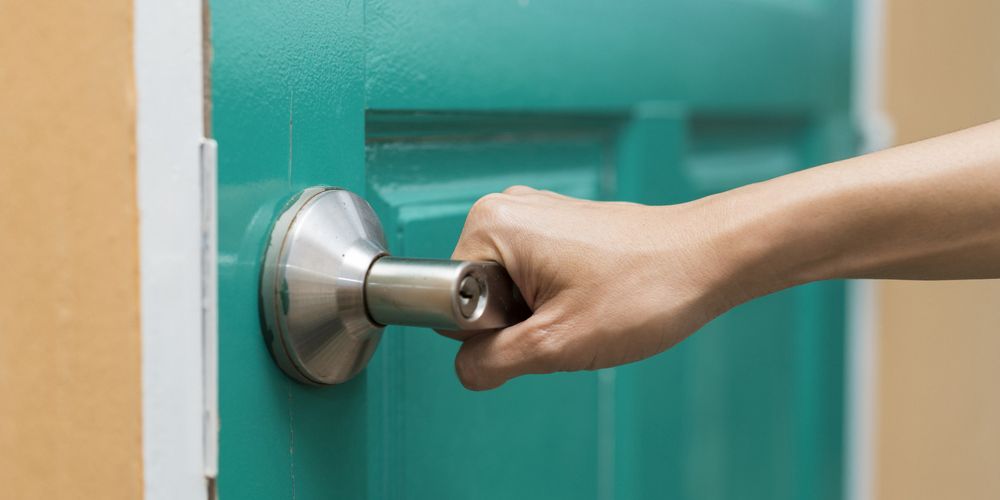
On a cold Monday morning, my key wouldn’t turn in the lock of my own front door. Through the new velvet curtains—curtains I’d never seen before, curtains that had replaced the linen ones Ethan and I had chosen together—I could see my mother-in-law Diana sipping tea from my wedding china, sitting in my living room like she owned the place.
When she finally opened the door, she looked at me with that particular expression of controlled satisfaction and said calmly, “You don’t live here anymore.”
I didn’t argue. I didn’t scream. I didn’t beg or cry or demand entry to my own home.
I walked away. I made one call. And by the time her family lawyer met me in that motel parking lot three days later, his face went pale at one line on a notarized page that Diana had no idea existed.
But I’m getting ahead of myself. Let me back up to the beginning of the worst week of my life.
Late January in Savannah has a particular kind of cold that settles into your bones—not the sharp, clean cold of northern winters, but a damp, penetrating chill that makes HOA mailbox lids clang in the wind and makes the air feel like it’s holding its breath, waiting for something to break.
I came home from St. Joseph’s Hospital at 8:04 AM on a Monday morning, still wearing the same jeans and sweatshirt I’d slept in for two nights straight in an uncomfortable chair in the cardiac intensive care unit. My overnight bag cut into my shoulder. A bouquet of roses from Ethan’s co-workers wilted on the passenger seat of my car like they already knew the ending of this story.
My husband Ethan had died at 3:17 AM on Sunday morning. Forty-one years old. Massive heart attack. No warning. No time to say goodbye, really—he was unconscious when they brought him in, never woke up, just slipped away while I held his hand and begged him to stay.
I’d spent the past forty-eight hours in a fluorescent-lit nightmare of medical decisions and paperwork and phone calls, running on adrenaline and grief and bad hospital coffee. I was numb. Hollowed out. Moving through the world like a ghost who didn’t quite understand she was dead yet.
All I wanted was to go home. To crawl into the bed I’d shared with Ethan for six years. To smell his pillow. To fall apart in private where no one could see.
At 8:12 AM, I stood on my own front porch, sliding my key into the lock of the house Ethan and I had lived in for four years.
The key wouldn’t turn.
I tried again, jiggling it, thinking maybe the lock was just sticky from the cold. Nothing. The key went in but wouldn’t catch, wouldn’t turn, like someone had changed something fundamental about the mechanism.
My stomach dropped. I pulled out the spare key we kept hidden behind the loose porch stone—the emergency backup Ethan had insisted on because I was always losing my keys.
That one wouldn’t work either.
Panic rising now, grief-fog clearing into sharp, cold fear, I looked through the narrow gap in the new velvet curtains and saw boxes stacked in my living room. My living room. Boxes I didn’t recognize. A pink velvet throw pillow on my reading chair—the leather reading chair Ethan had bought me for our third anniversary.
And furniture that wasn’t ours. A different coffee table. Different lamps.
Like someone had moved in while I was at the hospital watching my husband die.
I pounded on the door. “Hello? HELLO? What’s happening? Why won’t my key work?”
The door finally opened, but only partway, held by a security chain I’d never seen before.
Diana filled the frame. Ethan’s mother. Sixty-three years old, perfectly composed even at 8 AM, hair styled, makeup applied, wearing what I recognized as expensive loungewear—the kind that costs more than my entire outfit.
She looked at me with that particular expression of controlled satisfaction she always got when she’d won something, when she’d proven she was right about something I was wrong about.
“Rachel,” she said calmly, like we were meeting for lunch instead of standing at my own front door. “I didn’t expect you back so soon.”
“Why can’t I open my door?” My voice was shaking, but I kept my hands still, kept myself from grabbing the doorframe. “Why don’t my keys work?”
Diana tilted her head slightly, studying me. “Because, dear, you don’t live here anymore.”
Behind her, I caught a glimpse of Ethan’s sister Joseline drifting past with two of my serving plates—the white ceramic ones with the blue rim that had been my grandmother’s—like she was just strolling through a Target aisle, casually shopping in my home.
“What are you talking about?” I asked, my voice rising despite my efforts to stay calm. “This is my house. Ethan and I—this is our home. What are you doing here?”
“Was your home,” Diana corrected gently, like she was explaining something to a slow child. “But Ethan is gone now, God rest his soul, and the family needs to handle his affairs properly. You’re not really equipped for this, Rachel. You never were.”
“I’m his wife,” I said, and my voice broke on the word. “His widow. This is my home. You can’t just—you can’t change the locks on my house—”
“Ethan’s house,” Diana interrupted. “Ethan’s family home. You’ve been here six years, dear, but that doesn’t make you family. Not really. Not in the ways that matter legally.”
She started listing reasons, her voice calm and reasonable and absolutely certain. How I wasn’t on the deed—Ethan had owned the house before we married. How I’d never contributed financially to the mortgage—not true, but how could I prove it? How I didn’t have children with Ethan—we’d been trying, but fertility treatments are expensive and slow. How Ethan’s will was old, written before we married, leaving everything to his family.
Each statement was a knife, carefully placed, designed to cut.
“The family lawyer will be in touch,” Diana said. “We’ll make sure you get your personal belongings, of course. We’re not monsters. But the house belongs to the family now. It’s already being handled.”
She started to close the door.
“Diana, please,” I said, hating the begging note in my voice. “Ethan just died. Yesterday. I just—I just need to go inside. I need my things. I need—”
“I’ll have Joseline box up your clothes and toiletries,” Diana said, not unkindly—which somehow made it worse. “You can pick them up by the end of the week. But you don’t live here anymore, Rachel. The sooner you accept that, the easier this will be.”
The door closed. The deadbolt clicked.
I stood on my own porch—Ethan’s porch, apparently—and stared at the door I could no longer open.
I should have screamed. Should have pounded on the door. Should have called the police, called a lawyer, called someone who could tell me this wasn’t legal, wasn’t possible, wasn’t happening.
But I’d already spent every ounce of emotional energy I had watching my husband’s heart monitor go quiet in a hospital room that smelled like antiseptic and death. I had nothing left to fight with.
So I walked away.
Got in my car with my overnight bag and my dead roses. Drove to a motel off Highway 204 that rented rooms by the week and smelled like bleach and old coffee.
And I sat on the bed in that motel room and tried to figure out what the hell had just happened to my life.
My name is Rachel Morgan. I’m thirty-four years old. I met Ethan Morgan six years ago at a work conference in Charleston—he was presenting on startup tech solutions, I was there covering the conference for a business magazine. We got coffee. Then dinner. Then I drove to Charleston three weekends in a row before he finally just asked me to move to Savannah with him.
We got married after dating for eight months—fast, I know, but it felt right. Simple ceremony at City Hall, dinner with friends afterward, honeymoon in the mountains because neither of us could afford anything fancier.
It was a good marriage. Not perfect—no marriage is—but good. Real. We fought about normal things like whose turn it was to do dishes and whether we could afford a new couch. We laughed a lot. We were building something together.
Or I thought we were.
Two years ago, Ethan’s tech startup collapsed. The company he’d poured five years and all his savings into just… fell apart. Bad investors, worse timing, competition from a bigger company that could do what they did but cheaper.
He came home on a Tuesday afternoon and sat on the porch with his head in his hands and said, “It’s over. We lost everything.”
Not we. He lost everything. His money. His dream. His sense of himself as someone who was going to build something big.
I sat beside him on that porch and told him we’d figure it out. That we’d be okay. That it was just money, just a business, not the end of the world.
What I didn’t tell him—what I never told him, because his pride was already so damaged—was how much I sacrificed to keep us afloat after his company failed.
I refinanced the house. Took out a loan against the equity, putting the mortgage entirely in my name because Ethan’s credit was destroyed. Used my savings to make the payments when freelance work was slow. Picked up extra assignments, worked nights and weekends, wrote articles I didn’t care about for publications I didn’t respect because the money was good and we needed it.
For two years, I quietly carried the entire financial weight of our household while Ethan tried to rebuild his confidence, tried to find his next opportunity, tried to figure out who he was if he wasn’t a successful entrepreneur.
I never threw it in his face. Never made him feel small. Just loved him and supported him and believed we were partners, that my money was our money, that marriage meant you carried each other when one of you was too tired to walk.
It wasn’t romantic. It wasn’t the kind of sacrifice that gets celebrated in movies. It was just real, and it cost me more pride than money—watching him struggle, wanting to help but knowing he needed to find his own way back.
And now Diana was telling me none of it mattered. That I’d never really contributed. That I wasn’t really family.
By Tuesday morning, sitting in that motel room with interstate traffic hissing past my window, I’d moved past grief into something colder and clearer.
Anger, maybe. Or just survival instinct kicking in.
I called St. Matthews Memorial, the funeral home handling Ethan’s service.
“This is Rachel Morgan,” I said. “I need to make a change to my husband’s funeral arrangements.”
The woman on the other end of the line had that professionally compassionate voice they all develop. “Of course, Mrs. Morgan. What would you like to change?”
“The contact person,” I said. “Currently I believe it’s listed as Diana Morgan, Ethan’s mother. I need that changed to me. I’m his wife. I should be the primary contact.”
Silence on the other end. Then, carefully: “Mrs. Morgan, I’m showing here that… well, Mrs. Diana Morgan came in yesterday and filed paperwork as the responsible party for the service. She’s listed as next of kin.”
“I’m his wife,” I repeated. “I’m next of kin. She’s his mother, but I’m his spouse. Legally, that makes me the responsible party.”
More silence. “Let me… let me speak with my supervisor. Can I call you back?”
She called back twenty minutes later. “Mrs. Morgan, we’ve reviewed the situation. You’re correct—as the spouse, you are legally the primary next of kin. We’ve updated our records. Is there anything else you need to change?”
“Not yet,” I said. “But I’ll let you know.”
I hung up before my throat could close, before the reality of planning my husband’s funeral could overwhelm the practical necessity of making sure Diana didn’t take that away from me too.
Tuesday afternoon, I drove past the house—my house, Ethan’s house, whoever’s house it legally was—and parked behind the hedges down the street where Diana wouldn’t see my car if she looked out the window.
I watched for two hours. Saw Diana’s black Mercedes leave around 3 PM, followed by Joseline’s SUV twenty minutes later.
The house looked empty.
I knew the side door latch was faulty—had been since we moved in. Ethan kept meaning to fix it but never got around to it. You had to jiggle it just right, push up while turning, and it would pop open even when it was locked.
I’d used that trick dozens of times when I’d forgotten my keys.
I used it now.
The house smelled wrong. Like lavender air fresheners, the kind Diana always used. Not like our home. Not like Ethan’s cologne and my coffee and the particular scent that was just us.
My framed photos were gone from the hallway—the wedding picture, the vacation shots from our trip to the mountains, the candid photo of Ethan laughing that I’d loved so much. All gone, replaced by Diana’s family photos. Her other children. Her grandchildren. Pictures that erased me from the narrative of Ethan’s life.
I moved quietly through the house, looking for anything that would prove I belonged here, that I’d contributed, that I wasn’t just some temporary resident Diana could erase.
Bank statements—but Ethan had handled most of the finances, kept them in his email. Receipts—but who keeps receipts for mortgage payments? Proof of the refinance—but that paperwork was… where?
Ethan’s office. The small room off the kitchen that Diana used to mock as his “man cave,” the windowless space where he’d kept all his papers and electronics and the chaotic filing system that only made sense to him.
I opened drawers carefully, looking for anything. Old tax returns—those would show our joint filing, show my income, show I’d contributed. The refinance paperwork. Insurance documents. Anything with both our names on it.
That’s when I found it.
A slim black folder, tucked between two computer instruction manuals in the bottom drawer of his desk. On the cover, in Ethan’s all-caps handwriting:
POSTNUP. DO NOT DISCARD.
My hands were shaking as I opened it.
Inside was a postnuptial agreement. Dated eighteen months ago, three months after his company had collapsed. Notarized. Signed by both of us—though I didn’t remember signing it. Had I? There’d been so many papers after the refinance, so many things to sign, so many documents I’d trusted Ethan to handle…
I read it carefully, my legal knowledge limited to whatever I’d picked up from TV and articles I’d edited.
The language was formal but clear: In the event of Ethan’s death, the house—currently mortgaged in Rachel Morgan’s name—would pass to Rachel Morgan free and clear. Any remaining mortgage balance would be satisfied by Ethan’s life insurance policy, which listed Rachel Morgan as the primary beneficiary.
All of Ethan’s personal property, his investment accounts, his remaining business assets—those would pass to Rachel Morgan.
A provision stating that this agreement superseded any previous will or estate plan.
Another provision stating that this agreement was binding regardless of whether Ethan and Rachel had children.
It was airtight. Or it looked airtight to me. Written by a lawyer, signed by both of us, notarized.
I sat in Ethan’s office chair—the ergonomic one I’d bought him after his back started hurting from the cheap desk chair—and understood why Diana had been so certain, so confident.
She didn’t know this existed.
Ethan had never told her. Had hidden it away in his chaotic office, in the room Diana avoided, in the place she’d never think to look.
At the back of the folder, tucked behind the legal pages, was a single folded sheet of notebook paper in Ethan’s slanted handwriting.
I unfolded it with trembling fingers.
Rachel,
If you’re reading this, I’m probably gone. I’m sorry. I’m so, so sorry.
I know I’m not good with words when it’s important. I know I should have told you all this in person, should have explained. But I needed to write it down, needed you to have something concrete in case… in case something happened.
After my company failed, after you refinanced the house and saved us, I realized something. My mother has always thought you weren’t good enough for me. Wasn’t from the right family, didn’t have the right background, didn’t bring the right things to the marriage.
She’s wrong. You brought everything that matters. You saved me when I was broken. You carried us when I couldn’t. You loved me when I didn’t love myself.
But I know my family. I know my mother. And I know that if something happens to me, she’ll try to take everything from you. She’ll use the fact that the house was in my name before we married. She’ll use the fact that my old will—the one I wrote before I met you—leaves everything to her and my siblings.
I can’t let that happen.
This postnup protects you. Makes sure you get what you deserve, what you earned by being my partner when I had nothing to offer but debt and failure.
The house is yours. Completely yours. The life insurance will pay off the mortgage, and you’ll own it free and clear.
Don’t let my mother make you feel like you don’t deserve this. Don’t let her convince you that you weren’t really my family. You were my family. You ARE my family. The only one that mattered.
I love you. I’m sorry I didn’t say it enough. I’m sorry I didn’t show you enough how much I appreciated everything you did for us.
Fight for this, Rachel. Fight for yourself. You’ve carried me for two years. Let this be the last thing I can do for you.
All my love,
Ethan
I sat in that office, holding my dead husband’s letter, and cried for the first time since he’d died. Not the numb, shocked tears from the hospital. Real, breaking sobs that shook my whole body.
He’d known. He’d protected me. Even when I didn’t know I needed protecting.
Wednesday afternoon, I was sitting across from Angela Flores in her law office downtown.
Angela had been my roommate in college, the friend I’d stayed close to even after we graduated and she went to law school while I went into journalism. She’d become a real estate attorney, specializing in property disputes and estate issues.
I’d called her Tuesday night from the motel, told her everything in a disconnected voice that didn’t sound like mine.
“Come see me tomorrow,” she’d said. “Bring everything you have. Don’t talk to Diana or her lawyers without me. Understand?”
So here I was, in her office with its view of the river, handing over the black folder while she read through it with the careful attention of someone who knew exactly what she was looking at.
When her eyes hit the paragraph about the house passing to me free and clear, she went pale.
“Rachel,” she said, her fingers hovering over the notary seal, “please don’t leave until I read the entire document. And tell me everything about what’s happened since Monday.”
I told her. The changed locks. Diana’s certainty. The funeral home. The missing photos. All of it.
Angela’s face went through several expressions—shock, anger, professional calculation. When I finished, she leaned back in her chair and said one word: “Jesus.”
“Is it real?” I asked. “Is it legal? Can she just ignore it?”
“It’s absolutely real,” Angela said. “It’s properly executed, properly notarized, clear in its intent. This document supersedes any previous will Ethan had. Diana has no legal claim to that house. None. You own it—or you will, once the life insurance pays off the mortgage.”
“So what do I do?”
Angela pulled out her phone. “We call Diana’s lawyer right now. We inform them that you have a valid postnuptial agreement that grants you full ownership of the marital home. We give them twenty-four hours to restore your access to the property before we file for emergency relief with the court.”
“What if they fight it?”
“They’ll lose,” Angela said with certainty. “Rachel, what Diana did—changing the locks, denying you access to your marital home immediately after your husband’s death, removing your property—that’s illegal even if she did have a claim to the house. Which she doesn’t. This is open and shut.”
She started dialing. “Do you know who her lawyer is?”
“She mentioned a family lawyer,” I said. “I don’t know the name.”
“I’ll find out,” Angela said. Then, into the phone: “Yes, I need to speak with whoever represents the Morgan family estate… Yes, I’ll hold.”
The meeting happened in a Waffle House parking lot on Thursday morning—neutral ground, Angela insisted, not Diana’s lawyer’s office where they’d have home advantage.
The family lawyer was a man named Richard Pemberton, mid-fifties, expensive suit, the kind of lawyer who’d built a career on managing wealthy families’ affairs and probably never expected to be meeting in a Waffle House parking lot.
He arrived with an associate and a briefcase, looking annoyed at the location.
Angela and I arrived with the black folder and my dead husband’s letter.
“Mrs. Morgan,” Pemberton said, not unkindly. “I understand you’re upset about the house situation. But my client has legal standing—”
“Your client has no legal standing,” Angela interrupted, handing him a copy of the postnuptial agreement. “This document, properly executed and notarized, supersedes any previous will and grants my client full ownership of the marital home.”
I watched his face as he read. Watched the professional confidence drain away, replaced by something that looked like genuine shock.
He went pale at the paragraph about the house. His associate leaned over, read the same section, and whispered something in his ear.
“This is…” Pemberton looked up at me, then at Angela. “Diana never mentioned anything about a postnuptial agreement.”
“Because she doesn’t know it exists,” Angela said. “But now you do. And now you need to inform your client that she has illegally denied my client access to her own property, removed my client’s belongings without permission, and made fraudulent claims of ownership.”
“That’s a strong accusation—”
“It’s an accurate description,” Angela said. “You have twenty-four hours to restore Mrs. Morgan’s full access to the property, return all removed belongings, and acknowledge her legal ownership. If you don’t, we file emergency motions tomorrow morning and this becomes very public, very expensive, and very embarrassing for the Morgan family.”
Pemberton looked at the postnup again. Looked at me. “Mrs. Morgan, I’m very sorry for your loss. And I’m… I’m sorry for what’s happened this week. I had no idea this document existed. Diana told me—she said you’d only been married a few years, that you hadn’t contributed financially, that—”
“She was wrong,” I said quietly. “About all of it.”
“I can see that,” he said. “I’ll speak with my client immediately.”
By Friday afternoon, I had my keys back. The real keys, not the ones that had been changed.
Diana’s Mercedes was gone when I pulled up. So was Joseline’s SUV. The house was empty.
I walked through slowly, taking inventory. They’d removed most of the boxes, though they’d left their furniture upgrades—the new coffee table, the velvet pillows, the expensive lamps. I didn’t care. They could come get their things later.
My photos were back in the hallway. My grandmother’s serving plates were in the kitchen. My clothes were in the closet.
It looked like our home again. Except Ethan wasn’t there.
I sat in the living room—my living room, legally and completely mine now—and let myself feel it all. The grief I’d been holding back while fighting Diana. The loss of the person who’d written me that letter, who’d protected me even while dying.
The unfairness of having to fight his family for the right to grieve in the home we’d built together.
Angela had told me the life insurance would pay out within a few weeks. That I’d own the house free and clear. That Diana’s lawyer had already drafted paperwork acknowledging my ownership and promising no further interference.
“She’s furious,” Angela had said. “Pemberton says she feels betrayed that Ethan did this without telling her.”
“Good,” I’d said, surprising myself with the coldness in my voice. “She tried to steal my home while I was burying my husband. She should feel betrayed. By herself.”
Ethan’s funeral was Saturday afternoon at St. Matthews Memorial.
Diana came, of course. Sat in the front row with Joseline and the rest of the family. Cried appropriately. Accepted condolences gracefully.
She didn’t speak to me. Didn’t acknowledge me beyond a brief nod when our eyes met across the church.
I sat in the row behind her—the widow’s row, Angela called it, the place where surviving spouses sit—and listened to people talk about Ethan like they’d known him, like they understood who he was.
None of them mentioned the letter. None of them knew about the fight over the house, about the postnup, about Diana changing the locks.
They just saw a grieving family saying goodbye to a son, a brother, a husband taken too soon.
At the graveside, as they lowered Ethan into the ground, Diana caught my eye. For just a moment, her composed mask slipped. I saw rage there. And shame. And something that might have been respect, though I could have been imagining that.
Then the mask was back. She turned away. Got into her Mercedes and drove off without saying goodbye.
That was seven months ago.
I still live in the house. My house. The mortgage was paid off by Ethan’s life insurance, just like the postnup said it would be. I own it completely now—deed in my name, no strings attached, no family members who can take it away.
I changed the locks again. Different locks, better ones. Gave a spare key to Angela, not to anyone in the Morgan family.
I haven’t spoken to Diana since the funeral. Haven’t heard from Joseline. The Morgan family closed ranks, made me an outsider again, except this time I don’t care because I have what matters: the home Ethan and I built, the security he fought to give me, the proof that I mattered to him even if I never mattered to them.
I found a grief counselor. Started working through the complicated tangle of loss and betrayal and relief. Started figuring out who Rachel Morgan is when she’s not someone’s wife, not fighting someone’s family, just herself.
I turned Ethan’s office into my own workspace. Kept his desk but got rid of the chaos, organized the papers, made it functional. It feels right, somehow. Like honoring what he left me by using it to build my own life.
Sometimes I reread his letter. The one from the black folder, the words he wrote knowing he might die, knowing his mother would try exactly what she tried.
Fight for this, Rachel. Fight for yourself.
I did, Ethan. I fought. And I won.
Not because I was smarter or richer or better connected. But because you loved me enough to protect me. Because you saw what your family was and made sure they couldn’t take from me what we’d built together.
The house is mine. The life is mine. The future is mine to build however I want.
And every time I turn my key in the lock—the lock that works now, the lock that lets me into my own home—I remember the Monday morning when I couldn’t get in, when Diana stood in my doorway and told me I didn’t belong.
She was wrong.
And thanks to a black folder in a messy office, thanks to a husband who knew his family better than they knew themselves, I had proof.
The locks they changed couldn’t keep me out.
Because Ethan had already given me the only key that mattered: a legal document that said I was his family. His real family. The one he chose.
THE END

Sophia Rivers is an experienced News Content Editor with a sharp eye for detail and a passion for delivering accurate and engaging news stories. At TheArchivists, she specializes in curating, editing, and presenting news content that informs and resonates with a global audience.
Sophia holds a degree in Journalism from the University of Toronto, where she developed her skills in news reporting, media ethics, and digital journalism. Her expertise lies in identifying key stories, crafting compelling narratives, and ensuring journalistic integrity in every piece she edits.
Known for her precision and dedication to the truth, Sophia thrives in the fast-paced world of news editing. At TheArchivists, she focuses on producing high-quality news content that keeps readers informed while maintaining a balanced and insightful perspective.
With a commitment to delivering impactful journalism, Sophia is passionate about bringing clarity to complex issues and amplifying voices that matter. Her work reflects her belief in the power of news to shape conversations and inspire change.