The House I Built, The Son Who Forgot
The highway stretched out before me like a promise—four hours of asphalt ribboning down the coast, past rest stops with overpriced coffee and shingled beach houses that got progressively more weathered the closer you got to the water. I had my windows down despite the wind tangling my hair, because I wanted to smell the salt air the moment it appeared. I wanted to feel the exact second when city gave way to coast, when obligation gave way to peace.
I’d been counting down to this vacation for months. Three days. Just three days where nobody needed anything from me, where I could sit on my deck with a book I’d never finish and watch the waves do their endless, mindless work of reshaping the shore.
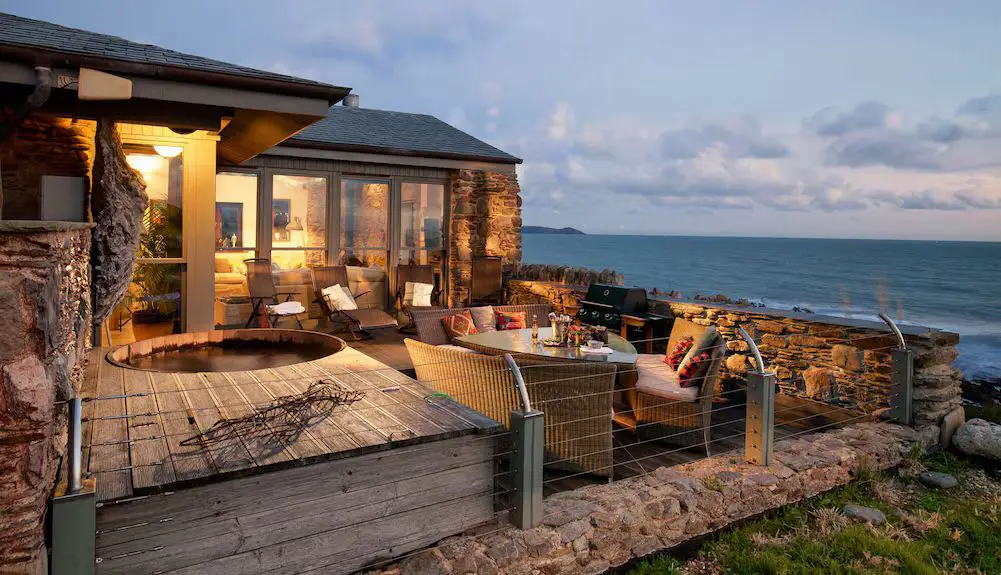
The beach house was mine—truly, legally, completely mine—purchased eight years ago with money I’d saved from decades of nursing night shifts. It wasn’t grand. It wasn’t even particularly large. But it had a view of the ocean from the master bedroom, a kitchen window that caught the morning light, and a quiet that felt like medicine after years of beeping monitors and fluorescent hospital halls.
I’d driven this route so many times I could navigate it half-asleep: exit 47, left at the gas station with the faded Pepsi sign, right on Coastal Road, third house past the wooden pier that teenagers used for jumping into the waves on summer afternoons.
But when I pulled into my driveway that Friday afternoon in late July, something was immediately, terribly wrong.
First, there were trucks. Two of them—contractor trucks with lumber in the beds and company logos on the doors.
Second, there was noise. The high-pitched scream of a power drill cutting through the salt air, the rhythmic bang of hammers, voices shouting instructions over the sound of the waves.
Third, there was Khloe.
My daughter-in-law stood on my deck—my deck, the one I’d had restained two summers ago—pointing like a foreman, gesturing emphatically at three workers who were nodding and taking notes. She wore white jeans and a striped shirt that probably cost more than my entire vacation budget, her phone pressed to her ear, her voice carrying across the yard with the kind of confidence that comes from never being told no.
She didn’t greet me. Didn’t even turn around when my car door slammed. Just continued barking instructions about tile delivery and finish dates and making sure everything was “move-in ready by Monday.”
My front door was wide open—not just unlocked, but propped open with a bag of cement that sat beside my geraniums, the ones I’d planted in terracotta pots three springs ago.
I walked up my own steps feeling like an intruder.
Inside was worse.
My kitchen—the kitchen I’d carefully designed with white subway tile and butcher block counters, the kitchen where I’d learned to make real coffee and had hosted exactly three dinner parties in eight years—barely existed anymore.
The cabinets were torn off the walls, leaving raw plywood and holes where the screws had been. Dust coated everything: the counters, the floor, the windowsills. The refrigerator had been shoved into the living room at an angle, its door hanging open, revealing the leftovers I’d put there two weeks ago now growing various shades of mold.
A circular saw sat on what used to be my kitchen table. Paint cans were stacked near the back door. Someone had written measurements in pencil directly on my walls.
“What is this?”
My voice came out steady—years of nursing had taught me to stay calm in emergencies, to assess before reacting, to never let panic show on your face even when everything inside you was screaming.
Matthew appeared from the direction of the bathroom, his hands gray with drywall dust, his face bright with the kind of enthusiasm that immediately made my stomach clench.
“Mom! You’re here!” He crossed the room to hug me, leaving dusty handprints on my shirt. “I wasn’t expecting you until tomorrow. This was supposed to be a surprise.”
“It’s certainly surprising,” I managed.
“I know it’s a mess right now, but wait until you see the plans.” He was already pulling up something on his phone, swiping through what looked like design renderings. “We’re updating everything. New cabinets, new appliances, new tile in both bathrooms. Khloe found this amazing designer who specializes in coastal modern aesthetic—”
“Matthew,” I interrupted quietly. “Where is my bed?”
He blinked. “What?”
“My bed. The one that was in the master bedroom. Where is it?”
“Oh.” He had the grace to look slightly uncomfortable. “Come on, I’ll show you.”
He led me upstairs, still talking about grout colors and cabinet hardware, his voice echoing in the stripped-down shell of what used to be my refuge.
When he opened the door to the master bedroom—my bedroom, with the ocean view and the reading nook and the closet I’d organized with matching hangers—my stomach dropped.
Everything was gone.
The bed I’d bought after my divorce, the one that felt like reclaiming something essential about myself—gone.
My grandmother’s armoire, the single piece of furniture I’d inherited that carried any family history—gone.
The curtains, the rug, the framed photographs of coastlines I’d collected from various trips—all gone.
The walls had been painted halfway to a mint green I would never, ever have chosen. Wires dangled from the ceiling where my light fixture used to be. The closet doors had been removed entirely.
“Where are my things?” I asked, and my voice sounded strange in my own ears—too quiet, too controlled.
“In the little room at the end of the hall,” Matthew said, already distracted by his phone, typing something rapidly. “Just temporarily, obviously. Once everything’s finished, we’ll figure out better storage solutions.”
The little room at the end of the hall was barely bigger than a closet. It had been my junk room—storage for beach chairs and extra linens and the boxes of things I couldn’t quite throw away but didn’t need regularly.
“Matthew.” I turned to face him fully. “What is happening here?”
He looked up from his phone, and for a moment I saw something flicker across his face—guilt, maybe, or discomfort—but it passed quickly, replaced by that bright enthusiasm again.
“We’re remodeling,” he said simply. “Khloe and I are moving in here permanently. Her parents too. It makes perfect sense, Mom. You’ve got your apartment in the city. You barely use this place—what, a few weekends a year? It’s wasteful for it to sit empty when we could make it a real family home.”
I stared at my son—my only child, the boy I’d raised alone after his father decided family life wasn’t for him, the kid I’d worked double shifts to put through college—and realized he wasn’t asking for permission.
He was announcing a decision he’d already made.
“This is my house,” I said carefully.
“I know, and it’s going to be beautiful when we’re done. You’re going to love it.” He was already heading back downstairs, back to whatever project was currently consuming his attention. “Khloe has amazing taste. You should see what she’s planned for the kitchen.”
I stood alone in the gutted shell of my bedroom and felt something inside me go very still and very cold.
Downstairs, I could hear Khloe’s laugh—bright, careless, utterly unbothered.
“She’ll get used to it,” she was saying into her phone. “She always does. Matthew says she never makes waves.”
Never makes waves.
Because I’d spent thirty years being the calm one, the steady one, the one who accommodated and adjusted and made space for other people’s needs.
Because I’d raised Matthew to believe that my flexibility was infinite, that my boundaries were negotiable, that my property was somehow his to redistribute as he saw fit.
I went back downstairs, stepping carefully over power tools and construction debris, and sat in the olive-green chair in my living room—the one piece of furniture they apparently hadn’t felt entitled to remove yet.
It was an ugly chair, honestly. Olive green velvet that was just slightly too shiny, with wooden arms that were uncomfortable to rest against. But I’d bought it at an estate sale the week after I closed on this house, and I’d never moved it because it reminded me that this place was real, that I’d actually done it, that at fifty-six years old I’d bought myself a beach house with money I’d earned and saved and protected.
My purse sat at my feet, my overnight bag still slung over my shoulder because I hadn’t been offered anywhere to put it.
I reached into my purse and pulled out the folder I keep organized for exactly moments like this—the folder with copies of deeds and insurance policies and legal documents that prove what’s mine.
The beach house deed was right where I’d filed it: my name, my signature, my property.
Purchased with my money. Titled in my name alone. No co-owners. No ambiguity.
I pulled out my phone and called Gregory—the lawyer who’d handled my divorce, then the house purchase, then the will I’d updated three years ago.
“Margaret,” he answered warmly. “How’s the beach?”
“Complicated,” I said. “I need you to come down here. Tomorrow morning. Sunrise. And bring everything—the deed, the property records, anything that proves ownership.”
There was a pause. Gregory was good at reading tone.
“What happened?” he asked, his voice shifting into business mode.
“My son is remodeling my house without permission and apparently planning to move in. With his wife. And her parents.”
Another pause, longer this time.
“I’ll be there at six AM,” he said. “Don’t sign anything, don’t agree to anything, and Margaret?”
“Yes?”
“Don’t let them convince you you’re being unreasonable. This is your property. Period.”
I hung up and sat very still in my ugly olive-green chair, listening to the sounds of my home being torn apart around me.
The Performance of Generosity
Matthew came back downstairs around 7 PM, looking pleased with himself in a way that made my jaw tighten.
“Mom, I want to show you the timeline.” He had a folder of his own now—much thicker than mine, full of contractor estimates and design boards and what looked like a full project plan.
He spread papers across my coffee table—or rather, on top of the coffee table, since the surface was covered in construction dust.
“Kitchen should be done in three weeks,” he narrated, pointing at a Gantt chart that someone had created with impressive detail. “Both bathrooms in four. Master bedroom in two. We’re doing the deck last because we want to get the interior livable first.”
“Livable,” I repeated.
“For when Khloe’s parents move in. They’re selling their place in Atlanta, and the timing works out perfectly. They can be here by mid-August, which gives us time to get everything set up exactly right.”
He showed me paint swatches. Floor samples. Photographs of light fixtures that cost more than I’d spent on my entire first car.
“This is going to add so much value to the property,” he continued enthusiastically. “Khloe’s dad knows real estate, and he says these updates could increase the value by thirty, maybe forty percent.”
Increase the value of my property. Using their taste. For their benefit.
“Matthew,” I said quietly. “Did you ask me if you could do any of this?”
He blinked, looking genuinely confused by the question.
“I mean… I mentioned we were thinking about the beach house? A few months ago? And you said it was fine if we used it more.”
“I said you could visit,” I clarified. “I said you were welcome here. I didn’t say you could gut my kitchen.”
“Mom.” He used the patient voice he’d probably learned in whatever management training his tech job provided. “We’re improving it. For you. This is an investment in your property.”
“That I didn’t ask for.”
“But you’ll benefit from it,” he insisted. “And honestly, it’s kind of wasteful to leave this place sitting empty most of the year when we could be using it, building equity, making it a real family gathering place.”
There it was again. That word. Wasteful.
As if my ownership of something I barely used was somehow morally wrong. As if the fact that I’d worked for thirty years to afford a place I could escape to a few times a year was selfish rather than earned.
“Where am I supposed to sleep tonight?” I asked.
“The little room! I told you. We put a lock on it and everything.” He pulled a key from his pocket and handed it to me like it was a gift. “So you’ll have privacy.”
Privacy. In a room the size of a closet. In my own house.
I looked at the key in my palm and felt the last thread of patience I’d been clinging to finally snap.
But I didn’t show it. Years of nursing—of dealing with difficult doctors and entitled patients and hospital administrators who thought staff were interchangeable—had taught me the value of staying calm on the surface while planning your next move in private.
“Thank you,” I said, taking the key.
Matthew looked relieved. “I knew you’d understand once you saw how much thought we’d put into this.”
Khloe appeared then, finally acknowledging my existence with a bright smile that didn’t reach her eyes.
“Margaret! You’re here early!” She air-kissed near my cheek, leaving a cloud of expensive perfume. “I’m so glad you’ll get to see the progress. Wait until you see the tile samples I picked for the master bath—they’re absolutely stunning.”
The master bath. My bathroom. The one I’d tiled myself eight years ago with simple white subway tile because it felt clean and classic and mine.
“I’m sure they’re lovely,” I said neutrally.
That night, I carried my bag to the “little room” at the end of the hall and found my life compressed into a space barely large enough to turn around in.
My bed—a queen-size that had felt perfectly adequate in the master bedroom—had been disassembled and crammed into the room with about six inches of clearance on either side. My grandmother’s armoire had been wedged against one wall, its doors unable to open fully because there wasn’t enough space.
The rest of my belongings—my clothes, my books, the photographs that usually sat on my nightstand—had been shoved into boxes and stacked in the corner.
I sat on the edge of the too-cramped bed and allowed myself exactly five minutes of fury.
Then I opened the boxes, found my pajamas, and got ready for bed.
Before I turned off the light, I went back downstairs for water and found something that stopped me cold.
My dining table—the one currently serving as a workbench for power tools—was covered in papers I hadn’t seen before.
Contractor estimates, yes. Timeline charts, yes.
But also: a quitclaim deed form, printed and partially filled out, with my name at the top as the grantor and Matthew’s name as the grantee.
Transferring ownership of my beach house from me to him.
The signature line was blank. Waiting.
Next to it was a note in Khloe’s handwriting: “Have her sign this Monday after she sees the finished kitchen—she’ll be so grateful she won’t think twice.”
I stood there in my own living room, holding a glass of water, staring at documents designed to trick me out of my own property.
And I did what I’d learned to do after thirty years of night shifts: I stayed calm, I took photos of everything with my phone, and I put every page back exactly where I’d found it.
Then I went upstairs, locked the door of my tiny room, and slept better than I had in weeks.
Because now I knew exactly what I was dealing with.
And I knew exactly what I was going to do about it.
The Dawn Meeting
My alarm went off at 5:30 AM—unnecessarily, since I’d been awake since 4:45, too wired with adrenaline to sleep.
I dressed carefully: jeans, a button-down shirt, my good shoes. Professional. Calm. Ready.
I made coffee in what remained of my kitchen, using the coffee maker that had somehow survived the renovation and finding cups in a box labeled “DONATE.”
At 5:58 AM, I sat in my olive-green chair with a mug of coffee and waited.
The house was silent around me. Matthew and Khloe were still asleep in what used to be the guest room—apparently my gutted master bedroom wasn’t quite ready for occupancy yet.
At exactly 6:00 AM, there was a knock at the door.
Not polite. Urgent. The kind of knock that says this is important and not going away.
I opened it to find Gregory on my porch, briefcase in hand, looking every inch the lawyer who’d built a career on property disputes and family law.
Behind him was a woman I didn’t immediately recognize—mid-fifties, professional attire, carrying her own briefcase.
“Margaret,” Gregory said. “This is Diane Chen. She’s a property appraiser and sometimes serves as an expert witness in cases like this.”
“Cases like this,” I repeated.
“Unlawful renovation without owner consent,” Diane said matter-of-factly. “If you’re planning to pursue damages, you’ll need documentation of what was altered, what it costs to repair, and what the property value impact is.”
I stepped back to let them in.
Gregory’s eyes widened as he took in the gutted kitchen, the displaced appliances, the construction debris scattered across every surface.
“Jesus, Margaret,” he muttered. “When you said remodeling, I thought you meant they’d painted a room.”
“So did I,” I said quietly.
The noise must have woken Matthew and Khloe, because within minutes they were stumbling down the stairs in pajamas, faces creased with sleep and confusion.
“Mom? What’s—” Matthew stopped short when he saw Gregory and Diane. “Who are these people? What’s going on?”
“This is my lawyer,” I said calmly. “And a property appraiser. They’re here to document the unauthorized alterations to my home.”
Khloe’s face went pale. “Unauthorized? We’re improving it! You should be thanking us!”
“Did I give you permission to remove my kitchen cabinets?” I asked, still calm.
“Well, no, but—”
“Did I give you permission to empty my bedroom and dispose of my furniture?”
“We didn’t dispose of it, we just moved—”
“Did I give you permission to prepare legal documents transferring ownership of my property to my son?”
Dead silence.
Matthew’s face drained of color. “How did you—”
“The quitclaim deed form was on the dining table,” I said. “Along with a note about having me sign it Monday after I saw the finished kitchen and felt ‘grateful.’ Did you really think I wouldn’t notice?”
Gregory had his phone out now, photographing everything—the gutted kitchen, the displaced refrigerator, the construction debris. Diane was making notes on a tablet, her fingers flying across the screen.
“Mrs. Harper,” Gregory said formally, addressing me by my legal name, “do you wish to press charges for property damage and attempted fraud?”
“Fraud?” Khloe gasped. “That’s insane! We were just—”
“Preparing documents to transfer ownership without proper disclosure or consideration,” Gregory interrupted. “That’s textbook fraud. Add in the thousands of dollars in unauthorized alterations, and we’re looking at both civil and potentially criminal liability.”
Matthew found his voice finally. “Mom, you’re overreacting. We were trying to help—”
“Help,” I repeated softly. “You gutted my kitchen without asking. You threw away my bed without asking. You planned to trick me into signing over my house without asking. At what point was any of this about helping me, Matthew?”
He couldn’t answer. Just stood there looking young and caught and desperately searching for words that would make this something other than what it was.
Behind me, I heard new voices.
Khloe’s parents—who apparently had been sleeping in the downstairs guest room I didn’t even know was occupied—emerged looking confused and defensive.
“What’s all this noise?” Khloe’s father demanded. “Who are these people?”
“Her lawyer,” Khloe said bitterly. “Apparently we’re being accused of fraud for trying to improve her house.”
“Improve?” Gregory’s voice was sharp. “You prepared ownership transfer documents and planned to have her sign them under false pretenses. That’s not improvement. That’s theft.”
Khloe’s mother made an indignant sound. “We have rights too! We were promised—”
“Promised what?” I interrupted. “Promised my house? By whom?”
Guilty silence from Matthew.
“Did you tell your in-laws they could move into my property?” I asked him directly.
“I… we thought… you said we could use the beach house…”
“For visits,” I said. “Not as your primary residence. Not to renovate without permission. Certainly not to transfer ownership.”
Diane finished her documentation and looked up. “Mrs. Harper, preliminary assessment suggests approximately forty thousand in damage to pre-existing finishes, plus the cost of replacing any furniture or belongings that were discarded. I’d need a few days for a full report, but that’s the ballpark.”
Forty thousand dollars.
Matthew’s face went even whiter.
“Additionally,” Gregory added, “you could pursue an injunction preventing them from continuing any work, plus a trespass order requiring them to vacate immediately.”
“You can’t kick us out!” Khloe protested. “We’ve put weeks of work into this place!”
“Unauthorized work,” Gregory corrected. “On property you don’t own. That gives you exactly zero legal standing.”
I looked at all of them—Matthew, Khloe, her parents—standing in my living room surrounded by the evidence of their presumption, their entitlement, their absolute certainty that what was mine was somehow theirs to redistribute.
And I made a decision.
The Terms
“Here’s what’s going to happen,” I said quietly, and the room went silent.
“First, all work stops immediately. The contractors leave today. Nothing else gets touched, removed, or altered.”
“But the kitchen is half-done—” Khloe started.
“Second,” I continued as if she hadn’t spoken, “you have seventy-two hours to return every piece of furniture you removed. My bed. My grandmother’s armoire. Everything. If you sold it or donated it, you replace it with equivalent items at your expense.”
Matthew opened his mouth. I held up a hand.
“Third, you hire a contractor—at your expense—to restore this house to exactly the condition it was in before you started. Original cabinets or exact replicas. Original paint colors. Everything.”
“That’s going to cost—”
“Approximately forty thousand dollars, according to the appraiser,” I said. “Which is forty thousand dollars less than I could sue you for. Consider yourselves fortunate.”
“Mom, please—”
“Fourth, you and Khloe and her parents vacate this property by tomorrow evening. You are not welcome here again without my explicit written invitation.”
Khloe’s father made an angry noise. “This is ridiculous! We have rights! We’ve invested money into this property!”
“Invested without permission is the same as wasted,” Gregory said coldly. “You have no legal claim to anything here. Mrs. Harper is being generous by not pursuing criminal charges.”
“Fifth,” I continued, my voice still calm, still steady, “the quitclaim deed gets shredded. Now. In front of witnesses.”
I walked to the dining table, picked up the partially completed form, and handed it to Diane, who pulled a small paper shredder from her briefcase—apparently she’d come prepared—and destroyed the document methodically.
“Finally,” I said, “we’re going to have a conversation about boundaries and respect and the difference between generosity and entitlement. But that conversation happens after you’ve fixed what you broke.”
“And if we refuse?” Khloe asked defiantly.
“Then I pursue every legal remedy available,” I said simply. “Criminal charges for the attempted fraud. Civil suits for the property damage. Liens against your assets to cover the restoration costs. Gregory has already prepared the paperwork—we just need to file it.”
I looked at my son, who was staring at the floor like it might offer him an escape route.
“Matthew, look at me.”
He did, reluctantly.
“I love you,” I said. “I will always love you. But I will not be stolen from. Not by strangers, and not by my own child. Do you understand?”
He nodded, tears streaming down his face now.
“I’m sorry,” he whispered. “I’m so sorry, Mom. Khloe said you wouldn’t mind, that you never used this place anyway, that it was wasteful to leave it empty—”
“And you believed her instead of asking me.”
“I know. I know. I just—we needed a place, and her parents needed somewhere to go, and it seemed like such an easy solution—”
“Easy for whom?” I asked gently. “Not for me. I’m the one who lost my bedroom, my kitchen, my property rights. I’m the one you were planning to trick into signing over my house. How was any of that easy for me?”
He had no answer.
Khloe, to her credit, at least had the decency to look ashamed now. Her parents looked furious but also scared—Gregory had that effect on people.
“Seventy-two hours,” I repeated. “Furniture returned, contractors hired to restore, all of you out. Those are the terms. Non-negotiable.”
“And if we do all that?” Matthew asked. “Then what?”
“Then we figure out where we go from here,” I said. “But Matthew, you need to understand: you don’t get to decide how I use my property. You don’t get to take what’s mine and redistribute it based on what you think is fair. And you absolutely don’t get to forge documents to steal my house.”
“I wasn’t trying to steal—”
“Yes, you were,” I interrupted firmly. “That’s exactly what you were trying to do. You just convinced yourself it was justified because I ‘didn’t need’ two homes. But need isn’t the point. Ownership is.”
I gestured around at the gutted kitchen, the displaced appliances, the construction chaos.
“This house represents thirty years of night shifts,” I said. “Thirty years of saving and planning and working while you slept. Thirty years of building something that was mine—truly mine—in a way nothing else in my life has ever been. And you tried to take it because Khloe’s parents needed somewhere to live and you thought I’d be too polite to fight back.”
“Mom—”
“I’m not finished.” My voice was still calm, but there was steel underneath it now. “You’ve spent your whole life watching me accommodate, adjust, make space for other people. You watched me stay calm through your father leaving, through financial struggles, through every crisis we faced. And somewhere along the way, you learned the wrong lesson.”
“What lesson?”
“You learned that my boundaries were negotiable. That my kindness was the same as weakness. That if you just pushed hard enough, I’d eventually give you whatever you wanted to avoid conflict.”
The words hung in the air between us.
“But I’m done with that,” I said quietly. “I’m done making myself smaller so other people can be more comfortable. I’m done sacrificing what’s mine because someone else decided they needed it more. I’m done being the person everyone expects to just ‘get used to it.'”
I looked at Gregory and Diane. “Thank you both for coming. Please send me the full documentation and your bills.”
They nodded, gathered their things, and left.
When they were gone, I turned back to Matthew and Khloe and her parents.
“Seventy-two hours,” I said one final time. “Starting now.”
Then I walked past all of them, climbed the stairs to my tiny temporary room, and closed the door.
Six Months Later
I’m writing this from the master bedroom of my beach house, which has been fully restored to exactly the way it was before Matthew and Khloe’s “improvements.”
It took five weeks and cost them slightly over forty-two thousand dollars—more than Diane’s initial estimate because the contractors found additional damage once they started the restoration work.
My bed is back. My grandmother’s armoire is back. The original kitchen cabinets—thankfully, the contractor Matthew hired had saved them when he was told they were being replaced—were reinstalled.
The house is mine again, wholly and completely.
Matthew and I have spoken three times since that morning. Brief, careful conversations where we both tried to rebuild something that got badly broken.
He’s in therapy now, working through what his therapist apparently calls “entitlement issues stemming from childhood emotional patterns.” I’m glad he’s doing the work, even if I’m not ready to trust the results yet.
Khloe sent a brief apology email two months ago. It was clearly drafted by a lawyer—no admission of wrongdoing, just vague language about “misunderstandings” and “different expectations.” I didn’t respond.
Her parents moved to South Carolina instead of Atlanta. I know this only because Matthew mentioned it in passing during one of our careful conversations.
The beach house has become even more precious to me now. I come down nearly every weekend, sometimes with friends, sometimes alone. I sit in my olive-green chair and watch the waves and remind myself that I fought for this. That I didn’t let them take it. That I finally, after fifty-six years, learned to defend what was mine.
Sometimes I think about that moment when I found the quitclaim deed on my dining table—the casual presumption of it, the assumption that I’d sign away my property out of gratitude for renovations I’d never requested.
And I think about how close I came to doing exactly that.
Because for most of my life, that’s who I was: the person who accommodated, who adjusted, who made space for other people’s needs even when it meant erasing my own.
The good nurse. The flexible mother. The understanding ex-wife. The woman who never made waves.
But that morning, standing in my gutted kitchen with my lawyer and a property appraiser, I became someone different.
I became the woman who said no.
Who drew a boundary and defended it.
Who looked at her own son and said: you cannot have this, it’s mine.
It wasn’t easy. It wasn’t comfortable. It certainly wasn’t the “nice” thing to do.
But it was necessary.
Because some things are worth fighting for.
And a life where you’re allowed to own what you’ve earned—without apology, without guilt, without making yourself small to accommodate other people’s presumptions—is one of them.
The waves outside my window keep their endless rhythm, indifferent to human drama, reshaping the shore one grain of sand at a time.
And I sit in my restored bedroom in my defended house, finally understanding what it means to take up space in my own life.
THE END

Adrian Hawthorne is a celebrated author and dedicated archivist who finds inspiration in the hidden stories of the past. Educated at Oxford, he now works at the National Archives, where preserving history fuels his evocative writing. Balancing archival precision with creative storytelling, Adrian founded the Hawthorne Institute of Literary Arts to mentor emerging writers and honor the timeless art of narrative.