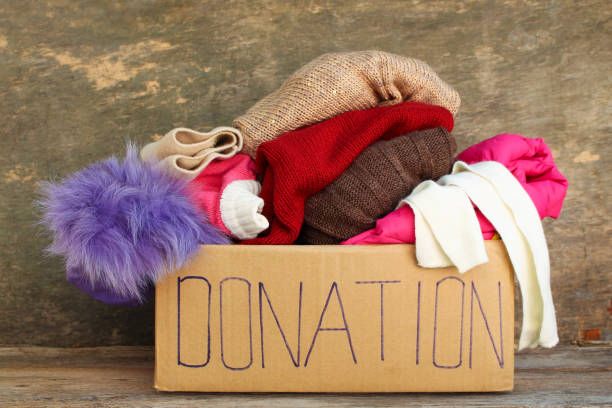
The Donation Tent Where My Grandfather Found Me
At the winter donation event for people in need, my grandfather saw me sitting quietly in the temporary warming tent. He asked me: “Where did my apartment and my one million dollars I gave you go?”
The tent smelled like soup, wet wool, and that clean-paper scent from fresh donation boxes still sealed in plastic. Outside, Indianapolis wind kept tapping the plastic walls like it wanted in, like it was trying to remind everyone inside that February wasn’t done with them yet. Volunteers in knit hats and puffy jackets moved down the line with practiced efficiency—hands passing out blankets, winter boots, hot cups of soup that warmed your fingers before they warmed your chest.
Somewhere near the entrance, a small American flag on a pole flickered with every gust, and Christmas lights someone hadn’t taken down yet blinked red and green against the gray afternoon.
I kept my head down on the folding bench, shoulders tucked into borrowed layers—a coat someone had donated, boots that were half a size too big, a hat I’d grabbed from the free bin without looking at it closely. Trying to look like I belonged in the background, like I was just another face in the crowd of people who needed help getting through winter.
My name is Sarah Katherine Morrison, I’m twenty-six years old, and six months ago I’d been standing in my grandfather’s beautiful downtown apartment signing papers that were supposed to secure my future. Today I was sitting in a charity tent trying to get warm.
Then I heard a familiar voice cutting through the general murmur of the tent—steady, confident, the kind of voice that always made people straighten up without realizing it.
“Excuse me—coming through. Got a heavy box here.”
I looked up, and my heart stopped.
My grandfather.
William Morrison, seventy-four years old, pillar of the Indianapolis community, retired banker, lifelong philanthropist. Carrying a box of winter coats like it weighed nothing, scanning faces the way he always did at community events—quick smile, quick nod, already thinking about who needed what, who could use an extra blanket, who looked like they might not have a warm place to sleep tonight.
For half a second, he didn’t see me. Just walked past, focused on delivering his box to the volunteer station.
And then he turned around to head back outside for another load, and his eyes swept across the crowd of people sitting on folding benches, and they landed on me.
The box of coats hit the floor with a soft thud.
His expression changed so fast it startled me—went from benevolent philanthropist to shocked grandfather in the space of a heartbeat. Color drained from his face. His mouth opened slightly like he’d forgotten how to form words.
“Sarah?” he said, and his voice cracked on my name like he wasn’t sure it was real, like he was seeing a ghost. “Honey… why are you here?”
Every head in the tent turned. Volunteers paused mid-pour. People stopped eating their soup. The whole space went quiet except for the wind battering the plastic walls.
I tried to stand, but my legs didn’t cooperate right away—partly from cold, partly from the shock of being seen, of being recognized in the one place I’d thought I could be anonymous.
“Grandpa,” I whispered, forcing a small, polite smile that didn’t belong on my face, that felt like a mask I’d forgotten I was wearing. “Please. Not here.”
But he was already moving closer, his volunteer badge swinging on its lanyard, his eyes taking in everything—the borrowed blanket wrapped around my shoulders, the scuffed boots that clearly weren’t mine, the paper cup of soup trembling in my hand because I couldn’t make my fingers stop shaking.
His voice lowered at first, then rose without him meaning to, carrying across the suddenly silent tent.
“Where did my apartment go?” He swallowed hard, his face cycling through confusion and fear and dawning horror. “Where did the one million dollars I gave you go?”
The line went completely quiet now. Even the industrial heater’s hum felt too loud. I could feel every stare like a physical weight, like spotlights burning into my skin.
I hated that my cheeks were burning. Hated that I looked guilty when I hadn’t done anything wrong. Hated that this moment was happening here, in front of strangers who were just trying to get through their own hard times and didn’t need to witness my family drama.
“Grandpa, please—”
“Answer me, Sarah.” His voice was shaking now, and I realized with a sick feeling that he thought—oh God, he thought I’d done something with his money. Thought I’d wasted it or lost it or spent it on something shameful. “I gave you everything. The apartment on Mass Ave, fully paid off. One million dollars in a trust account. Everything you needed to build a secure future. And now you’re here?”
He gestured around the tent, at the donation boxes and the charity blankets and the people who had nowhere else to go.
“What happened? Where did it all go?”
I opened my mouth, but no sound came out. How do you explain six months of nightmare in a sentence? How do you tell your grandfather—the man who’d believed in you, who’d trusted you, who’d given you everything—that you’d been betrayed by the one person who was supposed to help you?
“Outside,” I managed finally. “Can we please talk about this outside?”
Let me back up. Explain how I got here. How I went from having everything to having nothing in six months.
Last August, my grandfather called me into his beautiful apartment on Massachusetts Avenue—the kind of place with hardwood floors and crown molding and windows that overlooked the city. The kind of place I’d spent weekends as a child, learning to play chess on his antique board, listening to stories about my grandmother who’d died before I was born.
“Sarah,” he’d said, and his face was serious in a way that made my stomach flip. “I need to talk to you about your future.”
I’d thought he was sick. Thought he was going to tell me he had cancer or his heart was failing or something terrible that would take him away from me.
Instead, he told me he wanted to secure my future while he was still alive to see it.
“I’m seventy-four,” he said. “I’m healthy now, thank God, but I won’t be around forever. And I want to make sure you’re taken care of. Really taken care of, not just some money in a will that gets held up in probate for years.”
He’d explained his plan: he was signing over his downtown apartment to me—the two-bedroom condo he’d lived in for fifteen years, worth about $400,000, completely paid off. Plus he was transferring one million dollars from his investment accounts into a trust fund with my name on it.
“But Sarah,” he’d said seriously, “this is a test of sorts. Of maturity. Of responsibility. I’m trusting you with real wealth here. And I need to know you’ll be smart about it.”
“I will be,” I’d promised. “Grandpa, I promise.”
“That’s why I’m requiring you to work with a financial advisor,” he continued. “Someone who can help you manage the money properly, make good investment decisions, not blow through it on stupid things. I’ve already arranged it—his name is Marcus Webb. He’s been managing money for wealthy families for twenty years. Comes highly recommended.”
He’d pulled out a folder of paperwork. Deed transfer for the apartment. Trust documents. Financial management agreements.
“Marcus will help you set everything up,” Grandpa said. “He’ll make sure the money is properly invested, that you’re not paying unnecessary taxes, that everything is structured to provide for your future. You’ll meet with him once a month, let him guide you. Understand?”
“I understand,” I’d said, overwhelmed and grateful and already imagining the life this would give me. Security. Freedom. The ability to finish my degree without working two jobs. Maybe even help other people the way Grandpa always had.
“There’s just one thing,” Grandpa said, and his voice got very serious. “I’m making Marcus a co-trustee on the account. That means he has to approve any withdrawals over $10,000. It’s for your protection, Sarah. So you can’t make any major financial mistakes without someone experienced reviewing them first.”
It had made sense at the time. I was twenty-six with no experience managing real money. Of course I needed guidance. Of course having a professional co-trustee was smart.
I’d signed everything. Moved into the beautiful apartment. Met with Marcus Webb—fifties, silver hair, expensive suit, office with a view, exactly what you’d expect from a successful financial advisor.
He’d been charming. Professional. Explained how he’d invest the million dollars conservatively, generate steady returns, make sure I’d have income for decades.
“Your grandfather is a very wise man,” Marcus had said. “And very generous. He’s giving you an incredible gift. My job is to make sure that gift keeps growing instead of shrinking.”
For the first month, everything seemed fine. I got statements showing the account balance, the investments Marcus had made, the small amount of interest accumulating. I’d even withdrawn $5,000 to pay off some credit card debt—Marcus had approved it immediately, said it was a smart move.
Then in October, I’d needed to withdraw $15,000 to pay for the final year of my nursing degree program. Registration was due, and I didn’t have enough in my checking account.
I’d contacted Marcus to approve the withdrawal.
He’d said no.
“I’m sorry, Sarah, but that’s not a wise use of the trust funds. Education expenses should be covered by student loans or scholarships. The trust is for long-term wealth building, not short-term costs.”
“But it’s my money,” I’d said, confused. “Grandpa gave it to me for my future. Finishing my degree is investing in my future.”
“The trust documents specify that I have discretion over major expenditures,” Marcus had explained in that smooth, professional voice. “And my professional judgment is that this withdrawal isn’t appropriate. If your grandfather had wanted you to use this money for school, he would have specified that in the trust language.”
I’d called Grandpa, upset and confused. He’d sighed.
“Sarah, I told you Marcus was there to protect you from bad decisions. If he thinks the withdrawal isn’t appropriate, then maybe you need to think about whether finishing your degree right now is the right choice. Maybe work for a year, save up, then go back to school. That might be more responsible.”
I’d been hurt. Frustrated. But I’d told myself they were right. That I was being impulsive. That I needed to trust the system Grandpa had set up.
So I’d deferred my final year of nursing school. Kept working at the hospital as a nursing assistant, telling myself I’d save up and finish later.
November came. The building I lived in started having problems—plumbing issues, heating failures, maintenance requests that weren’t getting addressed. I’d learned why: the building was behind on its condo association fees. Way behind. Over $30,000 in arrears.
“How is that possible?” I’d asked the property manager. “My grandfather owned this place free and clear. He would have kept up with the fees.”
“The fees are coming out of an account that doesn’t have enough funds in it anymore,” the manager explained. “We’ve been sending notices for months.”
I’d checked. The condo fees were supposed to be automatically paid from an account Marcus was managing—a separate account Grandpa had funded specifically for property maintenance and fees.
That account was nearly empty. Only about $2,000 left when it should have had $50,000.
I’d confronted Marcus. “Where did the maintenance account money go?”
“Operating expenses,” he’d said smoothly. “Property taxes, insurance, utilities. It all adds up. Your grandfather didn’t leave as much in that account as you think he did.”
But I’d seen the original documents. I knew how much had been there. And the numbers didn’t add up.
That’s when I’d started really looking at the statements. Started questioning the investments Marcus claimed he’d made. Started noticing that the million-dollar trust account seemed to be shrinking instead of growing.
By December, I was demanding answers. Marcus stopped returning my calls. His secretary said he was traveling, would get back to me, was very busy this time of year.
By January, I’d hired a lawyer—used my last $2,000 to pay for three hours of legal consultation. The lawyer had looked at the trust documents and gone very pale.
“This is… this is a disaster,” she’d said. “The co-trustee clause gives Marcus Webb nearly unlimited control over the funds. And there’s no real accountability mechanism. He can make basically any investment decision he wants, take out fees however he deems appropriate, and you have almost no recourse.”
“What are you saying?”
“I’m saying I think your grandfather’s financial advisor has been stealing from you. From him. From both of you.”
The trust account that should have had a million dollars in it had $47,000. The maintenance account that should have had $50,000 had $1,200. Marcus Webb had taken out hundreds of thousands of dollars in “management fees” and “advisory costs” and made “investments” that didn’t seem to actually exist.
And because he was co-trustee, it was all technically legal. Technically within his authority under the trust documents.
By February, I was being evicted from the apartment because the condo association fees hadn’t been paid. The association had placed a lien on the property. I was going to lose it.
I’d tried to call Grandpa. Tried to explain. But how do you tell your grandfather that the man he trusted, the advisor he’d hired to protect me, had stolen almost everything?
I couldn’t. I was too ashamed. Too afraid he’d think I’d somehow caused this, somehow been irresponsible with the money.
So I’d just… stopped answering his calls. Stopped responding to his texts asking how I was doing. Let him think I was busy or distant or ungrateful instead of letting him know I’d lost almost everything he’d given me.
By the time the winter donation event came around, I’d been sleeping on friends’ couches for three weeks. My car had been repossessed because I couldn’t make payments. I was working part-time at a grocery store because I couldn’t afford the scrubs and supplies I needed for my nursing assistant job.
And I’d been too proud, too ashamed, too broken to tell anyone—especially my grandfather—what had happened.
Until he found me in that tent.
Snow crunched under our feet as we stepped outside into the February cold. My breath turned white in the air. Grandpa’s too, coming fast and panicked.
“Tell me,” he said once we were away from the tent, away from all those listening ears. “Tell me everything. Right now.”
So I did.
I told him about Marcus Webb. About the trust documents that gave him too much control. About the denied withdrawal for school. About the missing money from both accounts. About the lawyer who said it was technically legal theft. About the eviction. About losing everything in six months.
I watched my grandfather’s face go through every emotion—shock, disbelief, rage, and finally a kind of broken sadness that made me want to cry.
“Why didn’t you tell me?” he asked, and his voice cracked. “Sarah, why didn’t you call me the second something seemed wrong?”
“Because you trusted him,” I said, my own voice breaking. “Because you chose him to manage everything. Because I thought… I thought you’d think I’d done something wrong. That I’d somehow screwed this up. That I wasn’t responsible enough.”
“Oh, honey.” He pulled me into a hug that smelled like his cologne and winter cold. “I gave you a gift with strings attached. I put you in a position where you couldn’t access your own money without a stranger’s permission. I set up a system that made you vulnerable to exactly this kind of theft.”
“You were trying to protect me—”
“I was trying to control you,” he interrupted. “I was so worried you’d make mistakes that I gave away your autonomy to someone I barely knew. And that person betrayed both of us.”
He pulled back, looked at me seriously. “Where’s this lawyer you hired?”
“I can’t afford her anymore. I used my last money for the initial consultation.”
“Give me her name. Right now. And give me every document you have about Marcus Webb and the trust accounts.”
I did.
Two hours later, my grandfather and I were sitting in a coffee shop with my lawyer—a woman named Jennifer Chen who looked simultaneously exhausted and energized when Grandpa explained who he was and that he was prepared to fund a full legal assault on Marcus Webb.
“Mr. Morrison,” Jennifer said carefully, “I need to be clear with you. Your financial advisor did technically have the authority to do what he did under the trust documents. The co-trustee arrangement gave him broad discretion—”
“But he had a fiduciary duty,” Grandpa interrupted. “Right? A legal obligation to act in Sarah’s best interest?”
“Yes.”
“And taking hundreds of thousands in fees while making fake investments and letting property accounts drain to nothing—that’s not acting in her best interest.”
“No, it’s not.”
“So we sue him. We go after his professional license. We file complaints with every regulatory board that oversees financial advisors. We make sure he never does this to anyone else.”
Jennifer smiled. “That I can help you with.”
That was eight months ago.
Marcus Webb is currently under investigation by three different regulatory agencies. His license has been suspended. He’s being sued by four other families who discovered similar patterns of theft disguised as “management fees.”
The million dollars is mostly gone—he’d spent it, invested it in his own projects, used it to fund a lifestyle he couldn’t actually afford. But my grandfather’s lawsuit recovered $340,000, plus Marcus Webb’s agreement to make monthly restitution payments for the next fifteen years.
It’s not everything. But it’s something.
Grandpa bought me a small apartment—this time with the deed directly in my name, no trust, no co-trustee, no strings. Set up a new account with a reputable firm that I have sole control over. Helped me get back into my final year of nursing school.
“This time,” he said, “I’m just giving you help. Not control disguised as help. You’re an adult. You get to make your own decisions, even if they’re mistakes. That’s what being an adult means.”
I graduated last month. Started working as an RN at the same hospital where I used to be a nursing assistant. Make enough now to support myself, to save, to slowly rebuild what was taken.
And every week, I volunteer at the same winter donation event where Grandpa found me. Not because I need the help anymore, but because I remember what it felt like to need it. Remember sitting on that bench, trying to be invisible, trying to survive.
Last Saturday, I was handing out blankets when I saw a young woman sitting alone, shoulders hunched, trying to disappear.
I brought her soup and a warm coat. Sat down beside her.
“I’ve been where you are,” I said quietly. “It gets better. I promise.”
She looked at me like she didn’t believe me. Like hope was a luxury she couldn’t afford.
I pulled out my card—the one with my name and “Registered Nurse” printed underneath. “When you’re ready to get back on your feet, call me. I might be able to help.”
Because that’s what my grandfather taught me, even through his mistake. Even through the advisor who stole from us. Even through finding me in that tent and asking where his money had gone.
You help people. You give without strings. You trust, but verify. You protect, but don’t control.
And when someone betrays that trust, you fight back. You make them accountable. You make sure they can’t hurt anyone else the same way.
The donation tent still smells like soup and wet wool every winter. The flag still flickers in the wind. Volunteers still hand out blankets with gentle efficiency.
But now when I walk through it, I’m not hiding on a bench hoping not to be seen.
I’m the one doing the seeing. The one offering help. The one who understands that sometimes the greatest gift isn’t money.
It’s being seen as a whole person. Being trusted to make your own choices. Being given help without conditions that turn it into control.
My grandfather learned that lesson the hard way.
So did I.
But we learned it. And we’re both better for it.
THE END

Ethan Blake is a skilled Creative Content Specialist with a talent for crafting engaging and thought-provoking narratives. With a strong background in storytelling and digital content creation, Ethan brings a unique perspective to his role at TheArchivists, where he curates and produces captivating content for a global audience.
Ethan holds a degree in Communications from Zurich University, where he developed his expertise in storytelling, media strategy, and audience engagement. Known for his ability to blend creativity with analytical precision, he excels at creating content that not only entertains but also connects deeply with readers.
At TheArchivists, Ethan specializes in uncovering compelling stories that reflect a wide range of human experiences. His work is celebrated for its authenticity, creativity, and ability to spark meaningful conversations, earning him recognition among peers and readers alike.
Passionate about the art of storytelling, Ethan enjoys exploring themes of culture, history, and personal growth, aiming to inspire and inform with every piece he creates. Dedicated to making a lasting impact, Ethan continues to push boundaries in the ever-evolving world of digital content.