My mother didn’t ask. She never did, not really.
She sat across from me in the glass sunroom like a queen at a negotiating table, Chicago sunlight glittering off every surface she owned. The house was all angles and reflections—floor-to-ceiling windows, polished hardwood, a glass coffee table so sharp it looked like you could slice your hand on it. Everything in that room was chosen to say: we have money, we have power, we are above you.
Including me.
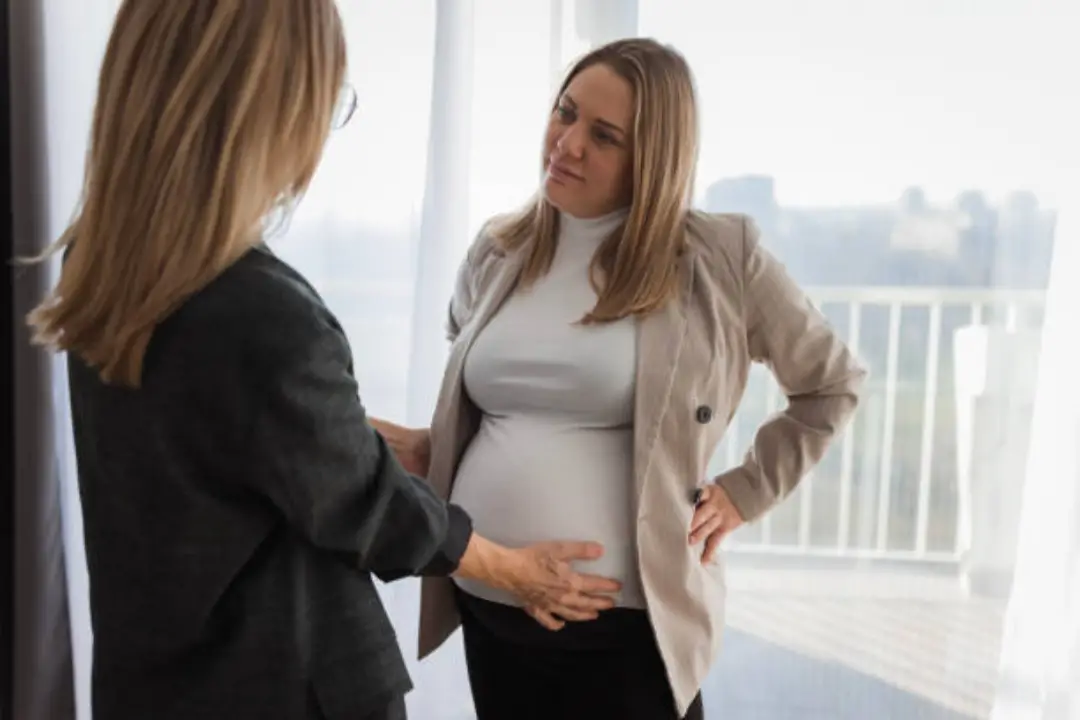
My mother’s gaze dropped to my stomach, to the roundness stretching my T-shirt, six months of heartbeat and hiccups and tiny kicks. There was no softness in her eyes. No pride. No curiosity about the granddaughter she’d be meeting in a few months.
Just calculation.
“You know your sister can’t carry a child,” she said, her voice clipped, calm, almost bored. “So you’re going to do it for her.”
I blinked. “I… what?”
“You’ll give the baby to Maya,” she continued, like she was explaining a simple schedule. “The trust releases four hundred fifty thousand once she has a child. She gets the inheritance, your father’s mess is cleaned up, and you go back to your little life.”
She smiled, but it didn’t touch her eyes. “You were always good at taking care of things, Amelia. This is no different. You’re just… the vessel.”
The word landed on the glass table between us like something dirty.
I stared at her. For a second, I honestly thought I’d misheard her. My brain tried to reframe the sentence, to adjust it into something sane. I’m an ER nurse. I see people at their worst and their bravest. I’ve had twelve-hour shifts where I was elbow-deep in blood and chaos, holding someone’s heart in my hands and convincing it to beat again. I know shock when I see it.
Apparently, I’d just never recognized it in the mirror.
My mother reached into her leather tote and slid something across the table. It was a stack of paper, the top sheet crisp and waiting.
“This is a disclaimer of interest,” she said. “You sign away any claim to the child and the trust. The baby is Maya’s. Permanently. Clean, simple.”
My name was already typed in, along with my due date. They’d prepared this. This wasn’t a wild idea blurted in the heat of the moment. This was step four in a plan.
When I think back on that afternoon, what I remember first is not the fear. It’s the quiet. The way the air felt thick, like I was underwater, watching sunlight ripple on the surface far above me.
I looked at the document. I looked at my mother. And somewhere underneath the shock, something old and tired inside me finally stood up.
“No,” I said.
It came out small, almost gentle. But once the word existed in the air, it had weight. It rolled across the table, over the neat black letters of my pre-filled name, over my mother’s manicured hands, over every ignored insult and minimized hurt of the last twenty-nine years.
Her expression didn’t crack. Not yet. She just stared at me like I’d mispronounced something at a dinner party.
“What did you say?” she asked.
I swallowed. My ribs shifted around the baby, my daughter, who pressed outward as if listening. “I said no. I’m not giving my child away. I’m not selling her for Grandpa’s money. I’m keeping her.”
The change in my mother’s face was microscopic, at first. The faint softening around her eyes hardened. The muscles in her jaw flexed. I watched her pupils tighten the way I’d seen patients’ pupils contract when painkillers didn’t touch the pain.
There was no hurt in her expression. No how could you. Just fury. Sharp and clean.
It was the look of someone who believed a transaction was finalized and had just been told the check bounced.
“You selfish little mistake,” she hissed.
The word “mistake” wasn’t new. I’d heard it before, overheard in fights when she thought I was asleep, in the way she sighed when I needed school supplies or new shoes, in the very precise way she introduced me at charity functions—”This is Amelia, our… older daughter. She’s a nurse.”
Maya got “our beautiful Maya.” I got my job title.
My mother stood suddenly, the chair scraping against the gleaming floor. Her hand came down on my shoulders, not in a slap, but in a shove. A hard, decisive push, as if I were a defective product she was returning.
“It belongs to her,” she snapped, voice rising. “You don’t get to ruin this. She was meant for that money. You were an accident. You’re not taking this from her.”
My heel caught on the edge of the sunroom rug.
There’s always a tiny pause before you fall. A stutter in reality. One second you’re balanced, the next your center of gravity packs its bags and leaves.
The glass table disappeared from under me. My arms pinwheeled, fingers catching nothing but air. And behind me, instead of flat floor, there was empty space, and a narrow staircase leading down to the garden.
The world tipped.
In that fraction of a second, my body did what years of training had wired it to do. Panic later. Protect now.
I didn’t throw my arms out to catch myself. I tucked my chin to my chest. I curled my spine, wrapping both arms around my stomach, making my body smaller, tighter, turning myself into a barrier between wood and the tiny life inside me.
The first impact was shoulder. The second was hip. The third was a bright white stab of agony as my left side slammed into the final step’s edge. I heard more than felt the crunch—a wet, cracking sound that my brain instantly filed under not good.
And then I was on my back on the lawn, the sky spinning above me, the taste of metal in my mouth.
I lay there, breathless, the world framed by the underside of the deck and the rectangle of sunroom railing above it. My chest burned. Every inhale was a knife. For a moment, there was nothing but the slow, high-pitched ringing that follows a car crash.
Then I saw her.
My mother stood at the top of the stairs. Not moving. Not screaming. Not scrambling down toward me with shaking hands and wild eyes and sobbed apologies.
She watched.
Not like a mother. Like someone checking whether the garbage truck had done a thorough job.
The part of me that was her daughter registered that and went very, very still.
The part of me that was an ER nurse got to work.
Airway? Clear. No choking, no blood filling my mouth. I could swallow.
Breathing? Shallow, but happening. Pain on the left side of my chest, sharp and localized. Probably at least one broken rib. Maybe two.
Circulation? No gush of warmth, no expanding red under my back. My limbs responded when I told them to wiggle.
Then the priority that overrode all the rest: my abdomen.
I slid shaking fingers under the hem of my shirt and pressed gently, moving hand-width by hand-width. Soft. No board-like rigidity. No immediate spasms. That didn’t rule out everything, but it was a start.
I held my breath, pressed my palm flat over the curve of my belly, and waited.
For an awful, lead-heavy five seconds, there was nothing.
Then, a flutter. The lightest kick, like a tap of protest.
My lungs burned with the exhale. “Okay,” I whispered. “Okay, baby. Okay.”
I didn’t call for help.
I didn’t look up to see if my mother would pretend to be horrified now that it was obvious I was still conscious.
If I screamed, I’d be helpless on the ground, and they’d be in control again. They could frame it as an accident, swamp me with apologies, usher me to my car, make sure I went to the hospital they chose, with doctors who played golf with my father or owed my mother favors.
Victims, I’d seen a thousand times in the ER, didn’t always die from their first injury. Sometimes they died because the people who hurt them had a second chance.
I wasn’t going to hand them one.
It took everything I had to roll onto my side and push myself up. Every muscle in my torso protested, my ribs a sheet of fire. The world shrank to the tunnel between where I lay and the driveway where my car was parked.
I did not look behind me as I staggered toward it.
From the corner of my vision, I saw movement at the sliding glass door. My father stood there, dark suit, tie loosened, hands in his pockets. His face was blank. Not shocked. Not horrified.
He watched me like a man observing a business deal that had gone slightly off-script but might still be salvageable.
I reached my car, yanked the door open with shaking fingers, and folded myself into the driver’s seat. Lock button. Engine. Hands on the wheel. Deep breath—no, shallow, shallow breath, the deep ones hurt too much.
I could have driven to the nice, shiny hospital fifteen minutes away, the one my mother donated to, where Maya had taken Instagram selfies in the lobby in high school.
Instead, I pointed the car toward the city.
Forty minutes of highway later, my hospital rose up in front of me: glass and steel and chaos and home. I’d lost track of how many people I’d seen roll through those ER doors: bleeding, broken, drunk, high, screaming, silent. Some left through the double doors. Some left in a bag.
I had never thought about coming in through the automatic doors as anything but the person in scrubs flashing an ID badge.
Now, I was the one clutching her side and trying not to pass out from pain.
They know me here, I thought, gripping the steering wheel until my knuckles whitened. They’ll believe me before they believe her. I can control the chart. I can make sure everything is documented, every bruise, every word.
As the adrenaline bled away, the pain came roaring in. Every bump in the parking garage felt like a sledgehammer. By the time I eased the car into a spot, my vision was edged in gray.
ER staff are the worst patients. We know all the shortcuts, all the ways to minimize our own suffering in the system. But walking through those sliding doors, I didn’t feel like a nurse. I felt like every battered woman I’d ever triaged.
The triage nurse’s eyes widened when she saw me. “Amelia? What happened?”
“Fell down some stairs,” I rasped. The lie was technically true, the kind that slides into a chart without raising eyebrows. “Twenty-nine, twenty-six weeks pregnant, left chest wall trauma, possible rib fractures. No abdominal tenderness, fetal movement present.”
They put me in a wheelchair. They wrapped a blood pressure cuff around my arm. A pulse ox monitor pinched my fingertip. I watched my own vitals pop up on the monitor, numbers that usually belonged to other people.
Every time a nurse or tech asked, “Any loss of consciousness? Any abdominal cramps? Any bleeding?” my brain split in two—the part answering clinically and the part screaming my mother pushed me, she wanted this baby gone, she wanted me gone.
I didn’t say it out loud. Not yet. Not to them.
To them, I said, “No LOC, no cramping, no bleeding. Just pain.”
In the dim ultrasound room, gel cold on my stomach, I listened to my daughter’s heart hammer through the speaker. It was fast and furious, a steady whoosh-whoosh-whoosh that filled the space between my ears.
I cried then, quietly, the tears sliding down into my hair.
“Baby looks good,” the tech murmured, eyes on the screen. “Active. Heartbeat’s strong.”
“Of course she’s strong,” I whispered. “She’s stubborn.”
The X-ray confirmed what I’d already guessed: fractured ribs, soft tissue damage. Painful, but survivable. For both of us.
When they discharged me hours later, I held the thick envelope of my records like a weapon. Detailed notes describing my injuries. Time-stamped documentation that I’d fallen down a set of stairs in my parents’ home. Ultrasound images. Radiology reports. Not just proof that I’d been hurt—but proof of when and how.
Evidence.
The automatic doors opened to the cool night air, and the hospital’s noise dropped away like someone had turned the volume down on the world. My phone buzzed against my leg, the vibration constant, a mosquito that wouldn’t die.
I finally pulled it out in the relative quiet of my parked car.
Seventeen missed calls. Thirty-two texts.
Most of them from my father.
Pick up.
Your mother is beside herself.
It was an accident. You slipped. She didn’t mean—
We’ll pay for the hospital. Just don’t overreact.
Come back to the house so we can talk this through like adults.
Do not make a scene, Amelia. Think of the family.
The words blurred together after a while. The exact phrases didn’t matter. The message did.
This wasn’t about my ribs, or my baby, or the fact that I had nearly somersaulted to the bottom of their stairs. It was about the story. The narrative Karen and Robert had spent years curating like one of her expensive art pieces.
Cozy, successful family. Perfect younger daughter: glamorous, charming, the kind of woman people assumed came with a trust fund and a Pilates membership. Older daughter: respectable, invisible, useful, the one you mention to show how grounded you are.
There was no space in that portrait for “Parents shoved pregnant daughter down a staircase to protect inheritance.”
I stared at the screen, thumb hovering over the red Block button. It would have been so easy. I could block them, drive home to our little rental, curl up on the couch against my husband’s chest and pretend these people were strangers I’d once met and quickly forgotten.
Except they weren’t strangers. They were dangerous. And dangerous people don’t vanish just because you stop taking their calls.
They regroup. They strategize. They come back with lawyers.
I thought of the women I’d seen in the ER who had left and gone back and left again, trying to outrun people who lived in their family trees.
Silence had never saved them. It had only bought their abusers time.
If I wanted to be free—not just physically away, but legally, permanently out of reach—I couldn’t disappear.
I had to end it.
My fingers moved before I’d fully realized what I was doing. I opened a new message thread and typed.
I’m scared. I don’t want to fight anymore.
I paused, letting the words sit there. The phone was quiet for half a beat. Then three dots appeared at the bottom of the screen, pulsing.
They were watching the screen like hunters watching a snare.
I’m willing to talk about the paperwork, I added. But I’m not coming back to the house. I’ll meet you at Mr. Henderson’s office tomorrow. Just bring the documents.
Send.
The reply came less than ten seconds later.
Good girl. 10:00 a.m. Don’t be late.
Good girl.
Two little words that made my stomach turn. My entire childhood distilled into one patronizing pat on the head. Sit. Stay. Heel.
That was the moment I chose what I was going to be.
On the drive home, one hand on the wheel and the other pressed protectively against my ribs, I rehearsed lines in my head. “You’re right, Mom.” “Whatever you think is best.” “I just want everyone to be okay.”
Every sentence a little hook, a little reassurance: You’re still in charge, Karen. I’m still the weak one. You’re still winning.
By the time I pulled up to our building, it hurt to breathe, but my mind was razor-sharp.
Justin met me at the door before I could fish my keys out. “Oh my God, Amelia.” His voice cracked on my name when he saw the way I was holding myself. “What happened?”
I had held it together through the fall, through the drive, through the triage questions and the X-ray machine and the doppler’s heartbeat. But seeing my husband’s face—panic and fury and love all twisted together—that broke something inside me that my ribs hadn’t managed to touch.
I sobbed, ugly and loud, my forehead pressed against his shoulder.
He guided me gently to the couch, his hands careful. “Slow down. Tell me. Did you fall at work? Was it the stairs down to—”
“My mother,” I choked out. “She—she pushed me.”
Silence.
We’d been together long enough that I knew the kinds of quiet he had. There was the “searching for the right word” quiet. The “should I make a joke here” quiet. The “I’m about to say something tender and I’m scared” quiet.
This quiet was different. Heavy. Focused.
Justin’s jaw clenched. “She put her hands on you while you’re pregnant?”
“I said no,” I whispered. “To the waiver. To giving them our baby. She got… angry. Dad just… watched.”
He closed his eyes for a second like he was containing something. When he opened them, there was a steadiness there that helped me breathe.
“Okay,” he said. “Okay. First, we take care of you and the baby. Then we make sure they can’t get anywhere near either of you ever again.”
I told him the rest—the texts, my reply, the meeting at Henderson’s office. My plan to get everything said where it counted.
He listened, nodding, occasionally squeezing my hand when I faltered. When I finished, he let out a slow breath.
“Do you trust Henderson?” he asked.
“As much as I trust any lawyer,” I said. “He was Grandpa’s attorney for years. He’s bound to the trust. And he’s monumentally pissed about Dad’s finances already, from what Grandpa hinted before he died.”
“Then we use that,” Justin said. “We treat this like we’re in the ER. You stabilize, you document, you bring in the specialists.”
He brushed my hair back from my face. “You don’t walk into that office alone tomorrow.”
“I wasn’t planning to,” I said. “I need you there to keep me from punching my mother in the face.”
His lips twitched. “You’d probably break another rib.”
“Or her manicure,” I muttered. “Which she’d consider the greater tragedy.”
We didn’t sleep much that night. Every time I shifted, pain pulled me awake. Every time I drifted off, I dreamed about stairs that never ended, my mother’s expression above me, flat and waiting.
At dawn, I was already awake, staring at the ceiling, one hand pressed over the place where my daughter sometimes stretched like a cat. She rolled under my palm, a slow, lazy movement that made my throat tighten.
“Morning, stubborn girl,” I whispered. “I promise you: today we choose you. Not money. Not them. You.”
The law office of Henderson & Associates sat on the twenty-third floor of a downtown building, all glass and steel and quiet wealth. The conference room they put us in was the kind of space designed to make people feel small: high ceilings, a mahogany table long enough to land a helicopter on, a view of the Chicago skyline that turned humans into tiny dots below.
If the sunroom at my parents’ house was a stage for domestic illusions, this room was a temple to power.
I arrived forty minutes early.
Mr. Henderson was already there, a silver-haired man in a three-piece suit that probably hadn’t gone out of style in forty years. He had the aura of someone who’d spent his life surrounded by numbers with lots of zeros and people trying to steal them.
He looked up when I walked in, his gaze dropping briefly to the way I held my side.
“Ms. Davis,” he said. “You look… unwell.”
I lowered myself carefully into a chair. “I’m six months pregnant with cracked ribs,” I said. “So that tracks.”
His mouth tightened. “Your father called me yesterday,” he said. “He said there was a small… family disagreement. That you’d unfortunately taken a tumble. He also asked if I could prepare documents to expedite a transfer of funds.”
“Of course he did,” I muttered.
I reached into my bag and slid the hospital envelope onto the table. “Here’s what happened from the perspective of radiology, obstetrics, and the attending physician,” I said. “Fell down the staircase leading from the sunroom to the garden at approximately 3:30 p.m. yesterday. No drugs, no alcohol. Witnesses present.”
“Witnesses?” Henderson’s eyebrows rose.
“My parents,” I said. “My mother’s hand on my shoulder when I went over.”
His face didn’t change much, but I’d learned to read tiny shifts in expression in trauma rooms while a surgeon tried to decide whether to crack someone’s chest open. There was definitely a shift.
“Ms. Davis,” he said slowly, “you understand my position. I am the trustee of your late grandfather’s estate. My primary obligation is to the integrity of that trust, not to any individual beneficiary. But I am also an officer of the court, and there are certain… statements I cannot in good conscience ignore.”
“I know,” I said. “That’s why I’m not asking you to take my word for anything.”
I explained then, as clinically as I could, what I needed from him. Illinois was a two-party consent state; I couldn’t record my parents without their knowledge and expect the recording to be admissible. But if they confessed to fraud, extortion, or attempted harm in front of him, and he later testified to that under oath?
That wasn’t a tape. That was evidence.
“Leave your office door cracked,” I said. “Let your paralegals hear enough to corroborate. Have whoever you need listening in from the hall. I will get them to talk. They can’t help themselves when they think they’ve won.”
“And what makes you think they’ll talk openly in here?” he asked.
“Because they don’t see me as a threat,” I said simply. “They never have. They’re walking in here to collect a signature from a scared, dependent daughter. They think four hundred and fifty thousand dollars is already theirs. All they have to do is intimidate me into compliance. People like my mother run their mouths when they feel powerful.”
He studied me for a long moment. “You realize that if what you’re alleging is correct, your parents could be facing serious criminal charges.”
“They tried to kill my child,” I said. My voice stayed calm. It surprised me. “If I showed up in the ER with these injuries and my partner admitted to pushing me down the stairs to get insurance money, what would you call it?”
“Attempted homicide,” he said quietly.
“Right,” I said. “This is no different. They just wear better clothes.”
He sat back, exhaling slowly. “We’ll do this by the book,” he said. “No tricks, no entrapment. I won’t prompt them. You speak. They respond. My staff will be within earshot. And I’ll have requested a patrol car to swing by the building during our meeting, just in case.”
“Thank you,” I said.
He nodded toward the hallway. “There’s a restroom just outside. You may wish to… gather yourself before they arrive.”
I knew what he meant. I looked like I always did: hair in a simple braid, face clean, eyes sharper than I felt. The only visible sign of injury was the stiffness in the way I moved.
I didn’t need sympathy from my parents. I needed underestimation.
In the restroom, under harsh fluorescent lights, I lifted my shirt and stared at the bruise blooming across my left ribs. It was ugly: purple edging into black, with yellow shadows at the border. The kind of bruise that made triage nurses ask gentle questions and circle “suspicious.”
I could have covered it completely. Hidden it away. Pretended nothing had happened.
Instead, I wrapped a bulky ace bandage around my torso, over my T-shirt, not under it. The layers of white elastic made my midsection look more injured, not less. I loosened it enough that it didn’t disturb the baby, tightened it enough that every breath made me wince.
My makeup bag sat on the counter. I opened it, looking at the contents.
Normally, makeup was something I used to look less tired after night shifts. Today, it was part of a costume.
I dusted a little contour powder under my eyes, darkening the shadows to make it look like I hadn’t slept in a week. I dabbed a hint of yellowish concealer along my jaw, echoing a bruise that had mostly faded. I made sure nothing looked theatrical—just… worn down. Defeated.
What I was doing felt cold. Manipulative. My mother’s word, used countless times when I’d tried to set boundaries: You’re being manipulative, Amelia. So dramatic. You always twist things to make me look bad.
She never understood the difference between defending yourself and twisting the truth.
I looked in the mirror at the version of myself I’d created: hunched shoulders, bandaged ribs, dull eyes.
Someone who’d given up.
Perfect.
At 9:58, the door to the conference room opened.
My mother swept in first, of course. Even in a law office, she managed to make an entrance. Cream pantsuit, gold jewelry, perfume wafting in a floral cloud that made my stomach churn. Her hair was shellacked into submission, not a strand daring to move.
She didn’t look at my bandage. She looked at the room, assessing its prestige level like she was rating a restaurant.
My father followed, clutching his leather briefcase. He looked… smaller somehow. The lines around his mouth were deeper; the tan he maintained for golf season had faded to a grayish pallor. His tie was slightly crooked—something I’d never seen in my entire life.
Maya drifted in last, oversized sunglasses pushed up on her head like a headband, her phone in her hand. She wore a soft sweater dress that hugged her perfectly flat stomach. For a second, my heart twisted. That had almost been the body carrying my daughter.
She barely glanced at me before she dropped into a chair and started scrolling.
“Let’s get this over with,” my mother said sharply, dropping her bag onto the table. “We have a reservation at noon.”
Of course they did.
I forced my body to move like it hurt, like I was weaker than I felt. Every wince was only half performance.
“Hi, Mom,” I said softly. “Hi, Dad. Hi, Maya.”
“Spare us the theatrics, Amelia,” my mother said, eyes flicking over my bandage with open impatience. “You agreed to sign. So sign.”
She pulled a thick document out of her bag and slid it toward me. It looked very similar to the one she’d presented on the glass table in the sunroom, but legally scrubbed and properly formatted.
“Disclaimer of interest,” she said. “You acknowledge that any child you birth is solely Maya’s for the purposes of the trust and that you waive any claim to the funds. This way, everyone wins.”
Except the baby. Except me. Except justice. Minor details.
I picked up the pen she’d thoughtfully placed beside the pages. My hand shook slightly, not from fear, but from the effort of holding back the tidal wave of adrenaline flooding my system.
“Before I sign,” I said, letting my voice tremble, “I just… need to understand something.”
My father shifted in his seat. “We’ve explained—”
“Why today?” I interrupted, turning wide eyes on him. “The trust isn’t due to pay out for another six months. Why do you need the waiver now? Why not wait until after the baby is born?”
A muscle jumped in his cheek. His gaze flicked to my mother, then to the window.
“It’s… complicated,” he muttered. “Just sign the paperwork, Amelia. For once in your life, don’t turn everything into a drama.”
I swallowed and let hurt flicker across my face. “Is it about the lake house?” I asked softly. “Did you lose it?”
He slammed his hand on the table so hard the pen jumped. Maya startled. I didn’t.
“I didn’t lose it,” he snapped. “I leveraged it.”
I feigned confusion. “Leveraged it… for what?”
He stood abruptly, as if sitting still were suddenly impossible. He walked to the window, looking out at the skyline as if the city could offer him answers.
“For shortfalls,” he said, voice tight. “There were market corrections. Some investments didn’t pan out as quickly as expected.”
“Shortfalls,” I repeated. “You mean debt.”
He exhaled, the sound almost a hiss. “I borrowed from a private lender,” he admitted. “High interest. Aggressive repayment schedule. It was supposed to be temporary. A bridge. Then the market dipped and—”
“And you couldn’t pay it back,” I said quietly.
He turned, eyes flashing. “You think it’s easy, Amelia? Providing for a family? Maintaining a certain standard? You think your little nurse’s salary gives you any idea what real pressure looks like?”
There it was. The contempt. The dismissal.
“You borrowed from the wrong people,” I said. “Didn’t you?”
Silence stretched. My mother’s phone buzzed under the table; she was typing rapidly, thumbs jerking. She wasn’t looking at him. She was looking at me with narrowed eyes, calculating how this conversation might affect her.
I’d seen that expression before too—in waiting rooms when we had to tell families their loved one might not make it.
“I took an advance from the trust,” my father blurted suddenly, words tumbling over themselves. “One hundred thousand. I signed Henderson’s name to authorize it.”
My stomach dropped even though I’d expected something like this.
“You forged the trustee’s signature,” I said. “To steal from Grandpa’s estate.”
“I didn’t steal,” he snapped. “I borrowed. I was going to pay it back before the quarterly audit next week, once the market corrected. But it hasn’t. And if that account isn’t replenished by Friday, there will be questions. Legal questions.”
“And questions from the people you owe,” I added quietly. “The ones who don’t send polite reminder letters.”
He ran a hand over his face. For a second, I saw not my father the businessman, but a man cornered by his own arrogance and greed.
“They don’t send letters,” he said hoarsely. “They send men. To your office. To your house. They break things. Fingers. Kneecaps. They don’t care about the SEC, they care about their money.”
“So that’s what this is,” I said slowly. “You need Grandpa’s trust fund to cover the hole you dug. And the only way to unlock it quickly is for Maya to have a child. And since she can’t—”
“You were supposed to be useful for once,” my mother cut in sharply. “We gave you everything you needed to carry that pregnancy. You live rent-free. You borrowed money from us. We host your baby shower. And this is how you repay us? By being selfish?”
I almost laughed. “Selfish for not selling my daughter?”
My mother leaned forward, her perfume enveloping me, sweet and suffocating. Her voice dropped to that low, dangerous register she saved for moments when she wanted to sound reasonable while she slid the knife in.
“Let’s be brutally honest, Amelia,” she said. “You’re an ER nurse. You work nights, weekends. You come home smelling like disinfectant. You rent a two-bedroom apartment in a mediocre neighborhood. You eat takeout.”
“Accurate so far,” I said dryly.
“We,” she continued, gesturing at herself and my father, “have resources. We have connections. Maya has a home suitable for a child. She has time. She can give this baby a lifestyle you can’t even imagine.”
I thought about our small rental with its secondhand furniture and always-slightly-leaky faucet. The tiny room we were turning into a nursery, with the hand-me-down crib from a coworker and the mobile I’d bought on clearance. It didn’t look like the glossy magazine spreads my mother liked. But it was ours.
“Are you talking about love or money?” I asked. “Because the second one has never been in short supply with you. The first one…”
Her eyes flashed. “If you refuse to sign, we will go to court,” she said. “We will fight for full custody.”
My skin went cold. “On what grounds?” I asked. “Being poor?”
“On the grounds that you’re unstable,” she said smoothly. “On the grounds that you had a ‘fall’ down the stairs because you were upset and not watching where you were going. On the grounds that you work long hours in a high-stress environment and have a history of… emotional outbursts.”
“You mean when I asked you not to insult me in public,” I said.
“We will hire experts,” she went on, ignoring me. “We will hire lawyers. We will bury you in paper. We have the time and the money. You don’t. You’ll break.”
She smiled then, small and satisfied. “First we take the child,” she murmured. “Then we see about finishing what we started on those stairs.”
She might as well have drawn a dotted line under the word threat and handed me a fluorescent highlighter.
My heart thudded, but my mind felt strangely calm. I glanced toward the door. It stood open a crack—just as Henderson had promised. Sound traveled well in this room; I’d tested it earlier, speaking in a normal tone and hearing my own words faintly from the hallway.
“Okay,” I said quietly. “Thank you for being honest.”
My mother sneered. “Don’t get dramatic, Amelia. Just take the pen and—”
I straightened slowly, letting the defeated posture melt away like a discarded coat. I rolled my shoulders back despite the ache in my ribs. When I lifted my eyes to meet hers, they were dry.
“No,” I said again. This time, the word didn’t tremble.
My mother’s hand shot out as if to slap the defiance off my face, years of instinct overriding her awareness of where we were. She caught herself halfway, fingers trembling in the air.
The moment stretched, the three of them frozen around the table—my father pale and sweating, my sister wide-eyed, my mother poised on the edge of violence.
“I think we’re done here,” I said. “Mr. Henderson?”
The door opened fully.
Henderson stepped inside, his expression composed but tight. Behind him, two uniformed officers appeared, hands resting near their belts.
The temperature in the room seemed to drop ten degrees.
My father made a sound I’d never heard from him before—a high, thin noise, like air slowly leaking from a balloon. He sagged back into his chair, the leather groaning under his weight.
My mother’s face went slack for half a second. Then the mask snapped back into place.
“What is this?” she demanded. “This is a private family matter. We did not consent to—”
“This stopped being private when you attempted to coerce your daughter into signing away her child and her inheritance,” Henderson said, voice like ice. “It stopped being private when you admitted to assaulting her while she was pregnant. And it certainly stopped being private when your husband confessed to forging my signature on trust documents.”
My mother’s mouth opened and closed. She looked, for once in her life, like she didn’t have a script.
“Karen Davis,” one of the officers said formally, stepping forward, “Robert Davis, and Maya Davis, you are under arrest on suspicion of attempted extortion, conspiracy to commit fraud, and—based on what we just heard—assault and threats of further harm.”
He hesitated, glancing at my stomach. “Those last charges may expand, depending on how the State’s Attorney wants to classify endangerment to the unborn child.”
“Unborn grandchild,” I corrected softly.
“My God,” my father whispered as the officer reached for his wrists. “You can’t. I’m the victim here. Those lenders—they’ll kill me if I don’t pay—”
“You should have thought of that before you forged legal documents and planned to traffic custody of a child to cover your debts,” Henderson said. There was something like disgust in his tone now. “You are not the victim in this scenario, Mr. Davis.”
The click of handcuffs echoed in the room, too loud for such a small sound.
My father crumpled, shoulders shaking, muttering about interest rates and deals gone bad.
My mother found her voice again as the second officer reached for her. “This is insane,” she shrieked. “She set us up. You don’t understand, she’s always been unstable, she threw herself—”
“Ma,” Maya blurted.
We all turned to look at her.
For the first time since she walked in, she looked genuinely rattled. Her eyes darted between her parents, the police, me, the open door. You could see the math happening in real time behind her perfectly mascaraed lashes.
Her whole life, the path had been paved for her. There had always been a safety net: her looks, her charm, her parents’ money. Now the people who spun that safety net were being led away in cuffs.
“I didn’t do anything,” she burst out suddenly, stepping away from my mother. “I didn’t push her. I told you not to, remember? I told you it was a bad idea.”
My mother stared at her, stunned. “Maya—”
“I saw you shove her,” Maya blurted, words tripping over themselves. “She was near the stairs, and you pushed her. I’m a witness. I’ll testify. I didn’t touch her.”
The betrayal, when it landed in my mother’s eyes, was almost… comical. For years, she’d treated Maya like an extension of herself, her shining reflection. She’d never considered that reflections can shatter and fall in whatever direction suits them.
“You ungrateful little—” she started, struggling against the officer’s grip.
“Ma’am,” he said sharply. “Stop resisting.”
Maya turned to the other officer, panic rising. “I didn’t do anything,” she repeated. “I was just there. You can’t arrest me. I’m not responsible for what they did.”
“You’re named on the documents,” he said. “You stood to gain financially and were present for the coercion. That makes you part of the conspiracy. You can explain the extent of your involvement downtown.”
As they led the three of them out, my mother twisted around to glare at me over her shoulder.
“This will ruin us,” she spat.
“It’ll save us,” I said softly, one hand resting on my stomach. “Me and her.”
Her eyes flicked to my daughter’s invisible form, then back to my face. For once, I saw something unfamiliar there. Not anger. Not calculation.
Emptiness.
Then she was gone, marched down the hall flanked by blue uniforms, her perfume fading with every step.
The room felt impossibly quiet after the door closed.
I sat there, breathing shallowly, the ache in my ribs blossoming now that the adrenaline had begun to ebb. The trust documents lay on the table between us, my signature line blank.
“Ms. Davis,” Henderson said, breaking the silence. “Are you all right?”
I let out something between a laugh and a sob. “Define ‘all right,'” I said. “I’m minimally concussed and my family is being processed by the criminal justice system. For me, that’s… surprisingly okay.”
His mouth twitched—the closest I’d ever seen to a smile on his face. “The officers will take your statement,” he said. “We’ll secure the trust records. And I will ensure that any further attempts to contact you through this office are documented.”
“Thank you,” I said. The words felt insufficient. “Really.”
He inclined his head. “Your grandfather was very fond of you,” he said, almost as an afterthought. “He would not be surprised to see you here today.”
That, for some reason, made my throat close up. I nodded, unable to trust my voice.
Justin was waiting in the hallway, perched on a leather bench, elbows on his knees. When he saw me, he jumped up.
“Well?” he asked.
“It’s… done,” I said. “They’re in cuffs.”
His shoulders sagged in relief. He pulled me into the gentlest hug he could manage around my midsection. I burrowed my face into his chest, breathing in the familiar scent of laundry detergent and coffee.
We went home. We peeled off the bandage and my fake bruises, leaving the real ones. We ordered Thai food and ate it on the couch, a Netflix show playing unheeded in the background. Every time my phone buzzed with an unknown number, I let it go to voicemail.
For the first time in my life, I was untouchable by them in a way that mattered.
The months that followed were not easy.
There were interviews with detectives, meetings with prosecutors, depositions. There were court dates where I had to sit in the same room as my parents and sister while lawyers argued over legal phrases that barely concealed the raw reality: you tried to trade a human being for cash.
My father took a plea deal. Embezzlement. Fraud. Some white-collar charges that still came with real time, even if country-club prison time.
My mother faced a stack of charges: attempted extortion, filing a false report, assault. The word “feticide” hovered in the background, a possibility that made her attorney sweat visibly.
Maya cried on the stand about how confusing it had all been, how she’d just gone along with what her parents wanted, how she’d truly believed I would be okay with being “a surrogate.” The prosecutor had no trouble pointing out that surrogates sign contracts before getting pregnant, not after being shoved down stairs.
The trust was frozen until the courts and Henderson untangled the mess my father had made. In the end, the terms my grandfather had set stood. The first grandchild would have access to the fund when certain conditions were met.
He hadn’t imagined the child needing protection from her own grandparents.
The court did.
Six months after the day in the sunroom, I sat in a quiet room that smelled faintly of baby powder and lavender, folding impossibly small onesies into a dresser drawer.
The nursery was not Pinterest-perfect. The walls were painted a soft green that we’d chosen because it was on sale. The crib had a tiny scratch on one rail. The rocking chair squeaked if you leaned a certain way.
To me, it looked like a palace.
My phone lay face down on the dresser. There were no new messages. There hadn’t been for weeks, not since the court order went through. No contact. No calls. No emails. No letters. If they tried, it would go through lawyers, and the consequences would be theirs, not mine.
My last name was different now. So was my daughter’s. So was the lock on our front door.
The bruise on my ribs had faded months ago. The mental bruise—the knowledge that the people who were supposed to protect me had decided my child’s life was expendable in the pursuit of a payout—would take longer to fade.
But as I ran my hand over a tiny folded sleeve, I realized something.
It didn’t ache like it used to. It was more like a scar: present, a part of me, but not dictating how I moved anymore.
A small foot pressed outward against my skin. I smiled, laying a hand over the spot.
“Hey, you,” I murmured. “Almost time.”
Justin appeared in the doorway, leaning against the frame. “Talking to your roommate again?” he asked.
“She’s a very good listener,” I said. “And a terrible kicker.”
He came over and wrapped his arms around me from behind, hands resting above mine on my belly. “She gets that from you,” he said. “The kicking. The stubbornness.”
“Probably,” I said. “The survival instincts, at least.”
We stood there together, looking out the window at the world our daughter would be born into. It wasn’t perfect. It was messy and loud and unpredictable. But it would be hers, not something my mother curated like an expensive gallery.
It would be ours.
“Do you think I’m going to be… enough?” I asked suddenly. The question had been gnawing at me for weeks. “I mean, you know my mom. Or, you know, you know what she is. I don’t have a model for this. For being a good mother.”
Justin kissed the side of my head. “You have a very clear model,” he said. “Just do the opposite of whatever Karen would do.”
I laughed, a sound that felt bright and clean. “So if she screams, I breathe,” I said. “If she manipulates, I tell the truth. If she treats children like investments, I treat them like… people.”
“Exactly,” he said. “You don’t have to be perfect, Amelia. You just have to be kind and present and willing to apologize when you screw up. Basically the opposite of your parents in every conceivable way.”
I looked down at my stomach. “You hear that, kiddo?” I said softly. “You’re never a bargaining chip. You’re never a vessel. You’re never a way to fix someone else’s mistakes. You’re just you. And that’s enough.”
She kicked once more, as if in agreement.
Peace, I’d learned, was not some floaty, Instagrammable feeling. It wasn’t candles and baths and herbal tea. It was paperwork and court dates and changing locks. It was sitting in a courtroom while your mother glared at you and still choosing to speak.
It was closing a door that would never, ever open again, even when some tiny, wounded part of you still hoped for an apology.
Peace was expensive.
It cost me my parents, my sister, the illusion of a normal family. It cost me bruises and X-rays and sleepless nights.
Standing there in that imperfect little nursery, watching sunlight creep across the rug, feeling my daughter press against my palm, I knew I’d gotten the better end of the deal.
“I promise you,” I whispered, the words more for me than for the tiny person rolling inside me, “you will only ever be loved. Not priced. Not traded. Loved.”
She answered with one last kick before settling again.
Outside, somewhere in the city, my parents’ lives had narrowed to court schedules and legal limits. Their reputations, their properties, their carefully curated image—all of it eroded under the slow, relentless tide of consequences.
Inside our small, rented home, the future was still wide open.
It didn’t look like the life my mother had planned for me.
It looked better.

Ethan Blake is a skilled Creative Content Specialist with a talent for crafting engaging and thought-provoking narratives. With a strong background in storytelling and digital content creation, Ethan brings a unique perspective to his role at TheArchivists, where he curates and produces captivating content for a global audience.
Ethan holds a degree in Communications from Zurich University, where he developed his expertise in storytelling, media strategy, and audience engagement. Known for his ability to blend creativity with analytical precision, he excels at creating content that not only entertains but also connects deeply with readers.
At TheArchivists, Ethan specializes in uncovering compelling stories that reflect a wide range of human experiences. His work is celebrated for its authenticity, creativity, and ability to spark meaningful conversations, earning him recognition among peers and readers alike.
Passionate about the art of storytelling, Ethan enjoys exploring themes of culture, history, and personal growth, aiming to inspire and inform with every piece he creates. Dedicated to making a lasting impact, Ethan continues to push boundaries in the ever-evolving world of digital content.