The Gift of Disappearance
My name is Julieta Morales, I’m seventy-two years old, and the moment I understood that love could be weaponized against you happened when my daughter looked me in the eye and told me the best birthday gift I could give her was to disappear from her life.
So I did exactly that.
But let me back up, because the story doesn’t start with that devastating sentence. It starts forty-five years earlier, with a baby I promised to give everything, and decades of slowly teaching her that my love was infinite, my resources were endless, and my needs didn’t matter.
The Beginning
I had Rebecca when I was twenty-seven—young enough to still believe that love could solve anything, old enough to know that motherhood would be harder than I imagined.
Her father left when she was three. Just walked out one Thursday morning saying he was going to the store and never came back. No dramatic fight. No warning signs. Just gone, leaving behind a toddler who kept asking when Daddy would be home and a woman who had to figure out how to be everything to this child.
I was a nurse at County General Hospital, working twelve-hour shifts that left my feet aching and my back screaming. But I worked more. Picked up extra shifts. Took the weekend rotations nobody wanted. Did the overnight coverage that paid differential.
Because Rebecca needed things. Needed daycare, needed clothes that fit, needed birthday parties that looked like the other kids’ parties, needed to not feel like the kid with the single mom who couldn’t provide.
I made sure she never felt that way.
I scrimped on everything for myself. Wore the same scrubs until they were thin. Drove a car that rattled. Lived in a modest apartment off the frontage road where you could hear every elevator chime and every neighbor’s television through the walls.
But Rebecca had what she needed. Always.
When she was sixteen and wanted to go on the school trip to Washington D.C., I worked four extra shifts in two weeks to make it happen. Didn’t tell her how hard it was. Just handed her the money and said, “Have fun, honey.”
When she got accepted to State University and the financial aid didn’t cover everything, I took out a loan. Cosigned for her. Worked overtime to make the payments. Told her not to worry about it.
“Focus on school,” I’d said. “I’ll handle this part.”
And I did. For four years. Tuition, books, housing, the meal plan she said was “necessary” because the dorm kitchen was “gross.” I handled all of it.
She graduated with a degree in marketing and minimal debt. I graduated to being permanently behind on my own retirement savings, but that was fine. That was what mothers did.
Rebecca got a good job at an advertising agency. Met a man named Derek—nice enough guy, steady income, wanted kids. They got engaged.
The wedding cost forty thousand dollars. I paid half.
“It’s tradition for the bride’s family to contribute,” Rebecca had said, showing me venue options I couldn’t afford. “You’ll do that, right, Mom?”
I did that. Worked extra shifts for eight months. Depleted my savings. Showed up to the wedding with a smile and told everyone how proud I was.
Two years later, the twins were born—Mia and Lucas, beautiful babies who made me understand what being a grandmother meant.
And who also, it turned out, made me understand what being an unpaid childcare provider meant.
The Role I Played
It started small.
“Mom, can you watch the twins Tuesday? Derek has a work thing and I have a client dinner.”
“Of course, honey.”
Then it became regular.
“Mom, can you do pickup from daycare on Wednesdays? It’s on your way home from the hospital.”
It wasn’t on my way. It added forty minutes to my commute. But I said yes.
Then it became expected.
“Mom, we’re going away for the weekend. You’ll take the twins, right?”
Not a question. A statement. And I took them. Every time.
I became the default solution. The emergency contact. The person who showed up when plans changed or schedules conflicted or Rebecca and Derek wanted a date night.
I bought the birthday presents. Brought the Costco trays for family dinners. Made sure there were paper plates when Rebecca was too tired to do dishes. Kept extra clothes and toys at my apartment so the twins had things when they stayed over.
I did it because I loved them. Because that’s what family does.
And because somewhere deep down, I believed that if I stayed useful, I’d stay wanted.
Rebecca never said thank you anymore. The gratitude that used to come—the “Thanks, Mom” and “I don’t know what I’d do without you”—faded into expectation.
I became infrastructure. Like plumbing or electricity. Essential but invisible. Only noticed when there was a problem.
When Rebecca bought her house—the beautiful four-bedroom in the new development with the curved streets and the HOA mailbox cluster—I helped with the down payment.
“Just a loan,” she’d said. “We’ll pay you back.”
Thirty thousand dollars from my retirement account. Money I’d been saving for decades. Money that was supposed to be my safety net.
“Of course, honey. Family helps family.”
She never paid me back. Never mentioned it again. Just moved into her beautiful house and started posting photos on Facebook of her “dream home” without ever acknowledging where some of that dream money had come from.
I told myself it was fine. Told myself that seeing her happy was enough. That I didn’t need the money back. That this was what mothers did—gave without expectation of return.
I was lying to myself.
But I didn’t realize how completely I’d erased my own needs until the week before Rebecca’s forty-fifth birthday, when I made the mistake of showing up with a cake.
The Birthday
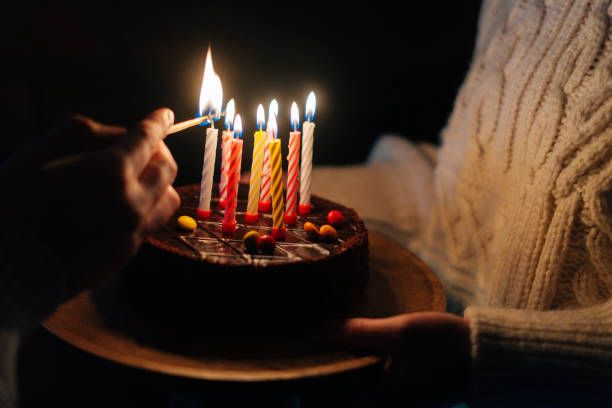
I’d ordered it from her favorite bakery—the expensive one downtown that makes those elaborate cakes with real fruit and Swiss buttercream. Chocolate with strawberries. Two hundred dollars.
Two hundred dollars I couldn’t really afford, but I’d convinced myself it was worth it to see her face light up.
I arrived early, carrying the cake carefully, the candles already placed. I’d practiced what I’d say: “Happy birthday, honey. I know it’s a few days early, but I wanted to celebrate with you before the actual day.”
I knocked on her door with that familiar flutter of hope—the hope that this time, she’d be genuinely happy to see me. That this time, I’d get the warmth I remembered from when she was young and still needed me in ways she acknowledged.
When Rebecca opened the door, her face didn’t light up.
It tightened. Like she’d opened the door to find a problem she didn’t want to deal with.
“Oh,” she said. “It’s you.”
Not “Hi Mom.” Not “Come in.” Just “It’s you,” in a tone that made it clear I was an inconvenience.
“I brought your birthday cake!” I said, too brightly, trying to compensate for her lack of enthusiasm. “Early, but I thought we could—”
“Mom, I’m really busy today.”
“It’ll just take a minute. I wanted to—”
She sighed. Actually sighed. “Fine. Come in. But I can only give you a few minutes.”
I followed her into the house I’d helped pay for, holding the expensive cake, feeling like an intruder.
The living room was pristine. Throw pillows arranged just so. Coffee table polished to a shine. Everything in its place, everything perfect, everything sterile.
We sat down. I held the cake in my lap like an offering to a god who wasn’t interested in accepting it.
Rebecca didn’t thank me. Didn’t even look at the cake. Just sat there with her arms crossed, waiting for me to… what? Leave? Disappear?
“So,” I tried, “what would you like for your birthday? I was thinking maybe a spa day? Or that jewelry you mentioned? Or—”
“Mom.” She interrupted me. “We need to talk.”
The way she said it made my stomach drop. That tone. That careful, rehearsed tone. Like she’d been practicing this conversation.
“Of course, honey. About what?”
She looked at me directly. No warmth. No affection. Just assessment.
“I’ve been thinking about our relationship,” she said. “And I think we need some space.”
Space.
“Space?” I repeated carefully.
“Yes. I think—” She paused, seemed to be choosing her words carefully. “I think you’re too involved in my life. Too present. I need some independence.”
I felt like I’d been slapped. “Too involved? Rebecca, I just help when you need—”
“That’s the problem,” she interrupted. “You’re always here. Always offering to help. Always showing up. I can’t breathe.”
“I’m your mother. I love you. I want to—”
“I know what you want.” Her voice got harder. “You want to be needed. You want to be essential. But I’m forty-five years old, Mom. I have my own family. My own life. And I need you to step back.”
The cake was getting heavy in my hands. The candles were starting to soften from my body heat.
“Step back,” I said quietly. “What does that mean?”
She stood up. Arms crossed. Looking down at me like I was a child who needed discipline.
“It means I need you to stop calling every day. Stop showing up unannounced. Stop offering to babysit unless I specifically ask. Stop acting like you’re still raising me.”
Each word landed like a stone.
“Rebecca, I don’t—I’m not trying to control you. I just love you. I want to help.”
“And that’s the problem!” Her voice rose. “You ‘help’ so much that I feel obligated. Guilty if I say no. Trapped by your generosity.”
Trapped.
By my generosity.
I stood up on legs that suddenly felt too old, too tired, too worn from forty-five years of standing for this girl who was telling me I’d loved her wrong.
“I gave you everything,” I whispered.
“I know you did,” she said, but there was no gratitude in it. Just weariness. “And that’s what makes this so hard. Because you gave and gave and gave, and now you expect something back. You expect me to be grateful. To need you. To keep you in my life because of everything you sacrificed.”
“I don’t expect—”
“Yes, you do.” She was looking at me like she’d figured out some terrible truth. “You sacrificed so much that now you can’t imagine stepping back. You’ve made yourself so essential that the idea of not being needed terrifies you.”
I couldn’t breathe. Couldn’t think. Couldn’t process that this was my daughter—the baby I’d held, the child I’d raised alone, the woman I’d given everything to—telling me that my love was suffocating.
“What do you want from me?” I asked, and my voice broke.
She looked me straight in the eye. And what she said next destroyed something in me that I didn’t know could be destroyed.
“The best gift you could give me,” she said carefully, “would be to disappear from my life.”
The room tilted. I gripped the cake so hard I felt the container crack.
“Disappear?” I repeated, because surely I’d heard wrong. Surely my own daughter hadn’t just asked me to cease existing in her world.
“Yes. I need space. Real space. Time to figure out who I am without you constantly hovering. Without the calls and the visits and the help I never really asked for.”
“You asked,” I said weakly. “You called me. You needed—”
“Because you were always available!” she snapped. “Because saying no to you meant dealing with your hurt feelings and your guilt trips and your ‘I just want to help’ speeches. It was easier to let you help than to establish boundaries.”
I stood there, holding that two-hundred-dollar cake, wearing my good dress, feeling like every year of sacrifice and love and effort had just been reframed as manipulation.
“I love you,” I whispered.
“I know,” she said. But she said it like a burden, not a blessing. “That’s why this is so hard. Because I know you think you’re helping. But Mom—you’re not. You’re suffocating me. And I need you to stop.”
I walked to the door. Opened it. Turned back one last time hoping for— I don’t know what. A softening. An apology. A recognition that maybe she was being cruel.
But Rebecca just stood there, arms crossed, waiting for me to leave.
“Happy birthday, Rebecca,” I said.
And I left.
The Aftermath
I drove home on autopilot. Carried that expensive cake into my modest apartment. Stood in my tiny kitchen and stared at it.
Then I threw it in the trash. Watched it land with a dull thud on top of yesterday’s coffee grounds.
I sat down at my small dining table—the one I’d bought secondhand twenty years ago and refinished myself—and felt something inside me crack open.
Not rage. Not even sadness, really.
Just emptiness.
For hours, I sat there. Watching the light change through my window. Listening to my neighbor’s TV through the wall. Feeling the weight of forty-five years of being a mother who’d apparently done it all wrong.
Around midnight, the emptiness shifted.
Crystallized into something colder. Clearer.
If Rebecca wanted me to disappear, I could do that.
I could give her exactly what she’d asked for.
Not as punishment. Not as revenge.
But as the final gift. The last sacrifice. The ultimate disappearance.
I got up and pulled out the boxes I’d kept in my closet for years—the ones with receipts and bank statements and loan documents and canceled checks. Every piece of paper that proved every dollar I’d given.
I spread them across my table and started making lists.
The wedding: $20,000
The house down payment: $30,000
The car loan I’d cosigned: $15,000
The “emergencies” over the years: approximately $35,000
Babysitting (calculated at minimum childcare rates): roughly $40,000
Various gifts, help, groceries, household items: another $20,000
Total: $160,000
One hundred and sixty thousand dollars over the years.
Money I’d never asked to be repaid. Never mentioned. Never held over her head.
Until now.
I called the bank in the morning. Made appointments. Started making phone calls.
The Disappearance
Over the next two weeks, I systematically erased myself from Rebecca’s life.
First: I called the bank and removed my name from the joint account we’d kept “for emergencies.” The account that still had $15,000 in it—my $15,000, that I’d kept there in case Rebecca needed it.
I transferred it to my personal account. Closed the joint one.
Second: I contacted the financial institution that held Rebecca’s house loan—the one I’d cosigned for when her credit wasn’t quite good enough.
“I need to understand my options for removing myself as cosigner,” I told them.
It turned out I couldn’t just remove myself. But I could request that Rebecca refinance to release me from obligation. I sent the formal request. Made it official.
Third: I went to my lawyer—the same one who’d done my will—and had him draft a formal demand letter for repayment of the $30,000 house down payment I’d provided.
“Make it professional,” I told him. “Legal. Give her sixty days to respond with a repayment plan.”
Fourth: I canceled the life insurance policy that listed Rebecca as sole beneficiary. Changed it to split between several charities I’d always supported.
Fifth: I made arrangements to move. Not just to a different apartment in the same city, but to another country entirely.
Switzerland.
I’d always wanted to see Switzerland. The mountains. The clean cities. The culture of privacy and independence.
I contacted a relocation service that specialized in retiree immigration. Started the visa application process. Found a small apartment in Lucerne with a view of the lake.
Sold my furniture. Downsized to what I could ship or carry.
And through all of it, I didn’t call Rebecca. Didn’t text. Didn’t show up at her door.
I gave her exactly what she’d asked for: space.
Two weeks before my flight, I went to her house one last time.
I knew she wouldn’t be home—she’d posted on Facebook about a work conference she’d be at all day.
I let myself in with the key I still had (the one she’d given me years ago “for emergencies” and never asked for back).
I walked through the house I’d helped purchase. The beautiful, pristine house where every surface gleamed and every corner was perfect.
And I placed something on her dining table.
Not a letter. Not a dramatic note.
Just a folder.
Inside: copies of every receipt, every bank statement, every loan document, every canceled check. Every piece of paper that proved every dollar I’d given over forty-five years.
And a single sheet of paper on top with one sentence:
“You asked me to disappear. I’m granting your wish. But before I go, I thought you should know what disappearing actually costs.”
I left the key on top of the folder.
Walked out of that house for the last time.
And flew to Switzerland two days later.
Switzerland
I’m writing this from my small apartment in Lucerne, six months after I disappeared from Rebecca’s life.
The view from my window is of the lake and the mountains beyond. The air is clean. The city is quiet. My days are my own.
I wake when I want. Walk by the lake. Read books. Sit in cafes. Attend concerts. Make friends with other expatriate retirees who chose late-life adventure over obligation.
I don’t answer my phone when Rebecca calls. And she does call. She called seventeen times the first week after she found the folder. Left voicemails that started angry (“How dare you just leave!”) and became desperate (“Mom, please, we need to talk about this.”) and finally turned guilty (“I didn’t mean it the way it sounded. Please come home.”).
I didn’t come home.
I changed my number after three weeks. Got a Swiss mobile number. Gave it to only two people: my lawyer and my closest friend from nursing school.
Rebecca found my lawyer’s number. Called him demanding to know where I was.
“Your mother has requested no contact,” he told her. “If you need to communicate, it can be through me regarding the legal matters of the loan repayment.”
She hired her own lawyer. Tried to argue that the down payment was a gift, not a loan.
My lawyer sent documentation: text messages where I’d explicitly called it a loan. Emails where Rebecca had promised to pay me back. Bank records showing it had been transferred with the memo line “HOUSE LOAN.”
The judge ruled in my favor. Rebecca has three years to repay the $30,000, with interest.
She also had to refinance her house to remove me as cosigner. Which meant she had to qualify on her own. Which meant, apparently, cutting back on some of the lifestyle expenses she’d been enjoying.
I learned this through my lawyer, who updates me monthly on the legal proceedings.
I learned other things through the one person I do still talk to occasionally: my old friend Martha, who lives in Rebecca’s neighborhood and sees things.
Martha tells me Rebecca’s Facebook posts have changed. Less “living my best life” and more carefully worded complaints about “family obligations” and “unexpected expenses.”
Martha tells me the twins ask about me. Where’s Grandma? When is Grandma coming back?
Rebecca apparently tells them I moved away. Doesn’t say why. Doesn’t explain that she asked me to disappear.
Martha tells me Derek—Rebecca’s husband—asked about me once when he ran into Martha at the grocery store. “Is Julieta okay? Rebecca won’t talk about her.”
I’m fine, I told Martha to tell him. I’m in Switzerland. I’m happy.
And I am.
Not in the uncomplicated way you’re happy when everything is perfect. But in the complicated way you’re happy when you’ve finally stopped setting yourself on fire to keep other people warm.
The Letter
Last week, a letter arrived at my lawyer’s office. Forwarded to me with his note: “You should read this.”
It was from Rebecca.
Ten pages. Handwritten.
I almost didn’t read it. Almost threw it away unread.
But I did read it. And I’m glad I did, even though parts of it hurt.
She apologized. Extensively. Said she’d been overwhelmed and stressed and had lashed out at the person who felt safest to lash out at. Said she hadn’t meant what she’d said about me disappearing. Said she’d been selfish and ungrateful and hadn’t appreciated everything I’d done.
She talked about therapy. About realizing she’d taken me for granted. About understanding, too late, what she’d lost.
She asked if I’d come home. If we could rebuild. If she could prove she’d changed.
And then, at the end, she wrote something that made me cry for the first time since I’d left:
“I asked you to disappear, and you did. And it wasn’t until you were gone that I realized you were the only person who’d ever loved me unconditionally. Who’d ever put me first. Who’d ever been there without needing anything back.
I was wrong, Mom. I was so wrong. And I don’t know how to fix this. But I’m willing to try if you’ll let me.”
I sat with that letter for three days.
Thought about what I wanted. What I needed. What forgiveness might look like.
And then I wrote back.
The Response
I wrote Rebecca a letter. Not ten pages. Just two.
Dear Rebecca,
I read your letter. Thank you for your honesty.
I forgive you. Not because what you said didn’t hurt—it did, more than I can express. But because I understand that you were overwhelmed and I had become part of that overwhelm.
But forgiveness doesn’t mean returning to what we were.
I can’t come back to being the person who drops everything to help. The emergency contact. The default babysitter. The endless source of money and time and energy.
I’m seventy-two years old, Rebecca. I spent forty-five years being your mother in a way that consumed me completely. And when you asked me to disappear, you inadvertently gave me permission to finally build a life that’s mine.
I like that life. I like waking up without obligation. Walking by the lake without rushing to pickup or dropoff. Making plans that are just for me.
I’m not punishing you by staying here. I’m choosing myself. For the first time.
If you want a relationship with me, it has to be different. I can be your mother. I can love you. I can visit (and you can visit me). But I can’t go back to being the person who exists solely to serve your needs.
The loan repayment stands. Not as punishment, but as acknowledgment that what I gave had value. That I had value beyond what I could provide.
I hope you understand. I hope we can build something new. But it has to be built on the understanding that I’m a whole person, not just your mother.
With love, Mom
I mailed it. And waited.
Six Months Later
Rebecca responded. It took her three weeks, but she responded.
She agreed to everything. Said she understood. Said she was working on herself, on being less entitled, on appreciating people for who they are rather than what they provide.
We started talking again. Carefully. Video calls once a week. Conversations that are about both our lives, not just hers. Boundaries that I maintain and she (mostly) respects.
I visited last month. Stayed in a hotel, not at her house. Saw the twins, who are bigger and beautiful and remembered me with the uncomplicated joy that children have.
Rebecca and I had coffee. Just the two of us. And for the first time in years, we talked like two adults. Like equals.
She’s making the loan payments. On time. It’s tight for her, she admitted. But she’s doing it.
“I need to,” she said. “Not just legally. But because I need to understand what you gave up for me. What it cost.”
I appreciated that.
We’re rebuilding. Slowly. With boundaries. With respect.
And I’m staying in Switzerland.
Because the greatest gift I ever gave myself was the courage to disappear when someone demanded it—and the wisdom to stay disappeared until I could return on my own terms.
I’m Julieta. I’m seventy-two. And for the first time in forty-five years, I’m not defined by being someone’s mother.
I’m just me.
And that’s enough.
THE END

Lila Hart is a dedicated Digital Archivist and Research Specialist with a keen eye for preserving and curating meaningful content. At TheArchivists, she specializes in organizing and managing digital archives, ensuring that valuable stories and historical moments are accessible for generations to come.
Lila earned her degree in History and Archival Studies from the University of Edinburgh, where she cultivated her passion for documenting the past and preserving cultural heritage. Her expertise lies in combining traditional archival techniques with modern digital tools, allowing her to create comprehensive and engaging collections that resonate with audiences worldwide.
At TheArchivists, Lila is known for her meticulous attention to detail and her ability to uncover hidden gems within extensive archives. Her work is praised for its depth, authenticity, and contribution to the preservation of knowledge in the digital age.
Driven by a commitment to preserving stories that matter, Lila is passionate about exploring the intersection of history and technology. Her goal is to ensure that every piece of content she handles reflects the richness of human experiences and remains a source of inspiration for years to come.