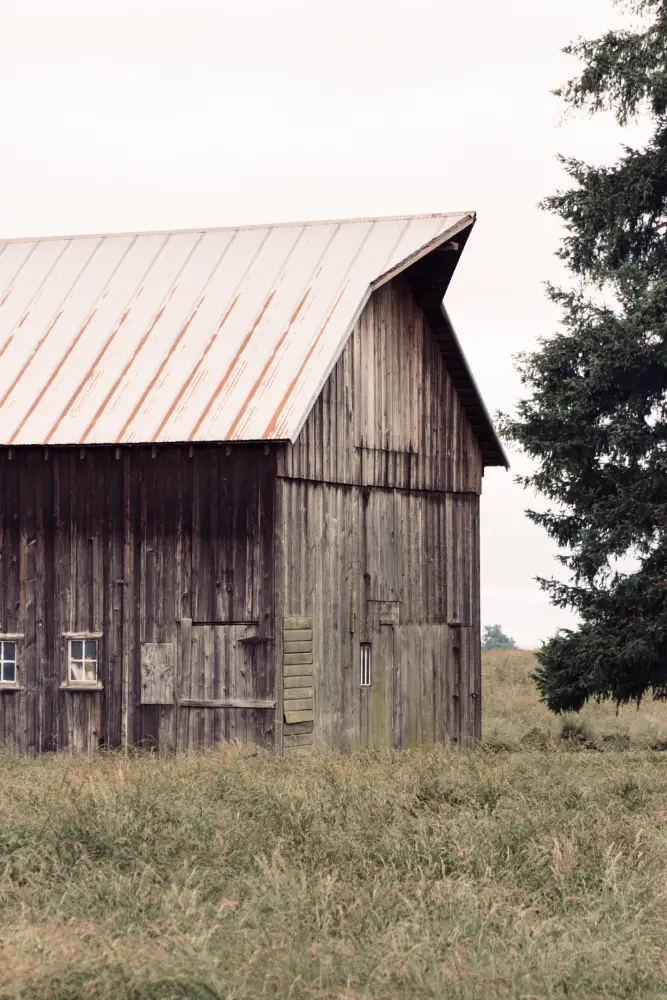
The Car Behind the Barn
I drove three hours to surprise my mom on her birthday and the first thing I saw was my husband’s car hidden behind our barn.
I was supposed to be the one doing the surprising.
Friday afternoon, I slipped out of work early in Columbus, telling my boss I had a dentist appointment I’d forgotten to mention. The lie came easily—too easily, maybe—but I’d been feeling guilty about missing so many family visits lately. My mom’s sixty-fourth birthday felt like the kind of milestone I shouldn’t miss, especially with Dad’s condition getting worse instead of better.
I tossed a bouquet of her favorite flowers—purple irises from the florist near my office—and a box of fancy chocolates into the back seat of my Honda. The kind with the gold foil wrapper that cost too much but always made her smile like a kid on Christmas morning. Then I pointed the car south and drove through the flat Ohio countryside, past endless fields of harvested corn and small towns that looked exactly like the one I’d grown up in.
The guilt rode shotgun the whole way. Six months since my last visit. Six months of phone calls where I’d promised “soon” and “next weekend” and never quite made it happen. Work was busy. Life was busy. Marcus needed me for this dinner party or that networking event. There was always a reason, always an excuse.
But today was different. Today I was going to show up, flowers in hand, and be the daughter my parents deserved.
By the time I turned onto the gravel lane leading to the farm, the sun was dropping behind the corn stubble, painting everything in shades of amber and gold. The familiar crunch of tires on gravel usually meant one thing to me: home. That sound was my childhood, my teenaged years, every visit back from college. It meant my dad would be on the porch in his wheelchair, probably dozing with a book in his lap, and my mom would be waving a dish towel from the kitchen doorway, flour on her apron, something delicious in the oven.
That day, the porch was empty. No wheelchair. No dad with his reading glasses sliding down his nose. No mom in the doorway. Just the old white farmhouse looking somehow larger and lonelier in the fading light.
But there was something else. Something bright and wrong out by the machine shed that caught my eye immediately.
A brand-new blue tarp, stretched tight behind the barn, weighed down with cinder blocks at each corner. It looked like a neon sign in the middle of all that brown and gray and weathered wood. My dad hadn’t bought new equipment since his stroke eighteen months ago—couldn’t afford it, couldn’t operate it, couldn’t see the point anymore. And my mom definitely didn’t impulse-buy tractors or machinery. She was practical to her bones, the kind of woman who made grocery lists and clipped coupons and kept the same car for fifteen years because it still ran fine.
Curiosity pulled me toward it like a magnet. I parked near the house but didn’t go inside. Instead, I walked across the yard, past the chicken coop where my childhood chickens used to peck and cluck, toward that incongruous splash of bright blue.
I walked closer, my shoes crunching on the gravel and dirt.
Under the tarp, the shape was too low and sleek to be a tractor. Too modern. City-shaped. A gust of October wind lifted the edge just enough for me to see a flash of metallic silver paint and a wheel I knew too well.
Same alloy rim. Same tiny scrape above the rear wheel well from that parking garage in downtown Columbus where Marcus had misjudged the clearance and sworn creatively for five minutes straight.
It was my husband’s car. His beloved Audi A6 that he washed every Sunday and wouldn’t let me eat in because of crumbs.
The problem—the big, glaring, impossible-to-ignore problem—was that my husband was supposed to be in Chicago. I’d packed his suitcase myself the day before. Folded his shirts the way he liked them. Made sure he had his phone charger and the good tie for important meetings. Driven him to the airport at five in the morning. Kissed him goodbye at the departure drop-off while he grabbed his bag and headed inside to “meet with investors about the new development project.”
He’d texted me from the gate. Sent me a photo of his boarding pass.
So why was his car hiding behind my parents’ barn under a tarp like something shameful? Why wasn’t it in long-term parking at the airport where it was supposed to be?
I stood there staring at that silver fender, my mind spinning through explanations. Maybe he’d driven here instead of flying. Maybe the Chicago trip got canceled. Maybe there was some perfectly reasonable explanation for why his car was hidden on my parents’ property while he was supposed to be in another state.
But none of those maybes explained the tarp. None of them explained why he’d hide the car. Why he wouldn’t mention coming to the farm. Why—
I heard his voice then, drifting from the kitchen window.
My husband’s voice, coming from inside my parents’ house. Sharp and cold in a way I’d never heard it before.
The Voices Through the Window
The kitchen window was cracked open maybe six inches to let out the heat from the oven. The October air was cool but the old farmhouse got stuffy when mom was cooking. I could smell roasted chicken and vegetables, that familiar scent of home and Sunday dinners and birthdays past.
But the voices coming through that window made my blood run cold.
“Just make it neat enough to read, Carol. It doesn’t have to be perfect. Just legible.”
It was Marcus’s tone more than his words that scared me. Flat. Hard. Utterly devoid of the smooth, joking charm he used at dinner parties and client meetings. This was a voice I’d never heard before, and it belonged to a stranger wearing my husband’s vocal cords.
My mom’s voice came next, shaking in a way I hadn’t heard since the night of my dad’s stroke. The night the ambulance came. The night we thought we might lose him.
“I can’t do this, Marcus. He’s confused today. He doesn’t even know what day it is, much less what these papers mean.”
“He knows enough.” Marcus’s voice was low and patient in that dangerous way that made my skin crawl. “You both know what’s on the line here, Carol. If you don’t go through with this, if we don’t get these signatures today, they can take everything. The house. The land. The farm your family has worked for three generations. All of it. Gone. Is that what you want? You want to lose everything because you’re being squeamish about some paperwork?”
Something inside my chest went very, very cold.
I should have kicked the door in right then. Should have stormed inside and demanded to know what the hell was going on. Should have protected my parents from whatever this was.
But some instinct—some deep, animal survival instinct—told me to wait. To listen. To gather information before I made my move.
I backed away from the siding quietly, carefully, making sure my footsteps didn’t crunch too loudly on the gravel. Walked back to my car with my heart hammering so hard I could feel it in my throat. Opened the driver’s door and slammed it hard like I’d just arrived, like I’d heard nothing.
“Mom? Dad?” I yelled toward the house, forcing brightness and surprise into my voice. “Surprise! Happy birthday!”
Inside the house, I heard immediate chaos. Chairs scraping violently across the linoleum floor. The frantic shuffle of papers being gathered. Hushed, urgent voices. Then sudden, complete silence that felt louder than any noise.
I grabbed the flowers and chocolates from the back seat and walked toward the house, my smile fixed in place like a mask, my mind racing through what I’d just heard.
When I pushed open the kitchen door, the whole room felt tight as a rubber band stretched to its breaking point. The air practically vibrated with tension.
My mom was standing at the stove stirring gravy way too fast, her movements jerky and anxious. The spoon clinked against the sides of the pot with a frantic rhythm. My dad sat in his wheelchair at the kitchen table, his knuckles bone-white where he gripped the armrests, his face pale and drawn. He looked at me with eyes that held something I couldn’t quite name. Fear? Relief? Warning?
And my husband was leaning against the counter in a blue flannel shirt I’d never seen before—when had he bought flannel? Marcus hated flannel, called it “farmer cosplay”—pretending to casually drink iced tea from one of my mom’s old mason jars like he belonged here, like this was normal.
For half a second when our eyes met, real panic flashed across his face. Raw and undisguised. Then the mask snapped back on so fast I almost thought I’d imagined it.
“Babe! Oh my god, what are you doing here?” He set down the tea and pulled me into a hug that felt more like a restraint than an embrace. His arms were too tight. His voice was too loud. “I thought you were working late tonight. You said you had that big presentation.”
I let him hold me, playing along, buying time to think. “It’s my mom’s birthday,” I said into his shoulder, breathing in cologne that smelled different than usual. Cheaper. Wrong. “Remember? I told you last week I might drive down to surprise her.”
He laughed—that practiced laugh he used when he was caught off guard but trying to hide it. Ran a hand through his hair in the gesture that usually meant he was thinking fast, recalibrating. “Of course, of course. I just forgot which day. God, this week has been insane.”
He launched into an elaborate explanation about canceled flights and meetings falling through and last-minute changes. How he’d decided to “just drive out and help around the farm for the weekend” since the Chicago trip got pushed back. How he’d been meaning to tell me but his phone died and he’d been so busy helping my parents with “some property tax stuff” that he’d lost track of time.
The lies flowed like water. Smooth and practiced.
I asked where his car was, keeping my voice innocent and curious.
The room went silent. My mom’s spoon stopped moving. My dad’s breathing got shallow.
Marcus smiled too hard, showing too many teeth. “Oh, it’s out back. Engine’s been acting a little weird—making this clicking sound? I didn’t want it in front of the house where it’d be in the way, so I parked it by the old equipment shed. Figured I’d take a look at it this weekend.”
Behind him, my mom’s hand was shaking so badly she almost dropped the spoon into the gravy. And there, just visible when her sleeve rode up as she lifted the pot, were faint red marks around her wrist. Like someone had grabbed her. Hard.
The Dinner
Dinner was worse than the kitchen scene. Worse because we all had to sit there and pretend everything was normal while the air practically crackled with unspoken tension.
Marcus talked nonstop through the whole meal—word salad about “new opportunities out in the country” and development trends and property values and market forces. Anything and everything except what was really happening in this house. He complimented the chicken three times, asked for seconds, charmed and joked and performed the role of devoted son-in-law with Academy Award precision.
My mom barely touched her plate. Just pushed food around while her eyes stayed fixed on her lap, occasionally glancing at my dad with an expression that made my heart hurt.
My dad stared at me with this sharp, desperate intensity that made my pulse race. His left hand, the one that still worked pretty well after the stroke, tapped on the table.
Once. Twice. Three times.
Our old code from when I was a kid playing hide and seek in the cornfields. When Dad would help me hide from my cousins during summer visits.
One tap meant “all clear.” Two taps meant “stay quiet.” Three taps meant one thing: danger.
I kept my face neutral, nodding along to whatever story Marcus was telling about Chicago investors and development deals and opportunities in “emerging secondary markets”—whatever that meant. But inside, my mind was racing like a hamster on a wheel.
Why was Marcus really here? What papers was he trying to force my mom to sign? Why did my dad look terrified? And why were there marks on my mom’s wrist?
After dinner, Marcus insisted on helping with dishes. My mom tried to wave him off—”You’re a guest, please, just relax”—but he was already at the sink rolling up his sleeves, playing the perfect helpful son-in-law.
“You go rest, Carol,” he said with that warm voice he used for clients and party hosts. “You’ve been on your feet all day. Claire and I can handle this. Can’t we, babe?”
My mom looked at me with eyes that screamed please don’t leave me alone with him, but what could she say out loud? He was my husband. He was being helpful and kind. She couldn’t accuse him of anything without sounding paranoid or ungrateful.
I stayed in the kitchen, drying plates while Marcus washed, both of us performing this domestic ritual like everything was fine and normal and not completely insane.
“How are your parents really doing?” he asked quietly, scrubbing at a stubborn bit of gravy. “Your mom seems really stressed. More than usual.”
“She’s fine. Just tired. Dad’s been having more bad days lately.”
“The stroke damage is getting worse?” His voice was perfectly calibrated with concern.
“Some days are better than others.”
“That must be so hard for her. Managing the farm, taking care of him. It’s a lot of work for people their age.” He handed me a dripping plate. “Especially with your dad’s condition making things so unpredictable.”
“They’re managing.”
“Are they though?” He turned to look at me directly, his eyes searching my face for something. “Because I’ve been thinking about it a lot lately, and I really think maybe it’s time to have a serious conversation about their options. Long-term planning. The land value around here has gone up significantly. They could sell, move somewhere easier to maintain. A nice condo in town maybe. One level, no stairs. Live comfortably off the sale proceeds without all this stress.”
“They don’t want to sell. This farm has been in my family for three generations. My great-grandfather broke this land.”
“I know the history, babe. But sometimes what we want and what’s best for us are different things. Sometimes love means making hard choices for people who can’t make them for themselves.”
There was something in his tone—something rehearsed and calculated—that made the hair on the back of my neck stand up. Like he’d practiced this speech. Refined it. Prepared for this exact conversation.
“What’s really going on, Marcus?” I asked quietly, setting down the dish towel.
He turned off the water, dried his hands on a towel with slow, deliberate movements. “Nothing’s going on. I’m just worried about them. About you. About how much pressure you’re under trying to support them financially from Columbus while maintaining your career and our life together. It’s not sustainable.”
“We’ve never talked about me supporting them financially.”
“Haven’t we?” He smiled that smile that used to make me feel loved and now made me feel cold. “All those checks you send for property taxes. The money for Dad’s medications. You think I don’t notice? I’m just saying maybe there’s a better way. A smarter way that doesn’t drain you dry.”
He kissed my forehead with lips that felt like ice, squeezed my shoulder, and went upstairs to the guest room—my childhood bedroom with the lavender wallpaper—leaving me alone in the kitchen with the dish towel and a growing sense of dread.
Above me, I heard the old floorboards creak as he moved around. Heard the bed frame squeak as he settled in. Heard him start snoring twenty minutes later with the kind of deep, easy sleep of someone with absolutely nothing on his conscience.
I stood at the sink and looked out the window toward where his car sat hidden under that blue tarp.
And I made a decision.
The Briefcase
I waited until midnight. Until the house settled into its nighttime sounds—the furnace clicking on and off, the old wood contracting in the cool air, Marcus’s snoring drifting down from upstairs in a steady rhythm that told me he was deeply asleep.
I crept downstairs in my socks, avoiding the steps that creaked, moving like I had as a teenager sneaking out to meet friends.
The stack of big brown envelopes that had been sitting on top of the fridge when I’d arrived—three or four of them, thick and official-looking—were gone. I’d noticed them during dinner, sitting there like accusatory evidence, but hadn’t said anything. Now they’d vanished.
Marcus’s leather jacket was hanging by the back door. The keys to his Audi were in the pocket, right where they always were. He was a creature of habit, my husband. Predictable in the small things even when he was apparently lying about everything else.
I took the keys, slipped on my shoes, and walked out into the October night.
The farm was beautiful under the stars. No light pollution out here, just the Milky Way splashed across the sky like someone had spilled diamonds. I could see every constellation my dad had taught me to find. Orion. The Big Dipper. Cassiopeia.
I found the silver Audi under the stars and the tarp, sitting there like a guilty secret. Unlocked it with the key fob. The interior lights came on, way too bright, and I quickly shut the door to kill them.
Popped the trunk with my heart in my throat.
There was a black leather briefcase inside, the expensive kind with brass fittings and a combination lock. The combination lock wasn’t engaged—Marcus’s arrogance or his carelessness, I wasn’t sure which.
I lifted it out, surprised by the weight, and carried it to the old barn. Used my phone’s flashlight to see.
The briefcase was stuffed with thick, official-looking documents. Legal size paper, the heavy kind, with raised seals and notary stamps.
I pulled out the first document and held it under the flashlight.
PROMISSORY NOTE
Principal Amount: $475,000
Borrower: Robert and Carol Jensen
My parents’ names in bold type at the top of a loan agreement I’d never heard of.
My stomach dropped like I’d missed a step in the dark.
I flipped through more pages, my hands starting to shake. Loan agreements with interest rates that made my eyes water—18% compounded monthly. Property liens against the farm. Something called a “Power of Attorney Authorization” dated four months ago, right after my dad’s stroke, granting Marcus full authority to make financial decisions on behalf of my parents “in matters relating to property development and asset management.”
My mom’s signature was at the bottom of that power of attorney. Clear. Unmistakable. Her distinctive looping “C” in Carol.
But my dad’s signature next to it looked wrong. The letters slanted at strange, inconsistent angles. Some of them trailed off like whoever was writing had lost strength halfway through. It looked nothing like his signature on the old birthday cards I had saved in boxes in my apartment. Nothing like the strong, steady hand that had signed my report cards and permission slips and high school graduation card.
I kept digging through the briefcase, pulling out document after document.
A purchase agreement for the farm, selling it to something called Heartland Development LLC for $1.2 million. I didn’t know much about land values, but I knew the farm was worth at least twice that. The property alone was 180 acres of prime Ohio farmland. The house was historical. The location was fifteen minutes from the highway.
$1.2 million was highway robbery.
The sale was contingent on “clear title transfer” and “borrower default resolution”—legal language that I was pretty sure meant my parents had to default on that massive loan before the sale could go through.
At the bottom of the briefcase, underneath all the papers, was a USB drive. Plain black, no label, the kind you could buy at any office supply store.
I took it. Photographed every single document with my phone, making sure to get clear shots of the signatures, the dates, the terms. My hands were shaking so badly I had to take some photos twice.
Then I put everything back exactly as I’d found it, locked the car, and went back inside.
I grabbed my laptop from my overnight bag and locked myself in the downstairs bathroom—the only room in the house with a door that had a working lock. My childhood refuge, where I used to hide when I needed to cry or think or escape.
Now I was hiding here again, but for much darker reasons.
The Video
I sat on the closed toilet lid and plugged the USB drive into my laptop with hands that wouldn’t stop trembling.
One file. Video format. MOV file, 47 minutes long. Date stamp from four months ago—June 15th.
The day after my dad’s stroke. The day he came home from the hospital still confused and weak.
I clicked play.
The video showed my parents’ kitchen in daylight. The same kitchen where we’d just eaten dinner, but different. Summer sun streaming through the windows. Everything looking normal and peaceful.
My mom was sitting at the table with papers spread in front of her. Lots of papers, arranged in neat stacks. My dad was in his wheelchair beside her, his head tilted at that angle that meant he was having one of his bad days—the stroke damage making everything foggy and distant.
Marcus’s voice came from off-camera, and hearing it made my skin crawl.
“Carol, I need you to listen to me very carefully. These papers in front of you are loan documents. Official financial agreements that will help protect your assets and Claire’s inheritance. You’re going to sign them, and you’re going to guide Robert’s hand so he signs them too. Do you understand?”
“I don’t understand what these are for, Marcus.” My mom’s voice was small and scared. “Why do we need a loan? We don’t have any debt. The farm is paid off. We don’t need to borrow money.”
“You don’t need to understand all the details. That’s what financial advisors are for. You need to trust me when I tell you this is to protect Claire’s future and your security. If something happens to you and Robert, this ensures she’s taken care of. The loan creates liquidity. Options. Financial flexibility.”
“But the amount… Marcus, this is almost half a million dollars. Why would we need to borrow—”
“Carol.” His voice got harder. Sharper. “The farm will be fine. This is just paperwork. Legal protection. Smart estate planning. Now pick up the pen.”
The camera angle shifted slightly, and I realized with growing horror that Marcus must have set this up deliberately. Set up a camera on a tripod. Planned this whole scene. Recorded it intentionally.
My mom picked up the pen with a hand that shook visibly on camera.
“Now the first signature is yours, right here on the bottom line. Then you’re going to help Robert sign next to you.”
“Marcus, he doesn’t understand what he’s signing. He can barely hold a pen right now. Yesterday he couldn’t remember my name. He’s not competent to—”
“He trusts you, doesn’t he?” The voice was cold now. Calculating. “Then help him. Be his wife. Support him. Unless you want to explain to Claire why you refused to protect her inheritance. Why you let stubbornness destroy everything your family built.”
I watched my mom—my strong, practical mom who’d run this farm through droughts and bad crop years and my dad’s stroke—crumble under that manipulation. Watched her shoulders cave inward. Watched her eyes fill with tears.
“I don’t want to do this,” she whispered.
“Then you’ll lose everything. The bank will foreclose. Claire will have nothing. Your husband will spend his final years in some state nursing home because you can’t afford to care for him. Is that what you want?”
“No, but—”
“Then sign. And help Robert sign. Now.”
I watched my mom pick up my dad’s limp right hand—the one that barely worked since the stroke. Watched her wrap his fingers around the pen. Watched her guide his hand across the signature line while tears ran down her face and my dad stared into space, not understanding, not consenting, just a body being used as a prop in someone else’s crime.
Marcus zoomed the camera in on that moment. Made sure every detail was captured. The shaking hand. The tears. The forced signature.
“Good,” his voice said from off-camera. “Now the next page. And the next. There are fifteen documents total, and Robert needs to sign all of them.”
The video continued for another forty minutes. Fifteen signatures. Fifteen times watching my mom break down and pull herself together and do what Marcus demanded because he’d convinced her it was the only way to protect her daughter and her husband and everything she’d spent her life building.
The video ended with Marcus’s face finally appearing on camera. Smiling. Satisfied.
“Perfect. These will hold up in any court. Remember, Carol—this was your choice. Your idea. You wanted to protect Claire. You wanted to secure the family’s future. If anyone asks, that’s what you tell them.”
Then the screen went black.
I sat on that bathroom floor with my laptop balanced on my knees, and I felt something break inside my chest. Not dramatically. Just quietly, like ice cracking on a pond.
This wasn’t a misunderstanding. This wasn’t a business deal gone wrong. This wasn’t Marcus trying to help in a misguided way.
This was fraud. Elder abuse. Coercion. Manipulation. Financial exploitation of vulnerable adults.
All committed by the man I’d married. The man I’d loved. The man I’d trusted to build a life with.
And he’d filmed it. Kept the video as insurance. Proof that my mom had “helped” forge my dad’s signature. Evidence he could use against her if she tried to back out or tell anyone. A weapon to keep her silent and compliant.
The cruelty of it took my breath away.
I sat there until my legs went numb, going through the video again, taking screenshots, making notes. Building a timeline of exactly what had happened and when.
Sometime after 3 AM, I heard footsteps upstairs. Marcus getting up to use the bathroom probably. I held my breath until the footsteps retreated and his snoring resumed.
Then I spent another hour going through every document again, cross-referencing dates and signatures, understanding the full scope of what he’d done.
By the time dawn started to lighten the sky outside the small bathroom window, I had a complete picture.
And I had a plan.
The Morning Confession
I didn’t sleep. Just sat in that bathroom until the sky turned from black to grey to the pale gold of sunrise.
At 6 AM, I heard my mom moving around in the kitchen. The familiar sounds of her morning routine—coffee pot filling with water, the click of the burner igniting on the old gas stove, cabinet doors opening and closing.
I waited until I heard Marcus’s shower start running upstairs—he was religious about his morning routine, always showered at exactly 6:15—then I went to find her.
She was making coffee with hands that still trembled. When she saw me emerge from the bathroom, laptop under my arm, her face went through several expressions at once. Surprise. Fear. Hope. Resignation.
“You’re up early,” she said, trying to smile. Trying to pretend this was normal.
“Mom, we need to talk. Now. Before he comes downstairs.”
Her face crumpled like a paper bag. “Oh, Claire. Oh, sweetheart.”
“Tell me everything. All of it. Every detail. I found the briefcase in his car. I saw the documents. I watched the video.”
The color drained from her face. “The video. Oh god. You saw—”
“I saw him coerce you into forging Dad’s signature. I saw him manipulate and threaten you. I saw everything, Mom. Now I need you to tell me the rest.”
It came out in pieces between sobs. How Marcus had shown up four months ago, just two days after Dad came home from the hospital, saying he wanted to “help with finances during this difficult time.” How he’d convinced her they needed to take out a loan to cover medical bills and property taxes and ongoing care costs that she didn’t really understand but sounded scary.
“The hospital bills from the stroke were so high,” she said, wringing her hands. “Even with Medicare, we owed almost forty thousand dollars. And Marcus said property taxes were going to increase dramatically because of some new assessment. He made it sound like we’d lose the farm if we didn’t get ahead of it. He had all these numbers and projections and official-looking spreadsheets.”
“But you didn’t owe forty thousand in medical bills. I paid most of those, remember? You called me from the hospital and I gave you my credit card number.”
She looked at me with dawning horror. “You did. I forgot. I was so overwhelmed and scared about your father, I forgot you’d already handled that.”
“What about property taxes?”
“I looked at the assessment after Marcus left that day. It had gone up $300 a year. Three hundred dollars. Not the thousands he claimed.”
“So the loan wasn’t necessary at all.”
“No.” Her voice broke. “But I didn’t realize that until later. He was so convincing. So official. He had papers and terms and he made it sound like this was just what responsible people did. Like I was being irresponsible and putting your father at risk if I didn’t sign.”
“What happened to the money from the loan?”
“It went into an account Marcus set up. He said it was safer that way, that he’d manage the payments and distributions, make sure everything was handled properly. He called it a ‘managed asset account’ and said it was standard practice for estate planning.”
“Have you seen any statements? Any record of where the money is?”
“He sends me emails every month with PDFs. But when I asked to see the actual bank account, to log in online and check it myself, he got angry. Said I was being paranoid and ungrateful. That I didn’t understand modern banking and I should trust him because he’s a professional and he’s family.”
“Where’s the money now?”
“I don’t know.” She was crying openly now. “He keeps saying it’s invested and we’ll see returns soon. That it’s all part of the strategy. But the loan payments are due. The first one is due next week—$8,400. And we don’t have it. Our regular account has maybe $3,000 in it. I asked Marcus what to do and he said not to worry, that he’d handle it.”
“He wants you to default.”
She looked at me with red, swollen eyes. “What?”
“That’s the plan, Mom. He wants you to miss the payment. To default on the loan. Then the lender forecloses on the farm, and Marcus has a buyer ready to purchase it at half its value. He probably gets a commission on the loan, a commission on the sale, and a kickback from the development company. Plus whatever he stole from the actual loan money.”
“But… he’s your husband. He’s family.”
“I know.” The words felt like broken glass in my mouth. “I know he is.”
We sat in silence while the coffee maker gurgled and the sun came up over the fields my family had worked since my great-grandfather first broke the land with a horse and plow.
“There’s something else,” my mom whispered finally. “Something I didn’t tell you.”
“What?”
“He recorded us. When I helped your father sign those papers. He made me do it in front of a camera. And afterward, he said if I ever tried to back out or tell anyone what really happened, he’d send that video to the police. That I’d be charged with elder abuse and fraud for forging Robert’s signature. That I’d go to prison and your father would die in state care.”
“I know. I saw the video.”
“Then you know I’m trapped. He has proof. My signature is on everything. Your father’s signature—even though I guided his hand, even though Marcus forced me—it’s still forgery. I could go to prison.”
I reached across the table and took her shaking hands in mine.
“No, Mom. He’s trapped. Because that video is also evidence of his crimes. Coercion. Fraud. Elder abuse. Exploitation of vulnerable adults. He recorded himself committing multiple felonies. The fact that you signed under duress makes those signatures invalid. And we can prove duress because he was stupid enough to film the whole thing.”
“But my signature—”
“Was obtained through threats and manipulation. Any lawyer will tell you that contracts signed under duress are void. And we have video evidence of the exact duress he applied. His own words. His own voice. His own face at the end.”
Hope flickered in her eyes for the first time. “You really think we can fight this?”
“I know we can. But we need to move fast. Get ahead of him. And I know exactly who to call.”
The Lawyer
I left Mom in the kitchen with instructions to act completely normal when Marcus came down. To make breakfast, smile, pretend everything was fine. To buy me time.
Then I grabbed my car keys and drove into town while Marcus was still in the shower.
The county seat was twenty minutes away, through corn fields and past the high school I’d graduated from a lifetime ago. The town looked exactly the same—same storefronts, same grain elevator against the sky, same diner where my parents used to take me for pancakes on Saturday mornings.
Morton & Associates had been on Main Street for as long as I could remember. The same brick building with the same gold lettering on the window. Roger Morton had handled my parents’ wills, the farm trust, every legal document that mattered in our family’s life.
He was in his seventies now, mostly retired, but still kept office hours three mornings a week. I’d called from the car and gotten his voicemail. Left a message saying it was an emergency about my parents. Hoped he’d be there.
When I walked into the office at 7:30 AM, he was already at his desk with a cup of coffee and a stack of files. He looked up, saw my face, and immediately stood.
“Claire Jensen. I haven’t seen you in years. What’s wrong?”
I didn’t waste time on pleasantries. Just pulled out my laptop, opened the video file, and said, “You need to watch this. All of it.”
He watched in silence, his expression getting darker with each minute. When it finished, he sat back in his chair and was quiet for a long moment.
“This is one of the most brazen fraud schemes I’ve seen in forty years of practice,” he said finally. “And I’ve seen some doozies.”
“Can we stop it?”
“Yes. But we need to move fast. When’s the next signature supposed to happen?”
“I think today. Maybe this morning. He was pressuring my mom last night when I arrived. There’s a notary involved—I saw someone I didn’t recognize at the farm.”
Roger picked up his phone. “I’m calling Judge Morrison. She handles emergency injunctions in this county. We’re going to get a temporary restraining order against your husband, freeze all accounts related to this loan, and file for emergency guardianship to protect your father.”
“Will it hold up in court?”
“With this video? Absolutely. He filmed himself coercing a vulnerable adult with diminished mental capacity. That’s textbook elder abuse. The loan documents are void. The signatures are invalid. The criminal charges alone will bury him.”
“There’s a loan payment due next week. If my parents can’t pay—”
“They won’t have to pay. That loan was fraudulent from the start. Any competent judge will void it the second they see this evidence. Your parents won’t owe a penny.”
“But Marcus already has the money. He could have moved it somewhere we can’t recover it.”
Roger’s expression went grim. “That’s the real question, isn’t it? How much has he already stolen and hidden? Do you have access to any account information?”
I pulled out the photos I’d taken of all the documents. “Everything was in his briefcase. Bank accounts, shell companies, the whole structure.”
He spent ten minutes going through the photos, making notes, his frown deepening. “This is sophisticated. Multiple LLCs, offshore connections, layered transactions. He’s been planning this for months. Maybe longer.”
“How much do you think he took?”
“Based on these documents? I’d estimate he diverted at least $380,000 of the loan money into accounts he controls. The rest probably went to the fake lending company—which I suspect he also owns or has a stake in—and to pay off the notary and anyone else involved.”
“Can we get it back?”
“Some of it. Maybe most of it if we move fast enough. But Claire, you need to understand something. Your husband is going to prison. There’s no scenario where he sees this video and these documents and doesn’t face serious criminal charges. And when that happens, your life is going to change dramatically.”
“It already has,” I said quietly. “The man I married doesn’t exist. I don’t know who that person is in the video, but it’s not anyone I recognize.”
The Sheriff
By 9 AM, I was sitting in the county sheriff’s office with Roger Morton on one side and Detective Sarah Chen on the other.
Detective Chen was younger than I expected, maybe forty, with sharp eyes that didn’t miss anything. She watched the video twice, taking detailed notes the second time through.
“This is prosecutorial gold,” she said when it finished. “Premeditated fraud. Coercion. Elder abuse. Exploitation of vulnerable adults. And the defendant documented everything himself. Do you know how rare that is? Most criminals try to hide their crimes. This guy filmed his own confession.”
“Can you arrest him?” I asked.
“I can do better than that. I can catch him in the act. You said he’s pressuring your mother to get more signatures today?”
“That’s what it sounded like yesterday. There was someone at the farm I didn’t recognize—probably a notary he brought in to witness signatures.”
Roger nodded. “He needs a notary to make certain documents officially valid. Powers of attorney, property transfers, that sort of thing. That’s probably his next move. Get your father to sign a deed transfer in front of a witness who can certify the signature was made willingly.”
Detective Chen stood up. “Then we need to get back to your parents’ farm right now. How far?”
“Twenty minutes.”
“Let’s move. I’m bringing a deputy. We’ll set up surveillance, wait for him to make his move, then intervene before any signatures happen. If we can catch him in the act with a witness present, that strengthens the criminal case even more.”
“What if he’s already done it? What if they signed something this morning while I was gone?”
“Then we arrest him anyway and void whatever he coerced them into signing. But I’d rather catch him mid-crime if possible. Makes everything cleaner.”
We took two cars—me driving with Roger, Detective Chen following with a deputy named Martinez who looked like he played college football not that long ago.
I drove faster than I should have, gravel spitting behind my tires as I took the country roads at speeds that made Roger grip the door handle. My mind was racing through scenarios. What if Marcus figured out I knew? What if he ran? What if he’d already forced my parents to sign more papers and was destroying evidence right now?
When we turned onto the long driveway leading to the farm, I saw immediately that we weren’t too late.
There were three cars in front of the house now. My husband’s silver Audi, uncovered and parked brazenly in front like he had nothing to hide. A beige Toyota Camry I didn’t recognize. And a black SUV with tinted windows that screamed either law enforcement or corporate security.
Through the kitchen window, I could see shapes moving.
I didn’t park neatly. Just stopped the car and ran.
The Moment
I burst through the kitchen door and stopped dead.
The scene was like a tableau from a nightmare. My dad’s wheelchair was pulled up to the coffee table that had been converted into a makeshift desk. Papers were laid out in neat rows. A man I’d never seen before stood beside the wheelchair holding a notary stamp in one hand and his phone in the other, looking uncomfortable.
My mom was pressed back against the kitchen counter, her face streaked with tears, her hands wrapped around her middle like she was trying to hold herself together.
And Marcus stood behind my father like some kind of puppeteer, his hands on my dad’s shoulders, curling my dad’s stiff, partially paralyzed fingers around a pen, guiding his hand toward a document on the table.
“Just make the mark, Robert,” Marcus was saying in that patient, cold voice I’d heard through the window yesterday. “Carol, help him. We’ve been over this. If we don’t finish this today, you lose everything. The bank forecloses. The farm is gone. Is that what you want?”
Something inside me snapped. All the fear and confusion and horror of the past twelve hours crystallized into pure, white-hot fury.
I heard my own voice before I realized I was shouting.
“GET YOUR HANDS OFF MY FATHER.”
Every head in the room whipped toward me at once.
Marcus dropped my dad’s hand like it had burned him. The pen fell from my father’s fingers and rolled across the table. The notary took a step backward, his eyes wide. My mom made a sound that was half sob, half gasp.
“Claire.” Marcus’s face went through a rapid series of expressions—shock, fear, calculation, then that smooth mask sliding back into place. “Good timing. We’re just finalizing some paperwork. Last few signatures for the estate planning we discussed. Your mom was just about to help your dad—”
“Step away from my father. Now.”
“Babe, you don’t understand what’s happening here—”
Detective Chen walked in behind me, her badge already out and held high. Deputy Martinez was right behind her, his hand resting casually on his service weapon.
“Sir, I need you to step away from the wheelchair immediately and put your hands where I can see them.”
Marcus’s face went pale. The mask finally cracked. “Officer, I think there’s been a serious misunderstanding. I’m this man’s son-in-law. I’m helping him with some financial planning and estate documents. This is a private family matter—”
“Marcus Chen?” Detective Chen’s voice was professional and cold as ice.
“Yes, but—”
“You’re under arrest for elder abuse, fraud, coercion, exploitation of vulnerable adults, and forgery. You have the right to remain silent. Anything you say can and will be used against you in a court of law. You have the right to an attorney—”
“This is insane!” Marcus’s voice rose to a shout. “I haven’t done anything wrong! These people are confused. The old man has dementia, his wife doesn’t understand basic finances. I’ve been trying to help them and this is the thanks I get?”
He tried to push past me, tried to run for the door.
Deputy Martinez caught him in two steps. The deputy was six inches taller and probably eighty pounds heavier. Marcus didn’t stand a chance. Within seconds he was face-down on my parents’ kitchen floor, hands being cuffed behind his back, still protesting his innocence.
The notary was suddenly very interested in cooperating. “I’m just a mobile notary,” he said quickly, hands up. “Guy hired me on TaskRabbit to witness some signatures. I didn’t know anything about fraud or coercion. I was just supposed to verify identity and watch people sign. That’s it. I’ll testify. I’ll tell you everything.”
Roger Morton was already gathering up the papers from the coffee table, documenting everything, making sure the chain of evidence was preserved.
My mom collapsed into a chair, sobbing so hard her whole body shook.
And my dad looked at me with tears running down his weathered face. Tears of relief and gratitude and something else I couldn’t quite name. His mouth worked, struggled to form words around the stroke damage. Finally got out three syllables that broke my heart:
“Thank you, Claire-bear.”
My childhood nickname. The one he hadn’t been able to say since the stroke.
I went to him, knelt beside his wheelchair, put my head on his lap like I had when I was small and the world seemed big and scary.
“I’ve got you, Dad,” I whispered. “You’re safe now. Both of you. I’ve got you.”
The Aftermath
They found the money. Most of it, anyway.
Marcus had opened accounts under three different shell company names—Heartland Development LLC, Midwest Property Solutions, and Strategic Asset Management. Moved money through a series of transfers designed to hide the trail and make it nearly impossible to follow. But he’d gotten sloppy in his confidence. Left digital breadcrumbs that the forensic accountants were able to follow right back to him.
He’d stolen $380,000 of the loan money, just like Roger had estimated. Used it to pay off his own credit card debts that I hadn’t known existed—$45,000 on cards he’d hidden from me. Bought the silver Audi I’d found behind the barn—$68,000. Made a down payment on a luxury condo in Chicago that I’d never heard about—$150,000. The condo where he was apparently planning to live with someone named Jennifer who turned out to be a “business development consultant” he’d been seeing for eight months.
The affair was almost funny in how predictable it was. Of course there was another woman. Of course she was younger and blonder and worked in something vague like “consulting.” Of course Marcus had been planning to take the money, destroy my parents, divorce me, and start over somewhere else with someone else.
The remaining money had gone to his brother—his brother, who I’d met maybe twice and who’d always seemed shifty—as a “consulting fee” for the development company that was never actually going to develop anything.
The criminal charges were extensive and devastating. Elder abuse. Fraud. Forgery. Coercion. Identity theft. Money laundering. Exploitation of vulnerable adults. Each one a felony. Each one carrying serious prison time.
His lawyer tried every defense in the book. Claimed my mom had willingly signed the documents. Claimed my dad had been competent and understood what he was signing. Claimed this was all a misunderstanding and Marcus was just trying to help.
Then the prosecutor showed the video in court.
The entire courtroom went silent as they watched Marcus coerce and manipulate and threaten my mother into forging my father’s signature. Watched him zoom in to capture every detail. Heard him instruct my mom to lie if anyone asked.
The jury deliberated for less than two hours.
Guilty on all counts.
The sentencing hearing was three weeks later. The judge was a woman in her sixties who looked at Marcus with something close to disgust.
“You exploited a vulnerable elderly couple during the most difficult time of their lives,” she said. “You betrayed the trust of your wife and her family. You committed calculated, premeditated fraud and documented your own crimes with stunning arrogance. The only thing that makes this case unusual is how thoroughly you incriminated yourself.”
Eight years in federal prison. No possibility of parole before five years served. Restitution of all stolen funds plus penalties. Permanent restraining order keeping him from contacting my parents or me.
Marcus tried to speak, to make some final statement, but his lawyer stopped him.
He was led away in handcuffs, and I felt nothing. Not satisfaction. Not grief. Not anger. Just a kind of hollow relief that it was finally over.
Six Months Later
I’m sitting on my parents’ porch watching the sun set over the corn fields. The farm is safe. The loan is void. Most of the money has been recovered and returned to my parents’ savings account, plus another $120,000 in penalties and damages that the court ordered paid from Marcus’s seized assets.
My dad is doing better. So much better it sometimes makes me cry. The speech therapy we finally got him into is helping—turns out stress was making his symptoms worse, and once the threat was gone, once he felt safe again, his recovery accelerated. He can say full sentences now. Yesterday he told me he was proud of me in a voice that sounded like him again, like the dad who used to read me bedtime stories and teach me to drive the tractor.
My mom is in the kitchen making her famous apple pie. I can hear her humming “Amazing Grace,” which is what she always hums when she’s happy and doesn’t realize she’s making noise. The sound floats through the window screens and wraps around me like a warm blanket.
The divorce was final last month. I kept the Columbus house—turned out it was in my name only, one of the few things Marcus hadn’t managed to steal or mortgage or use as collateral. I sold it three weeks later. Used the money to pay off my student loans that had been hanging over me for a decade, and put the rest in savings.
I moved back to the farm. Took a remote job with a marketing firm that lets me work from anywhere. Converted my old bedroom back from a guest room to my actual bedroom, kept the lavender wallpaper because it makes me smile, added a desk and good WiFi and everything I need to do my job.
At night I sleep in that room and listen to the house settling, the wind in the fields, my parents breathing steady and safe in their room down the hall. The sounds of home. The sounds of family. The sounds of being exactly where I’m supposed to be.
My mom comes out onto the porch with two mugs of tea—the good kind, with honey and a splash of milk. She sits beside me in the old rocking chair and we watch the sky turn from blue to pink to gold to purple.
“You saved us,” she says quietly. Not for the first time. Maybe the twentieth time. Like she still can’t quite believe it’s real.
“You would have done the same for me.”
“I should have told you sooner. When he first started coming around with papers and smooth talk. I knew something was wrong. Could feel it in my gut. But he was so convincing, and I was so scared about your father, and I wanted to believe he was trying to help.”
“He’s good at manipulation, Mom. That’s what con artists do. They make you doubt yourself. They make you think you’re being paranoid or ungrateful. They find your vulnerabilities and exploit them.”
We sit in silence for a while. A hawk circles overhead. The corn rustles in the breeze.
“Did you ever suspect?” she asks finally. “Before you found the car? Before all this?”
I think about it honestly. About the late nights Marcus claimed were work meetings. The new cologne I’d noticed. The way he’d started talking about “investments” and “opportunities” that I never quite understood. The phone calls he took in another room. The credit card statements he said he’d handle and I never looked at.
“I think part of me knew something was off,” I say slowly. “But I didn’t want to see it. Because seeing it meant admitting I’d married someone capable of this. Admitting I’d made a terrible mistake. It’s easier to ignore the small things than face the big truth.”
“You couldn’t have known it was this bad.”
“Maybe not. But I should have paid more attention. Should have visited more. Should have asked more questions when he volunteered to ‘help with your finances.’ Should have trusted my instincts instead of making excuses.”
“You’re here now. That’s what matters.”
Inside, my dad calls out something I can’t quite make out. My mom smiles.
“He’s asking if the pie is ready. Some things never change.”
She goes back inside and I stay on the porch a little longer, watching stars appear one by one over the fields.
Somewhere in a federal prison in Ohio, Marcus is serving eight years. His appeals keep getting denied. The evidence is too overwhelming. The video too damning. His lawyer says he might get out in five years with good behavior, but that’s still five years of his life gone.
Sometimes I think about what I would say to him if I could. If I saw him again.
I used to imagine screaming at him. Telling him exactly what he took from me—my trust, my marriage, my sense of safety in the world. Telling him about the therapy I’m in now, working through the betrayal and manipulation. Telling him about the nightmares I still have sometimes where I don’t find the car, don’t check the briefcase, don’t save my parents in time.
But now I think I’d just say thank you.
Because finding his car behind the barn that Friday afternoon—finding it hidden under that ridiculous blue tarp like something shameful—that was the moment I saw him clearly for the first time. That was the moment I stopped being the obedient wife who packed his bags and kissed him goodbye at the airport and started being the daughter who would fight for her family no matter what it cost.
That blue tarp flapping in the wind, that silver fender catching the light, that moment of confusion and curiosity that made me investigate instead of just walking into the house—that was the luckiest thing that ever happened to me.
I finish my tea and go inside.
The kitchen smells like cinnamon and apples and butter and everything good about home. My dad is at the table with a fork clutched in his good hand, waiting not-so-patiently. My mom is cutting perfect slices and adding scoops of vanilla ice cream that’s already starting to melt.
“Claire!” Dad says, clear as a bell. “Pie! Now!”
I laugh and sit down in my chair—the same chair I’ve sat in since I was six years old, with my initials carved into the underside of the seat from a rebellious phase when I was twelve.
“Happy birthday, Mom,” I say, raising my fork. “A little late, but still.”
She smiles, and it reaches her eyes for the first time in months. “Right on time, sweetheart. Right on time.”
We eat pie and talk about normal things. Whether to plant soybeans or corn in the south field next spring. What color to paint the barn—Dad wants red, Mom wants blue, I’m staying out of it. Whether the Johnsons’ new rooster is going to keep waking us up at 4 AM or if we need to have a diplomatic conversation with our neighbors.
Family things. Safe things. Future things.
Outside, the farm is dark except for the porch light and the stars. No cars hidden under tarps. No secrets buried in the fields. No threats lurking in the shadows. Just land my family has worked for three generations, and will work for three more if I have anything to say about it.
My phone buzzes. Text from Roger Morton: Final restitution payment cleared. Account fully restored. You can tell your parents they’re in the clear.
I delete the message and put my phone away.
It’s been over for months, really. Over since the moment I burst through that kitchen door and stopped Marcus from forcing my father to sign one more document. Over since Detective Chen read him his rights and Deputy Martinez put him in handcuffs.
But this feels like the real end. The financial end. The legal end. The last piece falling into place.
I take another bite of pie and look around the table at my parents—safe, together, home, eating dessert and arguing about paint colors like the world is normal and good and not full of predators who hide under blue tarps.
And I know with absolute certainty that I made the right choice.
The only choice.
Not the husband I thought I knew. Not the marriage I thought I had. Not the life I thought I was building in Columbus with someone who turned out to be a stranger.
But this. This kitchen. These people. This land. This home.
I chose right.
And I’d make the same choice every single time.
The End

Sophia Rivers is an experienced News Content Editor with a sharp eye for detail and a passion for delivering accurate and engaging news stories. At TheArchivists, she specializes in curating, editing, and presenting news content that informs and resonates with a global audience.
Sophia holds a degree in Journalism from the University of Toronto, where she developed her skills in news reporting, media ethics, and digital journalism. Her expertise lies in identifying key stories, crafting compelling narratives, and ensuring journalistic integrity in every piece she edits.
Known for her precision and dedication to the truth, Sophia thrives in the fast-paced world of news editing. At TheArchivists, she focuses on producing high-quality news content that keeps readers informed while maintaining a balanced and insightful perspective.
With a commitment to delivering impactful journalism, Sophia is passionate about bringing clarity to complex issues and amplifying voices that matter. Her work reflects her belief in the power of news to shape conversations and inspire change.