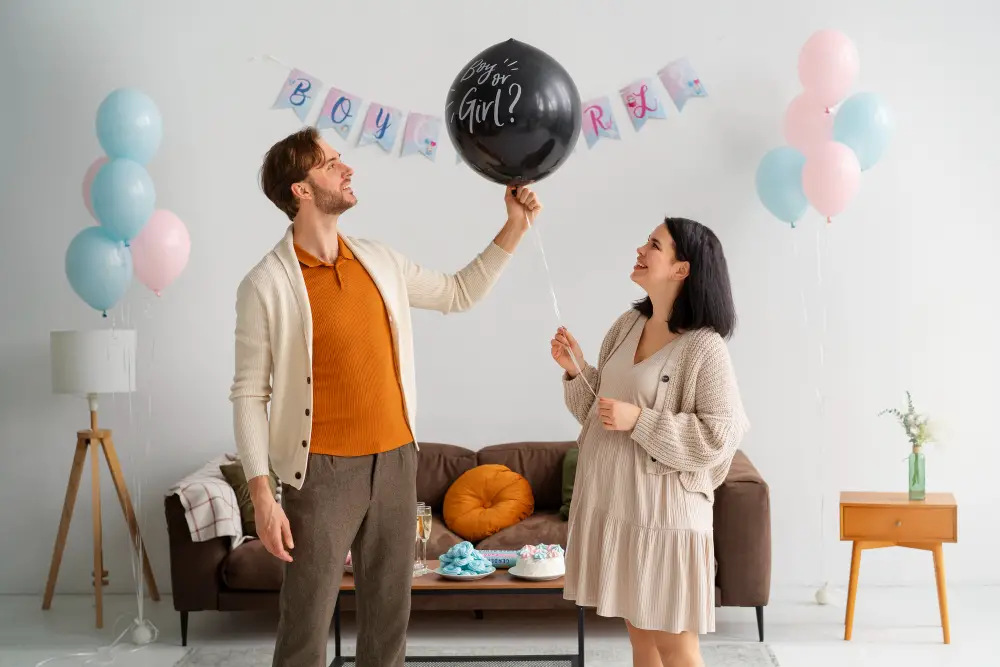
The Reveal
They say a house without children is a silent tomb, but Mondragon Manor was never silent. It was filled with the echoing accusations of my failure, the clinking of crystal glasses filled with scotch, and the sharp, venomous whispers of my mother-in-law.
My name is Valerie. For ten years, I was the dutiful architect of Franco’s life. I designed the interiors of his hotels, managed his social calendar, curated the quarterly reports for his investors, and maintained the image of the perfect power couple with the precision of someone building a bridge—every strut calculated, every load distributed, every weakness hidden.
But to Franco and his mother, Doña Matilda, I was nothing more than a broken vessel. A cracked pot that couldn’t hold water. The one thing they wanted from me—the only thing that would have made me valuable in their economy of bloodlines and inheritance—was the one thing my body refused to produce. Or so they believed.
“Barren.”
The word hung in the air of the dining room, heavier than the chandelier above us. It had been spoken so many times in that house that it had lost the quality of an insult and taken on the weight of a diagnosis. A permanent condition. A verdict.
“Ten years, Valerie,” Franco slurred, his face flushed with the expensive wine I had selected for the cellar three years ago. “Ten years of feeding you, clothing you, and what do I get? Dust. My lineage ends because of your incompetence.”
I stared at my plate, my knuckles white as I gripped my fork. “We have discussed this, Franco. The doctors said stress could be a factor—”
“Stress!” Doña Matilda cackled from the head of the table. She looked like a vulture draped in silk, her rings catching the light every time she gestured, which was constantly. “In my day, we didn’t have stress. We had duty. You are simply a useless woman, Valerie. A dried-up branch on a healthy tree.”
I swallowed the lump in my throat, tasting bile. I wanted to scream that I had built his business alongside him. That I was the one who redesigned the flagship hotel when his original architect quit. That I was the one who caught the accounting discrepancy that would have cost him two million in a tax audit. That I managed the accounts, the staff, the properties, the vendors, the insurance, the maintenance schedules—all while he played golf and collected credit for my labor.
But I stayed silent. I was the good wife. The good wife absorbs. The good wife adjusts. The good wife smiles through dinner and cries in the shower and wakes up the next morning ready to absorb again.
Until the Tuesday that shattered the world.
The rain was lashing against the floor-to-ceiling windows when the front door opened. Franco walked in, not with his usual drunken stumble, but with a swagger I hadn’t seen in years. And clinging to his arm, looking like a damp, frightened kitten who had practiced looking damp and frightened, was a woman.
She couldn’t have been more than twenty-two. Her skin was dewy, her eyes wide and vapid, and her hand rested possessively over a distinct bump in her midsection.
“Valerie,” Franco said, his voice booming with a cruelty that felt rehearsed. “This is Jessica. She will be living here from now on.”
I stood up, my legs trembling. “Excuse me?”
“She is pregnant,” he announced, puffed up with pride. “She is doing what you refused to do. She is giving me an heir.”
The room spun. The cruelty of it wasn’t just the infidelity—it was the proximity. He wasn’t leaving me. He was replacing me, right there in my own living room.
“You can’t be serious,” I whispered.
“I am very serious.” Franco stepped closer, his breath smelling of brandy and arrogance. “And since you are still legally my wife, and since I control the accounts, you have a job to do.”
He grabbed my chin, forcing me to look at Jessica, who offered me a smirk that was equal parts pity and triumph.
“I want you to organize a party,” he commanded. “A grand welcome. A gender reveal. I want the shareholders, the partners, the family—everyone. I want them to see that the Mondragon name will live on.”
“You want me to plan a party for your mistress?”
“I want you to do your duty,” he hissed. “Do it, or you leave this house with nothing but the clothes on your back.”
I looked into his eyes—eyes I had once loved—and saw nothing but a stranger. I nodded slowly, a plan forming in the dark recesses of my mind, cold and sharp as a scalpel.
“I will give you a party, Franco,” I said softly. “One you will never forget.”
The humiliation was a physical weight, pressing down on my chest as I navigated the next few weeks. Jessica moved into the guest wing, which she immediately began complaining about. She wanted the master suite. She wanted my driver. She wanted my wardrobe budget. She wanted my life, piece by piece, like a woman picking through a house at an estate sale.
Doña Matilda encouraged it. She visited daily now, bringing baby clothes and unsolicited advice and the particular brand of cruelty that only mothers-in-law who have been granted permission can deliver.
“Jessica, dear,” Matilda would say, loud enough for me to hear from wherever I was in the house, “you must eat more protein. The baby needs strength. Not like the dust that woman produces.”
Jessica absorbed the attention like sunlight. She bloomed under Doña Matilda’s approval the way I had once hoped to—and the realization that I’d spent ten years chasing warmth from a woman who had never intended to give it made something inside me harden into something useful.
“Valerie,” Jessica chirped one morning over breakfast, rubbing her belly while I drank black coffee. “Do you think we should have blue balloons or gold? Franco says he feels it’s a boy. A little CEO.”
“Gold,” I said, not looking up from my tablet. “It’s more regal.”
“You’re so helpful.” She smiled, a predator showing its teeth. “It must be hard, knowing you’re broken inside. But don’t worry, I’ll let you hold the baby sometimes.”
I left the room before I drove a steak knife into the table.
I needed leverage. I needed more than just anger. The prenuptial agreement I had signed ten years ago was ironclad—or so Franco thought. It stated that in the event of divorce, I got nothing, unless infidelity could be proven to have caused “irreparable damage to the family estate or reputation.”
Getting Jessica pregnant was certainly infidelity, but Franco would argue it saved the estate by providing an heir. I needed something nuclear.
The doubt started with a simple observation.
One evening, I passed by the guest wing. The door was ajar. Jessica was on the phone, her voice hushed and urgent.
“I can’t talk right now… No, he suspects nothing… I miss you too, babe… Yeah, the old man is clueless.”
The old man.
My heart hammered against my ribs. I retreated to the shadows.
Later that night, while Franco was snoring in a drunken stupor in the master bedroom, I crept to his side. I looked at the man who had called me barren for a decade. I looked at the thinning hair, the blotchy skin.
I remembered something my gynecologist had mentioned in passing years ago, during one of the dozens of appointments Franco had sent me to like a car being returned to the mechanic. “Valerie, your levels are pristine. Your hormone panels are textbook. Are you sure he has been tested?”
Franco had refused to be tested. Every time I raised it, he treated the suggestion like an accusation. “I am a Mondragon,” he had roared. “We are bulls. The problem is you.”
And I had believed him. Not because the logic was sound, but because when someone tells you you’re broken every day for ten years, you stop questioning the diagnosis and start managing the symptoms.
But now, lying in the dark beside a snoring man who had just installed his pregnant mistress in my guest wing, I wasn’t managing anymore. I was investigating.
I reached out, my hand shaking, and plucked three strands of hair from his pillow. I placed them in a ziplock bag. Then I went to Jessica’s bathroom, found her hairbrush, and took a sample.
The next morning, I hired a private investigator—a man named Detective Vance, who operated out of a walk-up office that smelled of stale tobacco and cynicism. He had the face of someone who had seen every version of this story and was no longer surprised by any of them.
“I need a rush on these,” I told him, sliding an envelope across his scarred desk. “A full DNA profile on the male. And I need you to find out who Jessica calls at 11:00 PM every night.”
Vance looked at the photos of Franco and Jessica. “The usual story?”
“No,” I said, putting on my sunglasses. “This is the ending.”
Three days before the party, the courier arrived.
I took the large manila envelope into my study and locked the door. I poured a glass of water—not wine, not anything that would blur the edges of what I was about to read—and sat at the desk where I had balanced Franco’s books for a decade.
I opened the medical report first. The terminology was dense, but the conclusion was stark, written in black and white at the bottom of the page, underlined by the lab technician as if they knew someone would need to see it clearly.
Diagnosis: Azoospermia. Sperm count: Zero. Etiology: Congenital bilateral absence of the vas deferens.
I put a hand over my mouth to stifle the sound that escaped me. It wasn’t a sob. It was a laugh. A hysterical, terrifying laugh that bubbled up from the depths of my soul like something that had been buried alive and was finally clawing its way out.
I wasn’t barren. I never had been.
Franco had been shooting blanks his entire life. He was born sterile. The condition was congenital—meaning he’d had it since birth, meaning every year he’d spent calling me broken, every dinner where Doña Matilda had called me a dried-up branch, every specialist appointment he’d sent me to like a defective appliance being returned for repair—all of it had been built on a lie he didn’t even know he was telling.
Which meant the child in Jessica’s womb was not his. Could not possibly be his.
I opened the second folder from Vance. Photographs spilled out. Grainy, high-contrast shots taken through the window of a budget gym downtown. Jessica, looking sweaty and radiant, locked in a passionate embrace with a man who looked like a Greek statue carved from protein powder and bronzer.
Subject: Kyle “The Cobra” Evans. Personal Trainer. Relationship: Ongoing. Duration: Approximately fourteen months. Timeline consistent with conception window.
Vance had also included phone records. Jessica’s nightly 11 PM calls all traced to the same number. Kyle’s. Every single one. For months.
I sat back in my leather chair, the evidence spread before me like a tarot reading of doom. Two lies, stacked on top of each other. Franco’s lie about my body. Jessica’s lie about his child. And in the middle, like a woman standing in the eye of a hurricane, me—with the only truth in the room.
The door handle to my study rattled. “Valerie!” Franco shouted from the hallway. “Stop hiding! The balloon arch is hideous. Fix it!”
I gathered the papers, my hands steady for the first time in years.
“I’m coming, darling,” I whispered to the empty room. “I’m just wrapping your gift.”
The day of the party, Mondragon Manor looked like a carnival of wealth. I had followed Franco’s instructions to the letter—not out of obedience, but because every detail he demanded was a brick in the stage I was building for him to fall from. Gold and white balloons cascaded down the grand staircase. A three-tier cake sat in the center of the ballroom, topped with a question mark made of spun sugar. Fresh flowers lined every surface. The catering was flawless. The lighting was warm and flattering, designed to make everyone look their best.
Including me, when the time came.
The guests arrived in waves of expensive perfume and insincere smiles. Franco’s business partners, men in grey suits who viewed women as depreciating assets, nodded at me with the kind of pity reserved for servants at formal events. “Valerie. So big of you to do this.”
“It’s all for the family,” I replied, my smile tight and practiced.
One of them—Eduardo, a real estate developer who had once tried to hire me away from Franco’s company before Franco put a stop to it—lingered a moment longer than the others. “You planned all this yourself?” he asked, looking around with genuine appreciation.
“Every detail,” I said.
He studied me with the expression of someone who understood labor when he saw it. “It’s impeccable.”
“Thank you, Eduardo. Remember that later.”
He raised an eyebrow but moved on.
Doña Matilda was in her element. She held court near the chocolate fountain, wearing a dress that was too red and too loud, jewelry stacked on every available surface of her body like she was trying to communicate her net worth through accessories alone.
“Finally!” she bellowed into a wireless microphone, silencing the room with the authority of a woman who had never been told to lower her voice. “The Mondragon line is secure! We have waited ten long years. We suffered through the drought…” She cast a withering look in my direction—practiced, theatrical, designed to land in front of an audience. “But now, the rain has come! Jessica, my dear, come here!”
Jessica waddled to the center of the room in a skin-tight white gown that accentuated her belly. She clung to Franco’s arm, playing the part of the radiant mother-to-be perfectly.
“Thank you, Doña Matilda,” Jessica cooed. “I am just so blessed to carry the future CEO.”
The crowd applauded. My stomach churned. I stood in the corner, holding a tray of crystal flutes like a member of the catering staff.
“Valerie!” Franco’s voice cut through the applause. “Don’t hide in the shadows. Come up here!”
The room went silent. This was the moment he had planned. The public humiliation. The final breaking of the horse.
I smoothed my dress—a simple, elegant black number that looked remarkably like mourning attire—and ascended the small stage.
Franco draped a heavy arm around my shoulder. It felt like a yoke.
“I want to thank my wife,” he said, his voice dripping with condescension. “It takes a special kind of woman to accept her shortcomings and step aside for the greater good. Valerie organized this entire event. Let’s give her a hand for her… effort.”
A smattering of polite, awkward applause rippled through the room.
“So, Valerie,” Franco grinned, the alcohol lighting up his eyes. “Do you have a gift for us? For the child you could never give me?”
I looked at him. I looked at Doña Matilda, smirking behind him. I looked at Jessica, preening like a peacock.
“Yes, Franco,” I said, my voice magnified by the speakers, calm and steady. “I do have a gift. I worked very hard to find it. I spared no expense.”
I signaled to the head waiter, a man I had tipped heavily beforehand. He walked onto the stage and handed me a large, crimson envelope. The color of blood. The color of warning.
“Jessica,” I turned to the mistress. “You are in your second trimester, correct?”
“Yes,” she snapped, annoyed by the interruption. “It’s a boy. We already know.”
“Good.” I turned to my husband. “Franco, open it. It’s the only gift you will ever need.”
Franco grabbed the envelope greedily. He likely expected a trust fund deed, or perhaps the transfer of my remaining personal assets to the baby’s name. He tore the seal and pulled out the papers.
I watched his face. It was a masterpiece of decomposition. The arrogance melted first, replaced by confusion. Then, as his eyes scanned the highlighted paragraphs, the confusion curdled into horror. His skin turned the color of ash.
“W-What… what is this?” he stammered, his hand trembling so hard the paper rattled against the microphone.
“Read it, Franco,” I commanded.
He couldn’t. His throat had closed up.
“If you won’t, I will.” I took the papers from his limp fingers.
I stepped to the center of the stage, isolating myself in the spotlight.
“For ten years,” I began, my voice ringing out like a judgment, “you told me I was broken. You told me I was barren. You called me a dried-up branch on a healthy tree. Your mother called me worse. You let an entire room of people pity me for a condition that was never mine.”
I held up the medical report.
“My husband has spent a decade destroying my self-esteem because we could not conceive. But last month, I visited a specialist. I am perfectly healthy. My womb is viable.”
A murmur of whispers broke out, like the buzzing of a thousand angry bees.
“So,” I paced the stage, “I had to ask myself: if the soil is fertile, perhaps the seed is the problem.”
Franco made a sound like a strangled animal. “Valerie, stop—”
“I took samples,” I announced, ignoring him. “I sent them to the best genetic laboratory in the country. The paper my husband is holding proves that he suffers from a condition called azoospermia.”
I let the word hang there. Alien. Clinical. Fatal.
“It means that Franco Mondragon has a zero sperm count. He was born sterile. He has never been able to father a child, and he never will.”
The silence that descended on the mansion was absolute. A vacuum, sucking the air out of the room.
Franco stared at the paper, his world collapsing. He turned slowly, mechanically, toward Jessica.
She was pale, her hands clutching her belly as if trying to shield the lie growing inside her.
“If I am sterile,” Franco whispered, his voice shaking with terrifying rage, “then what is that?” He pointed at her stomach.
“Honey…” Jessica backed away, her heels clicking on the hardwood stage. “That test is fake! She forged it! She’s jealous! She’s a crazy, barren witch!”
“Fake?” I laughed. It was a sound of pure liberation. “I anticipated you would say that. That is why I brought part two of my gift.”
I reached into my clutch bag and pulled out the stack of photographs Detective Vance had provided.
“I also hired a private investigator. Meet the real father.”
I threw the photos into the air.
They fluttered down like confetti—dozens of glossy images of Jessica and Kyle the Gym Instructor. Kissing in the parking lot. Entering his apartment. Him with his hand on her belly, grinning, in shots that made the timeline undeniable.
The guests scrambled to pick them up. The gasps were audible.
“No!” Doña Matilda screamed, a banshee wail that shattered the tension. “Impossible! My grandchild! My bloodline!”
She snatched a photo from the floor, looked at the muscular man in the tank top, and then looked at Jessica with an expression that could have curdled milk.
Franco grabbed Jessica by the shoulders. “You lied to me? I bought you a condo! I gave you a car! I was going to leave my wife for you!”
“I’m sorry!” Jessica sobbed, mascara running in black rivers down her face. “I thought you would never know! Kyle doesn’t have any money! I needed security!”
“You tried to pass off a gym trainer’s child as a Mondragon?” Franco’s voice broke on the last word—not with anger anymore, but with something worse. Humiliation. The kind he’d been feeding me for a decade, now swallowed whole in a single bite. He looked around the room at his business partners, his investors, his social circle, and saw on their faces exactly what they’d seen on mine for ten years: pity.
Doña Matilda slapped Jessica so hard the girl stumbled back into the balloon arch, popping the golden spheres in a series of sharp cracks that sounded like applause.
“Get out!” Matilda screamed. “Get out of my house!”
Security rushed the stage. Jessica was wailing, running toward the exit, clutching her belly, chased by the very people who had worshipped her an hour ago. The guests stood frozen in that particular paralysis of the wealthy witnessing something they cannot spin or delegate or buy their way past.
I stood amidst the ruin—the photos littering the floor, the cake untouched, the “Welcome Baby” banner hanging overhead like a punchline, the legacy destroyed.
And I smiled. Not a cruel smile. Not a triumphant one. The quiet, private smile of a woman who had just set down a weight she’d been carrying for ten years and felt, for the first time, the full strength of her own spine.
Amidst the shouting and the crying, Franco turned back to me. The rage had drained from his face, replaced by a look of dawning, horrific realization. He hadn’t just lost a child. He had lost his shield.
He fell to his knees, crawling toward me across the stage.
“Valerie… my wife…” He reached for the hem of my dress, tears streaming down his face. “Forgive me. I didn’t know. I swear, I didn’t know I was the problem. We can fix this. We can adopt. You’re the only one who has ever been loyal to me.”
The audacity was breathtaking. Even now, amidst the wreckage, he thought he could snap his fingers and I would return to being the dutiful architect of his life. Even now, on his knees, he was negotiating—not apologizing, but calculating how to keep the one person who kept his world running.
I looked down at him. He looked small. Pathetic. The man who had grabbed my chin and made me look at his pregnant mistress. The man who had called me barren at his own dinner table. The man whose mother had called me a dried-up branch while he nodded along.
I kicked his hand away.
“Don’t touch me,” I said, my voice ice cold.
“Valerie, please! I love you! Doña Matilda, tell her! We are family!”
Doña Matilda was slumped in a chair, fanning herself, looking aged by twenty years in twenty minutes. She couldn’t even look at me. She knew. She knew the power had shifted, permanently, irrevocably, in the space of a single crimson envelope.
“You don’t love me, Franco,” I said, looking around at the guests watching with rapt attention. “You loved the idea of your legacy. You loved the reflection of yourself you thought a child would provide. You never loved me. You loved what I did for you.”
I reached into my bag and pulled out one last envelope. A white one.
“This is from my lawyer.”
“Lawyer?” he blinked.
“I am filing for an annulment based on psychological incapacitation and fraud. And, per the infidelity clause in our prenuptial agreement—which acts as a penalty if your actions humiliate the family name—I am entitled to fifty percent of your liquid assets and the liquidation of our joint properties.”
His eyes bulged. “That will bankrupt the company.”
“You should have thought of that before you brought your mistress into my home,” I replied. “Prepare yourself, Franco. I know where every penny is buried. I was the one counting them while you were playing pretend.”
“Valerie!” he screamed as I turned my back. “You are useless without me!”
I stopped. I turned my head slightly, offering him one last profile.
“No, Franco. I was never the barren one. You were. In every sense of the word. You are a dead end. Enjoy your empty house.”
I walked down the stairs of the stage. The guests parted like the Red Sea, staring at me with a mixture of fear and awe. I didn’t look down. I held my head high. Eduardo, the real estate developer, caught my eye as I passed. He gave me a single, slow nod—not sympathy, not shock, but something closer to respect. The kind that comes from watching someone do something you always wished you had the nerve to do.
I walked through the ballroom, past the mocking “Welcome Baby” banner, past the shocked business partners, past Doña Matilda’s crumpled figure in her too-red dress, past the ruins of the Mondragon dynasty that I had spent ten years maintaining and ten minutes dismantling.
I pushed open the heavy oak doors of the mansion.
The night air hit my face. Cool, crisp, smelling of rain and wet earth. It smelled of life. It smelled of the world outside a cage I hadn’t realized I was living in until I stepped through the door.
Behind me, I heard the sound of glass shattering—likely Franco throwing a bottle against the wall. I heard Doña Matilda wailing for her lost heir. I heard the murmur of a hundred guests recalibrating their understanding of a marriage they thought they’d known.
But the sounds were fading, growing distant, like a nightmare upon waking.
I walked to my car, got in, and started the engine. As I drove away, watching the mansion shrink in my rearview mirror, I realized something profound.
I hadn’t just organized a party. I had organized a funeral for my old life.
The legal proceedings moved quickly after that. Franco hired three lawyers. I only needed one—the one I’d been quietly consulting for six weeks, the one who had helped me structure the prenuptial trigger, the one who had told me, “Document everything. The numbers are your weapon.”
I had documented everything. Ten years of financial records that I’d maintained personally. Every hotel renovation I’d designed. Every investor meeting I’d prepared for. Every account I’d balanced while Franco took the credit. My lawyer called it “the most organized divorce file she’d ever seen.” I called it the natural consequence of being treated like a secretary for a decade.
The settlement was substantial. Not because I was vindictive—because I was owed. Fifty percent of liquid assets. The prenuptial infidelity clause, triggered by Franco’s own public spectacle, made it airtight. His lawyers tried to argue that the party constituted intentional infliction of emotional distress. The judge asked if bringing a pregnant mistress into a wife’s home and forcing her to plan the mistress’s gender reveal constituted the same. The argument was withdrawn.
I took the money and started my own design firm. Not hotels—I was done building palaces for men who thought they were kings. I designed community spaces. Libraries. Youth centers. Clinics. Structures that served people instead of egos.
Doña Matilda tried to call me once, three months after the divorce was finalized. I let it go to voicemail. Her message was seven seconds of silence followed by a sigh that sounded like it had been building for decades. She didn’t try again.
Franco’s business survived, diminished. He sold two of the hotels. He stopped appearing at industry events. The people who had pitied me at the party now avoided him with the same practiced politeness, and the irony of that was not lost on me.
Jessica disappeared from the story entirely. Vance told me she’d moved to another city with Kyle. I didn’t ask for details. She was a symptom, not the disease.
A year later, I sat in the office of my new firm—a clean, bright space I’d designed myself, with floor-to-ceiling windows that I chose because I wanted the light, not because someone told me the view was impressive. My assistant knocked and handed me a certified letter. From Doña Matilda’s personal attorney.
It was a formal apology. Not warm. Not emotional. Written in the stiff language of someone who had been advised by counsel that accountability was legally prudent. But buried in the final paragraph was a single sentence that wasn’t legal at all.
I knew the problem wasn’t you. I knew for years. I chose my son over the truth, and I am ashamed.
I read it twice. I didn’t cry. I didn’t feel vindicated. I felt the quiet click of a door closing on a room I no longer needed to enter.
I folded the letter, placed it in a drawer, and went back to work.
Because the most satisfying part of my story isn’t the party. It isn’t the crimson envelope or the photographs fluttering like confetti or Franco on his knees begging the woman he’d called barren to save him one more time.
The most satisfying part is this: I spent ten years being told I was empty, and it turned out the only thing I was ever missing was permission to leave. Permission I’d been waiting for someone else to grant—a doctor, a lawyer, a husband, a mother-in-law—when the only person who could grant it was me.
I gave myself that permission. I gave it on the night I hired Detective Vance, and on the morning I signed the prenuptial enforcement paperwork, and on the stage when I took the papers from Franco’s limp fingers and read the truth into a microphone. I gave it to myself in a hundred small, precise, calculated moments that looked like party planning but were actually architecture.
I was always an architect. Franco just never understood what I was building.
And as the lights of the city twinkled through my office windows, I knew that for the first time in ten years, I was building something that belonged entirely to me.
THE END.

Lila Hart is a dedicated Digital Archivist and Research Specialist with a keen eye for preserving and curating meaningful content. At TheArchivists, she specializes in organizing and managing digital archives, ensuring that valuable stories and historical moments are accessible for generations to come.
Lila earned her degree in History and Archival Studies from the University of Edinburgh, where she cultivated her passion for documenting the past and preserving cultural heritage. Her expertise lies in combining traditional archival techniques with modern digital tools, allowing her to create comprehensive and engaging collections that resonate with audiences worldwide.
At TheArchivists, Lila is known for her meticulous attention to detail and her ability to uncover hidden gems within extensive archives. Her work is praised for its depth, authenticity, and contribution to the preservation of knowledge in the digital age.
Driven by a commitment to preserving stories that matter, Lila is passionate about exploring the intersection of history and technology. Her goal is to ensure that every piece of content she handles reflects the richness of human experiences and remains a source of inspiration for years to come.