The Empty Row
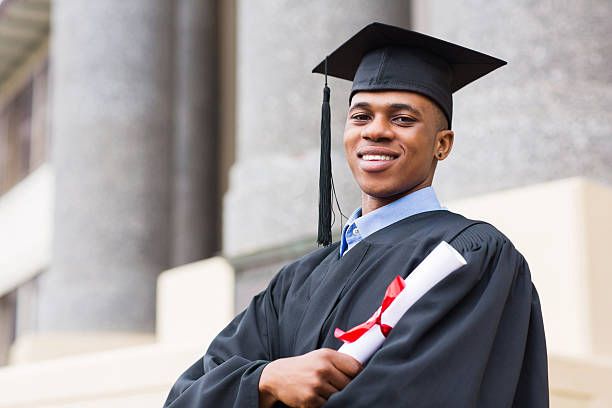
My name is Kai Mercer, I’m thirty-eight years old, and the moment I understood that my family had decided my achievements were optional happened when I walked across a graduation stage in Denver with six empty chairs where the people I loved most were supposed to be sitting.
But the story doesn’t end where you might expect. Because what happened in that hospital, and what I found when I got home, changed my understanding of everything—including myself.
Let me back up.
Five Years
I need to explain what those five years meant, because without that context, the empty chairs are just an anecdote about a bad day rather than the accumulation they actually represented.
I started the MBA program at University of Colorado Denver at thirty-three, two kids into a marriage that was good but not easy, three years into a job at Evergreen Capital that paid well but demanded everything. The MBA was my own idea—nobody asked me to do it, nobody required it. I’d looked at where I wanted to be in ten years and understood that the credential was the bridge between where I was and where I was trying to go.
Sienna hadn’t been opposed. She’d been practical, which in retrospect meant she’d supported the idea without fully accounting for what it would require.
What it required: evenings. Weekends. Mental real estate that I couldn’t give to anything else. Late-night study sessions that left me running on five hours of sleep and three cups of coffee. Assignments due during Jackson’s birthday parties, discussions scheduled over Luna’s recitals, deadlines that didn’t negotiate with a family’s calendar.
I missed things. I need to own that. I missed bedtimes and school pickups and Saturday morning pancake traditions. I told myself it was temporary—that five years of this would buy decades of better. That the sacrifice was an investment.
Sienna absorbed most of what I couldn’t cover. She was competent and capable and she did it without complaining most of the time, which I’ve since learned is not the same as it not costing her. She was carrying more than her share, and I was grateful for it in that abstract way you’re grateful for things you’re too busy to properly acknowledge.
My parents were supportive in the manner of people who approve of ambition without quite understanding its texture. My father was proud—he’d tell people about my program at family dinners with the particular satisfaction of a man whose son was exceeding expectations. My mother sent food occasionally and asked how I was handling the stress with genuine concern.
My brother Rowan was the wrinkle.
Rowan and I had always had a complicated dynamic. He was the social one—the one who threw parties, gathered people, filled spaces with warmth and noise. He was good at it. People loved being around Rowan. He had a gift for making everyone feel like they were exactly where they should be.
The shadow side of that gift was a kind of casual self-centeredness. Events happened on Rowan’s schedule, at Rowan’s convenience, and everyone adjusted because that’s what you did with Rowan—you adjusted, because the alternative was not being part of the warmth he generated.
For thirty-eight years, I’d been adjusting for Rowan.
The Barbecue
The group text arrived three weeks before graduation.
Hey fam! Housewarming/end of school year barbecue at the new place! Colorado Springs. Pool is READY. Same Saturday as usual? Food, drinks, the kids can swim all day. Who’s in?
My parents responded in fifty-eight seconds. I watched those three bubbles appear and resolve faster than I’d ever seen my mother type anything.
We’ll be there! Can’t wait to see the new house!
Then my father: Rowan you better have cold beer
Then cousins, aunts, the accumulated warmth of a family that moved easily toward Rowan’s gravity.
I looked at the date. Looked at it again. Then I went downstairs and found Sienna in the kitchen.
“He scheduled it the same day as my graduation,” I said.
She looked at her phone. Then at me. Then back at her phone with an expression I’d seen before—the expression of someone doing mental calculations about difficulty.
“Maybe it’s a coincidence,” she said.
“My graduation’s been on the calendar for three months.”
“Rowan probably just forgot.”
I texted him privately. Hey—that Saturday is my graduation. Any chance you can move it?
He responded four hours later. Sorry man, already told everyone. The pool guys are coming Friday. You understand. We’ll celebrate you another time!!
That was it. One text. Three sentences. And then he resumed posting barbecue preparations on Instagram.
I printed six tickets. Put them on the dining room table with the specificity of a man trying to make something real by making it tangible. Six rectangles with names typed across them. I laid them out and looked at them.
That night after the kids were in bed, I asked Sienna directly.
“Are you coming? Are you bringing the kids?”
She hesitated. Not long—maybe two seconds. But I’ve been paying attention to the language of hesitation for fifteen years, and two seconds from Sienna meant the answer was already no and she was working out how to say it.
“The kids really want to go to the pool,” she said. “You know how they’ve been looking forward to seeing their cousins. And you’ll be in the ceremony for three hours—they shouldn’t have to sit still that long when they could be—”
“It’s my graduation.”
“I know. I know it is. And I’m proud of you. But practically speaking—”
“Practically speaking, I’d like my wife and children to be there when I get my degree.”
Jackson came downstairs for water and got caught in the middle of something he didn’t understand. “Dad, why can’t we just do both? Go to the barbecue and then the ceremony?”
“Because they’re at the same time.”
“But the barbecue has a pool.”
Luna, who’d followed her brother down, started crying when she thought I was trying to keep her from her cousins. I spent twenty minutes reassuring her that I wasn’t the enemy before I could go back to the conversation I needed to be having.
By the end of the night, nothing was resolved. The tickets were still on the table. Nobody had picked one up.
Graduation Morning
I ironed my navy suit with the particular care of a man performing a ritual that nobody else understood was a ritual. I’d been thinking about what I’d wear to this day for most of five years—not in a vain way, but in the way that you maintain a specific, detailed image of an important moment to keep yourself moving toward it.
Navy suit. Good tie. The watch my father gave me when I got the job at Evergreen.
I walked into the kitchen expecting something. Coffee already made. Someone up early. A card on the counter. Some acknowledgment that this morning was different from other mornings.
Sienna was packing the cooler. Jackson was stuffing swim gear into his backpack. Luna was already in her glittery flip-flops, which meant she’d been planning this particular pair of shoes the night before and thinking about the pool this morning when she woke up.
Nobody asked what time I needed to be on campus.
Nobody asked how I was feeling.
Sienna’s phone buzzed and she read it and said she’d “try” to make it to the ceremony if things wrapped up early enough. She left a note on the counter in her handwriting: Took the kids early to help set up. Good luck. We’ll try to be there.
We’ll try to be there.
I folded that note and put it in my jacket pocket and drove downtown by myself.
The Arena
You know how some places are calibrated for celebration? The arena at the University of Colorado Denver on graduation day was calibrated for it—lights arranged for maximum joy, sound system dialed to maximum excitement, every square foot optimized for the specific American ritual of marking an ending and a beginning simultaneously.
The optimization assumed you’d brought people with you.
I found my section. Found the row with my last name taped across six chairs. Sat down in the middle of my empty row and watched families arrange themselves around their graduates with the practiced ease of people who’d been planning this moment for months.
The woman to my left had her mother on one side and her sister on the other. Her father was in the stands, a handmade sign visible from across the arena. She kept turning around to wave at him.
The man to my right had a crew that took up an entire row behind him—parents, siblings, what looked like in-laws, three kids under ten who were already losing their minds with excitement. His wife had made a banner.
I had my phone.
I checked it once, during the pre-ceremony wait, and saw the photograph that Sienna had been tagged in. Colorado Springs. Rowan’s backyard. The new pool catching afternoon light. My kids in the water, laughing, which meant they were happy, which I was glad about and simultaneously devastated by.
My whole family, two hours south, arranged around my brother’s barbecue.
They called my name.
“Kai Mercer.”
I walked across the stage. Lights hot. Applause from people who didn’t know me, celebrating me alongside the people they’d come to celebrate. I shook the dean’s hand and took my diploma and looked toward my row one last time.
Still empty.
I walked back to my seat and sat down, and that’s when my phone started vibrating in my pocket. Once, twice, continuously—the specific pattern of someone calling, getting voicemail, calling again immediately.
The Hospital
I waited until the ceremony ended. That felt important—some stubborn insistence on finishing what I’d started, on walking out of that arena with my diploma in hand rather than ducking out early.
In the quiet hallway, I looked at my screen.
Forty-five missed calls.
One text from Sienna: We need to talk urgently.
I called back.
“Kai.” Her voice had the particular quality of a person who has been crying and is trying to sound functional. “Jackson got hurt at the pool. We’re at Memorial Hospital in Colorado Springs. Please just get here.”
The drive on I-25 took an hour. My graduation cap was on the passenger seat. My gown was bunched around my waist. My GPS was directing me away from the graduation dinner I’d imagined and toward a hospital that was hosting the people who’d chosen the pool over my empty chairs.
I held two things simultaneously in my chest the whole drive: genuine fear for my son, and a separate, parallel grief that had nothing to do with his injury and everything to do with the morning I’d had.
When I pushed through the ER doors, I saw all of them at once.
My parents. Rowan. Sienna. Luna, who was curled against my mother with her eyes red. And Jackson, ten years old, propped up in the hospital bed with a cast being applied to his left forearm, looking pale and shaken and young.
They’d all shown up for this.
The irony wasn’t lost on me. The crisis had accomplished what my graduation couldn’t—it had gathered my family in one room, arranged around someone who needed them.
Jackson had jumped from the diving board wrong. Hit the side of the pool. Broken his arm in two places. He was going to be fine—the doctor had already said so—but it had been frightening, the kind of terrifying that clears your mind of everything except the fact that your child is hurt.
I crossed the room and put my hand on his good shoulder and he looked up at me and said, “Dad. I’m sorry I missed your graduation.”
Ten years old. Arm in a cast. And his first sentence to me was an apology.
That landed somewhere specific in my chest and stayed there.
What My Father Said
My parents had stepped into the hallway to give us space with Jackson. When I came out to get water, my father was leaning against the wall with the posture of a man who’d been thinking about something difficult.
He looked at me in my navy suit with my diploma under my arm.
“You look like you graduated today,” he said.
“I did.”
He was quiet for a moment. “We should have been there.”
“Yes,” I said. “You should have.”
My father is not a man who apologizes easily—his generation coded apology as weakness, and he’d spent decades learning around that programming. So when he said what he said next, I understood the weight of it.
“Rowan called us last week and said the barbecue was the same day as your ceremony. I told your mother we should skip it. She said we’d do both. Then the barbecue happened and—” He stopped. “We didn’t do both. We just stayed.”
“I know.”
“I should have been in that arena, Kai.” His voice was rough. “I should have watched you walk that stage. That was—that was a failure. On my part.”
I didn’t rush to reassure him. Didn’t perform forgiveness I wasn’t fully feeling. I just stood in that hospital corridor in my navy suit and let him sit with it.
“I saw the photo,” I said finally. “On Instagram. You and Mom and the kids in Rowan’s backyard.”
“Yeah.”
“That’s what I saw when I was sitting in my empty row waiting for my name to be called.”
He looked at the floor. “I know.”
“I’m not angry,” I said, and I mostly meant it. “But I’m not going to pretend it didn’t happen.”
“No,” he said. “You shouldn’t.”
What I Found at Home
We drove back to Denver that night. Jackson in the backseat with his cast, Luna asleep against him, Sienna quiet in the passenger seat in a way that felt like the beginning of a conversation rather than the end of one.
I carried Jackson inside, tucked him in, checked Luna in her room. Then I came downstairs and found Sienna in the kitchen.
She’d been crying again.
“I’m sorry,” she said before I could say anything.
“I know.”
“I handled this wrong. I—” She stopped. “You asked me directly. You asked if we were coming. And I hesitated, and I told you the kids didn’t want to sit through speeches, and I was wrong.”
“Yeah,” I said. “You were.”
“Can I explain? Not excuse. Just explain.”
I sat down at the kitchen table—the same table where I’d laid out the six tickets—and said, “Okay.”
What she said over the next forty minutes was hard to hear and necessary to hear.
She told me that five years of watching me put the program first had created a kind of distance in our marriage that she didn’t know how to name. That she’d started to feel, somewhere in year three, that the degree mattered more to me than she did—that the future I was building didn’t quite have her in it in the way she needed. That when Rowan’s barbecue appeared as an alternative, she’d taken it partly because the pool and the cousins were genuinely appealing to the kids, and partly because she was tired of being on the supporting end of someone else’s goal.
“That’s not fair,” I said. “I was doing this for us.”
“I know you believe that,” she said carefully. “But I didn’t always feel like that’s what it was. I felt like I was maintaining everything while you built something that felt more like yours than ours.”
“I talked to you about this degree constantly. You knew what I was doing and why.”
“Knowing isn’t the same as feeling included. You told me. You didn’t ask me. Does that make sense?”
It was an uncomfortable distinction. I sat with it.
“I should have been there today,” she said. “That’s not in question. I should have been in that arena with the kids. I made the wrong choice. But I want you to understand what it came from.”
“So do I,” I said. “So should we talk about that?”
She nodded.
We talked until two in the morning. Not fighting—something more like excavating. Five years of small distances we’d both been accumulating and not naming. The ways I’d been absent even when I was present. The ways she’d stopped asking for what she needed and built resentment instead. The ways we’d both been having a marriage adjacent to each other instead of with each other.
On the kitchen table, when I finally went to get water, I found something I hadn’t noticed when I came in.
A package. Flat, wrapped in the plain brown paper I associated with Sienna’s mother, who mailed things from North Carolina with that particular regional formality.
A note on top in my mother-in-law’s handwriting: Kai—I know what today was supposed to be. I know we should have done better. I love you. Open this.
Inside the package was a framed photograph.
Me. Twenty-three years old, standing in front of a used Honda in the parking lot of the first real job I’d ever gotten. Sienna beside me, twenty-one, hand on my shoulder, both of us grinning with the specific joy of people who are just starting and can’t see the difficulty yet.
I remembered that day. Remembered calling Sienna’s mother to tell her I’d gotten the job. She’d been more excited than my own parents—had cried on the phone and said she knew I’d figure it out, that she’d always known.
She’d kept that photograph for fifteen years. Had it framed. Had mailed it to arrive on my graduation day.
I stood in my kitchen at two in the morning holding a photograph that said I see what you’ve built, I’ve been watching, I’m proud of you from a woman who wasn’t even related to me by blood.
I cried. Not quietly—the kind of crying that’s been building for a long time and comes out all at once when the right thing finally opens the door.
Sienna came over and put her arms around me from behind and said, “She called me last week and told me to make sure this was on the table when you got home. She said you’d need it.”
“She was right,” I managed.
“She usually is.”
The Months After
I want to be honest about what happened next, because the honest version is more complicated than either a clean reconciliation or a clean break.
Sienna and I went to couples counseling. Started going a week after graduation and continued for eight months. It was the most uncomfortable sustained effort I’d made in my adult life—harder, in its way, than the MBA. You can optimize a class schedule. You cannot optimize a marriage. The mess has to be engaged with directly.
What the counselor helped us see: I had been building toward something real but had done it in a way that made Sienna feel peripheral. She had been carrying real weight but had channeled her resentment into passive withdrawal rather than direct conversation. We’d both been choosing the easier thing when the harder thing was what we needed.
We’re still married. We’re working. Some days the work feels like progress and some days it feels like maintenance, and the counselor says both of those are fine.
My parents came to Denver two weeks after graduation. Took me and Sienna out to dinner—just the four of us, without the kids, without Rowan. My father made a toast that was three sentences and cost him something to say. My mother held my hand for a moment before the waiter brought the food and didn’t say anything, which was her version of the same thing.
I’ve forgiven them. Not in the tidy way of someone who’s resolved a conflict, but in the ongoing way of someone who’s decided that love and disappointment can coexist without one canceling the other.
Rowan texted three days after graduation: Heard about Jackson—hope he’s okay. Also heard the ceremony was sick, sorry we missed it!
I read it twice.
Then I wrote back: Jackson’s fine. The ceremony was meaningful to me and I’m sorry you weren’t there.
He responded with a thumbs up emoji.
I looked at that emoji for a long time. Then I put down my phone and went to help Luna with her homework and let Rowan be who he was without requiring him to be different.
Some relationships are what they are. That’s not tragedy—it’s just truth.
Jackson’s Cast
The cast came off eight weeks after the pool. Jackson sat across from me while the doctor removed it, watching his thin pale arm emerge like something uncovered.
On the way home, he asked if we could stop for ice cream. We stopped. We sat outside a Dairy Queen in August heat and ate cones that melted faster than we could eat them.
“Dad,” he said. “At the hospital. You were wearing your graduation suit.”
“Yeah.”
“Were you sad? That we weren’t there?”
I thought about the right answer. The easy answer was no, it’s fine, I understood. The honest answer was more complicated.
“Yes,” I said. “I was sad.”
He thought about this. “I’m really sorry.”
“I know you are. I’m not telling you to make you feel bad. I’m telling you because you asked and I want to be honest with you.”
“Why did it matter so much? It’s just a ceremony.”
“It wasn’t just a ceremony,” I said. “It was five years of late nights and missed dinners and working toward something. The ceremony was when I got to actually see that it was real. Does that make sense?”
He ate his ice cream and thought about it. “Like when I won the science fair last year? And I wanted everyone to come see the ribbon?”
“Exactly like that.”
“And we made you miss it once. For soccer practice.”
“You remember that?”
“Mom talked about it later. She felt bad.”
Ten years old. Watching everything, storing it, making connections I hadn’t realized he was making.
“What I want you to take from this,” I said carefully, “is that the people you love—when they do something hard, when they accomplish something—you show up for it. Even when something else is more fun. Even when it’s inconvenient. Even when you have to sit still for three hours. You show up.”
He nodded. “Because it’s not about you. It’s about them.”
“That’s exactly right.”
He finished his cone. Looked at his freshly uncasted arm. Flexed his fingers experimentally.
“Dad?”
“Yeah?”
“Can we go to your next graduation?”
“I’m not planning on another one.”
“But if you did. Can we come?”
“You’d be first on the list, bud.”
He seemed satisfied with this.
We drove home in the late afternoon light, the kind of light that makes everything in Colorado look slightly more significant than it is—golden, clear, enormous sky.
I thought about the drive I’d made on graduation day. Same highway, different direction. Diploma in hand instead of fear in chest.
I thought about six empty chairs and forty-five missed calls and my father in a hospital corridor saying that was a failure on my part and my mother-in-law’s photograph on the kitchen table.
I thought about what it takes to show up for people. How the showing up is usually unglamorous—three hours of sitting still, parking downtown, finding the right section, holding a sign that says the name you’ve been saying since they were born.
How the absence is also a statement. Always, always a statement.
How we get to choose which statement we make.
“Dad,” Jackson said from the backseat.
“Yeah.”
“Thanks for driving to Colorado Springs.”
I looked at him in the rearview mirror. Pale arm resting in his lap. Ten years old and already understanding something important about what showing up means.
“Always,” I said. “That one you never have to ask about.”
THE END

Adrian Hawthorne is a celebrated author and dedicated archivist who finds inspiration in the hidden stories of the past. Educated at Oxford, he now works at the National Archives, where preserving history fuels his evocative writing. Balancing archival precision with creative storytelling, Adrian founded the Hawthorne Institute of Literary Arts to mentor emerging writers and honor the timeless art of narrative.