My Son and Daughter-in-Law Left Me at the Airport With No Money. They Had No Idea I Was Headed to Meet Someone Who Would Change Everything.
“You’ve got a phone. Call someone to come get you—or sell it. That’ll cover a Greyhound, right?”
That’s what my daughter-in-law said to me.
She said it the way you’d tell someone the parking meter was about to expire. Casual. Matter-of-fact. Already moving toward the security line with her designer carry-on rolling smoothly behind her.
She didn’t look back.
Neither did my son.
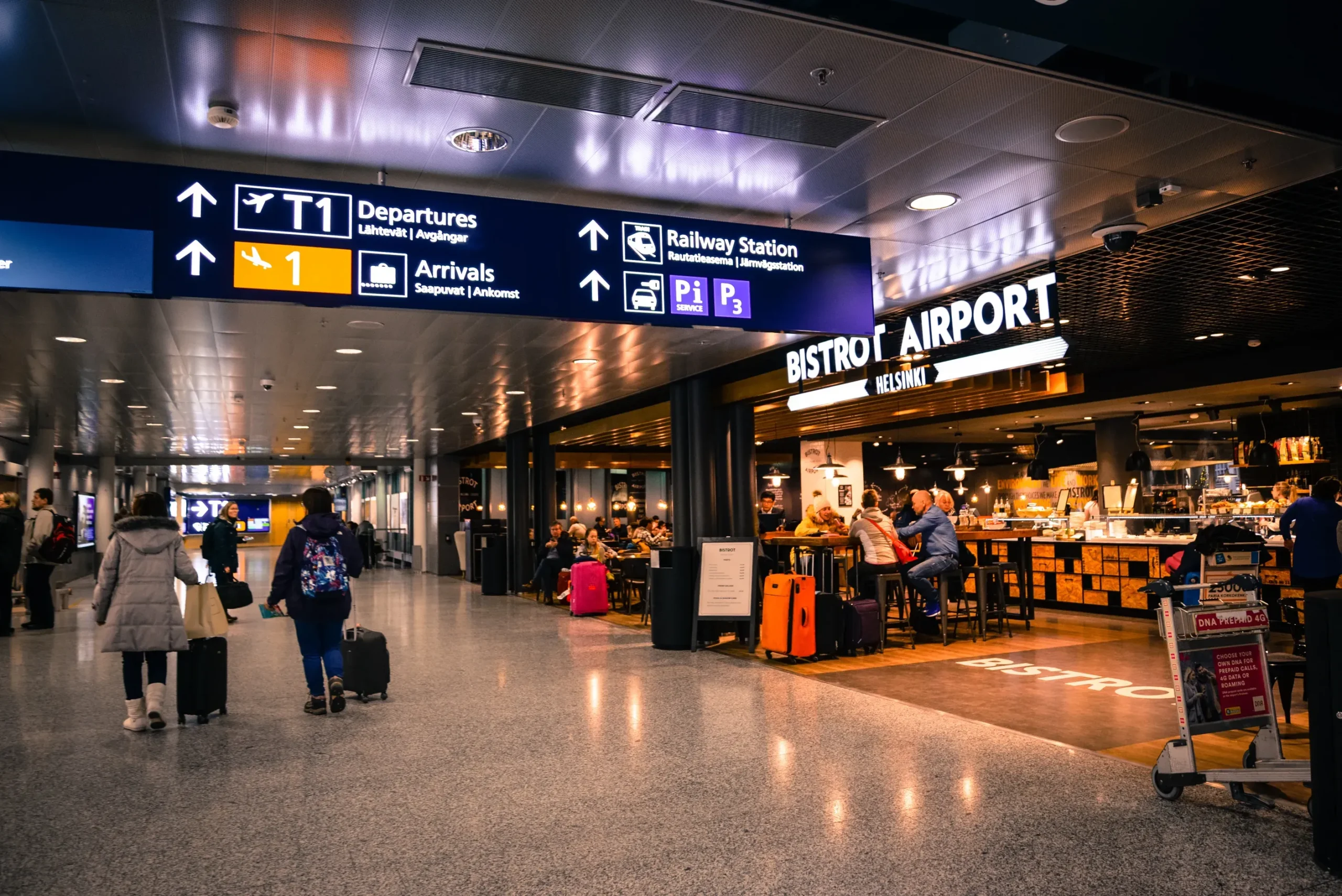
I stood alone in the middle of Nashville International Airport, purse pressed tight against my chest, holding a printed itinerary I now understood was never meant to be used. No suitcase—they’d checked it with theirs. No return boarding pass. No ticket home.
Just a thin sweater, a phone they’d suggested I sell, and the particular kind of silence that fills the space where your dignity used to be.
The airport moved around me like a river around a stone. Calls for boarding. Suitcases rolling over tile. Laughter in languages I couldn’t follow. A woman pushing a stroller caught my eye, gave me a polite smile that softened into pity the moment she noticed there was nothing beside me—no luggage, no companion, no one coming back.
I wanted to disappear.
And for a moment, standing there at gate B22, I did.
Just hours earlier, I had woken up believing I was part of something.
My husband Jake passed two months before that morning. Forty-two years we were married. We buried him on a rainy Monday, and I went home alone to a house that echoed differently without him. His slippers were still under the nightstand. His toothbrush sat beside mine. The chair he loved most still held the shape of him.
The weeks after the funeral were a blur of casseroles and condolences. People I hadn’t seen in years brought flowers and stories. Some days I didn’t leave the house at all. I’d sit in Jake’s chair and try to remember the exact sound of his laugh—that belly-deep chuckle that made his shoulders bounce. I tried to remember how he looked at me when I walked into a room.
I tried to remember who I was before I became the widow.
Then one morning, Mark came by.
He hugged me quickly, distracted, and said, “Mom, Tanya and I think it’d be good for you to get away for a bit.”
“Away?”
“Just a short trip. We’re taking the kids to Florida for spring break. You should come. Change of scenery. Some sun.” He paused. “Don’t you think Jake would want that for you?”
It felt like someone had opened a window.
I hadn’t been out of Tennessee in over five years. The thought of sand, of warmth, of not waking up to silence—it stirred something I thought had gone out like a candle when Jake died.
“Are you sure?” I asked.
“Of course,” Tanya smiled. “You’re family.”
I clung to that word like a life raft.
Later that week, I opened my jewelry box. Nestled in the corner was the gold band Jake had given me on our tenth anniversary—not expensive, but real gold. He’d saved for months and slipped it onto my finger one Tuesday morning with a whisper: Ten more years, then ten more after that.
I wore it every day until the day he died.
I held it in my palm. Felt its weight. Its warmth.
Then I let it go.
I walked to the pawn shop down the street. The man behind the counter looked up at me. “You sure, ma’am?”
“I’m sure,” I said, even as my throat tightened.
I used the money to pitch in for the trip. When Tanya mentioned everyone contributing, I offered without being asked. It felt good to still be needed. To be included. To be more than just a photo in a frame.
That night I cried alone in my room—not just for Jake, but because for the first time in weeks, I felt something close to hope.
I packed carefully. A small framed photo of Jake in my carry-on. My softest sweater, the one he always said made me look classy as hell. A beach towel I hadn’t used in years. A paperback I’d been meaning to read. A folded tissue tucked in the top flap, just in case.
I didn’t know that by the time I reached the airport, the woman I was while packing would not be the same woman left standing alone at gate B22.
I had not been invited out of love or grief or even pity.
I had been included for convenience. For what I could give.
I see that now.
But back then, in those days between the funeral and the flight, I believed the story they told me—that I was still part of the family, still wanted.
I was wrong.
There is a particular kind of silence that falls when you realize you are not part of the plan.
Not forgotten—because forgetting implies accident. No, this is different. This is the realization that someone looked at you, considered you, and still decided you were disposable.
It happened at the airline counter.
“Ma’am, I’m sorry.” The agent’s fingers moved across her keyboard. “There’s no return flight booked under your name.”
“I’m with my son’s family. The reservation should be under Monroe.”
She checked again. “I do see a Monroe group, but the return tickets are only for six passengers. You’re not listed.”
She looked up at me with that practiced empathy they must teach in training—the kind that says I’m so sorry your life just cracked open, but there’s a line behind you.
“There has to be a mistake.”
I turned and found Mark and Tanya near a coffee stand, laughing at something on her phone. I walked over, still holding my printed itinerary, the edges now damp from my palms.
“Mark,” I said quietly. “The agent says I don’t have a return ticket. Can you check yours?”
He glanced up. Eyes darting. A flicker of discomfort crossed his face before a half-hearted smile covered it.
“Oh, right. Yeah.” He scratched the back of his neck. “We figured you might want to stay a little longer. Enjoy some peace and quiet.”
My heart paused. “What?”
Tanya chimed in without looking up from her cup. “We only bought you a one-way, Blake. Flights are expensive—and let’s be honest, you’ve got plenty of time. You’re retired.”
“I thought this was a round trip,” I said. My voice came out thin. Almost childlike.
She shrugged. “You’re an adult. You can figure it out. You’ve got your phone. There’s Wi-Fi.”
I looked at my son. “Mark.”
He didn’t meet my eyes. “It just made more sense this way, Mom. We thought it’d be good for you to stay extra days. Maybe see some friends.”
“I didn’t pack for more days.”
“Well,” Tanya said, checking her nails. “There are stores.”
Something cold settled over me.
“Where’s my bag?” I finally asked.
Mark looked at Tanya. She looked back at him.
“We’re checking it with ours,” she said. “We can get it back to you later, if you stay longer.”
I stood very still. “So I don’t have a flight. I don’t have my things. And you didn’t think I’d need to know that before we got to the airport.”
“You’re overreacting,” Tanya said flatly. “You said you wanted to be included. Well, this is how we do things—flexibly.”
“We didn’t mean anything by it,” Mark added. “You’ve just been so emotional since Dad passed, and we thought this would be easier.”
“Easier for who?” I asked.
Neither of them answered.
Tanya zipped up her designer bag. “We’ve got to head to security. Our boarding group’s almost up.”
And that was that.
They walked away. Tanya’s heels clicking confidently. Mark carrying nothing but his carry-on, face empty of shame. Not a hug. Not an apology. Not a backward glance.
I stood there as they disappeared into the TSA line and felt the floor tilt beneath me. Not dramatically—just enough. The particular loneliness that doesn’t come from being alone, but from being discarded by the people who were supposed to love you most.
A woman with a stroller bumped gently into me and apologized. I nodded but couldn’t speak.
I stepped out of the flow of travelers and sat on a bench against the wall.
I didn’t cry.
I was too far past tears.
Instead, I reached into my purse and pulled out my phone—not to call Mark, not to call anyone in the family—and typed a single line into my notes app:
This will be the last time I trust them.
Then I scrolled to a contact I had saved under the name Jr. Lawyer.
Jake had introduced us years ago. Jr. had handled our mortgage paperwork, our wills. He had always said, “If you ever need anything, Blake, I’ll be there.”
I clicked the number and pressed call.
When he answered, I didn’t say hello. I didn’t explain.
I said: “I need to update my will.”
Just like that, my role changed.
I was no longer the forgotten mother on a one-way ticket.
I was a woman preparing to reclaim her voice.
I reached into the side pocket of my purse, past the folded tissues and the peppermints, until my fingers found what Jake and I had always called our break glass in case of fire fund.
We started it after his first heart scare. A fifty here, a twenty there. Sometimes a hundred after a tax return. Never meant for groceries or birthday gifts. Meant for the day one of us had no one left to rely on and needed to move fast.
I unfolded the envelope. Nine hundred and sixty dollars in cash, crisp from the bank.
Not much. But it was mine.
I flagged a cab outside and gave the driver an address I hadn’t spoken aloud in years.
“287 Jefferson Street. Monroe and Wade Law Office.”
He nodded and pulled into traffic. The cab smelled faintly of pine. I stared out the window as the familiar streets passed—strip malls, gas stations, the aging heart of Tennessee, where I’d spent most of my adult life.
The last time I was in that law office, Jake and I had gone in to sign our first will. Back then, it was simple. Everything to each other, then to Mark. We had been so sure of our legacy. So sure of our son.
Now I wasn’t sure of anything, except that the name on that paper no longer deserved what it promised.
Jr. was still there, older now, a little slower to stand, but his handshake was still firm.
“Blake,” he said, eyes widening with genuine surprise. “I was sorry to hear about Jake.”
“Thank you,” I said, sitting carefully. “I’m here because I need to change my will.”
He raised an eyebrow. “Anything specific?”
“I want to remove my son and daughter-in-law from every part of it.”
He paused. “You’re sure?”
“I’m sure.”
He didn’t ask why. He had known Jake well enough to know I didn’t do anything lightly. He just opened a folder, clicked his pen, and waited.
“I’d like to add a new beneficiary,” I continued. “An organization—one that supports elderly people who’ve been mistreated by their families.”
He looked up. “That’s very specific.”
“I’ve become very specific.”
He nodded. “We can do that. I’ll need some paperwork from the organization.”
“I already have it.” I slid a printed pamphlet from my bag—one I’d picked up months ago at the community center, never imagining I’d use it for myself.
As he copied the details, I leaned forward. “And while we’re at it, I want to make sure what happened to me—being left behind, taken advantage of—is something I can legally respond to. Not just emotionally.”
“You mean financial exploitation?” he asked. “Elder abuse?”
“Yes,” I said clearly. “Is there anything in the law that protects people like me?”
“There is,” he said, his voice growing more serious. “Especially if someone was taken advantage of under false pretenses. You said you gave the money freely—but for a trip they never intended you to return from?”
“They led me to believe I was part of something I wasn’t,” I said. Voice steady.
He nodded slowly. “We can explore that. At the very least, I can help make sure they never touch another cent of what’s yours.”
“Good. I want this change notarized, effective immediately. I want it sent to a third-party executor. I don’t want anyone in my family touching my affairs ever again.”
“You got it.”
For the next hour, we went line by line through the old will. Name by name. Number by number. Every assumption Jake and I had built, carefully dismantled.
Not out of spite.
Out of clarity.
By the time I left, I had a new folder in hand, a new plan, and a new understanding of who I could count on.
I walked out into the sunlight and didn’t feel weak.
I felt clean.
I flagged another cab and gave them the name of a modest downtown motel. Not where I would stay forever—just for the night. Enough time to rest. Enough time to think. Enough time to remind myself that a woman with no return ticket is not a woman who’s lost.
She’s a woman who has finally chosen her own direction.
By morning, the paperwork was official.
I left everything to an organization called Elder Haven—a nonprofit supporting older adults abandoned or financially exploited by their families. Housing assistance, legal protection, community programs. They helped women like me, and I knew I wasn’t alone.
I included a personal letter with the bequest. Addressed to no one in particular, but written to every woman who might one day sit where I sat—left behind, dismissed, treated like a burden instead of a blessing.
If you are reading this, I wrote, you are not invisible. You are not crazy. And you are not done yet.
Before checking out of the motel, I called Jr. one last time.
“Scanned and password protected,” I told him. “Sent only to the email I’ll give you now. Don’t share it with anyone. Not even if they come asking.”
“Understood.”
“And if anyone from my family contacts you—”
He didn’t even pause. “I’ll remind them they were removed by your own hand.”
I exhaled.
It was done.
The chain had been cut. Not in fury, but in quiet freedom.
It’s a strange thing—erasing someone you brought into the world from the future you once dreamed for them. But the truth is, they were never meant to inherit what they tried to buy with disrespect.
Inheritance isn’t just about money.
It’s about trust.
And trust, once broken the way mine had been, cannot be rebuilt with phone calls or flowers. It must be earned.
They had not even tried.
The sign out front read: Willow Grove—Independent Living for Seniors with Dignity.
Jake and I had toured it once, quietly, years before. He wanted to make sure we had options. I’d told him I’d never leave our home.
“Maybe one day,” he’d said, grinning. “If they have good pudding.”
Willow Grove had more than pudding. It had sunlight pouring through wide windows, hallways that smelled like lemon and not antiseptic, soft jazz in the common room, and people who looked up when you walked in—not through you, but at you.
“Welcome, Mrs. Monroe,” the woman at the desk said, smiling. “We’ve been expecting you.”
It was the first time in months someone had said my name like it mattered.
My corner unit looked out over the courtyard. My boxes were already there. Jake’s chair had been placed near the window. On the table was a welcome basket with jam, crackers, and a handwritten note from the director.
Thank you for helping us make this place possible. Now it’s yours, too.
Because what Mark and Tanya would never know—what they couldn’t have known when they rolled their luggage into the first-class lane and walked away—was that Willow Grove had been funded in part by the very donation I made through Elder Haven.
My estate wasn’t just a transfer of assets.
It was a quiet revolution.
I had built myself a place in the world where I would never again be forgotten.
Six months of silence. Six months of peace. Six months of morning coffee in the sunroom at Willow Grove, of learning to sketch birds in watercolor, of hearing my name spoken with kindness and never followed by a sigh.
Then the day arrived that I had circled in red on my private calendar.
That morning, Jr. emailed me with one sentence: Letters have been delivered.
I didn’t reply.
By 11 a.m., the phone started ringing.
Mark. Sixteen calls in one day. I watched them come in one by one, his name flashing on the screen—the name I had once loved so fiercely it nearly unmade me. A name that now triggered only stillness.
I didn’t answer. Not the first call. Not the twelfth. Not the one at midnight.
By the next morning, the email arrived.
Subject: I’m sorry, Mom—but at least let us keep the garden.
I opened it. Not because I expected sincerity. Because I was curious how he would phrase it.
Mom, I don’t know what to say. Tanya and I got the letter from the lawyer this morning. We didn’t think you’d actually go through with it. Look, maybe we were wrong. Maybe we didn’t handle the airport thing right. Maybe we underestimated how hurt you were.
I read that sentence twice.
We didn’t think you’d actually go through with it.
That line told me everything I needed to know. They thought I was too old, too soft, too desperate to be included. They thought I would bark but never bite. Weep but never walk away.
They mistook kindness for weakness.
He went on to ask about the land behind the house. The garden. Said the kids had helped plant it. Said it meant something.
I thought about that garden—the one Tanya posted about online as her sacred space, never once mentioning my name. The one I’d never been invited to help water.
That land now sat under the care of Elder Haven, whose regional director had already proposed turning it into a therapeutic horticulture program for aging women with memory loss.
My land. My choice. My legacy.
I read the email once more.
Then I powered off my phone, picked up my pen, and wrote in my journal:
Some things are inherited, others are earned, and some—like peace—are created from scratch.
Let them wonder. Let them miss the sound of my voice when birthdays come and go. Because I will be here, surrounded by people who didn’t expect me to fund their comfort in exchange for their absence.
I don’t owe anyone a conversation. I already gave them something better—a clear goodbye and a door that no longer opens.
Some days now I forget what the old silence used to sound like.
The sharp kind. The empty kind. The kind that sat with me in the house after Jake passed, after the casserole dishes stopped coming, after my own son stopped asking how I was holding up.
The silence at Willow Grove is different.
Here it hums gently. It waits for you. It does not shame you for resting or for remembering.
I spend my mornings with the book club—six women and one soft-spoken man who brings crossword puzzles to share. We argue over plot twists, laugh too loud at scenes no one else would find funny, drink tea with names none of us can pronounce. We belong to one another in the simplest way: by showing up.
In the afternoons, gentle yoga in the courtyard. My balance isn’t what it used to be, but no one minds. The instructor always says, “You’re stronger than you think.”
For the first time in my life, I believe it.
I’ve taken up painting again—something I gave up decades ago when life got busy, when Mark was young, when Jake worked late. My brushstrokes are shaky. My colors too bold. But my heart swells when I step back and see something I created just for me.
One evening, a woman named Ruth looked at me across the art table and asked softly, “Do you ever regret it?”
She didn’t specify what it was. She didn’t have to. We all knew what she meant.
I looked her in the eyes and said, “I regret not doing it sooner.”
She nodded. “No more questions.”
That night I sat alone in my room with the window open, letting in the breeze. On the table was the framed photo I brought from home—Jake laughing with his whole face, eyes nearly shut, hands mid-gesture.
I lit a candle. Not for grief, but for gratitude.
“I’m okay,” I whispered to him. “More than okay.”
Then, after a moment, I said something I hadn’t known I needed to say until just then.
“They thought I’d fall apart when they left me. They thought I’d panic, beg, chase after them.”
I leaned in closer, looking at his picture the way I used to look at him across the dinner table.
“But you know what, love? They’re the ones who lost something that day. Not me.”
They lost their way back.
Because that’s what they did—they mistook my silence for weakness. They mistook my endurance for consent. They mistook my love for a bottomless well they could draw from forever without ever pouring anything back in.
I don’t make that mistake about myself anymore.
I know my truth.
I lived it.
I survived it.
And more than that—I rebuilt from it.
Here, I am not just the old woman who sold her wedding ring to pay for a trip she was never meant to return from.
I am Blake.
They say my name when I walk into the room. They save me a seat at dinner. They ask what I’m working on in the watercolor class. They wait for my opinion in book club before turning the page. They know when I want peppermint tea and when I want chamomile.
They remember.
They see me.
And I—for the first time in longer than I can say—see myself.
Not as a relic. Not as a story that ended when Jake passed. But as a woman who walked through the worst kind of betrayal—the kind that hides behind family smiles—and came out the other side with her name intact.
Some nights I walk the courtyard alone, hand resting on my cane, watching the light spill from the community room windows. I think about the word legacy—how everyone wants to leave something behind.
But maybe the most radical legacy isn’t money.
Maybe it’s memory.
The right to write the ending of your own story, even if you have to tear up the old script and start fresh on a motel notepad with nine hundred and sixty dollars in your purse and nowhere to be.
I did that.
I chose new names to include. New traditions to build. New family to love—not bound by blood, but by presence. By choice.
And when I blow out the candle each night, I smile.
Because I don’t owe gratitude to anyone who made me small.
I owe it to myself—for standing up, for walking away, for choosing peace when every old habit said to stay and be grateful for whatever scraps of belonging they were willing to offer.
I chose myself.
I chose peace.
I chose a new family—one that would never, ever leave me at the gate.

Lila Hart is a dedicated Digital Archivist and Research Specialist with a keen eye for preserving and curating meaningful content. At TheArchivists, she specializes in organizing and managing digital archives, ensuring that valuable stories and historical moments are accessible for generations to come.
Lila earned her degree in History and Archival Studies from the University of Edinburgh, where she cultivated her passion for documenting the past and preserving cultural heritage. Her expertise lies in combining traditional archival techniques with modern digital tools, allowing her to create comprehensive and engaging collections that resonate with audiences worldwide.
At TheArchivists, Lila is known for her meticulous attention to detail and her ability to uncover hidden gems within extensive archives. Her work is praised for its depth, authenticity, and contribution to the preservation of knowledge in the digital age.
Driven by a commitment to preserving stories that matter, Lila is passionate about exploring the intersection of history and technology. Her goal is to ensure that every piece of content she handles reflects the richness of human experiences and remains a source of inspiration for years to come.