“We Don’t Serve Extra Food,” My Daughter-in-Law Said, Sliding Me a Glass of Water While Her Family Ate Lobster. My Son Added, “You Should Know Your Place, Mom.” I Just Smiled and Said, “Noted.”
The word hung in the air between us.
Noted.
Marlene blinked. For just a second, her composure slipped — she had expected tears, an apology, maybe a scene she could report back to her friends later. The humiliated mother-in-law making a spectacle of herself. Instead she got one word, delivered with a small smile, and nothing else.
I picked up my glass of water and took a slow sip.
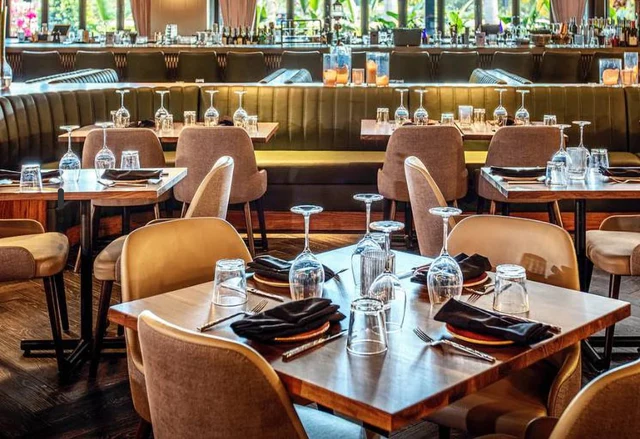
Let me tell you how I ended up sitting in the most exclusive restaurant in the city, watching my own family eat sixty-dollar lobsters while I had tap water in front of me. Because this story didn’t start that night. It started decades ago, when I decided that being a mother meant giving everything — and I meant everything — without a second thought.
Michael is my only son. I raised him alone after his father abandoned us when Michael was five years old. For years after that, I worked three jobs. I cleaned other people’s houses. I waited tables. I cooked in other people’s kitchens while dreaming of my own. I paid for every semester of his college education, every textbook, every coffee he grabbed with friends while he studied. When he changed his major twice, I supported him. When he met Marlene and told me she was the woman of his life, I welcomed her.
I never asked for much in return.
Well, that’s not entirely true. I asked for respect. I asked to be treated like his mother, not like a servant who had already served her purpose.
Apparently, that was too much.
The invitation came a week before the dinner. Michael called — unusual, because lately he only sent short, cold text messages. His voice sounded different. Almost warm.
“We want to reconnect, Mom. We’ve been distant. We want to fix things.”
I got dressed in the best thing I owned — a pearl gray dress, simple but elegant — fixed my hair, put on a little makeup. I wanted to look good for my son. I wanted him to see that at sixty-four, I was still his mother, still standing.
When I arrived, they were already seated. Michael, Marlene, and her parents — four people waiting at a table clearly set for five. They greeted me with air kisses that didn’t touch the skin.
“You’re late, Helen,” Marlene said, checking her gold watch.
Helen. She never called me Mom. Just Helen, as if we were peers, as if there were no history between us at all.
I took the only empty chair — the one in the corner, tucked away like an afterthought.
The waiter brought menus with no prices listed. That’s always the sign that everything is outrageously expensive.
Marlene didn’t even open hers. She snapped her fingers.
“Four lobster thermidors,” she told the waiter. “The large ones. And your best white wine.”
She had started to say five, then caught herself. Her eyes slid to me, and the calculation happened in an instant.
“We don’t serve extra food,” she announced, sliding a glass of water across the table toward me. Her voice was casual, pitched just loud enough for the whole table to hear.
The waiter looked at me, clearly uncomfortable, waiting for me to speak up. Before I could, Michael intervened.
“Mom already ate before she came, right?” Soft voice. Firm eyes. Not a question.
I felt something crack in my chest. Not dramatically. No soundtrack. Just a quiet fracture somewhere behind my ribs where hope used to live.
“Just water is fine,” I said.
Marlene smiled, satisfied, and leaned back in her chair.
The lobsters arrived ten minutes later — enormous, steaming, fragrant with butter and herbs. The waiter placed them carefully in front of each of them. He didn’t look at me.
Marlene cracked open the first shell with theatrical slowness, dipped the meat in butter, and closed her eyes. “Exquisite,” she murmured. “This place never disappoints.”
Her mother agreed enthusiastically. Her father nodded. Michael stared at his plate.
I sat with my hands in my lap, glass of water untouched, and I watched them.
Marlene’s father finally noticed me, in the way people notice furniture.
“Michael, your mother is very quiet. Has she always been like this?”
“Mom’s always been simple,” Michael said, still not meeting my eyes. “Humble. You know. She comes from a different generation.”
“Humble,” Marlene repeated, and there was something serrated in the way she said it. “Yes. Definitely humble.”
Her mother poured more wine and turned to me with a smile designed to look like concern. “These must be difficult times for people your age, Helen. No stable income, not enough savings. It’s a shame the older generation didn’t know how to plan better.”
No one defended me.
The desserts arrived — tiramisu with edible gold flakes, four plates. I was still with my glass of water. The condensation had formed a small ring on the tablecloth.
Then Marlene set down her fork and folded her hands, and I knew we had arrived at the real reason for the dinner.
“We’ve decided to make some changes,” she said. “Necessary ones. For our well-being. And for Chloe’s.”
Chloe. My four-year-old granddaughter. The girl who made drawings for me and fell asleep in my arms during bedtime stories.
“What kind of changes?” I asked.
Marlene looked almost surprised that I’d spoken.
“Well, Helen, we think it’s better for Chloe to spend time with people who can add value to her life. Enriching experiences, quality education. Things that some people simply can’t offer.”
I felt the blade go in clean.
“She’s your granddaughter,” Michael said. But not to Marlene. To me. As if that required explanation.
Marlene’s father tapped the table. “Come now. No need to be dramatic. Just understand your position in this family dynamic.”
Michael cleared his throat. “Mom, don’t take it the wrong way. Things are different now. We have to think about our future.”
“About not having a poor mother ruining your image,” I said, finishing the sentence he wouldn’t.
He looked at the table.
Marlene leaned forward. “What can you really offer this family? Michael is established. We can give Chloe everything she needs. You don’t have the resources. You don’t have the connections.”
“I only have love,” I said.
She let out a short laugh. “Love doesn’t pay for private universities. Love doesn’t open doors.”
I nodded slowly. My face stayed calm. My hands were steady.
Noted, I thought again.
I stood and told them I needed to use the restroom. Marlene rolled her eyes. Michael looked impatient.
I picked up my purse and walked toward the back of the restaurant.
I didn’t go to the restroom.
I walked down the long hallway that led to the kitchen.
The route I had walked hundreds of times over the last ten years.
The heat hit me first, then the sound — pans, knives, voices calling out orders in Spanish and Italian. The organized chaos of a kitchen running at full capacity.
My kitchen.
Julian saw me the moment I stepped through the door. He was my executive chef and general manager, a tall man with an impeccable white apron and the kind of loyalty that can’t be purchased. He had worked with me since the first day I opened this place.
“Mrs. Helen,” he said, moving toward me quickly, keeping his voice low. “I saw you at table twenty-two. I was going to come say hello, but something seemed wrong.”
“Everything is fine,” I said. The first genuine smile I’d managed all night. “Julian, I need your help with something. In a few minutes, I’m going to go back out there. And when I do, I want you to come out of the kitchen and call me what you always call me.”
His eyes lit up with understanding.
“Mrs. Helen,” he said.
“Exactly.”
A slow smile spread across his face.
I walked back to table twenty-two. They were still there — Marlene retouching her lipstick, her parents discussing a trip to Europe, Michael signing the check.
“780,” he muttered. “Reasonable for five people.”
Five people. They had charged my seat to the bill, even though my seat had been empty in every way that mattered.
They stood when they saw me coming. Gathered coats, said vague goodbyes. Michael held the door, and they spilled out into the cool night air.
I followed them out, stopping on the sidewalk.
“Before you go,” I said. “There’s something I forgot to mention.”
Michael sighed. “Mom, it’s late.”
“This won’t take long.”
Marlene looked at me like I was an inconvenience, which I suppose I had always been to her. “We’ve said everything there is to say tonight, Helen.”
“You have,” I agreed. “I haven’t.”
I turned and walked back through the restaurant entrance. I heard their footsteps behind me — curiosity, as I knew it would be, pulling them back. I walked to table twenty-two, which had been reset for the next reservation, and stood beside it, waiting.
They filed back in, confused and irritated.
“What is this?” Marlene asked.
“A clarification,” I said. “You told me tonight that I have no resources. No connections. No status. That I’ve only ever worked mediocre jobs and that I should understand my position in this family.”
“We weren’t trying to be cruel,” her mother began.
“I know,” I said. “That’s what made it so revealing.”
At that moment, the kitchen door opened and Julian walked out. Uniform pressed, posture straight, every inch the face of this establishment.
He stopped directly in front of me.
“Mrs. Helen,” he said, in a voice that carried clearly across the dining room. “Pardon the interruption. There’s a matter in the office that requires your attention before you leave for the evening.”
The silence was immediate.
Michael blinked. “Mrs. Helen?”
Julian glanced at him briefly. “Yes. Mrs. Helen — the owner of this establishment.”
Marlene’s jaw dropped. Literally dropped.
“What owner?” Michael said, as if the word didn’t compute.
“The person who signs my paycheck,” Julian said simply. “The person who built this restaurant ten years ago and turned it into what it is today.”
Marlene’s mother brought a hand to her mouth. Her father took a step back. Michael stared at me as if he were seeing me for the first time in thirty years.
“Mom,” he whispered. “You — this is yours?”
“Yes,” I said. “Me. The woman with no resources. The woman who embarrassed you with her old dress and her grocery store cake.” I let that settle. “That woman owns the restaurant where you just spent seven hundred and eighty dollars to humiliate her.”
The room came apart in stages.
Marlene tried several things in quick succession — confusion, then calculation, then a softened voice, then blame. She turned on Michael, who turned on her. Her parents grew quiet for the first time all evening. The waiter who had brought me water found somewhere else to be.
I told them the rest.
Three restaurants. Commercial properties in two states. Investments in real estate and technology. A net worth that made Marlene’s jaw work silently like she was trying to speak a language she’d never learned.
I told them about the CEO who dines here every Friday and has known me for six years. About the mayor in the corner booth. About the judge by the window.
“The promotion Michael has been waiting for,” I said, looking at Marlene steadily. “The one your uncle is supposedly securing for him — I could have made one phone call. One call, six years ago, and it would have been done.” I paused. “But I believed my son should earn things himself. The way I did.”
Marlene gripped the back of a chair.
“Why didn’t you tell us?” Michael asked. His voice had gone very small.
“Because I wanted to know who you were,” I said. “Without the influence of my money. I wanted to know if you would love me for who I am — not for what I have.”
I looked at my son, this grown man I had carried across three jobs and a thousand sleepless nights.
“Tonight, I got my answer.”
He sat down heavily in one of the chairs. His hands went over his face. His shoulders shook.
“I didn’t know,” he said. “Mom, I didn’t know.”
“Exactly,” I said. “You didn’t know. And without knowing, you gave me water while everyone else ate. You told me I should know my place. You sat there while your wife said I wasn’t good enough for my own granddaughter.” My voice stayed even. “That is who you were when you thought I had nothing.”
Marlene tried once more. “Helen, think about Chloe. Think about what this means for her.”
“Don’t,” I said quietly. “Thirty minutes ago, you told me Chloe needed to be around people who add value. That I wasn’t enriching enough for her.” I met her eyes. “Now that you know I have money, suddenly I’m worth considering. That tells me everything I need to know about how you think.”
Michael lifted his head. “Tell me what to do. Anything. I’ll do anything.”
I looked at my son for a long moment. The boy who used to climb into my lap during thunderstorms. The man who had sat across from me tonight and said nothing while his wife slid a glass of water across the table.
“The problem isn’t whether you can change,” I said. “The problem is that you shouldn’t need a revelation to treat your own mother with basic dignity. Your respect for me was conditional on what you thought I could offer you. That’s not something I can fix with a conversation.”
“What do you need from me?” he asked.
“Time,” I said. “Real reflection. Not because you’re embarrassed, and not because you’re afraid of what I might do. But because you genuinely understand what happened here tonight and what kind of person you want to be.”
I looked around the room — at Julian, at the staff who had quietly gathered near the kitchen doorway, at the customers who had long since stopped pretending not to listen.
“When you reach that understanding,” I said, “then we can talk.”
Julian stepped forward. “Mrs. Helen, the ten o’clock reservation is arriving.”
I nodded. “Of course.”
I turned back to my son, my daughter-in-law, the people who had measured my worth in a glass of water and found me wanting.
“It’s time for you to go,” I said. “Julian will see you out.”
I sat in my office afterward, in the small room at the back of the restaurant where the walls are lined with cookbooks and photographs. There’s a photo of Michael at his college graduation — both of us smiling, my hands on his shoulders. We looked like a real family.
I wondered when exactly it had broken. Whether it had been slow, or sudden, or both at once.
Julian knocked and came in without waiting.
“Mrs. Helen,” he said. “Are you all right?”
“I will be,” I said. “Eventually.”
He was quiet for a moment. “In ten years, I’ve watched you build this place from nothing. Pay your staff fairly when you could have paid less. Give chances to people others would turn away. Live modestly when you had every reason not to.” He paused. “I always wondered why. Tonight I understood. You were testing something.”
“And I got my answer,” I said.
He nodded. “Go home. Rest.”
I drove home in silence — no music, just the city moving around me. My apartment was the same as it had always been. Two bedrooms, old furniture, a kitchen that had seen every phase of my life.
I made tea. I sat on the sofa.
And I finally let the tears come.
I cried for the relationship I might have lost. For Chloe, who makes drawings for me and smells like strawberry shampoo. For the mother I had been — so devoted that I had forgotten to teach my son that a person’s worth doesn’t come from a bank balance.
But somewhere inside the grief, there was also something that felt, cautiously, like relief.
My phone buzzed. A message from Michael.
Mom, I know you asked for space. But I need you to know that I’m sorry. Not because of your money. Not because of the restaurants. Because I forgot who you were to me. Because I let you sit there and said nothing. I’m going to work on myself. I love you.
I read it three times. The words sounded true. But words always sound true after the walls come down.
I didn’t reply. Not yet.
Instead, I opened my photos and found the last one of Chloe — her yellow birthday dress, strawberry frosting on her chin, holding the grocery store cake that had apparently caused such embarrassment. In the photo, she looked radiant.
That was what mattered. Not the price tag. The love behind it.
I set the phone down and looked up at the ceiling.
Tomorrow there would be decisions to make. Paths to choose. Wounds to tend.
But tonight I had done something I had never done in sixty-four years of giving everything to everyone else.
I had stood up.
Not with screaming. Not with spite. Just with the quiet, irreversible truth of who I was — built over decades, one sacrificed dollar at a time, in kitchens and ledgers and early mornings while the rest of the world was still asleep.
They told me to know my place.
So I showed them mine.

Sophia Rivers is an experienced News Content Editor with a sharp eye for detail and a passion for delivering accurate and engaging news stories. At TheArchivists, she specializes in curating, editing, and presenting news content that informs and resonates with a global audience.
Sophia holds a degree in Journalism from the University of Toronto, where she developed her skills in news reporting, media ethics, and digital journalism. Her expertise lies in identifying key stories, crafting compelling narratives, and ensuring journalistic integrity in every piece she edits.
Known for her precision and dedication to the truth, Sophia thrives in the fast-paced world of news editing. At TheArchivists, she focuses on producing high-quality news content that keeps readers informed while maintaining a balanced and insightful perspective.
With a commitment to delivering impactful journalism, Sophia is passionate about bringing clarity to complex issues and amplifying voices that matter. Her work reflects her belief in the power of news to shape conversations and inspire change.
I just love reading your stories! You are an excellent writer!!!!