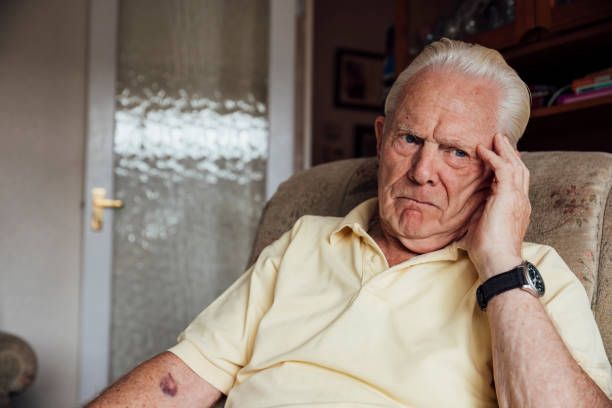
The Suitcase and the Signature
There are two kinds of clarity.
The first kind arrives loudly — with the slam of a door, or a voice raised past the point of return, or the particular crash of something that cannot be put back together. Most people recognize this kind. It announces itself.
The second kind is quieter and more dangerous. It arrives in a living room on a Tuesday evening while you’re still holding grocery bags, when your daughter says something that crosses a line you didn’t know was final until it was crossed. It doesn’t feel like rage. It doesn’t feel like grief. It feels like something settling — a mechanism completing its cycle, a lock clicking shut on a room you’ve been standing in for too long.
I know both kinds. The second one happened to me that Tuesday, and what followed it was something I had not planned for.
Not entirely.
Part One: The Recliner
I’d been to the grocery store on a Tuesday evening because Tuesday evenings are when I do the grocery run — have done, for the better part of thirty years. Martha and I established this rhythm early in our marriage and it became, like all established rhythms, something I continued without examining because it worked and because routine is a kind of kindness you offer yourself when the rest of life isn’t cooperating.
Martha has been gone for two years. The rhythm remains.
The bags were heavy. Four of them, canvas, the reusable kind that my daughter Tiffany had told me about with the earnest environmental conviction she’d had since her late twenties, and which I’d adopted because she asked me to, because when your daughter asks you to change a small habit and it costs you nothing, you change it. The handles had left red lines in both palms by the time I pushed through the front door.
The first thing I heard was the game. Basketball, mid-period, the announcer’s voice rising with the particular urgency of someone being paid to make points seem important. The second thing I registered was the recliner — Martha’s recliner, the dark green leather one she’d picked out at a furniture store in 2011 and loved with the specific, unapologetic attachment that sensible people develop for objects that have been exactly right from the first moment. Her recliner, fully extended, occupied by Harry.
Harry Baxter. My son-in-law. Thirty-four years old, with the posture of a man who has never sat in a chair that wasn’t waiting for him — one arm along the back, the other holding a half-empty beer bottle against his knee with the loose grip of someone who has been sitting here long enough that holding things has become automatic.
He didn’t look away from the game when I came in. He didn’t look away from the game when the door closed behind me with the sound it makes, the particular soft click of a door that was rehung seventeen years ago when the hinge wore and I did it myself on a Saturday with a screwdriver and a shim I cut from a magazine subscription card.
“Grab me another beer,” he said.
I have a control that I developed over decades of parenthood and employment and the particular discipline of being a man who inherited a temper and decided not to pass it down. It is not the absence of feeling. It is the practiced management of feeling — the learned knowledge that you can feel something completely and still choose what to do with it, still choose when and whether it comes out. I have used this control at difficult meetings, at difficult moments in my marriage, at the bedside of dying people I loved, at a graveside in November two years ago when the feeling was so large it seemed to take up the physical dimensions of the morning.
I used it now. I set the grocery bags down on the kitchen counter without a sound and began putting things away.
I was putting the refrigerated items away when Tiffany appeared in the doorway. She had the look she’d had since her teenage years when she was managing someone else’s disappointment — tight-jawed, slightly impatient, the look of a person who has already had this conversation in her head and found it tiresome before it began. She was wearing the kind of comfortable clothes that mean someone has been home for a while and was not expecting anything to disrupt their evening.
“Dad,” she said. The word had the quality of a warning rather than a greeting. “Just do it.”
I looked at my daughter. She is thirty-one years old, and I have known her since before she had a name, and I have spent thirty-one years doing things for her — not from obligation, not from transaction, but from love, which is different and which I had apparently been confused with obligation for long enough that the confusion had become structural. I thought of the nights I had sat up with her when she was sick, and the nights I had sat up with her when she was heartbroken, and the morning I drove three hours to her college to help her move after a bad roommate situation she’d called me about at eleven p.m., and the year I paid her rent without comment when the job she’d taken fell through and she needed six months to find another. I thought about how many of these things she remembered and how many had simply become part of the background of having a father, invisible and assumed, the way structural things always are.
“He’s my husband,” she said, when I didn’t respond. “You’re in our house.”
Our house. I noted the phrase with the careful attention I give to financial documents when something in them is not quite right.
“Either you help him when he asks,” she said, “or you pack your things and leave.”
She said it with the confidence of someone who has evaluated the situation and determined the outcome. She said it with the certainty of a woman who has never, not once, been in a position where her father did the unexpected thing, because her father had spent thirty-one years doing the expected thing, the thing that could be relied upon, the thing that said: I will always be here, I will always absorb this, I will always say yes.
I looked at her for a moment. I felt the clarity arrive — quiet, complete, the second kind, the kind that doesn’t announce itself. I felt it settle into place like something that had been finding its way there for a while and had finally, on a Tuesday evening in October, arrived at its destination.
“Noted,” I said.
I walked down the hallway.
Part Two: The Yellowstone Suitcase
The hardwood floors in the hallway had been refinished twenty years ago, a project that Martha and I undertook in the last week of August when the kids were at her sister’s and we had the house to ourselves for the first time in what felt like years. We rented the sander. We watched videos. We made mistakes on the first two feet of the hallway and learned from them and did the rest right, the slow, satisfying work of two people who have agreed to do something difficult together and find themselves, three days in, doing it well.
The floors are beautiful. They have been beautiful for twenty years. I had not thought about them particularly until I was walking down them with my decision made and my control intact, and the memory of August arrived without being called — Martha with a bandana in her hair, the smell of polyurethane, the satisfaction of a Tuesday evening when the first coat dried and we stood in the doorway looking at what we’d made.
I pulled the old suitcase off the closet shelf.
I have kept it there since 1987, which is the year Martha and I went to Yellowstone for our honeymoon. We drove, because we were twenty-three and twenty-four and did not have the money to fly, and we played cassette tapes the whole way and stopped at diners and arrived at the park in the evening and saw a bison standing on the road in the headlights and we both went completely silent, which is the correct response to a bison in your headlights. The suitcase is olive green, with metal clasps and a plaid lining, and it has been in that closet for thirty-seven years because it has sentimental value that I never needed to explain to anyone because Martha understood it without being told.
I packed it the way I pack when I know what I need and am not being distracted by what I don’t. Three changes of clothes — not my best, my most functional. My medications, organized the way my doctor’s assistant organized them in the weekly dispenser I’ve used since my blood pressure prescription was added two years ago. My reading glasses, because I have learned, over time, that the one thing you always regret forgetting is the glasses. My leather expense journal, which is a book I have kept since 1991 — not a diary, not a journal in the confessional sense, but a record of financial decisions and plans, a habit Martha called my pilot log because she said I treated money the way pilots treat weather: with respect, with preparation, and with the understanding that conditions change.
I rolled the suitcase back down the hallway.
The game was still on. Harry had a fresh beer, which meant Tiffany had gotten it for him, which meant something was clear that I hadn’t fully articulated to myself before. Tiffany was watching me from the kitchen doorway. I could see her making the calculation — the same calculation her husband had made, the calculation that had been made about me, by people who should have known better, for longer than I’d allowed myself to notice.
The calculation was: he won’t actually leave.
The calculations of people who believe they know what you will do are among the most interesting things to observe from the other side of having done the unexpected thing.
Neither of them said a word.
I rolled the suitcase to the front door. I opened it. The evening air came in — October, cool, with the smell of leaves that have been on the ground for a week and are beginning to do what leaves do.
I closed the door behind me.
My car started on the first try, which it always does, because I maintain it with the same attention I give to the other systems in my life. I sat in the driveway for approximately ninety seconds, which is how long it took me to feel the decision fully — not second-guess it, not reconsider, just feel it, the full weight of what I was doing and what it meant, and confirm that the weight was correct and that I could carry it.
Then I backed out and drove to the Pine Lodge Motel, which has a neon sign that flickers and a manager who knew my name because I’d stayed there twice before during the two years since Martha died when the house felt too large and too quiet and I needed a smaller space for a night or two. He gave me the room at the end of the row, the one with the window that faces the parking lot rather than the highway, which I prefer.
I opened my laptop. I spread my paperwork on the bed. I opened my pilot log to a fresh page.
I was not angry. Anger would have been simpler. What I was, sitting in the Pine Lodge with my Yellowstone suitcase open on the luggage rack, was organized.
Part Three: Sunday Morning, 8:12 A.M.
I have a list of things I do on Sunday mornings that makes the rest of the week more manageable. Coffee, made in the small drip machine I’d brought from home, because the motel’s machine produced something that was technically coffee in the way that a photocopy is technically a document. Thirty minutes of reading — whatever I was in the middle of, this week a book about the construction of the Hoover Dam that I’d been meaning to finish since the spring. The crossword, which I do in pen because my father did it in pen and I adopted the habit without deciding to and have never reversed it. And then, this Sunday, something else.
I did not feel, sitting in the Pine Lodge with my coffee and my crossword and the Sunday morning quiet of a motel where the other guests were sleeping or gone, the things I might have expected to feel. I did not feel grief, exactly — grief was familiar and lived in a different room, the room where Martha was. I did not feel anger, which had spent itself somewhere on the drive to the Pine Lodge and had not returned. What I felt was the particular clarity of a person who has been carrying a weight they mislabeled and has finally, holding it up to better light, read the label correctly.
I had been carrying obligation and calling it love. The love was real — I want to be precise about this, because precision matters to me and because the imprecise version of this story is easier and less honest. The love for my daughter was genuine and remains genuine and will not be altered by what she chose to do or by what I found on Friday in a flagged manila folder. Love does not require the object of it to deserve it, which is both its power and its complication.
But the thing I had been doing, over the past several years, was not purely love. Some of it was habit. Some of it was the path of least resistance, taken because the alternative path required a conversation I was not certain I had the right words for. Some of it was the particular stubbornness of a man who has decided that maintaining a relationship requires him to absorb whatever comes, because the alternative — the relationship ending, the rift becoming permanent — felt like a cost too high to accept.
What I understood, in the Pine Lodge on Sunday morning, was that I had been paying a different cost instead. Paying it quietly, in small installments, without accounting for it properly in my pilot log. And the installments had been accruing interest.
I navigated the bank’s phone tree with the efficiency of someone who has been navigating phone trees since before most phone tree designers were born. The automatic mortgage payment — set up three years ago when Tiffany and Harry moved into the house, a transition that had been framed as temporary and had calcified, as temporary arrangements often do, into permanence. The house was mine. The mortgage was mine. The automatic payment that came out of my checking account on the fifteenth of every month was mine. The payment that covered a house where a man sat in my late wife’s chair and asked me to fetch him beer while my daughter watched was mine.
“Sir,” the representative said, when I explained what I needed. “Are you sure? This is a recurring payment attached to a property.”
“I’m sure,” I said.
She processed it with the careful, slightly concerned quality of a customer service professional who is completing a request they find unusual. I thanked her and ended the call.
Then I called the insurance company. The homeowner’s policy on that address — mine, because it had always been mine, because I had paid it for twenty-two years — was adjusted. The auto-pay canceled. I noted the confirmation number in my pilot log.
The credit cards took two calls. The first was simple: a card in my name only, automatic payment on a balance I’d been carrying because Tiffany had asked me to help with some expenses “just for now” in January and the “just for now” had become eight months and four hundred dollars I did not recognize in the charges.
The second was the Costco card. I had added Tiffany as an authorized user on the Costco card seven years ago, when she was starting out and needed the credit access. The charges I did not recognize on this card were different from the ones I didn’t recognize on the first — larger, more frequent, and at merchants that told a story I was not going to finish reading on someone else’s behalf.
I removed her as an authorized user. I noted the confirmation number.
By the time the coffee was finished and the morning was fully light outside my motel room window, I had made seven calls and taken seven careful, documented actions, each one the appropriate response to the situation I was actually in rather than the situation I had been pretending to be in.
I was not angry. I was a man doing maintenance on his own life.
Part Four: The Missed Calls
Twelve by Wednesday. Twenty-two by Friday.
Tiffany’s messages went through phases the way weather goes through phases — first confused, with the quality of someone who cannot locate the expected result of an expected action (Dad, the mortgage payment didn’t go through, can you check on that, there must be an error); then explanatory, with the slightly elevated patience of someone who assumes there has been a mistake and is being helpful by identifying it (I called the bank and they said the automatic payment was canceled, did you do that intentionally?); then something colder and more controlled, the messages of a woman who has understood that there is no error and that the absence of the error is the problem (Dad, this is not acceptable, you have responsibilities here, I need you to call me back); and finally, in the last few, something that had dropped the controlled quality and had the raw edge of someone who has run out of the performance and is speaking from underneath it.
I did not respond to any of them.
Harry’s messages did not go through phases. They arrived fully formed and stayed there — loud and ugly, the messages of a man who has confused someone’s patience for permission and is now confronting the revocation of permission with all the grace of someone who has never previously had permission revoked. I listened to the first one from beginning to end. It took four minutes and eleven seconds, which I know because I looked at the timer on my phone screen. I deleted it. I did not listen to another.
I want to be clear about something, because the distinction matters to me and I have been thinking about it carefully in the back booth of the diner and in the Pine Lodge and in the car between places: this was not revenge. I have had many years to observe revenge — its texture, its satisfactions, its aftermath — and what I was doing did not feel like revenge. Revenge is a heat. What I was doing felt more like maintenance. Like a man finally attending to systems he had let fall into disrepair because attending to them had seemed, in each individual moment, like more trouble than leaving them alone.
The trouble of leaving them alone had been accumulating for years without my fully accounting for it in my pilot log, which is the only real mistake I can identify in the record: I was not keeping honest books on this particular account. I was writing the entries in a softer currency than the situation warranted. I was valuing love and family and the belief that Tiffany would one day return to being the person I had known her to be, before Harry, before the gradual rewriting of her relationship to me from father to resource — I was valuing these things at face, without asking whether the face was still accurate.
The Tuesday evening in the living room was when I finally marked the account to market.
What I found, when I did, was that I had been overextended for some time. Not financially — financially, my books were meticulous. In the other ledger. The one that tracks what you give and what you receive in return, not in kind necessarily, not transaction for transaction, but in the basic exchange that makes a relationship rather than an arrangement. I had been giving and receiving nothing that resembled reciprocity, and I had been calling the deficit love and telling myself it was enough.
It was not enough.
I noted this in my pilot log, on a page I titled Assessment, and I wrote what I actually thought rather than what I had been telling myself, and when I was done I had two pages of honest accounting and a clarity I hadn’t felt in some time.
Friday morning, I ate my eggs in the back booth and I tipped Carolyn well and I drove to the bank.
I had not expected what I found there. I had expected a conversation about a payment. I had not expected Sandra Osei to come back from the office holding a red-stamped folder and to be, visibly, pale.
Part Five: The Flagged File
I had been going to this branch since 2003, which meant the teller who recognized my name — a young woman named Priya who had been there four years and always called me Mr. Miller with the genuine respect rather than the performed kind — was not the first teller to know my name at that window, and would not be the last. But she was the one on duty on Friday morning, and when I told her I’d come in to update a payment, something moved through her expression that I did not have language for yet.
“One moment, Mr. Miller,” she said, and disappeared into the back.
I waited at the window with my pilot log in my jacket pocket and my hands on the counter and the particular patience of someone who has been waiting for things in an organized fashion for sixty-two years and has made peace with the fact that some waits are simply part of the process.
The branch manager’s name was Sandra Osei. She had managed this branch for eight years, and I knew her in the way you know people you see every few months in a professional context where trust has been established through consistent reliability over a long time. She was a competent, careful woman who did not rattle easily. I had seen her handle difficult situations in the lobby with the calm efficiency of someone who knows that calm is the most useful thing a person in authority can offer a difficult room.
She was holding a manila folder. The folder had a stamp on the cover, red ink, in capital letters: FLAGGED.
And she was pale.
“Mr. Miller,” she said. Her voice was lower than usual — not a whisper, but a deliberate reduction, the voice of someone who is managing information that needs to be managed carefully. “Thank you for coming in. Could you sit down for a moment?”
I sat. She placed the folder on the desk between us. She looked at me with the expression of someone who is trying to determine how much I already know, which told me something.
“This involves your home,” she said. “The property at Haverford Lane.”
“Alright,” I said.
She opened the folder. She slid one page across the desk toward me — a single sheet of paper, white, with the bank’s letterhead at the top and my address printed beneath it. A document I did not recognize. A document with my name on it in several places, most significantly at the bottom, on the signature line.
A signature that looked like mine.
I am sixty-two years old and I have been signing my name since I was seven, and I know my signature the way I know my handwriting — not because I study it, but because it is an extension of me, an automatic and individual gesture that contains thirty years of repetition and is therefore singular in the way that anything repeated for thirty years becomes singular. A signature is a fingerprint with ink. You know yours.
I looked at the signature at the bottom of that page.
I had not written it.
“This was submitted,” Sandra said, carefully, in the controlled voice of a woman who is delivering information that requires control, “as an authorization to add a co-borrower to your mortgage.” She paused. “And to initiate a refinancing that would change the terms of the loan.”
The fluorescent light above the desk hummed. The copier beside Sandra’s office clicked to life as if on cue, running some routine job, indifferent to the document on the desk between us.
“A co-borrower,” I said.
“Yes, sir.”
“Whose name?”
She turned the page slightly, indicating a second line I hadn’t looked at yet. The name printed there was Harold Baxter.
Harry.
I sat with this information for a moment. Not shocked — the anger at shock I did not feel, because the information, while I had not known it, did not surprise the part of me that had been adding things up without fully intending to. The Costco charges I didn’t recognize. Tiffany’s sudden insistence that I was obligated to accommodate Harry. The calculation she had made — the one that assumed I would not leave.
They had not needed me to stay as a father. They had needed me to stay as a financial instrument.
“When was this submitted?” I asked.
Sandra checked the file. “Three weeks ago,” she said. “It was flagged by our fraud department because the signature style showed inconsistencies with your signature on file.” She looked at me. “Which is why it has not been processed. But I need to ask you directly, Mr. Miller — did you authorize this?”
“No,” I said. “I did not.”
She closed the folder with the careful, deliberate closure of someone who understands the weight of what they are closing. “Then I need to explain to you what your options are,” she said. “And I need you not to leave yet, because this file needs to go to our fraud team this morning, and your presence and your account of this will be important.”
I placed my pilot log on the desk. I opened it to the page I had started on Sunday morning in the Pine Lodge.
“I have documentation of every financial arrangement I’ve made in the last twenty-two years related to that property,” I said. “Including the automatic payments I canceled this week. Including the credit card charges I’ve been examining since Monday.”
Sandra looked at the pilot log. She looked at me.
“I see,” she said.
“I suspected something was wrong,” I said. “I didn’t know how wrong.”
Now I did.
Part Six: What Comes After Fraud
The fraud team arrived within the hour — two of them, from a regional office, called in by Sandra with the quiet efficiency of a professional who understands when something has exceeded her level. They were both younger than I expected, dressed in the way of people whose job requires them to be taken seriously without being intimidating. They moved through the conference room with the deliberate calm of individuals who are trained to deal with situations where emotion is running high by not contributing to it.
I was not emotional. I was organized. I handed them my pilot log and walked them through its contents from the beginning — not the beginning of this week, the beginning of my financial relationship with the property on Haverford Lane, which goes back twenty-two years to the day Martha and I closed on it, which I can tell you the exact terms of because I wrote them down. I told them about Sunday morning and the payments I had canceled, and I explained my reasons for each, and I noted the confirmation numbers, which were in the pilot log. I told them about the Costco card charges and which merchants they were at and what the timeline looked like. I told them about Tuesday evening, which they had not asked about, but which I included because context is how you understand a document, and the document they were examining needed context to be fully legible.
They listened with the professional quality of people who listen to many people and have learned to do it without their face telling you what they think. They took notes by hand and on a laptop simultaneously, which struck me as methodical, and methodical is a quality I respect.
The comparison of signatures took about eight minutes. One of them had a device that photographed documents and ran them through some kind of analytical software, and I watched the two signatures appear side by side on the screen — mine, from the card I had signed when I opened my first account at this branch in 2003, and the signature at the bottom of the authorization form. The differences, displayed this way, were apparent even to me. The loop on the M in Miller, the angle of the A in Arthur, the particular way my signature tapers at the end into something that has the ghost of a period, which Martha used to call my punctuation habit — none of these were correctly replicated.
Someone had tried. They had studied my signature and reproduced something that would pass a casual glance. What they had not accounted for was that my bank kept a high-resolution image of my original signature on file, and that Sandra Osei’s fraud department had a comparison tool and used it when documents arrived authorizing significant financial changes, and that the flag in the folder was the result of a system that was working exactly as it was supposed to work.
What they had also not accounted for was that I would show up at the bank on Friday morning to update a payment, find out the truth, and already have two weeks of documented financial decisions in a pilot log that I was willing to hand to investigators.
They thanked me. They told me the investigation would take time, which I understood. I told them I was available for follow-up and that Patricia Hale was representing me and gave them her contact information, which I had written in the pilot log on Monday evening after our call.
Sandra walked me out to the parking lot when they were done. She had the look of someone who has been carrying something uncomfortable for three weeks and has finally been relieved of it.
“The flag came up three weeks ago,” she said again. “The delay was a processing backlog. I want you to know that it will be addressed.”
“I know you’ll address it,” I said. “You’re a careful branch.”
She looked at me for a moment. “I’m sorry you’re going through this, Mr. Miller.”
“I’m not,” I said. Surprising myself slightly with the honesty of it. “I’m sorry it happened. But I’m not sorry I found out. There’s a difference.”
She nodded like a woman who understood the difference.
I drove back to the Pine Lodge. I sat on the edge of the bed with my pilot log open on the side table and I looked at the Yellowstone suitcase on the luggage rack and I thought about the drive Martha and I had taken in 1987 — thirty-seven years ago, which I could not have told you when I was twenty-four would feel like both very long and not long enough — and I thought about the bison in the headlights, which had appeared without warning and had seemed to belong entirely to itself, enormous and certain and completely unconcerned with what we thought of it.
I wrote in the pilot log for a while. Then I went to sleep.
Epilogue: The Morning I Understood
Two weeks later, on a Monday, I moved back into the house on Haverford Lane.
The fraud investigation was underway, the legal hold was in place, and Patricia had made clear to Tiffany’s attorney that the house was and had always been solely mine, and that the authorization document submitted to the bank was a forgery, and that the appropriate authorities were now involved. Tiffany and Harry had vacated, which I understood was difficult and which I did not allow myself to feel responsible for. I had carried this family for years on the understanding that carrying them was an act of love. I now understood that what I had been carrying, for at least some of that time, had not been what I thought.
I did not think about this with anger. I thought about it with the same careful, organized attention I had been bringing to everything else — trying to see it clearly, trying to understand what was true rather than what would have been easier to believe.
The house was in good order. This surprised me. I had expected some evidence of carelessness, the particular entropy of people occupying a space they have come to feel entitled to rather than responsible for. But the floors were clean, the kitchen was in order, and Martha’s recliner was by the window at the angle she had always kept it, the angle that caught the afternoon light at just the right time of day.
I sat in it.
I had not sat in Martha’s recliner since she died two years ago. I had preserved it in the specific, superstitious way of grief — not a conscious decision, just an avoidance that had become habit, a way of keeping something of hers intact in its original form. I had walked past it for two years and not sat in it, and sitting in it now felt both overdue and appropriately timed, the way some things wait until the moment is right.
The afternoon light came in through the window at the angle Martha had liked. The house was quiet with the right kind of quiet — not the emptied quiet of absence, but the settled quiet of a space that has been returned to something close to itself. I could hear the neighbor’s lawn somewhere down the block and the intermittent sound of traffic on the main road and, somewhere farther off, a dog having an opinion about something.
I did not know what would happen with Tiffany. I want to say that clearly — I did not know, and I was not sure, and the not-knowing was its own weight, separate from the anger and the fraud and the legal proceedings, sitting quietly in the chair beside me. She was my daughter. I had known her since before she had a name. I had sat beside her in a hospital at two in the morning when she was seven years old and sick in a way that made me understand for the first time what it meant to be afraid. I had walked her down an aisle I had complicated feelings about. I had shown up, every time she asked, with the expectation that showing up was its own answer to a question that I now understood she had never actually asked.
The question she had actually asked was different. I was still working out what it was.
Patricia called at four o’clock. She had spoken with Tiffany’s attorney, she had received the fraud team’s preliminary documentation, she had filed the necessary notices. She spoke for twelve minutes with the precise, organized warmth of a woman who has been my attorney through the worst and most complicated things and has earned the right to skip the preamble.
“You’re in a strong position,” she said. “Legally. Financially. The house is yours, unambiguously. The fraud case is clear.”
“I know,” I said.
“How are you doing otherwise?”
I looked around the room. Martha’s recliner. The window. The afternoon light doing what it had done for twenty-two years. The pilot log on the side table. The Yellowstone suitcase visible through the open bedroom door, back on the shelf where it lived, olive green and enduring.
“I’m in a good position otherwise, too,” I said. “It turns out.”
After we hung up, I opened the pilot log to a fresh page.
I wrote the date at the top, the way I always do, because that is where you start: with where you are, today, in this moment, and then you write what you know from there. You do not start with the past and you do not start with the future. You start with where you are, and you write honestly, and you let the record speak.
Outside, the afternoon was doing what October afternoons do in this part of the country — going gold at the edges, the light at the particular angle that makes everything look like it is being lit from inside. Martha had loved October afternoons. She had kept the chair by this window specifically for them.
I kept writing.
THE END

Ethan Blake is a skilled Creative Content Specialist with a talent for crafting engaging and thought-provoking narratives. With a strong background in storytelling and digital content creation, Ethan brings a unique perspective to his role at TheArchivists, where he curates and produces captivating content for a global audience.
Ethan holds a degree in Communications from Zurich University, where he developed his expertise in storytelling, media strategy, and audience engagement. Known for his ability to blend creativity with analytical precision, he excels at creating content that not only entertains but also connects deeply with readers.
At TheArchivists, Ethan specializes in uncovering compelling stories that reflect a wide range of human experiences. His work is celebrated for its authenticity, creativity, and ability to spark meaningful conversations, earning him recognition among peers and readers alike.
Passionate about the art of storytelling, Ethan enjoys exploring themes of culture, history, and personal growth, aiming to inspire and inform with every piece he creates. Dedicated to making a lasting impact, Ethan continues to push boundaries in the ever-evolving world of digital content.