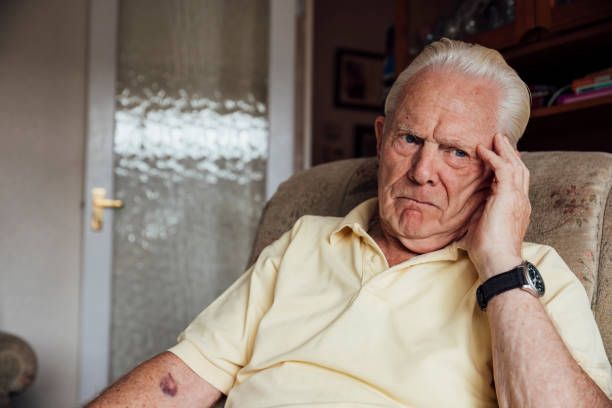
The grocery bags were still cutting into my wrists when I walked through the front door.
Harry didn’t look up from the basketball game.
“Grab me another beer while you’re up.” He was stretched out in Martha’s chair — the leather recliner she’d picked out herself, the last gift she gave me before the cancer took her. His stocking feet were propped up, a half-empty Corona dangling from his fingers. “The good stuff. Not that cheap beer you drink.”
I set the bags down slowly. The handles had left red marks across my palms.
“Harry, I just walked in.”
Now he looked at me. That expression — the one that said I was the unreasonable one, the difficult one. “What’s the big deal? You’re already standing.”
“This is my house.”
His feet hit the floor with a thud. He stood, and he always used his height like a weapon when he stood. Thirty years old and broader than me and completely certain that made him right.
“Your house?” He stepped closer. “Your daughter and I live here. We pay the bills.”
I thought about the automatic transfer that left my account on the first of every month. The mortgage payment I’d been making for three years. The groceries in the bags I’d just set down, bought with my Social Security check.
He kept talking. Something about doing things the easy way or the hard way. Something about playing ball.
The kitchen door swung open and Tiffany appeared, dish towel in her hands, already wearing the expression I knew — the disappointed one, like I was a child acting out.
“Dad, just get him the beer. It’s not worth fighting over.”
I looked at my daughter. Really looked at her. Searching for some trace of the little girl who used to climb into my lap during thunderstorms.
She looked back with Harry’s same entitled expression.
“You need to decide right now,” she said. “Either you help Harry and do what he asks, or you can pack your things and leave.”
The words sat in the air between us.
“All right,” I said quietly.
Harry smirked. “Good. Now, about that beer—”
“I’ll pack.”
The smirk died on his face.
I turned and walked toward the hallway. Behind me, I heard Tiffany’s sharp whisper — “Dad, wait” — but I was already moving, my footsteps steady on the hardwood floor that Martha and I had refinished together twenty years ago.
The suitcase came down from the closet shelf with a soft thump.
Martha and I had bought it for our honeymoon. Yellowstone, back when the future felt like an open road. Now it sat open on the bed, waiting.
I packed methodically. Underwear, socks, three changes of clothes. Not everything. Just enough. Martha’s photo went into the side pocket, wrapped in tissue paper. My medications. Reading glasses. The small leather journal where I tracked expenses.
From the living room came the low murmur of urgent whispers.
I wheeled the suitcase down the hallway, and they stopped talking. Harry had returned to his chair, but his posture was different — watchful. Tiffany stood by the kitchen doorway, arms crossed, trying to look certain and failing.
Neither of them said goodbye.
The car started on the first try. My old Buick, reliable as ever. I backed out of the driveway without looking at the house.
The drive to Pine Lodge Motel gave me thirty minutes to think. The memories came in waves. Tiffany’s college tuition — forty thousand a year for the private school she’d insisted on, four years of overtime at the bank to cover it. Her wedding — twenty-five thousand, Harry’s family unable to contribute their half, so I’d covered it quietly. The house — eighty thousand from my retirement savings for their down payment, because young couples needed help getting started. That’s what fathers did. That’s what Martha would have wanted.
The monthly payments after that. Twelve hundred for the mortgage. Three hundred for utilities. Five hundred for groceries when things got tight. My Social Security check disappearing into their lives piece by piece while I told myself it was love.
The motel room was small but clean. A bed, a chair, a tiny table by the window.
I sat on the mattress edge, opened my laptop, and logged into my banking.
Account balances glowed on the screen. Checking, savings, retirement accounts — numbers that represented a lifetime of careful planning, of denying myself small luxuries so I could take care of my family.
Tomorrow was Sunday. But some things could still be done.
The cursor blinked and waited.
I spread my paperwork across the motel table Sunday morning like a general planning a campaign.
The first call went to First National Bank.
“Good morning, Mr. Miller. How can I help you today?”
“I need to cancel the automatic mortgage payment for 847 Pine Street.”
A pause. Keys clicking. “Sir, I show that payment has been active for five years. Are you sure you want to discontinue it?”
“Completely sure.”
“May I ask the reason?”
“The homeowners no longer qualify for my financial assistance.”
The second call was to Geico. Harry’s Silverado and Tiffany’s Honda had been on my policy for three years. Two hundred and eighty dollars every month for vehicles I never drove.
“I need to remove two vehicles from my policy. My daughter and son-in-law will need to establish their own coverage.”
“When would you like this to take effect?”
“Today.”
The credit cards took longer. Tiffany was an authorized user on three accounts. Charges I’d never made, balances I’d never created.
Each call felt like lifting a weight off my shoulders. Thirty years in banking had taught me the systems — the legal language, the proper procedures. Everything I was doing was completely within my rights.
By noon, I’d made eight calls.
I sat back in the motel chair and looked at my notes. Confirmation numbers. Reference codes. Effective dates.
My phone sat silent on the table. They didn’t know yet. They wouldn’t know until the first bill arrived with their names on it instead of mine.
But they would know soon enough.
By Wednesday, there were twelve missed calls. By Friday, twenty-two.
I listened to them in chronological order, watching the progression.
The early ones were almost casual — Tiffany asking about some banking error with the mortgage. Harry leaving brief, annoyed messages about the car insurance. By midweek, panic had moved in and settled.
“Dad, what the hell is going on?” Tiffany’s voice cracking. “The bank says you stopped the automatic payment. They want the full amount by Friday or they’ll start foreclosure proceedings.”
Harry’s messages grew louder. “Clark, you need to fix this right now.”
The later calls bordered on begging. Tiffany crying. Harry trying a softer approach, claiming he’d been too harsh, wanting to make things right.
I deleted each message after listening.
Thursday morning, a knock at my door. Through the peephole — both of them. Tiffany in a wrinkled sweater, Harry in his work clothes, both looking like they hadn’t slept.
I opened the door but didn’t step back to let them in.
“Dad.” Tiffany’s eyes were red. “We need to talk.”
“About what?”
Harry pushed forward, face flushed. “About the fact that you’re ruining our lives over some stupid argument about beer.”
“I’m not ruining anything,” I said. “I’m simply no longer paying for your lives.”
“The mortgage, Clark.” His voice climbed. “You can’t just stop paying the mortgage. That’s our house.”
“It’s my house. My name on the deed. My signature on the loan. You were guests.”
Tiffany grabbed Harry’s arm as he stepped closer. “Dad, please. We can work this out. Harry was wrong to talk to you that way. But you can’t leave us with no warning.”
“You gave me an ultimatum,” I said. “Serve Harry or get out. Those were your words.”
“I didn’t mean it like that.”
“Yes, you did. You just didn’t expect me to choose option two.”
Harry tried a different voice — artificially calm now. “Look, we all said things we didn’t mean. But you’re talking about our home, our credit, our whole lives.”
“I can and I did,” I said. “You wanted me to leave. I left. Now you can handle things yourselves.”
“What about family?” Tiffany’s voice broke. “What about everything we’ve been through?”
I looked at my daughter. For a moment I saw her as she was at seven — bringing me dandelions she’d picked from the yard, insisting they were bouquets.
“Family works both ways, sweetheart,” I said quietly. “I spent five years taking care of you both. When it was time to take care of me, you chose him.”
Harry’s composure cracked. He said something I won’t repeat.
“I’ll call the police if you keep raising your voice,” I said. “This is private property.”
They stared at me like they were seeing someone they’d never met.
Harry grabbed Tiffany’s elbow. “Come on. We’ll figure it out ourselves.” His swagger was gone. She looked back over her shoulder as they walked to the car.
I watched them drive away, then closed the door and returned to my laptop.
There were still calls to make.
Tuesday morning, I was having coffee at the Main Street Diner when a familiar voice called out.
“Clark Miller. Well, I’ll be damned.”
Bob Harrison — we’d worked together at First National for fifteen years before his transfer to the main branch. He slid into the opposite seat and studied my face.
“Heard you moved out to Pine Lodge. Everything all right?”
“Family situation,” I said. “Needed some space.”
Bob nodded slowly. “That son-in-law of yours tried to pull something a few months back.”
My coffee cup stopped halfway to my lips.
“Wanted a home equity loan on your house. Fifty thousand dollars.” Bob’s expression darkened. “Claimed it was his property. Brought in documentation and everything.”
“My house.”
“That’s right. When we ran the title search, everything came back to you. Clean title, no co-signers, nothing that gave him any claim.” He leaned forward, lowering his voice. “Clark, the documents he brought in were forged. This wasn’t confusion about ownership. This was deliberate fraud.”
The implications hit me like cold water.
Three months ago, while I was still buying his groceries and paying his mortgage, Harry had been trying to steal my house out from under me.
“Did you report it?”
“We rejected the application and flagged his information. No money changed hands, so it’s a gray area legally. But I kept copies.” Bob studied my face. “Word around town is Harry’s got gambling debts. Substantial ones. Jim Morrison might know more — says Harry’s been a regular at Glacier Peaks Casino.”
I thanked Bob, left my barely-touched coffee, and walked back to Pine Lodge with my mind working through everything.
The beer demand. The disrespect. The ultimatum. None of it had been about establishing dominance.
It had been about maintaining access to money he planned to steal.
Detective Jim Morrison’s office was tucked in the back corner of the police station, dominated by filing cabinets and coffee-stained paperwork. Jim had aged since I’d last seen him, but his handshake was still firm.
I explained the situation. The ultimatum, my departure, Bob’s revelation. Jim listened without interrupting, occasionally making notes.
“Harry’s definitely known at Glacier Peaks,” he said when I finished. “Regular player, mostly poker tables. Higher stakes lately.” He paused. “I’d estimate eighteen to twenty thousand total debt. Mix of legitimate lenders and less savory creditors. The legitimate ones are getting impatient.”
“How long has he been stalling?”
“About six weeks. Most creditors give someone three months before escalating. Harry’s running out of road.”
I left the station with a clearer picture. The gambling explained all of it — the desperation, the forged documents, the increasing aggression. I wasn’t just a convenient funding source.
I was his only hope of avoiding serious consequences.
That afternoon, I drove to the Flathead County Courthouse.
The eviction clerk reviewed my property deed with professional efficiency.
“Mr. Miller, you understand this is your daughter’s current residence?”
“It’s my property. The residents have violated the terms of their occupancy.”
She stamped the papers with practiced authority. “Thirty-day notice begins today. The sheriff will serve final papers after the deadline.”
I thanked her and collected my copies.
Back at the motel that evening, I updated the document I’d been building — Harry Thompson Evidence. Bob Harrison’s account of the forged loan application. Jim Morrison’s information on the gambling debts. The eviction paperwork. Everything dated, everything documented.
Pattern recognition had been the crucial skill in thirty years of banking. The pattern here was clear.
Harry wasn’t just disrespectful. He was desperate, dishonest, and running out of time.
The next morning, I made a different kind of call.
“Mr. Webb, this is Clark Miller returning your message about Harry Thompson. I need to clarify something. He’s no longer living at my address and has no legal claim to my property. He listed that address on his credit applications, but he was a guest in my home. He’s been evicted. If you’re looking for him, he works at Mountain View Auto Dealership on Highway 93.”
I made six calls like that by noon — each one brief, factual, and accurate. I wasn’t paying Harry’s debts. I was simply correcting the false address he’d been using to stay one step ahead of the people he owed money to.
That afternoon, Judge Morrison signed my restraining order.
Harry Thompson was now legally prohibited from coming within five hundred feet of me or my property.
My phone buzzed with a text from an unknown number. This isn’t over, old man.
I forwarded it to Detective Morrison and blocked the number.
By Monday, his world was collapsing from multiple directions.
Mike Brennan from Mountain View Auto called me directly.
“Clark, I’ve known you twenty years. I need to ask you straight — are the things Harry’s been saying about you true?”
“What’s he been saying?”
“That you had some kind of breakdown. That you threw him out out of spite. That there’s a medical emergency and you’re refusing to help.” Mike paused. “I’ve got three customers today who mentioned Harry owing them money. One recognized him from the casino. It’s affecting my business.”
“There’s no medical emergency,” I said. “My banker, my lawyer, and the police detective on this case can all confirm I’m thinking clearly. Harry gave me an ultimatum and I left. That’s what happened.”
A long pause. “I’m going to have to let him go.”
Twenty minutes later, sitting at Annie’s Coffee Shop, I watched the first debt collector’s vehicle pull up outside my former house.
My phone rang. Tiffany.
“Dad, there are men here asking about Harry’s debts. They want to know about our assets, our income, everything.” Genuine panic in her voice now — not the rehearsed kind. “He owes eighteen thousand dollars. How is that possible?”
“Gambling debts. Glacier Peaks Casino.”
Silence. Then, quietly: “He told me he was working overtime those nights.”
“I’m sorry you’re finding out this way.”
“The sheriff came too. Served Harry papers. He’s been throwing things ever since.”
She sounded small on the phone. Not calculating. Just lost.
“Make your decisions based on who Harry actually is,” I told her. “Not who you hoped he was.”
I called Tiffany Wednesday morning and told her to meet me at the diner. Just her.
She slid into the booth across from me looking older than twenty-eight. Stress lines around her eyes. Nervous hands.
“Dad, Harry’s lost his job, and these collectors won’t stop calling—”
“I’m offering you one chance to end this with some dignity,” I said. “A public acknowledgement of the truth. What actually happened. How long I supported you both, and why I left.”
Her face flushed. “You want me to humiliate myself in front of the whole town.”
“I want you to tell the truth. There’s a difference.”
I walked her through what I was asking. A testimony at Sunday service. A letter to the Tribune. A Facebook post to our mutual connections. The full picture — college tuition, wedding costs, mortgage payments, and the ultimatum that ended it.
“What about Harry?”
“Harry is no longer part of any equation involving me. The restraining order is permanent. If you stay married to him, that’s your choice. But it means choosing him over any relationship with me.”
She was quiet for a moment. “What about the house?”
“It’s going to the Montana Veterans Housing Initiative. Three veteran families will live there. The will is already signed and filed.”
She absorbed that. “Even if I do everything you’re asking—”
“Even then. Because I need to know that whatever we rebuild between us is based on love, not inheritance expectations.”
Tears filled her eyes. Real ones this time.
“I’m sorry, Dad. I really am. I never meant for things to go this far.”
“Sorry isn’t enough anymore. The whole town watched you let Harry treat me like a servant. I need to see actions.”
She stood slowly. At the door, she turned back.
“Do you think you could ever forgive me?”
I looked at my daughter — really looked at her — and saw the little girl who used to braid dandelions into crowns.
“I forgave you the day I chose to leave instead of fight,” I said. “But trust has to be earned back one honest action at a time.”
She nodded and walked out.
Sunday was four days away.
The sanctuary was fuller than usual.
Word had gotten around that Tiffany Miller was going to say something at testimony time. Callispel is a small town. People knew something was coming.
I took my regular pew three rows from the front and waited.
When testimony time came, Tiffany stood from the back row. She walked the center aisle looking small, but her steps were steady. At the podium, she gripped the edges and looked out at faces she’d known her entire life.
“I need to tell you all something important about my father.”
Her voice carried clearly through the silent sanctuary.
“For the past five years, Clark Miller has been supporting my husband and me financially. He paid forty thousand dollars a year for my college education when I could have gone to a state school. He paid twenty-five thousand dollars for my wedding when Harry’s family couldn’t cover their half.”
Murmurs rippled through the pews.
“He gave us his family home — the house his parents left him, where he’d lived with my mother for twenty years. When we couldn’t make mortgage payments, he made them. When we needed groceries, utilities, car insurance, he paid for everything while living on Social Security.”
The sanctuary was completely still.
“Three weeks ago, when my father wouldn’t follow my husband’s orders like a servant, we gave him an ultimatum. Obey Harry or leave his own house. He chose to leave rather than surrender his dignity.”
Her voice strengthened.
“I stood by and watched my husband disrespect the man who sacrificed his retirement security for our comfort. I chose loyalty to someone who threatened my father over loyalty to the man who raised me.”
Tears ran freely, but her voice stayed steady.
“I’m standing here because my father offered me one last chance to choose truth over pride. I was wrong. Harry was wrong. My father deserved gratitude and respect, and we gave him ultimatums and demands.” She looked directly at me. “Dad, I’m sorry isn’t enough for what we put you through. But I’m hoping it’s a start.”
The congregation erupted in the gentle, sustained murmur that means something true has just been said.
Pastor Williams stood at the podium afterward with moisture in his eyes. “Sometimes the hardest courage is admitting our mistakes in front of the people who know you best. Tiffany has shown that courage today, and her father has shown us all what dignity looks like under pressure.”
After the service, people approached me with handshakes and quiet words. Mrs. Henderson squeezed my hand. Tom from the hardware store clapped my shoulder.
But the moment that mattered came when Tiffany found me outside.
“The Tribune letter runs Wednesday. The Facebook post goes up tonight.” She paused. “Harry left yesterday. Packed his truck while I was at work and disappeared. No forwarding address. No note.”
I wasn’t surprised.
“I’m sorry your marriage ended this way.”
“I’m not,” she said quietly. “I filed for divorce this morning. Found out he’d been using my credit cards for gambling without telling me. The debts are worse than we thought.”
Three months later, I stood in the front yard of my former family home watching three veteran families carry boxes through the door.
The house had been renovated into separate apartments. Staff Sergeant Maria Santos was directing her two children toward the playground equipment that local businesses had donated. She stopped when she saw me.
“Mr. Miller, this means everything to us. Thank you.”
“Veterans understand sacrifice,” I said. “This house should serve people who’ve actually earned it.”
My own life had settled into something I hadn’t felt in years. A lakeside cabin — small, exactly what I needed. Morning coffee on the deck overlooking Flathead Lake. Afternoons fishing. Evenings reading. The simple pleasures that feel like luxury after years of financial strain and walking on eggshells in your own home.
My phone buzzed. A text from Tiffany.
Dad, I’m three months into counseling and learning a lot about healthy relationships. Could we try having coffee sometime? I’d like to earn your trust back, one conversation at a time.
I looked out at the lake. An osprey was fishing in the shallows, patient and precise, waiting for exactly the right moment.
I typed back: Coffee sounds good. Saturday morning at the diner.
Her response came immediately. I’ll be there. And Dad — thank you for not giving up on me completely.
I set the phone on the railing and watched the osprey rise from the water with a fish in its talons, climbing toward the open sky.
I’d spent five years making myself smaller so they could feel larger. Five years of monthly transfers and quiet sacrifices and convincing myself that being needed was the same thing as being valued.
It took a beer demand and an ultimatum to show me the difference.
Some lessons cost more than they should.
But sitting there watching the sun go down over the Rockies, the lake surface going gold and orange, children’s laughter drifting over from the veterans housing down the road — families building new lives in the home where I’d learned mine —
I couldn’t say it wasn’t worth it.

Sophia Rivers is an experienced News Content Editor with a sharp eye for detail and a passion for delivering accurate and engaging news stories. At TheArchivists, she specializes in curating, editing, and presenting news content that informs and resonates with a global audience.
Sophia holds a degree in Journalism from the University of Toronto, where she developed her skills in news reporting, media ethics, and digital journalism. Her expertise lies in identifying key stories, crafting compelling narratives, and ensuring journalistic integrity in every piece she edits.
Known for her precision and dedication to the truth, Sophia thrives in the fast-paced world of news editing. At TheArchivists, she focuses on producing high-quality news content that keeps readers informed while maintaining a balanced and insightful perspective.
With a commitment to delivering impactful journalism, Sophia is passionate about bringing clarity to complex issues and amplifying voices that matter. Her work reflects her belief in the power of news to shape conversations and inspire change.