The Authorization
There are moments that look ordinary from the outside — a family dinner, a glass raised, a word spoken — that quietly split your life in two. This was one of them. It happened at Thanksgiving, and by the time it was over, nothing in that dining room, or in me, would ever be quite the same.
Part One: The Table
The dining room had been arranged with the kind of effort that announces itself without apology.
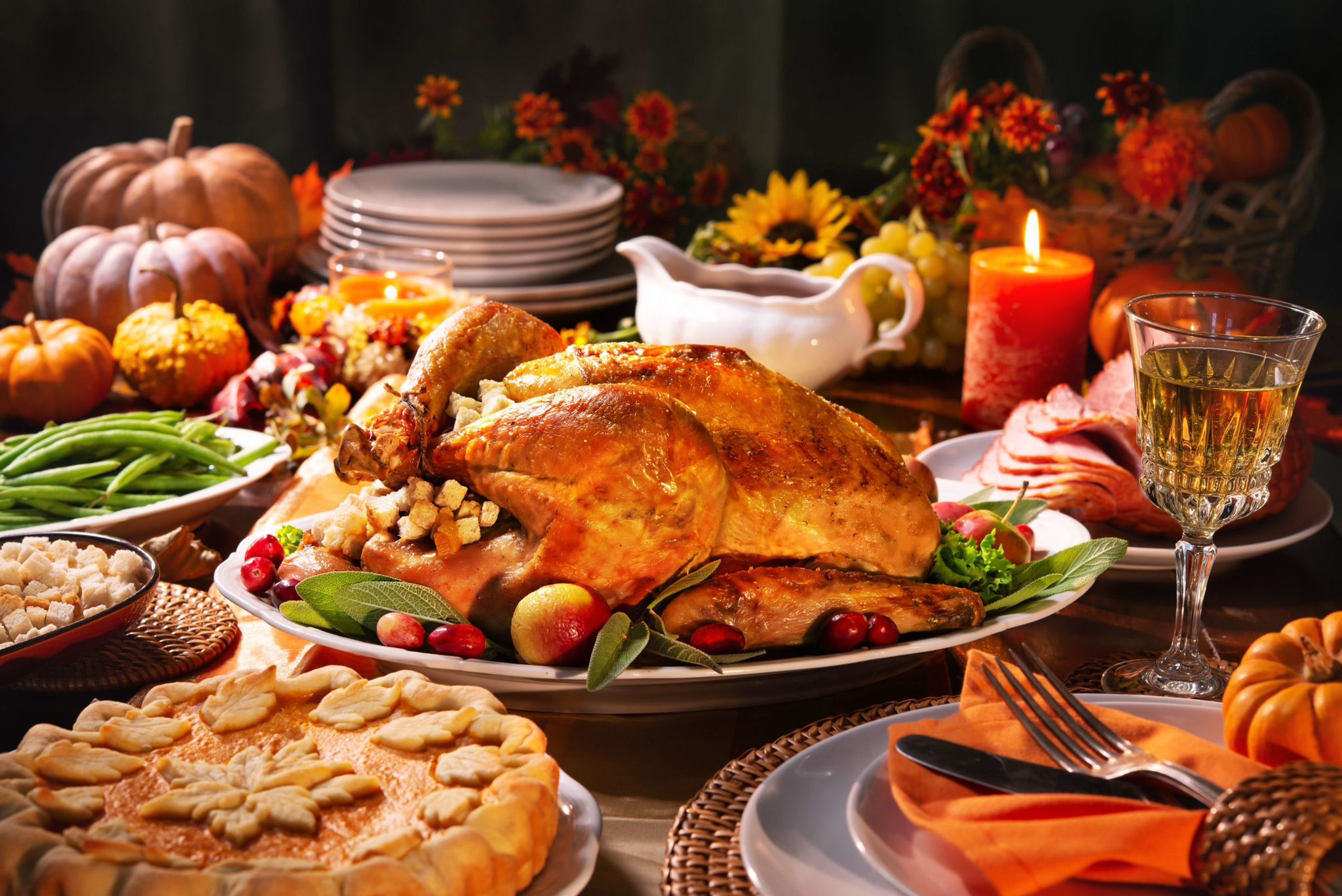
Three rectangular tables had been pushed end to end and draped in crisp white linen that my mother had ordered from a catalog she kept on the coffee table all year, dog-earing pages in September. The candles were from a boutique downtown — tall ivory pillars that my mother lit an hour before guests arrived so the wax would pool just right, giving the appearance of casual abundance. They burned with a scent she called “winter hearth,” though what it actually smelled like was cedar and something vaguely pharmaceutical, a high-end disguise that couldn’t quite overpower the roasted turkey, the rosemary stuffing, or the buttery cloud of garlic mashed potatoes that had been warming on the stove since noon.
Motown played softly from a Bluetooth speaker tucked against the sideboard. Not loud enough to dance to. Just loud enough to suggest that the people in the room were the kind of people who had good taste, easy warmth, and nothing unpleasant to say to each other. My mother believed music made gatherings look whole. Complete. She had been curating the soundtrack of our family for as long as I could remember, and she was very good at it.
I had driven two and a half hours to be there.
I wore a plain gray sweater — cashmere, though you wouldn’t know it from looking. No necklace. No bangles. Just the small pearl studs that my Aunt Ruth had given me on my twenty-first birthday, pressed into my palm in a little velvet pouch with a card that read: For the girl who never needs to prove anything. I had worn them to every difficult occasion since, the way some people carry a stone in their pocket, something to press your thumb against when you need to remember what solid feels like.
The psychology of dressing for your own family is complicated in ways that outsiders rarely understand. Wear something too nice and you’ve made an effort that invites commentary. Wear something too casual and you’ve committed an act of visible carelessness, which will be discussed in the kitchen after you leave. I had learned over the years that the safest strategy was to be unremarkable. Understated enough that people stopped expecting explanations. A gray sweater says: I am not performing today. It doesn’t always work, but it buys time.
My seat had been assigned — they were always assigned, handwritten place cards in my mother’s looping cursive — near Ruth’s wheelchair at the far end of the table. Ruth was my father’s older sister, the family member who had moved through the world with the quiet confidence of someone who had nothing left to prove and no interest in proving it. A stroke two years earlier had taken some mobility from her left side, but it hadn’t touched her mind or her eyes, which still missed nothing. Being placed beside her was the one grace in an otherwise strategically arranged seating chart. Close enough to help her cut her meat if she needed it, far enough from the center of the table to stay out of the spotlight. That was the arrangement, and I had made my peace with it.
Meredith sat at the center.
Of course she did. She always had, in every room she’d ever walked into, and the rooms seemed to agree with the decision. My sister was not cruel — I want to be clear about that, because the easy version of this story makes her the villain, and she wasn’t. She was simply the child my mother had built her dreams around, and she had grown into those dreams with a grace that looked effortless from the outside and probably cost her things on the inside that neither of us ever discussed. That Thanksgiving, she was glowing. Newly engaged — Craig sat beside her, broad-shouldered and affable, the kind of man who seemed to have been manufactured to fit comfortably into holiday dinners — and freshly graduated from law school, which was the real achievement, the one that had given my mother something to organize the entire gathering around.
Meredith laughed at something Craig said, and the laugh traveled down the table like warmth from a fireplace, and heads turned toward it instinctively, gratefully, the way you turn toward heat in winter. That laugh — full and unguarded and somehow exactly what the room needed — had always fit the mold my mother had designed. It wasn’t a performance. That was the thing about Meredith that made it impossible to resent her cleanly. It was genuinely, authentically her. She had simply grown up in soil that was very good at growing certain things, and she had flourished accordingly.
I had grown up in the same soil and come out differently, and that was the story the room told about me every time we gathered like this.
The food was passed around. The wine was poured. Conversations split and reformed along familiar fault lines — Craig’s firm, the new house he and Meredith were looking at, my cousin Daniel’s new baby, Uncle Rob’s complaints about traffic on I-91. I spoke when spoken to, ate the sweet potatoes, refilled Ruth’s water glass when it got low. The meal moved forward the way holiday meals do, with the reliable momentum of tradition, and for a while I thought we might actually get through it.
Then my mother stood, and the table quieted, and the toasts began.
Part Two: The Toast
My mother was a gifted public speaker in the way that certain people are gifted — not trained, but native. She had the instinct for pause and emphasis, the ability to read a room and give it what it wanted, the politician’s talent for making individuals feel seen while keeping the larger narrative firmly in her own hands. She held her wine glass with two fingers at the base, the way she always did, and she smiled at Meredith with an expression that was genuinely proud and genuinely hers, and I don’t doubt for a single moment that the love behind it was real.
What followed the love was the problem.
She spoke about Meredith’s degree with the precision of someone who had been rehearsing, not in a cynical way, but in the way of a person for whom this moment was so important they’d been composing it in their head for months. She talked about the late nights, the sacrifices, the strength of character it took to finish something hard. She talked about Craig with warmth and welcome. She talked about the ring, the future, the promise of it. The table applauded, softly, the way tables do when they’ve been drinking good wine and everyone’s been fed and the night feels complete.
Then her gaze found me.
There is a particular quality to the moment when a room pivots. A shift in the atmospheric pressure. The way conversations trail off in stages, the way forks lower and eyes move. I felt it before I saw it — the attention swinging in my direction the way a slow searchlight swings.
My cousin Patrice asked me something. I don’t remember the exact question now, but I remember the texture of it — polite, surface-level, the social equivalent of a handrail. How are things going with you? Or perhaps: Are you still living in the city? Something with enough room in it that I could have answered in a dozen ways and all of them would have been acceptable.
I opened my mouth.
My mother answered for me.
“She’s still figuring things out,” she said. Her voice was warm. That was the precision of it — the warmth was not sarcastic, not openly cutting. It was the warmth of a woman explaining something unfortunate with compassion. The warmth of a person managing your image on your behalf because they’ve decided, quietly and without appeal, that you cannot be trusted to do it yourself.
Laughter moved around the table. Not cruel laughter — not the kind with teeth. Just the relieved kind, the kind that a room exhales when someone has provided a comfortable narrative to fill an awkward space. She’s still figuring things out. It was so tidy. So sufficient. It closed the door on further questions without slamming it.
Relief sounds like a room choosing the comfortable story over the complicated one. I had heard that sound before. I had heard it at every holiday gathering for the better part of a decade.
I kept my hands wrapped around my water glass. It was cold. That was good. Cold is specific and grounding in a way that works better than breathing exercises when you’re trying not to say something that cannot be unsaid in a room with thirty people in it.
Under the table, Ruth’s hand found my wrist.
She didn’t say anything. She just held it — that steady, deliberate pressure that meant: I see you. I’m here. Don’t vanish. Ruth had been holding me together like that since I was twelve years old, and I had never once told her how much it had saved me.
But my mother was not finished.
She leaned forward slightly, the way you lean when you want a comment to feel intimate, directed, personal. Her voice dropped just enough to give the words a conspiratorial edge while still being perfectly audible to the eight people nearest us. It was a technique I had watched her deploy for years — the lowered voice that was never actually private.
“If you had made something of yourself,” she said, “I wouldn’t have to explain you.”
The words were not loud. They were deliberate. Calibrated. They landed in the space between us with a weight that was entirely out of proportion with their volume, the way a stone dropped into still water makes ripples that travel farther than you expect.
The ice in someone’s glass shifted. A fork paused in midair. My father, seated three chairs away, found something extremely interesting in the pattern of the tablecloth and studied it with great concentration.
I sat very still for a moment.
There are things that get said at family tables that everyone pretends didn’t happen, and those things calcify over years into a sediment of old damage that you carry in your chest and don’t have a name for. I had accumulated a significant deposit of it. I had spent a long time swallowing sentences that needed to be spoken, choosing silence because the cost of speaking felt too high, because the room wasn’t safe, because I was tired, because I loved my mother even when she made it very difficult to like her.
That evening, something in me made a different calculation.
I set my napkin on the table.
“Stop introducing me like I’m unfinished,” I said.
My voice was quiet. I did not raise it. I had learned from Ruth that you don’t need to raise your voice when you’re certain about what you’re saying, that certainty has its own volume. I said it clearly, to my mother, looking at her directly.
The silence that followed was the kind that has a texture. Thick and alert.
Ruth’s voice came through it like a match strike. “That’s enough,” she said, and those two words, from her, in that tone, closed something in the room that might otherwise have continued.
I stood up.
Thirty faces tracked the movement. I noticed them the way you notice periphery — without really registering individual expressions, just the collective turning, the held breath of it. There was no scene. No tears. I did not raise my voice or flip the table or deliver a speech. I simply made the decision to leave the stage, which is a different thing entirely from fleeing it.
I picked up my glass of water — I don’t know why, habit, something to do with my hands — and I turned toward the hallway.
Part Three: The Buzzing
I had taken approximately four steps when the first phone buzzed.
It was sitting face-up on the sideboard near the door, and the screen lit briefly — a notification, nothing more — but something about the timing caught my attention. One of my cousins glanced at his pocket. Then Uncle Rob, who was sitting near the center of the table, pulled his phone out with the reflexive motion of a man who checks his screen before he’s even conscious of reaching for it.
His expression changed.
It was the kind of change that happens to faces when something genuinely unexpected occurs — not the performance of surprise but the real thing, the color shifting, the eyes going slightly wider, the jaw momentarily loosening its habitual set. Rob was a man who had spent thirty years in commercial real estate, and he had the face for it: composed, appraising, rarely caught off guard. He was caught off guard now.
His phone rang.
The ringtone was something generic and slightly too loud for the room, and he answered it with the unthinking speed of a man who had forgotten where he was. He didn’t step away. He didn’t lower the volume. He answered it right there at the table, and — through some combination of distraction and confusion and whatever he was reading on that screen — he had it on speaker.
The voice that came through was calm. Professional. The kind of voice that belongs to people whose job it is to deliver important information without inflection.
“Ma’am,” the voice said, “please don’t leave. We need you to confirm the final authorization.”
The dining room stopped.
I don’t mean that people went quiet — they had already gone quiet. I mean the room stopped. The candles still burned. The Motown still played — Four Tops, I think, something about love and staying — but the human activity in the room reached a kind of arrested stillness that I had never experienced in a gathering of that size. Thirty people holding their breath in synchrony is a remarkable thing to be at the center of.
My mother’s face, which had been composed with the particular tightness of someone who has just been talked back to by a daughter she was in the middle of dismissing, shifted into something I had never quite seen on her before. Confusion. Genuine, unperformed confusion, the kind that replaces confidence like water filling a space.
Rob looked at the phone in his hand. He looked at me.
Slowly, with the deliberateness of a man who is not certain what he is doing but feels compelled to do it, he turned the phone around.
The screen faced the room.
I don’t know what the others saw in that moment. What I know is what I saw: a document I recognized. An authorization form with my name — my full legal name — at the top. Below it, a confirmation code. Below that, a series of numbers that represented a transfer so large that when I had first seen them three months earlier, I had sat very quietly in a lawyer’s office for a long time before I felt capable of speaking again.
Below the numbers, a line for a signature. And at the bottom right corner of the screen, a status indicator that read: PENDING FINAL CONFIRMATION — 47 minutes remaining.
The voice on the phone spoke again, patient and unhurried, as if it had all the time in the world and was simply waiting for the world to catch up.
“Ms. Calloway? This is the third and final authorization window. The trust will transfer automatically upon confirmation. We’ve been trying to reach you since this morning.”
Part Four: What Wasn’t Said at Dinner
Ruth Calloway had never married.
This was a fact the family treated with a quiet, collective delicacy, the way you treat a chair with a wobbly leg — you know about it, you work around it, you don’t examine it too closely. The official story, assembled over decades from fragments and implication, was that she had been engaged once, that something had happened, and that she had subsequently devoted herself to her work and to her independence and had seemed, in all observable ways, content with both.
What the family did not know — what I had not known, until that spring afternoon in a lawyer’s conference room in Hartford — was that Ruth had spent forty years quietly accumulating.
She had bought her first property at twenty-nine with money she’d saved working double shifts as a nurse. A small duplex in a neighborhood that nobody wanted. She had rented it, maintained it, and when the neighborhood turned twenty years later, she had sold it and bought three more. She had done this with a patience and a precision that had no audience, that sought no applause, that existed entirely outside the family narrative that had been built around her as the quiet one, the one who never quite had a story worth telling at the dinner table.
She had also, it turned out, been watching me.
Not in a way I had known about. Not in a way I had felt, though I understood later that perhaps I had felt it without naming it — the steadiness of her presence at those dinners, the way she always found a way to sit near me, the comments she made sometimes, quiet and precise, that landed differently than other people’s comments, that suggested she was working from a different understanding of who I was and what I was capable of.
The spring before that Thanksgiving, Ruth had had her second, more serious stroke. She had recovered significantly, but the experience had clarified something for her. She had called her lawyer. She had made decisions.
She had called me on a Tuesday in April, three weeks after she came home from the rehab facility. I had driven up to her house — a modest colonial she’d owned for twenty years, nothing about it suggesting what she held — and we had sat in her kitchen with tea, and she had told me everything.
She told me about the properties. About the portfolio that had grown, quietly and stubbornly, through two recessions and one near-miss with a bad contractor who had underestimated her capacity for documentation and follow-through. She told me about the accounts. She told me the numbers.
Then she looked at me across her kitchen table and said, “I’ve been watching this family for sixty-seven years, and I know exactly what it does to certain people. I know what it did to you. I’ve left the others comfortable. I’ve left you the rest.”
I had held my tea with both hands and not trusted my voice for quite some time.
“Why?” I had finally managed.
“Because you’re the only one in this family who ever figured out who you were without anyone’s help,” she said. “That’s worth more to me than a law degree.”
Part Five: The Room
I looked at the phone in Rob’s hand for a long moment.
The voice on the other end waited. The authorization window was counting down. The candles still burned.
I was aware, in a distant way, of my mother’s face — of the recalibration happening there, the rapid, visible reassessment of a woman who had just discovered that the story she had been telling about her daughter for twenty years was missing a significant chapter. I was aware of Meredith, who had gone very still, her wine glass still raised in a hand that had forgotten to lower it. I was aware of Craig, who was watching the scene with the careful expression of a man who is smart enough to understand that the subtext in this room is above his pay grade.
I set my water glass down on the sideboard.
I walked back to the table.
I sat down.
I reached across and gently took the phone from Rob’s hand. He let it go without resistance. His face had gone from confused to something approaching awe, and I didn’t know if that was about the numbers or about the phone call or about the fact that his niece, who had spent twenty years being described at family gatherings as still figuring things out, was apparently the person a financial institution needed to speak with urgently on Thanksgiving evening.
I put the phone to my ear.
“I’m here,” I said.
“Ms. Calloway. Thank you. We have the documents ready. For the record, can you confirm the last four digits of the trust identification number?”
I confirmed them.
“And you authorize the full transfer of the Calloway-Ruth Charitable and Estate Trust to the primary beneficiary account, effective today?”
“Yes,” I said. “I authorize it.”
“Thank you. The confirmation code will be sent to your registered email. Is there anything else you need from us this evening?”
“No,” I said. “Thank you.”
I ended the call.
I set the phone on the table, face-down, with a small and ordinary sound against the linen.
The Four Tops finished their song. A new track began — Smokey Robinson, something I couldn’t quite name, a melody both sweet and melancholy in a way that felt, under the circumstances, almost comically appropriate.
I looked at my mother.
Her mouth was very slightly open. It was the first time I had ever seen her without a ready expression. The catalog of managed responses — the warmth, the dismissal, the careful smile — seemed to have misfiled itself somewhere, and what was left was just her face, unscripted, genuinely not knowing what to do.
“I’m not unfinished,” I said, quietly.
I wasn’t angry. That surprised me, in the moment — I had expected to feel the anger that had been accumulating for years, expected it to arrive now with all its force, given the stage and the audience. Instead I felt something calmer. A kind of tiredness that had finally decided to sit down. And underneath it, something I didn’t have a word for yet: the tentative, unfamiliar feeling of a person who has just been told, by someone she trusted, that she was already enough.
My mother said nothing. She looked at the phone on the table. She looked at me. The confusion on her face was deepening into something more uncomfortable — recognition, perhaps, or the beginnings of it.
“Ruth,” she finally said. It wasn’t a question. It was the sound of a woman assembling pieces.
“Ruth,” I confirmed.
Part Six: After
The dinner continued, because dinners do. The remarkable thing about large family gatherings is their structural insistence on continuing — the plates still need to be cleared, the dessert still needs to be served, the children still need to be corralled and wiped and distracted, and all of this machinery keeps moving regardless of what has just happened at the table, carrying people forward through the sheer momentum of tradition whether they are ready to move or not.
I stayed.
That surprised some people, I think. I had already stood up once. The exit was there. I stayed because Ruth was there, and because I was no longer leaving the table for the reasons I had stood to leave it — that impulse had been resolved, in its way, by the four words I had said before I rose. And I stayed because I was tired of performing the role of the person who always left early, always disappeared into the hallway, always gave the room permission to close around her absence and rewrite her while she was gone.
I ate the pie. I had two cups of coffee. I sat beside Ruth and we talked about a gardening project she was planning for the spring, a raised bed she wanted to build along the south side of her yard, and what varieties of heirloom tomatoes she intended to grow. Her voice was level and warm and full of the particular happiness of a person who has spent a long life growing things in soil that suited her.
My mother did not speak to me again that evening. Not directly. I watched her, from a distance, moving through the room in her hosting role, refilling glasses, redirecting conversations, managing the evening’s surface with her usual competence. But there was something in her movements that hadn’t been there before — a kind of careful navigation around me, as if I had become an obstacle whose dimensions she was still calculating.
Meredith found me in the kitchen while I was helping rinse plates.
“I didn’t know,” she said.
“I know you didn’t.”
“She loves you,” Meredith said. “That’s what’s so—” She stopped. Started again. “She doesn’t know how to see you. That’s different from not loving you. I don’t know if that makes it better.”
“It doesn’t make it better,” I said. “But I believe you that it’s true.”
We stood at the sink for a while, passing plates in silence, and that silence was different from the silences we usually shared — less full of unsaid things, lighter somehow, the way a room feels after you’ve opened a window you’d forgotten was there.
“You’ve been doing something all this time,” Meredith said eventually. Not as a question.
“I’ve been doing several things,” I said.
She laughed — small, not her dining-room laugh, something realer. “I should have asked.”
“Yes,” I said. “You should have.”
Part Seven: What Ruth Knew
Ruth left early — her aide came at nine to help her home — and I walked her out, pushing her wheelchair down the ramp my father had built along the side of the front steps.
The night was cold. Clear. The kind of November dark that feels clean, all the softness stripped out of it, everything crisp and exact. I could see my breath.
“You stayed,” Ruth said.
“I stayed.”
“Good.” She pulled her coat tighter with her good hand. “Leaving too soon is its own kind of giving up. There’s a time to go and a time to sit in it.”
“How did you know?” I asked. “About me. That I was — what you said. Worth the trust.”
She was quiet for a moment. The aide was waiting by the van, giving us space.
“I watched you the year your mother told you not to take that art fellowship,” she said. “You were twenty-four. You’d worked two years for that opportunity. She told you it wasn’t serious. Not a real career. You didn’t fight her. You just — redirected. Found another way. Built something different with different materials.” She paused. “Most people when they’re told they can’t have something, they either collapse or they rage. You just found the door in the wall that nobody had noticed.”
I didn’t say anything.
“That’s a quality you can’t teach,” she said. “It’s the only quality that matters in the long run.”
The aide opened the van door. I leaned down and put my arms around Ruth carefully, the way you hold something you know is both precious and tougher than it looks.
“I’ll come next week,” I said. “I want to talk about the raised beds.”
“Bring the seed catalog,” she said. “I want the Brandywines.”
I stood in the driveway and watched the van turn onto the street and disappear around the corner, and the cold air on my face felt, for the first time in a long time, like something I could stand to feel.
Part Eight: The Drive Home
I left at ten.
My mother walked me to the door — I hadn’t expected that. She stood in the doorway in her holiday blouse, the candles behind her burned down to short stumps in their expensive holders, the last of the guests still visible at the end of the hall. She looked like a painting of herself.
“I don’t always say the right things,” she said.
It was the closest she had come, in twenty years, to an apology. I recognized it for what it was — partial, provisional, not the full accounting that the situation warranted but a beginning, maybe, a crack in the wall big enough to let light through if we chose to work on it.
“I know,” I said.
“Ruth always—” She stopped. “She saw you differently than I did.”
“She saw me accurately,” I said. “That’s different from differently.”
My mother pressed her lips together. She was not a woman who cried easily, but something moved across her face that was adjacent to tears — not the thing itself but the place where it lived.
“I’d like to understand,” she said, “what you’ve been doing. If you’ll tell me.”
“Ask me,” I said. “That’s all you have to do. Just ask me, and I’ll tell you.”
She nodded. Once. Small. The way people nod when they are making a promise they’re not sure they know how to keep yet but intend to try.
I walked to my car. The gravel crunched under my feet. The neighborhood was quiet, all the houses lit from inside, all the families inside them still digesting their meals, having their conversations, navigating the distances between what they meant and what they said.
I sat in my car for a few minutes without starting the engine.
I had not become a different person that evening. That’s the thing about moments like that one — they don’t transform you. You don’t emerge from them new. You emerge from them simply more visible, to yourself and to the room, which is different and harder and ultimately more useful than transformation.
I had said four words at a dinner table, and a phone had rung, and a voice had asked me to confirm what was already mine, and I had confirmed it.
That was all.
It was enough.
I started the car. The heater came on, slowly at first, then warmer. I pulled out of the neighborhood and onto the highway and drove north, toward my apartment, toward my life, toward the particular quiet of a space that was mine, that I had built alone and carefully and without anyone’s explanation.
The miles went by. The radio played something I didn’t know. Outside, the November countryside was dark and flat and endlessly itself.
I thought about Ruth and her tomatoes. I thought about Meredith at the sink, rinsing plates, asking I should have asked. I thought about my mother in the doorway, the closest she had come in twenty years.
I thought about what it had cost me to stay at that table.
I thought about what it had cost me to speak.
Then I stopped thinking about costs, because some things are not about what they cost. Some things are about what they mean, which is different, and what they open, which is different still.
The highway stretched out ahead of me, dark and clear.
I drove into it.
THE END

Adrian Hawthorne is a celebrated author and dedicated archivist who finds inspiration in the hidden stories of the past. Educated at Oxford, he now works at the National Archives, where preserving history fuels his evocative writing. Balancing archival precision with creative storytelling, Adrian founded the Hawthorne Institute of Literary Arts to mentor emerging writers and honor the timeless art of narrative.