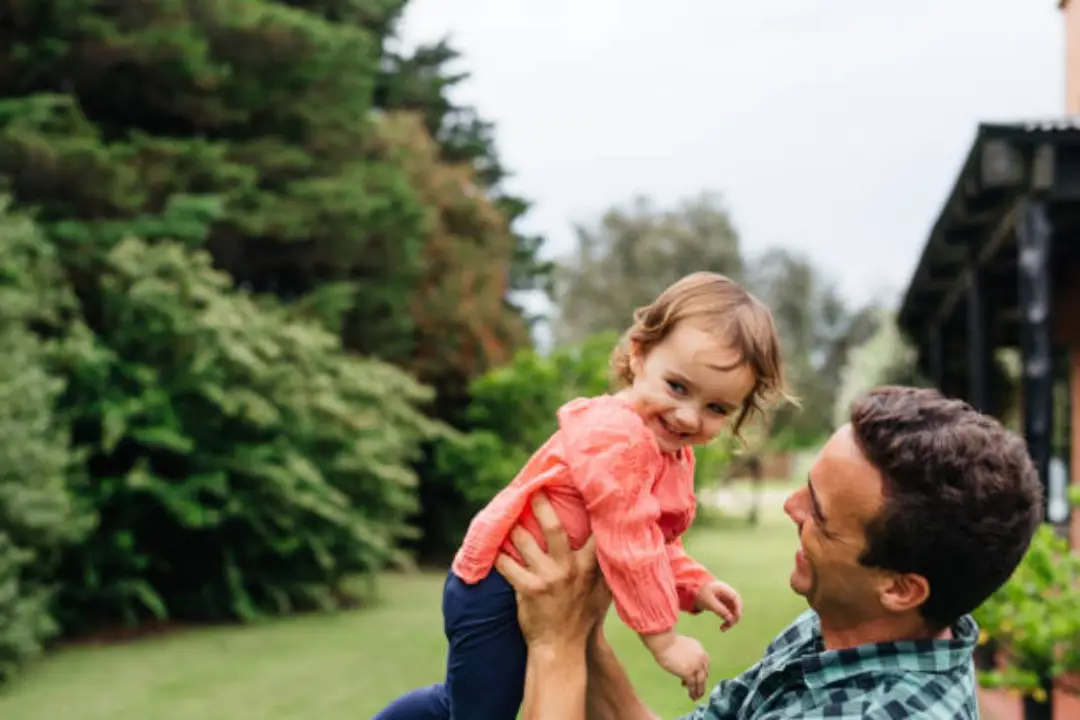
The Storm That Changed Everything
Michael Thompson drove through the Connecticut storm with his hands tight on the steering wheel, his black BMW cutting through rain-slicked roads as lightning split the September sky. After three exhausting weeks in Tokyo negotiating the biggest deal of his career, all he wanted was to collapse into his own bed and hug his eight-year-old twin daughters, Emma and Sophie.
The wipers beat frantically against sheets of rain as he navigated the winding back roads of Greenwich, past manicured lawns and grand estates that still felt surreal to a man who’d grown up in a small Midwestern town. Thompson Richardson Pharmaceuticals, the company he’d built from nothing, had just secured a partnership that would revolutionize treatment for rare childhood diseases. His daughters’ futures were secure. Everything he’d worked for was finally coming together.
He turned into his circular driveway, tires crunching on wet gravel, and immediately felt something wrong settle in his chest.
The house was completely dark. No warm glow from the kitchen windows, no porch lights cutting through the storm. At seven o’clock on a Tuesday evening, his home should have looked lived-in, welcoming. Instead, it loomed like an abandoned building against the angry sky.
Michael parked under the covered portico and grabbed his briefcase, stepping out into air that smelled like ozone and wet earth. Maybe Victoria had taken the girls to dinner. Maybe the power had failed. Connecticut storms could knock out electricity for hours.
Then he heard it.
Beneath the roar of wind and rain, a sound so faint he almost missed it. A high, thin crying that made every instinct in his body scream alarm.
He dropped his bags and ran, his dress shoes slipping on flagstone as rain soaked through his shirt. The crying grew louder as he rounded the corner toward the side yard, toward the massive oak tree that had been Emma’s favorite climbing spot since she could walk.
What he saw stopped him dead.
Two small figures huddled beneath the oak’s sprawling branches, their pink pajamas plastered to their bodies, hair hanging in wet tangles around faces that looked up at him with pure terror. Emma and Sophie. His daughters. Shivering so violently their teeth chattered, their lips tinged faintly blue.
“Daddy!” Emma’s voice cracked as both girls stumbled toward him, crashing into his chest with desperate force.
Michael wrapped his arms around them, feeling how cold they were, how their small bodies shook uncontrollably. “My God,” he whispered, pulling them tighter. “What are you doing out here? Where’s Mommy? Where’s Mrs. Rodriguez?”
“Mommy locked us out,” Sophie said against his chest, her voice barely audible over the storm.
“She said we were bad,” Emma added, clinging to his soaking shirt. “She told us to wait here until you came home.”
“We’ve been waiting so long, Daddy,” Sophie sobbed. “We’re so cold.”
Michael’s mind spun, trying to process what they were saying. Victoria locked them out? In a storm? “How long have you been out here?”
“Three sleeps,” Emma said with eerie calm. “We drank rainwater from the leaves. And we found some berries by the fence.”
Three days. His daughters had been outside for three days.
Rage surged through him so intensely he thought he might collapse, but he forced it down. The girls needed him steady, not falling apart. He shifted Sophie onto one hip and took Emma’s hand. “We’re going inside right now. Hot baths, food, warm beds. Daddy’s here. I’m not going anywhere.”
The front door stood unlocked—another red flag, since Victoria was obsessive about security. Inside, the house felt wrong. Too quiet, too still, like something vital had been drained from it. Picture frames sat askew on the entry table. Victoria’s favorite crystal vase lay shattered near the staircase.
“Mommy broke things,” Sophie said quietly. “She was really mad. She threw stuff and said bad words.”
Michael guided them upstairs, his heart hammering. The twins’ bedroom looked untouched—matching canopy beds, stuffed animals, everything exactly as he’d left it three weeks ago. But at the end of the hall, the master bedroom door hung open, revealing chaos. Drawers pulled out and overturned, closet stripped bare, empty hangers swaying in the air conditioning.
Victoria’s clothes were gone.
He settled the girls on Emma’s bed. “I’m starting your bath, then I need to make a phone call. I’m staying right here in the house, okay? I’m not leaving.”
“Are you going away again?” Sophie asked, fear darkening her eyes.
Michael knelt so he was level with them. “No, sweetheart. Daddy is not going anywhere. I’m staying right here with you.”
In the bathroom, his hands shook as he adjusted the water temperature. While the tub filled, he tried calling Maria Rodriguez, their housekeeper and nanny who’d been with them since the girls were toddlers. The call went straight to voicemail. He tried three more times with the same result.
When he returned to the bedroom, Emma said quietly, “Mommy sent Mrs. Rodriguez away. Same day she locked us out. Mrs. Rodriguez tried to take us with her, but Mommy wouldn’t let her.”
Michael felt something break inside his chest. Maria had tried to protect them. Victoria had prevented it.
After warm baths, clean pajamas, and chicken soup he found in the pantry, the girls finally stopped shivering. He tucked them both into Emma’s bed, deciding they needed each other tonight.
As they finished eating, his phone buzzed with a text from an unknown number. His stomach twisted as he opened it.
A video file. The preview showed Victoria sitting in what looked like a yacht cabin, sunlight streaming through a porthole.
He made sure the girls were occupied with their stuffed animals, then stepped into the hallway and hit play.
Victoria’s face filled the screen, and Michael barely recognized her. The warmth he’d fallen in love with had been replaced by something cold and calculating.
“Hello, Michael,” she said with a bright, empty smile. “If you’re watching this, you found our daughters. I do hope they survived their little camping adventure.”
Michael’s grip tightened on the phone.
“I suppose you’re wondering why I left them outside like unwanted pets,” Victoria continued conversationally. “The truth is, darling, I never wanted children. Every moment of motherhood has been a performance for your benefit. I’m tired of pretending.”
This wasn’t the woman who’d cried at the ultrasound, who’d painted the nursery, who’d held his hand when the twins were born. This was someone else entirely.
“I’m sure you’re also wondering about the money,” she said, her smile sharpening. “I’ve taken the liberty of liquidating several accounts. The girls’ college funds. Your family trust. A substantial portion of our joint holdings. Consider it compensation for eight years of playing house.”
The twins’ educational trusts alone held over two million dollars. The Thompson family trust held several million more.
“How did I access such carefully protected money?” Victoria asked, as if reading his thoughts. “That’s where your dear friend David proved especially useful. Having a business partner with signing authority certainly simplified matters.”
David Richardson. His best friend since college. Co-founder of their company. The girls’ godfather.
“Yes, darling. David and I have been enjoying each other’s company for quite some time. Three years, to be precise. Every business trip, every late night at the office, every conference. We put that time to very good use.”
Michael’s world tilted sideways.
On screen, Victoria held up documents and two familiar blue passports. “By the time you see this, David and I will be beyond the reach of any inconvenient legal complications. International waters have such wonderful advantages.”
She stood, moving toward the porthole. “I left the children outside because I needed them out of the way while I finalized things. I told them it was punishment for imaginary misbehavior. They believed me, of course. Children are wonderfully gullible.”
Michael’s stomach turned.
“I had planned to leave them with Mrs. Rodriguez, but the woman became hysterical and threatened to call the police. So I dismissed her. Told her I’d have her deported if she interfered. She has relatives with delicate immigration status. She was terrified.”
Maria had tried to save them. Victoria had threatened her into silence.
“Listen carefully, Michael,” Victoria said, leaning toward the camera. “David and I have left documents with my attorney that paint a very unflattering picture of your fitness as a father. Emotional abuse. Neglect. Abandonment. If you pursue us, those documents will be filed. You might be surprised how quickly a CEO can be made to look dangerous.”
Her expression shifted to mock sympathy. “The children will be better off without me anyway. I was never cut out for motherhood. Consider this my gift to them—and to you. Don’t bother trying to trace this transmission. David’s clever with technology. Take care of our daughters, darling. They’re completely your responsibility now.”
The screen went black.
Michael stood in the hallway of his silent house, his daughters sleeping just beyond the door, and felt the ground shift beneath him. His wife and best friend had stolen millions, abandoned two eight-year-olds in a storm, and vanished.
They had destroyed his trust, his marriage, the foundation of his company.
But they hadn’t destroyed his love for his children.
That love, he realized, was about to be tested in ways he’d never imagined.
The next morning, Michael woke in a chair beside the girls’ bed, having never truly slept. By six a.m., his practical mind took over. He went to his study and began checking accounts.
The joint checking that usually held fifty thousand dollars showed a balance of three hundred forty-seven dollars. The girls’ college funds were empty. The family trust showed months of withdrawals, each just small enough to avoid alerts but devastating in aggregate.
He printed everything until the desk was covered in damning evidence.
At seven, he heard small footsteps. He found Emma and Sophie awake, still curled together.
“Good morning, beautiful girls,” he said softly. “How did you sleep?”
“Better than the tree,” Sophie said matter-of-factly.
The simple comparison shattered him.
In the kitchen, he made pancakes while they watched from the island, tracking his every movement like they were afraid he might disappear.
“Daddy,” Emma asked as he flipped pancakes, “why did Mommy leave us outside? We couldn’t remember what we did wrong.”
He set down the spatula and moved closer. “Listen very carefully. You didn’t do anything wrong. Nothing. Sometimes adults make terrible choices because of something broken inside them, not because of anything children did. Mommy left because of her own problems, not yours.”
“But she said we were bad,” Sophie whispered.
“She was wrong,” Michael said firmly. “You are good girls. Wonderful and smart and brave. Nothing Mommy said changes that.”
His phone rang—Greenwich Hospital. They had Maria Rodriguez in the emergency room. She’d been found in her car in their parking lot, exhausted and dehydrated, asking about Emma and Sophie.
“We’re going to see Mrs. Rodriguez,” Michael told the girls. “Then we’re coming right home. I promise.”
At the hospital, Maria burst into tears when she saw them. “Mis niñas,” she sobbed, pulling them close. “My girls. Thank God.”
“I tried to stop her, Mr. Michael,” she cried. “I tried to take them with me, but she threatened to have me deported. My sister’s children—their status is complicated. I was so afraid.”
“Maria,” Michael said, his throat tight with gratitude, “you did nothing wrong. You tried to protect them. Now we’re going to protect you.”
Over the next hour, Maria told him everything—mysterious phone calls, documents being photographed, deliveries at odd hours, David’s visits whenever Michael traveled.
After leaving the hospital, Michael went straight to his attorney, James Morrison. The girls came too, coloring in the corner while Michael laid out the nightmare.
“This is more than a marital dispute,” Morrison said, glancing at the twins. “This is coordinated criminal conspiracy.”
“What are my options?”
“We act fast,” Morrison said. “Freeze remaining accounts. File for emergency custody. Document everything—the children’s medical condition, Maria’s testimony, the video. Launch a forensic review of company accounts. If David’s embezzled, we involve federal authorities. And prepare for whatever false allegations Victoria has filed.”
That afternoon came the worst news. Victoria’s attorney had already filed in Connecticut Superior Court, claiming Michael was emotionally abusive, neglectful, that his work schedule left the girls essentially orphaned.
“They’re seeking emergency custody,” Morrison explained. “Claiming Victoria fled for safety and will return when appropriate safeguards exist.”
Michael stared out at the oak tree. “James, we have video proof she abandoned them for three days in a storm. We have hospital records. Maria’s testimony.”
“And we’ll present all of it,” Morrison said. “But family court operates differently than criminal court. False allegations can be devastating. This could take months, even years.”
That evening, as he tucked the girls into bed, they refused to let go of his hands.
“Daddy,” Emma said in a small voice, “are you going to leave us too?”
He knelt between their beds, taking both their hands. “Never. I will never leave you. We’re going to get through this together. I don’t care how long it takes.”
The weeks that followed were a blur of legal meetings, doctor’s appointments, and careful reconstruction of routine. Morrison connected Michael with Dr. Sarah Mitchell, a child psychologist specializing in trauma.
“The girls are showing classic attachment disruption,” Dr. Mitchell explained after initial sessions. “Their mother deliberately made them feel unsafe. That creates profound trust injury. Before they can process what happened, they need security again.”
Sophie had retreated into near-silence, only speaking to Emma and occasionally whispering to Michael. She would only eat food Michael prepared, only after Emma took the first bite.
“Her relationship with food is about control,” Dr. Mitchell said gently. “She survived on berries and rainwater. Now she’s making sure nothing surprises her.”
Emma was more verbal, asking direct questions, drawing pictures of storms and crying faces, wanting to know if this was her fault.
“It’s never the child’s fault,” Dr. Mitchell repeated. “Never.”
Michael stepped back from daily operations at his company, turning his home office into a command center with whiteboards tracking court dates, account recovery, therapy sessions.
He also restructured their household. Maria returned to work once cleared, but this time Michael invited her to move into the main house.
“You’re family,” he told her. “The girls need you here.”
“These are my girls,” Maria said, tears in her eyes. “I will never leave them again.”
Then came a meeting that changed everything. Morrison introduced Michael to Robert Hayes, a retired detective now working as a private investigator.
Hayes spread photographs across the conference table.
Michael felt the blood drain from his face. Victoria appeared over and over—but different. Dark hair in some photos. Different clothes, different styles. Always with different wealthy men.
“Your wife,” Hayes said levelly, “is not who she claimed. Her legal name is Vivian Crawford. She’s been running marriage scams across multiple states for at least fifteen years.”
Maria gasped.
“We’ve identified seven confirmed cases,” Hayes continued. “All wealthy men with demanding careers. Three lost everything. One suffered a breakdown. Another died by suicide six months after she disappeared with his children and savings.”
Michael stared. “What about those children?”
“We’re still piecing it together,” Hayes said grimly. “Multiple birth certificates under various aliases. Some through questionable surrogacy or illegal adoptions. In several cases, she walked away and left them.”
Hayes slid more documents forward. “As for David Richardson, he appears to be her most recent recruit. We believe she targeted him specifically for access to your company’s finances. Phone records show contact for over a year before any obvious romance. This was a targeted operation.”
Michael leaned back, stunned. The woman he’d married had never existed. The wife who’d abandoned his daughters was a professional criminal.
“What do we do?” he asked.
“We take everything to the district attorney,” Morrison said. “Vivian Crawford faces serious charges—fraud, identity theft, conspiracy, child endangerment. David faces embezzlement and conspiracy. The custody case becomes much simpler when the ‘mother’ is a documented criminal using a false identity.”
For the first time in weeks, Michael felt something like hope.
His daughters hadn’t been abandoned by a mother who stopped loving them. They’d been used by a criminal incapable of love at all.
Within weeks, federal authorities moved in. Michael received the call while sitting in Dr. Mitchell’s waiting room, watching Emma and Sophie work on an art project.
“They’ve made arrests,” Morrison said. “Vivian Crawford and David Richardson were picked up on a yacht off the Bahamas. They’re being extradited to face charges in Connecticut and New York.”
“What about custody?”
“It’s effectively over,” Morrison said. “Vivian has no legal standing under a false identity. DNA tests confirmed you’re unquestionably Emma and Sophie’s biological father. Combined with criminal charges and child endangerment evidence, the court dismissed all claims against you.”
That evening, Michael sat with his daughters in the playroom for what Dr. Mitchell called “the truth conversation.”
He sat cross-legged so he’d be at their eye level.
“Girls, I need to tell you something important about the lady who used to live with us.”
They moved closer, sensing the seriousness.
“The lady we called Mommy wasn’t really your mommy. She was someone very sick in her heart who pretended to be part of our family so she could take things that didn’t belong to her.”
“Like a bad guy in a movie?” Emma asked.
“Yes. Something like that. She’s gone now and can’t hurt you again. The police have her.”
Sophie’s voice came as a whisper. “We didn’t make her leave?”
“Oh, sweetheart, no.” He pulled them both close. “She was already sick when she came into our lives. Nothing you did changed that. She made bad choices on her own. But you’re safe now.”
“Are we really safe?” Emma asked. “For always?”
“Completely safe,” Michael said firmly. “Our real family is me and you two and Mrs. Rodriguez and Dr. Mitchell and people who truly love you. Real families don’t abandon each other.”
Sophie looked up with eyes that seemed older than eight. “Mrs. Rodriguez is like a real mommy.”
“Yes, she is,” Michael said, his voice thick. “She loves you very much. She chooses you every day. That’s what real love looks like.”
That night, for the first time since the storm, the girls asked to sleep in their own beds. Michael sat in the hallway, listening to their quiet conversation.
“Sophie,” Emma said, “do you think we’re going to be okay?”
“Yes,” Sophie answered, clearer than she’d spoken in weeks. “Because Daddy loves us for real. And Mrs. Rodriguez loves us for real. Real love doesn’t go away.”
Six months passed. The house no longer felt like a crime scene. It felt like home.
Maria moved into the master suite full-time. Michael took a smaller room closer to the twins. The arrangement reflected a new understanding of what family meant.
“Mr. Michael,” Maria said one morning, “I think it’s time we make this official. I would like to adopt the girls, if you’ll let me.”
Michael paused mid-egg crack, staring at her. “You don’t need papers to be their mother. You already are.”
“I know,” she said. “But I want them to know it’s forever. I want them to understand I chose them. These are my daughters now—in my heart and, if possible, in law.”
The girls had started calling her “Mama Maria” on their own. Dr. Mitchell encouraged the adoption, explaining that children’s capacity to form new secure attachments was one of their greatest strengths.
Emma blossomed into an expressive young artist. Her bedroom walls filled with paintings—some dark, some bright—charting her journey from fear to hope.
Sophie’s recovery took a different shape. Her relationship with food normalized, and cooking transformed from a control mechanism into a passion. She spent hours in the kitchen with Maria, learning recipes.
“Cooking is how she talks,” Dr. Mitchell observed. “She’s communicating love and creativity through food.”
The biggest surprise came when Sophie asked if she could cook for the homeless shelter downtown.
“Why?” Michael asked gently.
“Because we were hungry and scared and nobody helped us,” Sophie said simply. “Now we can help people who are hungry and scared.”
They began volunteering at St. Catherine’s shelter every Saturday. Emma ran art projects with the children. Sophie helped prepare meals.
One day while stirring soup alongside his daughter, Michael realized something profound: success no longer meant stock prices or magazine covers. It meant this—his daughters laughing in a soup kitchen, helping other families feel less alone.
Then came an idea that would change everything again.
“Daddy,” Sophie announced one evening, “I want to write a cookbook for kids who are sad.”
Emma’s eyes lit up. “And I can draw the pictures. Pictures of families cooking together and feeling safe.”
Michael looked at his daughters and felt pride swell in his chest. “That sounds wonderful. We can all work on it together.”
The cookbook became a family mission. Sophie developed recipes with names like Brave Bear Soup and Happy Heart Pancakes. Emma illustrated with warm, colorful drawings of diverse families in kitchens. Maria contributed dishes blending her heritage with their American life.
When the local newspaper heard about it, they ran a front-page story: “From Trauma to Triumph: How Two Sisters Are Cooking Up Healing.”
The response was overwhelming. Families across the country wrote letters. Social workers requested copies. One email from California especially moved Michael.
“Reading about Emma and Sophie gave my kids hope,” a woman wrote. “We started cooking together every night. Thank you for showing us that broken families can become stronger.”
As spring turned to summer, their household found a new rhythm. Michael restructured his schedule to be home every night. Maria finalized the adoption. Emma’s artwork caught attention from a gallery specializing in therapeutic art. Sophie began teaching simple cooking classes for kids at the community center.
The oak tree that had once symbolized fear became the centerpiece of healing. The girls asked Michael to hang a swing from its strongest branch. On warm evenings, they gathered beneath it: Emma with her sketchbook, Sophie with recipe ideas, Maria with cookies, Michael soaking in the sound of their laughter.
One evening as the sun set and fireflies blinked in the yard, Emma asked, “Daddy, do you think other scared kids could visit us? So we can show them how to be happy again?”
Michael looked at her—no longer the trembling child under the tree, but a girl shaped by pain and courage.
“I think that’s a beautiful idea,” he said. “We have a lot of love to share.”
Three years passed. The story of the twins abandoned in the storm had traveled beyond Greenwich. Their cookbook and Emma’s art had been featured on national morning shows.
At eleven, Emma was a recognized young artist whose paintings hung in therapy centers across New England. Sophie had published two children’s cookbooks focused on emotional comfort.
Maria founded Safe Harbor Families, a nonprofit providing emergency housing and support for children experiencing parental abandonment. The old guest house became its headquarters.
Emma and Sophie volunteered regularly—Emma running art groups, Sophie leading cooking classes.
The years continued to unfold with purpose and healing. Emma earned a place in a prestigious summer art program at Yale. Sophie received an invitation to train under a renowned chef in Paris.
“I’m scared to be apart,” Sophie admitted one night. “We’ve never been separated for more than a few days.”
“Being apart for a summer doesn’t erase our strength,” Emma said. “It doesn’t mean we’re not still us.”
During a family dinner, Michael asked the question he’d been holding. “What do you two want? Not what’s expected. What do you want for yourselves?”
Emma took a breath. “I want to study at Columbia. Their art therapy program is perfect. But I’ve been afraid to say it because it means leaving Sophie.”
Sophie nodded. “And I want to go to Johnson & Wales in Rhode Island for culinary school. But I feel guilty wanting something different.”
The conversation that followed was emotional but healing.
“Maybe going to different schools will make us even closer,” Sophie said, wiping tears and laughing. “We’ll have new stories that aren’t just about what happened when we were eight.”
As they planned their futures, news threatened to drag them back into the past. Victoria Crawford was eligible for parole.
Emma’s reaction was immediate anger. “She doesn’t get to just walk out. She left us outside for three days. She doesn’t get a fresh start.”
Sophie’s response was more measured. “I don’t want her in our lives. But I also don’t want to waste energy being angry. She’s not our mother. She never was.”
With Dr. Mitchell’s guidance, they processed old fears. The conversations showed how far they’d come.
Emma and Sophie submitted victim impact statements to the parole board.
Emma wrote: “Victoria Crawford took away my sense of safety. But she didn’t take away my ability to create beauty. She stole the idea of a mother from me, but she couldn’t prevent me from finding real love.”
Sophie wrote: “Victoria Crawford taught me that some adults choose to hurt children. Other adults choose to heal them. I chose healing.”
The parole board denied Victoria’s release.
Five more years passed. At sixteen, Emma and Sophie were no longer just survivors. They were leaders.
Emma’s foundation, Colors of Courage, brought art therapy to over two hundred schools. Sophie’s nonprofit, Nourishing Hearts, ran mobile kitchens serving meals and cooking-therapy workshops to homeless families.
When college came, Emma went to Columbia and Sophie to Johnson & Wales. They discovered that distance didn’t weaken their bond—it deepened it.
Ten years after Victoria’s first parole hearing, Emma and Sophie were twenty-six.
Emma addressed the UN General Assembly about healing through art. Michael sat in the audience, wiping tears, remembering the shivering girl under the oak tree and seeing a confident woman speaking to the world.
In Paris, Sophie launched the global headquarters of Nourishing Hearts, addressing international aid workers about the power of food as fundamental care.
Emma married David Chen, a pediatric psychiatrist. They held their wedding under the oak tree, with Maria walking Emma down the aisle.
Sophie found love with Isabella Rodriguez, a social worker. Their commitment ceremony took place at Safe Harbor’s headquarters.
Michael stepped back from daily work to focus on the Thompson Rodriguez Foundation, funding childhood-trauma research. Maria completed advanced degrees in family therapy and served on a presidential commission on child welfare.
On the twentieth anniversary of that terrible September night, the family gathered under the oak tree for an event called Roots and Wings. Families from across the country who’d been touched by their programs shared stories of survival and healing.
“Twenty years ago,” Michael said to the crowd, “my daughters learned the world could be cruel. But they also began learning that love is stronger than cruelty, that healing is possible, and that broken things can be made more beautiful than they ever were.”
Emma held her six-month-old daughter, Grace Maria. “This little one will grow up knowing that families are built on choice, not just biology. That trauma doesn’t define us. How we respond does.”
Sophie, holding Isabella’s hand, nodded. “She’ll also know that one of the best ways to heal from hurt is to help others heal. Every child we’ve helped has helped us too.”
Among the crowd were seven young adults who’d once been children in Vivian’s earlier schemes. “We call ourselves the Phoenix Family,” said Marcus Williams. “We rose from the ashes of what that woman did. We found each other through Emma and Sophie’s work.”
As the evening wound down, Emma looked up at the oak tree’s massive branches. “I’m grateful for roots that go deep enough to hold through any storm.”
“I’m grateful for wings that carry our love to kids all over the world,” Sophie added.
“I’m grateful for chosen family and second chances,” Maria said.
Michael looked at his family—biological, adopted, chosen, extended. “I’m grateful for the lesson that what feels like an ending can be a beginning. Twenty years ago I thought Vivian had destroyed our family. Instead, she pushed us to build something more beautiful than I knew was possible.”
Sophie turned to the group with one more announcement. “Isabella and I have been approved to adopt three siblings whose parents died in a car accident. Lily, Marcus, and baby James. They’re coming home next month.”
Once again, children who’d endured loss were about to discover what real family felt like.
Later that night, Michael stood at his bedroom window, looking out at the oak tree rising in the yard, majestic and solid.
He remembered the terror of that first night—the rain, the crying, his daughters under the tree. He thought about everything that had grown from that moment: the nonprofits, the laws, the programs, the families healed across the country.
The storm that nearly destroyed them had become the source of a thousand rainbows—arches of hope stretching from Greenwich to distant cities where frightened children were learning that real love exists.
The Thompson Rodriguez family had proven that some stories end more beautifully than they begin, that some wounds heal stronger than unbroken skin, and that sometimes the cruelest betrayals become the foundation for the most extraordinary love.
As Michael turned off the light, the house settled into peaceful quiet. Outside, a soft rain began to fall, but this time it was just weather.
Inside, under the same roof, his family slept—safe, warm, and held by a love no storm could ever wash away.

Lila Hart is a dedicated Digital Archivist and Research Specialist with a keen eye for preserving and curating meaningful content. At TheArchivists, she specializes in organizing and managing digital archives, ensuring that valuable stories and historical moments are accessible for generations to come.
Lila earned her degree in History and Archival Studies from the University of Edinburgh, where she cultivated her passion for documenting the past and preserving cultural heritage. Her expertise lies in combining traditional archival techniques with modern digital tools, allowing her to create comprehensive and engaging collections that resonate with audiences worldwide.
At TheArchivists, Lila is known for her meticulous attention to detail and her ability to uncover hidden gems within extensive archives. Her work is praised for its depth, authenticity, and contribution to the preservation of knowledge in the digital age.
Driven by a commitment to preserving stories that matter, Lila is passionate about exploring the intersection of history and technology. Her goal is to ensure that every piece of content she handles reflects the richness of human experiences and remains a source of inspiration for years to come.