The Envelope
There are days that look like other days from the outside — a wedding, a ballroom, white roses on an arch — and contain, folded inside them, something that will take years to fully unfold. The afternoon of my brother’s wedding was one of those days. By the time the orchestra played its first song, I was carrying a tray of champagne through a room that did not know my name. By the time the evening was over, a man I had never met would hand me something that would make my mother stop smiling for the first time in my memory. What was inside the envelope I did not yet know. But the weight of it, when I finally held it, felt like a thing that had been waiting a long time to arrive.
Part One: The Ballroom
The chandeliers were the first thing you noticed, because they were designed to be. Twelve of them, cascading crystal, each one throwing light in a direction that made everything below it look softer than it was — the angles of faces, the edges of old grievances, the specific tightness around a smile that is being performed rather than felt. The Meridian Grand did this intentionally. It was in the business of making things look clean and forgiving, and it was very good at its business.
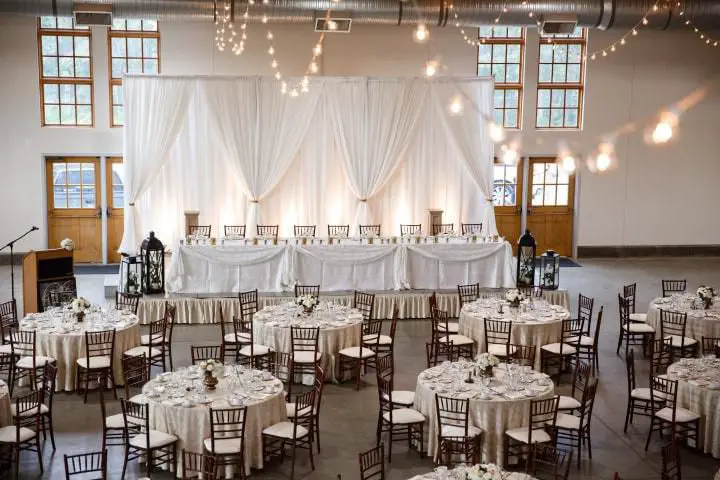
White roses climbed the arch at the front of the room in the abundance of something that cost significantly more than its apparent effortlessness suggested. The tables were dressed in ivory and gold, each centerpiece a careful arrangement that had taken a florist three days to design and four assistants to execute. Men in tailored suits moved through the space with the ease of people who have grown up in rooms like this — not awed by them, not performing comfort in them, simply occupying them the way you occupy your own living room, with the uncomplicated authority of long familiarity.
I floated between them with a tray of champagne flutes.
The apron was white, the tray was silver, the flutes were real crystal and heavier than they looked. I had been handed all of these things at ten in the morning by a catering supervisor named Deb who had given me a fifteen-minute briefing on service posture, refill timing, and the importance of maintaining eye contact with guests while simultaneously not making them feel watched. It was a skill that required practice. I had, it turned out, been practicing it my entire life, just not with a tray.
Visibility is dangerous. That was the lesson I had absorbed somewhere around age eleven, in the way children absorb the rules of a household without anyone stating them explicitly. You learn by watching what happens when you break them. You learn by noticing what earns silence and what earns reaction, and you calibrate accordingly, year by year, until the calibration becomes so natural you stop feeling it as effort.
I moved through the ballroom with the practiced invisibility of a person who has learned to take up exactly the amount of space that is useful and not one inch more.
My mother glided past at eleven forty-five in a satin gown the color of champagne, a choice that managed simultaneously to suggest she was celebrating and competing. She did not turn her head when she spoke to me. This was a technique of hers — the aside delivered without the vulnerability of eye contact, so that if anyone observed it, it read as casual commentary rather than directive.
“Stay invisible,” she said. “Today is not about you.”
I kept my eyes forward. “I know.”
“I mean it, Briana.”
“I know, Mom.”
She moved on, into the current of the room, laughing at something a woman in emerald said, touching a man’s arm with the fluid warmth of a woman who is very good at being in rooms like this. My mother had always been good at rooms. She knew how to read them, how to position herself within them, how to make herself central to whatever narrative was running. She had been doing it my entire life, and she was doing it now, on the afternoon of her son’s wedding, in a ballroom full of people who had no idea that the woman circulating champagne near the east entrance was her daughter.
Marcus appeared at twelve-fifteen.
My brother arrived into his own wedding the way he arrived into most things — surrounded, already. There were four men around him before he’d crossed the threshold, guys from his firm and his social network who said his name with the particular warmth of people for whom your name is currency, whose proximity to you makes them feel good about themselves. Marcus wore his confidence the way the room wore its chandeliers: as a given, as something that required no justification.
He saw me. Or he looked in my direction, which is not quite the same thing. His gaze moved across me with the friction-free ease of attention that has never had to work hard — the glance you give a lamp you don’t remember buying, present in the room but beneath the threshold of actual consideration.
“Briana,” he called. Not unkind. Not caring. The tone you use for staff whose name you happen to know. “Make sure there’s extra shrimp at my table.”
“Of course,” I said.
He was already looking somewhere else.
The tightness in my chest started as irritation — small, familiar, the manageable variety I had been carrying since childhood, the kind you learn to breathe around. I told myself what I always told myself: one more hour, one more room, one more performance. It had gotten me through a remarkable number of hours and rooms and performances.
The orchestra was warming up at the far end of the ballroom. Somewhere in the building, Victoria was being made ready — her dress, her hair, the final arrangement of a woman becoming the beginning of something. I had met her three times. She was kind in a brisk, efficient way, the warmth of a person who didn’t have time to be otherwise, and she had never quite looked at me long enough to ask the questions that might have produced uncomfortable answers.
That was all right. Most people hadn’t.
Part Two: Staff
The photographer called for family portraits at one o’clock.
I have thought about this moment many times since, about what it cost, and what it confirmed, and what it set in motion. The photographer was a young man with two cameras around his neck and the focused, competent energy of someone who loves his work and is getting paid well enough to do it without compromise. He had been moving through the space for two hours, gathering the candid shots that would later be assembled into a story of a day that looked joyful from every angle.
He called out for the family grouping, and everyone who belonged in that grouping moved toward the arch with the practiced ease of people who have done this before — weddings, anniversaries, the regular occasions of a family that photographs itself. My mother took her position with the unconscious authority of a woman who knows where the center is and stands in it without appearing to try. Marcus and Victoria anchored the frame. Grandparents were arranged. Cousins filled the outer edges.
I stayed where I belonged. One step behind the line.
The photographer’s eye moved across the grouping — the professional scan of a man assembling an image, checking sightlines and shoulder angles and the direction of afternoon light through the ballroom windows. His gaze traveled, paused, returned to me.
“And her?” he asked.
It was a genuine question. He was not being provocative or subversive. He was looking at the configuration of the group, looking at my face, performing the simple and uncomplicated act of wondering whether I was supposed to be in the picture.
My mother did not hesitate.
“She’s staff,” she said.
Not sister. Not family. Not she’s working today. Not even the softened version — she’s helping out. Just: staff. The word that places a person in a category that requires no further explanation, that makes their presence make sense in a way that their relationship would complicate.
I felt it move through my body the way cold moves — not sharp, not sudden, but pervasive, finding the places where warmth had been and replacing it.
For a moment my face was hot. Then it was cold. My body genuinely could not decide.
I made the decision it never got to make on its own.
I stepped back. I lifted my chin. I smoothed my voice until it had no edges.
“I’m working,” I said. “I won’t be in the picture.”
My mother’s hand found my elbow — fingers pressing through the fabric with the specific pressure of a message being sent below the level of observation. From the outside it looked like an affectionate touch. From the inside it felt like a bracket.
“Good,” she murmured. “Don’t make this weird.”
The photographer nodded, professionally rearranged his frame, and forgot about me in the way that people forget about things that have been explained.
I turned back toward the east entrance, toward the champagne station, toward the part of the room that needed me to have no feelings.
That was when I felt it.
The particular quality of being watched — not the ambient observation of a room full of people, but the specific, weighted attention of a single pair of eyes that have found something in you and cannot look away from it. I have heard people describe this as instinct, as the sixth sense of being surveilled. I had always understood it as the trained awareness of a person who has spent a lifetime navigating rooms by reading them carefully.
I turned slightly, without making it obvious that I was turning.
Victoria’s father stood near the edge of the ballroom, approximately twenty feet from where I had just stepped back out of a family photograph. He was holding a drink he had not touched. He was not scanning the room the way men in positions of authority often scan rooms — the acquisitive, cataloguing sweep of someone assessing their environment for useful information. He was still. Completely, unusually still.
He was looking at my face.
Part Three: The Watching
His name was Gerald Ashworth. I knew this because I had done the ordinary preparation anyone does before a significant occasion — a search, a skimming of LinkedIn, the basic social archaeology of understanding who would be in a room before you entered it. I knew he had built his company from a regional supplier into a national operation over thirty years. I knew he had a reputation for being direct in a way that some people called blunt and other people called honest. I knew he was Victoria’s only surviving parent, that her mother had died when Victoria was sixteen, and that father and daughter were close in the quiet, functional way of two people who have been each other’s primary relationship for a significant period of time.
I did not know why he was looking at my face with the expression of a man reading a document he cannot believe exists.
He walked toward me, and the air around him changed in the way that the air changes around people who carry a certain kind of gravity — not the performed gravity of status, but something more organic, something that comes from having lived through things that required you to become substantial.
He stopped two feet from me.
“What’s your name?” he said.
Not excuse me. Not sorry to bother you. Just the question, direct and genuine, the question of a man who needs specific information and is not interested in the social ceremony around asking for it.
“Briana,” I said.
I felt the vulnerability of it even as I said it — the way a name can feel like exposure when you have spent years learning that visibility is complicated. My name in this room, among these people, in this apron, felt like handing over something I could not take back.
He said it quietly, more to himself than to me. Briana. Testing it, the way you test the weight of something before committing to picking it up. His eyes were focused on my face with an intensity that was not aggressive and not unkind but was absolutely, entirely concentrated. He was looking for something. Or he had found something and was trying to confirm it.
My mother appeared from the left with the social velocity of a woman who has developed a radar for situations that require her management.
“She’s shy,” she said brightly. “Always has been. She much prefers to be useful. You know how some people are.”
He did not look at her.
He looked at me.
The deliberateness of not looking at her — the choice it represented, the social weight of that choice in a room where she was used to being the one who controlled the direction of attention — registered in my mother’s face as something she quickly suppressed and replaced with a wider version of her smile.
He stepped closer. Not threateningly — closer in the way of a person who needs to be heard by a specific individual and is adjusting the distance accordingly. When he spoke, his voice was quiet enough that it was meant only for me, but it carried the particular quality of certainty that makes quiet things audible.
“Bring her in,” he said.
He said it to the photographer.
The photographer looked at him. The photographer looked at my mother. The photographer looked at the authority differential in the room and made the correct professional calculation. He raised his camera.
My mother’s smile became architectural — the kind that is holding something up by sheer structural will.
“I don’t think—” she started.
“Thank you,” Gerald said, not to her.
The flash popped. Once. Twice.
I stood where the photographer had placed me, at the edge of the group, in my apron with my tray lowered, and the flash recorded all of it — the apron, the tray, my face, the position I occupied at the margin of a family I had been removed from at the edges for thirty years.
Gerald took the camera from the photographer’s hands with a gentle authority that brooked no objection and turned it so the screen was facing him. He zoomed in.
I watched his face from six feet away.
The color left it the way the sun leaves the sky in a fast-moving storm — not gradually, not in stages, but with the abruptness of something that was present and then was not. His jaw tightened. His hand holding the camera tightened. He looked at the image on the screen for seven seconds that had the quality of much longer.
Then he looked at me.
Whatever had just happened in his face had not resolved into anything simple. It was a compound expression — fear, urgency, recognition, and something underneath all of those that I could not name yet, something that looked like the face of a man who has just discovered that a thing he believed was impossible has, in fact, occurred.
My mother’s voice arrived at my ear from behind me, low enough to be private and cold enough to be unmistakable.
“You say nothing.”
I did not turn my head.
“I’ve been quiet my whole life,” I said. “That part won’t be hard.”
The silence that followed had a texture. It sat between us like a third presence — everything she had taught me to swallow, returned now to the air between us in a single sentence that she could not argue with because it was precisely, verifiably true.
Then the hotel manager appeared.
Part Four: The Corridor
His name was Mr. Chen, according to the small gold pin on his lapel. He was a man in his mid-forties with the immaculate posture and carefully modulated affect of someone who has spent a career managing situations that the room should not be permitted to see in full. He materialized at Gerald Ashworth’s left shoulder with the quiet inevitability of a person who had been watching from an appropriate distance and had received a signal.
He leaned in. His voice was below the level of the surrounding noise.
“Sir,” he said, “please — one final section before you proceed.”
Gerald looked at me.
The roughness that had entered his voice when he spoke my name again — Briana, please don’t leave — was the roughness of a man who is managing something he does not fully understand and is afraid of mismanaging it. He guided me with the gesture of a hand near my elbow, not touching, just directing, toward the service corridor behind the east wall of the ballroom, through a door that was designed to be invisible from the main floor.
Behind us, the ballroom continued. I heard my mother say something to Marcus — a low, swift sentence — and Marcus’s voice rising briefly before she cut it off. Then the door closed and the ballroom was a muffled hum and we were in the corridor.
The service corridor of the Meridian Grand was a different world from the room we had come from — functional, harshly lit, the honest infrastructure of a building that presents something else entirely to its guests. Carts of folded linens. A rack of extra chairs. The smell of industrial detergent and hot trays. Mr. Chen walked us quickly to the end and opened a door on the left.
The office was small and deliberately neutral. A round table. Four chairs. A sideboard with a water pitcher and glasses. The kind of room that is designed for conversations that require privacy without suggesting comfort, the room where signatures happen, where difficult logistics are arranged, where the business of an occasion is conducted away from its performance.
Gerald Ashworth sat down across from me.
Mr. Chen closed the door and stood near it, present and quiet.
Gerald put both hands flat on the table — not aggressively, but as a grounding gesture, the behavior of a man trying to compose himself around something that has destabilized him. He looked at me for a long moment without speaking.
“How old are you?” he said.
“Twenty-nine,” I said.
Something in his face moved.
“And your mother,” he said. “Her name is — she’s the guest at this wedding, on the groom’s side?”
“Yes,” I said.
“Her name,” he said. “Was she ever called — did she ever go by Linda?”
I held very still.
My mother’s legal name was Melinda. She had gone by Linda for most of her twenties, before she married my father, before Marcus was born, before she became the woman in the satin gown who glided through ballrooms. She had not been called Linda in my memory, but I had seen it in old photographs, in the handwriting on the back of pictures that lived in a box in her closet that I had never been supposed to find.
“Yes,” I said carefully. “When she was younger.”
Gerald Ashworth closed his eyes.
He sat like that for a moment — long enough that the quality of the room changed, long enough that Mr. Chen shifted his weight almost imperceptibly near the door. When he opened them, his face had arrived at a decision.
He reached into the interior pocket of his jacket.
He placed a manila envelope on the table.
He pushed it across to me.
Part Five: The Envelope
It was heavier than it looked. That was the first thing — the weight of it, the sense that it contained something with physical density, multiple layers of documented reality compressed into a rectangle of paper.
I looked at him.
“Open it,” he said quietly.
I opened it.
The first page was a document from a private investigator, dated fourteen months earlier. The letterhead was from a firm in Phoenix. The subject line contained my name.
Re: Investigation into the whereabouts of Briana Anne Calloway, subject, born September 14th, 1995, Tucson, AZ. Commissioned by: Gerald R. Ashworth.
I read the line twice.
I looked up at him.
“You were looking for me,” I said.
“For almost two years,” he said.
I looked back at the document. The pages beneath it were a chronology — dates, locations, records. A birth certificate. A photograph of my mother at what appeared to be a hospital, younger, in the specific exhaustion of a woman who has just given birth. A photograph of a man I did not recognize, younger, standing outside what appeared to be a college building.
The man had my eyes.
I understood this before I understood anything else — before the logic of it, before the facts, before whatever explanation Gerald Ashworth was about to give me. I recognized my own eyes in the face of a young man in a photograph in a manila envelope handed to me in a service corridor at my brother’s wedding, and the recognition arrived in my body as a physical thing, a dropping sensation, as if the floor had shifted two inches.
“Who is this?” I said. My voice was steady. I was surprised by that.
“My son,” Gerald said. “James. He died six years ago. A car accident, in November.”
I set the photograph down carefully.
“He and your mother,” Gerald said, “were together for about two years. When she was twenty-three, twenty-four. He was at the university, she was — they met through mutual friends, I was told later. He didn’t tell me about her. He was not — James was not always communicative with me.” A pause. “When she became pregnant, they separated. I don’t know the full circumstances. I only found out about any of it after James died and I was going through his things.”
He paused again. The pause of a man who has lived with a piece of information for six years and is now giving it to someone who has never had access to it.
“He had letters,” he said. “And a photograph. And a note — a letter, unfinished, that he had written to you. Or to — to whoever you would become. He never sent it. But he had written it.”
My hands were very still on the table.
“He knew about me,” I said.
“He knew about you,” Gerald confirmed. “He knew your mother had continued the pregnancy and that she had named you and that you were — that you existed. I don’t know why he never made contact. The letter suggests he was afraid he’d be turned away. He wrote—” Gerald’s voice changed texture. “He wrote that he didn’t know if you were better off without him in it. That he thought about you on your birthdays. That he used to drive past the neighborhood where he thought you lived.” A pause. “He was twenty-six years old when he wrote that. He wasn’t—” Gerald stopped. “He wasn’t always capable of his better instincts. But he had them.”
The room was very quiet.
“When he died,” I said, “you went through his things.”
“I found the photograph and the letters. And I hired someone to find you. It took two years.” His voice was steady with the effort of a man who has been steady about this for a long time and is now very close to the end of that effort. “My son didn’t know you. But I wanted to. If you were willing.”
I looked at the photograph again. The young man with my eyes standing outside a building, caught mid-laugh, the unselfconscious laugh of a person who doesn’t know they’re being photographed. He looked the way I looked in my early twenties in photographs that I have never quite recognized myself in — something around the jaw, something in the way the light caught the side of the face.
“He doesn’t know I’m here,” I said. Then I corrected it. “He didn’t know.”
“No,” Gerald said. “I didn’t expect—” He paused. “I had been told you might be at this wedding. A mutual acquaintance had mentioned the connection. I came today partly because of Victoria, and partly because I thought there was a chance I might find you.”
“And then my mother told the photographer I was staff,” I said.
He looked at me for a moment.
“Yes,” he said.
Part Six: What the Envelope Contained
I went through the rest of the documents one page at a time.
The birth certificate was mine — my actual birth certificate, with the field for father’s name left blank, which I had seen before, which had never been explained to me as anything other than a circumstance. My mother had told me, in the two conversations we had ever had on the subject, that my father was someone who had not wanted to be involved, and that this was the complete and sufficient account of the situation, and that further questions were both unnecessary and unkind, to her and to myself.
She had not said: his name was James Ashworth and he thought about you on your birthdays and he drove past your neighborhood and he wrote you an unfinished letter.
The letter was at the bottom of the envelope, on college-ruled paper, handwritten in a slant that leaned slightly to the right, the handwriting of a person who pressed harder than necessary, who left visible impressions on the page.
Briana—
I don’t know if you’ll ever read this. I don’t know if you know my name, or if she told you anything about me, or if you’ve spent any part of your life wondering. I spend a lot of time wondering if you wonder.
I am not writing to explain myself. I don’t think I can explain myself in a way that would be good enough, and I think you probably deserve better than my best explanation.
I want you to know that the decision — not coming forward, not being there — was fear, entirely. Not about you. About not being what you needed. About showing up as someone you’d have to make space for when you had enough to carry already. I convinced myself that absence was the kinder option. I’m not sure I was right.
If you’re reading this, something has happened that meant someone decided you should have it. That means I’m probably not here to tell you in person, which is the version I always hoped for and never managed to make happen.
You have my eyes. I have a photograph of you that someone sent me when you were three, and you have my eyes completely, and I have looked at it more times than I can count.
I’m sorry I was twenty-six and afraid instead of something better. I’m sorry I made the easier choice for too long.
Your father,
James
The letter was not finished. Below the signature there was a blank space, as if he had intended to add something and had not yet found what it was.
I folded it carefully along its original creases.
Gerald Ashworth was watching me with the careful attention of a man who knows that what is happening in front of him is something he must witness, not manage. He had offered no commentary while I read. He had not filled the silence. I was grateful for that.
“He was afraid,” I said.
“Yes,” Gerald said.
“So was I,” I said. “My whole life. Of taking up too much space. Of being the wrong kind of visible.” I paused. “I used to think that was just how I was made. It might be genetic.”
Something crossed Gerald’s face that was too complicated to name — grief and recognition and, underneath both of them, something that looked like the tentative, fragile beginning of relief.
“There is also money,” he said.
He said it quietly, practically, as a fact rather than an offer. “James had — he had a trust. It was structured to allow for the possibility of dependents he had not yet identified. When I found you, my attorney updated it. It’s been waiting.” He cleared his throat. “I am not telling you this to — it’s not leverage and it’s not a condition. Whether you want anything to do with me or not, the trust exists and it’s yours. My attorney can provide the documentation separately.”
I looked at the table.
“I didn’t know any of this,” I said.
“I know you didn’t,” he said.
“She knew all of it,” I said.
“Yes,” he said. “I believe she did.”
The ballroom was still running somewhere beyond the walls — I could feel the bass of the orchestra through the floor, the muffled evidence of a wedding proceeding without me, without any of this, on its own schedule. Marcus and Victoria were probably in their first dance. My mother was probably somewhere near the champagne bar, smiling the smile that reached exactly as far as required.
She had told me for twenty-nine years that my father had not wanted to be involved. She had told me this in the tone of a woman delivering an unfortunate but final fact, the tone that discourages follow-up questions. She had arranged the narrative of my origin the way she arranged everything — efficiently, in service of a story that required no inconvenient complications.
She had not said: he drove past your neighborhood.
She had not said: he has your eyes.
Part Seven: The Corridor, Reversed
I sat in that office for forty-five minutes.
By the end of it, I knew Gerald Ashworth’s voice well enough to hear in it the shape of a man who had spent six years carrying something he couldn’t set down. He told me about James with the careful, loving exactness of a father who has been reconstructing a person from memory — his stubbornness, his specific humor, the way he approached problems sideways rather than directly, the characteristic he shared with me, I realized, as Gerald described it, which was that he had always preferred to understand a room fully before he made himself visible in it.
Gerald wanted nothing from me except the possibility of contact. He said this plainly and I believed him, because the manner of a man who wants something is different from the manner of a man who is offering it, and he was offering without any of the pressure of want.
“I have grandchildren through Victoria now,” he said. “I have a life that is full in the ways that matter. But I have also spent six years knowing you existed and not being able to find you, and now I have found you, and I would very much like to know you if you are willing.”
“I don’t know yet,” I said. “I need time with all of this.”
“Take it,” he said. “There’s no deadline.”
“There are things I need to do first,” I said.
He looked at me with the attention of a man who understands that things I need to do means something specific and does not require elaboration.
“Of course,” he said.
I put the documents back in the envelope. I stood up.
“Thank you,” I said. “For looking for me. For two years.”
“You were worth looking for,” he said. Simply, without performance. The way facts are stated.
I picked up the envelope and walked out of the office and back down the service corridor.
Part Eight: My Mother
She was waiting.
Of course she was. She was standing at the end of the service corridor in her satin gown, and she looked exactly like herself — composed, deliberate, the face of a woman who has identified a situation and has arrived to manage it. She had sent Marcus back to the ballroom; I could feel his absence the way you feel the removal of something that was being used as a buffer.
She looked at the envelope in my hand.
Her face did the thing it very rarely did — it became still in the way of a face that has run out of performance and is briefly just a face.
“Briana—” she started.
“Don’t,” I said.
She stopped.
“I’m not going to make a scene,” I said. “I’m not going to come into the ballroom and announce anything or interrupt Marcus’s wedding or do any of the things you’re afraid I’m going to do. That’s not what this is.”
She was quiet.
“But I need you to hear me,” I said. “Clearly. Today.”
She looked at the envelope again. Her hands, I noticed, were very still at her sides.
“He wrote me a letter,” I said. “It wasn’t finished, but it was real. He thought about me. He drove past the neighborhood. He had a photograph of me at three years old.” I paused. “You knew all of this. You’ve always known.”
She said nothing. Her silence was not the silence of a woman who is about to deny things. It was the silence of a woman who knows denial is no longer available.
“Why?” I said.
Her jaw moved.
“Because he wasn’t—” She stopped. Started again. “He wasn’t stable. He wasn’t reliable. He wasn’t someone I wanted in your life while you were growing up, making promises he couldn’t keep, appearing and disappearing—”
“That was your decision to make?” I said.
“You were my child,” she said. “Yes. It was.”
“And after he died?” I said.
The silence this time was different. It was the silence of a woman who does not have an answer that will survive scrutiny, who knows it, and who is standing with that knowledge instead of attempting to outrun it.
“After he died,” I said, “there was no instability to protect me from. There was a man who had written me a letter. There was a father who had a photograph of me on his wall. There was a grandfather” — and my voice shifted slightly on the word, because I was only now having this word for the first time, grandfather, and it had weight — “who spent two years looking for me. And you said nothing.”
She looked at her hands.
“I was afraid,” she said. It came out smaller than her voice usually was. “That you would go to them and not—” She stopped.
“Not come back?” I said.
She didn’t answer. Which was its own answer.
I looked at my mother in her satin gown, in the harsh light of the service corridor, without the chandeliers to make everything look clean and forgiving. I looked at her the way I had looked at the letter — with a desire to understand before I responded, to find the true thing underneath the performed thing.
She was afraid. That was true. She had made decisions from fear that had cost me something I could not fully calculate yet. Those two things were both true, simultaneously, without one canceling the other.
“I’m not disappearing,” I said. “But things are going to be different.”
She nodded once. Small.
“I have a grandfather,” I said. “I have — I have a family I didn’t know existed. And I am going to know them.”
She pressed her lips together.
“Okay,” she said.
It was the same word I had always said, in the same register — quiet, even, absorbing something difficult without fighting it. It sounded different coming from her than it had ever sounded from me.
Part Nine: After
I walked back into the ballroom through the main entrance.
I had removed the apron. I had clipped the work badge to the pocket of my jacket — not hidden, not highlighted, just present, the way I was. I carried the envelope at my side.
No one stopped me. No one asked me to leave. The catering supervisor Deb clocked me near the champagne station and started to say something about the tray, and I looked at her with an expression that communicated, I think, that the tray was a separate conversation for a separate time, and she stopped.
I found a seat at a table near the back. I sat down.
Marcus and Victoria were dancing. He was laughing at something she said, genuinely, the full laugh that I had not seen from him in the formal orchestrations of this afternoon. She was looking at him with the expression of a woman who knows exactly who she has married and is at peace with the complexity of it.
I watched them and felt, for the first time that afternoon, something that was not tightened or managed.
He was my brother. That was true, had always been true, would continue to be true regardless of anything that had happened today. The fullness of that relationship — what it had cost me, what it had given me, what it had failed to give — was not resolved in an afternoon. It was the work of more time and more honest conversations than this day contained.
But he was my brother. And he was dancing. And the orchestra was playing something that had nothing to do with me, and that was fine.
Gerald Ashworth found me at my table at eight o’clock, while the dinner was winding into dessert.
He sat down across from me without asking, which was the right instinct.
“How are you?” he said.
“I don’t know yet,” I said. “I think I’ll be okay.”
“Yes,” he said. “I think so too.”
We sat together for a while in the back of the ballroom, in the dim warm light of a wedding evening, not talking very much, watching Victoria and Marcus say goodbye to their guests. His presence was comfortable in a way I didn’t have a vocabulary for yet — the particular ease of someone who has found a person they were looking for and is simply glad they found them.
“He would have wanted to know you,” Gerald said at one point.
“I know,” I said.
“He would have been terrible at it, probably,” he added. “At least at first. He was always better with things he could approach sideways.”
I laughed. Small, genuine, the kind that surprises you.
“I understand that,” I said.
Part Ten: The Drive Home
I left the Meridian Grand at ten-fifteen, with the envelope on the passenger seat and the city streets quiet outside the windows.
The drive home was nothing like the drive to the wedding — not the same roads, though they were. Not the same city, though nothing had moved. The architecture of the evening had rearranged something fundamental, and driving through familiar streets after a fundamental rearrangement is a particular and private experience.
I thought about the letter on the college-ruled paper. You have my eyes. I thought about a man who had been twenty-six and afraid and who had made the easier choice for too long and who had written a sentence that admitted it. I thought about what it meant to receive an apology from someone who could not deliver it themselves, who had left it for their father to carry across a distance of six years and one ballroom.
I thought about Gerald Ashworth, who had spent two years looking for me with the quiet, methodical persistence of someone who believes a person is worth finding.
I thought about my mother in the service corridor without her chandeliers.
I thought about my brother in the full laugh he saved for people he wasn’t performing for.
I had spent twenty-nine years being invisible in ways that I had come to understand as natural — as the way I was made, as the appropriate amount of space for someone like me to occupy in the rooms I moved through. I had carried trays and stepped out of photographs and smoothed my voice until it had no edges.
I was not made for invisibility. I had been taught it. Those were different things, and understanding the difference felt, on the drive home, like a door opening in a room I had believed had no doors.
The envelope was on the passenger seat. I would read the letter again tomorrow. I would call Gerald’s number — he had written it at the bottom of his business card, twice, with the emphasis of a man who wanted to make sure the number was not lost. I would figure out, in the slow and patient way that real things are figured out, what it meant to have a grandfather who had looked for me, a father who had written me a letter, a family I had not known existed.
I would also, in the slow and patient way of real things, figure out what my family of origin was going to look like on the other side of this evening. That reckoning had no timetable. It would take what it took.
The city passed outside the windows, familiar and rearranged.
I drove through it.
I was visible. Entirely, completely, without the managed calibration of a person who has learned that visibility is dangerous. I was visible in my own car, in my own skin, on my own route home, with the windows down and the November air honest and cold against my face.
It was enough. More than enough.
It was, in fact, everything.
THE END

Adrian Hawthorne is a celebrated author and dedicated archivist who finds inspiration in the hidden stories of the past. Educated at Oxford, he now works at the National Archives, where preserving history fuels his evocative writing. Balancing archival precision with creative storytelling, Adrian founded the Hawthorne Institute of Literary Arts to mentor emerging writers and honor the timeless art of narrative.