The Deed
By the time I took the final turn off the highway, the radio had dissolved into static and the air carried that faint ocean scent I had been craving for weeks — salt and pine and the particular dampness of a coast that doesn’t apologize for its weather. I had been counting down to this weekend the way I once counted down to the end of exhausting hospital shifts during my years as a surgical nurse: one more chart, one more medication round, one more hour under fluorescent lights that turned every complexion the same shade of institutional gray. Then quiet. Then waves. Then the specific restoration that only happens when you are alone in a place you own completely.
The street was peaceful in the deliberate way of beach communities that have written noise ordinances and enforce them. Matching mailboxes painted the same coastal blue. Porches with soft Edison bulbs on timers. A sprinkler system ticking steadily somewhere two houses over, the rhythm regular as a metronome. I pulled into my driveway already assembling the evening in my mind: a simple dinner of whatever was in the freezer, a book I had been carrying in my bag for three weeks without opening, and silence thick enough to feel like architecture.
The front door was wide open.
Not slightly ajar in the way of someone who had stepped out to the car and would be back in a moment. Not carelessly unlocked. Open the way a door is open when someone has claimed the space and sees no reason to secure it against entry because entry has already been granted, to themselves, by themselves.
Stacks of building supplies sat on the front deck beside the ceramic flowerpots I had planted with lavender four years ago. Drywall sheets leaned against the railing. A contractor’s van was parked at the curb with the name of a local renovation company stenciled on the side. The sound of power tools — a drill, rhythmic and intrusive — echoed from somewhere inside the house.
On the back deck, visible through the living room windows, Chloe stood with her phone raised, taking photographs of the ocean view, directing workers with the gestural authority of someone who had appointed themselves project manager. She didn’t turn when I pulled in. She didn’t look surprised. She simply pointed toward something off-camera and said, loudly enough that I could hear her through the open door, “The tile needs to be finished before Monday.”
Monday.
As if my arrival didn’t matter. As if the timeline had been set and my presence was incidental to it.
A familiar sensation moved through me — not anger yet, but the quiet recognition that something had shifted without my consent, that a boundary had been crossed so thoroughly that the crossing had become normal to the person doing it.
When Chloe finally noticed me standing in the driveway with my overnight bag, her expression rearranged itself into brightness, the smile people deploy when they believe warmth will smooth over what ought to be explained.
“Olga,” she said, walking toward me with her phone still in hand. “Perfect timing. Matthew’s inside overseeing the kitchen. You’re going to love the upgrades we’re doing.”
We.
I walked past her without responding and stepped into my house.
Part One: The Kitchen
The kitchen was not a kitchen anymore.
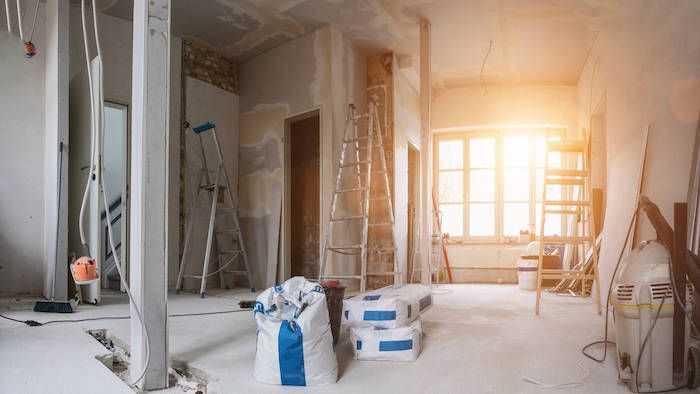
It was a demolition site that happened to be located where a kitchen used to be. The cabinets I had chosen seven years ago — white shaker-style with brushed nickel hardware, selected after two weekends of research and three visits to showrooms — had been removed. Not updated. Removed. Gone. The walls were exposed to studs. The countertops had been ripped out, leaving raw plywood and a smell of sawdust and adhesive. The refrigerator sat unplugged in the center of the living room, blocking the pathway to the deck, its door slightly ajar, the interior light off.
Dust coated every surface. The picture frames on the mantel. The spines of the books on the shelf. The throw pillows on the couch. The air tasted like drywall compound and paint primer.
“What is this?” I said. My voice was steady in the way voices are steady when steadiness is a choice you’re making deliberately, when the alternative is something you don’t want to release yet.
Matthew appeared from the hallway that led to the bedrooms, brushing white dust from his jeans with the casual motion of someone who had been working, or overseeing work, and who expected to be congratulated for it.
“Mom,” he said. Not apologetically. Not with explanation. Just: Mom, the way you address someone you’re about to update on a decision you’ve already made. “We’re remodeling. It was time for an update. The place needed it.”
“We?” I asked.
He gestured toward the second floor as if giving a tour of a property he was trying to sell. “Come see the master. We’re almost done with the framing.”
I walked up the stairs.
Part Two: The Master Bedroom
The master bedroom door was open, and I stopped at the threshold, not because I was being careful but because my body briefly refused to carry me further.
My bed was gone. The iron-frame bed I had bought from an estate sale in Portland, the one with the scrollwork headboard that I had spent an afternoon cleaning and re-painting, the bed I had slept in on every visit to this house for nine years — gone. My grandmother’s carved armoire, the one piece of furniture I had inherited when she died, the one I had driven eight hours to retrieve and had positioned carefully against the north wall where the morning light wouldn’t fade the wood — moved. Shoved into the corner, covered with a painter’s tarp, treated like an obstacle.
The walls were half-painted a pale green I would never have chosen, a color that belonged in a dentist’s waiting room or a kindergarten classroom, institutional and bland. Electrical wires hung from the ceiling where a light fixture used to be. The hardwood floor was covered in plastic sheeting and footprints.
“Where are my things?” I asked.
Matthew was standing behind me in the hallway, hands in his pockets, relaxed. “In the small guest room,” he said. “Just for now. We needed the space for the new layout.”
“For now,” I repeated.
“Yeah,” he said. “While we finish. It’s temporary.”
“What’s temporary?” I asked.
That was when he said it plainly, without preamble, the way you announce a decision you’ve made and don’t expect to be contested.
“Chloe and I are moving in. Permanently. Her parents too. They need more space, and this house is big enough for everyone.”
Permanently.
The word sat in the air between us with the weight of a document, of a claim, of something that had been decided in rooms I wasn’t in during conversations I wasn’t part of.
“This house belongs to me,” I said. My voice was still steady. I was proud of that.
He nodded, almost impatiently, the nod of someone who has anticipated the objection and has prepared a response. “You have your apartment in the city. You don’t need two properties. We do.”
From outside, through the open bedroom window, Chloe’s voice drifted up, light and unbothered, already discussing paint colors with one of the workers.
I didn’t argue.
I turned and walked downstairs, through the living room, past the displaced refrigerator, and sat in the olive-green armchair by the window — my chair, the one I had positioned there specifically because it faced the ocean and the morning light came through at exactly the right angle.
My purse was on the side table where I’d set it when I came in. Inside was the folder I always kept ready, the one I had learned to maintain during my years in healthcare when I had seen what happened to people who didn’t have their documents organized: property deed, trust paperwork, insurance declarations, the updated will I’d had drafted three years ago. Preparation matters. Preparation is the difference between being blindsided and being ready.
I opened my contacts and scrolled to a name I had saved under Gregory Hale – Attorney.
He answered on the second ring. His voice had the relaxed quality of a man on a Friday evening who was expecting a social call, not a professional one.
“Olga,” he said. “Everything all right?”
I looked around at the dust, at the workers moving through my house like it was a job site they’d been hired for, at the open door and the contractor’s van and my son’s casual certainty that this was fine.
“I need you here first thing tomorrow,” I said. “Bring the full property file.”
A pause. Gregory’s voice shifted, the relaxation replaced by focus. “Is this urgent?”
“Yes,” I said. “Before this goes any further.”
“What time?”
“Six a.m.”
Another pause. “Olga, that’s—”
“Six a.m., Gregory,” I said. “And bring everything.”
“I’ll be there,” he said.
I ended the call.
Part Three: The Evening
I did not eat dinner with them.
Matthew invited me to — or rather, Chloe invited me, standing in the doorway of the guest room where my belongings had been relocated, asking if I wanted to join them for takeout, her voice warm in the performed way of someone who is trying to demonstrate that everything is normal and collegial and there’s no reason for anyone to be upset.
“We ordered Thai,” she said. “Plenty for everyone.”
“I’m not hungry,” I said.
She lingered for a moment, as if waiting for me to elaborate or soften or provide an opening for further conversation. When I didn’t, she smiled tightly and closed the door.
I heard them later, through the walls — the sound of plates being set on whatever surface was functioning as a table now that my kitchen table had been moved, the murmur of conversation, Chloe’s parents’ voices joining the mix at some point, laughter that had the quality of people who are comfortable and settled and have no awareness that their comfort is unauthorized.
I sat in the small guest room — my grandmother’s room, the one I had kept exactly as she’d left it, with the quilt she’d made and the watercolor paintings she’d hung — and I went through the folder.
The deed was clean. The house had been purchased in my name fifteen years ago, with money I had saved from thirty years of nursing, with no co-signers, no loans, no marital property complications because I had been divorced for twelve years by then and my ex-husband had no claim to anything I acquired afterward. The trust documents were clear: upon my death, the property would be distributed according to my will, which currently named Matthew as the primary beneficiary. Currently.
I made a note on my phone: Update will. Remove Matthew as beneficiary pending resolution.
Then I lay down on the small bed in the room that had been my grandmother’s and stared at the ceiling and thought about how people take things when they believe taking is easier than asking.
Part Four: Six A.M.
The knocking started at exactly six a.m.
I had been awake since five, dressed since five-fifteen, sitting in the olive armchair with a cup of coffee I’d made in the microwave because the kitchen was still a construction site and the coffee maker was somewhere in a box labeled Olga – Misc.
The knock was authoritative. Three sharp raps, a pause, three more.
I opened the door.
Gregory Hale stood on my front porch in a suit that was too formal for a Saturday morning on the coast, holding a leather briefcase and a rolled set of documents that I recognized as property blueprints. Behind him, slightly to the left, was a woman I didn’t recognize — mid-forties, dark hair pulled back severely, wearing a blazer and carrying a tablet.
“Olga,” Gregory said. “This is Marion Reese. She’s a real estate attorney I work with on property disputes.”
Marion extended her hand. “Ms. Petrov. Thank you for calling us.”
From upstairs, I heard movement — footsteps, a door opening, Matthew’s voice saying something I couldn’t make out. Then Chloe’s voice, higher, alarmed: “Who’s here?”
“May we come in?” Gregory asked.
I stepped aside.
They entered with the deliberate efficiency of people who have done this before, who know what they’re looking for and where to find it. Gregory set his briefcase on the only clear surface — the fireplace mantel — and opened it. Marion was already photographing the living room with her tablet, documenting the displaced refrigerator, the dust, the construction materials.
Matthew came down the stairs, still in the T-shirt and sweatpants he’d slept in, his hair standing at odd angles. Chloe was behind him, pulling a cardigan over her tank top, her expression shifting rapidly from confusion to concern.
“Mom?” Matthew said. “What’s going on?”
Gregory turned to face him with the neutral, professional expression of an attorney who has just entered a situation and is about to clarify it.
“I’m Gregory Hale,” he said. “I represent Ms. Petrov in all property matters related to this residence. You are?”
“I’m her son,” Matthew said. His voice had an edge now, the defensiveness of someone who has just realized that a situation they believed was under their control is not.
“Matthew Petrov?” Gregory asked, pulling a document from his briefcase.
“Yes.”
“And you initiated the renovations currently underway in this property?”
Matthew looked at me, then back at Gregory. “I’m improving the house. It needed updates.”
“Did you obtain Ms. Petrov’s written consent to begin construction?” Gregory asked.
“She’s my mother,” Matthew said. “I don’t need written consent.”
Marion stepped forward, still holding her tablet. “Mr. Petrov, do you have any ownership stake in this property? Are you listed on the deed?”
Matthew hesitated. “No, but—”
“Then you are not authorized to make structural changes to the residence,” Marion said. Her voice was calm, factual, the voice of someone reading from a script they know by heart. “What you’ve done constitutes unauthorized modification of private property. Depending on the extent of the damage, it may also constitute vandalism.”
The room went very quiet.
Chloe’s parents appeared at the top of the stairs, drawn by the voices, and stopped when they saw the two attorneys and the briefcase and the tablet documenting everything.
“This is insane,” Matthew said. His voice was louder now, moving toward anger as a strategy. “Mom, you’re really doing this? Over a renovation?”
I looked at him steadily. “You told me you were moving in permanently. You removed my belongings from my bedroom. You dismantled my kitchen. You made decisions about my property without asking me.”
“Because you weren’t here,” he said. “Because you’re never here. This place just sits empty.”
“It’s mine,” I said. “And whether I’m here or not doesn’t change that.”
Part Five: The Documentation
Gregory had brought everything.
The original deed, recorded with the county fifteen years ago. The property survey, showing the exact boundaries and square footage. The homeowner’s insurance policy, which listed me as the sole insured party. The trust documents, which specified how the property would be handled upon my death but gave me complete control during my lifetime. Photographs I had taken of the house six months earlier during my last visit, showing the kitchen intact, the master bedroom furnished, everything as I had left it.
Marion laid them out on the mantel in a sequence that told a story: before, after, authorized, unauthorized.
“Mr. Petrov,” Gregory said, “you have two options. Option one: you halt all construction immediately, you restore the property to its original condition at your own expense, and we agree not to pursue legal action. Option two: we file for an injunction, we pursue damages for unauthorized modification and trespass, and we involve law enforcement if necessary.”
Matthew’s jaw tightened. “You’re threatening me with the police?”
“I’m informing you of the consequences of continuing to occupy and modify a property you don’t own without the owner’s consent,” Gregory said.
Chloe stepped forward, her voice taking on a pleading quality. “Olga, please. We thought you’d be happy. We thought you wanted the house updated. We were doing this for you.”
“You were doing this for yourselves,” I said. “And you didn’t ask.”
She opened her mouth to respond, then closed it.
Gregory checked his watch. “You have until noon today to provide a written plan for restoration. If we don’t receive it, we file the injunction Monday morning.”
“Restoration to what standard?” Matthew asked. He was stalling now, looking for an angle.
Marion pulled up a document on her tablet and turned it to face him. “To the condition documented in these photographs, dated six months ago. Any licensed contractor can give you a quote. We recommend you get several.”
Part Six: The Conversation I Should Have Had Years Ago
After Gregory and Marion left, after Chloe’s parents retreated upstairs with the tight-lipped silence of people who have just realized they are not welcome in a place they thought they were, after Chloe herself disappeared to make a phone call I could hear through the walls — her voice rising and falling in the specific rhythm of someone calling her own parents to complain about mine — Matthew and I sat across from each other in the living room.
He was in the armchair. I was on the couch. The displaced refrigerator hummed between us, still unplugged, a monument to poor decisions.
“You really called a lawyer on me,” he said. It wasn’t a question. It was a statement of a fact he was still processing, still trying to reconcile with the version of me he had built in his head.
“Yes,” I said.
“I’m your son.”
“I know.”
“And you’re treating me like a stranger.”
“No,” I said. “I’m treating you like someone who made significant decisions about my property without my consent. If you were a stranger, I would have called the police immediately. Because you’re my son, I’m giving you the opportunity to fix this.”
He looked at the floor. “I thought you’d be okay with it.”
“Why would you think that?”
“Because you’re never here,” he said. “Because this place just sits empty most of the year. It seemed like a waste.”
I leaned forward slightly. “Matthew, I want you to hear me very clearly. I worked for thirty-three years as a nurse. I saved money from every paycheck. I lived modestly so I could afford this house. I chose this location, this floor plan, this view. I picked every piece of furniture, every paint color, every fixture. This house is not a waste. It’s mine. And the fact that I’m not here every week doesn’t mean it’s available for you to claim.”
He was quiet for a long moment. “I didn’t think of it like that.”
“I know you didn’t,” I said. “That’s the problem.”
“So what happens now?” he asked.
“Now you restore the house,” I said. “You hire contractors, you put everything back, and you pay for it. Then we talk about whether you’re still in my will.”
His head snapped up. “You’d cut me out?”
“I’m considering it,” I said. “Because the person who inherits this house needs to be someone who respects what it is. And right now, I’m not sure you do.”
The silence that followed was not comfortable. It was the silence of a person realizing that actions have consequences, that family does not exempt you from those consequences, and that the parent who had always said yes might have limits they hadn’t anticipated.
Part Seven: The Restoration
The contractors Matthew hired were efficient and expensive.
I know because I reviewed their quotes — three bids, as Marion had suggested, ranging from $18,000 to $34,000 depending on the scope. Matthew chose the middle option, $24,500, and paid for it from the savings account he and Chloe had been building for a down payment on a house of their own.
I know this because Chloe told me, during one of the few conversations we had during the two weeks of restoration, her voice carrying the particular bitterness of someone who has just watched a plan collapse and take their savings with it.
“We were going to put an offer on a place in Bend,” she said. “Now that’s gone.”
I didn’t apologize. I had not taken their savings. They had spent it on a renovation they were not authorized to do to a property they didn’t own. Those were the facts.
The work took twelve days. The kitchen cabinets were reinstalled — not the same ones, which had been disposed of, but identical replacements that Matthew’s contractor sourced from the original manufacturer at significant expense. The countertops were replaced. The master bedroom was repainted in the original color, a soft cream that I had chosen because it worked with the morning light. My bed was located in a storage unit where Matthew had moved it, retrieved, reassembled. My grandmother’s armoire was returned to its position against the north wall, undamaged, which was a small mercy.
I was not there for most of this. I stayed in a hotel twenty minutes down the coast and received daily photo updates from Marion, who had taken on a supervisory role to ensure the work was done to the documented standard.
On day thirteen, Marion called and said, “It’s finished. You can come see.”
I drove back.
Part Eight: The House, Returned
The house looked like my house again.
Not exactly — there were small differences, unavoidable ones, places where new materials didn’t quite match the patina of old ones. But it was close. Close enough that standing in the kitchen, I could almost forget what had happened, could almost believe this had been a bad dream rather than a real violation.
Matthew was there when I arrived, sitting on the front porch with Chloe, both of them looking exhausted in the way people look when they have spent two weeks dealing with the consequences of their own choices.
“It’s done,” he said. “Everything’s back.”
I walked through the house slowly, checking each room, opening cabinets, testing light switches. In the master bedroom, I stood in front of my grandmother’s armoire and ran my hand along the carved wood, checking for damage. There was none.
“Thank you,” I said when I came back downstairs.
He looked surprised. “For what?”
“For fixing it,” I said. “It would have been easier not to.”
He nodded once, and something in his face shifted — not quite relief, but something adjacent to it, the recognition that the worst outcome had been avoided.
“I’m sorry,” he said. “I should have asked.”
“Yes,” I said. “You should have.”
“Are you still going to change your will?”
I looked at him for a long moment. “I don’t know yet. That depends on what the next few years look like.”
Part Nine: The Conversation with Chloe’s Parents
They left two days later.
I didn’t ask them to leave. I didn’t need to. The situation had clarified itself in ways that made their continued presence untenable. They packed their car on a Tuesday morning, early, and I watched from the window as they loaded suitcases and made multiple trips from the guest room to the trunk.
Chloe’s mother — Diane — knocked on my door before they left.
“We’re heading out,” she said. Her voice was stiff, formal, the voice of someone who is being polite because it’s required but who does not feel warmth.
“Safe travels,” I said.
She hesitated. “Chloe told us you were fine with the renovation. That you’d suggested it.”
I looked at her steadily. “Chloe was mistaken.”
“She wouldn’t lie,” Diane said.
“I didn’t say she lied,” I said. “I said she was mistaken. There’s a difference.”
Diane’s mouth tightened. “You’ve made this very difficult for them.”
“They made this very difficult for themselves,” I said. “I’m simply holding them accountable.”
She didn’t have a response to that. She nodded once, turned, and walked back to the car.
I watched them drive away and felt nothing except a mild relief that the guest room was now empty and I could return my grandmother’s quilt to its proper place.
Part Ten: The Will
I met with Gregory again six months later, in his office in the city, to discuss the will.
“Have you made a decision?” he asked.
“Yes,” I said. “Matthew stays in the will. But the house doesn’t go to him directly. It goes into a trust that he can access only under specific conditions.”
Gregory made notes. “What conditions?”
“He can live in it if he needs to,” I said. “But he can’t sell it without the approval of the trustee — which will be you. And he can’t make any structural modifications without documented consent. If he violates those terms, the house goes to charity.”
Gregory looked up. “That’s strict.”
“It needs to be,” I said.
He nodded slowly. “I’ll draft it.”
The documents were finalized in August. I signed them in Gregory’s office on a Tuesday afternoon, and he witnessed and notarized them, and they were filed with my other estate paperwork in a fireproof safe in his office.
I didn’t tell Matthew about the changes. He would find out eventually, when the will was read, but that was a future problem. For now, what mattered was that the house was protected from the version of him that believed claiming was easier than asking.
Coda: The Beach
I went back to the house in September, alone.
I spent a week there, doing the things I had planned to do on the trip that had been interrupted: reading on the deck, walking the beach at low tide, cooking simple meals in the kitchen that was mine again, sleeping in my bed in the master bedroom where the morning light came through at exactly the right angle.
On the last evening, I sat in the olive armchair and watched the sun set over the ocean, and I thought about the difference between ownership and occupation, between what you have a right to and what you believe you’re entitled to.
Matthew had believed he was entitled to the house because I was his mother and because the house existed and because he needed it more than I did. He had operated from the assumption that family meant access, that love meant surrender of boundaries, that my absence meant availability.
He had been wrong about all of that.
And the cost of being wrong had been $24,500 and the recognition that the parent he thought he knew had limits, and that those limits were not negotiable.
I did not feel guilty about this.
I felt clear.
The house was mine. The deed said so. The trust said so. The law said so. And now Matthew knew it too, in the specific and undeniable way that people learn things when the learning costs them something they can’t get back.
I finished my coffee and went inside and locked the door — my door, my lock, my house — and I went to bed in the room that was mine, and I slept better than I had in months.
THE END

Sophia Rivers is an experienced News Content Editor with a sharp eye for detail and a passion for delivering accurate and engaging news stories. At TheArchivists, she specializes in curating, editing, and presenting news content that informs and resonates with a global audience.
Sophia holds a degree in Journalism from the University of Toronto, where she developed her skills in news reporting, media ethics, and digital journalism. Her expertise lies in identifying key stories, crafting compelling narratives, and ensuring journalistic integrity in every piece she edits.
Known for her precision and dedication to the truth, Sophia thrives in the fast-paced world of news editing. At TheArchivists, she focuses on producing high-quality news content that keeps readers informed while maintaining a balanced and insightful perspective.
With a commitment to delivering impactful journalism, Sophia is passionate about bringing clarity to complex issues and amplifying voices that matter. Her work reflects her belief in the power of news to shape conversations and inspire change.