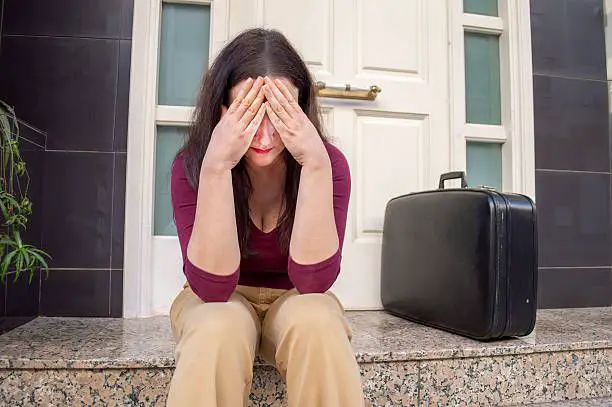
The Wedding That Never Happened
My name is Elena, and I’m thirty years old, and this is the story of a wedding that never took place — and how the not-taking-place of it clarified, with a precision I had spent my entire life avoiding, exactly what my family had always been. Two years have passed since the words were spoken. They still sit in my chest with the specific weight of things that were meant to wound and succeeded. I am telling the story now not because I am still wounded — I am not — but because the truth of it deserves to be complete, and for a long time I was the only one who held all of it, and I am tired of holding it alone.
Part One: The Roles We Were Given
From the outside, the Hargrove family looked the way families look when they have decided to look a certain way — comfortable, respectable, the kind of people who host Thanksgiving and send Christmas cards and talk about each other with the reflexive warmth of people who have mistaken proximity for love.
From the inside, the roles had been assigned before either of us was old enough to object to them.
Cassie was the golden child. Two years younger, blonde, outgoing, with the particular quality of a person who walks into a room and makes the room feel that it was waiting for her. She had been imagined by my parents long before she arrived — the daughter they had pictured, the child who confirmed that their imagining had been correct. She was not a bad person. I want to be clear about that from the beginning, because the easy version of this story requires her as a villain, and the truth is more complicated and more ordinary. Cassie was a person who had been given everything early enough that she had never had reason to develop the muscles you build when you carry your own weight, and she had grown up accordingly.
I was the other kind.
Quiet, observant, the child who liked books more than crowds and found numbers more satisfying than noise. I was not what they had imagined, which meant I was, from a very early point, working against an expectation that I had not created and could not meet. My parents, Greg and Marianne, never particularly hid the difference. When Cassie wanted dance lessons they found the most expensive studio in town and rearranged their schedules around the recital calendar. When I asked for art supplies — a specific request, a sketchbook and a set of charcoal pencils, nothing extravagant — I was told that money didn’t grow on trees and I should be grateful for what I already had.
Cassie got a brand-new car for her sixteenth birthday. A bow. Photographs that made it onto Facebook. My parents stood in front of the car with her, beaming, and the photo was bright and uncomplicated in the way of people who are genuinely happy and have no awareness of how the happiness is distributed.
I got a part-time job at the grocery store and saved for seven months and bought a used Honda with a cracked dashboard and a radio that operated on a specific and unreliable system: you held the knob to the left until it found the signal, and then you let go very slowly, and if you did it right you got maybe forty minutes of clear sound before it needed to be found again. I drove that car with the particular pride of something you earned, which is a different and more durable pride than the kind that comes with a bow.
Family photographs placed Cassie front and center, always. I learned to find myself by looking toward the edges, which was where I usually ended up, and at some point my parents began cropping the Christmas card photos differently, which was a decision I understood only when I was older and had enough distance from it to see it clearly.
My aunt Diane — my mother’s sister, who lived an hour away and visited often — reinforced the architecture of it every time she came. She arrived with gifts for Cassie and compliments that flowed without effort, the warm, specific compliments of someone who is genuinely engaged. Oh, Cassie, you’re just glowing. Then she would look at me, and her expression would adjust, and she would say my name in the tone of an item being checked off a list. Not cruelty. Something quieter and harder to argue with: consistent, practiced erasure, administered so naturally that it functioned as weather — not a decision but a condition.
I tried.
I want to account for the trying, because it was real and sustained and it cost me something to maintain it. I called regularly. I remembered birthdays — not just my parents’ and Cassie’s, but aunts and cousins and my parents’ anniversary, which they sometimes forgot themselves and which I would remind them of with a card sent in advance. I showed up to every family gathering with a smile I had practiced until it no longer felt like practice, and with the renewable hope that maybe this time would be the time they decided to see me.
The hope is the part that costs the most. Not the disappointment — the hope. Because hope requires investment, and investment without return accumulates into something that eventually has to be acknowledged.
Part Two: The Accounting
I did succeed. This is important to say plainly, because the family narrative required my failure, and I did not cooperate with it.
After college I joined a mid-size accounting firm, worked the hours that the early years require, earned my CPA at twenty-four, and climbed steadily through the structure of a profession that rewards precision and diligence and the willingness to stay late when everyone else has gone home. By twenty-six I was making more money than anyone else in my family. I bought a townhouse — my own, with my own down payment, with my name on the deed, the specific pleasure of a door that you unlock with your own key and everything behind it is yours. I traveled when I could. I built a life that had the texture of something real, something chosen, something earned.
I was proud of this in the private way of a person who knows not to be visibly proud around people who will read it as a judgment on them.
Cassie’s path went differently. She drifted through her twenties in the way of someone who has never had to commit because the commitment was always optional — community college courses that didn’t resolve into a degree, part-time jobs that moved between industries, an apartment that my parents helped cover and a car they kept insuring because it was easier than having the conversation about what it would mean for her to do it herself. None of this changed how they treated her. If anything it deepened the care, because need — the right person’s need — was the primary currency in my family, and Cassie had always known how to spend it.
My success made them uncomfortable. I watched this happen over years. At family dinners there were comments about how I was too career-focused, as if having a career was an excess, a personality flaw, evidence of priorities that weren’t properly arranged. When I offered to contribute to family expenses or events, it was received as an attempt to make them feel small rather than as generosity. I learned to stop offering.
I kept calling. I kept showing up.
I told myself: if I do enough, eventually they will see me.
I was wrong about this. It is the central thing I was wrong about, and it took a wedding to make me understand it completely.
Part Three: The Engagement
Cassie got engaged in the spring of 2022.
Her fiancé Mason was a decent man who worked in construction and loved her with the uncomplicated, steady devotion of someone who had decided on a person and was not interested in revising the decision. I was genuinely happy for them. Love is love, and despite the architecture of our family, she was still my sister, and I had not stopped loving her in the way that you love someone you grew up with regardless of what growing up with them cost you.
I found out about the engagement through a Facebook post.
Not a call. Not a text. Not an invitation to be part of the moment. A post, with a photo of the ring and a caption full of heart emojis and the name Mason and my mother’s comment below it — My baby is getting married!!! — with three exclamation points, which seemed like enough to carry the weight of the occasion.
I was not in the family group chat. I had not known there was a family group chat until I saw the post and called Cassie and she mentioned the group chat in passing, as a thing that existed and that I was apparently not part of, and the mention was so casual that it was clearly not something she had thought about at all, which was its own information.
We talked for nearly an hour. It was a good call — one of the best we’d had in years, the easy talk of two sisters who were remembering, briefly, that they could be this with each other when the rest of the structure wasn’t pressing on them. She told me about Mason’s proposal, which he had done at a restaurant they’d gone to on their first date, a small Italian place with candles and a waiter who had clearly been briefed. She laughed telling it, genuine and unguarded, and I laughed with her.
I offered to help.
With planning, with vendors, with the financial architecture of an event that I knew from professional experience could exceed every budget that had ever been set for it. I had the spreadsheets in my head before she’d finished speaking. I told her I would cover whatever gap existed between what she wanted and what she could afford, because that was what I had and that was what she was.
She thanked me. She said she’d let me know.
Part Four: The Months of Quiet
The months that followed had the quality of a tide going out.
She didn’t reach back with the planning details. She didn’t reach back with vendor questions. The calls that had been monthly became quarterly and then occasional, and when I called her she was warm and distracted in the way of someone who is very busy with a life that doesn’t include you.
I got occasional secondhand updates — a venue had been booked, October was confirmed, a venue in the wine country two hours from my parents’ house. I heard about the dress through my mother, in a phone call that was primarily about Cassie and during which my own life was not asked about. I heard about the bridesmaid dresses — four of them, cousins and Cassie’s college roommate — through a photo that appeared on Instagram, a fitting photo, four women in a boutique in dusty rose, laughing.
I was not one of them.
I had not been asked.
I told myself: bridesmaids are a specific category, it’s reasonable, we haven’t been as close as we once were, this is not a message.
Then September arrived.
I had been watching the mail — not obsessively, but with the heightened awareness of someone who knows an invitation should be coming and is not sure why it hasn’t come yet. I had begun to construct explanations: venue capacity, a small ceremony, maybe they were doing a different kind of event than I was imagining.
Then my mother called.
She called on a Tuesday evening, which was unusual — she called on Sunday mornings, reliably, the Sunday call that was the infrastructure of our relationship. A Tuesday call meant something specific was being communicated, and I answered with the pre-tightened awareness of someone who already knows the shape of bad news before it arrives.
“Elena,” she said. “I wanted to let you know before you heard some other way.” A pause. “The wedding is family and close friends only. You won’t be receiving an invitation.”
The sentence had been prepared. I could tell by the structure of it — the specific phrasing, the absence of stumbling, the way it arrived complete rather than assembled in real time. She had practiced it.
“I’m your daughter,” I said.
“Cassie’s wedding is about what she wants,” my mother said. “And this is what she wants.”
“And what do you want?” I said.
A silence. “I’m supporting my daughter.”
“I’m also your daughter,” I said.
Another silence, different from the first. Then: “Some events are for the people we actually love, Elena. I’m sorry.” A pause that was not sorry. “I thought you deserved to know directly rather than just not receiving an invitation.”
I held the phone. The call ended. I sat in my kitchen in my townhouse — the one I had bought with money I had earned, the one with the door I unlocked with my own key — and I held the phone in both hands and felt the sentence settle into me.
Events that are for the people we actually love.
I had spent thirty years in that family. I had called every Sunday. I had mailed birthday cards in advance. I had offered money and planning and presence and all of it, all thirty years of it, had produced the sentence some events are for the people we actually love, which meant: not you. It had always meant not you. The thirty years of effort had not changed the underlying architecture. It had just postponed the explicit statement of it.
Part Five: What My Father Said
My father called two days later.
He called, I understood immediately, because my mother had told him about the Tuesday call and about my response — I’m also your daughter — and something in that response had required managing, and he had been sent to manage it.
Greg Hargrove was a man who disliked confrontation with the intensity of someone for whom conflict has always been someone else’s department. He processed difficulty by locating a framework that made it acceptable and then presenting the framework in a reasonable tone. He had been doing this since my childhood, and he was doing it now.
“Elena,” he said. “Your mother told me you were upset.”
“Yes,” I said.
“I understand that,” he said. “I do. But you have to try to see it from Cassie’s perspective. This is her wedding.”
“I understand it’s her wedding,” I said.
“She’s entitled to the wedding she wants,” he said. “With the people she wants there.”
“Dad,” I said. “I’m her sister.”
A pause. “Elena, some people just don’t belong at family celebrations.”
He said it with the measured delivery of a man presenting a reasonable observation, a generalization that applied to someone other than himself, a piece of social wisdom that had the unfortunate quality of being applicable to his own daughter in this situation.
Some people just don’t belong at family celebrations.
I held the phone very still.
“Are you talking about me?” I said.
A pause that was longer than it should have been. “I’m just saying that Cassie has a vision for her day.”
“Answer the question,” I said.
He didn’t.
We said goodbye shortly after, and I hung up, and I sat in the quiet of my own house for a long time with the sentence my mother had given me on Tuesday and the sentence my father had given me on Thursday, and I understood that these sentences had not been improvised. They had been available in my family for thirty years, always present, occasionally surfacing in softer forms and now, finally, with the pressure of an occasion behind them, surfacing in full.
Part Six: Cassie
She called on a Friday.
Three days after my father’s call, a week after my mother’s, and the voice that came through was the voice she used when she had prepared something and was delivering it rather than speaking spontaneously.
“Mom said you were upset,” she said.
“Yes,” I said.
“Elena, this is my wedding,” she said. “I get to choose who’s there.”
“I know you do,” I said. “I’m not arguing with that. I’m asking you to explain it.”
“I want a drama-free day,” she said.
“When have I ever created drama?” I said.
A silence. Then: “You always make everything about you.”
I had heard this accusation before, in various forms. The version my family used when I had feelings about things — when I reacted to being excluded, when I noted a discrepancy, when I declined to absorb something without acknowledgment — was that I was making it about myself. The accusation had a very specific function: it made the person with the grievance the problem, which meant the grievance itself never had to be examined.
“I’ve spent thirty years making it about everyone but myself,” I said quietly.
She didn’t have a response to that.
“I’m not going to beg,” I said. “I wanted you to know that I love you and that the door is open from my side. That’s all.”
A pause. Then, and I believe she meant it, in some partial way: “I do love you, Elena.”
“I know,” I said. “I love you too.”
Then, right before she hung up, she said the last thing: “Finally, a wedding without the family disappointment.”
She said it with a lightness that suggested she had been thinking it for a while and had decided the moment had arrived. She was not wrong that she had been thinking it. She was wrong that she should have said it.
I held the phone after the call ended. Then I opened my laptop and booked a trip.
Part Seven: Iceland
The trip to Iceland had been in the back of my mind for two years — one of those destinations that accumulates on a list and waits for the right moment to move from list to itinerary. I had done the research already, which made the booking fast: a small hotel in Reykjavik for three nights, then a ring road rental car for four days, the kind of trip you can do alone and that rewards solitude.
I booked it for the first week of October.
I did not announce the trip to my family. I did not post about it on social media in advance. I simply booked it and began preparing, in the methodical way I prepare for anything I care about, with a packing list and a route mapped and a small notebook I bought specifically for the trip, to write in.
The wedding was October eighth. My flight departed October sixth, and I would be somewhere above the Atlantic while the ceremony was happening, which was not a statement I planned — it was simply the most convenient timing given the available flights, and I found that I did not mind the coincidence.
I told two people: my friend Priya, who had known me since college and who received the information with the specific anger-on-my-behalf that is one of the better things about old friends, and my therapist, whom I had been seeing for eight months and who had been, across those eight months, helping me map the exact terrain I was now standing in the middle of.
My therapist said: “How does it feel to be going?”
“It feels like the first decision in a long time that was entirely mine,” I said.
She wrote something in her notebook.
Part Eight: What Happened to the Wedding
I found out from Priya.
She texted me at seven in the morning on a Thursday in early October, four days before I was due to depart, with a message that read: Call me when you’re up. Something happened.
I called.
“The wedding is off,” Priya said.
I was quiet for a moment. “Off as in postponed?”
“Off as in Mason called it off,” she said. “I don’t know all of it. Apparently he found something — messages, I think. Between Cassie and someone from her work.”
I sat with this.
“Elena,” Priya said carefully. “Are you okay?”
“I don’t know yet,” I said.
The full picture emerged over the next forty-eight hours, in the way that these things always emerge — in pieces, from multiple directions, each piece adding resolution to something that had been blurry. Mason had found messages on Cassie’s phone, a six-month exchange with someone she worked with at the restaurant where she’d been waitressing. The someone was not a secret friend. Mason had called off the wedding on the Tuesday before it was scheduled, had moved out of the apartment they’d shared, and had returned the ring by courier with a note that Cassie later described to my mother as “very formal,” which suggested he had put as much distance between himself and the conversation as the postal service allowed.
The invitations had already gone out. The venue deposit was non-refundable. The dress had been altered and paid for in full.
My phone did not ring.
Not my mother, not my father, not Cassie. The family that had called to tell me I was not invited to the wedding did not call to tell me the wedding was not happening, which was its own information, and I noted it and filed it.
I went to Iceland.
Part Nine: Iceland
I landed in Reykjavik on a morning in October when the sky had the quality of a sky that doesn’t know what color it wants to be — not gray, not blue, not the specific drama of a storm, but something transitional, in motion, the sky of a place that changes its mind often and is not apologetic about it.
The hotel was small and clean and the staff said my name correctly on the first attempt, which is a small thing and also not a small thing. I walked the city that first afternoon in the jet-lagged clarity that makes everything slightly more vivid than normal, the particular receptivity of a person who has removed themselves from their ordinary context.
I did not think about the wedding. Or rather: I thought about it the way you think about weather you’ve come inside from. It was out there. I was in here. The walls were solid.
On the third day I picked up the rental car — a small SUV with all-wheel drive and a GPS I chose to mostly ignore in favor of the paper map I’d bought at a bookshop on Laugavegur — and I drove the ring road. East first, then north, following the coast. The landscape of Iceland does not comfort in the way of warm places; it is not interested in your feelings about it. It is volcanic and immense and indifferent in the absolute way of very old things, and this was, unexpectedly, exactly what I needed.
I stopped when I wanted to stop. I ate when I was hungry, at small places that served lamb soup and rye bread, at petrol stations with surprisingly good coffee. I stayed in a guesthouse in the East Fjords run by a woman named Sigrid who had four dogs and an opinion about the best waterfall within thirty kilometers and was right. I drove to the waterfall. I stood in the mist at the edge of it for twenty minutes and wrote nothing in my notebook, just looked.
On the fifth day I sat in a natural hot spring as the sky went dark and the Northern Lights appeared — not the dramatic arc of the photographs, but a quiet shimmer at first, a green-white suggestion along the northern horizon, and then growing, spreading, moving in the slow mathematical way of something that follows laws you can observe but not replicate. I was the only person at that pool. I sat in the water and watched the lights and felt something that I will not call epiphany because epiphanies are too tidy, but that was adjacent to it — a sense of proportion that had been missing, a sense of scale. The lights had been happening for thousands of years before my family assigned me a role in their story, and they would continue for thousands of years after, and the role was very small, and the lights were very large, and this was not a sad thing.
I wrote in the notebook. Not about the family, not about the wedding. About the lights, about the water, about the specific sound the volcanic landscape makes when the wind moves across it, which is a sound I have no word for.
I flew home on a Sunday.
Part Ten: After
Cassie called in November.
I let it ring the first time. Not as a strategy — I was simply in the middle of something and I was not ready. I called her back that evening, because she was still my sister, and because I had decided in Iceland that what I wanted was honesty rather than silence, and honesty required the call.
She was subdued in the way of someone who has had the dramatic architecture of their life suddenly reorganized. Mason was gone. The deposit was gone. The dress was in her closet. The people who had smirked at the idea of a wedding without the family disappointment were now managing their own version of the situation.
“I’m sorry the wedding didn’t happen,” I said.
“Are you?” she said.
“Yes,” I said. “I know that’s not what you expect me to say. But yes.”
She was quiet.
“Cassie,” I said. “What you said to me — the things everyone said — I need you to know that I heard them. Not as things said in stress that we can quietly let disappear. I heard them as things you meant.”
“I was stressed,” she said.
“You called me the family disappointment,” I said. “Your father said I don’t belong at family celebrations. Your mother told me the event was for people they actually love.” I let that sit for a moment. “These are not stress reactions. These are things that have been true in your family for a long time, and you finally said them out loud.”
A long silence.
“I know I haven’t been fair to you,” she said finally.
“No,” I said.
“I don’t know when it became so—” She stopped. Started again. “Mom always made it seem like you were fine. Like you didn’t care about any of it. Like you had your career and your money and you didn’t need us.”
“I called every Sunday for fifteen years,” I said.
The silence that followed was different from the others. It had the quality of a person finding the gap between the story they’ve been given and the evidence they have access to.
“I know,” she said quietly.
“I’m not going to disappear,” I said. “I’m not going to cut everyone off and never speak to any of you again. But I am also not going to pretend that those words weren’t said, or that the thirty years before them didn’t happen the way they happened. We would have to talk honestly about it. Really honestly, not the version that makes everyone comfortable.”
“That’s going to be hard,” she said.
“Yes,” I said. “I know.”
She agreed, tentatively, to try. We made a plan to have dinner the following month, just the two of us, no parents, no Aunt Diane, no audience. A dinner at a restaurant of my choosing, because I had earned that, and she agreed without argument, which told me something.
Coda: The Townhouse
I am thirty years old, and I live in my townhouse with the door I unlock with my own key and the life I built without anyone’s help.
I have a therapist I trust and a friend named Priya who answers the phone at seven in the morning and a notebook from a bookshop in Reykjavik with six pages of writing in it, none of which is about my family.
The dinner with Cassie happened. It was uncomfortable and honest in approximately equal measure, and we did not resolve thirty years in one dinner, because thirty years are not resolved in one dinner, but we said true things to each other rather than managed things, and at the end she hugged me in the way she used to when we were children and she was scared of the dark and would come to my room and I would not make her feel small for needing something.
I hugged her back.
My parents and I have spoken twice since October. Both conversations were civil and short. My mother has not repeated the sentence she used in September. My father has not repeated his. Whether they understand why those sentences were wrong or whether they have simply learned not to say them again in my presence is not a distinction I can make from the outside, and I have decided that I will not invest significant energy in trying to determine it.
What I know is this: I am not the family disappointment.
I am a woman who grew up in a family that needed someone to hold that role and assigned it to me before I was old enough to understand the assignment or decline it. I held the role for thirty years with a diligence and a patience that I am now directing elsewhere, toward people and work and places that register what I bring to them.
The Honda with the cracked dashboard and the unreliable radio — I thought about it in Iceland, in the hot spring, watching the Northern Lights. The specific pride of something you earned with your own hands and your own hours and your own patience, the way it teaches you something about the relationship between effort and outcome that a car with a bow never can.
I learned that early, without anyone meaning to teach it to me.
It turned out to be the most useful thing they ever gave me.
THE END

Adrian Hawthorne is a celebrated author and dedicated archivist who finds inspiration in the hidden stories of the past. Educated at Oxford, he now works at the National Archives, where preserving history fuels his evocative writing. Balancing archival precision with creative storytelling, Adrian founded the Hawthorne Institute of Literary Arts to mentor emerging writers and honor the timeless art of narrative.