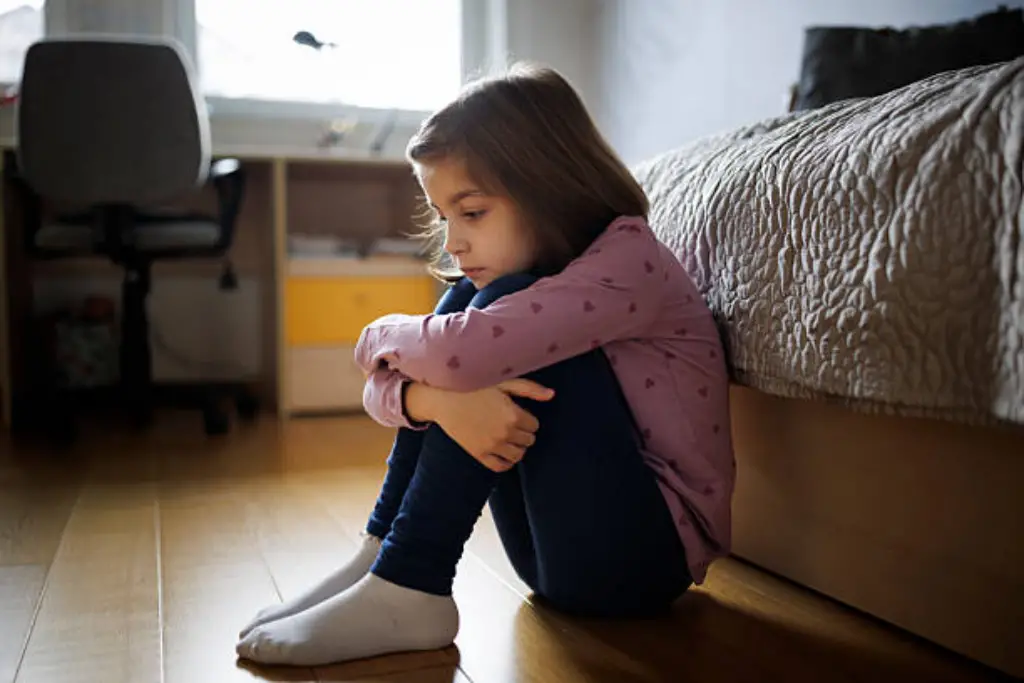
This Table’s for Family
A Story of Breaking Free
The turkey was just starting to brown when I realized I was holding my breath.
It was one of those tiny domestic realizations that arrives without invitation. I was standing in my kitchen, oven door open, heat rushing against my face, basting the bird like some nervous understudy on a cooking show, and my chest felt tight. Not from the warmth, not from the heft of the roasting pan. From anticipation. From the weight of knowing what was about to walk through my front door and rearrange the air inside my home the way it had rearranged every room I’d ever stood in.
I straightened up, wiped my hands on a dish towel, and listened. The house sounded exactly as it should on a Thanksgiving morning. My husband, Mark, was in the living room toggling between a football game and the Macy’s parade. Pots simmered on the stovetop, their lids rattling in gentle percussion whenever a bubble broke free. And from the dining room came the soft, serious voice of my eight-year-old daughter, conducting what she clearly considered the most important operation of the day.
“Careful,” Ellie murmured to herself. “Edges straight. Like in a restaurant.”
She was hunched over the dining table, tongue peeking from the corner of her mouth, folding cloth napkins into neat triangles by following a YouTube tutorial she’d insisted on watching three times that morning. Each place setting held a white plate, polished silverware, and one of her careful triangles. Beside each plate sat a hand-lettered name card—block letters, slightly uneven, the letter R always too wide—written in purple glitter marker that shed sparkles like a trail of fairy dust across the tablecloth.
“Mom?” She didn’t look up. “Do you think Grandma will like the candles?”
I glanced at her arrangement: fat cream-colored pillar candles in mismatched glass holders we’d scavenged from closets and thrift stores, surrounded by a constellation of fake autumn leaves. The whole thing had a charming, slightly chaotic elegance, like a wedding reception planned by woodland creatures.
“They’re perfect,” I said. “Very fancy. You’ve really outdone yourself.”
She straightened up, beaming. “Because I’m eight now.” She said the number like it was a magical threshold, a key that finally unlocked the door to everything she’d been waiting for. “Eight-year-olds can sit at the grown-up table, right?”
I’d known this question was coming. She’d been asking versions of it for months, in smaller, quieter ways. Could she pour her own juice? Could she pick her own clothes for school? Could she tell Grandma she didn’t like people touching her hair without asking? Each question was really the same one underneath: Am I allowed to be a whole person yet?
“Absolutely,” I said. “You’re sitting right next to me.”
She checked. Her place card—ELLIE, written in purple sparkle—sat to the left of my plate, exactly as we’d planned. She ran a fingertip over the glitter, satisfied, and nodded once with the gravity of a diplomat confirming treaty terms.
“Okay. Then it’s a real Thanksgiving,” she declared.
I smiled and returned to the kitchen. But the tightness in my chest didn’t leave. If anything, it cinched one notch tighter. Because I knew what was coming through my front door in about twenty minutes. Twenty minutes in which the house was still warm and soft and entirely ours. Twenty minutes before I went back to being the peacekeeper, the interpreter, the dutiful daughter with the practiced smile and skin thicker than anyone realized.
My parents.
• • •
If you’ve never had narcissistic parents, the thing that’s hardest to explain is how their presence can make you feel like a child again, even when you’re standing in your own kitchen, in your own home, with oven mitts on and a mortgage in your name. They walk in and drag the weather of your childhood behind them—all the things you thought you’d outgrown come alive again like dormant seeds in a sudden rain. The constant evaluations. The subtle digs. The way every room rearranges itself around their comfort and every person adjusts like furniture being pushed against walls.
Mark appeared in the doorway as I was checking the potatoes, leaning against the frame with that look he always wore when my parents were involved—equal parts concern and readiness, like a man bracing for a storm he couldn’t stop but refused to leave unattended.
“You’re allowed to kick them out, you know,” he said, wrapping his arms around my waist from behind.
“I know.”
I didn’t. Not really. The knowledge was like a book I owned but had never opened. The spine uncracked, the pages pristine. I understood, in theory, that “no” was a word adults were permitted to use. But every groove carved by years of managing their moods and patching over their messes was wired toward “yes.” Just this once. Just for the holiday. Just so they won’t make it worse.
“If they start anything—” he began.
“They’re always starting something,” I said gently. “That’s the problem. If we waited for a drama-free visit, they’d never see Ellie at all.”
He looked like he wanted to say that would be perfectly fine with him. Instead, he exhaled and released me. “Then we survive today. But if they cross a line—”
He didn’t finish the sentence. He didn’t need to. It hung between us, thin and familiar, like one of those empty threats parents make in grocery store aisles. If you don’t behave, I’ll… something.
• • •
The doorbell did not ring when they arrived. It never did.
Instead, the front door opened with a practiced twist, the way it had in every house I’d ever lived in, regardless of whose name appeared on the lease. My mother’s voice floated down the hallway first, sharp and appraising.
“Well. At least it smells better than last year.”
She entered my living room the way one might enter a restaurant after reading mixed reviews—prepared to be disappointed, hoping to be pleasantly surprised, unwilling to show either. She was all hard angles and expensive perfume, her gray-blonde hair lacquered into the same immovable helmet it had been since the late nineties. Her coat hung open just enough to display a necklace she wanted noticed. Her eyes swept the room in one efficient pass: cataloging, judging, discarding.
My father trailed behind her with slightly rounded shoulders, carrying a bottle of wine by the neck, the price sticker still visible on its side. His sweater was older than some of my coworkers. There was a softness in his face that wasn’t exactly kindness—more like absence, like he’d learned decades ago that being fully present only attracted fire.
Behind them, my sister Rachel and her husband Evan slipped in quietly. Rachel’s hair was pulled into a low bun, her sweater matching her eyes, a foil-covered dish clutched in hands that gripped a little too tightly. She had the look of someone entering a building they suspected might be condemned.
I hugged them all in quick succession. Perfume, cold air, dust. The usual.
“Where’s my granddaughter?” my mother demanded, already scanning the room as though Ellie should have been posed in the center of it with a ribbon in her hair.
Ellie appeared in the dining room archway on cue, bouncing on her toes, cheeks flushed with pride. “Hi, Grandma! Hi, Grandpa! Come see the table. I made the name cards myself!” She held one up as evidence, the purple glitter catching the overhead light.
My mother examined it. “Oh,” she said. “How… creative.”
Ellie didn’t hear the edge in her tone, or perhaps she chose to ignore it. She grabbed my father’s hand and tugged him toward the dining room, narrating the seating chart with the authority of a seasoned maître d’. “Grandpa, you’re next to Aunt Rachel because you both talk a lot, so you won’t get bored. Grandma, yours has a flower because you like flowers. And this one—” she tapped the card beside my plate—“is Mom’s. I put hearts because she’s the nicest.”
“And where are you sitting?” my mother asked.
Ellie puffed with quiet pride and pointed to the chair beside mine. “Right here. At the grown-up table.”
Something in my mother’s expression shifted. It was subtle—a narrowing of the eyes, a barely perceptible tightening at the corners of her mouth—but I recognized it immediately. I had been reading that face my entire life. Disapproval, dressed up as concern, disguised as common sense.
“That can’t be right,” she said. “Ellie, sweetheart. Little girls sit at the kids’ table.”
“We don’t have a kids’ table,” Ellie said, confused. “It’s just us. So it’s all grown-up table. And I’m eight now.”
“She’s fine there, Mom,” I said, keeping my voice light. “We planned this together.”
My mother looked at me, then at the chair, then at Ellie. And I watched the decision form on her face the way you watch a storm roll in across an open field—the shadow arriving well before the rain.
What happened next took perhaps three seconds, but I remember each one in the kind of crystalline slow motion that the mind reserves for moments it will never fully process.
Her fingers curled around the back of Ellie’s chair. Her other hand came out, palm flat, and pressed against my daughter’s small shoulder. Not with the brute force of someone intending injury, but with enough momentum and absolute disregard that Ellie, unprepared and trusting, stumbled backward. Her heel caught the edge of the rug. Her arms pinwheeled once, twice, and then she went down.
The sound of her palms hitting the hardwood floor was louder than it had any right to be. A sharp crack and a slap, followed by a small, shocked intake of breath.
Time fractured.
Mark froze halfway into his chair. My father’s silverware clinked against his plate. Rachel’s eyes snapped up, widened, and then dropped again, as though she’d stared into something too bright. The candles flickered, casting jittery shadows across the walls.
My mother looked down at Ellie with an expression that held no regret, no concern, nothing approaching remorse. Just mild annoyance, the face of someone who’d stepped in something inconvenient.
“This table’s for family,” she said. “Go away.”
The words fell like stones into still water and sent ripples through the room, through my chest, through every year I’d spent absorbing blows just like this one. Family. Go away. As though the two ideas weren’t a contradiction. As though she hadn’t just shoved her own granddaughter onto the floor in her own home.
Ellie stared up from the ground, bewildered. Her palms were pink, reddening where they’d absorbed the impact. Her sparkly name card had skidded across the floor and come to rest near a chair leg. She crawled toward it automatically, reaching for it the way a child reaches for a favorite toy after a fall—something familiar to anchor to.
Then she looked at me. Not crying. Not yet. Just confused. Like maybe she’d missed something. Like maybe this was one of those adult things she didn’t understand yet.
I moved before I knew I was moving. One second I was behind my chair, the next I was kneeling beside her on the cool hardwood, my hands sliding under her arms, lifting her gently. I checked her wrists without making it a production. I took the name card from her hand, brushed it off, and gave it back.
“You okay?” I asked softly.
She nodded, lips pressed together, eyes shining but holding. Her pride was bruised more than her skin.
I stood, still holding her close.
Everything inside me felt very far away and very, very clear. Like standing on a glass bridge suspended over a canyon for the first time and suddenly seeing exactly how high up you’d been, exactly how thin the structure beneath you, exactly how long you’d been pretending it was solid ground.
My mother watched, arms crossed, waiting. I could see the expectation in her posture. This was the part where I would smooth things over. Where I’d laugh it off, redirect, tell Ellie to run play in her room, maybe set up a little table in the kitchen “just for her.” The part where I would absorb the shrapnel and carry on, the way I always had.
But something inside me, some long-strained cable that had held together through decades of cutting remarks and casual cruelties, finally snapped.
All the years rushed through my mind in a single breath. The jokes about my weight at twelve. Her laughter when I cried over a boy at sixteen—“No one respects a girl who’s too emotional.” Her comparison of my SAT scores to Rachel’s—“Well, not everyone can be brilliant.” Her voice on the phone after my miscarriage—“You’re young. You’ll try again”—as though I’d misplaced my keys instead of lost a child. And now this. In my house. At my table. She had looked at my daughter—my kind, creative, fiercely hopeful little girl—and decided she was disposable.
I made sure Ellie was steady on her feet, her shoulders square, her name card clutched in her hand like a small, glittering flag. Then I looked at my mother, and my voice, when it came, sounded foreign in my own ears. Calm. Clear. Final.
“You’re not family to her.”
Five words. They hung in the silence, soft and devastating.
My mother’s face went still as a mask. The color drained from her cheeks, leaving two high spots of angry crimson. Her eyes darted to my father, hunting for reinforcement, for the ally who would help reassemble the narrative she controlled. He opened his mouth. Closed it. A strangled syllable escaped—something like “But” or “Barb”—before dissolving into nothing.
Ellie looked between all of us, then did something that simultaneously broke my heart and stitched it back together. She stepped away quietly, turned, and walked out of the room with her head held high. Her name card trailed a faint glittering line behind her as she went. The soft click of her bedroom door closing was strangely gentle, almost polite.
• • •
The rest of that meal passed like a dream in which everyone has forgotten their lines. We pushed food around our plates. Rachel complimented the stuffing in a trembling voice. My father offered observations about traffic. My mother sat rigid and silent, her weapon—words—suddenly useless. In the kitchen afterward, Rachel picked up a dish towel and stood beside me at the sink.
“Mom didn’t mean—” she began.
“She pushed my daughter onto the floor,” I said quietly. “Then told her to go away because she wasn’t family.”
Rachel’s lips pressed together. She kept her eyes on the plate in her hands. “I’ll talk to them,” she said, which was not a promise. It was a postponement.
At the front door, my mother broke her silence. “You overreacted,” she said, clutching her purse like it was a shield. “She’s a child. Children fall. If you coddle her, she’ll never grow up strong.”
A year ago, even six months, I might have tried to explain. Might have unpacked the difference between falling and being pushed, the way words land differently on small hearts, the fundamental importance of feeling safe at your own dinner table. But I felt none of that impulse now. I felt something worse than anger. I felt nothing. And nothing, I realized, meant I had finally stopped caring what she thought.
“I’m not interested in your assessment,” I said.
Her eyes widened. She turned to my father. “Maybe just let it go, Barb,” he muttered.
She stared at him as though he’d defected. Then she looked at me, her face hardening into something ancient and familiar. “You’ll regret this,” she said. “When we’re gone, you’ll regret how you treated us.”
I opened the front door. Cool November air drifted in, carrying the scent of leaves and distant wood smoke. “Good night,” I said, and I closed the door before they reached their car.
• • •
That night, long after the dishes were packed away and Mark had fallen asleep with one arm flung across his face, I lay in the dark and let the whole history unspool.
My mother at the kitchen table when I was seventeen, skimming a college brochure and frowning. “These places are so expensive. You’re not really academic, are you?” Like it was a kindness to lower the ceiling. Her voice on the phone the day I miscarried: “Well, these things happen. Stop crying; you’ll make yourself sick.” The time she’d snatched a plastic tiara off Ellie’s head during her princess phase and snapped, “You look ridiculous,” without seeing how the little shoulders had slumped. The missed birthday. The forgotten recital. The constant, methodical erasure of anything that didn’t serve her.
I’d excused every bit of it. She’s old-fashioned. She had a hard childhood. They don’t know any better. If I keep the peace, if I stay calm, if I manage everything just right, things will improve. But when her hand met my daughter’s small body that afternoon, when the words “Go away” left her mouth without a trace of shame, something cracked open inside me that could never be sealed shut again.
The next morning, I made a list. Not a mental list. A real one, written in pen on paper the way my mother might have written her grocery orders. At the top I wrote: Things I Do for Them. And then I filled the page. Driving her to physical therapy every Thursday. Managing all their online accounts—electric, gas, phone, insurance premiums, credit cards. Picking up prescriptions. Dropping off their dog at the groomer. Hauling groceries when she claimed to be too frail to shop despite summoning miraculous strength for department store sales. Sorting through their paperwork every tax season. Every errand, every favor, every small way I’d been their unpaid secretary, chauffeur, and caretaker—it all went on the list.
By the time I stopped writing, my hand ached and my coffee was cold. But something heavy had clicked into place. No more. They had treated me like staff for years, and I had allowed it because saying no felt like betrayal, because I’d been taught that good daughters served indefinitely and without complaint. But good mothers protected their children. And if those two roles were in conflict, I knew which one I was choosing.
• • •
They didn’t call for three days after Thanksgiving. Not to ask about Ellie. Not to apologize. Nothing. In the past, that silence would have sent me scrambling—texting, leaving voicemails, interpreting their distance as punishment and racing to repair whatever I’d supposedly broken. Now I recognized the tactic for what it was: control through withdrawal. Let the guilt simmer, then return once I’d contorted myself into an apology. This time, I let the silence sit.
On Thursday, my phone pinged with a calendar alert for my mother’s physical therapy appointment. My reflex was instant: grab keys, check the time, leave early. Instead, I turned the alert off and didn’t get in the car. At quarter to eleven, my phone rang. Her name flashed on the screen. I watched it vibrate across the counter and let it go to voicemail.
Her voice, when I listened, was brittle and offended. “I’m still at home. You’re late. Are you coming or not?” No concern about why I hadn’t shown. Just the assumption that I was failing at what I owed her.
I didn’t call back.
Day by day, I enacted the list. I canceled my access to their online accounts. No more late fees quietly corrected, no more frantic calls to service representatives on their behalf. Two days later, my father left a confused voicemail about a missed payment from the power company. I called him back.
“I’m not your secretary,” I said. “You’ll have to figure it out.”
He sputtered. “But you’ve always—”
“Not anymore.” I ended the call before he could shift into guilt or outrage. It felt like walking off a job I’d never been paid for and never agreed to take.
• • •
Rachel called the next day. “They’re freaking out,” she said. “Dad says you’re ghosting them. Mom says you’re letting everything fall apart on purpose. What are you doing?”
I sat at the kitchen table, watching Ellie draw a winged unicorn at the other end, her tongue poking out in concentration. “I’m doing what I should have done years ago,” I said. “Letting them deal with their own lives.”
“You just cut them off,” Rachel protested. “With no warning.”
A soft, disbelieving laugh escaped me. “No warning? You were there, Rachel. You watched Mom shove Ellie to the floor and tell her she wasn’t family. You sat right there and said nothing.”
Silence. Then, quietly: “I didn’t think it was that serious.”
“She pushed an eight-year-old out of a chair and told her to go away,” I said, each word deliberate. “What exactly would qualify as serious?”
We hung up. I expected nothing to change. Rachel had always been the golden child—the “pretty” one, the “smart” one, the daughter our mother saw herself in. She’d been praised and polished and propelled toward success with the same force I’d been held back from it. If she had to choose a side, I knew which way she’d lean.
Or so I thought.
Two days later, a single text arrived: Did she really push Ellie?
The question told me everything. Doubt had taken root. The story my parents were spinning—Ellie tripped, your sister is being dramatic—was hitting resistance in Rachel’s mind.
Yes, I wrote back. You saw it. You just didn’t want to believe it.
No reply. But something had shifted.
• • •
It happened the following weekend, during one of Rachel’s regular visits to our parents’ house. She brought her daughter Mia, thinking she could keep things normal, let the tension dissolve on its own. Classic avoidance strategy. She told me about it later that same night, sitting at my kitchen table with red-rimmed eyes and a shaking voice.
Mia had brought her favorite stuffed unicorn, Stella—a battered, beloved thing with one eye rubbed partially off, a tangled mane, and a paper crown taped crookedly to its head. The toy went everywhere with her. It was her comfort object, her companion, her best friend stitched from polyester and unconditional love.
They were in the living room, Rachel said. Our mother talking about the neighbor’s new car, our father half-asleep in his recliner. Mia on the floor, making Stella gallop from cushion to cushion, narrating the adventure in whispers.
At some point, the unicorn ended up in our mother’s path.
Rachel said she watched our mother’s face change. A flicker of disgust, faint but unmistakable. Then, deliberately, she brought her heel down on the toy. Plastic cracked. The delicate horn snapped clean off. She twisted her foot—ground it—like she was killing an insect.
“There,” she said. “You’re too old for toys like that. Stop acting like a baby.”
Mia’s lower lip trembled. Tears spilled before she could stop them.
Rachel told Mia to wait in the car, then turned to our mother and asked why. Our mother rolled her eyes. “Relax. It was an accident. She needs to toughen up. She’s too soft. Just like Ellie. You’re raising them weak.”
And there it was. Not an isolated incident. Not a bad day. A philosophy. A deliberate stance aimed not just at me anymore, but at our daughters. At the next generation, who she was determined to shape with the same blunt instruments she’d used on us.
Rachel left without saying goodbye. She buckled her sobbing daughter into the car and drove straight to my house. When I opened the door, she stood on the porch holding a box of pastries in one hand and a broken unicorn in the other.
“You were right,” she said.
• • •
We sat at my kitchen table while the girls played in Ellie’s room, Mia cradling one of Ellie’s dolls as a temporary replacement. The broken unicorn lay between our coffee mugs, its cracks catching the light.
“I want to do whatever you’re doing,” Rachel said. Her voice trembled, but there was something harder underneath, like rebar beneath concrete. “All of it. Whatever it takes to keep them away from my daughter.”
So I opened my laptop and showed her the folder I’d been quietly building. Screenshots of text messages where our mother blamed me for their late fees. Notes from phone calls where she’d threatened to cut me out of the will over imagined slights. Documentation of the time they’d shown up unannounced at Ellie’s school event and tried to take credit for organizing it. A careful, methodical paper trail constructed by someone who’d finally learned that good intentions don’t survive bad people without evidence.
We spoke to a lawyer—not to sue, but to establish a record. She listened, took notes, and told us we could file incident reports and, if things escalated, we’d be glad we had documentation. So I filed a report about Thanksgiving. It felt strange, explaining to a police officer that my mother had pushed my eight-year-old and told her to go away. There were no broken bones. The only scars were the invisible kind. But invisible didn’t mean imaginary.
The officer took my statement. A written warning was delivered to my parents’ house. A piece of official paper that said, simply and without emotion: someone is watching.
Two days later, my phone buzzed with a voicemail from an unknown number. My mother’s voice, low and venomous: “How dare you bring the police into this. You want war? You got it.”
I listened twice. The words that once would have sent me spiraling into frantic appeasement now washed over me like background static. This wasn’t war. This was consequence. They had spent their entire lives without facing any. Now, for the first time, the resistance had weight—legal, documented, unambiguous.
• • •
Then, quiet.
No calls, no texts, no dramatic appearances at my front door. The silence stretched for weeks. Letters eventually arrived—plain white envelopes, no return address, our mother’s sharp, upright handwriting on the front. Inside, a single sentence each. Mine read: You think you’ve won something, but you’ll need us eventually. Everyone does. Rachel’s: Your daughter won’t love you if you turn her against her grandparents.
That second line severed whatever fraying thread remained. Rachel changed her phone number, blocked their emails, and told her in-laws to share nothing about her family—not birthdays, not vacations, not a single detail.
Our alliance, tentative at first, solidified into something real. We started meeting weekly—sometimes with the girls, sometimes just the two of us. At first, we excavated old memories like archaeologists, examining them in the unflinching light of our new understanding. “Remember when you got that A in chemistry and Mom said, ‘Well, at least one of you inherited my brains’?” Rachel said one afternoon. “Remember when you won that art prize and she asked if they were grading on a curve?” I replied. We laughed, but it wasn’t really funny. It was relief dressed as humor—proof that we hadn’t imagined it.
Gradually, our parents took up less and less space in our conversations. We talked about our lives instead. About the ridiculous things our kids said. About work. About the shows we watched secretly after everyone was asleep. About the fact that we actually liked each other, now that we’d stopped competing for scraps from a table that had never had enough love on it to begin with.
• • •
A week after the letters arrived, we went to clean out the storage unit we’d shared with our parents for years. It was one of those anonymous, fluorescent-lit places with roll-up metal doors and the permanent smell of dust and cardboard. Boxes sagged along the walls, labeled in our mother’s tidy handwriting: Christmas. Easter. Photos. Barbara High School.
We worked in parallel silence, sorting things into piles—donate, trash, maybe keep. At some point, my hand landed on the bin labeled with my name.
I hesitated. Then I opened it.
On top were the expected relics—a yearbook, a bundle of notes folded into intricate origami shapes, a faded T-shirt from a club I barely remembered. But beneath them lay a smaller stack of envelopes. All addressed to me. University logos in the upper corners. Postmarks from cities I’d once circled on maps and then tried to forget.
My fingers went cold.
The first was from a state university two hours away. Inside, an acceptance letter. A partial scholarship offer. The second, from a college in Colorado. Accepted, wait-listed for housing, welcome to attend. The third—from a writing program in New York I’d applied to in the desperate flurry of senior year—offered a summer intensive with tuition waived based on my portfolio.
Each letter was dated the spring and summer after my senior year. The months when my parents had told me it was too expensive, that I wasn’t “really college material,” that I couldn’t move away because what if something happened and they needed me. The months I’d worked three jobs—diner, bookstore, daycare—convinced that my applications hadn’t been good enough.
They had been good enough. The letters had come. I just hadn’t been allowed to see them.
I sank down onto an overturned box, the pages limp in my hands. Rachel walked over, took one, and read it. Her face went pale.
“Mom said you never got in anywhere,” she whispered.
“She said I wasn’t college material.”
Rachel flipped through the others. The fluorescent lights hummed above us. Someone outside rolled up a metal door, and the rattle sounded like something breaking loose.
“This started a long time ago,” I said. “It wasn’t about Thanksgiving. That was just where the crack finally reached the surface.”
She sat beside me on the box. We didn’t speak for a long time. When we finally stood, we each kept one box from the storage unit. Old photographs of us as kids—before the roles had hardened, before the golden child and the scapegoat labels had calcified into identity. Pictures of two girls with missing teeth and skinned knees, laughing at something just off camera. Evidence that once, briefly, we had been just children.
• • •
Months passed. Christmas came and went without cards or stale cookies or performative texts about ungrateful children. Our parents receded from our daily lives like a radio station finally switched off after years of low, persistent static.
In the quiet, something unexpected grew. Peace. Not the dramatic kind with trumpets and declarations. The small kind. The kind that lives in moments you almost don’t notice.
It was in the way Ellie’s shoulders relaxed when I told her, firmly and finally, that she didn’t have to spend time with people who made her feel bad, even if they were related. In the way Mia’s nightmares about “the breaking” faded over weeks, replaced by dreams she described as “boring but nice.” In the way Rachel and I started planning holidays around what would make our daughters happiest, instead of what would make our parents least volatile.
That winter, we took the girls ice skating at a rink downtown. None of us were particularly graceful. Ellie fell twice in the first ten minutes and popped back up grinning each time. Mia clung to the wall with pink cheeks and wild hair escaping her hat. I spent half the session trying not to shatter my tailbone, laughing so hard my ribs ached.
Afterward, the girls declared themselves simultaneously “very cold and very hungry and also very thirsty,” so we bought outrageously overpriced hot chocolate. They each took three sips, pronounced themselves full, and sprinted back toward the ice.
Rachel and I sat on a bench, cradling the abandoned cups.
“This is what it’s supposed to feel like,” I said.
“What?”
“Family.”
Not eggshells underfoot. Not calculating every word. Not wondering whether someone you loved would weaponize your vulnerability. Just being together, clumsy and imperfect and safe.
• • •
In my home office, above my desk, I framed one of those acceptance letters. The one from the writing program in New York. The paper is slightly yellowed at the edges now, the ink beginning to fade, but the words remain clear: We are pleased to inform you…
I didn’t hang it to torture myself with what might have been. I hung it to remember two things. First, that I was never “not good enough.” The story I’d internalized—that I should be grateful for scraps of approval, that I was lucky to have what little I had—had been a lie, carefully constructed and deliberately maintained. And second, that even without those stolen paths, even with the sabotage and the minimized hope, I had built a life worth living. A family. A home where my daughter could set a table with sparkly name cards and know, deep in the marrow of her bones, that she belonged at it.
Ellie noticed the frame one evening. “Is that from school?” she asked, peering up.
“It’s a letter from a program that wanted me to come to New York and write stories for a summer,” I said. “When I was younger.”
Her eyes went wide. “Did you go?”
“No. I didn’t know I’d gotten in. Someone hid the letter.”
She frowned. “That’s mean.”
“It was.”
“Are you mad at them?”
“I was,” I said. “Now I’m just done.”
She traced the edge of the frame with one finger. “You still write stories, though.”
“I do.”
“So you did it anyway.” She nodded, satisfied by her own logic. “Cool.”
Later, when I tucked her into bed, she asked a different question. “Why don’t we see Grandma and Grandpa anymore?”
It was the first time she’d raised it. For months, she’d accepted the change the way children often do—easily, as long as the adults they trust seem steady. But the absence had grown large enough to notice.
I smoothed the blanket over her legs. “Because not everyone who shares your name treats you like they love you,” I said. “Some people just want to be in charge.”
She thought about it, eyes on the glow-in-the-dark stars dotting her ceiling. “Like a bossy kid at recess,” she said. “Who says you can’t play unless you do what they say.”
“Exactly like that.”
“Then you find other kids,” she decided. “Ones who let you play the way you want.”
“Yeah,” I whispered. “You find other kids.”
She nodded once, turned onto her side, and hugged her stuffed fox. Conversation closed. She was already stronger than I had been at her age. She already knew, instinctively, that proximity did not equal love and that sharing a last name didn’t grant anyone the right to push you out of your chair and tell you who you were.
• • •
Sometimes, late at night when the house is quiet and the old anxieties try to creep back in, I picture that Thanksgiving table. I see my mother’s hand on the back of Ellie’s chair. I see my daughter on the floor, palms red, eyes wide with confusion. I hear the words: This table’s for family. Go away.
But now, when I replay it, I also hear my own voice. You’re not family to her. Not the biological fact of it. The emotional truth. The distinction I’d spent thirty-some years refusing to make because making it meant accepting that the people who raised me had never truly been on my side.
We still have that dining table. The same one Ellie set that Thanksgiving morning, with the same slightly oversized tablecloth. The candle wax stains never quite came out. Most Sunday nights now, the table is scattered with crayons between dinner plates. There’s always at least one glass of milk perched dangerously close to a laptop. There are overlapping conversations, occasional spirited negotiations about vegetables, and laughter that stretches into every corner of the room.
At the head of the table, there is an empty chair. It isn’t reserved for anyone. It isn’t a monument to absence or a reminder of what was lost. It’s just an extra seat—for a friend, for a neighbor, for someone our girls might bring home one day who needs a place to sit where they will be seen and heard and, above all, safe.
This table’s for family.
And we get to decide what that means now.
— THE END —

Adrian Hawthorne is a celebrated author and dedicated archivist who finds inspiration in the hidden stories of the past. Educated at Oxford, he now works at the National Archives, where preserving history fuels his evocative writing. Balancing archival precision with creative storytelling, Adrian founded the Hawthorne Institute of Literary Arts to mentor emerging writers and honor the timeless art of narrative.