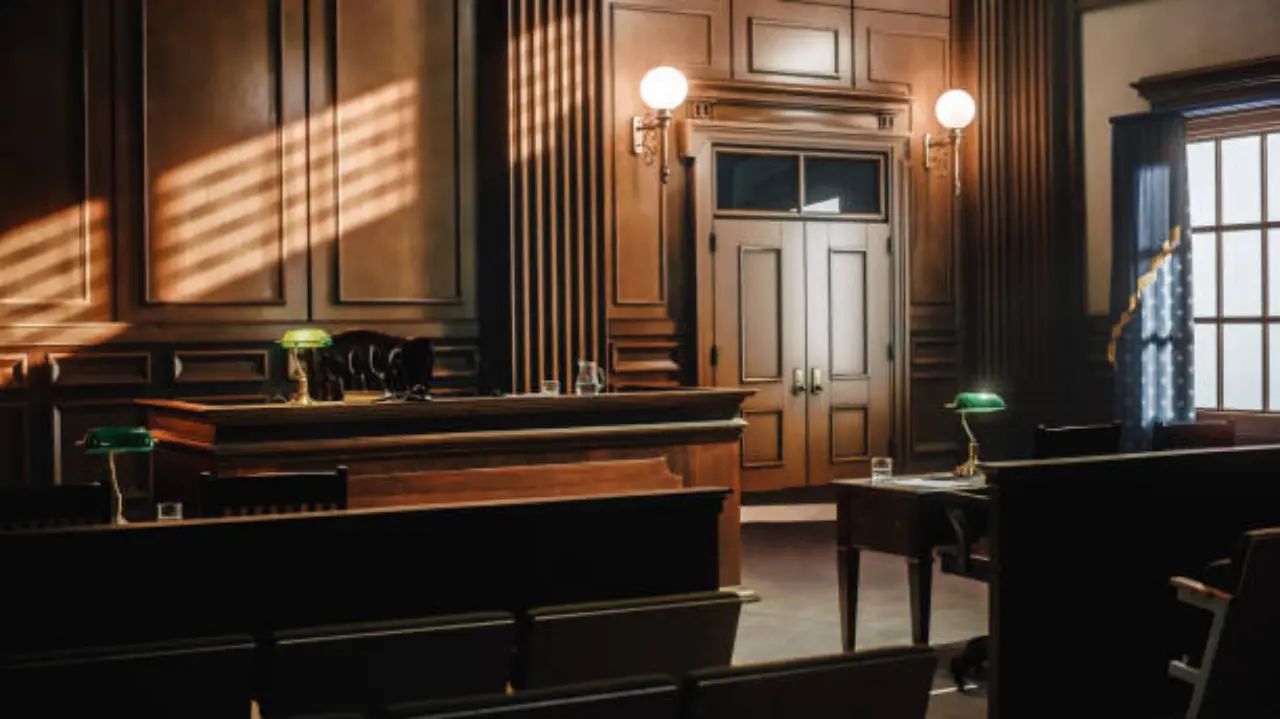
“Your Honor, I’ll be defending her.”
The words left my mouth clear and steady, cutting through the stale courtroom air like a blade through silk. For one suspended moment, everything stopped. The clerk’s fingers froze above her keyboard. The bailiff’s hand hovered mid-reach for his coffee cup. Even the fluorescent lights seemed to hum a little quieter, as if the building itself was holding its breath.
My father’s smirk—that familiar, contemptuous curl of his upper lip—stalled halfway between mockery and disbelief. His expensive attorney turned slowly in his chair, designer pen pausing mid-signature. The woman sitting beside my father, her manicured hand resting possessively on his arm, let her carefully maintained smile crack at the edges.
But this moment, the one people would remember and repeat in hushed conversations outside the courthouse for weeks afterward, wasn’t really where this story began.
It began fifteen minutes earlier, in the parking lot behind the county courthouse, where my mother sat in the passenger seat of my Honda Civic, gripping her purse so tightly her knuckles had gone white against the worn leather.
The courthouse loomed ahead—a square block of faded tan brick, identical to every other government building in small-city America. An American flag snapped sharply in the cold wind above the entrance. A row of metal benches lined the concrete walkway, their surfaces worn smooth by decades of nervous waiting, last-minute negotiations, and cigarettes smoked down to the filter by people whose futures hung in the balance.
The November morning was cold enough to sting exposed skin but not cold enough for snow—just that honest, gray kind of weather that doesn’t flatter anything or anyone. It shows you exactly what you’re dealing with, stripped of seasonal romance or atmospheric softening.
“You ready?” I asked quietly, turning to look at my mother.
She nodded, though her eyes were already shining with the threat of tears she was determined not to shed. Not yet. Not here. “As ready as I’ll ever be,” she said, her voice barely above a whisper.
We walked inside together, our footsteps echoing on the scuffed linoleum. The security checkpoint was staffed by a deputy with tired eyes who’d probably seen a thousand people walk through those metal detectors carrying the weight of collapsing marriages, custody battles, and broken promises. He waved us through without ceremony after we placed our belongings in plastic bins.
The hallway smelled faintly of burnt coffee and aging paper, overlaid with the sharp chemical scent of industrial cleaner. Somewhere deeper inside the building, a copy machine clacked rhythmically, and muted voices bled through closed doors. The sounds of the justice system grinding forward, case by case, hour by hour.
My mother trailed half a step behind me, the way she always did in unfamiliar places. She wore her good navy coat—the one she’d bought six months after the divorce was finalized because she said she wanted something that didn’t carry memories stitched into every seam. I could feel her glancing at me occasionally, as if checking to make sure I was still there, still solid, still willing to do what we’d come here to do.
Courtroom 3B waited at the end of the corridor, its double doors already propped open.
I saw him immediately.
My father sat at the defense table with the casual confidence of a man who’d never truly been challenged in his life. One ankle crossed over his opposite knee, expensive Italian loafers catching the overhead light. His suit was charcoal gray and perfectly tailored—the kind of understated luxury that whispers money without shouting it. Beside him sat the woman he’d left my mother for, younger by enough years to make it obvious to anyone paying attention. She wore cream-colored wool and a smile that never quite reached her eyes, the kind of expression that suggested she’d perfected the art of looking pleasant while thinking something else entirely.
On my father’s other side sat his attorney: silver-haired, composed, holding a leather briefcase that probably cost more than my first year of law school tuition.
When we entered, my father looked up. His eyes swept over my mother with the kind of dismissive brevity you’d give to furniture being rearranged by movers—acknowledging presence without granting significance. Then his gaze landed on me, and the corner of his mouth curved upward in that familiar smirk I’d seen my entire childhood whenever he found something amusing in its inadequacy.
He leaned toward his girlfriend and murmured something just loud enough for the words to carry across the aisle, though probably not loud enough that he thought we’d actually hear them.
“That stinking country girl thinks she can sue me.”
The words weren’t shouted. They didn’t need to be. They slid beneath the skin and lodged there, sharp and precise as splinters.
Beside me, my mother went rigid. I heard her breath catch—that same small, wounded sound I remembered from my childhood when he’d criticized the dinner she’d spent hours preparing, or the way she’d arranged the living room furniture, or her choice of dress for a company function.
For a fleeting second, I considered turning around. Walking back out through those doors. Driving away with her and leaving this entire painful confrontation behind us.
That would have been easier.
So much easier.
But we didn’t come here for easy.
We crossed the aisle and took our seats at the plaintiff’s table. The wooden chair beneath me was uncomfortably hard, its surface polished smooth by decades of nervous shifting from people waiting for verdicts, settlements, custody arrangements, and the official dissolution of promises they’d once believed would last forever.
I placed my briefcase carefully at my feet—the same scuffed leather case I’d carried through countless smaller courtrooms during the past three years.
Across the aisle, my father glanced at it and smirked again, clearly amused by what he perceived as a young woman playing dress-up in her first real courtroom.
He had no idea.
He genuinely had no idea.
The judge entered through the door behind the bench. We all rose. The bailiff called the room to order with the practiced efficiency of someone who’d recited the same words a thousand times before. When we sat again, the air felt heavier, weighted with the formality of legal proceedings and the silent understanding that what happened in this room would carry consequences beyond these walls.
As the clerk began reading the case number into the record, my thoughts drifted—not far, just far enough to remember exactly why we were here and what had brought us to this point.
My parents had been married for thirty-two years.
They met young, back when promises were expected to endure and wedding vows were taken at face value. They’d rented a narrow house on the edge of town—the kind with uneven floors and radiators that clanked through winter nights—and built their life together slowly, methodically, one careful decision at a time.
My mother had worked at the public library in those early years, shelving books and helping patrons navigate the card catalog before everything went digital. After I was born, she went part-time, then eventually stopped working outside the home entirely. She ran the household like a quiet, efficient engine—balancing the checkbook down to the penny, clipping coupons from Sunday newspapers, stretching every dollar until it practically begged for mercy, making sure dinner appeared on the table by six o’clock every single night.
My father liked to describe himself as the visionary. The risk-taker. The entrepreneur who built something from nothing through sheer force of will and business acumen.
But it was my mother who made sure those risks didn’t swallow us whole.
When my father started his small contracting business—residential renovations, kitchen remodels, the occasional bathroom gut-job—my mother stepped in without hesitation. She answered the phone with professional cheerfulness while simultaneously stirring dinner on the stove. She scheduled appointments in a spiral-bound planner, color-coded by priority. She organized invoices in labeled folders, taught herself basic accounting from library books, and kept the books balanced well enough that the business survived its shaky first three years when most small contractors fold.
She trusted him completely.
That trust would eventually cost her almost everything.
The affair didn’t explode into the open with dramatic evidence—no lipstick-stained collars discovered in the laundry, no incriminating text messages accidentally left open on a phone screen. It began quietly, almost invisibly, like carbon monoxide filling a room. There was a shift in tone, a subtle recalibration of attention. Longer work hours that couldn’t quite be explained. A woman who started appearing at business dinners with increasing regularity, introduced as a “marketing consultant” my father had hired to help expand the company’s reach.
My mother noticed. Of course she noticed. But she told herself she was being paranoid, insecure, letting her imagination run wild. He wouldn’t do that. Not after thirty-two years. Not after everything they’d built together.
The divorce followed swiftly once the truth finally came out.
Too swiftly.
My father retained an aggressive legal firm from the city—the kind that advertises on billboards and boasts about their win rates in bold typography. My mother, overwhelmed and emotionally gutted, didn’t hire anyone at first. She was exhausted. She wanted the fighting to end before it truly began. She wanted to stop feeling like her entire life was being picked apart and inventoried like items at an estate sale.
When my father presented her with settlement documents, he did so with the reassuring tone of someone doing her a favor. “This is fair,” he said, sliding the papers across their kitchen table—the same table where they’d shared thousands of meals over three decades. “This is generous, actually. You’ll be taken care of.”
She trusted him.
She signed.
It wasn’t fair.
We discovered that later, much later, when it was almost too late to do anything about it—accounts that had never been disclosed during settlement negotiations, property quietly transferred into business entities before the divorce was even filed, income streams that seemed to evaporate from financial statements right around the time lawyers got involved.
By then, my mother was living in a cramped two-bedroom apartment on the wrong side of town, furnished with secondhand pieces from thrift stores and a view of a cracked asphalt parking lot where teenagers gathered to smoke and blast music from car stereos with blown speakers.
She didn’t complain.
She never complained.
But I saw what it cost her—the way she’d shrunk into herself, the way she apologized for taking up space in conversations, the way she’d developed a habit of checking price tags twice before putting anything in her grocery cart.
I was already deep into law school when the truth about the hidden assets finally surfaced, uncovered almost by accident when a former business associate of my father’s mentioned an account during casual conversation, assuming my mother knew about it.
She didn’t.
I remember sitting at my small kitchen table in my studio apartment, financial statements spread across the surface like pieces of a puzzle that had been deliberately scrambled. Line by line, account by account, I traced the omissions. The convenient timing of transfers. The discrepancies that couldn’t be explained by simple bookkeeping errors.
That was the day I made my promise.
Not as his daughter.
As her attorney.
Back in the courtroom, the judge cleared his throat, the sound pulling me back to the present moment with sharp clarity.
“Appearances for the record,” he said, his voice carrying the practiced neutrality of someone who’d presided over hundreds of these proceedings.
My father’s attorney rose smoothly, buttoning his suit jacket with practiced ease. He introduced himself with the kind of casual confidence that comes from winning far more often than losing, his voice measured and assured. When he finished and sat back down, he gave my father a brief nod that suggested everything was proceeding exactly as expected.
Then the judge’s eyes shifted to our table.
“Counsel for the plaintiff?”
I stood.
For a fraction of a second, no one reacted. It was as though the courtroom itself required a moment to process what it was seeing—a young woman in a sensible gray suit standing where they’d expected either no one at all or perhaps some overworked public defender pulling double duty.
I stated my full name clearly, my voice steady despite the adrenaline coursing through my veins.
“I represent the plaintiff in this matter.”
The judge looked up from his docket, his expression neutral but attentive. “And the plaintiff is?”
“My mother,” I replied, gesturing gently toward the woman seated beside me.
The first ripple of reaction moved through the courtroom like a stone dropped into still water.
A murmur from the gallery. Shuffling papers. Someone’s leather shoe squeaking against the floor. Across the aisle, my father leaned forward slightly, confusion tightening the lines around his eyes.
The judge studied me with renewed interest. “You are counsel of record in this case?”
“Yes, Your Honor.”
A pause that felt longer than it probably was.
“Your bar number?”
I recited it from memory, each digit clear and precise.
He entered it into the computer system at his bench, his fingers moving across the keyboard with two-finger efficiency. After a moment, he nodded once and looked back up. “Very well. You may proceed.”
My father’s attorney turned toward me fully now, his professional composure intact but his eyes recalculating. He was reassessing the situation, trying to determine if this was some kind of stunt or if he actually needed to prepare for real opposition.
My father, however, stared at me as if I were a stranger who’d somehow stolen his daughter’s face and voice. His mouth opened slightly, then closed again. The woman beside him had stopped smiling entirely.
I drew in a measured breath and addressed the bench directly.
“Your Honor,” I said steadily, letting each word land with deliberate weight, “I’ll be defending her.”
The words carried no theatrical flourish. They didn’t need embellishment. They were simple. Direct. A declaration of role, of responsibility, of readiness.
My father let out a short, sharp laugh—the kind that’s more disbelief than amusement. “This is ridiculous,” he muttered, just loud enough for most of the courtroom to hear.
The judge’s eyes snapped toward him immediately, his expression hardening. “Sir,” he said in a tone that was calm but carried unmistakable authority, “you will address this court only through your attorney. Is that understood?”
It was the first time that morning anyone had told my father to be quiet.
I saw the shock register on his face, followed quickly by a flush of anger or embarrassment—I couldn’t tell which, and honestly, I didn’t care.
As we transitioned into preliminary matters—scheduling, document production, the usual procedural groundwork—I felt the energy in the room shift in ways both subtle and significant. What had initially appeared to be a routine post-divorce dispute, the kind that gets resolved in fifteen minutes of negotiation outside the courtroom, was beginning to take on weight and substance.
The judge leaned forward slightly, his hands folded on the bench before him, and began asking clarifying questions about the nature of our claims. I answered each one succinctly, keeping my voice level and professional, careful to keep emotion out of my responses even as I felt my mother’s presence beside me like a steady anchor.
My father’s attorney rose and objected on procedural grounds, suggesting there might be a conflict of interest inherent in a daughter representing her own mother in litigation against her father. I’d expected that maneuver. I’d prepared for it weeks ago.
“Your Honor,” I replied evenly, “the plaintiff has provided written informed consent, which has been filed with the court. I have complied with all applicable ethical obligations under state bar rules. There is no conflict under governing law.”
The judge motioned to the clerk, who handed him the relevant document. He reviewed it carefully, his eyes scanning the pages with practiced efficiency, then nodded once. “Objection overruled.”
Those two words seemed to deflate something inside my father. He sank back into his chair, the easy confidence he’d worn like expensive cologne beginning to evaporate. His girlfriend leaned toward him, whispering urgently, but he stared straight ahead, jaw tight, saying nothing.
As the hearing moved forward through its opening phase, something fundamental shifted in the courtroom’s atmosphere. This was no longer a matter to be brushed aside with procedural efficiency and a negotiated settlement worked out in hushed conversations in the hallway. It had developed teeth. It required actual scrutiny.
I laid out our position deliberately and methodically, anchoring every assertion in documented fact rather than emotional grievance. I spoke about timelines—specific dates when assets were transferred, when accounts were closed, when property changed hands. I referenced financial disclosure requirements under state law and the specific obligations my father had assumed when he signed the divorce settlement. I moved through each point with precision, speaking slowly not because I was uncertain, but because I wanted every word to settle fully into the official record.
Across from me, my father’s attorney scribbled notes furiously, occasionally pausing to glance at his client with what looked increasingly like irritation. My father avoided looking at me entirely, his eyes fixed on some point in the middle distance as if he could will himself to be anywhere else.
The judge listened intently, his questions thoughtful and probing rather than hostile. Each answer I provided seemed to narrow the focus further, tightening the frame around the central issue—not emotion, not revenge, but simple, documentable omission of material facts during legally required disclosure.
When the judge called for a brief recess, the courtroom seemed to exhale collectively. Conversations erupted in low murmurs. Papers shuffled. Chairs scraped against the floor.
My mother reached for my hand beneath the table, her palm warm and steady. “I’m proud of you,” she whispered, her voice thick with emotion she was barely holding back.
I nodded, not trusting myself to speak without my voice breaking. Words felt inadequate anyway.
Across the aisle, my father stood abruptly and began pacing in the small area behind the defense table, his movements tight and controlled. His attorney spoke to him rapidly, voice low and clipped, gesturing toward the thick file of documents with increasingly sharp movements. The girlfriend lingered beside them, her earlier composure replaced by something closer to visible unease.
That’s when it struck me with perfect clarity.
This was probably the first time in my father’s entire life that he’d truly felt outmatched. Not physically overpowered. Not financially outmaneuvered. But intellectually challenged and ethically cornered by someone he’d fundamentally underestimated.
He was accustomed to dominating rooms. To bending narratives in his favor through sheer force of personality and strategic deployment of charm. To assuming that confidence alone could dictate outcomes.
Here, in this courtroom, none of that currency held any value whatsoever.
The law didn’t care about his charisma. The judge wasn’t impressed by his expensive suit. The facts spoke louder than his carefully constructed explanations.
It was completely unfamiliar terrain for him, and it showed in every tense line of his body.
When court resumed after the recess, the judge methodically established a schedule for the evidentiary hearing—the phase where we’d present actual documents, call witnesses if necessary, and build our case piece by piece. He ordered the production of additional financial records and made it absolutely clear, in language that left no room for creative interpretation, that incomplete disclosures would not be tolerated going forward.
“Counsel,” he said, directing his attention to my father’s attorney with a look that could have frozen water, “your client will comply fully with all discovery requests. Am I understood?”
“Yes, Your Honor,” the attorney replied. The casual confidence that had colored his earlier statements was completely gone.
As we gathered our papers and prepared to leave, sliding exhibits back into labeled folders and organizing our materials, my father finally looked directly at me again. The smirk from earlier had vanished entirely. What remained was harder to define—disbelief, certainly, but also something quieter. Recognition, perhaps. Or the dawning realization that the power dynamic he’d taken for granted his entire adult life had fundamentally shifted.
I didn’t smile.
I didn’t gloat.
I simply held his gaze for a long moment, letting the silence speak, then turned back to help my mother with her coat.
Walking out of that courtroom, side by side with my mother, I felt something settle deep inside my chest. It wasn’t triumph—there was no rush of victory, no surge of vindication. Instead, there was weight. Responsibility. The gravity of understanding that this wasn’t about me proving something to him.
It was about standing in the exact place where my mother had once stood completely alone and making absolutely certain she was finally heard.
For years, my father had behaved as though the story ended the day those divorce papers were signed and filed. That morning, in Courtroom 3B, he learned something different.
The law has a long memory.
And for the first time in his carefully constructed life, he understood exactly who had been sitting across from him all along.
The evidentiary hearing began three weeks later on an unremarkable Tuesday morning—the kind of ordinary weekday that disguises life-altering moments in the mundane rhythm of regular business. The courthouse was quieter than it had been during our first appearance. The gallery held perhaps a dozen people, most of them waiting for their own cases to be called. Custody modifications. Property line disputes. Small claims matters that felt enormous to the people living through them.
That ordinariness mattered to me. Justice, I’d learned during my years of study and practice, doesn’t arrive with theatrical fanfare. It doesn’t announce itself with dramatic music or perfectly timed revelations. It arrives in manila folders and tabbed exhibits. In sworn testimony and paper trails that tell stories more honest than memory ever could.
It arrives with preparation.
I stood at our counsel table that morning and organized my exhibits one final time, aligning tabs with obsessive precision, ensuring that every document was positioned exactly where I’d need it. Across the room, my father sat beside his attorney, leafing through papers that suddenly seemed to weigh more than they had before.
The ordinary sounds of the courthouse continued around us—footsteps echoing in the hallway, the distant voice of another judge calling a docket number, the soft mechanical hum of the heating system pushing warm air through old vents.
In that quiet, structured space, I felt completely ready.
My exhibits were arranged in strict chronological order, each one chosen with specific intent. Bank statements showing the progression of accounts over time. Property records marked with color-coded tabs. Tax returns cross-referenced line by line against the income declarations my father had provided during the divorce proceedings. Every document had been selected not for drama, but for clarity.
My father’s attorney began his opening statement with polished confidence, the kind that suggests cooperation without concession. His voice carried that smooth quality of someone accustomed to guiding narratives toward predetermined conclusions. He characterized the alleged omissions as unfortunate oversights—clerical errors, timing issues, the kind of honest mistakes that happen in complex financial situations.
He talked about good faith.
About the inherent complexity of small business accounting.
About human error and the absence of malicious intent.
As if numbers rearrange themselves accidentally.
As if accounts transfer ownership through cosmic coincidence.
When my turn came, I approached the lectern without rushing. This wasn’t theater. It was architecture—building a structure of fact that could support the weight of truth.
“Your Honor,” I began, my voice steady and measured, “we will demonstrate through documentary evidence a clear pattern of non-disclosure that materially affected the terms of the divorce settlement and violated my father’s legal obligations under state law.”
I kept my tone controlled. Not angry. Not accusatory. Simply factual.
I walked the court through the timeline with methodical precision. An account opened exactly two months before the divorce petition was filed. A significant transfer executed three weeks before mandatory financial disclosures were due. A commercial property quietly sold to a shell entity controlled by my father’s longtime business partner—a sale that never appeared on any disclosure document.
There was no speculation in my presentation. No conjecture. No appeals to sympathy.
Each assertion was documented. Supported. Indexed.
The judge leaned forward slightly as I spoke, his questions going directly to substance—dates, statutory requirements, disclosure obligations. I responded with specific citations and exhibit references. “Your Honor, that’s addressed in Exhibit B, page fourteen. The relevant tax filing is Exhibit D, Schedule C. If you compare the year-over-year figures, the discrepancy becomes clear.”
When opposing counsel objected—and he did, repeatedly—the objections were technically precise but ultimately unavailing. Questions of relevance. Foundation. Hearsay. Each one was addressed quickly and resolved in our favor.
Behind me, my mother sat with her hands folded in her lap, her eyes fixed on the judge’s bench. She didn’t look at my father. She didn’t acknowledge the gallery. For years, she’d been told the truth was too complicated for her to understand. Today, it was being laid out with perfect clarity.
When my father took the witness stand, the temperature in the room seemed to drop several degrees.
He adjusted his tie carefully before sitting down. Cleared his throat. Positioned himself in the witness chair with the practiced ease of someone accustomed to being listened to and believed. He addressed the judge respectfully, his voice carrying just the right note of earnest cooperation.
Under direct examination from his own attorney, he spoke about the challenges of running a small business. About the difficulty of tracking every single transaction. About the complexity of managing multiple accounts and entities. He used words like “oversight” and “misunderstanding” and “honest mistake” with careful frequency.
Then the cross-examination began.
I approached the witness stand with a single manila folder in my hands.
“Mr. Carson,” I said—using his last name felt important, establishing distance—”I’m showing you what’s been marked as Plaintiff’s Exhibit 7. Can you identify this document?”
He glanced down at the paper I’d placed before him. “It’s a bank statement.”
“And whose name appears on the account?”
“Mine.”
“Please confirm for the court the date this account was opened.”
He looked more closely, his confidence flickering slightly. “March 15th.”
“And the divorce petition was filed when?”
A pause. “May 20th.”
“So this account was opened approximately two months before you filed for divorce. Is that correct?”
“Yes.”
“Now, directing your attention to Plaintiff’s Exhibit 8—these are the mandatory financial disclosures you signed under penalty of perjury. Do you see this account listed anywhere in these disclosures?”
He studied the document for a long moment. Too long. “I… may have overlooked it.”
“You may have overlooked an account containing over $47,000?”
“It was an oversight.”
“An oversight,” I repeated, letting the word hang in the air. “And the transfer of $35,000 from your business account into this personal account—that happened when?”
He checked the statement again. “April 3rd.”
“Six weeks before the divorce filing. Another oversight?”
“Objection,” his attorney interjected. “Argumentative.”
“Sustained,” the judge said. “Rephrase, counselor.”
“Mr. Carson, did you disclose this $35,000 transfer during settlement negotiations?”
“I don’t recall.”
“The disclosure documents are here in front of you. Please review them and tell the court if this transfer appears anywhere.”
He flipped through pages, his movements becoming less confident with each passing second. “It… doesn’t appear to be listed.”
“So to be clear: you opened a new account two months before filing for divorce, transferred $35,000 into it six weeks before filing, and then failed to disclose either the account or the transfer during mandatory financial disclosure. Is that accurate?”
The silence stretched.
“I didn’t intentionally—”
“Please answer the question yes or no. Is that sequence of events accurate?”
His jaw tightened. “Yes.”
The pattern continued through multiple exhibits. Each one showing similar timing. Similar omissions. Similar explanations that grew thinner with each iteration.
By the time his attorney attempted redirect examination, trying to rehabilitate the testimony and reframe the omissions as honest confusion, the damage was evident. The facts didn’t need dramatic presentation. They simply existed, documented in black and white, resistant to reinterpretation.
The girlfriend testified briefly, her voice tight with barely controlled irritation. She claimed to have no knowledge of financial matters, positioning herself as completely separate from business decisions. But the exhibits told a different story—funds from the undisclosed accounts had paid for her car lease, her credit card bills, her apartment deposit before she moved into my father’s house.
The judge made notes without visible expression, his pen moving steadily across his legal pad.
By the time we rested our case, the evidentiary picture was complete. Not sensational. Not designed for emotional impact. Simply complete.
The judge removed his glasses and set them on the bench before him. “I’ll take this matter under advisement,” he said. “You’ll receive a written ruling within thirty days.”
Outside the courtroom afterward, the atmosphere had fundamentally changed.
My father no longer made eye contact with anyone. He spoke quietly with his attorney in the hallway, his shoulders no longer squared with confidence, his voice low and strained. The girlfriend stood several feet away, absorbed in her phone as if distance might protect her from association.
My mother and I walked down the courthouse steps together into the cold afternoon air.
“How do you think it went?” she asked quietly.
“I think,” I said carefully, “that the truth was heard.”
That was all either of us needed.
Three weeks later, the ruling arrived in my office mailbox—a thick envelope with the court’s return address embossed in the upper left corner.
I opened it alone first, reading through the judge’s written decision with my heart pounding despite my attempt at professional detachment.
The court found material non-disclosure on multiple counts. Assets were ordered restored to the marital estate and redistributed according to what should have been disclosed originally. Penalties were assessed. Attorney’s fees were awarded.
Not everything could be undone, of course. Three years of my mother’s life couldn’t be returned. The uncertainty and shame she’d carried couldn’t be erased with a court order.
But the balance had been corrected.
The law had done its work.
When I called my mother to tell her, she was quiet for a long moment after I finished reading the relevant portions of the order.
“Does this mean it’s over?” she finally asked.
“The legal part is,” I said. “The rest is up to you.”
Two months later, my mother moved out of the apartment with the cracked parking lot view and into a modest house closer to downtown—nothing extravagant, but clean and bright with windows that actually opened and a small yard where she planted flowers that spring.
I helped her move, carrying boxes up the front steps while she directed placement with a decisiveness I hadn’t seen in years.
“Put that one in the kitchen,” she said. “No, wait—the bedroom. Actually, you know what? I’ll decide later.”
She was learning to make decisions without second-guessing herself into paralysis. Learning to trust her own judgment again. Learning that asking for what she wanted wasn’t selfish or demanding.
That transformation mattered more than any financial settlement.
As for my father, our relationship settled into something honest if limited. We spoke occasionally. Acknowledged birthdays. Discussed practical matters when necessary. There were no grand reconciliations or tearful apologies—just a quieter understanding of who we each were and the boundaries that now existed between us.
Nearly a year after the final order was entered, he called me on a random Thursday afternoon. The conversation started with small talk—weather, traffic, nothing substantial. Then he said something that caught me completely off guard.
“I used to think strength meant never backing down,” he said quietly. “I’m starting to understand it actually means knowing when you’re wrong.”
I didn’t respond immediately. Some realizations can’t be rushed or forced. They have to arrive on their own timeline.
“I appreciate you saying that,” I finally replied.
It wasn’t forgiveness, exactly. But it was acknowledgment. And sometimes that’s the most honest form reconciliation can take.
Professionally, that case changed how I practice law. I became more deliberate with clients who reminded me of my mother—people who’d spent decades trusting someone else to handle the details, who felt ashamed for not understanding financial documents, who apologized for taking up my time with their questions.
I learned to slow down. To translate legal concepts into plain language. To pause frequently and ask, “Does that make sense?” And to mean it—not as a formality, but as a genuine check for understanding.
I saw how transformative comprehension could be. How a person’s shoulders would relax when confusion gave way to clarity. How asking informed questions restored dignity that had been eroded by years of nodding along to explanations that made no sense.
If there’s one lesson carved into me from that experience, it’s this: injustice doesn’t always arrive with obvious cruelty. It doesn’t announce itself with villainy. Sometimes it wears a smile. Sometimes it speaks in calm, reasonable tones. Sometimes it simply relies on one person’s exhaustion and another person’s trust.
My mother was never weak.
She was trusting.
And trust should never be weaponized against the person extending it.
Looking back on that day in court—the moment when I stood and declared I would defend her, when my father’s smirk died on his face as he realized exactly who was sitting across from him—I don’t see revenge. I don’t replay it as personal triumph.
I see correction. A quiet, lawful recalibration of a scale that had been tipped too far for too long.
No one was publicly destroyed. No one was humiliated for spectacle.
The truth was simply placed where it belonged and allowed to stand on its own merit.
And honestly? That was enough.
If you hear something familiar in this story—if you’ve signed documents you didn’t fully understand because you were exhausted or overwhelmed or simply wanted the fighting to stop—I hope you hear this too: it’s never too late to ask questions. To seek clarity. To find someone who will explain in plain language what’s actually being asked of you.
The law exists for everyone, not just for people with money or connections or aggressive personalities.
It belongs to you too.
And if you’re someone who’s underestimated another person—who assumed they’d never challenge you, never grow beyond the version you found most convenient—carry this reminder:
People evolve in silence.
They develop skills you never bothered to notice. They build strength you never thought to measure.
And by the time you realize what they’ve become, they may already be standing across from you in a courtroom, holding the evidence you never thought they’d find.
As for me, I’m still practicing family law. Still learning. Still helping people navigate the complicated intersection of emotion and legal obligation. Still standing beside people who need a steady voice when their own feels uncertain.
That work—the quiet, unglamorous work of helping one person at a time—matters more to me than any dramatic courtroom moment ever could.
Because at the end of the day, justice isn’t about the smirk dying on someone’s face.
It’s about the person beside you standing a little straighter when they finally understand they have every right to be there.

Ethan Blake is a skilled Creative Content Specialist with a talent for crafting engaging and thought-provoking narratives. With a strong background in storytelling and digital content creation, Ethan brings a unique perspective to his role at TheArchivists, where he curates and produces captivating content for a global audience.
Ethan holds a degree in Communications from Zurich University, where he developed his expertise in storytelling, media strategy, and audience engagement. Known for his ability to blend creativity with analytical precision, he excels at creating content that not only entertains but also connects deeply with readers.
At TheArchivists, Ethan specializes in uncovering compelling stories that reflect a wide range of human experiences. His work is celebrated for its authenticity, creativity, and ability to spark meaningful conversations, earning him recognition among peers and readers alike.
Passionate about the art of storytelling, Ethan enjoys exploring themes of culture, history, and personal growth, aiming to inspire and inform with every piece he creates. Dedicated to making a lasting impact, Ethan continues to push boundaries in the ever-evolving world of digital content.