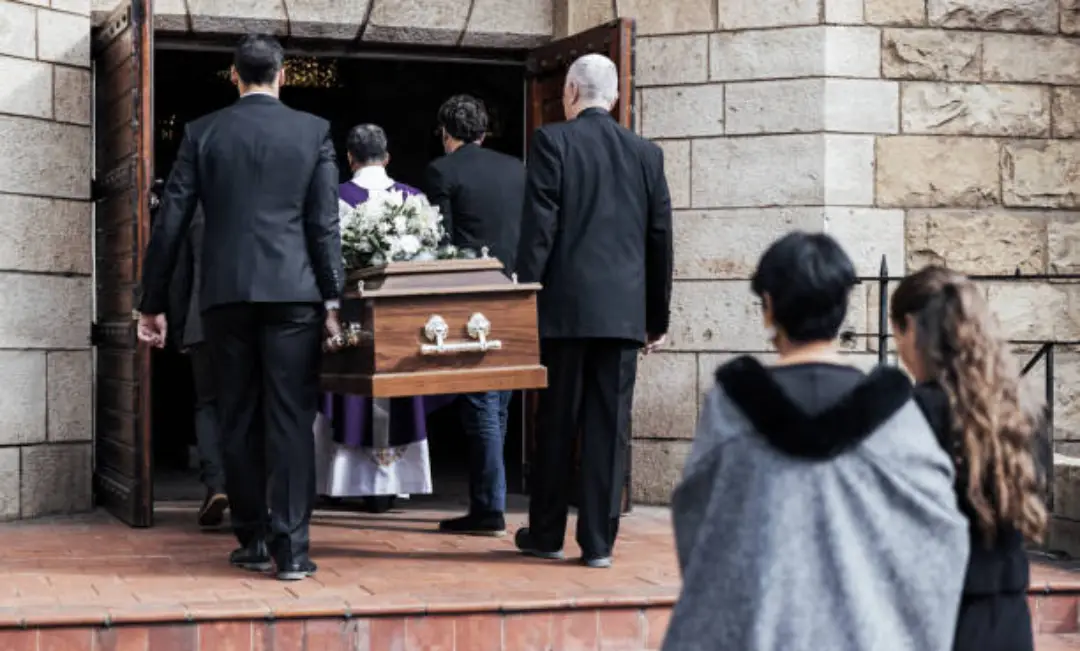
The silence of a Toronto winter morning is heavy—the kind that settles over the city after a night of freezing rain, when the snowbanks are crusted with gray and the sky hangs low and metallic. You can hear the hum of the furnace through the walls, the occasional hiss of a passing car on slush, but otherwise the world feels padded, insulated, distant.
The silence on the phone, though—my sister’s silence before she spoke—was heavier still.
I had my coffee mug halfway to my lips when the call came in. The display simply said “Glenda.” No emoji, no exclamation marks like she usually added when she wanted something from me. Just her name, stark and simple against the gray morning light filtering through my kitchen window.
I pressed accept and held the phone to my ear, already feeling a knot form in my stomach. Glenda never called this early unless something had gone wrong—or she needed something.
“She’s gone.”
Her voice was flat, practiced, as if she’d been rehearsing those two words during her drive to wherever she was calling from. Papers rustled in the background, and I could hear the faint murmur of other voices—an office, maybe, or a lobby.
“Diane, did you hear me?” she continued quickly, as if ticking items off a checklist. “Mom passed away at four this morning. The facility said it was heart failure. Very peaceful. She didn’t suffer.”
For half a second, everything inside me stilled. My mind didn’t blank the way people say it does in moments of shock. Instead, it sharpened, like camera lenses snapping into perfect focus. I gripped the edge of the kitchen counter, the cold granite solid beneath my palm.
“Heart failure?” I managed. “When did they call you? Why didn’t anyone—”
Glenda didn’t wait for me to finish.
“I’ve already handled the legalities,” she said, her tone shifting into what I recognized as her business voice—brisk, efficient, brooking no questions. “Since I have power of attorney and the updated will Mom signed last month, I’ll be taking over the Richmond Hill property and managing the investment portfolio. There’s a blue envelope in the mail for you. Consider it a gift from me. A generous one, actually. Don’t call me—I’m busy with the estate arrangements.”
The way she said it—”I’ll be taking over”—like she was discussing a corporate acquisition rather than our mother’s death.
“There’s going to be a small memorial service on Friday,” she added, almost as an afterthought. “Eleven a.m. at the estate. I’ll send details. Again, don’t call me. I have meetings all day.”
Then came the soft click, and nothing but the dull dial tone.
I stood there in my kitchen, still holding my mug, the steam curling into my face. The old oak table in front of me, the pale gray slush piling up outside the window, the magnet-studded refrigerator humming quietly—all of it looked exactly the same as it had five minutes earlier.
But something fundamental in the architecture of my world had shifted, and every instinct I’d honed over forty years was screaming that the structure Glenda had just described was built on a rotting foundation.
My name is Diane Harrison. I’m sixty-four years old, a widow, and to most people, I’m just a retired professional with sensible shoes and comfortable sweaters who does crossword puzzles and meets old colleagues for lunch. But my mind doesn’t work like most people’s minds, because I spent four decades as a forensic architect—the person they called after buildings failed, after parking garages collapsed, after condo balconies sheared off and school roofs sagged over gyms full of students.
My job was to walk through wreckage and answer the question everyone was too afraid to ask: which bolt failed first? What hairline fracture in the design, in the steel, in the oversight, had grown quietly and patiently until everything came down?
Right now, standing in my kitchen with Glenda’s words echoing in my head, I felt that familiar sensation. The air might as well have been filled with dust and dangling electrical wires. Glenda’s story was a wall of crumbling brick, and I needed to find where the collapse had started.
“Heart failure at four a.m.,” I murmured to myself, setting the mug down carefully. “No previous calls. No warning. No chance to say goodbye.”
Our mother, Helen, was eighty-five. Old, yes. Fragile in some ways, certainly. But she was not a woman who faded quietly into the night. This was the woman who did the Sunday New York Times crossword in pen, who corrected my grammar over Sunday roast, who’d refused a walker for years because “I still remember how to use my legs, thank you very much.”
Two months ago, Glenda had moved her into The Willows, a high-end eldercare facility with polished floors and brochures full of smiling seniors doing watercolors and tai chi. She’d claimed Mom had “aggressive late-stage cognitive decline”—a phrase that had clanged in my ears like a warning bell the first time I heard it.
And yet the last time I’d spoken to Mom on the phone, just three weeks ago, she’d corrected my Latin pronunciation and reminded me to check my tire pressure before the first major snowfall.
I’d tried to visit her at The Willows twice. Both times, I’d been turned away at reception with polite but firm explanations: “Your mother is resting,” “She’s having a difficult day,” “The doctor recommends limited stimulation.” When I’d pushed back, they’d informed me that Glenda held medical power of attorney and had restricted the visitor list to “immediate caregivers only.”
That power of attorney—pushed through during what Glenda called “a confused spell”—had effectively locked me out of my own mother’s life.
Now, apparently, Mom was gone. At four in the morning. On a Tuesday. From “heart failure.” And Glenda had already moved on to cataloguing assets.
I looked at my phone, then at the front hall where the mail basket sat with a few flyers peeking out. The mention of a blue envelope felt deliberate, performative—like evidence being planted at a crime scene.
I walked to the basket and found it immediately: powder blue, my name printed in an elegant calligraphic font that Glenda liked to use for her real estate marketing materials. “Diane Harrison,” looping and delicate, like a wedding invitation.
I held it for a moment, feeling its thickness. A check, probably. A fraction of an estate she’d already mentally divided and spent a dozen times over.
I didn’t open it.
Instead, I slipped it into the kitchen junk drawer—that graveyard of rubber bands, dried-out pens, and takeout menus—and pushed it closed with a firm click.
The forensic part of my brain was fully awake now, every nerve humming with focused attention.
I grabbed my coat from the hook by the door—dark wool, warm enough for January—and slid my feet into my winter boots. I wrapped a scarf around my neck and picked up my purse, my fingers automatically checking the small zippered compartment inside.
Old habits from old investigation sites: I kept a steel measuring tape, a pocket magnifier, and most importantly, several small sterile sample vials in a padded sleeve. Concrete dust, soil samples, corrosion flakes—I’d collected them all over the years, tiny fragments that told enormous stories.
“Let’s see what’s rotting in your foundation, Glenda,” I muttered, stepping out into the gray morning.
The cold hit my face immediately, sharp and clean. My breath puffed out in small clouds as I walked down the driveway, my boots crunching on the salt-and-ice mixture I’d spread the previous evening.
The drive to The Willows took thirty minutes through sparse morning traffic. I don’t remember much of it—the way you don’t remember highways you’ve traveled a thousand times when your mind is elsewhere. My wipers beat a steady rhythm against the windshield, smearing road salt and slush, while my brain assembled a mental blueprint.
Timeline: Two months ago, Mom moved from the Richmond Hill house to The Willows. Primary decision-maker: Glenda, armed with a power of attorney signed under circumstances I’d never been able to verify. Recent events: A new will signed last month, giving Glenda the family property and investment portfolio. Me, reduced to a “blue envelope.” Cause of death: “Heart failure” at 4 a.m., reported via phone by Glenda herself, not by any medical staff. No opportunity for me to see Mom, to speak with her, to verify her condition before she allegedly died.
And then there were Glenda’s exact words, replaying in my head: “She’s gone.” Not “I’m so sorry.” Not even “Mom died.” Just “She’s gone”—like she was reporting the liquidation of a stock position.
The Willows sat on the edge of the city where old farmland met newer developments. When I pulled into the visitor lot, my tires crunched over salted ice. The building itself was modern faux-comfort architecture: warm-toned bricks, lots of glass, a pitched roof trying desperately to look residential rather than institutional.
As an architect, I always looked past façades. I saw the loading docks, the service corridors, the utility access points—the building’s real skeleton beneath its cosmetic skin.
I didn’t go through the front entrance with its glass doors and watchful reception desk. Instead, I drove around to the service area, where a white laundry van sat with its rear doors open. A young man in a gray uniform shirt was pushing a wheeled cart loaded with bagged linens toward a side door.
I timed my approach to his, falling into step behind him as if I belonged there.
“Cold one today,” I said casually.
“Always is,” he grunted, using his hip to push open the door.
It led into a narrow corridor lined with industrial lighting and exposed pipes along the ceiling. Warm, humid air hit my face, carrying smells of bleach and overcooked vegetables. The delivery worker didn’t look back—people rarely do when you move with confidence and purpose.
I followed the corridor to a service elevator, pressed the button for the fourth floor, and watched the numbers climb: 2… 3… 4.
The doors opened onto a carpeted hallway with soft pastel walls and tasteful framed prints of flowers and landscapes. The air smelled faintly of disinfectant overlaid with something sweeter, like air freshener trying too hard to smell like citrus and lavender.
I walked down the hall, counting doors until I reached the one I’d memorized from my blocked visits: Room 402.
My mother’s room.
The door was slightly ajar.
For a moment, my hand hesitated on the handle. Glenda’s words—”Mom passed at four this morning”—hung in my memory. I steeled myself for an empty bed, neatly made, the space already sanitized and ready for its next occupant.
I pushed the door open.
A woman sat by the window, silhouetted against pale morning light filtering through half-closed blinds. For one strange, disorienting moment, I thought I’d entered the wrong room or stepped into some kind of temporal echo.
White hair, thinner than I remembered. Sloped shoulders under a pale blue cardigan. Hands resting on the arms of a high-backed chair.
My throat tightened so suddenly I couldn’t breathe.
“Mom?” I whispered.
She didn’t move at first. Her gaze angled toward the window, unfocused, as if watching something far away that only she could see. The profile of her face looked older—lines around her mouth deeper, skin paper-thin—but unmistakably hers.
Then I saw her fingers.
They were tapping a rhythmic pattern on the chair’s armrest: long, short, long, long.
I froze, recognition flooding through me like ice water.
That pattern. When I was eight years old and terrified of my first day of school, Mom had stood in the classroom doorway, her hand resting on the frame, fingers tapping that exact rhythm. It was her tell, the habit she had when she was thinking hard, analyzing, planning. She’d been a schoolteacher before she became our mother, and that little pattern was as distinctive as a fingerprint.
I crossed the room slowly, my boots sinking into soft carpet, my heart hammering against my ribs. Up close, I could see age spots on her hands, veins a delicate blue beneath translucent skin. The tapping continued, steady and deliberate.
I moved to face her directly.
Her eyes looked straight ahead, pupils unfocused, face slack. For a terrible moment, my heart sank like a stone dropped into deep water. Maybe Glenda had been right. Maybe Mom really had slipped away inside her own mind before her body could follow.
“Mom?” I said again, louder this time. “It’s me. Diane.”
No reaction. Nothing in her expression changed.
Then, in the hallway outside, footsteps passed—the squeak of rubber-soled shoes on linoleum. A nurse’s voice murmured something about medication schedules, and someone laughed softly in response.
As the sounds faded, my mother’s eyes snapped to mine with such sudden clarity that I actually gasped.
It was like watching shutters fly open on a darkened house. The vacant softness vanished instantly. Her gaze sharpened, focused, blazingly intelligent, and I was staring at the woman who’d terrorized lazy students with grammar drills and refused to accept anything less than intellectual rigor.
“Diane,” she hissed, her voice low and fierce. “Check the tea.”
My knees nearly gave way. “I—Jesus, Mom,” I whispered, bending closer. “Glenda said you were—”
“Check. The. Tea,” she repeated, cutting me off with the impatient tone of someone who doesn’t have time for emotional reunions when there’s work to be done.
I followed her eye line to the small table beside the bed. A white ceramic mug sat there, a ring of darker liquid staining its interior, a faint herbal scent rising from cold dregs. Beside it, a plastic pill organizer held a neat row of tablets in day-labeled compartments.
I crossed to the table and picked up the mug carefully, peering at the remnants. The tea was pale yellowish-brown—chamomile, maybe, or something similar. But there was an oily film on the surface that didn’t look right.
I set the mug down and reached into my purse, fingers closing around a sample vial from the padded sleeve. Old habits, still useful. I unscrewed the cap, tilted the mug carefully, and let a small amount of the liquid run into the sterile container. I sealed it and tucked it back into my purse.
“What’s in it, Mom?” I asked quietly.
She glanced toward the door, then back at me, eyes blazing with controlled fury. “Vitamins,” she said, her voice dripping with contempt. “Glenda calls them vitamins. Special supplements for cognitive health.”
Her hand trembled slightly on the chair arm—whether from age or rage, I couldn’t tell.
“They make everything gray,” she continued, her voice dropping to barely above a whisper. “They make me sleepy, confused. My thoughts get sticky, like trying to walk through mud. I’ve been spitting the pills into that silk plant for three days.”
She nodded toward the corner where a tall artificial ficus stood in a decorative pot, its leaves glossy with that slightly-too-perfect sheen that fake plants always have.
A cold, grim satisfaction settled in my chest. She was still in there. Still fighting. Not gone at all.
“She’s coming back today,” Mom continued, leaning forward slightly. “Glenda. With a man in a suit—a notary. She wants me to sign over the Muskoka property.”
The Muskoka land. The lakefront property where we’d spent every summer of my childhood. The cabin Dad had built with his own hands, the dock that creaked when you walked on it, the smell of pine and damp earth and sunscreen. It wasn’t just land—it was family history, memory made tangible.
“She told me you were dead,” Mom added, her mouth tightening into a thin line. “Car accident, very sudden. She’s holding a funeral for you this Friday at the Richmond Hill house. Eleven a.m. I’m apparently supposed to be too grief-stricken and medicated to attend.”
Something inside my chest went very still, like the moment of absolute silence before a structure begins to collapse. Then, slowly, my understanding of Glenda’s plan began to rearrange itself into something even more disturbing than I’d imagined.
She wasn’t just stealing from Mom. She was erasing me entirely from the narrative, making it impossible for anyone to question her actions because the only other person who might object was supposedly dead.
I looked at my mother—this woman who’d raised two daughters, taught hundreds of students, survived widowhood and aging and now this calculated betrayal—and saw steel in her eyes.
“Then we’d better make sure it’s a funeral they never forget,” she said.
A laugh bubbled up in my throat, half hysteria and half pure admiration. I bit it back, but moisture stung my eyes.
I couldn’t just walk out with her. Glenda held the medical power of attorney. On paper, she was the responsible daughter taking care of her cognitively impaired mother. If I tried to remove Mom from the facility, Glenda could call the police, and I’d be arrested for kidnapping a vulnerable adult.
No, I thought, my architect’s mind already sketching solutions. You don’t demolish a building by attacking random walls. You identify the load-bearing structures and remove support systematically until the whole thing comes down in a controlled collapse.
“I need forty-eight hours,” I said.
Mom nodded once, sharply. “You have until Friday morning,” she replied. “That’s when I’m supposed to be mourning your tragic death.”
I squeezed her hand, feeling familiar bones and tendons beneath papery skin, feeling her squeeze back with surprising strength.
“Then let’s make sure there’s a different kind of burial,” I said.
The next two days were the most intense professional challenge I’d faced since my last major investigation, with one crucial difference: if I made a mistake now, it wasn’t concrete and steel at risk—it was my mother’s life and freedom.
As soon as I left The Willows, I sat in my car in the parking lot, windshield fogging with my breath, and pulled out my phone. I scrolled through contacts until I found Marcus Green, a digital forensic investigator I’d worked with on several insurance fraud cases. If there was a financial trail, a hidden account, a suspicious transaction, Marcus could follow it back to its source.
He answered on the second ring. “Diane! I was just thinking about you. That Halifax condo collapse is back in the news—they quoted your report about cascading structural failures. You’re basically a legend in the field now.”
“Marcus, I need a favor,” I said, cutting through the pleasantries. “A deep dive on Harrison Heights Realty. That’s my sister’s company.”
He whistled softly. “Problem with one of her buildings?”
“Problem with the person who owns the buildings,” I said. “I need you to look at her debt-to-equity ratio, outstanding loans, liens, anything that smells off. And Marcus—check for offshore accounts and unusual transfers.”
There was a beat of silence. “You’re serious.”
“Completely,” I said. “And Marcus? I need it fast. I’ve got maybe forty hours.”
“I’ll get on it,” he said, and I heard the shift in his voice from casual to professional. “You’ll have something by tonight.”
Next, I needed leverage against the facility itself. The Willows operated in a heavily regulated industry, which meant they were vulnerable to certain kinds of pressure—specifically, the threat of liability.
I drove home and spent the afternoon pulling together what I remembered about Ontario healthcare facility regulations, elder care standards, and abuse statutes. By evening, my dining table was covered with printed documents, legal pads filled with notes, and a growing list of potential violations I’d observed during my brief visit to Mom’s room.
At six o’clock, as winter darkness pressed against my windows, my phone rang.
Marcus.
“Diane,” he said, and I could hear excitement mixed with concern in his voice. “Your sister isn’t just overextended. She’s in complete free fall.”
I closed my eyes briefly, not from surprise but from the bitter satisfaction of having a suspicion confirmed with hard numbers.
“Tell me,” I said.
“She took out a bridge loan eighteen months ago,” Marcus explained, papers rustling in the background. “Twenty million from a banking consortium for a waterfront development project—Lakeside Residences. Luxury condos, rooftop amenities, the whole package.”
“I’ve seen the ads,” I said. “Glass towers with smiling couples.”
“Right. Only the development’s been frozen for nine months because of environmental permits. Wetlands on the property, indigenous land claims, the works. No construction means no pre-sales. No sales means no revenue stream.”
He paused for emphasis. “She’s four million in the hole, Diane. Between loan interest, construction penalties, and short-term credit she’s been using to stay afloat. She’s been moving money between accounts like she’s playing three-card monte, but the banks are getting nervous. A couple of her transactions have been flagged for possible fraud.”
“So she doesn’t just want Mom’s assets,” I said slowly. “She desperately needs them.”
“She needs stable collateral she can pledge to the banks to avoid default,” Marcus confirmed. “The Richmond Hill house, the Muskoka land—those are unencumbered, owned outright, substantial value. Without them, she’s looking at bankruptcy at best. At worst, criminal charges for financial fraud.”
“Which means she’s desperate,” I said. “And desperate people take risks.”
“Exactly,” Marcus said. “I’ll have a full report for you by tomorrow morning, something you can wave around if you need ammunition.”
After we hung up, I sat in the gathering darkness of my dining room, staring at the documents spread across the table, my mind working through the structural weaknesses in Glenda’s position.
She’d built her entire scheme on the assumption that Mom was actually impaired, that I was too distant to notice or care, and that she could move quickly enough to secure everything before anyone asked questions.
But every assumption was a potential failure point.
The next morning, I dressed in a charcoal blazer and slacks—professional, authoritative—and gathered several official-looking documents I’d printed: building inspection checklists, facility compliance forms, elder care regulation summaries. I clipped them into a folder, grabbed a clipboard, and drove to The Willows.
This time, I walked through the front doors.
The receptionist gave me a polite, practiced smile. “Good morning. How can I help you?”
“I’m here to see your facility director about some compliance concerns,” I said briskly, just letting the edge of the clipboard peek out of the folder. “I’m conducting a preliminary safety review, and I’ve identified several issues that need immediate attention.”
The words “compliance” and “safety review” are magic in heavily regulated industries.
Her smile faltered. “Do you have an appointment?”
“I’m sure Mr. Avery will want to make time,” I said calmly. “I noticed several code violations on my last visit that could become legally problematic if not addressed. I’d rather discuss them privately before filing an official report.”
Ten minutes later, I was sitting in a small conference room with Richard Avery, the facility director—a man in his mid-fifties with thinning hair and a tie slightly askew from what looked like a stressful morning.
“Ms. Harrison,” he said carefully, “I understand you have some concerns?”
“Several,” I said, opening my folder. “I spent forty years as a forensic architect, Mr. Avery. I’ve investigated structural failures, safety violations, and regulatory oversights that led to catastrophic failures. I know what small problems look like before they become disasters.”
I let that settle, watching his expression shift from polite attention to genuine worry.
“Your facility has some concerning issues,” I continued. “The handrail on the main staircase is below code height. The anti-slip coating near the entrance is worn through in several high-traffic areas. Emergency exits have obstructions—I counted three mobility devices partially blocking clearances.”
His face paled slightly with each item.
“Those are structural concerns,” I said. “But what really worries me—and what will worry regulators much more—is the medical oversight in room 402. My mother, Helen Harrison, appears to be receiving heavy-duty antipsychotic medications despite having no documented history of psychosis or severe dementia.”
I slid a printed article across the table—a public health report about overprescription in long-term care facilities.
“If I discover there’s any kind of kickback scheme involved with Dr. Aerys,” I said quietly, “this facility won’t be the only thing that collapses.”
His hand gripped the arm of his chair. “Ms. Harrison, I assure you—”
“I’m not interested in assurances,” I interrupted. “I’m interested in documentation. I want visitor logs for room 402 for the past two months. I want copies of any medication authorization forms signed by my sister. And I want them within the hour, or my next call is to the provincial health inspector.”
He licked his lips, calculations flickering across his face. Finally, he nodded.
“Give me forty-five minutes,” he said.
It took exactly forty-three.
He returned with a printed stack of visitor logs and a slim file folder, setting them on the table with visible reluctance.
“If there are issues with Dr. Aerys,” he said carefully, “we want to know about them. Off the record.”
“Of course,” I said, already scanning the first page.
The visitor logs told a damning story. Glenda had been visiting late at night—10:30 p.m., 11:00 p.m., even past midnight—far outside regular visiting hours. Several entries included notes: “Meeting with notary,” “Legal consultation,” “Document signing.”
She’d been treating Mom’s room like a private office.
The same names appeared repeatedly alongside hers: Dr. L. Aerys, N. Henderson (Notary), and an assistant from her real estate company.
The medication forms showed a steady escalation over six weeks: benzodiazepines, antipsychotics, dosages increasing with each update. Things designed to blur thoughts and dull resistance.
I left the facility with copies of everything, a cold anger burning in my chest.
Thursday evening, the night before my supposed funeral, I returned to room 402 one final time.
I went through the front entrance again, signed the visitor log with my real name, and took the elevator to the fourth floor. Mom was in her chair, and when she saw me, her whole face brightened before she consciously schooled it back to neutral.
“She called earlier,” Mom said as soon as I closed the door. “She’s coming tonight with ‘one final document’ for me to sign.”
“Perfect,” I said, pulling a small device from my purse—a high-definition button camera I’d used for documenting hard-to-reach structural details on investigation sites. “We’re going to record everything.”
I positioned the camera in the curtain fabric near the window, angling it to capture the chair, the table, and the door. I checked the feed on my phone—crystal clear.
“This will record everything she says and does,” I told Mom. “Every word. Every coercion. Every signature she forces.”
Mom took a deep breath, squaring her shoulders. “Good,” she said. “Because I’m apparently attending your funeral tomorrow, and I’d like to have evidence ready when I crash that particular party.”
I squeezed her hand. “You remember when you taught me about load-bearing walls? When I wanted to rearrange my bedroom?”
She smiled faintly. “You were ten. Very determined.”
“You told me I couldn’t knock down the wall between my room and the hallway because it was holding up everything above it,” I said. “You said, ‘You can’t remove what keeps the roof from falling, Diane.'”
“You called it tyrannical maternal overreach,” she said, eyes twinkling.
“I’d just learned the word ‘tyrannical,'” I admitted. “But you were right. Some things hold everything else up. Glenda thinks you’re just a wall she can move to make room for her design. She’s wrong. You’re the foundation of this family.”
Mom nodded, her spine straightening with resolve.
I helped her settle into position, made sure the untouched tea was visible on the table, then crossed to the large wardrobe in the corner. It smelled faintly of fabric softener and old wood when I stepped inside, shifting hanging clothes to make space. I pulled the door mostly closed, leaving just enough gap for air and sight.
Through the narrow opening, I could see the chair, the table, the door. I opened my phone’s camera app and started recording a backup angle.
Then we waited.
Fifteen minutes crawled by. Twenty. The building’s evening sounds filtered through: distant television laughter, cart wheels in corridors, muffled conversations.
Then the door handle turned.
Glenda’s heels clicked on the threshold—sharp, purposeful. “Hi, Mommy,” she called out in that sugary voice she used at charity galas, dripping with false warmth.
She stepped into view: black pencil skirt, fitted blazer, silk blouse that probably cost more than I spent on groceries in a month. Her blonde hair fell in perfect salon waves. A thin black veil was clipped to a headband, currently pushed up.
She was already dressed for mourning.
“I brought your special tea,” she cooed, setting a thermos on the table with elaborate care. “And Mr. Henderson is here. Just one more teensy signature, and then you can rest.”
A man in a navy suit entered behind her—late forties, thinning hair, clutching a briefcase like it might escape. This was Henderson, the notary. He looked distinctly uncomfortable, eyes darting around as if checking for witnesses.
Mom let her face go slack, her voice thin and wavering. “I’m so tired, Glenda. Can’t it wait?”
“I know, sweetie,” Glenda said, stroking Mom’s shoulder in a gesture that would look tender to anyone not hearing the steel beneath her tone. “This is the very last one. Just sign here and you can sleep as long as you want.”
Henderson unfolded a document on a clipboard. “Mrs. Harrison, this is the deed transfer for the Muskoka property. We just need your signature.”
He tapped a line with his pen.
Mom’s hand shook convincingly as she took the pen, hovering it over the paper. Glenda leaned close, her lips nearly brushing Mom’s ear.
“Sign it, Mother,” she murmured. “You can’t manage those trips anymore anyway. It’s better if I handle it. For everyone. For the family.”
I watched through the wardrobe gap as Mom’s pen scratched a shaky approximation of her signature across the bottom of the document. Henderson witnessed it with visible relief. Glenda’s eyes gleamed with satisfaction.
Every second was being recorded in perfect clarity.
When Mom’s hand slipped deliberately, making a crooked line across part of the signature, Glenda waved it off. “It’s fine,” she said to Henderson. “You witnessed it. That’s all that matters.”
Henderson grimaced but nodded. “As long as she signed in my presence,” he said nervously.
Then Glenda leaned toward him, lowering her voice but not enough. “She’ll be officially gone by Friday anyway. Just backdate it if there’s any question.”
Henderson’s Adam’s apple bobbed. He didn’t argue. Just packed his briefcase and left quickly, avoiding eye contact with everyone.
After they departed, I emerged from the wardrobe. Mom looked up at me, exhaustion and fury mingled in her expression.
“Well?” she asked.
I held up my phone, checking the recording. Clear video. Perfect audio. Glenda’s face, her words, the coercion, the conspiracy.
“We have everything,” I said.
Mom sagged back in her chair with a long exhale. “Good,” she whispered. “Because tomorrow, your funeral starts at eleven. And I plan to make an entrance.”
Friday morning dawned cold and bright, the sky a sharp blue dome over the city. By ten-thirty, I was parked on the street near the Richmond Hill estate, watching luxury vehicles fill the driveway—sleek sedans, pristine SUVs, a few sports cars. Valet attendants in black coats directed traffic.
Glenda had spared no expense for my funeral.
A white tent had been erected on the front lawn, its fabric sides rolled down against the cold, portable heaters glowing inside. Through gaps, I could see rows of white folding chairs facing a small raised platform. At the front, under a canopy of silk and flowers, sat a polished mahogany casket.
My casket.
I sat in my modest, salt-stained car and watched people arrive—business associates I recognized from Glenda’s social media, city officials, wealthy developers, the beautiful and connected of Toronto’s real estate world.
This wasn’t a funeral. It was a networking event.
At ten fifty-five, I got out of my car and walked up the driveway. People glanced at me, then did double-takes, confusion spreading across their faces.
“Is that…?”
“I thought she was…”
I caught fragments of whispers as I moved through the crowd. Glenda had clearly been laying groundwork, telling everyone about her tragically estranged sister’s sudden death, the reconciliation that never happened, the regrets.
I slipped into a seat near the back of the tent just as Glenda stepped up to the microphone at the front. She wore an elegant black dress, pearls at her throat, diamond bracelet catching light. Her veil was lowered over her face now, appropriate grief on display.
“Thank you all for coming,” she began, voice trembling just enough. “Today we gather to honor two incredible women: my mother, Helen Harrison, and my dear sister, Diane, both taken from us far too soon.”
I raised an eyebrow. Bold choice, eulogizing someone sitting fifteen rows back.
“My mother was a pillar of this community,” Glenda continued, hands folded on the podium. “She believed in progress, in building legacies. In her final days, she entrusted me with the family estate to ensure her vision would continue—to create something that honors her memory while serving this community.”
She was already pivoting to her development pitch. At my funeral.
“She believed in me,” Glenda said, voice thickening with practiced emotion. “She knew I would honor her wishes and build something extraordinary.”
I let her speak. Let her construct her narrative brick by brick, painting herself as the devoted daughter, the sole heir, the responsible steward.
Then, when her speech reached its crescendo, I stood up.
My chair scraped against the ground, the sound sharp in the hushed space.
“Beautiful speech, Glenda,” I said, my voice carrying across the tent. Decades of shouting over construction equipment had given it projection.
Every head turned.
“Diane?” someone gasped.
“Beautiful speech,” I repeated, walking down the center aisle, my boots clicking on the wooden platform. “It’s a shame it’s built on a foundation of lies.”
Glenda’s eyes—visible now through the veil—went wide with genuine shock.
“How dare you,” she hissed. “How dare you interrupt—”
“I’m not interrupting my own funeral, Glenda,” I said calmly. “I’m auditing it.”
I reached the front and turned to face the crowd, holding up my phone.
“I spent forty years investigating structural failures,” I said. “Buildings that collapsed because someone ignored the warning signs, cut corners, lied about the foundation. And what I discovered this week is that my sister has been doing exactly that—except instead of buildings, she’s been demolishing our family.”
I tapped my phone screen. Glenda’s voice filled the tent, crystal clear:
“Sign it, Mother. You can’t manage those trips anymore. It’s better if I handle it.”
Then Henderson’s nervous voice: “As long as she signed in my presence.”
And Glenda again, quieter but damning: “She’ll be officially gone by Friday anyway. Just backdate it if there’s any question.”
Gasps rippled through the crowd.
Glenda’s face went pale. “Turn that off,” she snapped, stepping toward me. “This is a private—”
“Is it?” I interrupted. “Because the recording was made last night. It shows our mother—who you claimed died Tuesday morning—signing documents under coercion while you drugged her tea.”
More gasps. Someone stood up, phone out, recording.
“That’s insane,” Glenda said, voice rising. “You’re—you’re clearly unstable. Everyone, please, my sister is experiencing a breakdown—”
“Then why is the casket empty?” I asked.
Before she could stop me, I grabbed the polished wood edge and lifted the lid.
It swung open with a thud.
Inside, neatly arranged to provide weight and shape, were industrial bags of mulch.
The silence was absolute.
Then chaos erupted. Voices overlapping, chairs scraping, someone shouting “What the hell is this?”
I raised my voice over the noise. “And if our mother is dead, as Glenda claimed Tuesday morning, then who is that?”
I pointed toward the driveway.
A black SUV had just pulled up. The driver opened the rear door, and my mother stepped out.
She wasn’t in a wheelchair. She wasn’t being supported. She stepped onto the gravel firmly, one hand on the door frame, wearing her favorite crimson suit—the one she’d worn to important occasions throughout my childhood.
Her white hair was perfectly styled. Her lipstick was a calm, lethal red.
Beside her walked Robert Chen, our family attorney, and two uniformed officers from the financial crimes division.
The crowd parted like water as they approached.
Glenda staggered backward, her heel catching on the platform edge. For a moment, she looked genuinely terrified—not of consequences, but of the ghost she’d thought she’d successfully buried.
Mom climbed onto the platform, took the microphone from Glenda’s slack grip, and faced the assembled crowd.
“The reports of my death,” she said clearly, “have been greatly exaggerated.”
Nervous laughter rippled through the gathering.
“But the reports of my daughter’s financial fraud,” Mom continued, her gaze cutting to Glenda, “are entirely accurate.”
Robert Chen stepped forward, holding up a folder. “We have documented evidence of elder abuse, coercion, medication tampering, and fraudulent document signing. As of this morning, all transfers of the Harrison estate have been frozen, and Ms. Glenda Harrison’s accounts are under investigation.”
The two officers approached Glenda, who’d collapsed onto the platform steps.
“Glenda Harrison?” one said formally. “You’re under arrest for elder abuse, financial fraud, and conspiracy to commit probate fraud.”
“No,” Glenda whispered, shaking her head. “No, this is—I’m her power of attorney. I have legal authority—”
“You had authority,” Robert corrected. “Until Mrs. Harrison revoked it yesterday in the presence of two independent witnesses and myself.”
He held up the document, signatures clear.
Glenda’s carefully constructed façade shattered completely. “You’re all believing her delusions,” she spat, pointing at Mom. “She’s eighty-five. She doesn’t know what she’s saying. Diane manipulated her—she’s always been jealous—”
“Enough,” Mom said, and the single word carried such authority that Glenda actually flinched.
“You told me my daughter was dead,” Mom continued, her voice steady but edged with steel. “You drugged my tea and called it vitamins. You brought strangers into my room at midnight to sign away my home. I may be old, Glenda, but I am not confused. And I am not your asset to liquidate.”
The officer stepped forward with handcuffs. “Ms. Harrison, I need you to stand up.”
Glenda looked at the cuffs, at the gathered crowd with their phones out recording every second, at Mom standing tall in her crimson suit.
Then she lunged—not at the officers, but at me.
“You ruined everything!” she screamed, fingers clawing toward my face. “You always ruin everything!”
I stepped aside smoothly. She stumbled, her heel catching, and the nearest officer caught her arm, twisting it firmly behind her back as he secured the handcuffs.
“Ma’am,” he said tightly, “stop resisting.”
They led her across the lawn toward a waiting police car, past the white lilies and expensive arrangements, past the stunned guests, past the empty casket filled with mulch.
I watched her go, feeling nothing but a vast, tired relief.
Then I turned to Mom, who was gripping the podium rail with both hands, adrenaline fading now, leaving her pale and shaking.
I climbed the steps and put an arm around her shoulders.
“Show’s over,” I said quietly.
She leaned into me, exhaling a long, trembling breath. “Not bad for an eighty-five-year-old, hm?”
“Not bad at all,” I agreed.
The aftermath wasn’t dramatic or cinematic. There were no tearful courtroom confessions. Instead, there were weeks of statements and paperwork, interviews and depositions, hours in fluorescent-lit rooms with bad coffee.
The video I’d recorded became central evidence. Marcus’s financial audit showed the web of failing loans and desperate transfers. Dr. Aerys, confronted with proof of kickback payments from pharmaceutical companies, folded immediately and confirmed he’d been overprescribing sedatives.
Glenda lost her real estate license, her company, and her reputation. But more than that, she lost the thing she’d wanted most: the family estate slipped entirely from her grasp.
Mom never returned to The Willows. The day after the non-funeral, we walked through the front door of the Richmond Hill house together, and she stood in the hallway breathing in the smell of old wood and dust and home.
“This feels surreal,” she murmured. “Like I’m trespassing in my own life.”
“You’re reclaiming it,” I corrected.
We hired trustworthy caregivers, converted a main-floor room into a comfortable bedroom, and slowly rebuilt routines that weren’t based on control or medication or lies.
Sometimes, in the afternoons, I’d spread blueprints across the kitchen table—not for buildings, but for home modifications. Ramps, railings, accessibility improvements.
“We could widen this doorway,” I’d suggest. “Add support here.”
“We?” Mom would tease.
“I’m still an architect,” I’d reply. “Just working on a different kind of structure.”
One evening, about a month after everything, we sat on the back porch watching sunset bleed orange and pink across the winter sky. Mom cradled tea in her hands—real tea, prepared by her own choice—and looked at me with an expression I couldn’t quite read.
“I always worried I raised you to be too analytical,” she said. “Too focused on bolts and beams instead of feelings.”
“Feelings collapse without proper support,” I said.
She laughed softly. “What you did—what you do—isn’t just about buildings. You see where things break before they fall. You saved me because you knew which cracks to follow.”
I squeezed her hand. “I’m an architect, Mom. I know a house can be rebuilt. Walls can be moved. But the foundation has to be honest, or everything built on top is just waiting to fail.”
She nodded, eyes bright with unshed tears. “We ignored too many cracks with Glenda, didn’t we?”
“We wanted to believe the best,” I said gently. “We patched over problems instead of addressing them. That’s not unique to buildings—it’s how families fail too.”
We sat in comfortable silence as stars began to prick through the darkening sky.
The Harrison estate still stands—not as a luxury development or a monument to anyone’s ambition, but as a home. Slightly drafty, slightly creaky, utterly imperfect, and absolutely genuine.
Glenda chose profit over people, assets over relationships. She forgot that structures built on betrayal have no foundation at all.
But this story isn’t just mine. It’s a warning.
Elder abuse doesn’t always look like bruises or shouting. Sometimes it looks like a beautiful facility with friendly staff and tea that makes your thoughts go gray. Sometimes it looks like a loving daughter with a power of attorney and a mounting pile of debt.
It thrives in silence. In our reluctance to ask hard questions about people we love.
Don’t wait for the roof to cave in. Don’t ignore small cracks because you’re afraid of what they mean. Don’t assume someone else has everything under control just because they claim they do.
Check on your loved ones today. Visit them. Look at their medication bottles. Listen to what they say—and what they don’t say. Notice the silences.
If something doesn’t add up, don’t dismiss it.
You don’t need to be a forensic architect to see cracks in a foundation.
You just need to be willing to look.

Ethan Blake is a skilled Creative Content Specialist with a talent for crafting engaging and thought-provoking narratives. With a strong background in storytelling and digital content creation, Ethan brings a unique perspective to his role at TheArchivists, where he curates and produces captivating content for a global audience.
Ethan holds a degree in Communications from Zurich University, where he developed his expertise in storytelling, media strategy, and audience engagement. Known for his ability to blend creativity with analytical precision, he excels at creating content that not only entertains but also connects deeply with readers.
At TheArchivists, Ethan specializes in uncovering compelling stories that reflect a wide range of human experiences. His work is celebrated for its authenticity, creativity, and ability to spark meaningful conversations, earning him recognition among peers and readers alike.
Passionate about the art of storytelling, Ethan enjoys exploring themes of culture, history, and personal growth, aiming to inspire and inform with every piece he creates. Dedicated to making a lasting impact, Ethan continues to push boundaries in the ever-evolving world of digital content.