The Ring, The Truth, and The Reckoning: How Grandma’s Final Plan Exposed a Lifetime of Family Lies
My Aunt Linda had wanted Grandma’s diamond ring for as long as I could remember. Not because it was beautiful—though it was—but because it represented everything she thought she deserved and had never received. Recognition. Value. Proof that she mattered most.
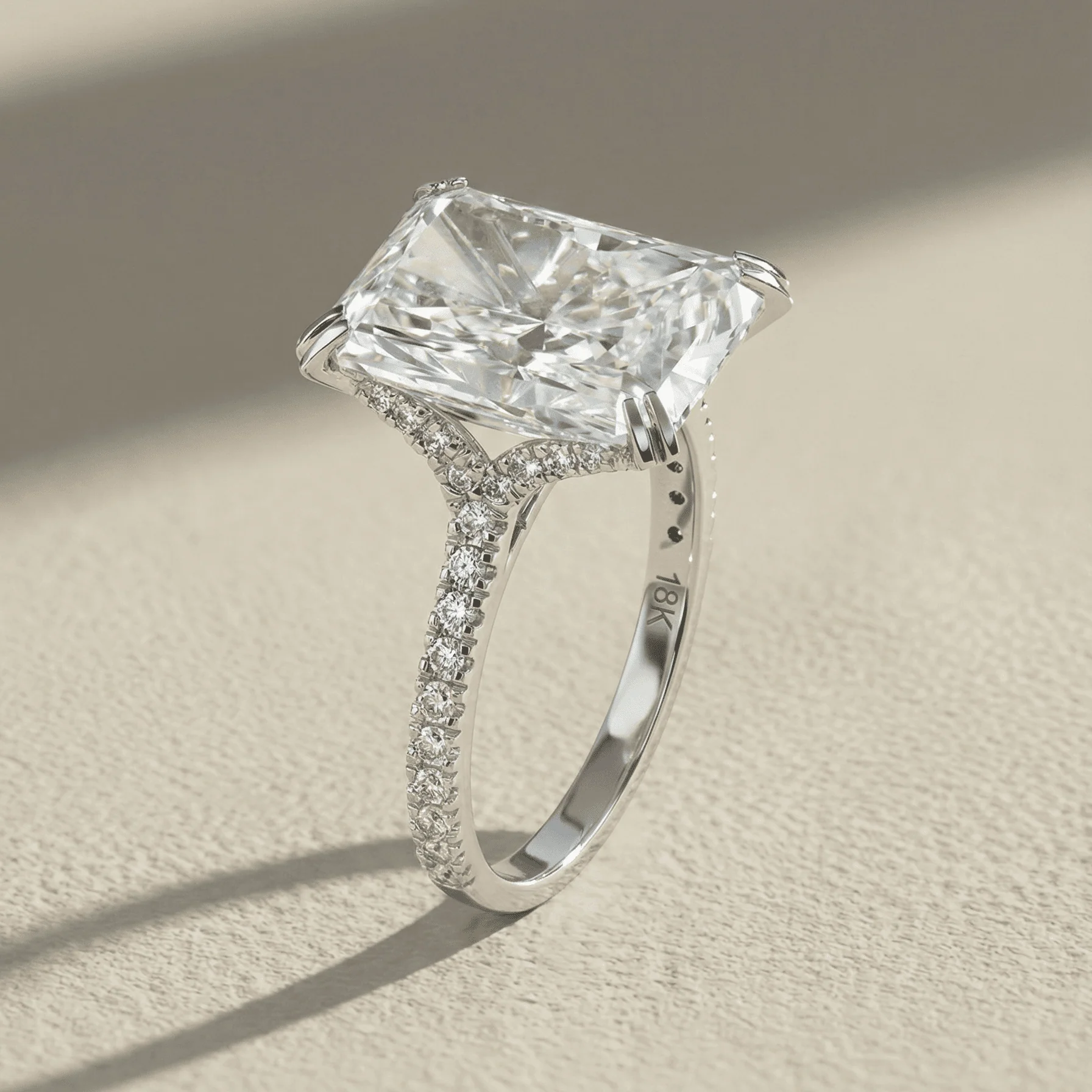
The vintage two-carat diamond was a legend in our family. Grandpa had bought it for Grandma after coming home from World War II, using money he’d saved during three years of combat pay. It wasn’t just jewelry. It was a symbol of love that had survived separation, war, and decades of marriage.
But as Grandma lay dying in that hospice bed, frail and fading, the only thing Linda seemed to care about was the glimmer on Grandma’s left hand.
I was there when it happened. We were all gathered around her bed saying our final goodbyes—Mom holding her hand, Uncle Ray reading her favorite psalm, the cousins whispering how much they loved her. I was holding Grandma’s feet, telling her she’d been the best grandmother anyone could ask for.
That’s when Linda leaned over to “kiss her forehead goodbye.”
Her hand slid smoothly over Grandma’s left hand. One fluid motion, like she’d practiced it. One second, the diamond flashed under the fluorescent lights. The next second, it was gone—slipped clean off Grandma’s finger and into Linda’s cardigan pocket.
I froze, my mouth opening to say something, anything.
Then Grandma’s eyes opened.
She looked straight at me. Then at Linda. Her gaze was clear, alert, completely aware of what had just happened.
And she gave the faintest, saddest little smile.
She didn’t fight. She didn’t accuse. She just closed her eyes and let it happen.
I almost exposed Linda right there. The words were on my tongue—”She took the ring, she stole it while you were dying”—but something about that look Grandma gave me stopped me cold. There was acceptance in her eyes, but also something else. Knowledge. Like she’d expected this exact scenario.
Grandma passed away twenty minutes later, with Linda’s fake sobs the loudest in the room.
The Funeral
Linda played the grieving daughter perfectly at the funeral. She called herself “Mom’s favorite” to anyone who would listen, dabbed her eyes with lace handkerchiefs, and gave a eulogy about how much she’d learned from Grandma’s strength and integrity.
All while the stolen ring sat in her coat pocket.
She wore black Chanel—the dress she’d bought with money from her last “emergency” loan from Grandma. She positioned herself at the front of the receiving line, accepting condolences like she was the primary mourner, the most affected family member.
“She was everything to me,” Linda told the pastor. “I don’t know how I’ll go on without her guidance.”
I watched her performance with growing nausea. Every tear seemed calculated, every gesture designed for maximum sympathy. But what made it worse was that some of it might have been real. Linda had loved Grandma—in her own selfish, conditional way.
The ring burned in my mind like a secret I couldn’t carry. I found myself studying Linda’s face, looking for guilt or shame or any sign that she understood the magnitude of what she’d done. But there was nothing. Just the same entitled grief she’d worn her entire life, the assumption that being hurt gave her permission to take whatever she wanted.
The Package
Forty-eight hours after Grandma’s death, the doorbell rang at Mom’s house. We were all gathered there—the whole family still in that strange post-funeral limbo where you don’t know how to resume normal life.
A courier stood on the porch with an overnight envelope. Signature required. Addressed to “The Family of Eleanor Matthews—To Be Opened in Presence of All.”
Linda practically lunged for it. “That’s from Mom,” she said, snatching the package like it was a trophy. “She always loved me best. I bet she left me something special.”
We gathered in the living room as Linda tore open the envelope with shaking hands. Inside was a smaller box, wrapped in burgundy velvet, and a sealed letter with explicit instructions written in Grandma’s careful handwriting: “OPEN IN FRONT OF EVERYONE.”
Linda hugged the box to her chest. “This proves it,” she whispered. “She knew I needed something to remember her by.”
But when she opened the box, her face drained of color instantly.
Inside was another velvet pouch and a letter addressed to her specifically. Linda read the first line silently, and her hands started trembling so violently the paper rattled.
“No!” she gasped. “No, Mom… that’s cruel. How could you do this to me?”
“Read it out loud,” I said, stepping forward.
Linda clutched the letter to her chest. “It’s private.”
Mom’s voice was steel. “It says to open it in front of everyone. Read it.”
Uncle Ray leaned forward. “Out loud, Linda.”
Linda’s eyes darted around the room, looking for an ally, an escape, anything. Finding nothing, she began to read in a thin, strained voice:
“Linda… if you are reading this, it means you did exactly what I knew you would do.”
The room went dead silent.
Linda swallowed hard and continued. “I saw you take my ring in hospice. I chose not to stop you. I did not want a fight at my deathbed. But I also did not want Kate blamed for telling the truth.”
My stomach flipped hearing my name. Grandma had seen everything—my shock, my almost-accusation, my decision to stay quiet.
“Read the rest,” Mom said quietly.
Linda’s voice was barely audible now. “I sold the real diamond ten years ago.”
The words hit the room like a bomb. Uncle Ray straightened in his chair. The cousins looked at each other in confusion. Mom put her hand to her throat.
“Keep reading,” I said.
“The money went to pay for your third rehab program,” Linda read, her voice cracking. “You called me crying, saying you were ready to change, that this time would be different. I believed you. I wanted to believe you.”
Linda stopped reading, staring at the paper like it might catch fire.
“There’s more,” Mom said. “Finish it.”
“The ring you stole from my deathbed is costume jewelry. Glass and silver plate. Worth maybe thirty dollars. I’ve been wearing it for years because I couldn’t bear to tell anyone what I’d sacrificed for you. Again.”
Linda threw the letter down. “I didn’t ask her to sell it!”
“Yes, you did,” I said quietly. “You called her crying. You promised to change. You took her wedding ring money just like you took everything else.”
The Evidence
I reached into the box and pulled out what Linda had missed in her panic—a receipt from Murphy’s Pawn Shop, dated exactly ten years ago. The amount was heartbreaking: $4,200 for a ring worth ten times that much.
Uncle Ray read over my shoulder, his face hardening with each detail. “She gave you her wedding diamond for rehab money.”
“I was sick!” Linda snapped. “I needed help!”
“You needed help thirteen times,” Mom said quietly. “Thirteen different emergencies where Mom bailed you out. The ring was just the biggest one.”
Linda yanked the fake ring from her pocket and slammed it on the coffee table. “There! Happy? Take it! It’s worthless anyway!”
The glass stone caught the living room light, too bright, too clean, obviously fake now that we knew what to look for. I stared at it, thinking about Grandma wearing costume jewelry for ten years rather than admit what she’d sacrificed.
“You had that in your pocket at the funeral,” Ray said with disgust. “You wore it while giving a speech about Mom’s integrity.”
“I thought it was real!” Linda protested. “I thought she wanted me to have it!”
“She wanted you to have help,” I said. “She gave you help thirteen times. You never changed.”
The Second Letter
I looked back in the box and found another envelope, thicker than the first, with my name written across it in Grandma’s handwriting. Below my name, another instruction: “OPEN IN FRONT OF EVERYONE.”
Linda lunged for it. “That could be for all of us!”
I pulled it back, turning the envelope so everyone could see what was written on the flap: “If anyone but Kate opens this, you’ll prove my point.”
Uncle Ray let out a low whistle. “She planned this whole thing.”
With the weight of everyone’s attention on me, I tore open the envelope. Inside was a single sheet of paper and a folded bank slip.
I read aloud because that’s what Grandma wanted—witnesses to every word.
“Kate. You are the only one I trust to do what needs doing.”
Linda scoffed. “Oh, spare me the dramatics.”
I continued reading. “There is a small account set aside for funeral expenses and maintaining Grandpa’s headstone. This is not an inheritance. It is a responsibility.”
I unfolded the bank slip. The balance wasn’t huge—around $8,000—but Linda’s eyes locked onto it immediately.
“That’s money,” she said, and I could see the calculations starting in her head.
“Keep reading,” Ray said sharply.
“Linda will try to twist this into a prize. She will cry. She will threaten. She will promise to change. Do not give it to her under any circumstances.”
Linda’s mouth fell open. “Are you kidding me? Even from the grave, she’s punishing me!”
“She’s protecting what’s left,” Mom said, her voice cracking. “Just like she always did.”
I read the final instructions. “Within twenty-four hours, you will gather the family for Sunday dinner. You will read both letters out loud—all of it. Not to shame Linda, but to stop the lies that have been stealing peace from this family for decades.”
Linda jabbed a finger at me. “You’re going to put me on trial? You’re going to humiliate me in front of everyone?”
“We understand the situation,” Ray said calmly. “We’ve just been quiet about it for too long.”
I finished reading. “Take the funeral account to the bank. Put it under your mother’s name with two signatures required—Kate’s and hers. Linda gets no access, no matter what story she tells or what emergency she claims.”
The Confrontation
Linda looked around the room desperately, her usual tactics failing one by one. The tears that had always softened Mom’s heart. The claims of being misunderstood that had always made Ray uncomfortable enough to change the subject. The promises to do better that had worked thirteen times before.
Nothing was working.
“Kate, honey,” Linda said, switching to her sweet voice. “Let’s talk about this privately. You don’t understand the whole situation.”
“No,” I said. “We’re doing this exactly like Grandma wanted.”
Linda’s face tightened. “You think you’re so perfect, don’t you? Miss Responsible. Miss Trustworthy. But you’ve never struggled like I have. You’ve never needed real help.”
“I think Grandma deserved better,” I said. “And so did the rest of us.”
Linda grabbed her purse, her last refuge being dramatic exit. “Fine. Have your little tribunal. Read your letters. I won’t be there to listen to this character assassination.”
“Yes, you will,” I said, standing up.
“Excuse me?”
“You can show up Sunday and hear it read properly, or I’ll read it without you and your side of the story won’t exist at all.”
Her face went pale. Not from guilt—from fear of losing control of the narrative.
“I won’t soften a single word,” I added. “And I’ll make sure everyone understands exactly what these letters mean.”
That did it. Fear flashed in her eyes. Not fear of consequences, but fear of being seen clearly by people she’d been manipulating for decades.
She stormed out, slamming the door hard enough to rattle the windows.
The Truth
The silence that followed was heavy but somehow cleaner than before.
Mom sank onto the couch, looking exhausted. “She sold her wedding ring for Linda. Mom never said a word about it.”
Ray stared at the pawn shop receipt like it might explain the last ten years. “All those ’emergencies.’ All those promises to pay her back. And Mom just… took it.”
“Grandma carried it alone so we wouldn’t have to fight about it,” I said. “Now we don’t have to carry it anymore.”
We went to the bank that afternoon. The teller didn’t blink when I explained the two-signature requirement. Mom’s voice was small when she said, “My mother planned this very carefully.”
Sunday Dinner
Sunday arrived with the weight of an execution date. Mom cooked like she always did when she didn’t know what else to do—channeling her anxiety into roasts and side dishes and enough food for twice as many people.
Ray texted the cousins. Uncle Tom called the extended family. Same message: Sunday dinner, six o’clock, don’t be late.
By six, the house was full. People brought awkward silence and questions they didn’t dare ask yet. The air was thick with anticipation and dread.
Linda walked in at 5:58, dressed like she was going to court. Black dress, red-rimmed eyes, perfect lipstick. She stood in the doorway surveying the room like a defendant sizing up a jury.
“Are we really doing this?” she asked.
I pointed to an empty chair. “Sit.”
She sat slowly, radiating anger and fear in equal measure.
I stood at the end of the table with both letters in my hands. Mom took the head—Grandma’s traditional spot—and the symbolism wasn’t lost on anyone.
“I’m going to read what Grandma left for us,” I said. My voice was steadier than my hands.
Linda scoffed. “Go ahead. Make me the villain of your little story.”
I read the first letter. The hospice scene. The ring theft. Grandma’s choice not to fight. The pawn receipt. The rehab money. The fake diamond.
When I finished, nobody moved. The room felt too small to hold all the truth we’d just heard.
Linda stood up so fast her chair scraped against the floor. “Stop. Just stop this.”
“No,” I said, and opened the second letter.
I read Grandma’s instructions about the bank account, the two-signature requirement, the warning about Linda’s inevitable manipulation attempts.
When I finished, Mom let out a breath like she’d been holding it for years.
Linda’s voice shook with fury and desperation. “So that’s it? You all just hate me now?”
“We don’t hate you,” Mom said quietly. “We’re just done rescuing you from consequences you created.”
Linda looked around the table—cousins, uncles, family members who had watched this pattern play out for decades. No one stepped forward to defend her. No one offered to help solve her problems.
“I made mistakes,” she said, her voice smaller now. “I was sick. I needed help. I couldn’t help what I did.”
“Then tell the truth about what you did,” I said.
Linda’s eyes flicked around the table one more time, finding no allies, no escape routes, nowhere to hide.
Finally, she broke.
“I took the ring,” she whispered. “I took it while she was dying because I thought it was mine. I thought she would want me to have it. I thought…” She stopped, tears streaming down her face. “I thought it meant she loved me best.”
The admission hung in the air like smoke.
“I’ve felt terrible about the rehab money my whole life,” she continued. “When I saw the ring, I just wanted something to remember her by. Something that proved she didn’t regret helping me.”
It wasn’t a complete confession, but it was more truth than Linda had told in years.
She looked at Mom one last time, her eyes full of something that might have been regret.
Mom didn’t move. Didn’t reach out. Didn’t offer the forgiveness Linda was clearly hoping for.
Linda walked to the door. This time it didn’t slam. It clicked shut, soft and final.
The Aftermath
That night, after everyone had gone home and Mom was washing dishes with the mechanical precision of someone processing shock, I sent Linda a text: “You told the truth tonight. Keep doing it.”
She never responded.
Over the following weeks, the family slowly recalibrated around Linda’s absence. Sunday dinners continued, but quieter, more honest. People stopped making excuses for behaviors they’d been enabling for years. The conversations were harder but cleaner.
Mom started seeing a therapist to work through the guilt of not protecting Grandma from Linda’s constant demands. Ray began talking openly about the resentment he’d carried for decades, watching his mother sacrifice for a daughter who never seemed to learn.
I kept the pawn shop receipt in my wallet—not as punishment, but as reminder. A reminder of what love looks like when it’s asked to give everything and gets nothing but more requests in return.
The bank account grew slowly, earning interest while we figured out what Grandma would have wanted us to do with it. Eventually, we donated it to a veterans’ organization that helps families of WWII soldiers—people like Grandpa who came home and tried to build something lasting.
Linda moved across town. We heard through extended family that she’d gotten a job, was going to meetings, was trying to rebuild her life without anyone else’s money. I hoped it was true. Not for her sake—though I wished her well—but because change was the only thing that could honor what Grandma had sacrificed.
The Lesson
Six months later, I found myself cleaning out Grandma’s apartment and discovered a box of letters she’d written but never sent. Letters to Linda, written after each “emergency,” each broken promise, each time she’d chosen to give money instead of setting boundaries.
One letter, dated two years before her death, began: “I know I’m enabling you, but I don’t know how to stop loving you. I don’t know how to watch you suffer, even when the suffering is your own doing. So I give you money and hope this time will be different, knowing it won’t be.”
Another: “I sold my ring today. I told myself it was because family is more important than jewelry. But really, it’s because I’m too tired to fight you anymore. Too tired to watch you manipulate everyone into thinking I don’t care if I don’t help.”
The last letter, written just a month before she entered hospice, was the shortest: “I’m done carrying your consequences. Someone else needs to learn to say no, because I never could.”
Reading those letters, I understood why Grandma had orchestrated the ring theft, the revelations, the public reading. She’d spent decades protecting Linda from the truth about her own behavior, protecting the rest of us from having to choose sides, protecting herself from admitting that love without boundaries isn’t love at all.
The elaborate plan she’d left behind wasn’t revenge. It was her final gift to a family she’d been holding together through sheer force of will and unlimited financial sacrifice. She’d given us permission to stop enabling. Permission to tell the truth. Permission to love Linda without rescuing her from herself.
Epilogue
I still have the fake ring. It sits in my jewelry box next to the earrings Grandma gave me for my college graduation—the real ones, the ones she didn’t have to sell.
Sometimes I take it out and hold it, thinking about the years Grandma wore costume jewelry rather than admit what she’d given up. Thinking about Linda, desperately clutching a thirty-dollar piece of glass and believing it proved she was loved best.
Both women had been wearing symbols that weren’t what they appeared to be. Grandma wore fake diamonds rather than let anyone know what she’d sacrificed. Linda stole fake diamonds believing they represented something real.
The truth, as always, was more complicated and sadder than either version of the story.
But Grandma’s final plan worked. The family stopped pretending Linda’s problems were emergencies that required our constant intervention. We started having honest conversations about enabling and boundaries and what it means to love someone who consistently hurts the people trying to help them.
Linda is still family. She always will be. But she’s no longer family who gets to take whatever she wants and call it love.
And somehow, in the space that created, we found room for the kind of love Grandma had always tried to give us—the kind that protects without rescuing, supports without enabling, and sometimes says no because that’s what caring really looks like.
The real diamond is gone forever. But the truth it bought us—messy and painful as it was—turned out to be worth more than any ring could ever be.
Sometimes the most loving thing you can do is stop letting someone destroy themselves with your help. Sometimes the greatest gift you can leave behind is permission for people to tell the truth about what’s been happening in the shadows.
Grandma knew that. She planned for it. And in the end, she gave us something more valuable than diamonds:
The courage to love each other honestly.

Lila Hart is a dedicated Digital Archivist and Research Specialist with a keen eye for preserving and curating meaningful content. At TheArchivists, she specializes in organizing and managing digital archives, ensuring that valuable stories and historical moments are accessible for generations to come.
Lila earned her degree in History and Archival Studies from the University of Edinburgh, where she cultivated her passion for documenting the past and preserving cultural heritage. Her expertise lies in combining traditional archival techniques with modern digital tools, allowing her to create comprehensive and engaging collections that resonate with audiences worldwide.
At TheArchivists, Lila is known for her meticulous attention to detail and her ability to uncover hidden gems within extensive archives. Her work is praised for its depth, authenticity, and contribution to the preservation of knowledge in the digital age.
Driven by a commitment to preserving stories that matter, Lila is passionate about exploring the intersection of history and technology. Her goal is to ensure that every piece of content she handles reflects the richness of human experiences and remains a source of inspiration for years to come.