The Chest
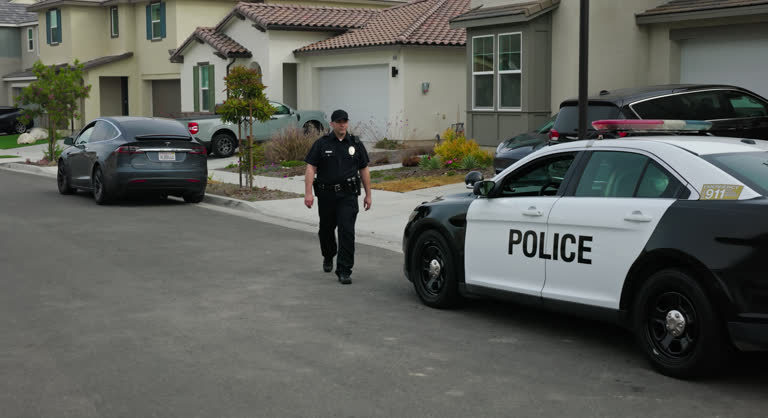
Blue lights strobed against the white clapboard, washing the front of 11 Wexley Hill Lane in a sick, pulsing glow. Three cruisers sat at odd angles in the gravel, doors open, radios crackling. An officer lifted the tape for me as I climbed out of my car.
“Ma’am? You Elise Harrow?”
My fingers tightened around my keys. “Yes. I own this house.”
He glanced over his shoulder toward the open front door. “Then you’re gonna want to see this.”
The air smelled like rain and drywall dust and something older I couldn’t name. Jonah had called less than forty minutes earlier, voice low and clipped, telling me to come immediately and to keep my parents and sister out of it. Now there were squad cars in the yard and my hands wouldn’t stop shaking.
I stepped over the threshold of the house my grandmother left me and felt, in my bones, that whatever they’d found wasn’t just about rotten wood or bad wiring. It was about the lies my family had built their lives on.
Two months earlier, I’d thought the worst thing that could happen at a funeral was an ugly floral arrangement.
The funeral home on Route 3 smelled like lilies, lemon-scented polish, and recirculated air—the kind that makes grief feel stale instead of holy. A slideshow of my grandmother’s life played on a mounted TV, her smile dissolving into the next frame every seven seconds. Margaret Jane Harrow. Eighty-two years old. Matriarch. Founder of Harrow Heritage Holdings. The only person in that room who had ever made me feel like more than a mistake with the wrong last name.
My parents sat in the front row, perfectly composed—my mother’s hair sprayed into a helmet, my father’s tie knot geometrically precise. Next to them, my older sister Karine dabbed at her eye with a monogrammed handkerchief and sighed just loudly enough for people behind us to hear. She’d picked a dress that looked more donor gala than funeral. Of course she had.
When the minister stepped aside, our family attorney rose from the aisle seat and walked to the lectern. The envelope in his hands was thick and cream-colored. He held it like it might burn through his fingers.
“Per the last will and testament of Margaret Jane Harrow, the estate shall be distributed as follows.”
My stomach dropped. We were doing this here. In front of everyone.
My parents received disbursements from the primary trust. Karine received liquid assets, marketable securities, and lifetime access to the Vineyard property. Her glossed lips twitched in satisfaction.
“And to Elise Harrow…”
Such a small pause. Half a second. But it sliced through the room.
“The testator leaves full ownership of the real property located at 11 Wexley Hill Lane, including all fixtures and contents therein.”
Silence.
“That’s it?” The question slipped out before I could stop it. “Just the house?”
Karine let out a cough that sounded like a laugh. My father didn’t turn around. My mother reached back and patted my forearm the way you’d pat a child who’d dropped an ice cream cone. “It’s a very generous gift, Elise. Houses in that area are worth quite a bit.”
“She told me everything was going to me,” I said quietly. “The business, the ring. She told me herself.”
My father turned just enough for me to see the cool boredom in his eyes. “That was before the will was finalized. Apparently, she changed her mind.”
“No. She wouldn’t do that. Not without telling me.”
Karine rolled her eyes. “Here we go. Elise being dramatic.”
“I want to see the will,” I said. “The actual document.”
“Elise,” my mother hissed, smile never leaving her face. “Not here.”
“You’re a legal representative,” I said to the lawyer. “You know you’re obligated to provide a copy to any direct heir on request.”
A muscle in his jaw ticked. “I’m afraid that’s not possible today.”
My father and the lawyer exchanged a look—a quick, sharp flicker of understanding that sliced through me like a scalpel.
“I have every right,” I said, standing so suddenly the pew creaked. “And I will not be brushed aside like some distant cousin while you all rewrite history in front of a closed casket.”
My mother’s voice dropped to a harsh whisper. “You’re ruining this.”
“She’s already gone,” I said. “The only thing left is the truth. And apparently, none of you can look me in the eye when you lie.”
I walked out into the damp parking lot like I had just slammed a door on the first act of a play I hadn’t agreed to be in.
Harroves Diner sat wedged between a nail salon and a dry cleaner. My best friend Kayla and I had been coming here since middle school. Now she sat across from me, curls piled on her head, glasses sliding down her nose, watching me try not to shatter.
“Of course they were relieved,” she said. “The way your dad and that lawyer looked at each other—that wasn’t grief. That was choreography.”
“She told me she was leaving everything to me. Not once. Over and over. She said I was the only one she trusted not to sell the company for parts.”
“I believe her,” Kayla said.
“Then why does the will say otherwise?”
“Because wills can be changed. Or altered.”
I looked up. “Altered how?”
“You’ve told me stories about your dad’s ‘creative accounting.’ You really think forging a signature would be beneath him?”
The thought had been simmering all afternoon, but hearing it aloud made my skin prickle.
“What if the document he read today wasn’t the last version she signed?”
Kayla leaned back. “Then that house might be the only piece they couldn’t easily manipulate.”
“The house is falling apart. The roof leaks. They’ve been telling me for years to sell it.”
“Exactly. If they wanted you to cave, they’d leave you something that looks like a burden. Something you might walk away from.” She paused. “Unless there’s something there they couldn’t hide anywhere else.”
Her words hung between us like steam.
“She once told me,” I said slowly, “that someday I’d have to walk through something dark. And when I did, I shouldn’t look for light. I should look for the match she left me.”
Kayla’s eyes widened. “That house is your match.”
The house on Wexley Hill had been quietly dying long before my grandmother did.
The first time Kayla and I pulled up the cracked driveway, the place looked like every cautionary tale HGTV ever aired—paint peeled to gray, shutters hanging crooked, the porch sagging as if the whole structure were exhaling its last breath.
“She really left you a horror movie set,” Kayla said.
“She loved this place. She used to say the house held our family’s spine. Without it, we’d all collapse.”
Kayla glanced at the tilted porch railing. “Well, the spine has scoliosis now.”
Inside, the air was stale and damp. Dust motes hung in slanted light. The floral wallpaper had started peeling at the seams, revealing older patterns beneath—generations of style layered over one another, the way secrets layer in families that have had too many decades to accumulate them.
My parents had told me for years to sell it. My father’s dismissive laugh: It’ll never be worth what you put into it. My mother’s careful indifference: That house is a money pit, Elise. Let it go.
My grandmother’s hand, frail but firm, squeezing mine the last time I sat at her bedside: Don’t let them strip this place for parts, sweetheart. Houses remember who tells the truth.
“No,” I said. The word surprised me with how solid it felt. “I’m keeping it.”
I started small—hauling trash, pulling carpet, learning via YouTube how to use a pry bar without destroying my hands. Every weekend I drove forty minutes from my rental in the city, bringing coffee, work gloves, and the stubborn kind of determination that grows in the wake of humiliation.
My parents asked about it once at Sunday dinner. My father suggested I sell to a developer. Karine proposed a “haunted Airbnb.” I set my fork down and said, “I’m restoring it. I’ve already started pulling permits.”
My father chuckled. “That place will collapse before it earns a dime.”
“Maybe,” I said. “But I’d rather pour my time into something honest than into the kind of lies you call work.”
The table went quiet. After that, I stopped sharing updates.
By month six, the house no longer felt like a mausoleum—it felt like a stubborn patient finally responding to treatment. I took out a small renovation loan and hired a crew with references that didn’t come from friends of my father.
That’s how I met Jonah. He ran a three-man outfit called Lakeside Restorations, his logo painted on a dented white truck. He wore faded flannel and a tool belt older than me.
“You the one who’s been doing demo by yourself?” he asked, stepping over cracked tile.
“Guilty.”
He let out a low whistle. “Most people tap out at the first sign of mold.”
“I’ve lived with worse,” I said. “Mold is honest. It shows you where the rot is.”
His bid was fair, his questions smart, and he didn’t talk down to me. We signed contracts at the kitchen counter with a cardboard box serving as a desk. Slowly, the bones of the place started to look less like a cautionary tale and more like a promise.
Then Jonah called me on a Wednesday just after noon, and everything changed.
I was eating lunch in my car at the insurance office where I worked when my phone buzzed.
“I need you to come out to the house,” Jonah said. “Now.”
“Did something collapse?”
“No. Structure’s fine.” He hesitated—and Jonah never hesitated. “Just get here. And, Elise? Don’t tell your parents or your sister you’re coming.”
By the time I turned onto Wexley Hill Lane, my knuckles were white on the steering wheel. That’s when I saw the cruisers—three of them scattered in the gravel, yellow tape stretching from the oak tree to the front steps.
Inside, the smell hit me first. Not mold or paint. Older, earthier, edged with something metallic.
Jonah stood near the fireplace. The wall above the mantel looked wrong—bricks pried loose, some stacked on a tarp, exposing a dark gap behind the remaining masonry.
“One of my guys pulled those bricks to reline the chimney,” he said. “He felt air coming through from somewhere it shouldn’t.”
He stepped aside.
Behind the missing bricks, tucked into a narrow recess my grandmother had built behind the firebox, sat a wooden chest. Dark cherry wood, brass corners softened by time. A rusted padlock lay snapped beside it.
My knees went weak.
“She built a false back,” Jonah said quietly. “Did it right, too. If we hadn’t been opening this up for inspection, it would’ve stayed hidden forever.”
A detective in plain clothes entered—badge clipped to his belt, late forties, the posture of a man who’d spent most of his career reading people in doorways.
“Detective Santos,” he said. “Given this property passed directly to you, and absent evidence of a crime, the contents fall under your property rights. However, if what’s inside relates to an ongoing investigation, we’re going to be very interested.”
“Ongoing investigation?”
Santos shrugged. “Let’s just say your family name isn’t unfamiliar downtown.”
The chest looked smaller in my attorney’s office.
Walter Emmes unlatched it with a soft click. Inside lay layers of neatly wrapped bundles: manila folders, cloth-wrapped ledger books, and on top—like a crown on a stack of evidence—a thick envelope.
FOR ELISE ONLY, the front read in my grandmother’s looping script.
I slid a finger under the flap.
She wrote about the first time she noticed discrepancies in the business accounts—numbers that didn’t add up, invoices leading to shell companies, transfers pinging between offshore banks and then vanishing. She’d spent three months confirming what she suspected, working at her desk after midnight with reading glasses and a calculator, building the same kind of careful ledger she’d kept when the company was still three employees and a dream.
She wrote about confronting my parents. About my father telling her grief was clouding her judgment after my grandfather died—using her husband’s death as a tool to gaslight her about the crime she’d uncovered. About my mother suggesting, sweetly and with that particular softness she used when she wanted someone to fold, that it was time to let “the next generation” handle things. The same voice. The same technique. My mother had learned it from someone, and now I knew it wasn’t my father—it was the language of a family that had been managing inconvenient women for generations.
She wrote about the day my father tried to have her evaluated for cognitive decline—brought in a doctor, scheduled an appointment without her knowledge, told the physician she’d been “confused” and “paranoid.”
They wanted me declared unfit, she wrote. They wanted my signature removed from everything so they could siphon whatever they wanted without the bother of my conscience. Your father looked me in the eye and told the doctor I didn’t know what year it was. I knew exactly what year it was. It was the year I stopped trusting my own son.
She explained why the house.
The others would strip it. Sell it. Disappear the history as easily as they disappeared the money. But you… I believed you would go looking if something didn’t feel right.
In the chest, you’ll find copies of everything I could gather: ledgers, wire transfers, photos, names. Use them. Not out of revenge, but to stop them. The truth will not fix everything, but it will keep the rot from spreading.
And when they tell you you’re overreacting, dramatic, ungrateful—remember this: people who feed on lies are allergic to anyone who lights a match.
All my love, Grandma
By the time I finished, my cheeks were wet.
Walter lifted the top ledger with gloved hands. Columns of numbers marched down the page—dates, amounts, account numbers, bank names that sounded like the glossy side of corruption.
“This one ledger alone covers almost twenty years,” he said. “Consistent movement. Increasing amounts.” He closed it carefully. “Substantial enough that federal agents are going to want a very long conversation with your parents.”
We spent the rest of that day cataloging—photos of my mother at a resort pool with the company’s chief accountant, my father signing “consulting agreements” with companies that had no employees, email threads full of euphemisms about “asset diversification” and “tax optimization.”
“She built the roadmap,” Walter said, holding up a small black notebook filled with her tight, slanted hand, “and left it in your fireplace.”
“Then we follow it,” I said. It felt like treason. It felt like loyalty. It felt like finally doing what she’d asked.
The retaliation came fast. We filed the complaint through channels Walter trusted—not the ones my father’s golf buddies frequented. The local financial crimes unit took the documents with polite interest and vague assurances. “These things take time,” they said. Time, as it turned out, was exactly what my parents planned to weaponize.
Two weeks later, my car vanished from a downtown parking spot in broad daylight. The surveillance footage was “corrupted during a software update.” Then Walter received an anonymous letter—no return address, no signature—threatening his grandchildren. His car’s tires were slashed overnight.
He called me the next morning, voice shredded at the edges in a way I’d never heard from a man who’d spent decades in courtrooms. “I can’t risk my family, Elise. I’ve compiled a list of colleagues who might take this on, but I—I can’t.”
“I understand,” I said, because it wasn’t his fault my parents were monsters who treated intimidation like a business expense.
After we hung up, I sat on the floor of my bare living room, back against the wall, heart thudding in my ears. For the first time since I’d found the chest, I wondered if my grandmother had been wrong about me. Maybe I wasn’t strong enough. Maybe that house on the hill had chosen the wrong person to trust.
Then my phone buzzed.
KAYLA: You alive?
ME: They took my car. My lawyer quit. The cops shrugged.
KAYLA: Text me your address.
Twenty minutes later, she was at my door with a duffel bag, a laptop, and an expression I’d only seen on opposing counsel in courtroom dramas.
“You’re not doing this alone,” she said. “We make that pile of documents radioactive. We organize it, cross-reference it, build something so clean no judge with half a conscience can pretend not to see it.”
“You’re not licensed,” I said.
“So? I can still help you prepare. And when we find someone brave enough to sign their name on this, they’ll be grateful we did the heavy lifting.”
We spent weeks at my kitchen table—papers spread everywhere, coffee cups multiplying, Kayla highlighting and annotating like her life depended on it. We built timelines, cross-checked account numbers, found patterns even my grandmother hadn’t had time to map.
By the time Julia Patel—one of Walter’s referrals—agreed to take the case, we had a binder so organized it could have served as an exhibit on its own.
“You two missed your calling,” Julia said, flipping through the tabs. “This is cleaner than half the discovery I get from opposing counsel.”
Julia submitted filings, requested subpoenas, reached out to contacts in state and federal agencies who didn’t owe my parents favors.
Then came the hearing.
My parents sat at the defendants’ table, flanked by white-shoe attorneys whose lobby probably smelled like imported leather and generational wealth. My mother wore dove gray and that calm expression she used when she needed the world to believe she was the reasonable one. My father’s posture was relaxed, hands folded, as if this were simply another tedious meeting.
Judge Lathrop took the bench—sixties, silver-haired, with a mouth that didn’t look like it smiled much. He had the particular bearing of a man who’d spent decades being deferred to and had confused that deference with wisdom.
“Ms. Harrow, you’ve brought serious allegations. Fraud. Embezzlement. Misappropriation. You’re asking for an injunction, a formal investigation, and a freeze on certain accounts.”
“Yes, Your Honor.”
Julia rose. “My client has provided extensive documentation—”
“Which the court has reviewed,” he said, cutting her off with the casual authority of someone who doesn’t consider interruption rude when he’s the one doing it.
“However,” he continued, “this morning the court received a counterclaim from the defendants, alleging defamation, fraudulent misrepresentation, and an extortion scheme built on—quote—’fabricated documents and emotionally unstable accusations.'”
The words hit like a punch. Emotionally unstable. The same language my father had used when he tried to have my grandmother declared unfit. The same playbook, passed down like an heirloom—the family tradition of diagnosing inconvenient women with madness when they got too close to the money.
Judge Lathrop shuffled pages. “I understand that grief can cause people to see conspiracies where none exist.”
“With respect,” I said, “the ledgers, the bank records, the wire transfers—those aren’t feelings. They’re numbers.”
“Ms. Harrow, you will speak when spoken to.”
He set the file aside. “The motion for injunction is denied. And regarding the counterclaim, the court finds there is enough to proceed—with charges against you, Ms. Harrow. Defamation. Fraudulent misrepresentation. Abuse of judicial process.”
The room tilted.
“Bailiff, please detain the plaintiff for processing.”
“This is insane,” I said, voice cracking. “They’re the ones who stole—I have ledgers, I have transfers—”
“Ma’am,” the bailiff said. “I’m going to need you to turn around.”
The cuffs were heavier than they looked. I stared at my parents. My mother’s face was smooth. My father’s mouth twitched in something that wasn’t quite a smile.
They thought they’d finally caged the inconvenient daughter who didn’t know how to stay quiet.
That’s when the courtroom doors slammed open.
Six figures in dark suits swept down the aisle. The man in front was older, silver hair cropped close, eyes sharp. He moved straight to the bench and flashed a badge.
“Judge Albert Lathrop. I’m Special Agent Mark Easton, FBI Financial Crimes Division. You’re under arrest for bribery, obstruction of justice, and conspiracy to suppress a federal investigation.”
The room erupted.
“We have documented payments traced from shell accounts connected to Harrow Heritage Holdings to entities tied to your personal finances,” Easton said. “We also have recordings of conversations in which you discuss ‘taking care of’ certain cases.”
The words dripped with irony when he added: “Step down from the bench, Your Honor.”
The bailiff released my wrists. The cuffs came off with a soft click.
Another agent turned to my parents. “Elaine and Richard Harrow, please remain seated.”
My mother’s mouth opened and closed. My father’s knuckles went white on the table’s edge.
Easton turned to me. “Elise Harrow?”
“Yes,” I managed.
Something like recognition flickered across his face. “We need to talk. Privately.”
We went to a coffee shop two blocks from the courthouse. The barista nodded at Easton like she knew him. He ordered two coffees and we took a corner booth.
“Your grandmother wrote to me two months before she died,” he said, pulling out a small, worn envelope. My name was on the front—not Elise. Ellie. Only one person had ever written it that way.
“She mailed it to me with instructions not to give it to you unless certain conditions were met.”
“What conditions?”
“That you inherited the house and used what you found there to bring this into a courtroom. Her words, not mine.”
Inside was a single index card in her handwriting: If he brings you this, you’ve done what I couldn’t. Trust him. Ask him what he never told me.
I looked up. “What didn’t you tell her?”
Easton stared at the table. “I worked a case in the early nineties. White-collar crime. I crossed paths with a woman at a conference who asked all the right questions about tax codes and loopholes. Margaret Harrow.”
He said her name like it still meant something.
“We had a brief relationship. Six months. We were both married. We ended it before it detonated our lives. But we stayed in touch. She’d call with questions that sounded hypothetical but never were.”
He pushed a folded photograph across the table—old, corners softened. My grandmother standing next to a younger version of this man, both laughing at something just out of frame.
“She asked me once if the law could protect a granddaughter from her own parents when the parents were the ones breaking it. I didn’t answer, because I didn’t want to lie.”
He paused. “It’s possible I’m not just an agent on this case. It’s possible I’m something else to you.”
Growing up, people told me I looked “like a Harrow” but never said which one. My mother’s features were sharp and curated, my father’s broad and blunt. I had never fully seen myself in either of them.
But when I held up a photo on my phone next to the picture of my grandmother and this man, the similarities were undeniable. The angle of the eyes. The curve of the jaw.
“I want a DNA test,” I said.
“I already put the wheels in motion,” he replied. “With your consent.”
The results came back seventy-two hours later. 99.9 percent probability that Mark Easton was my biological maternal grandfather—which meant the woman in the dove-gray suit who’d watched me be handcuffed wasn’t just my mother. She was the daughter of the man who’d just arrested the judge protecting her.
I stepped into the hallway where Mark was waiting.
“Well?” he asked.
I handed him the report. He read it, jaw tightening.
“I’m sorry,” he said. “For not being there. For watching from a distance because I thought it would keep you safer.”
I stepped forward and wrapped my arms around him. He froze, then hugged back—strong and careful, like he was afraid I might vanish.
“Don’t be sorry,” I said. “Just help me finish what she started.”
It took six more months, two trials, and more legal filings than I ever want to see again.
Federal investigators built their case off my grandmother’s ledgers, our timelines, and new evidence Mark’s team uncovered with warrants. Subpoenas pulled bank records that matched her handwritten notes almost date for date. Whistleblowers emerged—an accountant who’d been brushed off when he questioned a transfer, an assistant who remembered shredding documents at odd hours.
My mother maintained in every deposition that she had “relied on her advisors”—a defense so thin it was practically transparent, the legal equivalent of claiming you didn’t know the house was on fire while standing in the doorway with a match. My father tried to cut deals twice, offering names and partial confessions, but prosecutors had seen enough of his maneuvering to know that Richard Harrow’s cooperation was just another form of control—he’d give them something small to protect something large, the way he’d always operated.
I didn’t attend every hearing. Some days I stayed home and painted walls at Wexley Hill instead—rolling fresh coats of warm white over old, stained plaster, covering the water stains that had bloomed like bruises across ceilings my grandmother had once looked up at while planning how to save the granddaughter who didn’t yet know she needed saving. It felt like exorcism. It felt like renovation in both senses of the word.
Karine, for her part, cooperated early and fully. She claimed she’d known nothing—and the evidence, for once, supported her. She’d been given securities and a vacation house because she was easy to manage, the kind of daughter who didn’t ask questions because she’d been trained not to want the answers. I didn’t forgive her for the cruelty, but I understood, in a way that hurt more than anger, that she’d been shaped by the same machine that had tried to shape me. She’d just broken differently.
But I was there for the verdicts. Guilty. On fraud. On conspiracy. On obstruction. The sentences were too lenient in my opinion—minimum security, book clubs and walking paths—but they were cells. And the company was signed over to me as part of a court-approved restitution agreement.
Kayla cried harder than I did. “You brought the whole thing full circle.”
“We did,” I corrected.
I thought of my grandmother’s letter. Use them. Not to destroy, but to stop them. We had. And now we had something new to build.
The house on Wexley Hill doesn’t look haunted anymore.
On summer evenings, the white clapboard glows and the navy shutters throw neat, dark lines against the siding. The porch is straight, its rails solid beneath your hand. The garden blooms the way it did in old photographs, only now there are more benches and a magnolia tree we planted for my grandmother, its petals just starting to open.
We call it the Margaret J. Harrow Center for Justice and Creative Renewal. Most people just call it The Chest—a joke that turned into a name that turned into a mission.
The front parlor hosts legal clinics on Saturday mornings. Volunteers help people fill out forms they never thought they’d understand: restraining orders, wage theft complaints, FOIA requests. The sunroom is a reading room filled with secondhand law books, poetry collections, and soft chairs where people sit and realize, sometimes for the first time, that understanding the system that hurt them is not the same as forgiving it—but it’s the beginning of taking it apart.
The upstairs bedrooms serve as therapy spaces—we partner with counselors who specialize in financial abuse and family estrangement, and we never charge for that work. Because the thing about growing up in a family that treats money as love and silence as loyalty is that the damage doesn’t end when the verdict comes in. It lives in the body. It lives in the flinch when someone raises their voice, in the automatic smile you wear when someone insults you, in the way you still check your rearview mirror when you leave the house even though the people who were following you are in prison now.
Mark volunteers here in his retirement, showing nervous teenagers how to submit records requests with the same steady patience he once brought to federal investigations. Kayla went on to a big firm but still comes every weekend with case law and homemade brownies in equal measure. Julia Patel sends referrals and pro bono hours. Jonah’s crew did the final renovation at cost, and he still stops by to check the porch rails with the proprietary concern of a man who considers his work a personal promise.
The chest itself sits in the front hall under glass, empty now but for my grandmother’s letter and a small brass plaque: THE TRUTH BELONGS TO THOSE WHO GO LOOKING.
Sometimes new visitors pause and read it, lips moving silently. And sometimes, later, they knock on my office door with a folder in their hands and a tremor in their voice and say, “I think I found something. I don’t know if it matters.”
It always matters.
I invite them to sit. I hand them coffee. And I watch their hands shake the way mine shook in Walter’s office, and I remember what it felt like to hold proof of something you’ve always suspected but never been allowed to say—the vertigo of seeing the truth on paper and understanding that the world you grew up in was built on someone else’s lie.
I tell them what my grandmother told me, in ink and ash and the carved initials on an old wooden chest.
You are not crazy. You are holding the match. What you do with it next is up to you.
THE END.

Lila Hart is a dedicated Digital Archivist and Research Specialist with a keen eye for preserving and curating meaningful content. At TheArchivists, she specializes in organizing and managing digital archives, ensuring that valuable stories and historical moments are accessible for generations to come.
Lila earned her degree in History and Archival Studies from the University of Edinburgh, where she cultivated her passion for documenting the past and preserving cultural heritage. Her expertise lies in combining traditional archival techniques with modern digital tools, allowing her to create comprehensive and engaging collections that resonate with audiences worldwide.
At TheArchivists, Lila is known for her meticulous attention to detail and her ability to uncover hidden gems within extensive archives. Her work is praised for its depth, authenticity, and contribution to the preservation of knowledge in the digital age.
Driven by a commitment to preserving stories that matter, Lila is passionate about exploring the intersection of history and technology. Her goal is to ensure that every piece of content she handles reflects the richness of human experiences and remains a source of inspiration for years to come.