The Island They Couldn’t Rent
The invitation felt expensive in a way that commanded attention.
Cream cardstock, thick enough to make a statement when tapped against a table. Gold lettering pressed so precisely into the surface it caught restaurant candlelight like it was designed to sparkle.
Marcus Chin 40th Birthday Celebration
Sapphire Island Private Resort
July 15
I held it for less than a minute before my brother reached across the table and reclaimed it.
No “can I look at that again?” No awkward laugh to soften the gesture. Just a smooth, practiced motion, as if he was retrieving something that had never truly belonged to me.
“It’s not personal,” Marcus said, and the corner of his mouth twitched the way it always did when constructing a careful lie.
Across from him, Vanessa didn’t look up from her phone. She was scrolling through what appeared to be a digital seating chart, her pale pink nails tapping with the precision of someone who had either considerable free time or professional help. Possibly both.
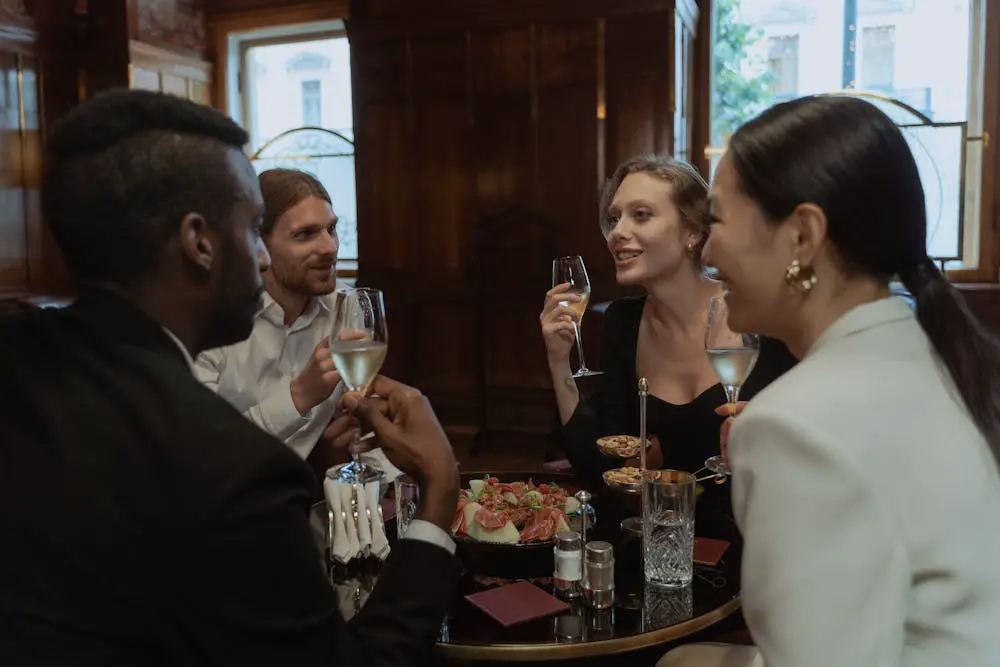
The restaurant smelled of truffle oil and inherited wealth. No televisions. No raised voices. Servers moved like they were floating rather than walking, refilling water glasses before anyone registered they were low. The host had greeted Marcus by name.
“Curated,” I repeated, testing the word as if it might reveal something about itself.
Marcus nodded too quickly. “It’s a milestone birthday. Vanessa’s parents are flying in from Singapore. My managing partners will be there. People from the firm. Clients.”
“And,” I said quietly, “people who won’t damage your image.”
His jaw tightened. He didn’t deny it. He didn’t confirm it either. He simply studied the tablecloth as if it offered safer territory than my eyes.
Vanessa finally glanced up, her gaze carrying that particular coldness some people have—efficient, appraising, like she was assessing a room for structural flaws. “It’s a certain kind of event,” she said. “It requires a certain kind of energy.”
Energy. Optics. Curated. These were the words that allowed people to be cruel while maintaining plausible deniability.
I set my water glass down slowly, watching condensation form a ring on the linen. “Sapphire Island,” I said, keeping my voice neutral. “That’s ambitious.”
“It’s exclusive,” Marcus corrected, eager to redirect the conversation toward something that elevated him. “Vanessa worked on this for months. The owner is extremely selective. They don’t host just anyone.”
“I’m sure,” I said.
Vanessa returned to her phone. “Two hundred guests,” she murmured. “Seven-course dinner. Fireworks. The sunset timing is critical.”
Marcus smiled as if the word fireworks was a medal pinned to his chest. “It’s going to be spectacular.”
I could have laughed. Not because it was amusing—because it was familiar.
Marcus had always needed his life to resemble a glossy brochure. He’d been that way since middle school, when he’d begged our parents for a designer backpack because the generic one made him “look like we didn’t care.” The backpack had cost more than my entire back-to-school wardrobe.
He didn’t remember that, naturally. He remembered the backpack.
I glanced at the invitation in Marcus’s hand, now held like contraband. It sat between his fingers, still gleaming, still pretending it had nothing to do with me.
“You understand how Mom is,” Marcus added, voice softening as if offering consolation. “She’ll say it’s about space, or timing, or whatever. But you get it.”
I did understand. I’d been understanding for thirty-seven years.
Two days earlier, my mother had called with that careful tone she deployed when wanting something but unwilling to state it directly.
“Just accommodate what Marcus wants,” she’d said. “He’s under significant pressure. Vanessa has particular ideas. Don’t take it personally.”
The part she didn’t articulate: You make things complicated sometimes.
Difficult, in my family’s vocabulary, meant quiet. Difficult meant I didn’t perform enthusiasm on command. Difficult meant I didn’t inflate Marcus’s ego with the same oxygen everyone else supplied reflexively.
I’d spent my adult life watching them mistake my calm for defeat.
Marcus had the corner office and the German car. Vanessa had handbags that arrived in boxes worth keeping as trophies. They possessed the loud, polished version of success that made sense at holiday gatherings.
Me? I worked in nonprofit management. That’s how my mother introduced it, with a polite smile suggesting she was discussing a hobby rather than a career.
I drove a six-year-old Camry. I wore the same black dress to family events because it fit properly, was well-constructed, and I couldn’t justify purchasing another solely to prove I was keeping pace with invisible competition.
I didn’t discuss my weekends because my weekends weren’t Instagram-worthy. They were meetings and spreadsheets and site visits and grant reports and the quiet satisfaction of watching someone receive a housing voucher and not have to sleep in their vehicle anymore.
I stood from the table. My chair made a soft scraping sound against the floor.
Marcus blinked. “Elena—”
“It’s fine,” I said, and I meant it in the way you mean it when you’re finished trying. “Enjoy your birthday.”
I walked past tables where people consumed steaks costing more than my grocery budget, past a sommelier speaking reverently about wine, out into the parking garage that smelled of concrete, exhaust, and distant salt air from the harbor.
My Camry sat between a Tesla and a Range Rover like an apology.
I got in, closed the door, and sat with both hands on the steering wheel. I breathed slowly until the sting behind my eyes transformed into something cleaner, clearer.
Then I retrieved my phone.
I opened the property management application.
And I scrolled until I found it.
Sapphire Island Private Resort
Status: Booking Pending
Client: Chin Event, July 15
Owner Review Required
The listing thumbnail showed an aerial photograph: turquoise water, a curved line of sand, resort buildings nestled among palm trees as if they’d always belonged there.
I tapped the booking request.
I added a note with the kind of calm my family had never comprehended. Calm wasn’t surrender. Calm was control.
Owner approval required before contract finalization.
I set the phone in the cupholder and stared at the dim garage lighting.
The invitation had been in my hands for forty seconds.
It had taken my brother forty seconds to decide I didn’t belong in his life’s highlight reel.
I drove home slowly, letting the city blur past. My condo was in a neighborhood my family called “up-and-coming,” their euphemism for assuming I’d been priced out of anywhere more desirable.
The building was quiet. My unit smelled faintly of clean linen and lemon. Gray walls, minimal furniture, a view of city lights that resembled scattered diamonds if you allowed yourself to believe in metaphors.
I poured a glass of red wine and took one deliberate sip.
At 6:47 p.m., my phone rang.
Marcus.
I watched it vibrate itself to silence.
At 7:02, it rang again.
At 7:15, Vanessa.
Then my mother.
By the time I played the first voicemail, I had my laptop open and my wine glass half full.
“Lena,” Marcus said, voice tight and unfamiliar. “Call me back. There’s an issue with the island booking. The planner is panicking.”
The second message was sharper. “They’re saying they need owner approval. Do you know anything about that?”
Vanessa left a voicemail that sounded like she’d swallowed razors. “If you did something to sabotage this, I swear—”
My mother’s voice trembled. “Elena, please. Whatever this is, fix it. You know how important this is.”
I set the phone down and opened a blank spreadsheet.
I named it The Ghost Ledger.
Because some debts don’t appear on bank statements.
Some debts manifest in how you shrink at family gatherings. In how you stop offering news because it won’t be received. In how you learn to applaud someone else’s life until your hands go numb.
Row one: The loan Marcus requested when his down payment came up short.
Row two: The holidays where my achievements were met with “that’s nice,” then immediately redirected to him.
Row three: Every Sunday dinner that felt like attending a meeting where I wasn’t on the agenda.
The numbers weren’t the point. The pattern was.
At 7:29 p.m., my phone rang again.
Marcus, for the fourth time.
This time, I answered.
“Hey,” I said, as if discussing weather.
“Okay,” he exhaled, relief and panic entangled. “What’s going on? They said the owner has to approve the contract, and then—then the owner name appeared and—”
He stopped, as if approaching the edge of something and realizing it dropped off into empty space.
“The owner is listed as Martinez,” Marcus said carefully. “Elena… do you own Sapphire Island?”
I leaned back in my chair, looking at the spreadsheet title on my screen.
“Yes,” I said. “I do.”
Silence expanded on the line, thick and stunned.
“But you—” Marcus started. “You said you worked in nonprofits.”
“I do,” I replied. “That’s my work. It’s not my only asset.”
I could hear Vanessa in the background, her voice rising. “What is she saying? Marcus, what’s happening?”
Marcus’s voice emerged small. “How long?”
“Eight years,” I said. “I bought it when the resort was failing. Rebuilding took time. It’s booked years in advance now.”
He didn’t know how to process this information. It didn’t fit the narrative he’d been telling himself—the story where he was the sun and everyone else orbited.
“Why didn’t you tell us?” he asked, as if the omission constituted my betrayal.
I looked at the ghost ledger, at the empty cells waiting to be filled with accumulated truth.
“You never asked,” I said. “Not once.”
Another silence, sharper this time.
Then I heard Vanessa’s voice, suddenly close to the phone. “Marcus, tell her we’ll pay extra. Whatever she wants. Double it.”
Marcus swallowed. “We can pay more,” he said quickly, as if money could smooth over everything. “Just approve it. The invitations went out. People already booked flights.”
I took a slow sip of wine.
“The standard fee is forty-five thousand,” I said evenly. “Your plan—with catering, staffing, entertainment, fireworks—will be significantly higher.”
“We can afford it,” Marcus snapped.
“I’m sure you can.” I paused. “But the question isn’t whether you can pay. The question is why you want to rent my property for a party I’m not welcome to attend.”
In the background, Vanessa made a sound—half gasp, half offended laugh—as if she couldn’t believe I’d stated the quiet part aloud.
Marcus’s breathing became uneven. “Elena, come on. It was just—Vanessa was trying to—”
“To curate,” I said. “I understand the concept. The owner is selective, correct?”
“Don’t do this,” Marcus pleaded, and the desperation in his voice didn’t resemble regret. It resembled fear of embarrassment. Fear of losing the stage.
“I’m not doing anything,” I said. “I’m following procedure. All event requests require owner review.”
“How long?” he demanded.
“Seventy-two hours,” I answered. “Have the planner submit the full proposal. Contract details. Insurance. Guest list. Vendors.”
“The party is in nine days,” he said, voice cracking.
“Yes,” I said, letting the word land exactly where it belonged. “That’s extremely tight timing.”
Vanessa’s voice erupted behind him. “This is blackmail!”
I smiled faintly, alone in my quiet condo. “Submit the documents,” I repeated. “I’ll review them.”
Then I ended the call.
And for the first time in considerable time, I felt something shift inside me—like a door I’d been leaning against for years had finally clicked shut.
The Reckoning
By morning, my phone had transformed into a living entity.
It vibrated across my kitchen counter while I made coffee. It illuminated beside my laptop while I answered work emails. It pulsed against my palm while I stood at the window watching commuters move through the city like purposeful ants.
Marcus called twelve times before noon.
Vanessa called seven.
My mother left three voicemails that sounded like the stages of grief compressed into audio form.
First: confusion disguised as politeness. “Elena, honey, I’m certain there’s been a misunderstanding. Marcus mentioned something about owner approval—just call me back.”
Second: urgency sharpened into accusation. “Your brother has worked extraordinarily hard for this. Don’t do something you’ll regret.”
Third: the vocal crack that used to pull me in every time as a child. “Please. Please don’t ruin this.”
I didn’t answer any of them.
Not because I lacked words. I had abundant words.
I didn’t answer because, for once, I didn’t want to be the person who made everything comfortable for everyone else at my own expense.
Instead, I opened the document my property manager had emailed: the draft event proposal from Marcus’s planner.
The planner, a woman named Darlene, had written with frantic professionalism.
Ms. Martinez,
Thank you for your time. We apologize for the delay in obtaining final owner approval. Please find attached the full proposal for Mr. Chin’s July 15th birthday event, including vendor list, insurance request, and preliminary guest roster.
The attachments were thick with ambition.
A seven-course menu with expensive ingredients spelled out like a love language. A fireworks plan with diagrams, as if the sky itself required choreography. A live band, a DJ, and something called an “experiential champagne wall,” which sounded like a phrase invented by someone who’d never waited for a paycheck to clear.
I scanned the guest list.
Two hundred names. A sea of unfamiliar people. Partners, associates, clients, friends of Vanessa’s parents, influencers, executives. The kind of roster that made you feel important because it proved you had access.
I searched the document for my name.
Nothing.
Not in the guest roster. Not in the seating chart. Not in the “family remarks” section, where Marcus’s father was apparently scheduled to give a toast—my father, who hadn’t called me on my birthday in two years without my mother reminding him.
I closed the file and stared at my screen.
The strange thing was, I wasn’t surprised.
I’d spent years collecting small moments like these—quiet cuts that didn’t bleed in front of other people but left scars anyway. The way my mother’s eyes illuminated when Marcus entered a room. The way my father asked him about work with genuine curiosity while asking me, “Still doing that nonprofit thing?”
Still.
As if I was temporarily playing at adulthood and would eventually do something real.
I took my coffee to the table and opened my ghost ledger properly.
I began filling it in with accumulated truth.
Not just the money I’d lent Marcus when he’d needed a last-minute patch between his savings and the down payment. Not just the “I’ll pay you back after my bonus” that had evaporated into air like smoke.
I documented the time.
The attention.
The emotional labor.
The way I’d purchased my mother a thoughtful gift once—a framed photo from a family trip before things became complicated—and she’d smiled with wet eyes… after she’d cried over Marcus’s lavish spa weekend gift, calling him “such a good son” in a voice that sounded like worship.
I documented the time Vanessa had insisted on a professional family photo and positioned me in the back because my dress “didn’t photograph well,” as if my body was furniture that could be rearranged to improve the composition.
I documented the Sunday dinners where my job was treated like a hobby and Marcus’s job was treated like war stories worthy of rapt attention.
By afternoon, the ledger resembled a confession.
And the more I wrote, the less angry I felt.
Anger was hot. Temporary. Anger burned out.
This felt colder. Clearer. Like the moment you realize you’ve been holding your breath for years and finally, finally exhale.
Around 4 p.m., my father called.
That surprised me.
My father didn’t call. He sent emoji reactions. He forwarded articles. He responded to my existence as if it was something happening on television.
I let it ring twice.
Then I answered.
“Elena,” he said, voice rough. “We need to talk.”
“No,” I replied, and my voice sounded steady in a way that surprised me.
There was a pause, as if he hadn’t anticipated that word from me. “I’m your father.”
“Yes,” I said. “You are.”
“Marcus says—” he started.
“Marcus says many things,” I interrupted.
“He said you’re doing this because you’re hurt,” my father continued, ignoring how I’d cut in. “And I’m not saying you don’t have the right to feel hurt. But you don’t do this kind of thing to family.”
I stared out the window at a bird perched on the ledge, calm and unbothered. “Is that advice you’ve followed your entire life?” I asked quietly. “Not doing things to family?”
His breath caught. “That’s not fair.”
“Fair,” I repeated, letting the word sit between us like an unpaid bill. “Okay.”
“Look,” he said, shifting tactics the way Marcus did, the way men in my family always did when emotions made them uncomfortable. “Tell us what you want. Money? An apology? An invitation? We’ll fix it.”
Fix it.
As if I was a malfunctioning appliance requiring a replacement part.
“I want you to stop calling me when you need something,” I said.
Silence.
Then, softer, my father said, “That’s not what this is.”
I almost laughed. Not because it was funny. Because it was predictable.
“It is,” I said. “You haven’t called me just to ask how I’m doing in… I don’t even remember how long. And suddenly, because Marcus’s party is threatened, you’re on the phone.”
“That’s not—”
“Name one thing about my life,” I said. “Right now. Not what I did five years ago. Not what Mom told you. One thing you know because you asked.”
He didn’t answer.
He couldn’t.
The silence extended long enough that I could hear his throat tighten with discomfort.
“I’m busy,” he finally muttered, as if that explained everything.
“So am I,” I said. “But I made time for you. For years.”
He exhaled, a frustrated sound. “So what now?”
Now.
As if I was supposed to provide a roadmap for how to treat me like a human being.
“Now I review the proposal,” I said, calm as a metronome. “And I decide whether I want my property used for an event where I’m considered bad optics.”
“Stop saying that,” he snapped.
“Why?” I asked. “Because it’s ugly to hear aloud? It’s still true.”
My father’s voice went quieter, almost pleading. “Elena, your mother is beside herself.”
I thought about my mother’s voicemails. The way her voice always found the soft spot in me. The way it had trained me, for decades, to fold.
“I’m not doing this to punish Marcus,” I said. “I’m not doing this to punish anyone.”
“Then why?” he demanded.
I looked at my ghost ledger again.
“Because I’m done,” I said simply.
When I hung up, my hand shook slightly. Not from fear.
From the strange aftershock of speaking a truth I’d swallowed for years.
The next day, the messages changed tone.
Marcus texted: Of course you’re invited. There was a mix-up. Vanessa is sending you a new invite.
Then another: Please don’t do this. People are flying in. This is going to be humiliating.
Then, later, a message that made my stomach drop—not because it frightened me, but because it was so characteristically him.
I talked to a lawyer. You can’t refuse us for personal reasons. That’s discrimination.
I read it twice, then set the phone down as if it was contaminated.
Discrimination.
As if my refusal to host a private event on my private property was a civil rights violation.
As if my boundaries were illegal when they inconvenienced him.
That night, I met with my own attorney—Marisol, sharp and calm, the kind of woman who wore minimal jewelry and terrified men like Marcus without raising her voice.
She reviewed the contract and nodded. “You can decline,” she said. “It’s a private property booking. Owner approval clause is explicit. You’re within your rights.”
“Even this close to the date?” I asked.
“Especially this close,” she replied. “If anything, the risk is elevated. Two hundred guests, fireworks, alcohol—if something goes wrong, it’s your liability.”
I stared at the contract clause about insurance coverage. The planner’s proposed policy limits weren’t adequate. Not for fireworks. Not for their “sunset boat shuttle experience,” which sounded like a lawsuit waiting to happen.
Marisol’s eyes lifted to mine. “This isn’t merely emotional,” she said gently. “It’s also practical.”
I nodded.
But we both understood the practical aspect wasn’t what had altered my breathing pattern.
On the third night, at exactly seventy-two hours since Marcus had first called, my mother sent a single text.
How much do you want?
I stared at the screen until it dimmed.
Then I opened my email.
And I wrote to the planner.
After careful review, I must decline to host the July 15th event at Sapphire Island. The property is not available for this booking. Please seek alternative venues. Sincerely, Elena Martinez.
I hit send.
I didn’t feel triumphant. I didn’t feel guilty.
I felt something that was almost unfamiliar.
Relief.
Twenty-three minutes later, my doorman called.
“Ms. Martinez,” he said, hesitant, “your brother is downstairs. He’s… quite upset.”
“Tell him I’m not available,” I said.
“He’s insisting.”
“Then tell him again,” I replied, keeping my voice soft. “And if he refuses to leave, contact security.”
There was a pause. Then: “Understood.”
I went to my window and watched the street below. The city moved forward, indifferent to family drama. A woman walked a dog. A couple argued quietly on the sidewalk. A man carried groceries as if it was the most important thing he’d do all day.
Marcus eventually left.
But the next morning, there was a knock on my door that wasn’t polite.
It was the kind of knock that announced entitlement.
I opened it to find my entire family in the hallway.
My mother, eyes swollen. My father, jaw clenched. Marcus, pale with anger. Vanessa, immaculate even in crisis, as if she’d refuse to lose control of her appearance even if the world was burning.
“Can we come in?” my mother asked, voice trembling.
I stayed in the doorway. “No.”
Marcus stepped forward. “This is insane.”
Vanessa’s eyes narrowed. “You’re enjoying this.”
I looked at them—really looked.
And I realized something that made my chest constrict.
They weren’t here to see me.
They were here to fix the problem I’d become.
“We need to talk,” my father said.
“I don’t think we do,” I answered.
My mother’s voice broke. “Elena, please. You’ve made your point. We understand you’re successful. We didn’t know—”
“You didn’t want to know,” I corrected quietly.
Marcus’s face twisted. “That’s not fair.”
Vanessa snapped, “You’re sabotaging his birthday because you’re jealous.”
Jealous.
It was almost impressive how quickly she grabbed for a narrative that made her superior.
I met her gaze. “You said I would hurt the optics,” I said. “So I’m honoring your concern. My property won’t be used for an event where I’m unwelcome.”
Marcus’s voice went desperate. “We’ll invite you. You can come. Front row. Whatever you want.”
I shook my head once. “I don’t want to come,” I said.
My mother’s lips parted, confused, as if she’d never considered that my presence at their table wasn’t the prize she thought it was.
“What do you want?” she whispered.
I thought about the ghost ledger. About all the years I’d spent feeding effort into a machine that never paid dividends.
“Nothing,” I said. “There’s nothing you can do that makes thirty-seven years disappear.”
My father’s face tightened. “We didn’t know you felt this way.”
“You didn’t ask,” I replied. “And that’s the entire point.”
Marcus opened his mouth again, but I didn’t let him.
“I’m done being the contrast,” I said, voice steady. “I’m done subsidizing the story where you’re the only one who matters.”
My mother started crying, really crying, the kind that used to make me fold instantly.
I didn’t fold.
I stepped back.
And I closed the door.
Reflective Conclusion: Stories like Elena’s reveal something fundamental about family dynamics and the peculiar invisibility that can afflict the quieter sibling. The child who doesn’t demand attention, who doesn’t perform success loudly, who builds meaningful work rather than impressive appearances—this child often becomes functionally invisible, valued only for utility rather than personhood. What makes Elena’s situation particularly painful is the casualness of the exclusion: Marcus didn’t maliciously plot to hurt her. He simply never thought about her at all. The invitation was reclaimed not through hatred but through thoughtless erasure—she didn’t fit the aesthetic, so she simply didn’t exist in his mental framework. The power of Elena’s response isn’t in vindictive revenge but in the quiet establishment of boundaries that demand she be seen as a complete person rather than a supporting character. Sapphire Island becomes the stage where the truth performs itself—not through Elena’s proclamations, but through the undeniable reality that she built something significant while everyone was too busy applauding Marcus to notice. The real work isn’t the dramatic moment when she declines the booking. It’s the years of careful, deliberate rebuilding that follow—the slow process of requiring her family to meet her as an equal or not meet her at all. Sometimes the most profound justice isn’t making people suffer. It’s making them finally, finally see.

Lila Hart is a dedicated Digital Archivist and Research Specialist with a keen eye for preserving and curating meaningful content. At TheArchivists, she specializes in organizing and managing digital archives, ensuring that valuable stories and historical moments are accessible for generations to come.
Lila earned her degree in History and Archival Studies from the University of Edinburgh, where she cultivated her passion for documenting the past and preserving cultural heritage. Her expertise lies in combining traditional archival techniques with modern digital tools, allowing her to create comprehensive and engaging collections that resonate with audiences worldwide.
At TheArchivists, Lila is known for her meticulous attention to detail and her ability to uncover hidden gems within extensive archives. Her work is praised for its depth, authenticity, and contribution to the preservation of knowledge in the digital age.
Driven by a commitment to preserving stories that matter, Lila is passionate about exploring the intersection of history and technology. Her goal is to ensure that every piece of content she handles reflects the richness of human experiences and remains a source of inspiration for years to come.