The House on Calle Serrano
My name is Arturo Santander. I am seventy years old, and I have lived in the same house for forty-five of those years.
I want you to understand what that means before I tell you anything else. Not the legal fact of ownership, not the square footage or the number of bedrooms or the assessed value — those are details that can be put in a document. What I mean is something different. I mean that every wall in that house holds a version of my life. The kitchen where Carmen taught our daughter to make her grandmother’s rice on Sunday afternoons. The hallway where Natalia learned to walk, taking the furniture as handrails, laughing each time she sat down hard on the tile. The master bedroom where Carmen and I slept for thirty-eight years, where I held her hand while she slept in those last months, where I lay awake for weeks after she was gone, listening to a silence that had never been silent before.
Forty-five years is not a number. It is a life.
When my daughter woke me on a Tuesday morning to tell me I needed to vacate the room where all of that had happened, because her in-laws needed it, she did not understand what she was asking me to give up. She thought she was asking me to move to a smaller room. She was actually asking me to surrender the last physical space that still contained my wife.
I said very little to her that morning. I had already made my decision.
Part One: Carmen
Before there was any of this — before the divorce and the remarriage and the seven people in a house built for four — there was Carmen.
Carmen Reyes de Santander was the most competent person I have ever known. I say this not as a husband performing devotion but as a man who spent forty years watching her manage the complex, shifting demands of a life with the particular grace of someone who understands that grace is not something you receive but something you build, daily, through choices made with full knowledge of their cost.
She was a primary school teacher for thirty-two years. She raised Natalia with an attention to both affection and accountability that I admired and sometimes struggled to match — I was the warmer parent in the easier sense, the one who said yes more readily, who found the lines difficult to hold when Natalia’s eyes filled. Carmen held the lines. She held them with love, which made them more effective and more difficult to resent, though Natalia tried to resent them anyway, as children do.
When Carmen was diagnosed at sixty-one, she approached the illness with the same organized attention she had given everything else. She put her affairs in order. She had conversations she wanted to have. She made sure Natalia and I both understood the relevant legal and financial arrangements, sitting us down together with the patience of a teacher who knows the material will matter later and wants it learned correctly.
She died at sixty-three, on a Thursday in November, with her affairs in perfect order and my hand in hers.
The house, upon her death, became mine entirely. This was not a surprise — Carmen had arranged it clearly, with the help of a notary, years before she became ill. She had also, in one of the last coherent conversations we had, said something that I have thought about many times since.
“Arturo,” she said, “you are too gentle for your own good. When I am gone, you will need to learn to hold the lines yourself.”
I thought, at sixty-three, newly widowed and consumed by grief, that I understood what she meant.
It took several more years for me to actually understand.
Part Two: The Temporary Arrangement
Natalia and Gustavo’s divorce was handled with the civility of two people who had agreed that the marriage was over and wanted to cause the minimum damage to their children in the process. This civility, I have always thought, was primarily Natalia’s achievement — she is her mother’s daughter in the ways that matter, whatever else has happened.
When she came to me about moving in, Sebastián was fifteen and Martina was thirteen, both at ages when what they needed most was stability and the presence of people who loved them without condition. My house was large enough. I was alone in it. The answer was obvious.
“A few months, Papa,” she said. “Until I find an apartment.”
I want to be clear that I do not blame her for the months becoming a year and the year becoming more. Life is not punctual, and financial recovery from divorce is slower than the people inside it expect. I was not counting days. I was, if I am honest, grateful for the presence of the children — for the sounds of a house that had been very quiet since Carmen died, for Sebastián’s music coming through the wall and Martina’s laughter in the kitchen and the general alive quality that young people bring to spaces that have been too still.
What I was less prepared for was Andrés.
He appeared in Natalia’s life fourteen months after the divorce, the kind of confident, polished man who enters situations expecting them to accommodate themselves to him. I watched him carefully, the way I watch most things — quietly, without announcing what I am doing. He was kind to Sebastián and Martina, which mattered. He was good to Natalia in the visible ways: attentive, generous with his time, clearly devoted.
“Papa, he’s the man I’ve been waiting for my whole life,” Natalia told me, her voice carrying that particular note of certainty that I recognized as both genuine and slightly dangerous. When people are certain, they stop asking questions.
I asked them anyway, but privately.
What emerged, gradually, was the full picture. Andrés was forty-two, divorced, with a ten-year-old son named Bruno who I liked immediately — a quiet, serious boy who watched the world with the careful attention of a child who has learned not to take stability for granted. He also had parents: Roberto, seventy-five, retired bank manager, and Miriam, seventy-three, who had managed their home and their son’s childhood with the conviction that the world owed her a certain standard of treatment.
The story about the apartment was true, as far as I could verify it. They had sold their house, purchased an apartment with legal complications, and lost their stable housing as a result. This was a real misfortune. I did not doubt it.
What I noticed was that the way the situation was presented to me assumed my agreement before I had given it.
“Don Arturo,” Andrés said, in the measured tone of a man who has practiced the conversation in advance, “my parents are going through a difficult time. They had nowhere to go.”
Natalia was beside him, her hand on his arm, already watching my face with the expression of someone who has decided the answer but needs to hear it said aloud.
“Don’t you think we could let them stay here for a while, Papa?”
There it was. The construction of the question that contains its own answer. Don’t you think — not what do you think, not I’d like to discuss, but a phrasing that positions disagreement as a failure of generosity rather than a legitimate perspective.
“We already have five people in this house,” I said. “That would make seven.”
“It’s temporary, Papa.” Her voice was warm, certain, the voice she had always used when she wanted something she suspected she shouldn’t want. “Just until they sort things out.”
I agreed. Because she was my daughter. Because I believed her. Because Carmen was not there to hold the line for me, and I had not yet fully learned to hold it myself.
Part Three: Roberto and Miriam
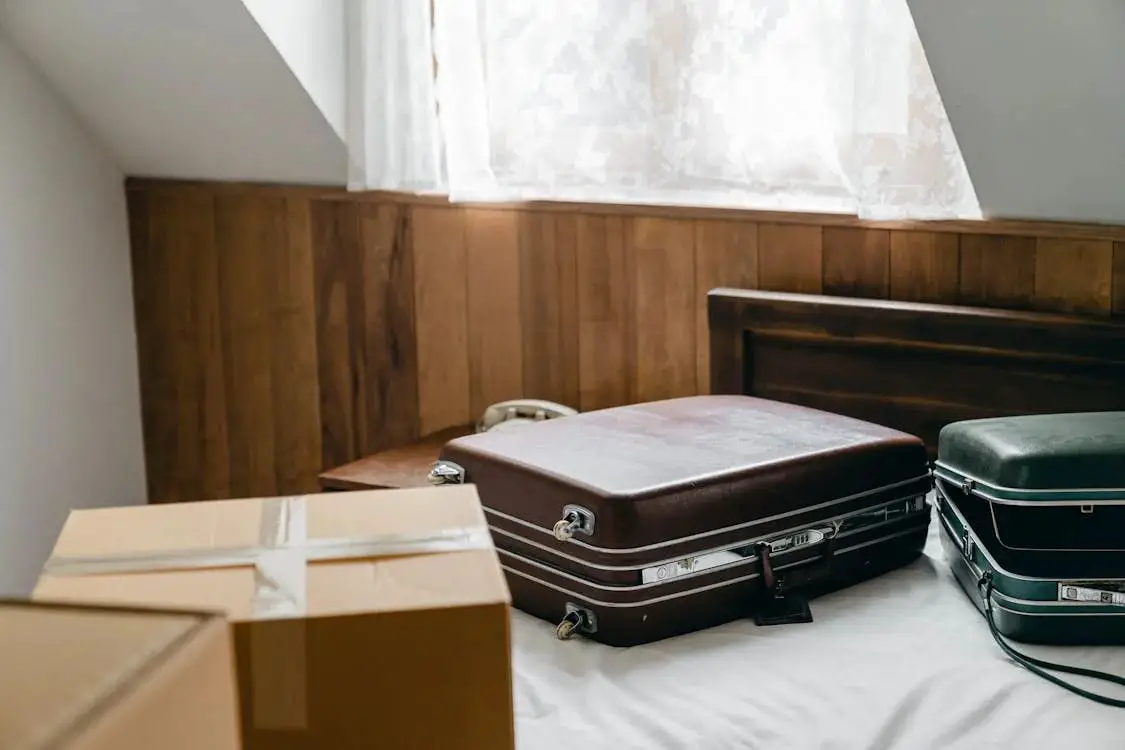
They arrived on a Saturday morning with three enormous suitcases and the attitude of people who have been inconvenienced by circumstances and expect this inconvenience to be acknowledged by everyone around them.
Miriam walked through the house on her first day with the deliberate attention of a hotel inspector — noting the kitchen layout, the bathroom fixtures, the way the light came through the living room windows in the afternoon. She did not comment directly. She had the more refined technique of commenting obliquely, through appreciative comparisons that contained their criticisms in the negative space.
“In our old house,” she said, standing at the living room window, “we had a terrace. We spent our evenings there.”
There was no terrace.
Roberto was quieter but communicated with the specific efficiency of a man who had spent thirty years as a bank manager — through sighs, through raised eyebrows, through the particular silence that follows a statement he finds inadequate. He ate my food, sat in my living room, watched my television, and managed to convey in everything he did not say that the arrangement was beneath his expectations.
The guest room — where I had temporarily placed them, as Natalia had originally suggested for me — lasted four days. On the fifth day, Miriam mentioned to Natalia, in a conversation I was not supposed to hear from the kitchen, that the room was small and the closet was insufficient and her back was troubling her and she had never in her life slept in a room that faced a neighbor’s yard.
The conversation I overheard the next morning, in the kitchen before I had finished my first coffee, was between Natalia and Andrés.
“The guest room isn’t working for them,” Natalia said.
“What do they need?” Andrés said.
“More space. A proper closet. Better light.”
A pause.
“The master bedroom,” Andrés said.
Another pause, shorter.
“I’ll talk to Papa.”
Part Four: Tuesday Morning
She came in at seven-fifteen. I was already awake — I have not slept past six-thirty since my fifties, a development that would have horrified my younger self and that I have come to find simply true about who I am now.
She knocked on the bedroom door, which she had never done as a child and had started doing as an adult, a small courtesy that had always struck me as both considerate and slightly formal, as though she was already aware that the relationship had shifted into something that required the performance of respect rather than the simple inhabiting of it.
I said come in.
She was dressed, already, which meant she had thought about this conversation before she came to have it. She stood near the door rather than sitting, which meant she expected it to be brief — she had already decided on the outcome and was delivering the conclusion, not initiating a discussion.
“Papa,” she said. “I need to talk to you about the bedroom situation.”
“All right,” I said.
“Roberto and Miriam aren’t comfortable in the guest room. It’s too small, and Miriam’s back is worse.” She paused, not long enough for me to speak. “We think the master bedroom would work better for them. You could take the guest room — you’re just one person, and you don’t need as much space.”
She said this carefully, kindly even, with the practiced gentleness of someone who understands she is asking something significant and has found the words to make it seem smaller than it is.
I looked at her. I looked at the room around her — the walls Carmen and I had painted together in the first year we lived here, the windows that let in the morning light at the angle Carmen had always said she loved, the closet where her things had hung for thirty-eight years and where some of them, still, hung.
“These are your father’s exact words?” I said.
She blinked. “What?”
“Roberto and Miriam. Are these your words or theirs?”
She hesitated. “Andrés and I discussed it—”
“And before Andrés and you discussed it,” I said, “did Miriam say something to you?”
The hesitation told me everything.
I did not argue. I did not raise my voice. I had Carmen’s voice in my head from that last conversation — you are too gentle for your own good, you will need to learn to hold the lines yourself — and I had been learning for five years, slowly and imperfectly, and this was the moment the learning had been building toward.
“I’ll think about it,” I said.
She left. She believed she had won, or was about to win, because I had always eventually said yes to everything.
She did not know what I had been thinking about for the past three months.
Part Five: The Notary on Calle Bolívar
Three months earlier, on a quiet afternoon when the house was empty and I had made coffee and sat at the kitchen table with the particular clarity that comes from finally allowing yourself to think a thought you have been avoiding, I had come to a decision.
The house was mine. Carmen had ensured it was mine. The title was clear, the mortgage was paid, the property taxes were current, and the decision about what to do with it belonged to no one but me.
For three months, I had been doing what Carmen would have done: consulting the appropriate people, asking the right questions, understanding my options completely before acting on any of them. I had visited a notary on Calle Bolívar, a serious woman named Dolores Marchetti who had been recommended by a retired colleague. I had met with her three times. I had reviewed every legal consideration. I had contacted a real estate agent named Felipe, who had assessed the property and put together documentation. I had opened a new bank account at a branch across the city, separate from the household accounts, in my name alone.
I had also called my sister Teresa in Mendoza, who had been asking me to come live near her for two years and whom I had always told that I was fine, that I had my life here, that the house was my home.
The morning Natalia came to tell me to vacate my bedroom, I had already signed the listing agreement. The house was already on the market, quietly, through Felipe, at a price that reflected its actual value rather than the sentiment I had attached to it.
What Natalia did that Tuesday morning did not cause my decision. My decision had been made. What she did was simply confirm that the decision was correct.
Part Six: The Sale
Felipe found a buyer within six weeks. A family — husband, wife, two young children — who saw the house on a Saturday afternoon and made an offer by Monday morning. The offer was fair. I accepted it.
The legal process took three weeks. I signed the final documents on a Thursday in the office of Dolores Marchetti, with Felipe beside me and the buyers across the table. When it was done, Dolores handed me a copy of the deed transfer and a check for the remainder after the expenses of the transaction, which was not a small amount, and which represented the accumulated value of forty-five years of payments and maintenance and the simple fact that the neighborhood had become more valuable than it had been when Carmen and I bought the house.
I drove directly from the notary’s office to the bank, deposited the check, and then drove to the café on the corner of my block — my former block, now — and sat at a window table and drank a coffee and looked at the street I had lived on for four and a half decades.
I thought about Carmen. I thought about whether she would have done the same thing. I decided she would have — not without grief, because she had loved the house too, but with the clear-eyed understanding that a house is not the same as a home and that a home is something you carry with you rather than something you return to each evening. She would have done what needed to be done and she would have moved forward without second-guessing.
I finished my coffee and went home to tell Natalia.
Part Seven: The Conversation
I chose the evening. Everyone was home — Natalia and Andrés, Roberto and Miriam, Sebastián and Martina, Bruno. I asked them to sit in the living room, which they did with the slightly wary attention of people who recognize that the quiet one is about to say something.
I stood near the window — the one that Carmen had always said caught the best light — and I told them clearly and without preamble that I had sold the house. That the sale had been completed three days earlier. That the buyers would take possession in sixty days. That everyone currently living in the house would need to make other arrangements.
The silence that followed this announcement had several different qualities happening simultaneously.
Natalia’s face moved through surprise, then confusion, then something close to disbelief, then — I watched it arrive — the beginning of comprehension. She was her mother’s daughter. She understood what I had done and why I had done it faster than the others did.
“Papa,” she said. Her voice was very quiet. “When did you—”
“Three months ago I began the process,” I said. “I finalized it last Thursday.”
Andrés looked at me with the expression of a man who has not been accounted for in a situation he believed he understood. “Don Arturo, this is everyone’s home—”
“No,” I said, gently but entirely without ambiguity. “This is my home. It has been my home for forty-five years. It was purchased with my money and my wife’s money. The title has always been in my name. I made the decision to sell it, as I had every legal and personal right to do, and the decision is complete.”
Miriam had risen slightly from her seat. “But where are we supposed to go?”
I looked at her with the patience that seventy years provides, if you’ve done the work of earning it.
“That,” I said, “is a question for you and your son.”
Roberto began to say something about expectations, about what he had been given to understand. I listened. When he finished, I said that I had not made any representations to him about the permanent availability of my home, and that what he had been given to understand was between him and Andrés.
Andrés was quiet in the specific way of a man who knows that what is being said is true and has no argument against truth.
Sebastián and Martina were watching from the corner of the sofa with the wide, careful attention of teenagers who understand that something significant is happening and are deciding what it means. Martina looked at me with an expression that was, unless I was wrong about it, respect.
Bruno had gone to find something in the kitchen.
Part Eight: Natalia
She came to my room late that night. I was sitting in the armchair by the window — Carmen’s chair, technically, the one she had always taken when she wanted to think — reading the book I had been working through for two weeks.
She knocked. I said come in.
She sat on the edge of the bed and looked at her hands for a while. The quality of her silence was different from the others’ — not aggrieved, not calculating, but genuinely reckoning with something.
“I should have talked to you,” she said. “About everything. About Andrés’ parents. About the room.”
“Yes,” I said.
“I thought—” She stopped. Started again. “I thought you would always say yes. I stopped treating you like someone whose opinion mattered.”
This was accurate and she knew it was accurate and she was saying it without softening it into something more comfortable, which told me that the part of her that was Carmen was still present and still functioning.
“I made decisions about your house,” she said, “like I was the one who owned it.”
“You did,” I said.
“Are you angry with me?”
I thought about this honestly before answering. “I was. I think now I am more sad than angry. Not about the room — the room was the last thing, not the first thing. I am sad about the years of temporary that were never temporary. I am sad that I became someone you managed rather than someone you talked to.”
She looked up at me. Her eyes were her mother’s.
“I’m sorry, Papa.”
“I know you are,” I said. “I believe that you are.”
We sat quietly for a while. The house was settling into its nighttime sounds — the particular language of a structure that has held people for a long time, the creaks and sighs of walls and floors that know the weight of the lives inside them.
“Where are you going?” she asked.
“Teresa has a house in Mendoza with more room than she needs,” I said. “I am going to go live near my sister. See the mountains. Have my own space again.”
“And us?”
“You will find somewhere,” I said. “You are capable, Natalia. You have always been more capable than you’ve needed to be, which is why you stopped working as hard as you could. The necessity will be useful.”
She almost smiled at this. Almost.
“That sounds like something Mamá would say.”
“Yes,” I said. “It does.”
Part Nine: The Last Weeks
The sixty days before the buyers took possession were busy in the way that endings are busy — the practical work of dismantling what had been built over a long time, sorting and packing and deciding what to keep and what to release.
I kept the things that mattered. Carmen’s photographs — all of them, organized into albums I had started making the year after she died and continued methodically ever since. The clock from the kitchen, the one that had ticked with important patience on every morning of our life in that house. Her gardening notebooks, the record of every plant she had ever tried to grow in the courtyard, annotated in her handwriting with observations about what worked and what didn’t. A small ceramic figure she had kept on the bedroom windowsill since before we were married, which had been her grandmother’s and which I could not have left behind.
I did not keep the furniture. Most of it went — to Natalia, to neighbors, to the church sale. Material things. Carmen had never been sentimental about objects for their own sake; she was sentimental about what objects represented, and the representations traveled with me regardless.
Roberto and Miriam found an apartment through Andrés, in a neighborhood a few kilometers from mine. I heard about this from Natalia in a brief, factual conversation and wished them well with the sincerity of a man who bears no grudge against people for being who they are. They are who they are. I am who I am. The house no longer required us to negotiate those facts daily.
Andrés came to speak with me once more, in the final week. He was not the man I had first assessed him to be — not worse, but different, more complicated. Beneath the confidence was something that responded to having been held accountable, a seriousness that the preceding months had perhaps earned from him. He apologized directly, which I had not expected.
“I brought a situation into your house,” he said, “and I let it grow in ways I didn’t manage.”
“You did,” I said.
“I should have handled it differently.”
“Yes.” I paused. “You have a chance to handle things differently going forward. I hope you take it.”
He nodded. He shook my hand. He left.
I thought, watching him go, that Natalia had not been entirely wrong about him. There was something worth keeping in the man — something that the consequences of his choices had perhaps begun to reach. Whether he would grow from it or not was between him and his choices and the passage of time.
Part Ten: Mendoza
Teresa met me at the bus station with the exuberance of a woman who has been waiting two years for a thing to finally happen and has not given up hoping for it. She is sixty-six, four years younger than me, with the same broad face and dark eyes we share from our father and a laugh that makes rooms larger.
Her house is in a neighborhood at the edge of the city, with the Andes visible on clear mornings — which are most mornings — from the kitchen window. She has a garden that needs more work than she wants to do alone. She has a neighbor who brings wine on Fridays and stays for three hours talking about everything and nothing. She has a guest room that became my room within two weeks, the furniture rearranged to fit how I actually live, my books on the shelves and Carmen’s clock on the wall and the ceramic figure on the windowsill in the morning light.
I have been here four months now. I walk in the evenings through streets that are becoming familiar in the slow, thorough way that places become familiar when you are no longer moving through them too quickly to notice. I visit the market on Saturday mornings. I have started, at Teresa’s persuasion, a small raised bed in the garden where I am attempting to grow the tomatoes Carmen always said required more patience than I had.
She was right about that. They require considerable patience. I am working on it.
Sebastián called me last month — called me, without Natalia asking him to, from his phone, to talk for forty minutes about his life and to ask how I was settling in. He is seventeen now, and there is something in him that is becoming solid in the way that good things become solid — quietly, through accumulation. He asked if he could visit in the summer. I told him Teresa and I would have a room ready.
Martina sends messages. Brief, warm, with the particular expressiveness of a fifteen-year-old who has not yet decided how much to perform and how much to simply be. She calls me Abuelo Arturo in the messages, which she did not do before and which I find, each time, unexpectedly affecting.
Natalia calls on Sundays. The calls have a different quality than they had before — less managing, more talking, the difference between a person conducting a relationship and a person having one. We do not always agree. We do not pretend to always agree. But there is honesty in the calls now that was absent before, an honesty that the preceding months earned from both of us.
She told me last Sunday that she and Andrés have found an apartment. That the children have settled. That Bruno has started coming on weekends and the children have decided, mostly on their own, that they are something like siblings.
“I think it might be good,” she said.
“I think so too,” I said.
Part Eleven: What I Know Now
I am seventy years old. I have learned, in the specific way that age teaches things — slowly, expensively, through the accumulated evidence of the years — several things I want to say clearly.
A house is not a home. A home is the life you build inside the walls, the people you build it with, the meaning you make in the ordinary moments that seem minor when they’re happening and turn out, later, to be everything. The house on Calle Serrano was where my home happened to be located for forty-five years. When it became a place where I was treated as a guest in my own life, it was already no longer my home in the way that mattered. Selling it did not end my home. It relocated it.
Gentleness is not the same as weakness, but it can look the same from the outside, and when the people around you have been taught by your behavior that your gentleness produces unlimited accommodation, the corrective is unpleasant for everyone involved. Carmen told me I was too gentle for my own good. She meant it as a warning. I heard it as a compliment for too long.
Children — even grown ones, even the ones who are good people in most ways — require the experience of limits to become fully themselves. Natalia is a better person now than she was before the Tuesday morning she came to tell me to vacate my room. Not because she suffered — I take no satisfaction in her difficulty — but because the situation forced her to encounter herself honestly, and she turned out, as I had always believed she would, to be someone who could face herself honestly and choose differently.
And this: the preparations Carmen made — for the house, for the title, for the arrangements that ensured everything was clear and documented and mine to decide — were acts of love as real and lasting as anything she said to me. She is gone, but the structure she built is still standing. She held the line from the other side of her death, through the work she had done while she was alive. That is a form of love I will never stop being grateful for.
The mountains are visible this morning. The tomatoes need water. Teresa is making coffee and I can hear her in the kitchen, talking to the plants the way she has always done, as though they are capable of being reasoned with.
Carmen used to talk to her plants too.
The clock on the wall says seven-fifteen. I have the whole morning ahead of me.
That is enough. That is, as it turns out, exactly enough.
THE END

Lila Hart is a dedicated Digital Archivist and Research Specialist with a keen eye for preserving and curating meaningful content. At TheArchivists, she specializes in organizing and managing digital archives, ensuring that valuable stories and historical moments are accessible for generations to come.
Lila earned her degree in History and Archival Studies from the University of Edinburgh, where she cultivated her passion for documenting the past and preserving cultural heritage. Her expertise lies in combining traditional archival techniques with modern digital tools, allowing her to create comprehensive and engaging collections that resonate with audiences worldwide.
At TheArchivists, Lila is known for her meticulous attention to detail and her ability to uncover hidden gems within extensive archives. Her work is praised for its depth, authenticity, and contribution to the preservation of knowledge in the digital age.
Driven by a commitment to preserving stories that matter, Lila is passionate about exploring the intersection of history and technology. Her goal is to ensure that every piece of content she handles reflects the richness of human experiences and remains a source of inspiration for years to come.