What Joshua Left for Catherine
“Never go to the farm, Catherine. Promise me.”
He had said it the way a man says something he has been carrying for a long time and has finally decided must be said aloud — not angrily, not dramatically, but with the specific gravity of a person drawing a line they need you to see clearly. In twenty-four years of marriage, Joshua had almost never drawn lines. He was not a man of prohibitions. He was a man of conversations, of the patient explaining of reasons, of the belief that two people who loved each other could talk their way through most things.
The farm was the exception.
I had honored it. Not without curiosity — curiosity has always been my native condition, the thing I am made of in the way some people are made of patience or ambition — but with the specific discipline of a woman who understands that love sometimes means respecting the shape of a silence even when you cannot see what the silence is protecting.
Two weeks after his funeral, I sat in Mr. Winters’ wood-paneled office that smelled of old paper and something that might have been formaldehyde and something that might have been the specific odor of accumulated human difficulty, and I looked at the small box he slid across the desk.
Inside: a brass key on a maple-leaf charm, worn with the particular tarnish of something old and used and kept. And an envelope with my name in Joshua’s handwriting — the neat, steady script I had been reading for twenty-four years, on notes left on kitchen counters and cards tucked into luggage, the handwriting I had memorized without meaning to, the way you memorize the things that are always there.
“He left one more thing,” Mr. Winters said quietly. “It’s in Alberta. It’s yours now.”
My name is Catherine Mitchell. I am fifty-one years old, and I drove into the Alberta countryside forty-eight hours after that conversation, ridiculous in a rental car with a key that felt, in my hand, like it weighed more than a key should weigh.
Part One: The Promise
I want to tell you about the promise before I tell you about the farm, because the promise is the shape that contains the rest.
Joshua and I met when I was twenty-six and he was twenty-nine, at a charity auction for a horse rescue organization that I had volunteered for and that he had attended with a work colleague who wanted company. He had no particular interest in horses — he told me this early and without apology, with the honest self-knowledge of a man who did not pretend to things he wasn’t. He had come for his colleague and had found, in the process, a woman who could explain the difference between a Hanoverian and a Thoroughbred for twenty minutes without losing either her enthusiasm or her awareness that her audience was following on goodwill rather than genuine comprehension.
He said, on our third date: “You talk about horses the way I imagine people talk about the things they were born for.”
I said: “What were you born for?”
He thought about it honestly. “I’m still finding out,” he said.
This was twenty-six years ago, and it remains one of the most accurate things I have ever heard a person say about themselves.
We married three years after the auction. He was warm and funny and had the specific quality of someone who is genuinely interested in other people — not the performed interest of a networker or the extractive interest of someone who is looking for usefulness, but the natural interest of a man for whom other people were simply interesting. He was a civil engineer by training and had moved, over the years of our marriage, into project management and then into consulting, work that took him away sometimes for weeks and that he managed with the quiet efficiency of someone who has made peace with the demands of his profession.
He mentioned the farm twice in our first year of marriage. Once in passing, as something that existed in Alberta, something from his family. Once more deliberately, when I asked a follow-up question, and the mention of it produced the thing I came to recognize as the farm response — a quality of withdrawal in his face, not hostile but complete, like a porch light clicking off. And then the rule, spoken clearly and once: never go to the farm. Promise me.
I promised.
In twenty-four years, I kept the promise.
In what I understand now to be the final eighteen months of his life — the months during which he had been diagnosed with a cardiac condition he had not told me about, had revised his estate arrangements, had prepared the farm for my arrival — he had kept a different kind of promise. One he had made without telling me he was making it.
Part Two: The Drive
Alberta in October is specific. The prairies have done their summer work and are preparing for winter with the particular seriousness of places that understand what winter means, and the trees have produced the last of their color and the fields are the gold of things completing themselves. The sky is enormous in the way that northern skies are enormous — not threatening, just present, the kind of sky that makes you aware of your own scale in a way that cities do not allow.
I drove west from Calgary with the rental car’s heater and the specific anxiety of someone who has made a decision she cannot undo. I had told my sister Margaret where I was going. I had told her what Mr. Winters had said. She had said what Margaret always says, which was: be careful and call me when you get there, which is the complete expression of her affection.
The gates appeared at dusk, which was later than I had intended — I had stopped twice, once for coffee and once because I needed to sit in a lay-by for twenty minutes and simply breathe. MAPLE CREEK FARM in black iron letters, the specific formality of a sign that has been made to last.
What I had expected, in the part of my imagination that had occasionally, over twenty-four years, sketched the outline of whatever the farm was: something broken. Something Joshua had been unable to face. A ruin of the kind that is left when a place has been carrying the weight of a difficult history and no one has done the maintenance.
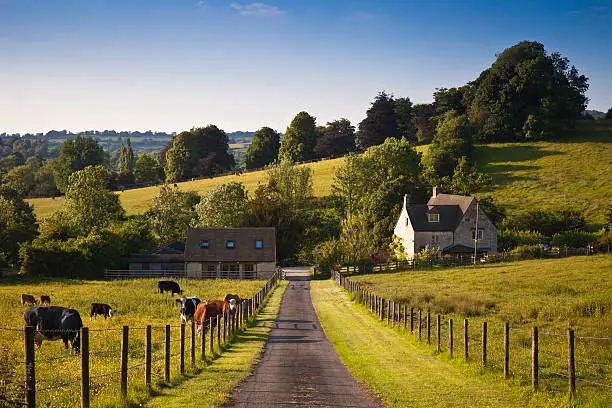
What I found was an estate.
Fresh paint. Clean fences. Outbuildings arranged with the orderly attention of someone who had been expecting an arrival. Not abandoned — prepared. The specific quality of a place that has been cared for by people who understood that its purpose was not its present but its eventual delivery.
I sat in the rental car at the top of the drive for a long time, looking at the house, and felt the specific sensation of twenty-four years of one story meeting the first paragraph of a different one.
Part Three: The Horses
The front door opened with the soft click of a well-maintained lock, and the house received me with the warmth of a space that has been heated recently, that has not been left to go cold.
High ceilings. Wide-plank floors. The great room with the stone fireplace that had been built to be the heart of a house that intended to last. Good furniture, nothing elaborate, the furniture of a place that has been furnished for use rather than display.
And then the horses.
I stood in the doorway between the entrance hall and the great room and I looked at them and I felt my breath leave my body with the specific involuntary quality of a response that has bypassed the deliberative part of the mind entirely.
Paintings of horses in full gallop, the motion in them caught by artists who understood that what makes a horse in motion beautiful is not the stopped moment but the implied continuation — the suggestion that the gallop extends beyond the frame in both directions. Bronze sculptures mid-stride on the mantelpiece and the side tables, the specific weight and presence of good sculpture that demands its space rather than merely occupying it. Photographs in simple black frames — horses in fields, horses at speed, horses in the particular stillness that is not rest but watchfulness.
My obsession. The thing I had been born for, as Joshua had said on our third date. The thing that had organized my private attention since I was seven years old and had sat on a horse for the first time and understood, in the specific language of the body that precedes thought, that I had found something I would love for the rest of my life.
Joshua had smiled at this love for twenty-four years. Smiled at the books on my nightstand and the photographs I collected and the small ceramic horses on the kitchen windowsill and the way my voice changed when I talked about horses — going into that register of someone who is speaking about their own nature rather than their preferences. He had smiled with the amusement of a man who does not share a love but genuinely values it in someone else, who finds it delightful rather than alien.
He had been collecting. Twelve years, as I would later learn — twelve years of finding the paintings and the sculptures and the photographs, of shipping them to Alberta, of placing them in a house I had never visited, making a room that looked like the inside of my imagination.
He had made a place for me before I knew the place existed.
I sat down on the floor of the great room because my legs were not interested in continuing their function, and I looked at the horses on the walls and I talked to my husband, who was not there, who had never been more present.
Part Four: The Desk
The silver laptop was on the desk by the west-facing window, closed, with a single red rose dried and placed across its lid. Not fresh — dried, which meant it had been placed deliberately and in advance, which meant Joshua had been here more recently than I had known, preparing the things that needed preparing.
The envelope beside the laptop had my name in his handwriting.
I held the envelope for a long time. I have described elsewhere — in the other account I have given of this story — the specific unwillingness to consume a thing that cannot be replaced. Once I read the letter, I would have read it. The reading would be permanent. I wanted to stay in the receiving for a while longer.
I opened it anyway. Because Joshua had prepared it for me to open, and honoring his preparations meant doing the things he had prepared for.
The letter was four pages, handwritten, in the care of someone who had thought carefully about every sentence. I will not reproduce it in full — some of it belongs to the privacy of a marriage. But I will tell you what it contained in the ways that matter for this account.
He had known for eighteen months that his heart was failing. The specific information he had from his cardiologist had been, he wrote, that the timeline was uncertain but the direction was not, and he had decided, in consultation with himself, that he would spend those months preparing rather than worrying, doing rather than managing, making things right rather than making them easier to bear.
The farm was the primary making-right. He described it in the letter — the history of it, which I will tell you separately — and he described what he had done to prepare it and why, and he said the thing that the room had already said without words: I made it for you. I should have brought you here years ago. The reason I didn’t is what I need to explain.
He explained.
Part Five: What Joshua Left Unsaid for Eighteen Years
Joshua had two brothers. This was something I had known in the abstract — he had mentioned them rarely, in the specific way of someone managing a subject rather than discussing it, and I had understood that the relationship was complicated and had not pushed for more than was offered.
What he had not told me, and what the letter explained, was the full history.
His father, Gordon Mitchell, had built Maple Creek Farm over forty years into what it was — a productive operation, well-maintained, the product of a man who understood land and had devoted his working life to understanding it better. Gordon had died when Joshua was thirty-one, leaving a will that had been revised in the final months of his illness in ways that his elder brothers, Callum and Fraser, had found insufficient to their expectations.
The estate dispute had been lengthy and costly and had produced the specific damage of legal processes applied to family relationships — damage that is both precise and total, that leaves people who once knew each other well unable to recognize what remains. Callum and Fraser had, in the course of the dispute, done things that Joshua had never forgotten and had spent fifteen years protecting me from knowing.
Not because he was ashamed of them. Because he was ashamed of his own response — because the conflict had surfaced in him a quality of anger he had not known was there and that had frightened him, and he had managed this by keeping the whole of it at a distance from the life we had built together, which was the life he valued most.
He had, in the end, received Maple Creek Farm as his portion of the estate, cleared of the competing claims through a legal process that had cost him significantly but had produced a clean title. He had then spent fifteen years managing the farm through an agent, repairing what the dispute had damaged, preparing it.
And then, when he understood his time was limited, he had changed the estate documents to direct everything to me, had prepared the folder in the desk drawer, had arranged for the RCMP to be on standby through Mr. Winters’ office if the brothers appeared — which Mr. Winters had told him they would, because Callum and Fraser had been informed of the estate and had communicated their intention to contest it.
He had built a trap. Not for me — for them. A legal structure so clean and so complete that their approach to the property would be the moment it closed.
They’ll try to take it, he had written. Don’t let them scare you. In the bottom drawer of that desk is a blue folder. Everything you need is in there.
Part Six: The Tires
I heard them before I finished the letter.
Tires on gravel, coming up the drive with the specific confidence of vehicles that are not uncertain of their destination. I went to the window and watched a black SUV stop behind my rental car and three men step out.
Tall. Dark-haired. The specific arrangement of features that I recognized immediately, because I had been looking at a version of that face for twenty-four years. Joshua’s jaw. Joshua’s forehead. The eyes set at Joshua’s angle, but without what Joshua’s eyes had had, which was the specific warmth of someone for whom other people are interesting rather than useful.
Callum, Fraser, and a third man I did not recognize — younger, possibly a lawyer, carrying documents.
I locked the front door with hands that were shakier than I would have preferred.
The knock came. Then the voice, carrying the Canadian edge that Joshua had told me was his family’s regional inheritance, the specific accent of the Alberta foothills.
Mrs. Mitchell. We know you’re in there. We need to talk.
I backed away from the door and looked at the laptop and thought about the line in the letter that I had not yet understood: One more thing is waiting for you in the laptop. The password is what I called you on our third date.
On our third date, Joshua had called me the woman who was born for horses. He had shortened this, over the years, to just: born.
I opened the laptop. The password field. B-O-R-N.
The screen opened to a folder labeled: For Catherine.
Inside: video files. Hundreds of them. Each dated.
Part Seven: The Videos
I clicked the first one.
Joshua appeared on the screen. Healthy, in this video — the specific version of him from before the illness had claimed the weight and the color, the Joshua of our middle years together, the one I had been trying to hold clearly in memory and that was already, in the two weeks since his death, beginning to soften at the edges.
He was sitting in this chair. In this room. Looking directly into the camera with the crooked grin that had undone me since the third date.
“Hello, Cat,” he said.
My throat closed.
“If you’re watching this, you came to the farm anyway. Which means you kept your courage, which is something I never doubted and am grateful for.” He paused. “I made one video for every day you’ll need me. I don’t know how many days that is. I made enough.”
Outside, the men on the porch had stopped knocking. I could see them through the window — conferring, unfolding papers, doing the thing that people with legal documents do when the documents are their primary argument.
Joshua’s expression on the screen sharpened.
“They’ll be outside,” he said. “The brothers. They’ve been told about the estate and I know how they respond to being told things they don’t like. Don’t let them frighten you. The blue folder has everything — the chain of title, the legal analysis from the firm that worked on the estate, the specific response to the claim they’ll try to make. Mr. Winters has a copy. There are also two calls you can make.” He named the numbers. “The first is the RCMP detachment in Pincher Creek — they know to expect a call and they know what the situation is. The second is the estate lawyer who handled the original dispute. She is not my lawyer but she knows the history and she will tell you the history correctly.”
He looked at the camera for a moment.
“I’m sorry,” he said. “For keeping this from you. For making you promise without explaining why the promise mattered. I’ll explain. There are videos for all of it.” He smiled, small and real. “I have a lot to tell you, Cat. I should have been telling you for years. I’m going to make up for lost time.”
The video ended.
Outside, a second vehicle pulled up. Heavier than the first. The sound of a radio crackle that was official rather than civilian.
A different knock. Measured. The knock of someone doing a job.
Mrs. Mitchell. This is Constable Chen with the RCMP. We need you to open the door, please.
I held the blue folder against my chest, felt the key in my palm, and went to open the door.
Part Eight: The Folder Opens
Constable Chen was young — twenty-five at most, with the specific quality of someone who has been briefed thoroughly and is applying the briefing carefully. She had a partner behind her, older, with the patience of someone who has done this before.
Callum was already talking — had been talking before the RCMP car stopped, the specific verbal forward motion of a man who believes that talking is a form of action and that action taken first has inherent advantage. He had a document in his hand, held at an angle that communicated official authority.
“Mrs. Mitchell,” Constable Chen said, directing her attention to me rather than to the document-holding man, “we received a call from the estate. Mr. Winters’ office indicated there might be a property access situation.”
“There is,” I said.
I had the blue folder. I held it correctly — not defensively, not as a shield, but in the way of someone who has the relevant information and is prepared to present it. Joshua had organized the folder the way he organized everything — with the specific patience of an engineer who understands that the sequence in which information is presented determines how it lands.
The first document in the folder was the current chain of title, ending with the transfer to my name as of the estate settlement. Clean, complete, notarized, with the firm’s seal.
The second was the legal analysis — twelve pages, dense, written by the estate lawyer Joshua had named, assessing the claim the brothers were likely to make and explaining, precisely and with precedent, why the claim was not legally operative.
The third was a one-page summary of the same analysis, written for people who are not lawyers, which I suspected Joshua had included because he knew me and knew that twelve pages of dense legal analysis would require sustained attention that I might not have while standing on a porch with three men and two RCMP officers.
I gave Constable Chen the chain of title first.
She looked at it. She showed it to her partner. He looked at it with the specific attention of someone who is checking something against a standard in his head and finding the check satisfactory.
Callum said something about the original estate, about their father’s intentions, about documents that superseded the current title.
Constable Chen held up one hand, without looking at him, in the way that people in her profession have developed for exactly this circumstance.
She looked at me.
“Is there a lawyer you’d like to contact before we proceed?” she said.
“Yes,” I said. “I have the number.”
Part Nine: The Phone Call
I called the number Joshua had written in the folder. The estate lawyer — her name was Patricia Moreau, and she had been working in Alberta estate law for thirty years — answered on the third ring with the quality of someone who has been waiting for a call and has prepared for it.
I told her where I was and who was on the porch.
“I know about the situation,” she said. “I worked on the original dispute and I know the brothers. Tell me what documents they’ve presented.”
I described the document Callum had been holding. She asked me to read a portion of it. I did.
She was quiet for a moment.
“That document was addressed in the estate proceedings,” she said. “It is not operative against the current title. I can be on a call with the RCMP officer in the next ten minutes if that would help establish that for them directly.”
“Yes,” I said.
Patricia Moreau spent fourteen minutes on the phone with Constable Chen, during which she explained the legal history and the disposition of the brothers’ claim and the reasons the document Callum had presented did not do what he believed it did. I watched Constable Chen listen and take notes and ask the precise questions of someone building a clear record.
Callum and Fraser had moved to the side of the porch by then. Callum was on his own phone. Fraser was looking at the fields with the specific expression of a man who is recalculating something.
The third man — the lawyer, I had correctly guessed — was reading the chain of title document I had given Constable Chen, which she had passed to him when Patricia Moreau had explained the legal framework. His expression had the quality of a professional assessment arriving at a conclusion he had not been hired to reach.
When the call ended, Constable Chen walked to where the brothers stood and spoke to them in the low, official tone of someone delivering information that is not subject to negotiation.
I did not hear the specific words. I did not need to.
Part Ten: After
They left. Not immediately — these things are never entirely immediate, and there was the procedural management of the RCMP officers completing their documentation and Constable Chen giving me the reference number for the file that would exist in case further contact was needed. But they left before the last light was gone, the black SUV going back down the drive and through the gates, and then the RCMP vehicle following it as far as the road.
I stood on the porch and watched the taillights disappear and felt the specific silence of a farm at the end of an October day — the prairie going quiet, the light doing its final business with the horizon, the grass making the small sound it makes when the wind is low and constant.
I called Margaret.
“I’m here,” I said. “I’m all right.”
She made me describe the whole thing, which took twenty minutes and which I was grateful for because describing it made it real in the way that events require description to become fully real, to settle into the category of things that happened rather than things that are still happening.
“What are you going to do now?” she said.
“Stay,” I said. “For a while.”
I went back inside. I made tea in the kitchen — the kitchen that had been stocked recently, which I understood was the work of the property agent who had been maintaining the farm. The tea was good. The kitchen had the warmth of a room that has been used.
I took my tea to the great room and I sat in Joshua’s chair and I looked at the horses on the walls and I opened the laptop.
Part Eleven: The Videos
I watched two videos that first evening.
The first was the introductory one I had already seen, and watching it again with the porch cleared and the house quiet produced a different experience than the first viewing — less the shock of his presence and more the specific quality of settling into it, of understanding that this was a form of him that was going to be available to me.
The second video was dated three days after the first and was Joshua sitting in the same chair, looking out the window for a moment before he turned to the camera, and in the pause before he spoke I could see the farm in the background through the glass — the field, the outbuildings, the October sky.
He talked about the farm’s history. About his father, whom he described with the specific mixture of love and complicated truth that children use for parents who were genuinely good in some ways and genuinely difficult in others. About the brothers and the dispute — telling it from the beginning, the details he had kept from me, the specific shape of what the years had contained.
He talked for forty-two minutes in this video. He was a methodical narrator — he had learned, in his engineering career, to sequence information in the order that made each piece understandable before the next arrived, and he applied this to his own story with the same precision. By the end of the video I understood things about my husband’s past that I had not known and that I was still processing and that I think I will be processing for a long time.
He ended by saying: “I should have told you this when we were sitting at the kitchen table. I should have told you a hundred times. I was protecting you from something that didn’t need protecting from, and I was also protecting myself from the telling, and I mixed those two things up and it cost us something. I’m sorry, Cat. I’m going to keep explaining until you understand everything.”
I watched the third video.
In the third video, he showed me the farm — walking through it with the camera, narrating, explaining what each building was and what its history was and what he had done to restore it. He knew this place the way he knew the projects he managed — with the comprehensive attention of someone who has learned a thing at every level, from the structural to the incidental. He knew which fence post had been replaced in which year and why. He knew the name of the creek that ran along the eastern edge of the property and the history of how it had come to be called that.
He was giving me a tour of a place he had prepared for me. He was telling me about it the way you tell someone about a place you want them to love.
By the time I stopped watching, it was after midnight. I was in the chair with the laptop and the tea that had gone cold and the horses on the walls, and I felt something that was not quite okay and not quite not-okay but was something in between — the specific state of a person who has received more than they can process in one evening and who has understood, in the receiving, that the processing is going to be the work of a long time.
Part Twelve: What the Farm Is
I have been at Maple Creek Farm for four months now.
I did not go back to sell it, which was the plan, because the plan was made before I understood what it was. It is not primarily a property. It is not primarily an estate or an inheritance or a legal structure that required defending from brothers who arrived with documents and confident voices. It is a conversation — the longest and most patient conversation of my marriage, the one that could not happen at the kitchen table and has been waiting here instead.
I wake up to the sound of the horses in the pasture. There are three of them — I discovered this on my second morning, going out the back door with my coffee to find them in the field doing what horses do in the early morning, which is be themselves without performance. One of them is gray, which is my preference in horses the way some people have preferences in colors, and when I told this to Margaret she said that of course Joshua had known.
Of course he had known.
I watch the videos in the evenings. I am up to the thirty-seventh, which means there are many more, which means Joshua made more days than he expected me to need him or which means he expected me to need a long time. I do not know which. It does not matter. They are there.
Patricia Moreau filed the legal response on behalf of the estate, and Callum and Fraser have not appeared again in person, and the claim they filed has been addressed through the process it belongs in, which is a legal process rather than a presence-on-the-porch one. Margaret says this is the right outcome. Patricia says it is the expected outcome. I have decided to think about it only when it requires thinking about and to think about the horses and the videos and the October turning into November turning into the specific winter of the Alberta foothills the rest of the time.
There is a line in the forty-first video — I know because Margaret told me someone who had heard the account of the videos described this as the most important one, and I fast-forwarded once to find it — where Joshua says: I built this for you because I couldn’t figure out how to give you the thing directly. I’m better with structures than with words. I’m going to try to be better with words.
He spent the videos being better with words.
I have been learning, in the evenings in his chair with the horses on the walls and the laptop and the cold tea, what he was trying to say. I am not finished learning it. I think the learning is going to take as long as it takes, which is the kind of learning that does not have a schedule.
The key is on the maple-leaf charm on the desk where I left it the first evening. Face up. Available.
The farm smells of cedar and cold air and horses, which is the smell of the thing that was waiting for me.
I am still arriving.
THE END

Adrian Hawthorne is a celebrated author and dedicated archivist who finds inspiration in the hidden stories of the past. Educated at Oxford, he now works at the National Archives, where preserving history fuels his evocative writing. Balancing archival precision with creative storytelling, Adrian founded the Hawthorne Institute of Literary Arts to mentor emerging writers and honor the timeless art of narrative.