What Joshua Left
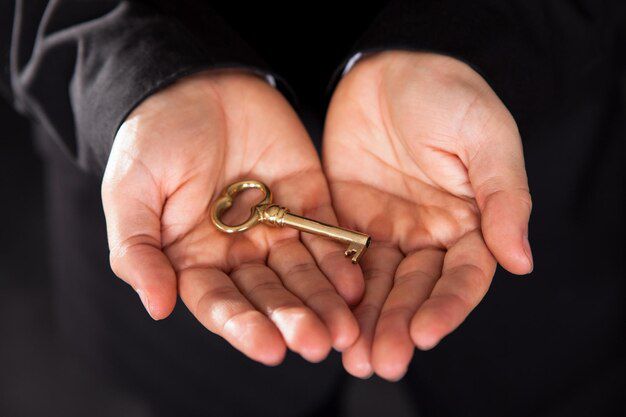
Two weeks after Joshua’s funeral, his attorney slid a tarnished brass key on a maple-leaf chain across her walnut desk and said, “Now it’s yours.”
My stomach dropped.
Not because I hadn’t known, somewhere in the background of our twenty-four years of marriage, that there was a farm. Joshua had mentioned it the way you mention a country you visited once and do not intend to return to — briefly, without invitation for questions, with the specific closing quality of a subject that was closed. There had been a rule, stated once and never restated because it had never needed restatement: don’t ask about the farm. I had accepted this with the trust of a woman who believed that people are entitled to their private territories and that love does not require the elimination of privacy.
What I had not known was that the farm would become mine.
The attorney, Margaret Osei, had the patient quality of someone who has delivered complicated information many times and who understands that the first delivery is only the beginning of a person’s processing. She watched me look at the key and she gave me time.
“He left it in its entirety to you,” she said. “The property, the assets, the accounts associated with it. Everything.”
“Why didn’t he tell me?” I asked.
“He wrote about that,” she said. “In the letter. The envelope you’ll find on the desk.”
She told me about the brothers — three of them, all older than Joshua, all named in an earlier version of the estate documents that had been superseded by the current one, the one that directed everything to me. She told me they were aware of the change. She told me, leaning forward with the specific gravity of a woman who wants to make sure a thing is heard: do not sign anything if they show up.
I looked at the key. The maple-leaf chain. The tarnish of something old and kept rather than old and forgotten.
I made one call — to my daughter, who was staying at my house with her children for the week of the funeral — and then I booked a flight to Calgary and drove west into the prairie dusk toward a place my husband had kept from me for twenty-four years.
Part One: Joshua
Before the farm, before the brothers, before the laptop screen that blinked awake in a farmhouse in Alberta — there was Joshua.
Joshua Mitchell was fifty-seven when he died of a cardiac event on a Tuesday morning in March, which is the specific cruelty of deaths that are not warned about — the no time to say the things, the no last conversation, the morning that began with coffee and ended with a phone call. He had been my husband for twenty-four years and my person for twenty-six, and the two years before the marriage had been the years of understanding that I had found someone who was, in the most fundamental sense, safe.
Not safe in the way of unchallenging — Joshua was not that. He had opinions and defended them and could argue with the focused energy of someone who believed ideas deserved to be tested. He was funny in the dry, understated way of people who trust you to catch the joke rather than telegraphing it. He was, as a father to our daughter Claire, the specific kind of present that does not need to be performed because it simply is.
He was also, in one specific territory, closed.
The farm was never explained. It was referenced, in the early years of our marriage, as something that existed and that he was not attending to and that I should not expect to hear about. He said this without cruelty and without defensiveness — just with the clear simplicity of a man establishing a boundary he expected to be respected. I respected it. Over the years, the farm became one of those things that had always been there and was simply part of the landscape of our life together — present, acknowledged, unexamined.
When I try to understand, now, why he kept it from me, I return to what he wrote. But I will tell you what he wrote later, because the letter deserves to come in its proper place.
What I knew about Joshua, in the days after his death and in the two weeks before Margaret slid the key across her desk, was this: he had loved me completely and had kept one thing private and had, without telling me, arranged for me to have everything.
Part Two: The Drive
The prairie in early April is a specific kind of landscape — not the green of the summer prairies that appear in photographs, but the in-between prairie of a place that has been brown for a long time and is only beginning to consider the possibility of something else. Wide. Uncompromising. The kind of place that makes you feel both very small and very clear, because there is nothing to obstruct the view in any direction and the unobstructed view produces a quality of honesty that more cluttered places do not.
I drove west from Calgary on the Trans-Canada with the rental car’s heater working against the April cold and the sky doing the enormous thing that Alberta skies do — the clouds stacked at a scale that does not exist in the places I have lived, the light coming through them at angles that seem dramatic to people from elsewhere and that are, I would come to understand, simply what this place looks like.
Margaret had given me directions. The farm was three hours from Calgary, in the foothills region where the flat prairie begins its approach toward the mountains — not in the mountains but near enough to feel their presence, to see them on clear days as a blue wall along the western horizon.
I had packed for a week, though I had told myself I was going for logistics — a quick look, an assessment, a decision about what to do with property I had not known was mine. I had packed for a week because some part of me that was not the part making practical plans had understood that quick might not be what the situation called for.
The gates appeared out of the countryside at dusk. MAPLE CREEK FARM, in black iron, curved with the specific formality of something that had been made to last. Wind moved the tall grass on either side of the drive. I stopped the car at the gate and sat for a moment, looking at the letters, and felt the specific quality of arriving at a place that has been present in the background of a life without ever being visited.
The key turned in the gate lock like it knew me.
Part Three: The House
Gravel under the tires on the long drive. The farmhouse appearing at the top of a slight rise — white paint fresh enough to suggest recent attention, a wide porch with chairs that faced the view, windows catching the last light in a way that made the house look inhabited rather than empty.
Not broken. Not forgotten. Not the “don’t ask” place I had constructed in my imagination over twenty-four years of not being told about it.
I sat in the car for a while before going in.
The key worked in the front door with the smooth confidence of a key that has been used regularly, that has not been neglected. The hinges did not creak. The house opened into warmth — the specific warmth of a space that has been heated recently, recently enough that the heat had not yet bled away.
Wood beams overhead. Stone floors in the entrance, wide-plank wood in the great room. A fireplace built with the permanence of something installed not as decoration but as the primary warmth source for a winter that requires warmth you can depend on. Good furniture — nothing elaborate, but nothing careless, the furniture of someone who had thought about how a room is used and had chosen accordingly.
And then the horses.
I stood in the middle of the great room and looked at them and felt something move through me that was part recognition, part vertigo, part the specific confusion of finding something you know very well in a place you have never been.
Horses everywhere. Paintings of horses in mid-gallop, the movement caught with the quality of paint that has not tried to freeze the motion but to show it continuing beyond the frame. Sculptures in bronze and ceramic and what looked like hand-forged iron. Photographs in simple black frames — horses in fields, horses at speed, horses standing still in the specific way that horses stand still, which is never entirely still.
My obsession. The thing I had loved since childhood, since my first lesson on a gray mare named Agnes at a farm outside Toronto, since the specific moment when I had understood that horses were the one thing in the world I could be around that made the noise of my interior life quiet.
Joshua had always smiled at this — smiled at my horse books and my horse photographs and the small ceramic horse on the windowsill of our kitchen that had been there for twenty years. He had smiled the way people smile at something they do not quite understand but do not want to diminish. He had never tried to take it from me. He had never suggested it was too much or too specific or too expensive, the times I found a riding lesson or a stable visit to include in a trip.
He had also, apparently, built a gallery of it. In a farmhouse in Alberta. In the place he had never taken me.
I sat down on the floor of the great room — just sat, on the stone floor, in my coat, because my legs were not interested in continuing to hold me up — and looked at the horses on the walls and tried to understand the twenty-four years of silence in the context of this room.
Part Four: The Desk
The silver laptop was on the desk by the window that faced west, toward the last light. The red rose was dried — not fresh, dried, which meant it had been placed deliberately some time ago rather than recently. Joshua had been here, more recently than I had known, and had placed a dried rose on the laptop lid the way you place a marker on something you want someone to find.
The envelope with my name on it was in his handwriting. Not his careful handwriting — his actual handwriting, the one that arrived in notes left on kitchen counters for twenty-four years, the one I had read hundreds of times without knowing I was memorizing it.
I held the envelope for a long time without opening it.
This was partly the specific unwillingness to consume a thing that cannot be replaced — once I read the letter, I would have read it, and the reading would be over, and the letter would be something I had already received rather than something I was still receiving. I wanted to stay in the receiving for a little longer.
It was also partly that I could hear tires on the gravel.
Part Five: The Brothers
They were tall in the way Joshua had been tall, with the specific echo of shared ancestry in their faces — the jaw, the forehead, the set of the eyes. But Joshua’s face had warmth in it as its organizing quality, and what these faces had was something else. The certainty of men who have decided they are owed something and have come to collect it.
Three of them. The SUV behind my rental was large and clean, a vehicle chosen for the impression it makes rather than the function it serves.
The first knock was polite. The second was not. The voice through the door had the smooth certainty of a man who has prepared for this conversation and believes the preparation is sufficient.
We can do this nicely, or we can make it very difficult.
I stood back from the door and felt the sequence of things I had learned, in the preceding years, to feel in order: calm, then irritation at the calm being disturbed, then the specific tight pressure of being treated as someone whose grief makes them movable.
“You don’t get to rush grief,” I said through the door. “And you don’t get to rush me.”
Silence. Muttering. And then the paper appeared against the window glass — held up by one of them, the visual language of official documentation deployed as threat rather than information. Black letters, legal formatting, the performance of procedural authority.
I looked at the paper through the glass and thought about Margaret’s voice: don’t sign anything if they show up.
Then another engine. Heavier. A radio crackle that was not the radio crackle of a civilian vehicle.
RCMP.
Someone had called the RCMP to Maple Creek Farm, and the voice that came through the door now had the careful, formal quality of someone who is doing a job rather than trying to win something.
Mrs. Mitchell. We need you to open the door, please.
I looked at the rose. The envelope. The laptop.
Joshua had not left me a farm. He had left me a decision.
I walked to the desk and sat in his chair and opened the laptop.
Part Six: The Password
The password came to me without deliberation, which told me something about what the password was and who had chosen it. Four digits and a word: the year we met and the name of the gray mare I had told Joshua about on our third date, the horse I had learned on, the horse I had described with enough detail that he had remembered it twenty-six years later.
Agnes.
The screen blinked awake.
On the porch, a RCMP officer was speaking with the brothers in the low, measured tones of someone applying procedural calm to a situation. The brothers’ voices were audible as interruption and insistence, the voices of men who expected the procedure to resolve in their direction.
I opened the folder on the desktop labeled with my name.
Part Seven: What Joshua Left
The folder contained four things.
The first was a video. Joshua, sitting in this chair, in this room, with the horses visible on the walls behind him. He looked tired in the way of someone who has been tired for a while and has decided to do the thing anyway. He looked directly at the camera with the specific quality he had always had of looking at me — not the performed attention of someone making eye contact for effect, but the actual seeing of someone who knows what they are looking at.
“Eleanor,” he said. “If you’re watching this, I’m gone. And you’ve already met the house.”
He paused. He smiled in the way that had always been his actual smile rather than his public smile — smaller, more precise, with more in it.
“I need to explain some things,” he said. “I need to explain the farm.”
He talked for thirty-seven minutes. I will tell you what he said, not in full — some of what he said is mine and will stay mine — but in the shape that matters.
The farm had been his parents’ land, which his father had built from nothing and which had been, for the first fourteen years of Joshua’s life, the place that meant home in the most complete sense. When his father died, Joshua was twenty-two and the eldest three brothers — Gordon, Lawrence, and Davis — had already established themselves as the family’s decision-making center, the men who determined what happened with the family’s assets and who consulted no one outside their own agreement.
What they had decided, in the estate settlement following their father’s death, was that the farm belonged to them collectively and that Joshua, who had been close to their father in ways that made the others uncomfortable, who had been the one present at the end, who had been the one who had learned the farm’s management rather than leaving for the city — Joshua would receive a token portion and the clear understanding that his opinion about the farm’s future was not required.
Joshua had contested this. The contest had failed, because the other three had resources he did not and had organized themselves in advance of the estate settlement in ways that foreclosed his options. He had lost the farm — the farm where he had grown up, where his father had taught him everything he knew about land and animals and what it meant to stay in a place rather than merely visit it.
He had lost it, and then, over the following twenty years, he had bought it back. Not dramatically — quietly, the way he did everything important. He had found the moment when the brothers needed to sell, which came eventually because things that are not cared for deteriorate and deteriorating things become burdens, and he had made the purchase through an LLC that did not carry his name, and he had taken possession and had spent fifteen years restoring what had been neglected.
He had not told me because telling me would have required explaining, and explaining would have required revisiting twenty years of the wound, and the wound was one he had managed by putting it somewhere he could contain it rather than letting it live in the present of our marriage.
The farm had been his private grief and his private restoration, and he had kept them private because he had not known how to give them language in the context of a life that was otherwise present and forward-facing.
“I should have told you,” he said in the video. “I know that. I’ve known it for years. I kept telling myself there would be a time when it would be easier to explain, and there was never a time, and then I ran out of time.”
He looked at the camera.
“The horses are for you,” he said. “I put them there for you. I’ve been collecting them for twelve years, since I took possession and started thinking about what the house should be. I didn’t know if you would ever come here. But I wanted, if you did, for it to feel like yours.”
Part Eight: The Brothers
The second thing in the folder was a legal document — the complete chain of title for Maple Creek Farm, including the LLC purchase and the transfer to Joshua’s personal name and, subsequently, to mine. It was clean. Margaret had already told me it was clean. But seeing it laid out in the document, seeing the deliberate, methodical work of twenty years of careful legal management, I understood it at a level that Margaret’s description had not reached.
The document that the brothers had pressed against the window glass was, according to the third item in the folder — a letter from Margaret — a claim based on an earlier version of the family estate settlement that had been superseded by the LLC purchase. It was, she had written, the kind of claim that has the visual language of legitimacy without the legal substance of it. It would require addressing, but addressing it was a matter of presenting the chain of title, and the chain of title was clean.
They will come, Margaret had written. They have already signaled their intention. Take no action at the property until you have spoken with me, and take no action with them at all until you have legal representation present.
The fourth item in the folder was the letter. Not the video — the video was its own thing — but the handwritten letter, scanned, the one that matched the envelope on the desk.
I read the digital version first, because I needed to read it before I could be in the room with the physical copy.
He wrote about his father. He wrote about the brothers and the estate and the twenty years of buying back what had been taken. He wrote about the horses — about finding the first one, a painting in a shop in Calgary, six months after he took possession of the farm, and understanding in the moment he saw it that the house needed them, that the house needed what they meant to him when he thought about me.
He wrote: I have spent twenty years making this place what it should have been. I kept it from you because I was ashamed of the story it came from. I know now that was wrong. The shame was mine and I should have carried it differently, with you, rather than alone.
He wrote: The farm is yours. Not because I am leaving it to you — that is true but it is not the reason. It is yours because you are the person I would have brought here first if I had known, from the beginning, that you were the person who would understand what it is. You would have seen it the way I see it. I know this. I always knew this. I waited too long to show you.
He wrote: Don’t let them take it. It is mine to give. I give it to you.
Part Nine: The Door
I opened the door.
The RCMP officer was young, with the careful professionalism of someone who has been sent to manage a situation with uncertain parameters. The brothers were arranged on the porch with the configuration of men who have planned this and are waiting for the script to proceed as planned.
“Mrs. Mitchell,” Gordon said. He was the eldest — Joshua’s senior by seven years, with a face that had the specific set of a man who has been the deciding voice for a long time and expects to continue being it.
“Mr. Mitchell,” I said. It was deliberate — the use of his last name, the same last name, the reminder that the name connected us before his plans did.
“We’d like to talk about the property,” he said. “There are some things you may not be aware of regarding the history of this land.”
“I’m aware of the history,” I said. “I’ve been reading about it for the past hour.”
The RCMP officer looked at me with the attention of someone recalibrating. He had been called to manage an intrusion, and what he was finding was not the vulnerable widow the brothers had apparently described when they made the call.
“There are documents—” Lawrence began.
“I’ve seen the documents,” I said. “Both the chain of title and the document you pressed against the window. I know which one is legally operative. My attorney also knows. She will be available for any communication you need to have about this property, and I would ask that you direct future contact to her office.”
I had Margaret’s card in my pocket. I held it out. Gordon looked at it. He did not take it immediately.
“Eleanor,” Davis said, and his voice had shifted into something that was attempting warmth, “we’re not here as enemies. Joshua was our brother.”
“I know who Joshua was,” I said. “To me and to your family. That knowledge is not in conflict with what I’ve told you.”
The RCMP officer cleared his throat. “Ma’am,” he said, “is there a dispute you’d like to—”
“There’s a legal matter that will be handled through attorneys,” I said. “There’s no dispute that needs to be resolved tonight, and there’s no reason for anyone to remain on this property. The title is clear. I’m happy to provide the documentation if that would be helpful.”
I looked at the officer as I said this last part, because the documentation would be more useful to him than to the brothers, who already knew what the documentation said.
Part Ten: After They Left
The porch was quiet. The gate clicked at the end of the drive. Taillights on the road.
I stood in the doorway for a while, looking at the prairie in the dark — the stars that are visible in this part of Alberta with an intensity that is simply not available in the cities I have lived in, the sky doing the enormous thing it does when there is nothing to obstruct it.
I called Margaret. She answered on the second ring, which told me she had been expecting the call.
“They came,” she said.
“They came,” I said.
“The document they had is not operative,” she said. “We can file the response tomorrow. It’s straightforward.”
“I know,” I said. “I read the folder.”
A brief pause. “He was thorough,” she said.
“He was always thorough,” I said.
I was quiet for a moment. The prairie dark was very large and very quiet and the stars were doing what they do in large, quiet darkness.
“Margaret,” I said. “Did he know he was sick?”
She was quiet for a moment.
“He had a cardiac event two years ago,” she said. “A minor one. He didn’t tell many people. But after it, he updated the documents and prepared the folder. He wanted everything to be clear.”
“He wanted me to be able to come here and know what it was without having to ask him,” I said.
“Yes,” she said. “I think that’s right.”
I thanked her. I went back inside. I sat in Joshua’s chair at the desk with the horses on the walls and I opened the physical envelope and I read the letter in his handwriting, the actual handwriting, not the scan.
I read it twice. Then I folded it and put it back in the envelope and set it on the desk.
Part Eleven: The Morning
The prairie at dawn is different from the prairie at dusk. The same landscape, the same scale, the same quality of unobstructed view — but the light arrives differently, from the east rather than departing toward the west, and the arriving light has a quality of declaration that the departing light does not.
I found the kitchen and the coffee, which was good coffee in a machine that had been recently maintained, by someone who came regularly to care for the property. I found the back door and stood on the back porch with my coffee and watched the light arrive over the prairie.
The pasture behind the house was green — early-spring green, not the full summer green it would become, but the particular tender green of a place that has been waiting for the right conditions and has found them. And in the pasture, moving through the early light with the specific unhurried quality of horses that are not performing for anyone, were three horses.
Not paintings. Not sculptures. Actual horses.
I set my coffee down on the porch railing and I stood and I looked at them with the full attention I had always given to horses, the specific total quiet of my interior life that only this produced, and I understood something that the letter had not said directly but that the farm had said in every room and in every painting and in the fact of three horses in a pasture behind the house.
Joshua had known. Not just about the horses — about what the horses were for, about what they did for the noise in me, about what it meant to be near them. He had smiled at it for twenty-four years not with incomprehension but with the knowledge of someone who understands a thing even if they cannot fully share it, who values it in another person because they can see what it gives.
He had built the thing that would give it to me in the only place he had that was entirely his to build.
Part Twelve: What I Know Now
I have been at Maple Creek Farm for six weeks. I told myself I came for a quick look and I am still here, which tells me something about what quick and look actually meant when I said them.
The legal matter with the brothers is being handled by Margaret and by the additional counsel she recommended, a litigator in Calgary who has the specific quality of someone who has encountered this kind of claim before and finds it manageable. The claim is not operative. It will be resolved. The timeline is Margaret’s to manage and she is managing it.
Claire came for the second week. She is thirty-one and has her father’s quality of attention and her own version of the directness I have spent a lifetime developing, and she stood in the great room on her first evening and looked at the horses on the walls and did not say anything for a long time.
“He made this for you,” she said finally.
“Yes,” I said.
“He was embarrassed about it,” she said. Not a question.
“He was ashamed of the story it came from,” I said. “He carried it wrong.”
She looked at a painting of a horse mid-gallop, the motion caught with the quality that had made me stand in this room on my first evening and simply sit down on the floor.
“He should have brought you here,” she said.
“Yes,” I said. “He should have. And I would have understood if he had.”
She turned from the painting.
“Are you going to keep it?” she asked.
I looked around the room. The beams. The fireplace. The horses on every surface. The desk by the window where the laptop had waited with its password and its folder and its thirty-seven-minute video of my husband explaining what he had not known how to explain when he was alive.
“Yes,” I said.
The horses in the pasture are named, as I discovered from the property manager who comes twice a week — a quiet woman named Jean who had been managing the property for three years and who had received her instructions from Joshua and who had, she told me, been told that someday his wife would come.
The horses are named Agnes, Eleanor, and Joshua.
He had named one for me and one for himself and one for the horse I had loved when I was young enough that loving a horse was the whole of what I needed.
I go out to the pasture every morning. I stand at the fence with my coffee and the prairie light arriving and Agnes comes to me with the specific unbothered directness of an animal that has decided you are trustworthy and does not need to perform the deciding.
Some things are given to you after the person who built them is gone. You cannot thank them and you cannot ask the questions that the gift raises and you cannot have the conversation that should have happened twenty years earlier and did not.
What you can do is take the gift completely. You can live inside it with the full attention it deserves. You can tend the pasture and maintain the paintings and sit in the chair at the desk and understand, as fully as you are able, what was built there and what it cost to build it and what it means that it was built for you.
This is what I am doing.
This is the only way to say thank you that is still available.
THE END

Ethan Blake is a skilled Creative Content Specialist with a talent for crafting engaging and thought-provoking narratives. With a strong background in storytelling and digital content creation, Ethan brings a unique perspective to his role at TheArchivists, where he curates and produces captivating content for a global audience.
Ethan holds a degree in Communications from Zurich University, where he developed his expertise in storytelling, media strategy, and audience engagement. Known for his ability to blend creativity with analytical precision, he excels at creating content that not only entertains but also connects deeply with readers.
At TheArchivists, Ethan specializes in uncovering compelling stories that reflect a wide range of human experiences. His work is celebrated for its authenticity, creativity, and ability to spark meaningful conversations, earning him recognition among peers and readers alike.
Passionate about the art of storytelling, Ethan enjoys exploring themes of culture, history, and personal growth, aiming to inspire and inform with every piece he creates. Dedicated to making a lasting impact, Ethan continues to push boundaries in the ever-evolving world of digital content.