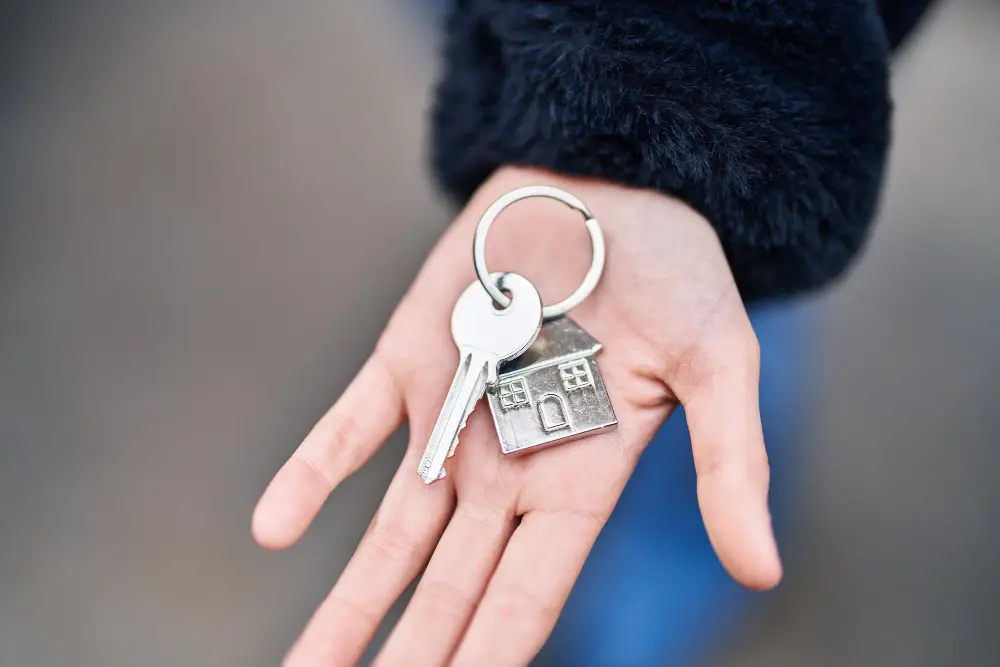
My name is Alicia Bennett. I’m thirty-four years old, and I used to believe a spare key was a symbol of trust—something you hand over for emergencies, not permission to rearrange someone’s life.
Then I came home from work one Tuesday and stopped dead in my doorway. Boxes were stacked neatly beside my sofa like a move had been scheduled in my calendar without my name on it. Shoes I didn’t recognize sat by my entry rug, and “RACHEL” was written in bold black marker across the cardboard.
That’s when I learned the difference between helping family and being steamrolled by them.
But the real lesson came two days later, when I woke up to the sound of metal on metal at my front door—and discovered my mother standing on my porch with a locksmith, trying to change my locks without my permission.
What happened next taught both of us that some doors close permanently when you refuse to respect the person on the other side.
The Setup
I bought my small three-bedroom house four years ago in a quiet neighborhood. Saved for the down payment, worked overtime, made sacrifices. It was mine—the first thing I’d ever owned that was completely, legally, indisputably mine.
Two years ago, I gave my mother a spare key. For emergencies. In case I locked myself out. In case something happened and someone needed to get in. It was supposed to be about trust, about safety, about family looking out for family.
I didn’t know it was actually permission for her to treat my house like community property.
The dynamic in my family had always been clear: my younger sister Rachel, twenty-nine, was the one who struggled. That’s the polite word my family uses. She’s had a series of jobs that never work out, relationships that end badly, living situations that implode. And every time, my mother swoops in to rescue her—pays her rent, covers her bills, lets her move back home.
I’ve always been the responsible one. The one who doesn’t need rescuing. The one who “has it together.” Which apparently means I’m also the one whose boundaries don’t matter.
Three weeks before it all went sideways, Rachel lost her apartment. Something about unpaid rent and a roommate situation gone south.
My mother called me. “Rachel needs a place to stay. Just for a few weeks while she gets back on her feet.”
“She can stay with you,” I said.
“I don’t have the space. And you have three bedrooms.”
“Which I use. I have a home office. I have a guest room for when friends visit.”
“She’s your sister.”
“And she’s your daughter. If you want to help her, help her. But I’m not offering my house.”
“You’re being selfish.”
“I’m being clear about my boundaries.”
The call ended tensely. I thought that was it. I thought I’d made my position clear.
I was wrong.
The Invasion
The day it happened, I’d left for work at 7:30 a.m.—normal Tuesday, nothing unusual. I came home at 4:45 p.m., earlier than usual because I’d finished a project and decided to leave early.
I unlocked my front door and stopped.
Boxes. Stacked neatly beside my sofa. Three of them. “RACHEL” written in black marker on the side. Shoes I didn’t recognize by the entry rug. A jacket hung on my coat rack that wasn’t mine.
I heard sounds from deeper in the house—a drawer opening, footsteps.
Rachel appeared from the hallway wearing leggings and a t-shirt, comfortable, like she lived there.
“Oh. You’re home early.”
I stared at her. “Why are you in my house?”
“Mom said I could stay here. She used her key.”
“Her emergency key?”
“I guess. She let me in this morning.”
My mother appeared from my guest room, holding a blanket she’d taken from my linen closet.
“You’re home early,” she said, like I was the one interrupting.
“Why is Rachel in my house?”
“She needs a place to stay. You have the space. It just makes sense.”
“I told you no.”
“You were being unreasonable. So I made a decision that’s better for everyone.”
I set my purse down slowly, kept my voice level. “This is my house. You don’t get to make decisions about who lives here.”
“I have a key—”
“For emergencies. Not for moving people in without my permission.”
Rachel shrugged. “Mom said it was handled. I thought you’d agreed.”
“I didn’t agree. I explicitly said no.”
My mother exhaled like I was being difficult. “Don’t make this dramatic, Alicia. She’s your sister. She needs help.”
“Then help her. At your house. With your resources. Not mine.”
“You have three bedrooms—”
“That I pay for. That I own. That are mine to use however I want.”
The Line in the Sand
My mother’s expression hardened. “After everything I’ve done for you—”
“You gave me a key for emergencies. Not permission to overrule my decisions.”
“So you’re just going to throw your sister out on the street?”
“I’m going to enforce the boundary I already set. Rachel, you need to leave.”
Rachel looked at my mother. My mother crossed her arms.
“She’s not leaving.”
“Yes, she is. Because this is my house and I didn’t give permission for her to be here.”
“You’re being selfish—”
I pulled out my phone. Dialed. Put it on speaker.
“Non-emergency police line, how can I help you?”
My mother’s face went white. “What are you doing?”
“Documenting an unauthorized entry. Someone used a key I gave them for emergencies to move another person into my house without my permission.”
The dispatcher took my information, explained that while it wasn’t technically breaking and entering since my mother had a key, it was a civil matter and I had the right to ask them to leave immediately.
“If they refuse to leave, call back and we’ll send an officer.”
I thanked her and hung up.
Rachel was staring at me. “You’d call the cops on your own family?”
“I’m protecting my home. You both need to leave. Now.”
My mother’s voice was cold. “You’re going to regret this.”
“Maybe. But it’s my choice to make.”
They left that night. Quietly. Stiffly. My mother handed me the key on her way out, dropped it on my counter without looking at me. Rachel didn’t say anything, just grabbed her boxes and left.
After they were gone, I sat in my living room and felt relief. And sadness. And clarity. I’d set a boundary. They’d ignored it. I’d enforced it.
That should have been the end.
The Locksmith Gambit
Two mornings later, I woke up to a sound at my front door—metal on metal, scraping, deliberate.
I checked my doorbell camera from my phone. My mother was on my porch. With a locksmith.
I didn’t rush. Didn’t panic. I got out of bed, made coffee, got dressed, and stood by my front window to watch.
The locksmith was young, professional, examining my lock with tools in hand. My mother was talking to him, gesturing, explaining something.
I called the non-emergency line again.
“This is Alicia Bennett. I called two days ago about an unauthorized entry. The same person is now on my porch with a locksmith trying to change my locks without my permission.”
“We’ll send an officer.”
I stood at my window with my coffee and waited.
The police arrived before the locksmith finished. Two officers approached my porch.
I opened my door.
“Ms. Bennett?”
“Yes. That’s me.”
“You called about someone trying to change your locks?”
“Yes. That woman.” I pointed to my mother. “She’s my mother. She used to have a spare key. I took it back two days ago after she used it to move my sister into my house without permission. Now she’s trying to change my locks.”
The officer turned to my mother. “Ma’am, is that accurate?”
My mother’s face was tight. “This is a family matter—”
“Is this your property?”
“It’s my daughter’s, but—”
“Then you don’t have the right to change the locks without her permission.”
“She’s being unreasonable—”
“That’s not relevant. This is her property. You can’t alter it without her consent.”
The locksmith looked uncomfortable. “I was told this was her mother and she was locked out.”
“That’s not true,” I said from my doorway. “I never asked her to change the locks. She’s trying to do it without my permission.”
The locksmith looked at my mother. “Ma’am, I can’t complete this job. If there’s a dispute about authorization, I need written proof from the property owner.”
My mother’s hands clenched. “I’m trying to help my daughter—”
“By breaking into her house?” the officer asked.
“I’m not breaking in—”
“You’re attempting to change her locks without permission. That’s illegal. If you continue, we can arrest you for attempted burglary.”
The Moment of Truth
My mother looked up at my window. Saw me standing there with my coffee. Calm. Watching.
Her face went through several expressions—anger, disbelief, finally defeat.
“This isn’t over,” she said.
“Actually, it is,” the officer replied. “If you come back to this property without Ms. Bennett’s explicit permission, you’ll be trespassing. Do you understand?”
She didn’t answer. Just turned and walked to her car.
The locksmith packed up his tools, apologized to me, and left. The officers took my statement, gave me a case number, and suggested I consider a restraining order if the harassment continued.
The Aftermath
That was three weeks ago. My mother hasn’t contacted me since. Neither has Rachel.
My extended family has reached out—some supportive, some accusing me of being cruel, ungrateful, selfish.
“She’s your mother. She was just trying to help.”
“She broke into my house and tried to change my locks.”
“That’s dramatic—”
“No. That’s accurate. And illegal.”
I changed my locks anyway—professionally, legally, on my own terms. I installed a better security system with cameras and motion sensors. Not because I’m paranoid, but because I learned something important: trust is earned, and once it’s broken, it needs to be rebuilt with actions, not words.
People ask me if I regret how I handled it, if I think I should have been more understanding.
I don’t.
Because here’s what happened: My mother decided that my boundary wasn’t real, that “no” was just an obstacle to work around. She used a key I gave her for emergencies to override my explicit decision about who lives in my house.
When I enforced that boundary, she didn’t respect it. She didn’t apologize. She didn’t try to repair the relationship. She tried to change my locks so she could override me again.
That’s not help. That’s control.
The Real Lesson
Rachel sent me a text last week: “I’m staying with Mom. It’s really crowded. I don’t understand why you couldn’t just help me.”
I didn’t respond. Because there’s nothing to explain.
I did help—by being clear about my boundaries, by teaching her and my mother that my space, my home, my life are mine to manage.
The help they wanted was for me to absorb the consequences of Rachel’s choices, to sacrifice my comfort, my peace, my autonomy so they didn’t have to deal with her situation.
That’s not help. That’s enabling.
That morning, standing at my window with my coffee while my mother argued with police officers about why she should be allowed to change my locks, I felt something I hadn’t felt in years: clear, certain, unapologetic.
My home is mine. My boundaries are real. And family doesn’t get to override them just because they’re related to me.
The spare key I gave my mother was supposed to be about trust, about emergencies, about knowing someone had access if I truly needed help. She turned it into a tool for control, for overriding my decisions, for treating my home like it was hers to manage.
So I took it back. Changed the locks. Made it clear that access to my life is earned, not assumed.
And when she tried to force her way back in—literally, with a locksmith—I made it clear that some doors close permanently when you refuse to respect the person on the other side.
The Bottom Line
Not all doors open just because you brought a key. Some doors require permission. Respect. Trust.
My mother had all three. She lost them when she decided her judgment was more important than my autonomy.
And now the door—literal and metaphorical—is closed. Not out of cruelty, but out of clarity.
Because I learned something important: You can’t protect your peace if you’re always letting people who disrespect it walk right in.
So I changed the locks. And I don’t regret it.
The woman who thought a spare key gave her the right to rearrange my life learned that some boundaries come with consequences—and some trust, once broken, can never be repaired.
My house is still mine. My boundaries are still real. And my front door now opens only for people who understand that respect isn’t negotiable.
That’s a lesson worth learning, even when it costs you the key.

Lila Hart is a dedicated Digital Archivist and Research Specialist with a keen eye for preserving and curating meaningful content. At TheArchivists, she specializes in organizing and managing digital archives, ensuring that valuable stories and historical moments are accessible for generations to come.
Lila earned her degree in History and Archival Studies from the University of Edinburgh, where she cultivated her passion for documenting the past and preserving cultural heritage. Her expertise lies in combining traditional archival techniques with modern digital tools, allowing her to create comprehensive and engaging collections that resonate with audiences worldwide.
At TheArchivists, Lila is known for her meticulous attention to detail and her ability to uncover hidden gems within extensive archives. Her work is praised for its depth, authenticity, and contribution to the preservation of knowledge in the digital age.
Driven by a commitment to preserving stories that matter, Lila is passionate about exploring the intersection of history and technology. Her goal is to ensure that every piece of content she handles reflects the richness of human experiences and remains a source of inspiration for years to come.