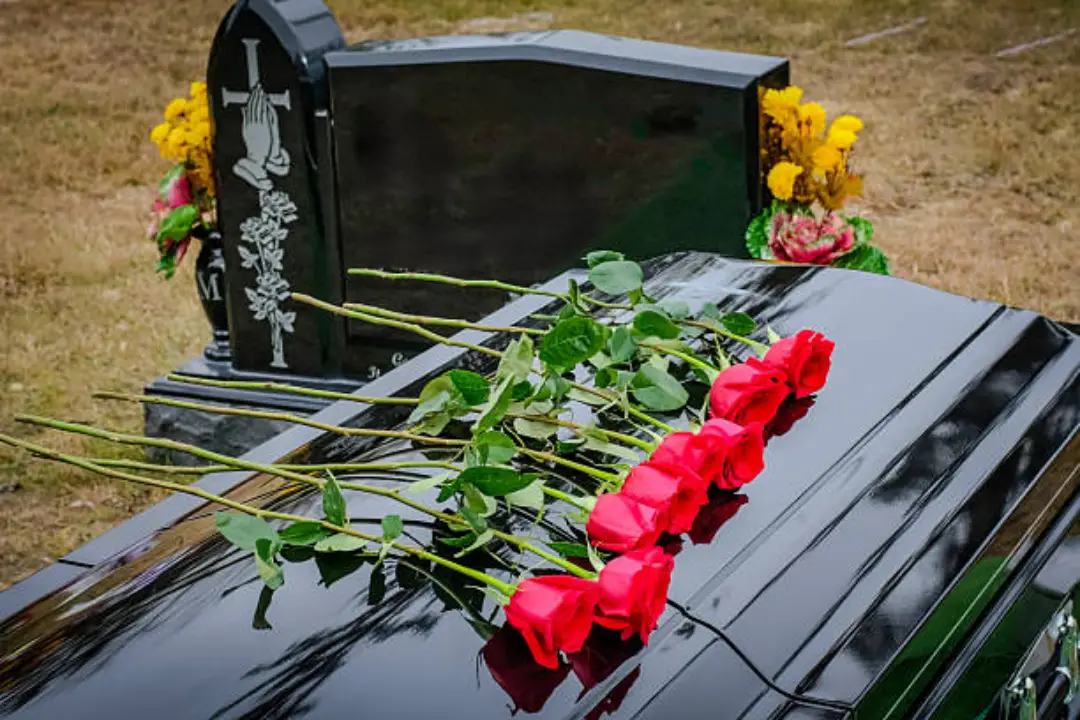
The morning of my husband’s funeral, I woke to sunlight streaming through curtains I’d forgotten to close the night before. For one merciful second, my brain hadn’t caught up to reality—then the weight of it crashed down like a physical thing. Bobby was gone. The memorial service was in three hours. And I would be facing it alone.
My phone sat on the nightstand, dark and silent. No missed calls. No messages of support or last-minute travel updates. Just the screensaver photo of Bobby and me on our wedding day, his arms wrapped around my waist, both of us laughing at something his best man had said. That man—Captain Miller from the fire station—would be at the funeral today. But my own family would not.
I sat up slowly, my body moving through motions it had rehearsed a thousand times during Bobby’s illness: feet to floor, stand, breathe, move forward. The house felt cavernous without the hum of medical equipment, without Bobby’s labored breathing from the hospital bed we’d set up in our bedroom. The silence was absolute and terrible.
My name is Cassandra Mitchell, and I’m thirty-two years old. I never imagined I’d stand alone at my husband’s funeral while my parents and my best friend since childhood attended my sister’s engagement party instead. But that’s exactly what happened—and what I discovered in the aftermath changed everything I thought I understood about family, loyalty, and the true nature of love.
Bobby and I met five years ago at a coffee shop downtown. I was rushing to my nursing shift at St. Catherine’s, exhausted after pulling a double, when I literally crashed into him and sent my latte splashing across his leather jacket. Instead of the anger I expected, he laughed—that warm, easy laugh that would become my favorite sound in the world.
“Well, that’s one way to warm up on a cold morning,” he said, wiping coffee from his sleeve with a grin that made his brown eyes crinkle at the corners.
I apologized profusely, mortified, offering to pay for dry cleaning. He waved it off and asked for my number instead. I surprised myself by giving it to him. There was something about the way he looked at me—not through me, the way people often did when I was in scrubs rushing between obligations—but actually at me, like I was someone worth knowing.
Our first date was at a tiny Italian restaurant that smelled like garlic and fresh basil. We talked for four hours, long after our plates had been cleared and the waiter had given up on subtly suggesting we leave. Bobby told me about his work as a firefighter, how he’d wanted to help people since he was six years old, watching fire trucks race past his bedroom window. I shared my journey to becoming an ICU nurse, the exhaustion and heartbreak and occasional miracles that came with the territory. Our mutual dedication to service created an instant bond.
Within six months, we were inseparable. He proposed on a hike to our favorite lookout point above the city, pulling out a simple solitaire ring that had belonged to his grandmother. “I don’t have much,” he said, voice rough with emotion, “but everything I am is yours.”
My parents weren’t thrilled when I called with the news. My mother’s first question wasn’t about my happiness or how he’d proposed—it was about Bobby’s salary. “Firefighting isn’t exactly a lucrative career, Cassandra,” she said in that particular tone I’d learned to recognize as disapproval wrapped in concern.
My father was more direct. “You could do better. That hospital’s full of doctors.”
They’d always had plans for me that involved marrying someone with prestige—a physician, an attorney, someone who could provide the lifestyle they deemed appropriate for their daughter. But Bobby provided something infinitely more valuable: unconditional love and unwavering support. He cheered me through my certification for critical care nursing, surprising me with highlighted study guides and bringing dinner during late-night cramming sessions. He made me laugh even on days when I’d watched patients die despite our best efforts.
Stephanie, my best friend since third grade, seemed supportive initially. She stood beside me as maid of honor at our small wedding ceremony, though she did comment that she was surprised I’d chosen such a “modest venue” when my parents had offered to pay for something more impressive. What she didn’t understand—or chose not to understand—was that Bobby and I wanted something intimate that reflected who we actually were, not my parents’ idea of an appropriate social statement.
After the wedding, we bought a small Craftsman bungalow that needed work but had the most perfect front porch. Bobby stood there on closing day, arms around my waist, and promised we’d grow old together drinking coffee and watching the seasons change. We spent weekends painting walls and refinishing the original hardwood floors, transforming that house into our home one project at a time.
We talked about having children someday, but we wanted to savor being newlyweds first—just the two of us figuring out married life, learning each other’s rhythms. Bobby would come home from twenty-four-hour shifts at the firehouse with stories that made me laugh or cry or both. I’d share the small victories and crushing defeats from the ICU. We understood each other’s work in a way many couples don’t—the irregular hours, the emotional toll, the way certain patients stay with you long after you’ve clocked out.
My parents maintained a polite but distant relationship with Bobby. They’d invite us to dinner occasionally, but conversations remained stilted and formal. Bobby tried so hard—bringing thoughtful gifts, asking genuine questions about their interests, helping my father with home repairs—but they never truly warmed to him. He was always going to be “the firefighter” rather than the remarkable man I’d married.
Stephanie visited frequently those first two years, though her comments had an edge I tried to ignore. She’d make observations about our “cozy” house (meaning small), or Bobby’s “noble” profession (meaning underpaid), or how I was “settling into domestic life” (meaning giving up ambition). I told myself she was being protective, worried I’d sacrificed too much for love.
Then, during our second year of marriage, everything changed.
Bobby started getting headaches—not ordinary ones, but intense pain that would wake him at night, leaving him pale and shaking. He dismissed them as stress or dehydration, typical of his personality to minimize anything that might worry me. But when he called from the station one morning, his speech slightly slurred, saying he felt “a little off” and was coming home early, I knew something was seriously wrong. Bobby never left a shift early.
The headaches worsened over the following weeks, accompanied by occasional confusion and balance issues he tried to hide. Finally, I insisted he see a doctor. Even then, he joked in the car: “Probably just all those spicy wings catching up with me.”
That was the last normal day we had.
I was restocking medication in the supply room when my phone rang—Bobby’s captain. Calls from the firehouse during my shift usually meant Bobby was checking in or asking about dinner plans. This call was different.
“Cassandra, it’s Captain Miller. Bobby collapsed during morning equipment checks. Paramedics are transporting him to Mercy General right now.”
I don’t remember dropping the medication tray or my supervisor telling me to go. The next clear memory is running through the emergency room doors, still in scrubs, frantically searching for my husband. They’d already taken him for a CT scan. I paced the waiting room, calling my parents and Stephanie, leaving increasingly desperate voicemails.
Stephanie called back first, promising to come immediately. My parents eventually texted that they were “tied up” with an important business dinner but were “sending prayers.”
When the neurologist finally found me in the waiting room, her expression told me everything before she spoke a word.
“The scan showed a large mass in Bobby’s brain,” she said gently, sitting beside me. “A glioblastoma. Grade four—the most aggressive type of brain tumor.”
The word “terminal” hung in the air even before she said it aloud.
“With aggressive treatment, we’re looking at maybe twelve to fifteen months,” she continued, her voice soft with practiced sympathy. “I’m so very sorry.”
Twelve to fifteen months. Less time than we’d spent renovating our kitchen. Less than we’d been married. Not nearly enough for the children we’d planned or the life we’d promised each other.
I felt Stephanie’s arm around my shoulders as I collapsed into a chair, but her comfort felt distant, as if it were happening to someone else.
Bobby took the diagnosis with characteristic courage. When I was finally allowed into his room, surgical staples fresh from the biopsy, his first words were: “Hey, beautiful. Don’t look so worried. We’ve got this.”
Even with staples in his head, he was trying to comfort me.
The following months blurred into a nightmarish routine of appointments, treatment plans, second opinions, experimental protocols. Bobby approached each option with determination, researching clinical trials and asking questions that impressed his medical team. Stephanie initially stepped up, filling our freezer with homemade meals and sitting with Bobby so I could shower or sleep.
“That’s what best friends do,” she said, hugging me tightly. “You’d do the same for me.”
My parents made one awkward hospital visit—my mother visibly flinching at Bobby’s surgical scars, my father immediately raising practical concerns about insurance coverage and our mortgage. “You might need to sell the house if this goes on too long,” he said, not unkindly, but with the detached pragmatism that characterized his approach to crisis.
Bobby, even weakened from surgery, squeezed my hand. “We’ve got good coverage through the department,” he said firmly. “Cassandra won’t have to worry.”
I took a leave of absence from the hospital, transforming our living room into a medical space with a hospital bed, oxygen equipment, and medication schedules posted everywhere. I learned to administer treatments, manage symptoms, and translate medical jargon for the stream of visitors from the fire station—Bobby’s brothers in a way my actual family never were.
The radiation made him violently ill. The steroids to reduce brain swelling caused his face and body to bloat until he barely resembled the strong, vital man I’d married. Through it all, he remained unfailingly kind, apologizing when illness struck suddenly or when pain made him short-tempered.
“You shouldn’t have to do this,” he said one night as I changed his sheets for the third time. “You should be living your life, not nursing a dying man.”
I climbed carefully into bed beside him, mindful of his IV lines. “This is exactly where I want to be. For better or worse, remember?”
As months passed, subtle changes occurred in my relationships with my parents and Stephanie. Their visits became less frequent, their excuses more elaborate. Phone calls focused on practical matters—insurance, expenses, plans for “after”—rather than how we were actually coping.
Six months into treatment, I borrowed Stephanie’s phone to call the pharmacy while mine was charging. A text notification from my mother appeared on the screen: “Have you talked to Cassandra about what we discussed? Time is running out.”
My finger hovered over the message, stomach clenching. I returned the phone without opening it, telling myself it was probably about organizing help or support. But a week later, I overheard a conversation that shattered that comfortable illusion.
Stephanie had stepped onto our back porch to take a call, not realizing the window was cracked. “I’ve tried bringing it up,” she said in a hushed voice, “but it’s never the right time. She’s completely devoted to him… No, I don’t think she’s thinking clearly about the future at all… Yes, I agree. She needs to start making plans for after.”
After. The word hung in the air like poison. They were already planning for his death while we were still fighting with everything we had.
That night, after settling Bobby for the evening, I checked our joint account and discovered unauthorized withdrawals I didn’t recognize—including one for the exact amount I’d borrowed from Stephanie, dated the day after she’d given me the money. Had I made these transactions and forgotten in my exhaustion? It seemed possible, but doubt gnawed at me.
The betrayals accumulated slowly, like water eroding stone. Money went missing. Stephanie made comments about selling the house. My mother asked about Bobby’s life insurance policy. An envelope of cash from Bobby’s colleagues disappeared during one of Stephanie’s visits.
When I finally confronted Stephanie about the money, she suggested I was confused from “caregiver fatigue” and “not thinking clearly.” The gaslight was subtle but unmistakable.
What I didn’t know until much later was that Bobby had noticed everything. Even as the tumor pressed against his brain, stealing his words and memories, he remained perceptive about the vultures circling.
Eight months after diagnosis, we received the news we’d been dreading. The tumor was growing despite treatment. His oncologist recommended a different protocol, but her eyes held little hope. Bobby remained determined to fight, but I could see in his face that he understood we were running out of time.
As Bobby’s condition deteriorated, I began hospice arrangements. When I called to tell my family it was time for goodbyes, their responses were devastatingly revealing.
“We have that charity gala this weekend, but we’ll try to stop by next week,” my father said. “Have you spoken with the insurance company yet about the payout?”
Stephanie promised to visit “tomorrow,” then texted about a work emergency. My parents left voicemails about scheduling conflicts.
Three days before Bobby died, during one of his rare lucid moments, he asked me to bring him the lockbox from his closet. Inside were financial documents, our wills, insurance policies, and a sealed envelope with my name on it.
“I made some changes last month,” he said, voice barely above a whisper. “The house is paid off now. Firefighters take care of their own—the department’s benevolent fund helped. I didn’t want you to worry about the house after.”
I started to protest, but he squeezed my hand. “Promise me you’ll read that letter when I’m gone. Promise you’ll read it alone.”
“And promise me something else,” he continued with surprising strength. “Promise you’ll rebuild. Find joy again. You’re stronger than you know, Cassandra. Stronger than all of them.”
I didn’t ask who “them” meant. Somehow I already knew.
Bobby died at sunrise on a Tuesday, the morning light golden on our bedroom walls. I was holding his hand, telling him about the cardinal that had landed on our windowsill—his favorite bird. One moment his labored breathing filled the quiet room, and the next moment there was only silence.
I called my parents and Stephanie to tell them he was gone.
My mother’s first question: “Have you called the insurance company yet?”
Stephanie’s response: “I’ll come help you make arrangements. Do you have the policy information?”
Instead of accepting their offers, I called Captain Miller. He arrived within thirty minutes and sat with me while I made the necessary calls. Bobby’s firefighter brothers arranged everything: a full department funeral with ceremonial honors, a processional, the final radio call.
I reserved front-row seats for my parents and Stephanie.
That evening, alone for the first time in our house, I opened Bobby’s letter.
My dearest Cassandra, it began in his careful handwriting. If you’re reading this, I’ve gone ahead of you, which was always my greatest fear—not death itself, but leaving you alone.
The letter detailed everything he’d discovered: Stephanie looking through our financial documents, conversations he’d overheard between her and my parents about the insurance payout, money he’d seen her take from his desk when she thought he was sleeping.
I made changes to protect you, he wrote. The house is paid in full. My insurance names only you as beneficiary with provisions preventing transfers to family members. I’ve arranged a financial advisor—Sam Wilson—to help you manage everything. I hate leaving you with this burden of knowledge, but I needed to protect you one last time. Trust your instincts about who deserves a place in your life going forward.
Attached were account records showing unauthorized access attempts from Stephanie’s email address, and screenshots of messages between her and my parents discussing how to guide me toward “smart investments” they could help manage once the payout came through.
As I absorbed the proof of their betrayal, I also found Bobby’s journal. In an entry from two months earlier, he’d written: Cassandra doesn’t see it yet, but they’re circling like vultures. Her parents have called three times asking about my coverage. Stephanie keeps eyeing the house. They see her as an ATM they’ll access when I’m gone. I have to protect her without breaking her heart.
That night, I wept not just for Bobby’s death, but for the burden he’d carried—knowing the people who should have supported us were plotting to exploit my grief.
The funeral took place on a perfect spring morning. I wore the black dress Bobby had always liked and his wedding ring on a chain around my neck. As the service time approached, I watched the parking lot for my parents’ silver Mercedes or Stephanie’s red hatchback.
Fifteen minutes before the service, the texts came.
Stephanie: Emergency at work. Can’t get away. So sorry.
My mother’s voicemail: The car is making a strange noise. We won’t make it. So disappointing.
No real emergencies. Just excuses delivered at the last possible moment.
“We should begin,” I told the chaplain, looking at the three empty chairs beside me.
The service was beautiful despite their absence—or perhaps because of it. Bobby’s colleagues shared stories that made me laugh through tears. Captain Miller presented me with the ceremonial flag. I spoke about Bobby’s courage and kindness, about love demonstrated through showing up, not just making promises.
I didn’t mention the empty chairs. Their absence spoke louder than words.
At the cemetery, just me and a handful of Bobby’s closest colleagues, I placed his ashes in the niche we’d chosen together. The fire captain had arranged a reception at the station, but I couldn’t face it. I went home alone to the empty house we’d filled with love.
A week later, they came.
I was sorting Bobby’s clothes when the doorbell rang. Through the peephole, I saw Stephanie standing between my parents, all wearing appropriately somber expressions.
I opened the door without greeting them.
“Darling,” my mother said, moving to embrace me. I remained stiff in her arms.
They filed into the living room carrying a casserole and a small gift bag, as if this were a normal condolence call rather than their first appearance since abandoning me at Bobby’s funeral.
“Why are you here?” I asked.
My mother looked taken aback. “To check on you, of course.”
“So concerned that none of you came to Bobby’s funeral.”
Uncomfortable silence.
“That was unfortunate timing,” my father said. “Car trouble—”
“Don’t,” I interrupted. “Don’t insult me with more lies.”
My mother sat down uninvited. “We’re here now to help you make arrangements and move forward.”
Arrangements. There it was.
“This house is too big for just you,” my father said, eyes assessing the room. “You should sell while the market is good. Move back home until you’re on your feet.”
Stephanie nodded enthusiastically. “I’ve been researching financial advisors for the insurance settlement. There are great investment opportunities—”
“When were you planning to discuss the payout?” I asked quietly. “Before or after pretending to care how I’m doing?”
I walked to Bobby’s desk and pulled out the folder of documents he’d left me—the account records, the messages, the proof of their betrayal.
“Would you like to explain these?”
The color drained from Stephanie’s face. My mother’s mouth opened without sound.
“Bobby found them,” I said. “He knew what you were doing.”
“That’s absurd,” my mother protested. “We were trying to protect you from questionable decisions he was making. The medication affected his thinking.”
“Bobby was clearer on his worst day than you are at your best,” I said, voice shaking with anger. “He saw exactly who you were.”
Stephanie began crying—manufactured tears that might once have moved me. “You’re twisting everything. We were worried about you being taken advantage of—”
“Is that why you took money from his desk?” I asked. “To protect me?”
My father stood abruptly. “We came to help, and you’re treating us like criminals. That firefighter filled your head with paranoid nonsense.”
“That firefighter,” I said, voice deadly calm, “was my husband. And he protected me until his last breath, including from you.”
I showed them the final document: Bobby’s updated will and insurance policy naming only me as beneficiary with provisions preventing any transfers for five years.
My mother gasped. “He can’t do that!”
“He did,” I said. “He made sure you couldn’t manipulate me when I was grieving.”
My father’s face darkened. “That’s gratitude after everything we’ve done for you.”
“What exactly have you done?” I asked. “You didn’t help during his illness. You didn’t come to his funeral. You never thought he was good enough.”
My mother’s composure finally cracked. “A firefighter! You could have married a doctor, had security and standing. Instead you tied yourself to a man with a dangerous job and mediocre income.”
The truth, finally.
“Bobby was worth a hundred of you,” I said quietly. “He understood what family really means—showing up, love without conditions.”
Stephanie tried once more, stepping closer. “Cass, grief does things to people. We care about you. We just want what’s best—”
“What’s best for me,” I interrupted, “is never seeing any of you again. Bobby left me everything I need, including clarity to see who truly loved me and who saw me as a path to money.”
I walked to the door and held it open. “Leave my home and don’t come back. Further communication goes through my lawyer.”
They left in stunned silence. As I closed the door, a strange feeling washed over me—not loneliness, but freedom.
The rebuilding came slowly. I returned to work part-time, where colleagues who’d attended Bobby’s funeral welcomed me with understanding. Captain Miller and Bobby’s firefighter family remained present, showing up to help with house repairs and share meals.
“Bobby made us promise to look out for you,” Miller said one evening. “But we’d have done it anyway. You’re one of ours now.”
Three months after the funeral, I met with Sam Wilson, the financial advisor Bobby had chosen. Together we established a foundation in Bobby’s name providing scholarships for firefighters’ children. It felt right to honor his legacy of service.
While organizing Bobby’s desk one afternoon, I found a business card for Jason—the estranged brother Bobby had mentioned only once or twice. After days of hesitation, I called.
We met for coffee. The resemblance was striking—the same warm eyes, the same thoughtful pauses before speaking. Jason shared stories of Bobby as a child, and through him I discovered pieces of my husband I’d never known. He had a family of his own—a wife named Rachel and twin boys—and they incorporated me into their lives with natural ease.
For the first time, I understood what genuine family felt like.
On the one-year anniversary of Bobby’s death, I held a small memorial at the lake where we used to picnic. Jason’s family came, along with Bobby’s firefighter brothers and nursing colleagues. We planted a young oak tree with a simple plaque: Robert Mitchell, beloved husband, brother, friend. His love continues to grow.
That evening, a letter arrived from Stephanie—an apology that acknowledged the betrayal without making excuses. I didn’t respond, but I didn’t throw it away either. It represented something important: recognition of consequences.
My parents never reached out. Through mutual acquaintances, I heard they’d explained to everyone that I’d pushed them away in my grief.
As seasons changed, I found unexpected healing through volunteering at a grief support group for young widows and widowers. Sharing my story helped others navigate loss, and their experiences reminded me that pain, while unique, is also universal.
Two years after Bobby’s death, I bought a small cottage by the lake using some of the insurance money—the place where Bobby and I had dreamed of retiring. I kept our house, unable to part with walls that had witnessed our love story, but the cottage became my weekend sanctuary.
I resumed full-time nursing, switching to hospice care and drawing on my experience to comfort families navigating their own journeys through grief. The work was demanding but deeply fulfilling, transforming my pain into compassion for others.
New friendships entered my life—genuine connections formed through shared interests and mutual respect. I became close with Maria, the hospice nurse who’d guided us through Bobby’s final days, discovering in her a kindred spirit who understood both loss and resilience.
Sitting on my front porch one evening—the porch where Bobby had promised we’d grow old together—I thought about the person I’d become. The betrayal by those I’d trusted most had taught me painful but necessary lessons: that family is defined by presence, not blood; that love is demonstrated through actions, not words; that loss, while devastating, can also be clarifying.
Bobby had seen the truth about my parents and Stephanie long before I was ready to acknowledge it. His final act of protection—ensuring my financial security and independence—had given me freedom to rebuild on my own terms, surrounded by people who valued me for myself.
The greatest lesson I learned from losing everything was that I hadn’t actually lost what mattered most. Bobby’s love remained with me, not just in memories but in the strength he’d helped me discover—the ability to stand alone rather than accept conditional relationships, the courage to begin again.
I still missed him every day. But when I thought of Bobby now, my first thought wasn’t of loss—it was of gratitude for the love we’d shared and the lessons that continued to guide me.
True family, I’d learned, isn’t always who we’re born to. Sometimes it’s the people who show up when everyone else walks away—the colleagues who become friends, the estranged brother who becomes a lifeline, the neighbors who care simply because they’re good people.
Bobby once told me that the measure of a life well-lived isn’t in achievements or possessions, but in love given freely, expecting nothing in return. By that measure, his short life was richer than most that span decades.
The empty chairs at his funeral had taught me everything I needed to know about whose presence mattered. And in the end, that knowledge set me free.

Adrian Hawthorne is a celebrated author and dedicated archivist who finds inspiration in the hidden stories of the past. Educated at Oxford, he now works at the National Archives, where preserving history fuels his evocative writing. Balancing archival precision with creative storytelling, Adrian founded the Hawthorne Institute of Literary Arts to mentor emerging writers and honor the timeless art of narrative.