I am eighty-two years old, and I have buried more people than I care to count.
My husband went first. A quiet man who built our home with his own hands, nail by nail, board by board. Then my son — Daniel’s father — taken too young, too suddenly, leaving behind a hole in our family that never quite healed over.
After all of that, what remained was Daniel. My grandson. My last thread to everything I’d ever loved.
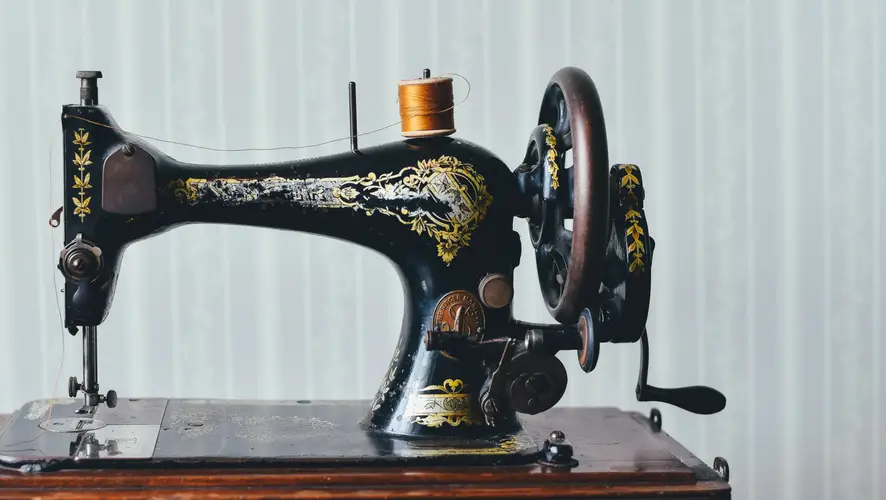
For sixty years, I watched the world change around me. Fashions came and went. Neighborhoods transformed. The little village where I raised my children became a suburb, then practically a small city. But some things stayed constant — the creak of my old rocking chair, the smell of the fabric I kept folded in cedar chests, the feel of a needle between my fingers.
These hands have sewn through every season of my life. Through joy and grief, through long winters and hopeful springs. Sewing was never just a hobby for me. It was the language I spoke when words weren’t enough.
So when Daniel told me he was getting married, I knew exactly what I would give him.
The wedding invitation arrived on heavy cream paper with gold lettering. The venue alone told me everything I needed to know about what this celebration would look like. The Grand Meridian Ballroom. Five-star catering. A live orchestra.
Daniel called me two weeks before the ceremony, his voice warm and excited.
“Grandma, you’re sitting at the family table. Right up front.”
“Of course,” I said. “I wouldn’t miss it for anything.”
What I didn’t tell him was that I’d already started the quilt.
I pulled out boxes I hadn’t opened in years. Daniel’s childhood blanket — the soft blue one with the little bears on it, worn thin from years of being dragged everywhere. A square of fabric from his school uniform, the one with the small ink stain on the cuff that I could never quite get out. A piece of my husband’s flannel work shirt, the gray one he wore every Saturday morning.
And from the very bottom of my cedar chest, carefully wrapped in tissue paper, I pulled out a strip of lace from my own wedding veil.
I spread everything out on my kitchen table and sat there for a long time, just looking at it all. Sixty years of a family. Sixty years of ordinary Tuesdays and Sunday dinners and arguments that blew over and love that didn’t.
I picked up my needle and I began.
My hands aren’t what they used to be. The arthritis has been working on my fingers for the better part of twenty years now, and some mornings I wake up and they’re so stiff I can barely close them around my coffee cup. Sewing a full patchwork quilt at eighty-two is not the same as sewing one at forty.
But I didn’t stop.
Every evening for three weeks, I sat at my kitchen table under the lamp and I worked. Piece by piece. Seam by seam. The stitches weren’t perfect — I know that. My lines wandered a little, the way old roads do. But I kept going.
In the bottom right corner, I embroidered their names in blue thread. Daniel & Olivia. Together forever.
It took me four evenings just to get those letters right. My hands trembled the whole time.
When I finished and held the quilt up in the lamplight, I cried a little. Not from sadness. Just from the feeling you get when something you made with your hands actually becomes what you hoped it would be. I could see every piece of our family in it. I could see Daniel at four years old, dragging that blue blanket behind him. I could see my husband at the kitchen table on a Saturday morning. I could see myself, young and nervous in white lace, standing at an altar.
I folded it carefully, wrapped it in brown paper, and tied it with a ribbon.
I was so proud of it.
The Grand Meridian Ballroom was everything the name promised.
Crystal chandeliers threw soft light across tables draped in white linen. Four hundred guests filled the room in their finest clothes, a sea of silk dresses and tailored suits and perfume so thick you could almost taste it. The centerpieces were elaborate arrangements of white roses and eucalyptus that must have cost a fortune each.
I wore my good navy dress. The one I save for important occasions. I ironed it twice the morning of the wedding and sat very still on the drive over so it wouldn’t wrinkle.
Walking into that room, carrying my brown paper package, I felt the distance between my world and this one more sharply than I expected. Every gift table I passed was stacked with sleek white boxes bearing the names of brands I recognized from television commercials. There were envelopes that clearly held checks with many zeros. Crystal decanters. A set of luggage that probably cost more than my monthly pension.
I set my little wrapped bundle carefully at the end of the table and tried not to think about how it looked next to everything else.
The ceremony was beautiful. I’ll give them that. Olivia was stunning in her dress — layers of silk that caught the light as she walked. Daniel looked so handsome, so grown, that I had to press my lips together to keep from getting emotional right there in the front row.
I kept thinking about his father. Wishing he could see this.
After the ceremony, we moved into the reception hall, and the celebration began. The orchestra played. Champagne appeared. Toasts were made that made people laugh and applaud. I ate a little, drank some water, and watched my grandson smile and laugh at his own wedding, and I thought — whatever else, he is happy. That is enough.
Then the host stepped to the microphone.
“And now, ladies and gentlemen — it’s time for the gift opening!”
I should have anticipated how this would feel.
Watching them open gifts in front of four hundred people is a particular kind of theater, and I’d forgotten that about big, wealthy weddings. Every gift becomes a performance. The crowd oohs and aahs over brand names, applauds for the expensive electronics, laughs appreciatively at the witty cards.
Box after box was unwrapped to genuine delight. A coffee machine that probably cost more than my refrigerator. A set of monogrammed towels. An elegant watch presented in a velvet box. Each one was held up for the crowd to admire.
I watched from my seat at the family table, my hands folded in my lap, trying to steady my breathing.
Then the host’s voice rang out across the room, cheerful and bright.
“And now — a very special gift. From Grandma!”
Polite, curious applause. People turned to look. Some smiled at me — the sweet old grandmother, of course.
Olivia reached for my package.
Even now, I have to pause when I think about what happened next. Because I want to be fair. I want to remember it exactly as it was.
She unwrapped it. Unfolded the quilt. Held it up.
And I watched her face change.
It wasn’t a sudden cruelty. It crept in slowly — a twitch at the corner of her mouth, a glance sideways at the bridesmaid standing nearest to her, a shift in her posture that said everything before she ever opened her mouth.
She spoke into the microphone.
“Oh my God…” She tilted her head, holding the quilt out at arm’s length, studying it the way you might study something you found at the back of a dusty thrift store shelf. “What is this? Is it vintage?” She paused for effect, and her smile widened. “Or just… budget?”
A ripple of laughter moved through the crowd.
“Maybe Grandma thought we were moving to the countryside.” More laughter, louder this time. “We were kind of hoping for a designer bedspread, but I guess—”
I stopped hearing the rest.
Not because the room went quiet. Because something went quiet inside me.
I looked down at the table in front of me. The white linen tablecloth. My own hands, resting on it, the knuckles swollen from three weeks of sewing. I thought about the strip of my wedding veil that I’d cut up and stitched into that quilt. I thought about my husband’s flannel shirt. I thought about little Daniel with his blue blanket.
I pushed back my chair.
I didn’t make a scene. I didn’t say a word. I just stood up slowly, the way old women do, steadied myself, and began to walk toward the exit. The laughter was still going on behind me. Someone had made another joke. The microphone was still live.
I just wanted to get outside. I just wanted air.
I was nearly to the door when a hand closed around mine.
I turned, expecting a sympathetic guest. Someone who’d seen and felt bad. A distant cousin, maybe, or one of Daniel’s old school friends.
It was Daniel.
He wasn’t smiling anymore. He’d been smiling all day — that open, easy smile that reminded me so much of his father — but it was gone now. His face was very still, very focused, the way it used to get when he was a boy working through something difficult.
He had the quilt in his other hand.
He turned back toward the room, and something in his bearing made people go quiet. The laughter settled. The orchestra had already stopped. Four hundred faces turned toward us.
Daniel stepped back to the microphone.
His voice was calm. That was what I remember most — how calm it was.
“I want to say something,” he said. “This quilt—” He held it up. “—is made from my grandfather’s shirt. From my baby blanket. From my grandmother’s wedding veil.” He paused. “She has arthritis. She sewed this for three weeks. Every stitch was her hands hurting.”
The room was absolutely still.
“This is the most valuable thing on that gift table.” He set it down carefully and looked at Olivia. “And if the person I’m marrying doesn’t understand that — then I don’t think she understands me. Or what I come from. Or what I need in a partner.”
I heard someone near the front draw in a sharp breath.
“I’m sorry,” Daniel said to the room. His voice didn’t waver. “I’m so sorry to everyone who came here today. This isn’t what I wanted.” He looked at Olivia for a long moment — not with anger, but with something sadder than anger. “I can’t do this.”
He walked back to me.
He took my hand — both of my hands, in both of his — and he looked at me, and I saw that he was fighting very hard not to cry.
“Let’s go, Grandma.”
We walked out together.
The doors of the Grand Meridian Ballroom closed behind us, and suddenly we were in a carpeted corridor that smelled of nothing in particular, and the sound of four hundred stunned people was muffled behind thick doors, and it was just the two of us.
Daniel sat down on a bench in the corridor. I sat next to him. He still had my hands.
For a while, neither of us said anything.
“Are you all right?” I finally asked.
He laughed — just a short, rough sound. “I don’t know yet.” He looked at the ceiling. “Are you?”
“I’m fine.” I squeezed his hands. “I’m right here.”
A hotel staff member hurried past us, clearly uncertain whether to intervene. We ignored him. We sat together in that quiet corridor while the biggest day of Daniel’s life unraveled behind those closed doors, and he held my hands, and I held his, and I thought — this is what family actually is. Not the hall. Not the flowers. Not the orchestra or the four hundred witnesses.
This moment, right here.
In the weeks that followed, I heard pieces of what happened after we left. Someone had called it the most dramatic wedding they’d ever attended. There were people who had supported Olivia — of course there were, there always are. There were people who’d applauded Daniel. The pictures made rounds on social media. I don’t use social media, but my neighbor’s daughter showed me some of it on her phone.
I felt sorry for Olivia, in the end. I want to say that clearly. I don’t know what was in her heart that day. I don’t know if she meant to be as cruel as she was, or if she simply didn’t think — didn’t calculate what that quilt meant, where it came from, what it cost me to make it. Some people are careless. Some people perform for crowds without thinking about who’s in the audience. I’ve known enough of life to understand that cruelty and thoughtlessness often look the same from the outside.
I don’t wish her badly. I hope she learns.
But I’m glad Daniel walked out.
Not because of me — I want to be clear about that too. An eighty-two-year-old woman’s feelings about a quilt are not a good reason to end a marriage. But what happened that day wasn’t really about the quilt, was it? It was about whether the person Daniel was choosing understood who he was. Where he came from. What he valued.
And in five minutes, in front of four hundred people, she showed him.
Daniel came to see me the Sunday after the wedding. He brought coffee and a bag of the almond pastries from the bakery on Chestnut Street that I’ve always loved and that he’s been bringing me for fifteen years.
We sat at my kitchen table, the same table where I’d sewn the quilt.
He put the quilt on the table between us.
“I want to keep it,” he said. “If that’s okay.”
“It’s yours,” I said. “It was always yours.”
He ran his hand over the embroidery in the corner. Daniel & Olivia. Together forever. He looked at those words for a while.
“I’ll fix the name,” I told him. “When the time comes.”
He looked up at me, and he smiled — that real smile, the one that reaches his eyes, the one that has been making my heart feel full since he was three years old.
“I love you, Grandma.”
“I love you too,” I said. “Now eat your pastry before it gets cold.”
I’ve thought a lot about that day since then. About what it means that a handmade quilt — uneven seams, trembling stitches, lace from a sixty-year-old wedding veil — turned out to be the truest thing at a four-hundred-person celebration that cost more money than I’ll see in the rest of my life.
I’ve thought about my husband, who built our house nail by nail. About my son, who isn’t here. About Daniel, who grew up knowing that the people who love you will show up for you, and that showing up sometimes means doing the hard, unglamorous, arthritis-hands work of making something from scratch.
I don’t have a moral to offer. I’m eighty-two years old and I’ve earned the right to just tell you what happened without wrapping it in a bow.
But I will tell you this.
The night I finished that quilt and held it up in the lamplight, I cried because I was proud of it. Because it held everything we were. Because I had made it with my hands and my heart and a love that doesn’t have a price tag.
That feeling was real.
Whatever happened at the Grand Meridian Ballroom, nobody can take that from me.
And my grandson knows it too.

Sophia Rivers is an experienced News Content Editor with a sharp eye for detail and a passion for delivering accurate and engaging news stories. At TheArchivists, she specializes in curating, editing, and presenting news content that informs and resonates with a global audience.
Sophia holds a degree in Journalism from the University of Toronto, where she developed her skills in news reporting, media ethics, and digital journalism. Her expertise lies in identifying key stories, crafting compelling narratives, and ensuring journalistic integrity in every piece she edits.
Known for her precision and dedication to the truth, Sophia thrives in the fast-paced world of news editing. At TheArchivists, she focuses on producing high-quality news content that keeps readers informed while maintaining a balanced and insightful perspective.
With a commitment to delivering impactful journalism, Sophia is passionate about bringing clarity to complex issues and amplifying voices that matter. Her work reflects her belief in the power of news to shape conversations and inspire change.