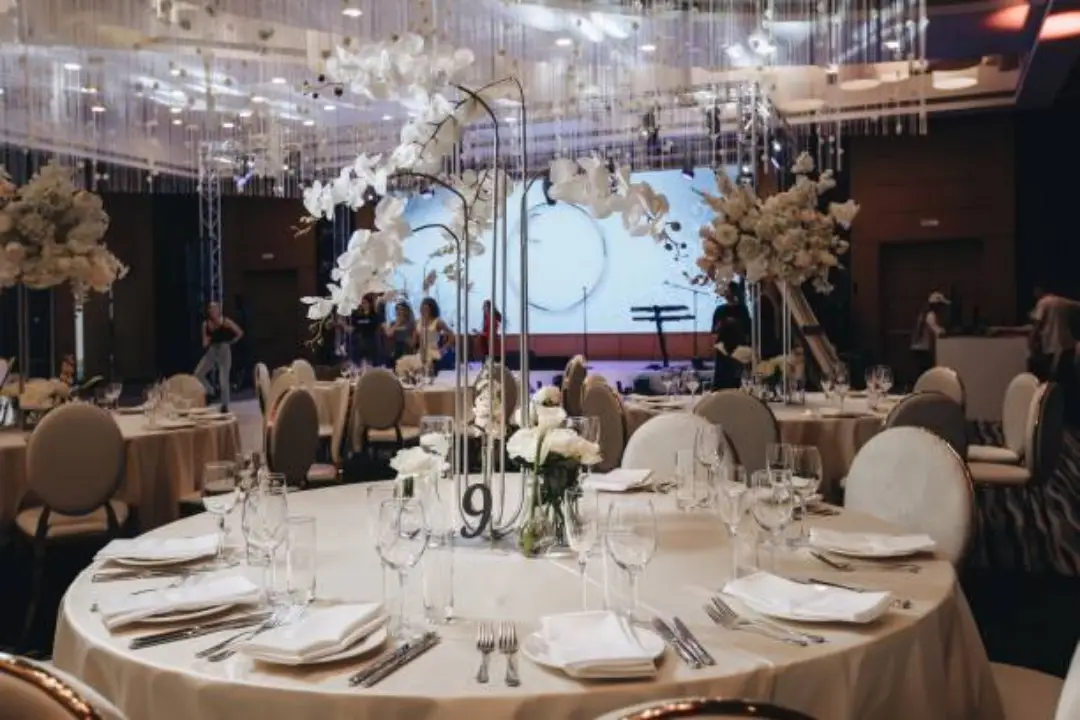
My sister didn’t clear her throat or soften her voice. She said it the way you state a fact that requires no defense.
“It’s only for family.”
I had my phone pressed so tightly against my ear that the edges bit into my skin. For a moment I tried to locate some alternative meaning in the words — maybe she’d said mostly family, maybe the connection was bad, maybe some syllable had dropped in transit between us. But the silence that followed was too deliberate for misunderstanding. She’d said exactly what she meant and had arranged the silence afterward to let it settle.
I was standing in my living room looking at a photograph on the wall: my parents on a beach somewhere, my sister Claire in the foreground with her arms spread wide, my mother and father laughing behind her. I wasn’t in the photo. I’d been the one holding the camera. Even then.
“I don’t understand,” I said, carefully. “I helped pay for it.”
“And we really appreciate that,” she said smoothly. “But Mom and Dad just want something intimate. Close family. It’s their anniversary, Lissa. It’s not personal.”
Not personal.
I stood there holding the phone and I understood, in the specific way you understand things your body has known longer than your mind has been willing to admit, that this was not a misunderstanding and not a logistical problem and not something that would resolve itself with a clarifying conversation. It was a decision that had been made and then held until the moment when it had to be disclosed, which was now, apparently, because I had called to confirm the details.
“Okay,” I said.
Claire exhaled with the particular quality of someone who has been braced for difficulty and is relieved to find none. “Don’t be weird about it. We’ll send photos. You know how they are.”
“I understand,” I said.
I did. Just not in the way she thought.
My name is Lissa Hartwell. I’m a freelance photographer in my mid-thirties, which means I earn my living noticing things — light at a particular angle, the half-second when an expression tells the truth before the performance reasserts itself, the detail that makes an image honest rather than merely composed. I am professionally attentive to what is actually in front of me. It took me an embarrassingly long time to apply that attentiveness to my own family.
From the outside, we looked like what families try to look like: solid, warm, close. There were matching sweaters in the Christmas card photos and big group dinners at holidays and a language of affection that sounded convincing at a distance. My parents had been married for thirty years. My siblings and I had grown up in the same house, gone to the same schools, shared enough history that outsiders assumed we shared the same story.
We didn’t. We had assigned roles, and they had been assigned early enough that none of us had consciously chosen them, which meant none of us had examined whether we wanted them.
Claire was the luminous one. Talented and magnetic in the way that had made teachers remember her name and relatives lean in when she spoke at dinners. She was the first to be recognized, the first to be celebrated, the one people meant when they said your kids are doing so well to my parents.
My brother Daniel was the rational one. He had carried a clipboard to organize our childhood games and graduated to color-coded spreadsheets as an adult. He could explain any decision in clean, logical sentences until it sounded inevitable, which was a skill that served him well in the family ecosystem because it meant he could make any arrangement sound like the only reasonable one.
And I was the reliable one. The capable one. The one who figured out who to call when something broke and stayed on the phone past midnight when someone was upset and did the math when unexpected bills arrived and found a way to make the money work. They called me a lifesaver when I sent funds for a repair that couldn’t wait. They called me dependable when I showed up without being asked. They called me strong when I absorbed their emergencies without flinching.
No one called me the gifted one. No one leaned in when I talked at dinners.
What I had was utility, and for a long time I had confused it with love because it was the version of love I was given and I hadn’t looked carefully enough at what love was supposed to look like in return.
The money had begun small, in my early twenties, when my parents called to mention that the roof was leaking and the timing was difficult. They weren’t asking directly. They never asked directly. They stated the problem and let the implication do the work, and the implication in our family had always been: if you can, you will, and if you don’t, the silence that follows will tell you how that was received.
So I wired what I could. Then a little more. Then a little more, as rough patches failed to end and temporary arrangements became permanent. My transfers became as habitual as utility payments, steady and unremarked upon, folded into the infrastructure of their lives so thoroughly that they stopped being noticed as choices — by them, and eventually by me.
I told myself this was what families did. Someone had to be the solid one. Someone had to make sure the house didn’t fall apart in either the literal or metaphorical sense. I was suited for it and I was available for it and the alternative — watching my family struggle and doing nothing — felt worse than the ongoing cost.
What I never asked out loud was: why is that someone always me?
The anniversary planning had materialized in the usual sideways manner. Not an invitation, not a direct request, but a series of mentions that accumulated into an implied plan. My mother sighing about late spring dates. Daniel referencing speeches and slideshow timing. Claire texting about RSVPs.
And then Claire texting me with a different tone: Could you help a bit with costs? Nothing crazy. You know how much they’ve sacrificed.
I felt the familiar tightening — not financial anxiety exactly, but the recognition of being penciled in before being asked. They hadn’t wondered whether I was comfortable. They had simply assumed my contribution and worked backward from there, which was how the family budget had always operated: my resources were a given, like weather or gravity, not something that required consultation.
Still, I sent money. And I pictured myself at the party with my camera, catching my mother mid-laugh and my father in his best awkward proud expression. A quiet fantasy, modest and private. I hadn’t realized how much I’d been counting on it until Claire asked for more — travel funds for an aunt — and something in me, tired and small but finally audible, said: no.
I typed the word and sent it before the reflex could override me.
The response came within minutes: Wow. Didn’t expect that from you. Then: Everyone is counting on things going smoothly. This is really stressing Mom out. Then, the sentence that told me everything I needed to know about what my contributions had purchased: You just have your photography. I’m juggling kids, work, and planning everything.
Just my photography. The thing I had built with my own hands, the work that paid my rent and kept me fed and was the truest expression of who I was — reduced, in a single word, to evidence that my life was less demanding and therefore my resources less legitimately mine.
I didn’t respond. I put the phone down and made dinner and sat at my kitchen table in my quiet apartment and felt the weight of what was actually true begin to surface through the layers of what I had been telling myself.
That was the week before Claire called to tell me the party was only for family.
After we hung up, I sat in the late afternoon light and thought about what she’d actually said without the softening around it: you are not one of us. Not in the way that counts. You are useful to us, but usefulness and membership are different categories, and we have placed you in the first one.
The tears I might have expected didn’t come. What came instead was something cooler — a clarity that moved through me like water finding its level. If I was not family enough to be included, I was also not obligated in the way that family is obligated. The two things were inseparable. You could not have one without the other.
I opened my banking app and canceled the recurring transfers with two taps. The confirmation message was brief and administrative: Your changes have been saved. No alarm. No warning. Just a small record of a decision.
Then I called my best friend.
Zoe had been my closest friend since we were twelve, the kind of person who shows up with soup and doesn’t require explanation. She picked up on the second ring.
“I’m thinking about going somewhere,” I said.
“Somewhere like the grocery store, or somewhere like Paris?”
I laughed, the sound catching me off guard. “Somewhere like Paris.”
“Then let’s get you to Paris,” she said, without hesitation, without asking whether I’d thought it through or whether it was practical or whether my family would have feelings about the timing. Just: let’s go.
I told her about the call. About only for family. About the years of transfers and the canceled contributions and the particular exhaustion of having been the infrastructure of other people’s lives while being quietly excluded from their celebrations. She listened without interrupting, the way she always had.
“That’s messed up,” she said when I finished. “Not a little insensitive. Actually messed up.”
“I know,” I said. “I’m starting to know.”
“Book it,” she said. “The party is that weekend?”
“Yes.”
“Then book it for that weekend.”
I asked whether it was too pointed. Whether going to Paris the same weekend as their anniversary was the kind of gesture that looked like a statement rather than a choice.
“You’re not making a statement,” Zoe said. “You’re making a decision. There’s a difference. You spent years making decisions that were entirely about them. You’re allowed one that’s entirely about you.”
Doing something entirely for myself. The concept sat in my chest like a language I recognized but had never spoken.
I opened a flight search. The prices were real and significant and did not disappear. I did the math and found, with some surprise, that after years of diverting money into other people’s emergencies, I had enough. Not easily, not without noticing, but enough. And if I didn’t spend it on this, I knew where it would go eventually: into the next unexpected situation that couldn’t wait, the next rough patch that turned permanent.
I booked the ticket for the anniversary weekend. When the confirmation arrived in my inbox I sat with it for a long moment, half-expecting something to intervene — a sense that I had done something wrong, the old reflexive guilt. It didn’t come. What came was something quieter and more durable.
Packing felt like arranging myself into a different shape. I folded clothes carefully — jeans, a dress I liked but rarely had occasion to wear, a sweater, comfortable shoes. Then I sat on the edge of the bed and opened my camera case and touched each lens with the familiarity of long practice. The fifty millimeter for ordinary life. The thirty-five for wider streets. I left the heavy telephoto at home — this trip wasn’t about work. It was about looking.
Paris arrived the way cities arrive when you’ve imagined them for years: at once more ordinary and more arresting than the imagination prepared you for. The air coming out of arrivals smelled of rain and bread and exhaust. My hotel was small and slightly cramped, the room barely larger than my bedroom at home, but the window looked out over a tangle of rooftops and the quality of the light was exactly what I’d needed without knowing it.
I set my bag down and stood at the window for a long time.
Somewhere back home, final preparations were being made. A venue was being decorated. A seating chart was being finalized. My name appeared nowhere in any of it.
Here, I was nobody’s capable one. Nobody’s lifesaver. Nobody’s reliable backstop. I was simply a woman standing at a window watching a city go about its afternoon, and the anonymity was not lonely. It was like setting down weight I’d grown so accustomed to that I’d stopped feeling it as burden and had started feeling it as self.
The morning of the anniversary — the actual day — I woke to clear light and dressed without hurrying. Camera across my chest, lens cap on, comfortable shoes. No plan. Just the city.
I walked for hours. The river in the early morning with mist still on it. A woman on a bicycle with a baguette in her basket. An old man at a café table with both hands around a small cup, looking at something only he could see. A child in a square running at pigeons who scattered and circled and landed again behind her. I worked steadily, unhurried, the camera finding what it found without agenda.
Back in my room that afternoon, I edited what I’d made. I didn’t push the images toward drama — just brought out what was already there, adjusted the light toward honesty rather than effect. When I had three I was genuinely pleased with, I opened my social media without much deliberation and posted them in a quiet sequence.
The river at morning. A coffee cup by a window with the city soft behind it. A narrow street with laundry on a line above.
The caption: Chasing quiet moments and letting joy take its time.
No names. No context. No signal to anyone who didn’t already know the situation. Just images from a life I was in the process of claiming.
I closed the app and went to dinner at a small restaurant nearby where the tables were close enough that you could follow three conversations at once if you chose to. I ate slowly. I listened to the room. I did not check my phone.
What I didn’t know, while I was eating, was what my small, quiet post was doing on the other side of the world.
A cousin had seen the photos first. She’d mentioned it to someone nearby at the party, who’d turned their screen toward my mother. By the time the main course was cleared, the question had moved through the room like a current: Why isn’t Lissa here? Wasn’t she involved in funding this?
My mother’s prepared explanation — she’s busy with work — had begun to fray the moment it met the image of me in Paris with a coffee and a camera, the caption about choosing joy. Busy people didn’t go to Paris. Excluded people did.
Some guests had left early. Others had grown quiet in a way that made the evening feel different from what it had been planned to be.
I was walking back to my hotel under a sky that had finally cleared, the air cool and sharp, when my phone began to move in my pocket. Once, twice, several times in quick succession.
I took it out. My mother’s name. Home. Claire’s name. Daniel.
The old reflex fired immediately: answer, assess, fix, smooth. My thumb hovered for a moment over my mother’s name. Then I put the phone back in my pocket and kept walking.
It was nearly an hour before I called back, from my room with the window open, the sounds of the street coming in on the night air.
“Lissa,” my mother breathed when she answered, my name carrying the weight of relief and reproach in equal measure. “Where are you?”
“In Paris,” I said.
“You didn’t tell us.” Her voice was thinner than usual. “People are asking where you are. They saw your photos. Some of them left. Your father is embarrassed.”
I leaned against the wall by the window. Down on the street, a couple walked past laughing about something I’d never know. “You told them I wasn’t coming,” I said.
“We said you were busy.” A pause. “We didn’t think you’d post publicly that you were somewhere else.”
“I posted photos of a trip,” I said. “I didn’t mention the party or the family or anything that happened. Whatever people concluded from seeing me in Paris — that came from what they already understood about the situation.”
“You made it look like we excluded you,” she said, her voice sharpening.
“You did exclude me,” I said. Not sharply. Just factually, the way you state a thing that is true.
She exhaled. “You’re twisting it. If you felt hurt, you should have come to us.”
“I did come to you,” I said. “I called Claire to confirm the details. She told me it was only for family.”
The silence that followed had a different quality from the defenses she’d been deploying. It was the silence of someone who has run out of road.
“Can you take it down?” she asked finally, the desperation audible now, the performance of calm abandoned. “Please. For the family.”
There it was. The family. The thing I was supposed to protect at the cost of my own visibility, the thing I was excluded from when it was convenient and invoked when I was needed.
“No,” I said.
She started to cry — soft and genuinely distressed. I listened without rushing to fill the sound with reassurance. I loved her. The love didn’t require me to pretend.
“I hope you had a beautiful evening,” I said, when the crying had settled. “I mean that honestly. I’m going to go now, Mom.”
She didn’t say goodbye. I hung up gently.
Claire didn’t open with her usual warmth when I called her back. She opened with what the hell, Lissa, and proceeded to characterize what I had done as a tactical attack on the family’s reputation, a victim narrative performed for followers, a dramatic misreading of a logistics decision.
“You’re twisting my words,” she said. “You know I didn’t mean it like that.”
“How did you mean it?” I asked. “Explain it in a way that doesn’t end with me being good enough to pay but not good enough to attend.”
She went quiet.
“Do we know each other?” I asked. “Outside of me helping and you asking?”
“That’s not fair,” she said.
“It might not feel fair,” I said. “But I think it’s accurate.”
She tried to re-establish control of the conversation — take the post down, apologize, stop making everything worse — and I heard in her voice the genuine bafflement of someone who has never before encountered the version of me that was currently on the phone. I had been so reliably available for management that my refusal to be managed registered as a personality change rather than a boundary.
“You’re impossible,” she said.
“You’re very used to me not being impossible,” I replied. “Good night, Claire.”
Daniel’s call came last, his voice calibrated to the rational register he used for everything: I’m going to be straight with you. You escalated this. You affected their reputation. Adults handle issues privately.
“I posted travel photos,” I said. “I didn’t name anyone. I didn’t write about what happened. People drew conclusions because the conclusions were available to draw.”
“You’re not seeing the bigger picture,” he said.
“I think I’m seeing it more clearly than I have in a long time,” I said.
We talked for twenty minutes, and none of it changed anything, which was fine. He posted something vague about loyalty on his own social media that night. The comments did not go the direction he’d intended. I didn’t gloat. I just noted, quietly, that narratives can only be managed until they meet the reactions of people who weren’t inside the arrangement.
I stayed in Paris ten days.
Not to make a point. Not to extend the gesture. But because for the first time in my adult life I was somewhere that asked nothing from me except attention, and attention was something I had in abundance. I took photographs — not the commercial work that paid my bills but the personal work I’d been deferring for years, the images that came from genuine curiosity rather than assignment. A series on light in old buildings. Portraits of shopkeepers who agreed to be photographed with a kind of casual pride I found moving. The way water moved in the city at different hours.
A gallery owner who followed my social media reached out midway through the trip. An editor contacted me about a travel feature. Small things, but real ones — the work finding me in the space I’d opened by redirecting resources toward myself rather than away.
My phone grew quieter over the days. The calls from home tapered from urgent to occasional. The tone shifted from pressure to something more uncertain, as though my family was recalibrating around the absence of my usual responsiveness and hadn’t yet decided what to do with the adjustment.
My mother called again near the end of the trip. Her voice had changed.
“Lissa,” she said. “We want things fixed. We want you home.”
“I’m coming home,” I said. “I booked a return ticket.”
“You know what I mean,” she said.
“I do,” I said. “But I don’t want things the way they were. The way they were meant I paid for a party I wasn’t invited to, and that was a normal Tuesday in our family.”
She was quiet for a moment. “What do you want?”
“To be seen,” I said. “To be included in things I help make possible. To not have every ‘no’ treated as a character defect. To be a person in this family and not just a function.”
“That’s not how we meant it,” she said.
“I know you didn’t mean it,” I said. “That’s not actually reassuring, Mom. It means it happened without anyone noticing. That’s a different problem.”
She didn’t have an answer for that. But she stayed on the line, and I stayed on the line with her, and we talked in the quiet and uncertain way of people beginning to find new language for an old relationship.
I came home on a clear October morning. My apartment smelled like absence — that particular quality of a space that has been empty and is now, incrementally, returning to itself.
I sat down at my desk and looked at the work I’d made in Paris, sixty-odd images spread across my screen, each one evidence of what happened when I pointed my attention somewhere useful.
The conversations with my family continued in the weeks that followed. Not warm and resolved ones, not yet — but honest ones, which was more than we’d managed before. My mother acknowledged, in the careful way of someone trying out new vocabulary, that she had not always distributed her attention equally between her children. My father said less but was present in a different way, the way people are present when they’ve been made to understand that presence has a cost and they are willing to meet it. Claire and I talked twice, both conversations difficult and unfinished, which was progress in itself because they had previously been smooth and false.
Daniel remained the most resistant. He still framed my Paris trip as an escalation rather than a response, still believed that the family’s difficulties could be managed through better communication rather than acknowledged through honest accounting. But even he had grown quieter, as though the exercise of seeing his social media post fail to land the way he’d intended had introduced some small doubt about the narrative he’d been inhabiting.
I didn’t cancel my family. I didn’t close the doors. What I did was stop agreeing to the terms under which the relationships had been operating, which was less dramatic and more durable than any single confrontation.
The recurring transfers stayed canceled. I bought things I had been deferring — a new camera body, a week in November to shoot a personal project I’d been planning for two years, a set of prints for my apartment walls from my Paris series. Each purchase felt slightly foreign, the way any new practice feels before it becomes normal.
In the spring, a gallery show came together. Six weeks of work, thirty images, a small opening in a space I liked. I sent invitations to my family without expectation or agenda. My mother and father came. They stood in front of the river photographs for a long time without speaking, which was its own kind of answer.
My mother said, quietly, while we were standing together near the end of the evening: “I didn’t know you could do this.”
“You didn’t ask,” I said.
She looked at the photographs and then at me, and I saw something move across her face that I didn’t have a name for but recognized as genuine.
“I’m asking now,” she said.
It wasn’t an apology. It wasn’t sufficient. But it was the beginning of a different question, and different questions are how things change.
On the way home that night, I thought about what I had learned — not dramatically, not all at once, but in the accumulating way that understanding arrives when you’ve finally started paying attention to the right things.
I had spent years operating as infrastructure: invisible, load-bearing, taken for granted. I had confused being needed with being loved, and utility with belonging, and the fact that no one asked me to leave with the fact that I had been invited to stay. I had funded celebrations I wasn’t permitted to attend and told myself the funding was proof of connection rather than the clearest possible evidence of its absence.
What Paris had given me — what that single canceled transfer and a plane ticket and an unpremeditated Instagram post had set in motion — was not revenge and not vindication. It was simpler and more consequential than either of those things.
It was the experience of choosing myself without waiting for permission.
Not loudly. Not as a statement. Just as a person who finally understood that the resources she had been routing outward were also available to be routed inward, toward a life that was hers to build rather than a role that was hers to maintain.
My apartment was quiet when I got home. The prints from Paris hung on the walls. My camera bag sat by the door. On the kitchen counter, oat milk I had bought for myself, for my own morning coffee, in my own kitchen, on my own terms.
The life I had was mine.
Not the one I had been assigned, not the function I had been given, not the role I had been occupying so long that I’d forgotten it was a role.
Just mine.
That turned out to be more than enough. That turned out, in fact, to be everything I had needed all along, which I might have understood years earlier if anyone had ever thought to ask what I needed rather than assuming I was there to provide for theirs.
They hadn’t asked.
So I had gone to Paris, and taken photographs, and posted a quiet caption about joy, and let the shape of my absence do what words had never been allowed to do.
And then I had come home — to my own life, my own light, my own walls — and begun.

Ethan Blake is a skilled Creative Content Specialist with a talent for crafting engaging and thought-provoking narratives. With a strong background in storytelling and digital content creation, Ethan brings a unique perspective to his role at TheArchivists, where he curates and produces captivating content for a global audience.
Ethan holds a degree in Communications from Zurich University, where he developed his expertise in storytelling, media strategy, and audience engagement. Known for his ability to blend creativity with analytical precision, he excels at creating content that not only entertains but also connects deeply with readers.
At TheArchivists, Ethan specializes in uncovering compelling stories that reflect a wide range of human experiences. His work is celebrated for its authenticity, creativity, and ability to spark meaningful conversations, earning him recognition among peers and readers alike.
Passionate about the art of storytelling, Ethan enjoys exploring themes of culture, history, and personal growth, aiming to inspire and inform with every piece he creates. Dedicated to making a lasting impact, Ethan continues to push boundaries in the ever-evolving world of digital content.