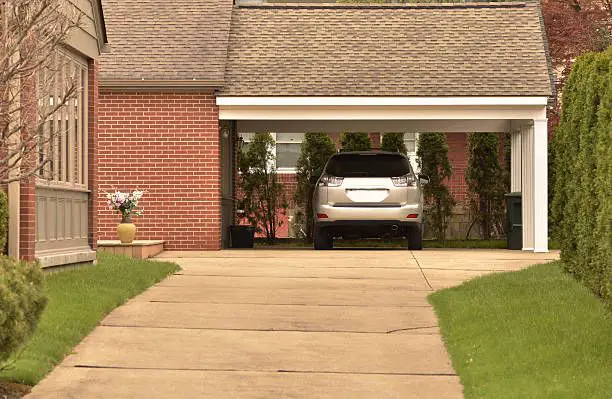
What Robert Left
The conference room smelled of lemon polish and printer heat and the specific absence of grief — the absence that very clean rooms have when they have been designed for transactions rather than for the things that happen to people, for the orderly transfer of what remains after a life rather than for the life itself.
I was still in the black dress from Robert’s service. I had not changed because changing had required a decision and decisions had required energy I was reserving for the room I was about to sit in, for the folder I was about to watch Mr. Hoffman open, for the specific work of remaining present in a body that wanted very much to be somewhere else.
My name is Margaret Campbell. I am sixty-one years old, and I had been married to Robert Campbell for thirty-three years, and Robert died on a Tuesday in November of a cardiac event that was, his cardiologist told me afterward, both predictable given his family history and impossible to have predicted with the specific certainty that would have produced intervention. This is the particular cruelty of that kind of death — the retroactive clarity, the things you would have done differently if you had known, the knowledge that you could not have known and the knowledge’s insufficient comfort.
I am telling you what was in the envelope. But first: Robert, and the garage on Industrial Parkway, and what I knew and what I did not know and what I was about to understand.
Part One: Robert
Robert Campbell was the kind of man who expressed love through preparation rather than declaration — through the arrangements made in advance, the problems solved before they arrived, the specific foresight of someone who had decided that care was most reliably expressed through action rather than statement. He had proposed to me by taking me to an apartment he had already rented, because he had wanted me to see that the proposal came with a plan rather than just a feeling.
I had married him for the feeling and the plan both, which was the combination that produced thirty-three years of genuine partnership.
He was a real estate developer — not the glamorous kind that appears in profiles, but the methodical kind that appears in city council meetings and zoning hearings and the unglamorous negotiations that produce the buildings other people photograph. He had built a portfolio over thirty years that was, by the time of his death, substantial. Not wealthy in the way that requires management of a different kind, but established, carefully managed, the product of decades of patient work.
Jonathan was our son. He was thirty-seven, and he had come into the business seven years earlier with the specific confidence of a man who believes that proximity to creation is equivalent to participation in it. He had learned the vocabulary of real estate development and had deployed it in the rooms where vocabulary mattered and had not, as far as I had observed, done the specific unglamorous work that had produced the portfolio he was now in a conference room waiting to receive.
I had watched this with the complicated attention of a mother who loves her child and who also has eyes. I had not said everything I saw, which is a form of love and also a form of mistake, and I had been making it for seven years.
The morning of the reading, Jonathan had arrived in a suit that cost more than my dress and had sat in Robert’s chair and checked his watch twice before Mr. Hoffman opened the folder.
I had folded my hands over my purse and waited.
Part Two: Industrial Parkway
The penthouse landed in the room with the quiet confidence of something expected. Jonathan’s expression produced its single flicker of restraint and then the careful smile — polite enough for the room, sharp enough for me. He looked at me like a line item, which was the most accurate description I had for it and the one that told me what I needed to know about what the preceding seven years had built.
Then the address.
Industrial Parkway. Garage and contents.
My stomach tightened.
Industrial Parkway was in the Warehouse District — the specific part of the city that Robert had been interested in since before it had become interesting, when the area was genuinely industrial rather than aspirationally industrial, when the buildings there were used rather than repurposed. He had mentioned a property there once, years ago, and I had not asked enough questions about it because I had been occupied with other things and because Robert’s real estate thinking was its own world and I had learned to trust the thinking rather than track it in detail.
I said I don’t sign confusion. I said it calmly, with the specific steadiness of someone who has decided that the steadiness is the only response available that does not give the other people in the room something they can use.
Jonathan’s jaw flexed. He leaned back in Robert’s chair and looked at the city through the window and waited for me to become convenient.
I recognized, sitting in that room with the lemon polish and the printer heat, how quickly a person becomes inconvenient when the paperwork says she does not come with the property.
Mr. Hoffman kept reading. Acknowledgments. Transfers. Clean language. Jonathan’s knee bounced once and stilled.
Then Mr. Hoffman reached a page and stopped.
Part Three: The Stop
I have thought many times about what I saw on Mr. Hoffman’s face in that moment, because what I saw was important and I want to describe it accurately.
It was not surprise. Mr. Hoffman was sixty-three and had been handling estate work for thirty years and was not a man who was easily surprised by the contents of documents. What I saw was the specific expression of someone who has reached something in a document that changes the nature of the document — who has found the page that makes all the previous pages read differently, that rearranges the meaning of what has already been said.
His lips pressed together. His eyes moved from the page to Jonathan, then to the door, then back to me. The tremor in his hands, which I had noticed and attributed to his general manner, became more pronounced. He set the folder down with the specific gesture of a man who has understood that the thing he is holding requires a different handling than the handling he had prepared.
Jonathan felt the change before he understood it. He snapped his head toward Mr. Hoffman with the irritation of someone whose schedule is being disrupted.
I pushed my chair back. Not to cause a scene — I have never been a person who causes scenes, which is a quality I have sometimes understood as discipline and sometimes as a failure to take up the space that was mine. I pushed the chair back because I was in a body that still belonged to me and I needed to be in it in a way that was not determined by the room’s arrangements.
Mr. Hoffman stood too fast.
“Mrs. Campbell, please don’t leave.”
He said it with the specific urgency of someone who has understood that the next thing that happens requires my presence to happen correctly. He swallowed hard. He slid the sealed envelope forward with the careful precision of a man handling something he understands has weight.
My name was on the envelope in Robert’s handwriting.
The handwriting I had been reading for thirty-three years. On grocery lists and notes tucked into luggage and the specific letters he had written on the occasions when he wanted to say something that required more permanence than a conversation.
“There’s one final section,” Mr. Hoffman said.
Jonathan’s face had the expression of someone who has understood, in the space of a few seconds, that something he believed was concluded is not concluded. The expression of a man who thought he knew the contents of a room and has found an unexpected door.
I put my hand on the envelope.
Part Four: The Garage
I did not open the envelope immediately. I held it for a moment in the conference room with Mr. Hoffman standing too straight and Jonathan very still in Robert’s chair and the framed skyline behind its glass, and I understood something before I read a word.
Robert had known this room was going to be the room it was. He had known, with the specific foresight that had organized our entire marriage, that there would be a moment in this reading when I would need something he had prepared in advance. He had prepared it. He had placed it at the end of the document, past the point where Jonathan’s confidence would have calculated the document to be finished, in the specific location where the people who were expecting completion would have stopped paying attention.
He had hidden the envelope at the end of the document the way he had done everything important — plainly, without drama, in the place where the people who were not paying close enough attention would miss it.
I opened it.
The letter was four pages, handwritten. The handwriting was Robert’s deliberate hand — the hand he used for things he wanted to last, not the quick hand of daily notes. He had written it, the date on the first page told me, eight months before his death.
He had known eight months in advance. Not about the cardiac event specifically — about the direction things were moving. About Jonathan and the seven years and what the seven years had produced in his son and what that production meant for what came after.
He had prepared.
I read the letter in the conference room, at the polished table, while Mr. Hoffman stood and Jonathan waited. I did not read it aloud. When I finished the first reading, I read it again, because the first reading is for receiving and the second reading is for understanding and Robert had written things that required both.
Then I looked at Mr. Hoffman.
“What is the garage?” I said.
Part Five: What the Garage Was
Mr. Hoffman had known. This was clear from the way he answered — with the specific relief of someone who has been carrying information and has been waiting for the moment when the carrying could end.
The garage on Industrial Parkway was not a garage in the sense of a storage facility or a parking structure. It was a commercial property — a building in the Warehouse District that Robert had purchased six years ago, during the period when the district was beginning its transition from genuinely industrial to something else, when the valuations were still at the early-transition number rather than the arrived-transition number.
The building was twelve thousand square feet. It had been, when Robert bought it, operating as an automotive workshop. The business had since moved, and the building had been empty for two years, managed by a property company under a lease arrangement that had produced steady income while the district’s transition continued.
Robert had held it in a separate LLC — separate from the primary portfolio, separate from the business entities that Jonathan had been involved with, titled in a way that was clean and legal and that had never been mentioned in the family conversations about the portfolio because it had not been part of the portfolio. It had been in a separate accounting.
The letter told me what was in the separate accounting.
The garage had appreciated with the district. The Warehouse District’s transformation had been the specific kind of urban transformation that produces dramatic changes in valuations over a compressed timeline — the kind Robert had been watching and had correctly assessed in the six years since purchase. The building was now appraised at a figure that was, I understood when Mr. Hoffman confirmed it, not a garage in anyone’s understanding of the word.
The letter also contained what Robert had done with the income from the building over six years.
He had invested it. Methodically, with the same patience that had built the primary portfolio. The investments were documented in the pages that accompanied the letter — a separate portfolio, modest in origin and significant in its current state, held in accounts that were titled in my name and that had been managed independently of everything Jonathan knew about.
Robert had known Jonathan was looking at the portfolio. He had known, with the foresight of a man who had spent thirty years reading rooms, that the seven years of proximity had produced in his son a relationship to the assets that was more evaluative than filial. He had not said this to me directly — he had expressed it in the way he expressed important things, which was through arrangement.
He had arranged for me to be taken care of in the place where the people who were taking stock of what there was to take would not think to look.
He had given me the garage.
Part Six: The Letter
I want to tell you what else was in the letter, because the financial documentation was the practical content and the letter was the other content, and both mattered and the letter mattered more.
He wrote about our marriage. Not the history of it — he assumed I knew the history — but his understanding of it, the specific articulation of what thirty-three years had been from inside his experience of them. He wrote about the morning I had agreed to look at the apartment he had already rented and what he had felt when I said yes to the proposal that came with a plan. He wrote about Emily’s birth and then Jonathan’s, and the specific different quality of those two events that he had noticed and never said aloud.
He wrote about the seven years of watching Jonathan.
He was precise about this. He said: I have watched my son look at what I built the way a man looks at something he has decided is already his. I have watched him look at you the way he looks at the parts of the business he has decided are inconvenient. I am writing this because I want you to know that I saw it and I did not do enough about it when I was here to do something, and this letter is the most I can do from the position I find myself in.
He wrote: You spent thirty-three years making this marriage what it was. You did it without asking for recognition and I gave you too little of it because I assumed you knew. You should have known more explicitly. I am telling you now: every good thing in our life had your attention in it. The business would not have been what it was without the steadiness you provided when it was difficult. Jonathan would not have had the platform he had without the home you made. I do not want you to leave the reading with a garage and a line in a document without understanding what I understood, which was that the garage represents my best attempt to ensure that the platform you gave everyone else comes with a platform for you.
He wrote: I love you. I am sorry I did not say it more often in the forms that could have been said more often. I said it in preparation and in arrangement and in the things I built for the future. I should have also said it plainly, more than I did.
I folded the letter and put it in my purse.
Part Seven: Jonathan
Jonathan had been very still during my reading. He had the quality of someone who has understood that the room has changed and is waiting to understand the extent of the change before he decides how to respond to it.
When I looked up from the letter, he was looking at me with an expression I had not seen on his face in seven years. Not the line-item expression. Not the careful smile working overtime. Something underneath those things — the specific quality of a man who has just understood that he had been looking at something and had not been seeing it.
“She knew,” he said. To Mr. Hoffman. Not to me.
“Your father ensured she was provided for,” Mr. Hoffman said. The specific formulation of someone who is being accurate without inflaming.
“The garage—”
“Is not a garage,” I said.
He looked at me.
“How long have you known?” he asked.
“I read the letter twenty minutes ago,” I said. “The same as you.”
He was quiet.
“Dad knew what I was doing,” he said. It was not a question.
“Your father knew a great many things,” I said. “He expressed what he knew through preparation rather than through confrontation. That was his way.”
Jonathan looked at the folder in front of Mr. Hoffman. At the penthouse documentation that still sat on top. At the chair he had been sitting in — Robert’s chair, in Robert’s attorney’s office, at the table where Robert’s estate was being distributed.
He looked like a man who has been seeing a room from one angle and has just understood there are other angles.
“I don’t need to talk to you about the division of the estate,” I said. “Mr. Hoffman will manage what needs to be managed and Sandra will represent my interests in any conversations that require representation. What I want to say to you directly is this.”
He waited.
“Your father loved you,” I said. “The portfolio, the business, the penthouse — he wanted those things to be yours. Not because he thought you had earned everything in the way that everything can be earned, but because you were his son and he wanted your life to be resourced. That was real.”
“I know,” Jonathan said. Very quietly.
“What was also real,” I said, “was the way you looked at me in this room this morning. Like I was a line item. Like my thirty-three years in this family were an inconvenience between you and the assets.”
He did not argue.
“I am not a line item,” I said. “I was your father’s partner and I am your mother and I built things in this family that are not in any portfolio but that are the reason the portfolio was possible. I am not going to leave this room having allowed that to go unnamed.”
The room was quiet.
Jonathan looked at his hands.
Part Eight: What Jonathan Said
He did not say the thing immediately. He sat with what I had said with the specific quality of someone who is being required to hold something they would prefer not to hold and who is deciding whether to hold it or set it down.
He set it down once — started a sentence that began with I didn’t mean to— and then stopped, because the sentence was the managed version of the response and even Jonathan could hear that it was the managed version and that the managed version was not what the room required.
Then he held it.
“I’ve been looking at the business,” he said, “for seven years. At the numbers. At the assets. At what I was going to—” He stopped. “At what I thought was going to be mine.”
“I know,” I said.
“I looked at you as part of the business,” he said. “As a liability or a factor or—” He stopped again. “That’s not— I know that’s not what you are.”
“But it’s how you were looking,” I said.
“Yes,” he said.
“Why?” I asked. Not accusingly — I genuinely wanted to know, because the why matters when you are trying to understand whether something can be different.
He thought about it for a long time.
“I think I stopped seeing you as my mother,” he said, “when I started seeing the business. I think I started seeing everyone in terms of the business. Dad. You. Everyone.” He paused. “I think Dad tried to tell me this and I thought he was being sentimental.”
“Your father was not sentimental,” I said. “He was precise. He was telling you something precise.”
“I know that now,” he said.
The conference room was still too clean for grief. But something in it had changed — not resolved, not repaired, but shifted. The shift was the beginning of a different conversation than the one we had been having, which was the only thing I had hoped the morning might produce.
Part Nine: Sandra
My attorney, Sandra Park, had been at my house at eight that morning with coffee and the specific attention of someone who has represented a person through a significant legal process and who understands that the legal process and the emotional process are happening simultaneously and that both require attention.
I called her from the hallway, after Mr. Hoffman had said please don’t leave and before I went back to the conference room.
“Sandra,” I said. “There’s a sealed envelope. Robert’s handwriting. Mr. Hoffman has called it a final section.”
“Go back in,” she said immediately. “Do not sign anything until I arrive. I will be there in twenty minutes.”
She arrived in eighteen. She sat beside me and reviewed the documentation with the focused attention of a woman who has been doing this work for twenty-five years and who knows what to look at and in what order.
When she finished, she looked at me over her reading glasses with the expression of someone who has confirmed what she needed to confirm.
“The LLC is clean,” she said. “The portfolio transfer is properly documented. The accounts are properly titled. Your husband was methodical.”
“He was always methodical,” I said.
“The property valuation is current,” she said. “I’d recommend a new appraisal within sixty days, given the district’s movement. The number may have changed since the documentation was prepared.”
“All right,” I said.
“Mrs. Campbell,” she said, setting the papers down and looking at me directly in the way she did when she was speaking to me rather than to the legal matter. “Your husband prepared this with considerable care. The separation of the assets, the timeline, the specific placement of the documentation at the end of the reading — he thought about every detail.”
“I know,” I said.
“He wanted you to be safe,” she said.
“He always wanted me to be safe,” I said. “That was his way.”
Part Ten: The Building
Sandra arranged the appraisal. I went to the building on Industrial Parkway on a Thursday morning, three weeks after the reading, with the property manager who had been overseeing it and who had known Robert and who received me with the specific warmth of someone who has been told to expect me and who has his own feelings about Robert that he is managing.
The building was, as the documents had described, twelve thousand square feet. The neighborhood around it was what the Warehouse District had become — the coffee shops and design studios and the specific pedestrian quality of an area that has been discovered, with the construction cranes further down the block indicating that the discovery was continuing.
The building itself was not yet transformed. It still had the quality of its industrial origins — the high ceilings, the wide loading doors, the concrete floors. But the quality was the quality that people were paying for in the district, and the size was the size that produced a specific category of value, and the appraisal, when it arrived two weeks later, confirmed what Sandra had anticipated.
I stood in the empty building on that Thursday morning and I looked at what Robert had given me. Not the valuation — the thing itself. The twelve thousand square feet of concrete and high ceilings and loading doors that he had purchased six years ago and held and managed and placed at the end of the document where Jonathan would not think to look for it.
He had given me something I could do something with. Not a maintenance obligation, not a complicated portfolio to manage at a time when management was already overwhelming — something that, given the district’s trajectory, was either a significant income-producing asset in its current form or the foundation of something I could build.
I had not built anything from a building before. I had built things within buildings — a marriage, a home, the thirty-three years that Robert had written about in the letter. But I had not taken a building and decided what it would become.
I stood in the concrete and the high ceilings and I thought about it.
Part Eleven: What I Decided
The decision took six months. I am describing it briefly here because the six months of thinking and consulting and walking through the building and sitting with the appraisal and talking with Sandra and talking with a commercial real estate advisor Sandra recommended and walking through the building again — the six months were not brief, and they deserve acknowledgment, but their detail is the detail of a process rather than a turning point.
I decided not to sell.
This required explanation to the people who advised me, who had expected that a sixty-one-year-old widow would prefer liquidity to management, who had prepared their recommendations accordingly. I explained it to each of them in the same way: Robert had held this building for six years in a district he believed in and had been right about. I was not going to sell the thing he had been right about in the first year of owning it.
I also decided not to lease it again in its current form, because the current form was not the form that the district’s direction was producing value from.
What I decided, with the help of an architect I found through a referral from one of the Warehouse District’s existing creative tenants, was to convert. Not the conversion that would produce the maximum short-term return, but the conversion that the building’s specific dimensions and quality were suited for — a mixed-use space that would serve the creative and light-production businesses that were the district’s actual population.
The conversion took fourteen months. I was involved in every decision, with the specific involvement of someone who is learning a thing by doing it rather than delegating it to people whose expertise is the thing. I learned more about buildings in fourteen months than I had learned in sixty-one years of living in them.
Robert would have found this funny. He would have also found it entirely predictable.
Part Twelve: What Remains
The building on Industrial Parkway is fully leased as of this spring. The tenants are the kind of tenants that produce a building’s character — a film production company, a ceramics studio, a small architecture firm, a catering business that fills the loading dock with purpose. The income from the leases is what Sandra had projected and what the appraisal had suggested was achievable.
Jonathan and I have the relationship that the conference room made possible and that we have been building since. It is not the relationship I had before the seven years, and it is not the relationship the seven years produced. It is a different relationship — more honest, more deliberate, requiring more work from both of us than either of the previous versions. He called me on Robert’s birthday in April and we talked for an hour. We did not talk about the estate. We talked about Robert.
I am still in the house. I will stay in the house for as long as the house is the right place to be in, and when it is not the right place I will make a different decision, and the decision will be mine to make. This is the most fundamental thing the garage gave me, which is not the valuation or the income but the specific freedom of a woman who has a platform for her own decisions.
Mr. Hoffman sent me a note after the reading. Handwritten, brief, on his personal stationery rather than the firm’s. He said that in thirty years of estate work he had seen many documents, and that he had rarely seen one that demonstrated the specific quality that Robert’s demonstrated, which was the complete love of a man for the person he was trying to protect.
I kept the note.
I kept the letter too. It is in the drawer of my desk — the desk that was Robert’s, which I moved into my office at the building on Industrial Parkway when the renovation was complete, because the desk deserved to be in a place where work was happening and because I wanted, in the place I had built, the presence of the person who had made the building possible.
He gave me the garage because he knew what I would do with it.
He was right.
He was always right about the things that mattered.
THE END

Adrian Hawthorne is a celebrated author and dedicated archivist who finds inspiration in the hidden stories of the past. Educated at Oxford, he now works at the National Archives, where preserving history fuels his evocative writing. Balancing archival precision with creative storytelling, Adrian founded the Hawthorne Institute of Literary Arts to mentor emerging writers and honor the timeless art of narrative.