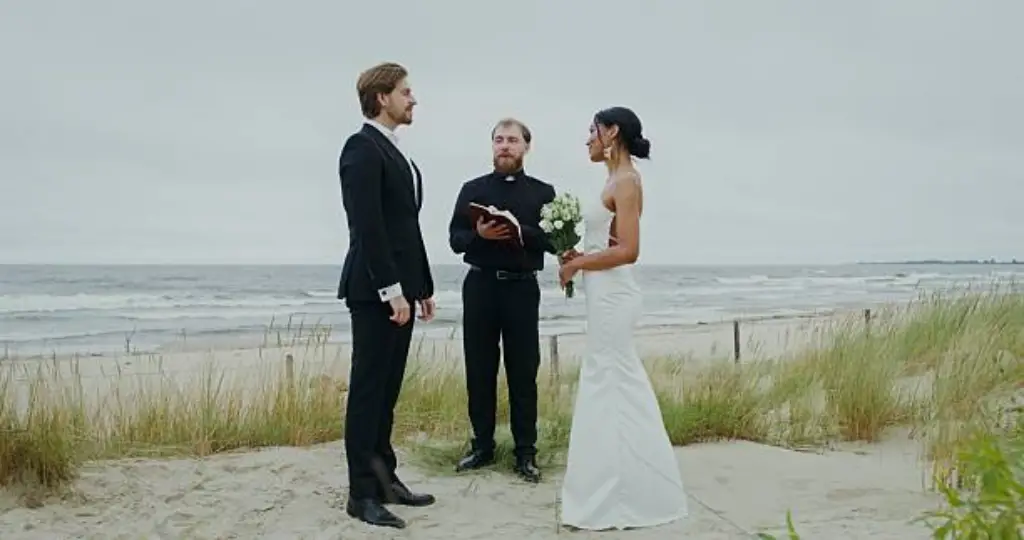
I found out about my sister’s wedding the same way I learned about most of the tectonic shifts in my family—through the jagged, awkward pity of a stranger.
It was a Tuesday afternoon, one of those gray, rain-soaked days in March that makes the fluorescent lights of an office breakroom feel particularly hostile. I was stirring powdered creamer into lukewarm coffee when Sarah from accounting hovered near my elbow, clutching her own mug with both hands like she was steadying herself for a difficult conversation.
“So,” she chirped, her voice pitched a little too high with forced enthusiasm, “are you excited for this weekend? I heard through the grapevine that your sister is getting married. A vineyard ceremony in Napa, right? It sounds absolutely dreamy.”
The spoon froze in my hand. The rhythmic clinking sound against the ceramic mug stopped abruptly, leaving a silence that felt heavy and suffocating. I stared at the swirling beige liquid, watching the creamer dissolve into murky clouds.
“This weekend?” I repeated, my voice steady despite the sudden cold stone dropping into my stomach.
Sarah’s smile faltered. I watched her face change in real time—the brightness dimming, the realization hitting her like a slap. She saw the blankness in my eyes, the complete lack of recognition. The embarrassment flushed her cheeks a deep pink.
“Oh God, I just—I saw the registry online when I was looking for weekend plans. I assumed…” She trailed off, horrified at her own presumption. “I’m so sorry, Emma. I thought you’d be in the wedding party.”
“It’s fine,” I lied, turning back to my coffee to spare her the sight of my humiliation. The coffee suddenly looked undrinkable, the surface covered with a thin film that made my stomach turn. “It must be a small, intimate affair.”
But I knew Lily. I knew my mother Carol. Nothing they did was small. Nothing they did was without careful calculation about who would see, who would know, who would be impressed.
I didn’t go back to my desk. I told my supervisor I had a family emergency—which, in a twisted way, was true—and drove straight to my parents’ house. The sprawling colonial sat in the best neighborhood of Greenwich, Connecticut, the kind of house that always smelled of lemon polish and furniture wax and unspoken judgments that hung in the air like expensive perfume.
I found my mother in the sunroom, the space flooded with gray afternoon light filtered through floor-to-ceiling windows. She was arranging white lilies—of course, Lily’s namesake flower—into a crystal vase that probably cost more than my monthly rent. She wore her signature pearls, the ones she touched whenever she was about to deliver a polite insult wrapped in concern.
“Emma,” she said without looking up, her hands moving with practiced precision among the stems. “You didn’t call ahead.”
“I didn’t get an invitation,” I said, cutting straight through the pretense. “To Lily’s wedding. This Saturday. In Napa.”
Carol paused mid-snip, the garden shears suspended in the air for a beat before she finished cutting the stem with a sharp snick that sounded final. She finally looked at me, and her blue eyes were cool and unbothered, like a frozen lake you could skate across but never swim in.
“Oh, that,” she sighed, as if we were discussing a minor oversight in seating arrangements rather than my complete erasure from a family milestone. “We decided to keep the guest list curated, Emma. It’s an intimate gathering. Just the people who truly support Lily’s happiness.”
The words landed like individual blows. Curated. As if I were a piece of art that didn’t match the aesthetic. As if my presence would somehow taint the carefully constructed image they were presenting to the world.
“Support her happiness?” I stepped closer, my hands trembling at my sides with a mix of hurt and rage I was desperately trying to contain. “I’m her sister, Mom. I’ve bailed her out of credit card debt twice. I helped her move into her first apartment when you were too busy with the country club committee. I’ve been there for every crisis—”
“And you’ve been nothing but critical of Mark since the day they met,” my father’s voice cut in from behind me. I hadn’t even heard him enter. Robert stood in the doorway, swirling a glass of scotch that was too amber for two in the afternoon, looking at me with that particular brand of weary disappointment he usually reserved for quarterly earnings reports that didn’t meet expectations. “Some people just don’t belong at family celebrations, Emma. Your constant negativity, your suspicions, your inability to just be happy for your sister—it casts a shadow.”
“It’s not negativity, Dad. It’s caution,” I argued, hearing the defensive edge creep into my voice and hating myself for it. “I asked legitimate questions about his business. About his background. That’s called due diligence.”
“You were jealous,” Lily’s voice floated down the curved staircase before she appeared, descending like royalty making an entrance. She glowed with the kind of expensive tan you can only get from multiple visits to high-end tanning salons, her engagement ring—a massive emerald-cut diamond—catching the light with every gesture. She laughed, a sound that felt brittle and sharp enough to draw blood. “Finally, a wedding without the family disappointment hovering in the corner, reminding everyone how superior she is with her ‘questions’ and her ‘concerns.’ Just stay away, Emma. Don’t ruin this for me. For once in your life, don’t make this about you.”
I looked at the three of them standing there—a perfect, polished tableau of willful delusion. They were a portrait in expensive clothing and careful lighting, and I was the smudge on the lens, the flaw in the composition that needed to be edited out.
“Fine,” I said, surprised by how calm my voice sounded when inside I felt like I was fracturing into a thousand sharp pieces. “If I’m not welcome, I won’t be there. Enjoy your curated event.”
I turned on my heel and walked out of that house, my childhood home that had never really felt like home. I didn’t slam the door—that would have given them something to critique, something to add to their narrative about my dramatic, unstable personality. I just let the silence of my erasure settle over the house like dust.
That night, alone in my one-bedroom apartment that my parents had once called “depressing” and “beneath your potential,” I packed a bag. I didn’t want to be in the same time zone when they toasted the happy couple. I didn’t want to scroll through social media and see the photos, the carefully curated images of a family celebration that I wasn’t part of, with captions about how “intimate” and “perfect” it all was.
I booked the first flight I could afford to Sedona, Arizona. Red rocks. Open sky. A landscape so different from Connecticut’s manicured lawns and country clubs that it felt like traveling to another planet. I told my supervisor I was taking the personal days I’d been hoarding, and on Thursday morning—two days before the wedding—I boarded a plane heading west.
As the aircraft taxied down the runway, I turned off my phone. The screen went dark, and with it, the constant anxiety of waiting for messages that would never come, invitations I would never receive, acknowledgment that I mattered in the slightest to the people who shared my DNA.
I told myself I was escaping. I had no idea I was actually fleeing a blast zone right before detonation.
Sedona was everything Greenwich wasn’t. It was rugged, dusty, honest in a way that felt almost confrontational after years of Connecticut’s polite pretense. The heat hit me like a physical blow when I stepped off the plane, baking the tension out of my shoulders and replacing it with a different kind of exhaustion—the good kind that comes from sun and movement rather than stress and rejection.
For two days, I existed in a self-imposed communication blackout. I hiked the Cathedral Rock trail until my lungs burned and my legs shook, pushing myself up steep red stone faces that required both hands and focus, leaving no room for thoughts about weddings or families or the growing realization that I’d spent thirty years trying to earn love from people who treated it as a commodity with conditions attached.
I sat on the edge of cliffs at sunset, watching the light transform the landscape into something almost otherworldly—violent shades of orange and purple and red that looked like the earth itself was on fire. The vastness of it, the ancient patience of stone that had been here for millions of years before my family drama and would be here millions of years after, put things into perspective in a way that hurt and healed simultaneously.
I tried not to think about what was happening back home. Right now, there would be a rehearsal dinner at some expensive restaurant, probably the one my mother had been talking about for months, where Mark would charm everyone with his vague stories about “international logistics” and “crypto-diversification”—buzzwords that sounded impressive but meant absolutely nothing when you actually tried to pin down specifics.
I remembered the first time I met him, six months ago at a family barbecue. He’d been too slick, too polished, his smile too perfect and practiced. He talked about his business in that particular way that people do when they’re making it up as they go, throwing out jargon and name-dropping companies and cities with the confidence of someone who knows most people won’t actually verify anything he says.
When I’d asked for a business card, he’d laughed and said he was “too digital for paper trails.” When I’d asked about his family, he’d given vague, sad answers about being orphaned young, tragic accidents he didn’t like to discuss, a narrative designed to forestall questions while simultaneously making him sympathetic.
Every instinct I had screamed that something was wrong. But when I’d voiced my concerns to Lily, she’d cried and called me jealous. When I’d mentioned it to my mother, Carol had pursed her lips and said maybe I was bitter about being single and unsuccessful, that I needed to let Lily have her happiness without poisoning it with my own insecurities.
And my father—my father had simply said that perhaps I didn’t understand the business world the way successful men like Mark did, and wasn’t it time I stopped pretending to know better than everyone else?
So I’d stopped talking. And they’d stopped inviting me to things. And now here I was, hiking alone in Arizona while they celebrated the con artist they’d chosen to love more than their own daughter.
Friday night came. The eve of the wedding. I was sitting in a budget motel room, eating mediocre Chinese takeout on a bed that sagged in the middle, when the silence started to feel less comforting and more oppressive. The room was clean but generic, the kind of space that thousands of people had passed through, leaving no trace, feeling nothing.
I looked at my phone sitting on the nightstand. Dark. Lifeless. It had been off for forty-eight hours, and I’d felt lighter for it. But now, in the growing darkness of the room, with the neon motel sign flickering through thin curtains, a small voice whispered: What if something’s wrong? What if someone’s hurt?
Just check, the voice said. Just make sure.
It was a mistake.
I pressed the power button. The Apple logo glowed white, mocking me with its clean simplicity. As soon as the phone connected to the network, it began vibrating with an intensity that made it skitter across the wooden surface of the nightstand.
Bzzt. Bzzt. Bzzt. Bzzt.
The notifications came in waves, an endless cascade of missed calls and messages that made the device feel alive in my hand, desperate and panicked.
Thirty-seven missed calls.
Forty-two text messages.
Voicemails stacking up like debris after a hurricane.
I stared at the screen, my heart hammering against my ribs. The names scrolled past: Mom. Dad. Aunt Denise. Cousin Mike who hadn’t spoken to me in five years. Mom again. Mom again. Mom again.
The texts from my mother escalated from sharp to panicked in a timeline that made my hands shake:
Friday, 4:00 PM: Emma, call me immediately.
Friday, 5:30 PM: Where are you? This is not the time for your dramatics. Pick up your phone.
Friday, 7:15 PM: Please, Emma. It’s an emergency. I’m begging you.
Friday, 8:00 PM: WE NEED YOU. CALL ME NOW.
My throat closed. Had someone died? Had there been an accident on the way to Napa? Was Lily hurt?
I scrolled to the voicemails with trembling fingers. I skipped my parents’ messages—their voices would be accusations wrapped in crisis, and I needed information, not guilt. I went straight to Aunt Denise, my mother’s sister, the only person in the extended family who’d ever treated me with something resembling neutrality.
I pressed play.
“Emma,” Denise’s voice came through shaking and breathless, sirens wailing in the background. “Emma, you need to call me back immediately. The wedding—it’s been canceled. The police were here. Federal agents. It’s bad, Emma. It’s so, so bad.”
The room spun. I sat down heavily on the edge of the sagging mattress, the phone pressed so hard against my ear it hurt. With shaking hands, I called her back. She answered before the first ring finished.
“Emma? Oh thank God. Where are you?”
“Arizona. Aunt Denise, what happened? Is everyone okay?”
“Physically? Yes.” She drew a shaky breath. “But Emma, Mark was arrested this morning. At the rehearsal brunch. Federal agents swarmed the restaurant patio. They put him in handcuffs in front of everyone—the wedding party, the out-of-town guests, the restaurant staff. It was…” She made a choked sound. “It was a nightmare.”
My entire body went cold, then hot, then cold again. “Arrested? For what?”
“Fraud,” Denise whispered the word like it was cursed. “Identity theft. Wire fraud. Money laundering. Emma, he’s been using different names for years. He’s wanted in three states. There are victims everywhere—people he scammed out of their life savings. The agents said he’s part of a larger investigation.”
I closed my eyes, a strange cocktail of vindication and horror washing over me. I’d known something was wrong. I’d known. But being right felt hollow when I could hear the devastation in my aunt’s voice.
“And the wedding?” I asked, though I already knew the answer.
“The venue locked the gates,” Denise said. “All the checks Mark wrote bounced. The deposits are frozen because they’re linked to accounts that don’t exist or are tied up in federal seizure. The caterer, the florist, the photographer—they’re all threatening lawsuits. Guests were already checking into hotels. It’s total chaos, Emma. Your parents are falling apart. Lily locked herself in the bridal suite and won’t talk to anyone. They need—” She paused. “They need you to come home.”
Before I could respond, another call beeped through. Mom.
Then a text notification appeared at the top of my screen: Emma, please come home. We need you to fix this.
I stared at those words. Fix this. Not “we’re sorry.” Not “you were right.” Not “we should have listened to you.” Just fix this, as if I were a cleanup crew they could summon after making a mess, as if my value lay only in my utility.
I could stay here. I could turn the phone off again and watch the sunrise over the red rocks tomorrow while their carefully constructed world burned to ash. It would be poetic justice. It would be exactly what they deserved for treating me like I didn’t matter until they needed something.
But curiosity is a powerful drug. And if I’m being honest with myself, a darker part of me wanted to see the wreckage firsthand. I wanted to watch their faces when the curtain fell and reality came crashing in. I wanted to see if they’d finally admit I’d been right all along.
“I’m coming,” I told Denise. “I’ll get the first flight I can.”
I flew into San Francisco early Saturday morning, running on no sleep and airport coffee that tasted like regret. I rented a car and drove north toward Napa, watching the landscape transform from urban sprawl to rolling vineyard country. The drive usually felt like entering a postcard—golden California light, orderly rows of grapevines, the promise of wine and luxury and Instagram-perfect moments.
Today it felt like driving toward a funeral.
I arrived at the Bella Vista Vineyard around noon—the exact hour the ceremony was supposed to start. Instead of string quartets and the rustle of expensive fabric, I heard shouting.
The wrought-iron gates stood half-open, and a police cruiser sat near the entrance, its lights dark but its presence a silent punctuation mark at the end of what should have been a fairytale. The scene beyond the gates looked apocalyptic.
Bridesmaids in wrinkled silk robes sat on stone benches, mascara streaking their faces, clutching each other and their phones. A florist was angrily loading white roses back into a van, her voice carrying across the courtyard as she argued with someone I couldn’t see. The pristine white chairs set up for the ceremony sat empty, beginning to collect leaves blown by the afternoon wind.
My father stood near the parking area, still in his tuxedo shirt though it was unbuttoned at the collar, his bow tie hanging loose like a noose. He looked diminished somehow, as if the events of the past twenty-four hours had physically shrunk him. He was waving a credit card at the florist, who was shaking her head vehemently.
“I don’t care about your ‘assets in transition’!” the florist shouted. “Your check bounced! I’m taking my inventory, and you’ll be hearing from my lawyer!”
My mother spotted me first. She rushed across the cobblestones in heels that clicked with desperate urgency, her usually perfect chignon coming loose, tendrils of hair escaping in ways she would normally never allow. She looked frantic, unmoored, like someone whose entire identity had been built on control and now couldn’t find anything to hold onto.
“Thank God,” she gasped, grabbing my hands with a grip so tight it hurt. “Thank God you’re here, Emma. You have to talk to the caterer—they’re threatening to keep all the food and equipment. The hotel is saying they’ll evict the out-of-town guests if someone doesn’t pay the block of rooms. The photographer is demanding cash. You have to help us fix this.”
I gently but firmly pulled my hands back. “Why me, Mother? I thought I didn’t belong at family celebrations. I thought my negativity was a cloud.”
She flinched as if I’d struck her. “Don’t be cruel. Not now. We had no idea Mark was—we didn’t know. He fooled all of us. He’s a monster.”
“Not all of us,” I said quietly, meeting her eyes. “I warned Lily six months ago. I warned you at Christmas. You called me jealous and bitter. Dad said I didn’t understand the business world. So forgive me if I don’t feel particularly compelled to jump in and save the day.”
“We didn’t know!” she wailed, and actual tears started rolling down her carefully made-up face, cutting tracks through her foundation. “He showed us bank statements! He had references! He seemed so successful!”
“He had a printer and Adobe Photoshop,” I said. “Where’s Lily?”
Carol pointed with a shaking hand toward the main building. “She’s in the bridal suite. She won’t come out. She won’t speak to anyone. Emma, please—”
I walked past her without another word, through the chaos of the courtyard where cousins and family friends I hadn’t seen in years now looked at me with desperate, pleading eyes, as if I might have a magic wand or an unlimited checkbook. I had neither.
The bridal suite was at the end of a long hallway lined with photographs of other, successful weddings—smiling couples, joyful families, moments frozen in time when everything had gone according to plan. The door was closed, and I could hear nothing from inside.
I knocked. “Lily? It’s Emma.”
Silence.
“I’m coming in.”
I opened the door to find my sister sitting on the plush carpet, surrounded by the debris of a wedding that would never happen. Untouched champagne bottles sat in melting ice. The wedding dress hung on a mannequin like a ghost. Shoes, makeup, flowers—everything ready for a day that had been canceled.
Lily sat with her back against the wall, still in her white silk “Bride” robe, staring at nothing. Her face was ravaged by crying, all the carefully applied makeup smeared and ruined. Her eyes were puffy and red, and she looked younger somehow, stripped of the arrogance and confidence she’d worn like armor.
She didn’t look up when I entered.
“I didn’t think you’d actually show up,” she said, her voice hoarse from crying.
“I wasn’t invited,” I reminded her, leaning against the doorframe.
She laughed—a dry, broken sound that held no humor. “Well, you’re the only one who got the dress code right. Everyone else showed up for a wedding that doesn’t exist.”
She finally raised her eyes to meet mine. “He took everything, Emma. The joint account we opened for the house down payment—sixty thousand dollars, gone. The credit cards he convinced me to get in my name for the wedding expenses—maxed out and fraudulent. Even the ring…” She looked down at her bare left hand, flexing her fingers. “The FBI took it as evidence. It was stolen property. Someone in Texas has been looking for it for three years.”
“I know,” I said simply.
“You knew,” she corrected, her voice cracking. “You tried to tell me. And I called you jealous. I said you were trying to ruin my happiness because you couldn’t stand to see me succeed where you failed.”
“Why?” I asked, genuine curiosity in my voice. “Why was it easier to hate me than to ask him for a simple background check?”
Lily pulled her knees up to her chest, wrapping her arms around them like she was trying to make herself smaller. “Because you were supposed to be the disappointment. The one who didn’t fit in, who didn’t understand how to play the game. If you were right about Mark, then I was the fool. And I couldn’t be the fool, Emma. I was the golden child. The perfect daughter. The one who made Mom and Dad proud.”
“And now?”
“Now,” she whispered, looking around at the ruins of her perfect day, at the dress she’d never wear and the future she’d never have, “I’m just another name in a federal case file. Another victim who should have known better.”
I looked at my sister and felt…nothing. No triumph, no vindication, no satisfaction. Just a vast, tired emptiness. She looked broken, genuinely devastated, and I realized I didn’t even have the energy to feel superior about being right.
“Get up,” I said, extending a hand. “We need to go talk to the vendors before Dad has a stroke in the parking lot.”
The rest of that day was a masterclass in humiliation and damage control. I sat in meetings with the venue manager, the caterer, the hotel coordinator, listening to my father try to negotiate with money he didn’t have while my mother dabbed at her eyes with tissues that left white lint on her black dress.
In the venue manager’s office, surrounded by photos of successful events, we reviewed the carnage.
“Mr. Harris,” the manager said, his voice tight with barely controlled anger, “the wire transfer for the final balance of fifty thousand dollars was flagged as fraudulent. We are out of pocket for the food, the rentals, the staffing, security. We will be pursuing legal action.”
My father, still in his disheveled tuxedo shirt, rubbed his temples. “My investments… I can liquidate some assets. Move some things around. This is just a temporary—”
“Dad,” I interrupted, my voice cutting through his desperate fantasy. “Stop.”
I turned to the manager. “My father is a victim of a federal crime. His accounts were accessed and drained by someone under federal investigation. You can sue, but you’ll be getting in line behind the FBI, the IRS, and multiple other victims. If you want to salvage anything from this situation, let us get the remaining guests off the property quietly, and we’ll set up a payment plan for documented hard costs.”
The manager looked at me, surprised by the shift in tone from denial to pragmatism. He looked at my father, who was staring at the floor, finally out of words and energy.
“Fine,” the manager said. “Everyone off the property by six PM. We’ll invoice for actual expenses, and I want a payment plan agreement in writing by Monday.”
I found my mother in the parking lot, trying to explain the situation to Aunt Denise while simultaneously fielding calls from the hotel.
“The investment fund,” Carol was saying, her voice trembling. “Mark said the returns were guaranteed. We signed over the paperwork for the retirement accounts just last week to get the upgraded venue package and pay for the honeymoon suite…”
I stopped walking. “You did what?”
Carol looked at me, her face pale beneath the smeared makeup. “He said it was a short-term loan. Just until his assets cleared from the Cayman accounts. He promised double returns by Monday. It was supposed to be—”
“Mom.” I grabbed her arm, forcing her to focus on my face. “How much?”
“Four hundred thousand,” she whispered. “The entire retirement fund.”
The world tilted. It wasn’t just the wedding. It wasn’t just Lily’s savings. They had leveraged their entire future—the house, the retirement fund, probably credit lines and home equity—all for a man who’d convinced them he had connections and opportunities that were too good to pass up.
“It’s gone,” I said, the words coming out flat and emotionless because if I let any feeling in, I might start screaming. “There are no Cayman accounts. There is no investment fund. There is no double return. You gave your retirement money to a con artist, and it’s gone.”
She slapped me. The crack echoed across the parking lot, silencing conversations. Her palm connected with my cheek with enough force to snap my head to the side, and for a moment, we both just stood there, shocked.
I touched my stinging cheek, looking at her. She stared at her own hand like it belonged to someone else, shaking.
“I was supposed to matter,” I said quietly, my voice steady despite the burning in my face and throat. “I’m your daughter. And you chose to believe a stranger over me because he told you what you wanted to hear. You chose a fantasy over reality, and now you’re paying the price. And somehow, even now, I’m the one you hit.”
I walked away, leaving her standing in the parking lot surrounded by wilting flowers, unpaid vendors, and the wreckage of her own vanity.
I stayed for three more days. Not to comfort them—I was far past that—but to ensure Lily didn’t do something desperate and to help them navigate the immediate legal nightmare. Federal agents wanted statements. Creditors were calling. The house in Greenwich, it turned out, had been used as collateral for loans Mark had encouraged my father to take out.
On the second night, Lily knocked on the door of what used to be my childhood bedroom—now converted into a “guest suite” since I’d moved out, wiped from the visual narrative of the family.
She came in and sat on the edge of the bed, looking small and lost in ways I’d never seen before.
“I spent my whole life pushing you down,” she said into the semi-darkness. “Making you the villain, the difficult one, the disappointment. And I don’t even know why I needed to do that. Maybe because you saw the truth about everything, and if I made you invisible, I could pretend the truth didn’t exist either.”
I sat up against the headboard. “That’s a pretty heavy realization for a random Tuesday night.”
“Mom and Dad are selling the house,” she said. “The bank called today. Dad co-signed on loans for Mark’s ‘business ventures.’ They’re underwater on the mortgage now. Foreclosure proceedings start in sixty days if they can’t come up with two hundred thousand.”
“I know.”
“What do I do, Emma?” Her voice cracked like breaking glass. “I’m thirty years old. I have no husband, no savings, no job. I’m living in my parents’ house while it goes into foreclosure. I don’t even know who I am if I’m not the golden child.”
“You start over,” I said. “You get a job. You build a life. You pay for it yourself. And this time, you do it based on reality instead of the image you want to project.”
We didn’t hug. We didn’t have some tearful reconciliation. Real life isn’t a Hallmark movie. But for the first time in our lives, we talked without competing, without performing, without trying to win something from each other.
The next morning, I packed my rental car. My father sat on the front porch steps—the same steps where he used to read the Sunday paper, where he’d once seemed invincible—staring at the lawn service truck he could no longer afford.
“You’re leaving?” he asked without looking at me.
“I have a job. I have a life. One that I built without your approval or your help.”
He nodded slowly, looking older than I’d ever seen him. “You were the only one who saw him for what he was.”
“I wasn’t the only one, Dad,” I said, opening my car door. “I was just the only one who cared more about the truth than the image. There’s a difference.”
I drove away without looking back in the rearview mirror. I knew what was there—a shrinking house, a shrinking family, people finally learning that reality doesn’t care about your carefully curated narrative.
In the weeks and months that followed, I watched from a distance as the Harris family imploded in slow motion. My parents downsized to a two-bedroom condo in a less prestigious town. My mother, who hadn’t worked in forty years, got a job at a boutique—standing on her feet for eight hours, helping women try on clothes, earning hourly wages for the first time since college.
My father took a consulting position, the kind that’s really code for “forced retirement but we need the money.” The country club membership was canceled. The luxury cars were sold.
Lily moved in with them for a while, then got a studio apartment and a job in marketing. She started therapy. She stopped posting aspirational quotes on Instagram. We text now, occasionally. Carefully. With boundaries that we’re both learning to respect.
As for me, that trip to Sedona changed more than my geographic location. It unlocked something I’d been denying for years: I’d spent my entire adult life waiting for an invitation to a table where I was being served poison.
I transferred within my company, taking a position in Denver. I wanted mountains. I wanted distance. I wanted to build a life where family drama was measured in time zones rather than minutes.
Six months after the wedding that never happened, I received a card in the mail with no return address. Inside was a check for five hundred dollars. Not much in the grand scheme of their losses, barely a drop in the ocean of debt they’d accumulated. But on the memo line, in my father’s increasingly shaky handwriting, it said: For the flight to Sedona. I’m sorry you had to come back.
I stared at that check for a long time, sitting in my new apartment with its view of the Rockies, trying to decide what it meant. An apology? An acknowledgment? A down payment on a relationship that might someday be rebuilt on honest foundations?
I cashed it. I used the money to buy new hiking boots—good ones, the kind that would last for years. And then I went hiking, breathing thin mountain air, feeling the burn in my legs as I climbed higher, watching the world get smaller below me.
Sometimes I think about how close I came to believing their version of me. The disappointment. The problem. The one who didn’t understand how families work, who couldn’t just be happy, who always had to question and doubt and ruin things with her negativity.
It’s funny how the person they tried to erase ended up being the only one left standing when the smoke cleared.
The wedding was canceled because of Mark’s fraud—but the real collapse had started long before federal agents showed up. It started the moment my family decided that love was conditional, that belonging was something you earned by fitting into the frame they’d constructed, by not asking difficult questions, by sacrificing your own clarity for the comfort of their delusions.
I shattered that frame. I walked away from the picture they wanted to paint. And I discovered something profound in that Arizona desert, something that solidified with every step I took in those new hiking boots:
Some people spend their whole lives waiting to be invited to celebrations that would poison them. The real victory isn’t getting the invitation. It’s realizing you’re better off without it.
I built a new life in Denver. Made friends who valued honesty over image. Dated people who saw my questions and caution as wisdom rather than negativity. Got promoted because my attention to detail—the same quality my family called obsessive and judgmental—was exactly what my company needed.
And when I finally exhale at the top of a mountain trail, looking out over vast distances where the air is so clear you can see for miles, I understand what freedom actually means.
It means belonging to yourself first. It means trusting your instincts even when everyone else calls you wrong. It means walking away from tables where you’re not wanted and building your own, where the only requirement for a seat is showing up as your authentic self.
The wedding that never happened taught me that much, at least. And in the end, that lesson was worth more than any invitation ever could have been.

Adrian Hawthorne is a celebrated author and dedicated archivist who finds inspiration in the hidden stories of the past. Educated at Oxford, he now works at the National Archives, where preserving history fuels his evocative writing. Balancing archival precision with creative storytelling, Adrian founded the Hawthorne Institute of Literary Arts to mentor emerging writers and honor the timeless art of narrative.