What Remains
I’ve always believed there are moments that divide a life into before and after.
My first teaching job in a red-brick public school, where I stood before thirty-two second-graders who smelled of crayons and earnest hope, and understood immediately that this was my purpose. Meeting Richard at a charity auction in Boston—he had outbid a real estate developer for a watercolor of the harbor, then confessed he had no wall to hang it on and would I perhaps like to go to dinner and help him solve that problem. The birth of Caroline on a snowstorm night when the hospital parking lot looked like a blank sheet of paper, unmarked and full of possibility—the midwife placing her in my arms at 2:47 a.m. while Richard wept openly and without embarrassment.
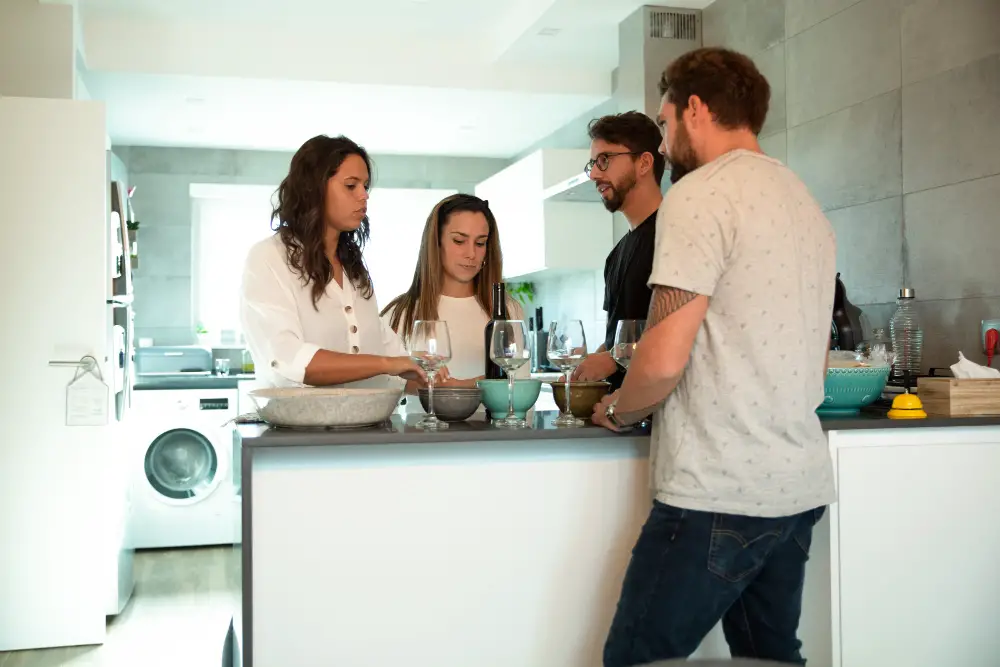
And now this moment. Standing in my own kitchen, the morning light falling across the countertop where I have kneaded bread dough and pitted cherries and signed every school permission slip for twenty years, as my daughter coldly informs me that she has mortgaged my home without my knowledge or consent.
“He needed it more than you do, Mom,” Caroline says. Not a hint of remorse. Not a flinch. She says it the way one might explain a minor household rearrangement, as though the weight of the words bears no relationship to their meaning.
She explains how she used my personal documents—documents she had access to for the harmless purpose of helping me file taxes two years ago—to secure a $285,000 loan against the fully paid home where I have lived for forty years.
“Greg’s startup has real potential. You’re sixty-eight. He’s forty-five, with decades of earning ahead of him.”
I stare at her, trying to reconcile the woman in front of me with the child I raised. This stranger wearing my daughter’s face, speaking with my daughter’s voice. The Caroline I thought I knew. The little girl who once cried because a caterpillar had dried up on the hot sidewalk and she was convinced it had suffered. The teenager who rode the bus every Saturday to volunteer at the senior center, filing paperwork and reading aloud to residents whose own children visited rarely. The woman who promised her father on their wedding day—her hand in Greg’s, her eyes finding Richard’s across the garden—that she would always take care of me.
That Caroline has been replaced by someone calculating and cold. Or perhaps she was always this person, and I was the last to know.
For forty-seven days, I had sat beside Richard’s hospital bed as cancer slowly claimed him. Forty-seven days of holding his hand, moistening his lips when morphine left him parched, reading aloud his favorite Mary Oliver poetry in the small hours when pain kept him from sleep. Forty-seven days of humming the hymn we had both known since childhood—Be Thou My Vision—because something about the tune made his breathing ease, though the words had long since left his reach. Forty-seven days when Caroline visited exactly three times, always with a different excuse: the children had activities, Greg had a meeting, the drive was long.
During those forty-seven days—while I kept vigil over my dying husband of forty-six years—my daughter had apparently been busy gathering my financial documents, forging signatures where necessary, and leveraging the home that represented my only real financial security to fund her husband’s latest entrepreneurial venture.
“The payments are $1,750 a month,” she continues, as if explaining how to operate a new appliance. “It’s only for a year or two until Greg’s company takes off. Then we’ll pay it all back.”
My teacher’s pension is $2,300 a month. The mortgage she’s arranged would leave me with $450 to cover utilities, food, insurance, and every other expense of existence. I do the arithmetic with the automatic facility of someone who has spent four decades teaching children that numbers do not lie.
“Caroline,” I say, my voice steadier than I feel. “This is my home. My only significant asset. You had no right.”
“Dad would have wanted to invest in family.”
She uses this phrase whenever she wants something. Has used it since before Richard was even ill—invoking a permission she had retroactively assigned him, a generosity she had decided he owed her.
Richard had indeed believed in supporting family. But he had also been the one to finally cut off financial support to Caroline and Greg after their third failed business venture had depleted our retirement savings by $120,000. He had sat at this very table, his reading glasses pushed up on his forehead, and said quietly: Eleanor, I love our daughter, but loving someone doesn’t mean funding their lessons indefinitely. There have to be consequences, or there’s no learning.
“Your father would never have approved of mortgaging my home without my knowledge while he was dying,” I correct her quietly.
Something hardens in Caroline’s expression. A glimpse of the stranger she has apparently always been beneath the familiar surface.
“Well, it’s done now,” she says. “The papers are signed. The money’s been transferred. You’ll just have to manage the payments until we can take them over.”
I feel a curious calm settle over me. Not peace, exactly. Something more like the eye of a hurricane—that eerie stillness at the center of catastrophe that exists not because the storm has passed, but because it is still fully present on all sides.
For forty-two years, I have been first and foremost Caroline’s mother—prioritizing her needs, making excuses for her shortcomings, believing in her fundamental goodness despite mounting evidence to the contrary. But in this moment, I am suddenly simply Eleanor Bishop again. The woman who existed before motherhood. The woman who once sat across from men three times her age in mahogany conference rooms and left them re-evaluating their assumptions. The woman who chose to become a teacher not because she had no other options, but because she believed it mattered more.
“I see,” I say, reaching for my purse on the counter. Inside is my wallet, my phone, and the letter from Mutual Life Insurance that arrived yesterday—confirmation of the $750,000 policy that Richard and I had maintained in secret for exactly this kind of emergency. He had taken it out thirty years ago, over my gentle protests about the premium cost, saying only: Eleanor, I want to know that whatever happens, you’re safe. Indulge me.
I indulged him. He was right, as he so often was.
Caroline mistakes my calm for resignation. “I knew you’d understand. Once Greg’s company takes off, we’ll take care of you properly.”
I look around the kitchen where I have prepared thousands of family meals. Where Richard and I danced on our fortieth anniversary to a scratchy Motown playlist, barefoot on the linoleum at midnight because the children were grown and there was no one to embarrass ourselves in front of. Where Caroline learned to bake snickerdoodles and later announced her engagement over coffee mugs that said WORLD’S BEST DAD.
Every surface holds memories now tainted by what she has done.
“Then don’t complain about what happens next,” I tell her, and I move toward the door.
“What’s that supposed to mean?” Caroline calls after me, and for the first time I hear uncertainty in her voice—a hairline fracture in her composure. “Mom, where are you going?”
I don’t answer. The front door closes behind me with a quiet click that belies the seismic shift it represents.
The Harbor Inn motel sits at the edge of Cedar Grove with its faded blue exterior and flickering neon sign—a landmark for locals, rarely a destination. I pay cash for three nights, ignoring the desk clerk’s curious glance at a woman my age arriving alone with a single bag and the particular contained composure of someone who is holding themselves together by sheer force of will.
Room 12 is clean but spare. A double bed with a floral comforter that has seen better decades. A small table with two chairs positioned beneath a window that faces a parking lot and, beyond it, a strip of harbor that shows silver in the afternoon light. A bathroom where the towels are thin from countless washings and the mirror is slightly warped, showing me a version of myself that is fractionally distorted—which feels appropriate.
It reminds me of the first apartment Richard and I shared after college, before anything had accumulated into the comfortable life we later built. We had eaten pasta on mismatched plates and argued cheerfully about whether the landlord was legally obligated to fix the radiator, and the whole enterprise had felt like an adventure rather than a hardship because we were doing it together and we did not yet know what was coming.
I sit on the edge of the bed and check my phone. Seventeen missed calls from Caroline. Three from Greg. A text from my neighbor Martha, wondering if I am all right.
I reply only to Martha: Taking some time to myself. Please don’t share my whereabouts with Caroline.
Her response is immediate. Understood. Here if you need anything.
The simple offer of support brings tears I had not expected—the first I’ve allowed since the kitchen. I let them last for two minutes exactly, counting them down against the second hand on Richard’s watch, which I have worn since the hospital. Then I dry my eyes, open my laptop, and begin.
Richard’s voice in my memory: Eleanor Bishop doesn’t wallow. She assesses and addresses.
First, the specifics. Online banking reveals the full dimensions of what Caroline has done. $285,000 at 6.8% interest, a thirty-year term with a balloon payment due in five years. The funds were transferred directly to Green Innovations LLC, the company Greg incorporated three months ago—while Richard was still alive but too ill to be aware of financial matters. While I was holding Richard’s hand and reading him poetry, my daughter was executing a financial scheme against me.
By midnight, I have a plan with three parallel tracks: legal consultation about the mortgage’s validity; financial security for my remaining assets including Richard’s insurance payout; and intelligence-gathering about Green Innovations’ actual business prospects.
My father’s voice surfaces from somewhere deep in memory. He had watched me leave for my first job in finance with a pressed blazer and a briefcase he’d given me for graduation, and he’d said: Eleanor, in business, information is currency and timing is everything. The person who knows more and moves faster always has the advantage.
I’d used those words for fifteen years in corporate finance. Then I’d set them aside for forty years of teaching, where the currency was patience and the timing was a child’s readiness to learn. It is strange to feel them returning now, like a language I’d thought forgotten.
Morning brings Marian Jenkins at Coastal Community Bank—twenty years of shared church pews and library board meetings—who listens to my account of Caroline’s actions with an expression that moves through concern, shock, and carefully controlled outrage before settling into professional efficiency.
“This is elder financial exploitation, Eleanor,” she says quietly. “I’m a mandated reporter. But let’s secure what we can first.”
Within an hour, Caroline’s access to my accounts is removed. The insurance check for $750,000, deposited the day before, sits on a five-day hold. By Friday it will be available, and I already know exactly what I’ll do with it.
My next stop is the office of Harriet Winters, elder law attorney, who sees me after a five-minute wait because her receptionist understands that some situations cannot hold for two weeks.
“Financial exploitation of seniors is ninety percent of my practice,” Harriet says, reviewing my documentation with sharp eyes. “Usually scammers or caregivers. Family members are increasingly common. What makes your case unusual is how quickly you’re responding.”
“I spent fifteen years in corporate finance before teaching,” I tell her.
Harriet’s eyebrows rise slightly. “Finance to teaching. Interesting path.”
“I wanted work that aligned with raising a family.” I pause, hearing the irony even as I say it. So does she, though she’s too professional to acknowledge it directly.
We file for an emergency injunction that afternoon.
On the second day, an unexpected text arrives from an unfamiliar number.
Mrs. Bishop, this is Kevin Xiao. I worked with Greg on the medical records project until last month. We should talk.
We meet at a coffee shop in the next town, far enough from Cedar Grove to avoid observation. Kevin is younger than I expected—late twenties, earnest, with the slightly rumpled look of someone who chose principle over comfort and is still adjusting to the cost of that choice.
“When I questioned the direction the company was taking,” he says, his hands wrapped around his coffee cup, “Greg let me go. Said I lacked business vision.”
The direction in question: an algorithm designed to identify patients likely to require expensive treatments while flagging insurance limitations that would allow providers to decline their care. Not a tool to improve healthcare. A tool to help companies avoid it.
This is what my home was mortgaged to fund.
“I have documentation,” Kevin says. “Emails. Meeting notes. The original business plan versus the current development guidelines. I wasn’t comfortable staying silent when I heard what happened to you.”
“Would you share these with my attorney?”
“That’s exactly why I reached out.”
I drive back to the motel with Kevin’s flash drive and a grim certainty about what it proves. Green Innovations will never succeed. Even if they complete the product, the legal exposure under healthcare discrimination laws would bankrupt them before they could scale. Caroline had mortgaged my home for a company that was never going to pay her back.
The following days accumulate their own momentum.
My neighbor Martha reports activity at the house—Greg’s BMW in the driveway alongside a renovation van, men measuring rooms and photographing exteriors. She has already begun a log: dates, times, descriptions, a few discreet photographs taken from her garden.
“Securing the asset,” Greg apparently told someone on the phone. They intended to renovate my house and sell it. To treat it as inventory.
I return to confront Greg directly, standing in my own kitchen among cabinet samples and countertop materials spread across the table he has no right to use. The renovation crew files out when he asks them to, sensing they’ve walked into something beyond a simple client disagreement.
“What the hell do you think you’re doing, Eleanor?” His tone is the particularly contemptuous kind reserved for people whose opposition one has not taken seriously enough to prepare for. “This needs to stop.”
“No, Greg. What needs to stop is your assumption that you have any right to make decisions about my home or my finances.”
He recalibrates quickly, shifting to condescension. These improvements will benefit everyone. The house will be worth more. Think of the family.
“As of this morning,” I tell him, watching his face, “Caroline is no longer my heir in any capacity. The insurance money from Richard is secure. And this house will be listed for sale on Monday.”
The silence that follows is the specific silence of someone encountering consequences they had not calculated.
“You can’t sell the house. There’s a mortgage.”
“A fraudulent mortgage,” I say, “currently being investigated by my attorney and the fraud department at First Fidelity. Yes—I know about the second application too.”
He takes a step toward me. His height is meant to be intimidating. It isn’t.
“We have documentation showing your approval of these financial arrangements,” he says. “Your word against ours. Who do you think people will believe? A grieving widow—possibly suffering from cognitive decline—or her concerned daughter and son-in-law?”
There it is. The threat held in reserve until needed. He has just shown me exactly who he is.
“Documentation can be examined for authenticity,” I say. “Signatures can be verified. Cognitive ability can be professionally assessed.” I move toward the door. “I may be grieving. But I’m far from decline. Something you’re about to learn.”
I walk out into the autumn afternoon and drive directly to Martha’s house, where I document every word of that conversation while it is still fresh. Contemporaneous notes, Harriet had emphasized. Information is your most valuable asset.
My father would have agreed.
The guardianship petition arrives two days later.
Caroline and Greg, working with a lawyer named Stanley Preston—a man known for aggressive elder law tactics—file an emergency petition claiming that I am making financially destructive decisions due to grief-induced cognitive impairment. They cite my disappearance from home, the sale of my residence without secured housing alternatives, my large financial transfers. They claim I have been giving away money to strangers and refusing necessary medical care.
At 2:18 a.m., Caroline leaves a voicemail.
Mom, if you go through with listing the house, we’ll have no choice but to petition for guardianship. We have documentation from Dad’s doctor about your emotional state during his illness. No one would question a daughter’s concern for her recently widowed mother making irrational financial decisions.
Martha, overhearing it play back on speaker the next morning, sets down her coffee mug with the deliberate care of someone controlling a strong impulse.
“They would go that far,” she says. Not a question.
“They have,” I reply, and forward the voicemail to Harriet.
On Monday, Dr. Abigail Warner administers a comprehensive cognitive assessment—executive function, memory, judgment, financial capacity, all of it. Afterward she folds her hands on the desk and says: “Mrs. Bishop, I conduct dozens of these monthly. Your cognitive function is not merely adequate for independent living. It’s exceptional for any age. My report will state this unequivocally.”
On the same afternoon, Diane Kramer at First Fidelity Mortgage shows me something I had not known to anticipate: a screen recording, captured automatically during the identity verification portion of the online loan application Caroline submitted in my name. A clear image of my daughter sitting at Greg’s office desk at 11:47 p.m.—a time I can prove I was at the hospital—methodically filling out a fraudulent application using my personal information.
“Our fraud department has filed a report with the Financial Crimes Division,” Diane tells me, sliding a flash drive across the desk. “I wanted you to have your own copy.”
I hold the small device in my hand and think: This is what irrefutable looks like. Not my account against theirs. Not a grieving widow’s word against concerned family members’. Video. Timestamp. Evidence.
By Tuesday evening, a notary has filed a report stating her stamp was used on the original mortgage documents without her authorization—she had been in Florida on the day the papers were supposedly notarized in Cedar Grove. One more pillar supporting what has become an overwhelming structure of proof.
Detective Sandra Morris of the Financial Crimes Unit arrives Wednesday morning, reviews my documentation with the focused attention of a professional who has seen this pattern before, and informs me that there are sufficient grounds to open a formal criminal investigation.
“Mrs. Bishop,” she says, “I understand this is exceptionally difficult given the family relationship. If charges are filed, would you be willing to testify?”
The question is the real one. Not: Can we prove it? We can prove it. The question is: Will you stand up and say what your daughter did, in a court of law, in front of her, so that there are real consequences?
I think of Richard. His voice from thirty years ago, quiet at this same kitchen table: If we keep rescuing her from the results of her choices, she never learns what choices cost.
“Yes,” I say. “I will testify.”
The courthouse in Cedar Grove dates to 1892, its granite façade designed to inspire respect for the idea that truth, presented with sufficient evidence, has weight. I have passed it thousands of times without entering. Today I walk up its marble steps in the October morning light with Harriet at my side and Martha behind me, and I feel the strange composure of someone who has prepared thoroughly for something they never wanted to face.
Caroline and Greg sit at the petitioners’ table with Stanley Preston. Caroline looks up as we enter, and for a moment her face shows something—something cracked open and uncertain—before she smooths it closed. Greg leans toward Preston, whispering urgently. Neither acknowledges me.
Judge Helen Watkins enters at precisely nine o’clock. She is a slender woman with silver hair and reading glasses and the particular economy of movement that belongs to people who have spent decades making consequential decisions and have learned not to waste a single gesture.
She reviews the supplemental filing Harriet submitted that morning—regarding the active criminal investigation into the petitioners—with an expression that reveals nothing and implies everything.
“Mr. Preston,” she says, “can you explain why the Cedar Grove Police Department’s financial crimes unit and two separate banking institutions have independently identified potential criminal activity?”
Preston is smooth. He’s paid to be smooth. He pivots to my emotional fragility, my grief, the behaviors that demonstrate impaired judgment.
Harriet counters with Dr. Warner’s assessment, with the financial protection order, with the documented timeline proving that every action I have taken has been a rational response to discovering I was being robbed.
Then Judge Watkins turns to me.
“Mrs. Bishop, I’d like to hear directly from you.”
I stand. Across the courtroom, I can see Caroline—the stranger wearing my daughter’s face. For one suspended moment I see her as she was at seven years old, at twelve, at twenty-three when she called to tell me she was engaged and her voice was so full of happiness that I sat down on the kitchen floor because my legs had simply given out with love for her. The little girl who once collected caterpillars in a jar and checked on them every morning before school, devastated when they dried up, needing me to explain that this was part of how the world worked and that grief for small things was not foolish but human. The woman who somehow, somewhere, became capable of forging her mother’s signature while her father lay dying thirty miles away.
I had spent the night before the hearing trying to understand how it happened. Not excusing it—understanding is not excusing—but tracing the contours of it the way you run your fingers over a scar to understand what happened beneath. Greg’s influence, certainly. Years of failed ventures, the humiliation of asking us for money and being refused, the corrosive sense of entitlement that builds when someone has always been rescued from their consequences and then suddenly isn’t. Caroline had been angry at Richard for cutting off the financial support. Had never said so directly, but I had seen it in small moments—the slight edge in her voice when she mentioned her father, the too-careful silences at family dinners. Perhaps she had decided that what Richard refused to give her, she would simply take from me instead.
And perhaps I had made it easier for her, without intending to. Forty years of putting her first. Forty years of being the parent who smoothed things over, who made the excuses, who believed in Caroline’s fundamental goodness past the point where the evidence warranted it. My patience had perhaps taught her that I had no limits. That I would absorb whatever she did.
She was about to learn differently.
The grief of it is real and present and I let it exist alongside everything else, because it must.
Then I straighten my shoulders and speak to the court in the same measured voice I used for forty years in my classroom—the voice of someone who believes that what she is saying matters and expects to be heard.
I walk through the timeline with the precision of someone who has organized evidence for weeks. What Caroline said to me in this kitchen. What the bank records show. What the screen recording captured. What the notary discovered about her own stolen stamp. What Greg said to me in my own kitchen about cognitive decline, delivered as a threat.
“The actions I’ve taken,” I conclude, “are not signs of confusion. They are rational, strategic responses to discovering I had been financially exploited by family members I trusted implicitly.”
The courtroom is quiet when I finish. The particular quiet that follows testimony that has landed.
Judge Watkins studies me for a long moment. Then she turns to Caroline.
Preston intervenes smoothly—his client merely wants a neutral evaluation of her mother’s welfare, the court’s oversight can only benefit—but Judge Watkins is not interested in smoothness today.
“What I’m seeing,” she says, removing her glasses, “is an attempt to use this court to gain control over assets that your clients have already tried to access through potentially criminal means. That is not the purpose of guardianship provisions.”
She delivers her ruling without hesitation.
The petition is denied. A financial protection order is issued, prohibiting Caroline and Greg from accessing any account, property, or asset belonging to Eleanor Bishop. All documentation from the hearing is forwarded to the district attorney.
Harriet squeezes my arm. Martha’s hand finds mine under the table.
I allow myself one full breath of something that is not quite relief and not quite joy but is perhaps the quieter thing that lives beneath both of them: the satisfaction of having been believed. Of having stood up and been seen clearly, by a system that could have failed me and, today, did not.
I do not look at Caroline as I leave.
Three months after the morning I walked out of my kitchen with nothing but my purse and my dignity, I stand in a new place.
The condominium is smaller than the house—deliberately so. Two bedrooms, an open kitchen, a balcony that overlooks a community garden where the last of the season’s basil and marigolds still hold their color in the late autumn warmth. I paid for it outright with a portion of Richard’s insurance money, which means it is mine in the particular way that only fully owned things can be—not subject to anyone else’s decisions, not leveraged against anyone else’s ambitions.
I chose it carefully. The built-in bookshelves in the living room, which I have filled with the books that mattered enough to bring. The reading nook in the guest room—a window seat with storage beneath it—where I have already spent a Sunday afternoon with tea and a novel, doing nothing more purposeful than reading. The balcony, where Martha’s gift of a flowering plant has joined the small kitchen herb garden I started last week.
The house sold for $455,000. The young couple—she was visibly pregnant at the signing—had fallen in love with the magnolia tree Richard planted the year we moved in. I hope they tend it. I hope their children climb it. I hope the house holds them the way it held us.
The fraudulent mortgage was invalidated through the combined weight of the notary’s affidavit, the First Fidelity screen recording, and the bank’s own internal fraud investigation. Douglas Freeman, who has handled property transactions in this county for five decades, called it one of the cleanest reversals he had seen in forty years of practice.
Caroline and Greg accepted a plea deal. Mortgage fraud and elder financial exploitation, charges reduced from the full indictment. Two years’ probation, full restitution of legal expenses and the mortgage amount, two hundred hours of community service each, and a permanent financial protection order. No prison time, which means their children—my grandchildren—still have both parents at home.
I am not certain what I feel about this outcome. I turn it over sometimes like a stone in my hand, examining it from different angles. Martha says justice was served, though not what they deserved. I think she may be right on both counts. Consequences have been established, boundaries enforced, restitution ordered. The alternative—prison time, children visiting parents behind glass—satisfied nothing in me when I imagined it. I did not pursue this to punish. I pursued it to survive, and to establish what I have come to think of as the foundational truth of the whole ordeal: that the law exists to protect people like me, and that I was entitled to use it. Not because I am special. Because every person deserves to have their autonomy defended, and age does not diminish that entitlement no matter what Caroline and Greg believed.
The restitution alone—the mortgage amount returned, my legal fees covered—is a kind of vindication that money cannot fully capture. It means they acknowledged, however reluctantly, that what they took from me had a specific value. That my security was real and worth something. That I was not simply a resource to be allocated by people who had decided they needed it more.
I am building something new with the insurance money Richard left me. Not hoarding it. Not hiding it. Using it with the intention that he intended—to make the last decades of my life genuinely my own.
The plea hearing was Monday. Today is Thursday, and my grandchildren are coming for their first visit to the new apartment.
My daughter’s note arrived on Sunday through Emma Harrison, the family therapist who has been instrumental in arranging supervised visits at the community center. Emma handed it to me wordlessly, with the careful neutrality of her profession.
Mom,
As we prepare to accept legal responsibility for our actions, I wanted to write to you directly. The words “I’m sorry” seem inadequate for what we did, but they are nonetheless true. We betrayed your trust during your most vulnerable time, prioritizing our financial interests over your security and dignity.
I don’t expect forgiveness or reconciliation. I’m not sure I’ve earned the right to expect anything from you. But I want you to know that I recognize the harm we caused—not just legally, but to our family bonds, and to the values you and Dad worked so hard to instill in me.
The children ask about you. They don’t understand what happened, and I’ve tried to shield them from as much as possible. Whatever happens between us, I hope their relationship with you can continue and grow. You are their grandmother. That was never mine to take.
Caroline
I read it twice, searching for manipulation or hidden agenda, the way you probe a wound to understand it. What I find is what appears to be genuine—if incomplete—acknowledgment. Some distance still in the phrasing. Some careful omissions. But more than I have received from her thus far, and more than I would have predicted three months ago when she stood in my kitchen and told me her husband needed my home more than I did.
I do not know yet what I will do with this. Forgiveness is a long road, and I am at its beginning, and I am not sure I owe anyone a faster pace than grief allows. But I folded the note and kept it, which is itself a kind of answer.
Martha arrives at ten with a flowering plant for the balcony, declaring it essential to the fresh-start garden she has decided I am building.
“The moving crew did a nice job,” she observes, looking around at the carefully arranged furniture, the bookshelves, the small painting I hung over the fireplace—a watercolor of the harbor, purchased at a local gallery last week because it reminded me of nothing painful and everything possible.
“Teachers are good organizers,” I reply.
She looks at me in the particular way she has—the way of someone who has known you long enough to see the difference between who you were and who you are becoming.
“You’ve changed through all this,” she says. “Not hardened. Fortified.”
I think about this. The accommodating mother. The widow defined primarily by loss. The retiree gradually diminishing her expectations. I am none of these things today, or not only these things.
Evidence of something else surrounds us. Watercolor supplies in the corner—I have joined a Thursday evening class, where I am the worst painter in the room and do not care. Travel brochures for a New England coast tour I’ve booked for spring, solo, which Richard would have encouraged and which I would have delayed indefinitely while he was alive because there was always something else to tend to. Business cards for the financial literacy workshop for seniors I have begun co-facilitating at the community center—translating my painful experience into something that might protect others from the same.
The financial literacy workshop at the community center has become the unexpected center of my weeks. I developed the curriculum myself, drawing on my years in corporate finance and my even longer years watching families navigate financial difficulty. We meet on Wednesday afternoons—a rotating group of ten to fifteen seniors, some newly widowed, some caring for ill spouses, some simply trying to understand a financial landscape that has grown more complex and predatory than the one they were prepared for. I tell them about information as currency. I tell them about the importance of financial accounts that no one else has access to. I tell them what to watch for, what questions to ask, what documents to keep in a place that is genuinely private.
I tell them, carefully and without drama, that family members are sometimes the source of the threat. I watch the discomfort move across their faces—the same discomfort I would have felt, before—and I let it sit there, because discomfort is sometimes the only thing that creates the space for necessary truth.
Several of them have approached me afterward, quietly, with their own stories. A woman whose son had gradually transferred her investment accounts into his name, a little at a time, over three years. A man whose daughter had listed him as a dependent on her taxes without telling him, affecting his own filing for the past five years. Small violations, some of them. Large ones, others. All of them sitting in the particular silence of people who love the person who harmed them and cannot quite reconcile those two facts.
I cannot give them resolution. I can give them what I have: the knowledge that they are entitled to their own finances, their own documents, their own decisions—regardless of age, regardless of grief, regardless of what their children believe they know better.
My grandchildren enter like weather—loud and immediate and bright, their whole attention on the new space, the balcony, the books, the cookie ingredients laid out on the kitchen counter. My grandson spots the sparrow that has landed on the railing and shouts for everyone to come look.
Emma Harrison catches my eye from the doorway. Nods once, quietly.
We will build bird feeders this afternoon. We will bake snickerdoodles from the same recipe I used with Caroline thirty years ago, and the kitchen will smell of butter and cinnamon and the particular sweetness of something being passed forward. I will read to them in the window seat until they fall asleep against each other like a pair of warm, trusting animals, and I will sit beside them in the thin autumn light and understand that this—this moment, this presence, this continuation—is what was always worth protecting.
My grandson tugs my sleeve. “Look, Grandma. They’re building something.”
Two sparrows on the railing, gathering small twigs. The beginning of something.
“Yes,” I say, watching them. “Yes, they are.”
I think of Richard—not the Richard of the hospital room, diminished by illness and time, but the one who stood in a cold parking lot thirty years ago and told me the insurance premiums were non-negotiable because he wanted to know I was safe. The one who could see, even then, what I could not quite let myself imagine: that I might someday need to be Eleanor Bishop without him.
He gave me the tools before I knew I would need them. The insurance policy. The mantra. The unwavering belief that I was capable of more than anyone—including me—had lately asked of me.
I stand in my own home, in the afternoon light, surrounded by the children who did not choose what their parents did and do not yet understand it—who know only that Grandma has a new home with a balcony and good cookie ingredients and a reading nook that fits exactly two small people and one grandmother comfortably—and I feel something I had not expected to feel again so soon.
Not happiness, exactly. Not yet. But its reliable precursor: the quiet, sustaining knowledge that I am exactly where I am supposed to be, doing exactly what I am capable of, with everything that matters most still intact.
The sparrows finish their work and settle together on the railing, small and competent and unconcerned with the difficulty of what they’ve built.
Sometimes starting fresh is exactly what’s needed.
And sometimes—if you’re paying attention—it turns out to be the beginning of something better than what came before.

Lila Hart is a dedicated Digital Archivist and Research Specialist with a keen eye for preserving and curating meaningful content. At TheArchivists, she specializes in organizing and managing digital archives, ensuring that valuable stories and historical moments are accessible for generations to come.
Lila earned her degree in History and Archival Studies from the University of Edinburgh, where she cultivated her passion for documenting the past and preserving cultural heritage. Her expertise lies in combining traditional archival techniques with modern digital tools, allowing her to create comprehensive and engaging collections that resonate with audiences worldwide.
At TheArchivists, Lila is known for her meticulous attention to detail and her ability to uncover hidden gems within extensive archives. Her work is praised for its depth, authenticity, and contribution to the preservation of knowledge in the digital age.
Driven by a commitment to preserving stories that matter, Lila is passionate about exploring the intersection of history and technology. Her goal is to ensure that every piece of content she handles reflects the richness of human experiences and remains a source of inspiration for years to come.