The Midnight Call
The shrill ring of my phone jarred me from sleep at 1:47 a.m.
In the disorienting moment between dreams and wakefulness, my first thought was Catherine—my daughter in Toronto, perpetually overworked, prone to late-night research sessions that I always half-expected would end in some quiet emergency. At my age, late-night calls rarely bring good news.
“Hello.” My voice came out rough with sleep as I fumbled for the bedside lamp.
“Grandma.” The voice on the other end was tight with fear, immediately recognizable. “It’s Tyler.”
I sat up straight, instantly alert. Thirty years on the federal bench teaches you to do that—to go from rest to clarity in the space of a breath.
“Tyler. What’s wrong?”
“I’m at the police station in Portland.” His words tumbled out, strained and desperate. “Robert kicked me out of the house, and now he’s telling the police I attacked him. They’re treating me like I’m some kind of criminal. Mom’s at work and I didn’t know who else to call.”
The mention of Robert—my former daughter-in-law’s new boyfriend of barely four months—sent a wave of cold dread through me. I’d never met the man, but Tyler’s reluctant comments over recent weeks had built a clear enough picture: someone who used his position as a municipal officer to throw his weight around, who had moved Jennifer and Tyler to Portland with a speed that had unsettled me even at a distance.
“Which station?” I asked, already swinging my legs over the side of the bed. “Tell me exactly what happened.”
“The central precinct on Middle Street. Robert and I got into an argument after Mom left for her night shift. He found me on the phone with you earlier and completely lost it. Said I wasn’t allowed to contact you without his permission.”
My jaw tightened. Tyler had been calling me regularly since my son Michael died seven years ago. Those calls had become our ritual—our way of holding together what death had threatened to sever. That someone had tried to forbid them told me everything I needed to know about the household Jennifer had moved her son into.
“He grabbed my phone,” Tyler continued, his voice cracking slightly. “When he saw I’d been recording some of the things he’d been saying to me, he went ballistic. Started throwing my things outside, told me to get out. When I said I had nowhere to go, he tried to push me through the door. I just pulled away from him and he tripped and hit the doorframe.”
“And now he’s claiming assault,” I concluded. I’d seen this pattern play out in my courtroom too many times—someone with institutional authority manufacturing charges against someone more vulnerable, counting on the system to reflexively protect one of its own.
“His police buddies showed up and didn’t even listen to me,” Tyler said bitterly. “They just took his word for everything.”
“I’m coming right now.” I was already pulling clothes from the dresser, phone cradled between ear and shoulder. “It’ll take about two hours. Don’t say anything else to anyone until I get there. If they try to question you, tell them politely that you’re waiting for your grandmother.”
“Okay,” he whispered, sounding younger than sixteen. “Please hurry, Grandma.”
As I hung up, the practiced calm I’d maintained for Tyler’s benefit gave way to cold anger. In the seven years since Michael’s death, I’d done everything possible to support Jennifer in raising my grandson. I’d never interfered in her relationships, even when I’d had reservations. But some lines, once crossed, cannot be ignored.
I drove from Boston to Portland in one hour and forty minutes. The highways were empty, which helped—but it was mostly the particular focus that comes when something important is at stake. Thirty years on the federal bench had taught me to compartmentalize fear and convert it into action. My grandson was in a police station on false charges, and that was a problem to be solved.
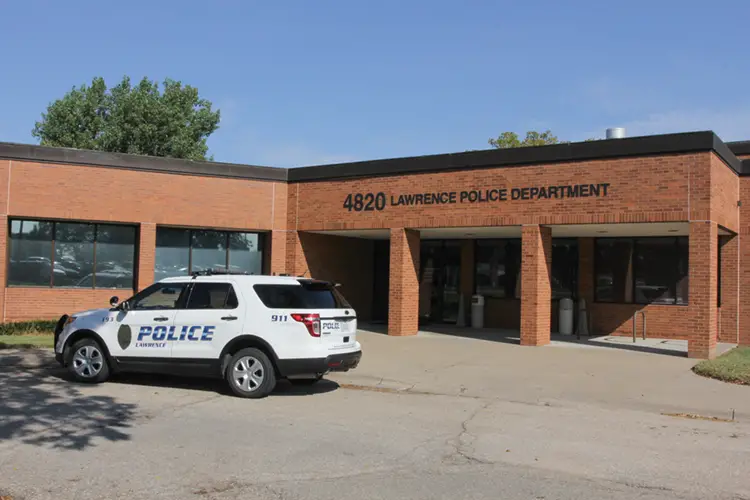
The station was brightly lit against the 3:30 a.m. darkness—an imposing brick building that had probably seemed impressive once, now merely tired and institutional. I parked and took a moment to adjust my clothing, a simple black pantsuit I kept ready for emergencies, and square my shoulders.
The desk sergeant looked up as I entered, his expression a mixture of boredom and mild curiosity at seeing a well-dressed older woman arriving at this hour.
“I’m here for Tyler Sullivan,” I announced, my voice carrying the same authoritative tone I’d used to quiet unruly attorneys. “My grandson was brought in earlier this evening.”
“Sullivan. Yes. He’s being held pending juvenile charges—domestic disturbance and assault. Are you his legal guardian?”
“I’m his grandmother, Margaret Sullivan. I’d like to see him immediately.”
A door to the side opened, and a man in his mid-thirties emerged with a clipboard and the air of someone who’d grown comfortable in his authority. Officer Peterson.
“Mrs. Sullivan,” he began, “I understand you’re here about the juvenile involved in the assault on Officer Miller.” His tone suggested a routine matter hardly worth the disruption to his night shift.
“That’s Judge Sullivan,” I corrected him calmly. “Federal Judge Margaret Sullivan, retired from the First Circuit Court of Appeals. And I’m here about my grandson, who has been accused by a man he’s known for less than four months, with no witnesses and no evidence beyond the accuser’s own word.”
The change was immediate and striking. Peterson’s posture stiffened. His grip on the clipboard whitened his knuckles. Recognition flashed across his face—the kind that comes when a name from legal textbooks suddenly materializes in human form.
“I’m sorry, I didn’t know,” he stammered, his earlier confidence evaporating like morning fog. “We—the paperwork didn’t indicate any connection to—Officer Miller didn’t mention that the juvenile was related to—”
“I imagine there are quite a few things Officer Miller failed to mention,” I replied. “Now I’d like to see my grandson immediately. Then we can discuss why you accepted the uncorroborated accusation of one of your colleagues against a minor without proper investigation.”
Through a small observation window, I could see Tyler sitting alone at a metal table, posture defeated, one hand touching the side of his face where a reddish mark was visible even from this distance. Something shifted in my chest—grief and fury in equal measure.
“Has he received medical attention for that injury?” I asked sharply.
“He didn’t request any medical—”
“He’s sixteen, Officer Peterson. A minor in custody. The responsibility for ensuring his well-being lies with your department, not with a frightened teenager’s ability to formally request assistance.”
Peterson fumbled with his keys. “I’ll have someone from medical check him right away—department protocol requires supervision for all—”
“Officer,” I cut him off, my voice dropping to the quiet, precise tone that had silenced countless courtrooms, “I spent thirty years sending people to federal prison for civil rights violations. Would you like to explain to your captain why you denied a minor access to his legal representative?”
He opened the door.
Tyler rose quickly to his feet, and I crossed the room and embraced him, feeling the slight tremor in his body that betrayed his fear despite his attempts to appear composed.
“We’ll speak privately,” I told the hovering Peterson. “You were just leaving to arrange for medical attention and to gather the complete case file for my review.”
Once the door closed, Tyler’s shoulders slumped.
“I didn’t do what they’re saying, Grandma. I swear.”
“I know,” I assured him, guiding him back to the chair. “Now tell me everything from the beginning. Don’t leave anything out.”
He described how Jennifer had been working night shifts three times a week since they’d moved in with Robert, leaving the two of them alone. Robert had been establishing rules designed to isolate Tyler from friends and family—reading his texts, monitoring who he spoke to, setting curfews that had nothing to do with Tyler’s behavior and everything to do with control.
“Last week he told Mom that my calls with you were excessive. That I was too dependent on my grandmother.” Tyler’s voice carried a bitter edge that didn’t belong on a sixteen-year-old. “Mom just said we should try to make things work.”
My heart ached for both of them—Tyler caught in an impossible situation, and Jennifer so desperate for stability after Michael’s death that she couldn’t recognize control tactics for what they were. I had seen this dynamic in my courtroom too: grief as a doorway that certain kinds of people know how to walk through.
“Tonight he found me on the phone with you and lost it. Said I was undermining his authority in his own house.” Tyler’s jaw tightened. “When he grabbed for my phone, I pulled back and he saw I’d been recording some of the things he’s been saying.”
“The recordings,” I said immediately. “Where is your phone?”
“Robert has it. When his police friends showed up, he told them it was evidence of me planning to attack him.”
Twenty minutes later, after a police medical technician had documented and photographed the distinct finger marks on Tyler’s face—consistent with being slapped, not with any defensive action on Tyler’s part—I followed Peterson to Captain Reynolds’s office.
Captain Diane Reynolds stood as we entered, extending her hand. Her grip was firm, her gaze direct. I recognized in her the bearing of someone who had earned her position through competence rather than connections.
“Judge Sullivan. I apologize for meeting under these circumstances.”
“I appreciate you coming in at this hour, Captain.”
“I know who you are,” she said, once Peterson had been dismissed and the door had closed. “Your reputation is well established. That’s why I came in personally.” She paused, choosing her words. “Officer Miller is relatively new to our department. This incident raises concerns I’ve been monitoring—a pattern of domestic calls that escalate when he’s involved, and a tendency to call on personal connections within the department rather than following protocol.”
“Had I known the juvenile involved was your grandson,” she added, “I would have supervised this case more closely from the beginning.”
“Because he’s related to me,” I challenged, “or because every juvenile deserves that level of care?”
A hint of respect flickered in her eyes. “Point taken, Your Honor.”
The file she opened was thin. Officer Miller’s statement claimed Tyler had become verbally abusive, then physically assaulted him when asked to leave for the night. No witnesses. No documented injuries on Miller. No evidence beyond one officer’s word—and that officer happened to have the phone.
“My immediate concern is my grandson’s release,” I said. “But that phone needs to be secured properly. I have reason to believe it contains recordings that directly contradict Miller’s statement.”
Reynolds raised an eyebrow. “Recordings?”
“Tyler has been documenting Miller’s behavior over recent weeks. Miller discovered these recordings tonight, which precipitated his aggressive response. I suspect we both know what that phone actually contains, Captain.”
She reached for her desk phone.
“Peterson. Retrieve the cell phone collected as evidence in the Sullivan case and bring it directly to my office. Prepare release paperwork for the juvenile.”
When Tyler entered her office minutes later, eyes moving anxiously between the adults before settling on me, I gave him a single reassuring nod. He unlocked the phone, navigated to a password-protected calculator app—the kind of precaution that told me he had been planning this documentation for some time, that he’d known at some level how serious things were—and selected the most recent audio file.
The recording began with household sounds. Then a door opening forcefully.
Who are you talking to? Robert’s voice, sharp with suspicion.
Just Grandma. Tyler’s voice, deliberately casual.
Give me that phone. What have I told you about calling her without permission?
You can’t just take my phone.
The protest was cut short by a sound that could only be interpreted as a slap, followed by a sharp intake of breath.
In my house, you follow my rules. Your grandmother isn’t your parent. I am. Well, look at this—recording apps. You’ve been spying on me.
The confrontation escalated. Robert’s threats became increasingly explicit—ordering Tyler to leave, threatening to teach him respect—until the sound of a physical altercation preceded his voice, cold with calculation:
You assaulted an officer. Let’s see how your precious grandmother helps you when you’re in juvenile detention. My guys will be here in five minutes.
Reynolds stopped the playback. Her expression remained professionally neutral, but her eyes were hard with controlled anger.
“I think we’ve heard enough,” she said.
“Indeed.” I placed a hand on Tyler’s shoulder. “Captain, I believe we’ve established sufficient cause for Tyler’s immediate release into my custody, as well as serious concerns about Officer Miller’s truthfulness in an official report.”
Reynolds turned to Peterson, who stood pale-faced by the door. “Process the juvenile’s release immediately. Then contact internal affairs—I want them here at 8:00 a.m.”
As Peterson escorted Tyler out, Reynolds regarded me with a mixture of respect and weariness.
“You know this isn’t over, Judge Sullivan. Miller won’t take this lying down, especially once he realizes the phone is in our possession.”
“I’m counting on it,” I replied, feeling the familiar clarity of purpose that had guided my judicial career for three decades. “Some lessons about accountability are long overdue.”
Dawn was breaking as Tyler and I left the station, casting long shadows across the parking lot. He walked beside me in silence, shoulders slightly hunched in the too-thin jacket he’d been wearing when Robert forced him out. The April morning carried a chill that went beyond temperature.
“We should call your mother,” I said once we were settled in the car. “Her shift must be ending soon.”
Tyler stared out the window. His profile, in that early grey light, was so reminiscent of Michael at that age that my heart tightened unexpectedly.
“She’ll take his side,” he said quietly. “She always does.”
“She deserves to know where you are,” I replied, keeping my tone neutral despite the anger I felt. “And she needs to hear what happened from us before she hears Robert’s version.”
Jennifer’s phone went to voicemail. I left a brief, calm message: Tyler was safe, there had been an incident, please call as soon as possible.
We were halfway to the interstate when she called back. Tyler listened as I explained, his expression carefully neutral while her voice rose through the speaker—Robert wouldn’t—he’s a police officer—Tyler, are you exaggerating again?
“Jennifer,” I cut in, “there are recorded statements and documented physical evidence supporting Tyler’s account. Captain Reynolds is launching an internal investigation based on what she heard herself.”
A silence.
Then, smaller: “I just got off a twelve-hour shift. I can’t process this right now. Let me talk to Robert.”
“No,” I said firmly. “Tyler is coming back to Boston with me. He has visible marks on his face from being slapped, and Robert is on record threatening to use his position to punish Tyler through the legal system. This isn’t a situation where you smooth things over with a phone call.”
“You can’t just take my son, Margaret.” Her voice rose with a hint of panic. “You don’t have the right.”
“What I have,” I replied, maintaining the calm that had served me for decades, “is a moral obligation to protect my grandson from an abusive situation. Tyler is sixteen—old enough for courts to give significant weight to his own preference regarding where he lives. If you want to pursue this legally, I’ll be happy to present the evidence to a family court judge.”
We both knew what would happen in family court with Tyler’s recordings, the documented injury, and my standing in the legal community. The implicit weight of that hung between us.
“I need to see him,” Jennifer said finally, her voice cracking. “To make sure he’s okay.”
“You’re welcome to come to Boston. My door has always been open to you. But I won’t bring Tyler back to Portland while Robert remains in that house.”
After we disconnected, Tyler was quiet for several miles.
“She won’t leave him, will she?”
The question carried the particular weight of a child’s disappointed realization about a parent’s limitations. I had heard similar things in my courtroom—children who understood more than the adults around them wanted to believe.
“I don’t know,” I answered honestly. “Your mother has been searching for stability since your father died. Sometimes that search leads people to compromises they shouldn’t make.”
“Like moving us away from everything we knew for a guy she’d known for a few weeks,” Tyler said bitterly.
“She thought she was building something better for both of you,” I offered, though my own anger at Jennifer’s choices made the words feel somewhat hollow. “Love and fear can cloud judgment in ways that seem incomprehensible from the outside.”
We stopped at a diner just over the New Hampshire border, both needing food and a break from the road. Seated in a worn vinyl booth with coffee and pancakes between us, Tyler finally asked the question I’d been waiting for.
“What happens now, Grandma?”
I considered my answer carefully. At sixteen, he deserved honesty, not false reassurance.
“Legally, your mother is still your guardian. In the short term, you’ll stay with me while this situation resolves. Captain Reynolds will investigate Robert’s false report—there may be disciplinary action, possibly criminal charges.”
“Will I have to go back?” The fear in his voice was palpable.
“Not if you don’t want to,” I assured him. “There are legal mechanisms to modify custody arrangements, especially with documented abuse. And at your age, the court gives significant weight to your preferences.”
He nodded slowly, processing this with the serious consideration that had always marked his character. Like his father, he tended to sit with difficult emotions before responding.
“I’d like to go back to Boston Latin,” he said after a moment. “If that’s possible. I never wanted to leave in the first place.”
By the time we crossed into Massachusetts, he was asleep against the passenger window, the exhaustion of the night’s trauma finally claiming him. I glanced at his peaceful face—so like Michael’s—and felt the familiar mix of grief and fierce protectiveness that had shaped my life since my son’s death.
Whatever came next, I would face it with the same unwavering resolve I’d brought to the bench for thirty years.
Jennifer arrived at my door that afternoon, still in hospital scrubs, hair pulled back messily, looking simultaneously angry and fragile.
“Where’s my son?”
“Sleeping,” I said, stepping back to let her in. “It’s been a traumatic night.”
“You had no right to take him across state lines without my permission.”
“I had every right to remove him from an abusive situation.” I kept my voice even. “Would you have preferred I left him in police custody while Robert’s colleagues decided whether to believe false accusations?”
She flinched.
In the kitchen, over coffee, she described how Robert had called her after we’d left the station—claiming it was all a misunderstanding, that Tyler had been deliberately provocative, that the recordings were misleading.
“He said Tyler has been manipulating you,” she said, staring into her cup. “Twisting things to make him look bad.”
“There are recordings, Jennifer. I heard them myself. Captain Reynolds heard them. There is documented physical evidence of Robert striking Tyler. These aren’t matters of interpretation.”
She didn’t respond, but I saw the slight tightening of her jaw that told me the point was landing.
“He said Tyler was too dependent on you,” she continued quietly. “That it wasn’t healthy.”
“Isolating someone from their support network is a classic control tactic,” I said. “As a nurse, you’ve surely encountered this pattern in your patients.”
We sat in silence for a moment. Then she said she wanted to see him.
I led her upstairs. In the room that had gradually become Tyler’s over years of weekend visits, he was still asleep, his face relaxed—but the reddish mark on his cheek was darkening into what would become a bruise.
Jennifer’s intake of breath was involuntary. She moved to the bedside, her nurse’s eyes assessing the injury even as her mother’s heart visibly broke at the sight of it. She brushed a strand of hair from his forehead, careful not to wake him.
“Robert did this?” she whispered.
“Yes. The police medical staff documented it. There are photographs in the official record.”
We retreated to the hallway. Jennifer leaned against the wall, looking every hour of her sleepless night.
“Tyler tried to tell me Robert was different when I wasn’t around,” she said, more to herself than to me. “I thought he was just being difficult about the move…” The implications of that settled heavily between us.
“I need to think,” she said after a moment. “I’m not going back to Portland today.”
“You’re welcome to stay here.”
She shook her head. “I need my own space. Tell Tyler I came by. That I love him.”
After showing her out, I returned to my study and made two calls. First to Richard Harmon, a family court attorney I’d known for twenty years, who listened to the situation with professional focus and advised preparing an emergency custody petition—ready to file, but held in reserve while less adversarial approaches were explored first. Then to Captain Reynolds for an update.
That evening, Tyler helped me with the dishes after dinner. He had the quiet, methodical quality of someone processing things internally, and I didn’t push.
Later, over chess, he asked: “Do you think Dad would be disappointed in how everything turned out?”
The question pierced my practiced composure in the way only grief can—arriving from an unexpected angle.
“Your father would be immensely proud of you, Tyler. Your resilience, your courage in standing up for yourself, your compassion toward your mother despite everything. These are qualities Michael valued deeply.” I set down the chess piece I’d been holding. “These are qualities he had himself.”
Tyler’s eyes glistened slightly, but he nodded. Accepting this from the person who had perhaps known Michael best.
That night, after he’d gone to bed, my phone lit up with a text from Jennifer.
Spoke with Robert. He’s claiming it was all a misunderstanding. But he couldn’t explain the mark on Tyler’s face. I’m not going back to Portland tomorrow. Need more time.
I replied carefully: Take all the time you need. Tyler is safe here.
Then, after a moment: This isn’t your fault, Jennifer. Manipulative people are expert at hiding their true nature.
Her response came quickly.
Isn’t it, though? I moved my son away from his school, his friends, his support system—from you—for a man I barely knew. What kind of mother does that?
The raw self-recrimination in her words softened my frustration with her.
A human one. We all make mistakes, especially when grief and loneliness cloud our judgment. What matters now is how we move forward.
A long pause. Then her final message of the night.
Thank you for protecting him when I didn’t.
Captain Reynolds drove down from Portland two days later, arriving in civilian clothes. The drive alone—over two hours each way—spoke to the seriousness of what she’d come to say.
“After reviewing the evidence and interviewing the responding officers, I placed Miller on administrative leave pending a full investigation.” She sat across from me in my study, hands folded on her knees. “But the situation is more concerning than initially apparent. In the process of investigating this incident, we discovered previous episodes that were improperly handled. Two domestic calls at residences where Miller had stayed with former partners. Reports filed, then effectively buried.”
“A pattern,” I said. “And protection within the department.”
“Yes.” She met my gaze directly. “I wanted to inform you personally because these findings could have implications for your grandson’s case—and potentially for his mother’s safety. Men who engage in this type of controlling behavior rarely limit it to one target. And they tend to escalate when they feel their control slipping.”
I thought of Jennifer’s text: I’m not going back to Portland tomorrow.
“She’s here in Boston,” I said. “She hasn’t returned to him.”
“Good. Keep her close if you can.” Reynolds hesitated. “There’s something else. Miller has been telling colleagues that this is a manipulative teenager turning his grandmother against his stepfather.”
“He’s not Tyler’s stepfather,” I said, an edge in my voice despite myself.
“Of course not. But I wanted you to know the narrative he’s constructing.”
After Reynolds left, I found Tyler in the kitchen making sandwiches for lunch. His hands stilled when I explained what the captain had shared.
“Is he going to get in real trouble?” he asked.
“It appears so. Administrative leave, and an investigation into prior incidents.”
He absorbed this with visible relief. Then, quietly: “So they believe me—not just because of who you are, but because the evidence actually matters.”
The comment struck deeper than he likely intended. He was asking whether the system had worked because of truth, or because of my connections. It was a fair question, and I understood what its answer meant to him.
“The evidence matters,” I confirmed. “Your voice matters, Tyler. What happened to you was wrong, and there are still people in the system who recognize that.”
He nodded slowly. I could see the cynicism that had taken root—a premature disillusionment painful to witness in someone so young. Facts alone could not heal it. Only time, and the slow accumulation of trustworthy experiences, could do that.
The custody hearing at Suffolk County Family Court, three weeks later, was the formal resolution to a crisis that had been resolved in human terms long before.
Jennifer had secured a job offer at Massachusetts General and found an apartment near the hospital. Robert had resigned from the department rather than face termination and relocated to New Hampshire. The immediate danger had passed. What remained was the careful work of making it official.
Tyler sat between Jennifer and me on the courthouse bench, wearing the button-down shirt and khakis we’d selected that morning. He straightened his collar for perhaps the fifth time.
“Will I have to speak?” he asked Richard.
“The judge may ask about your preferences,” Richard confirmed. “Just answer honestly.”
Jennifer reached over and squeezed Tyler’s hand. The past weeks had brought a noticeable change in her—a gradual reclaiming of the confidence and clarity that had characterized her before Michael’s death. Her new job had helped. Her therapist, whom she’d started seeing at my gentle urging, had helped more.
“Remember,” she told Tyler softly, “this isn’t about choosing between me and Grandma. It’s about creating an arrangement that works for all of us while I get established again.”
Judge Eleanor Watkins entered briskly, acknowledged me with a slight nod—a professional courtesy between current and former judges—and called the proceeding to order. When she turned to Tyler, her demeanor softened.
“Mr. Sullivan, you’re sixteen, which means the court gives significant weight to your preferences. In your own words—what arrangement do you believe is in your best interest?”
Tyler sat straighter, his nervousness controlled.
“I’d like to continue living with my grandmother while finishing the school year at Boston Latin. I want to spend time with my mom, too, especially now that she’s back in Boston. The arrangement they’ve worked out seems fair to everyone.”
“And you feel safe and supported in both homes?”
“Yes,” Tyler said without hesitation. “My grandmother’s house has always been my second home. And Mom is working hard to make her new apartment a good place for both of us.”
Judge Watkins rendered her decision with practiced efficiency: joint legal custody, primary physical placement with me until the end of the school year, transitioning to a more balanced arrangement once Jennifer was fully settled.
“The court finds that the proposed arrangement serves the best interests of the minor child,” she concluded. “I commend all parties for putting aside potential conflicts to create a solution centered on the child’s well-being.”
As we exited into the hallway, Tyler finally let his tension release.
“So it’s official.”
“It’s official,” Jennifer confirmed, a complex mixture of sadness and acceptance in her face. “It gives me time to get the apartment set up. And you time to finish the semester without more disruption.”
What I saw between them—tentative, carefully rebuilt, grounded in something more honest than what had existed before—made the past weeks worth every difficult moment.
Summer arrived the way it does in Boston—a week of cold rain, then a morning when the air is suddenly warm and the trees fully green and you can’t quite remember when it happened.
Three months had passed since the hearing. Tyler had completed his semester at Boston Latin with academic distinction. Jennifer had settled into Massachusetts General. Her small apartment near the hospital had gradually become a home, with weekend visits from Tyler helping establish new routines.
On a June evening, we were preparing for the first dinner gathering of our extended family since the crisis. Catherine had flown in from Toronto. Jennifer would be joining us—the first time all four of us would share a meal since everything had fractured and then reshaped itself.
“Should I put out the good china?” Tyler asked as he helped me set the table. “It’s kind of a special occasion.”
“The everyday plates are fine,” I told him. “This isn’t a formal dinner. It’s family reconnecting.”
He nodded, arranging silverware with careful precision. “Do you think Mom will be okay? She seemed nervous when I was at her apartment yesterday.”
“She’s anxious about seeing everyone together,” I acknowledged. “But your mother is stronger than she sometimes believes.”
Catherine arrived first, embracing Tyler with genuine warmth. Jennifer came twenty minutes later, carrying a ceramic dish.
“I remembered it was always Michael’s favorite for family dinners,” she said at the door, handing me the lasagna.
The mention of my son—her former husband, Tyler’s father, Catherine’s brother—brought a moment of shared remembrance that acknowledged the absence at the heart of our reconfigured family. Michael’s death had set in motion everything that followed, his loss creating the void that Jennifer had so desperately tried to fill.
“It’s still my favorite,” Tyler said, with characteristic teenage practicality. “I’ve been smelling it since you got out of the car.”
Dinner proceeded with a gradually warming atmosphere. Initial awkwardness gave way to more natural conversation as we found our collective rhythm. Catherine shared anecdotes from her university department. Jennifer spoke about her new colleagues and the satisfaction of returning to cardiac care. Tyler described his plans for a summer science program at MIT that his school counselor had encouraged him to apply for.
I observed more than participated, taking quiet satisfaction in the healing visible around my table. As a judge, I had witnessed countless families torn apart by circumstances within and beyond their control. Now, in my retirement, I was privileged to participate in the careful reconstruction of my own family’s bonds—damaged, but not destroyed.
After dessert, Catherine helped me clear while Jennifer and Tyler moved to the back porch. Through the window I could see them seated side by side on the steps, shoulders occasionally touching in unconscious reconnection.
“She’s doing better than I expected,” Catherine said quietly as we loaded the dishwasher. “When you first told me what happened with that man, I wasn’t sure Jennifer would find her way back.”
“People are remarkably resilient when given the right support,” I replied.
“You know,” Catherine said, turning to look at me with her academic, analytical gaze, “when Dad died and you retired from the bench, I worried you might fade into quiet widowhood. I should have known better.”
“What do you mean?”
“Look at what you’ve done in the past six months.” She gestured toward the porch, where Tyler and Jennifer sat in their tentative, newly repaired closeness. “You confronted a dangerous man. You navigated the legal system from the petitioner’s side after three decades on the bench. You’ve become the primary parent of a teenager at sixty-five.” She paused. “That’s not exactly a quiet retirement.”
I hadn’t considered my actions in that light. I had simply responded to what was needed.
“Anyone would have done the same,” I said.
Catherine’s eyebrow rose in familiar skepticism. “No, Mother. They wouldn’t have.”
Before I could respond, the back door opened and Tyler and Jennifer rejoined us.
“Mom’s coming to my MIT presentation next month,” Tyler announced with evident satisfaction. “And we’re going to try the hiking trail in the Blue Hills this weekend. Do you want to join us, Grandma?”
“I’d like that,” I said.
After Jennifer and Catherine departed and Tyler had retreated upstairs, I sat in my study in the particular quiet that follows meaningful evenings.
On my desk lay the latest update from Captain Reynolds. Robert had resigned from the department rather than face termination. The restraining order remained in effect. He had moved to New Hampshire—physical distance between himself and the family he had tried to control.
The immediate danger had passed. But its impact lingered—in Tyler’s occasional hypervigilance, in Jennifer’s ongoing therapy sessions, in the new arrangements that governed our family interactions. These were not things that resolved cleanly. They were things that were lived through, day by day.
My phone lit up with a text from Jennifer.
Thank you for tonight. For everything, really. We’re going to be okay, aren’t we?
I typed back without hesitation.
Yes, we are. One day at a time.
I looked around my study—the law books, the family photographs, the chess board still set up from Tyler’s and my game. A photograph caught my eye: Tyler’s tenth birthday, less than a year after Michael died. The grief was still raw in all our faces. But there was resilience there too: Jennifer’s arm protectively around Tyler, my hand on his shoulder, Catherine smiling encouragingly from behind the cake.
We had weathered that devastating loss together. We had weathered this one too.
Tomorrow would bring its own complexities—the ongoing custody arrangements, the careful work of helping a sixteen-year-old trust that the adults in his life would not fail him again. We would face it together, as we had faced everything before.
I turned off the light in my study and went upstairs, passing Tyler’s closed door. From behind it came the small sounds of a teenager settling into sleep in his own room—the room that had gradually become his over years of weekend visits and summer stays, the room he had called me from a police station to come home to.
I had brought him home.
That was the whole of it. Everything else—the legal strategy, the recordings, the custody hearing, the slow work of rebuilding—had been in service of that single fact.
Some battles are fought in formal courtrooms with gavels and legal precedents. Others are fought on late-night highways, in police station corridors, at kitchen tables where difficult conversations finally happen. The principles, I had come to understand, are the same in both arenas.
Protect the vulnerable. Uphold the truth. Remember that healing—like justice—sometimes requires difficult passages before it finds its resolution.
And sometimes the most important thing a judge can do has nothing to do with the law at all.
Sometimes it’s simply answering the phone in the middle of the night and saying: I’m coming. Hold on. I’m coming.

Sophia Rivers is an experienced News Content Editor with a sharp eye for detail and a passion for delivering accurate and engaging news stories. At TheArchivists, she specializes in curating, editing, and presenting news content that informs and resonates with a global audience.
Sophia holds a degree in Journalism from the University of Toronto, where she developed her skills in news reporting, media ethics, and digital journalism. Her expertise lies in identifying key stories, crafting compelling narratives, and ensuring journalistic integrity in every piece she edits.
Known for her precision and dedication to the truth, Sophia thrives in the fast-paced world of news editing. At TheArchivists, she focuses on producing high-quality news content that keeps readers informed while maintaining a balanced and insightful perspective.
With a commitment to delivering impactful journalism, Sophia is passionate about bringing clarity to complex issues and amplifying voices that matter. Her work reflects her belief in the power of news to shape conversations and inspire change.