The reports had been getting worse for three months straight.
Daniel sat at his desk on a gray Tuesday morning surrounded by numbers that all told the same story in slightly different ways. Occupancy down 40%. Revenue off by a third. The renovation loan — the one he’d taken out eighteen months ago to modernize the hotel, to bring it into the kind of shape that would attract serious investors — was sitting on the books like a stone around his neck.
He’d done everything right, or thought he had. New lobby. Refurbished rooms. Updated kitchen equipment. A website redesign that had cost more than he’d budgeted. He’d believed the theory: modernize the property, attract better guests, justify higher rates, let the revenue follow.
The revenue had not followed.
What had followed instead were the creditors, who had shifted from polite quarterly reminders to monthly calls. And now there was the other matter — the investors. Three men who had contributed a significant sum toward the renovation in exchange for a stake in the hotel’s future, men who had been patient in the particular way that people with leverage are patient: quietly, and with their eyes open.
Daniel rubbed the bridge of his nose and reached for his coffee. Cold. He’d been at the desk since before seven.
When his phone rang and he saw the international number, his stomach dropped before he’d even answered.
The voice was calm and professional and carried in it the specific coldness of a man whose money is not performing the way he expected.
“Tonight. Dinner. We expect you and your wife.”
Daniel opened his mouth. “Of course, I should mention—”
The line went dead.
He sat holding the phone for a long moment.
His wife. He didn’t have a wife. He’d been divorced for four years, quietly and without drama, and it had never come up with the investors because there had never been a reason for it to come up. Business relationships don’t require personal disclosures. Except now, apparently, they did.
He understood what the dinner was. It wasn’t social. It was an assessment — the kind of meeting where investors look at more than the numbers. They look at the man. At his stability, his groundedness, his sense of order. A successful man with a wife and a table and a life that made sense. That was what they expected to see tonight.
What they would see instead was a divorced hotel owner eating alone.
Unless.
He ran through the options quickly. An actress — too risky, too many ways for it to go wrong. A friend or acquaintance — too many questions he’d have to answer afterward, too much explaining. He had four hours, maybe less.
He was still working through it when someone knocked on his office door.
“Sir, may I clean?”
She was already stepping inside when she said it — the automatic motion of someone who has performed the same task in the same space so many times that the question is really just a courtesy. Veronica. One of his maids. He’d been seeing her every day for over a year and had somehow never actually looked at her.
He looked now.
She was tall, with long dark hair pulled back neatly. Her posture was what struck him first — not stiff, but composed, the kind of bearing that doesn’t come from trying. She moved through the doorway with a quiet assurance that seemed, in that moment, entirely out of place in a maid’s uniform. There was something about her that suggested she was accustomed to more than this room, more than this task, though he couldn’t have said why exactly.
The idea arrived the way bad ideas sometimes do — completely formed, immediately convincing, and slightly desperate.
He held up a hand.
“Veronica. Close the door. I need to talk to you.”
He explained it quickly, because there wasn’t time for anything else. The investors. The dinner tonight. The wife they were expecting. He watched her face as he talked and she gave nothing away — no surprise, no judgment, no sign of what she thought about any of it.
He told her what he needed. Sit beside him. Smile when appropriate. Nod occasionally. Let him lead the conversation. Don’t volunteer anything that wasn’t necessary. He’d take care of the business side. He’d pay her well — he named a figure that was generous, because the situation called for it and because something about the steadiness of her gaze made him want to be fair.
He added, almost as an afterthought, that he hoped she was comfortable with formal dining.
Veronica listened without interrupting. When he finished, she was quiet for just a moment — not uncertain, but considering.
“Alright,” she said. “I agree.”
Simple as that. No negotiation, no visible anxiety, no list of questions.
He should have paid more attention to that.
They spent an hour that afternoon on the basics. He told her the investors’ names, the general shape of the deal, how long they’d been involved. He gave her a brief history of the renovation project, the goals, the current challenges.
She listened and asked almost nothing. The few questions she did ask were specific and precise — about the financial structure, about the investors’ original terms, about what the hotel had looked like before the renovation. He answered them, assuming she was trying to understand the context she’d be sitting in that evening.
He gave her access to a room to get ready. He arranged for someone to bring a suitable dress, based on his best guess of her size. When she appeared in the lobby at seven o’clock, he stopped walking.
The transformation wasn’t dramatic — she hadn’t become someone else. She was simply herself, but with nothing in the way of it. The dress was dark and simple. Her hair was down. She’d done something with her eyes that made them look larger, steadier. She walked toward him the same way she’d walked into his office that morning — without hurry, without performance.
“Ready?” she said.
He realized he’d been staring. “Yes,” he said. “Let’s go.”
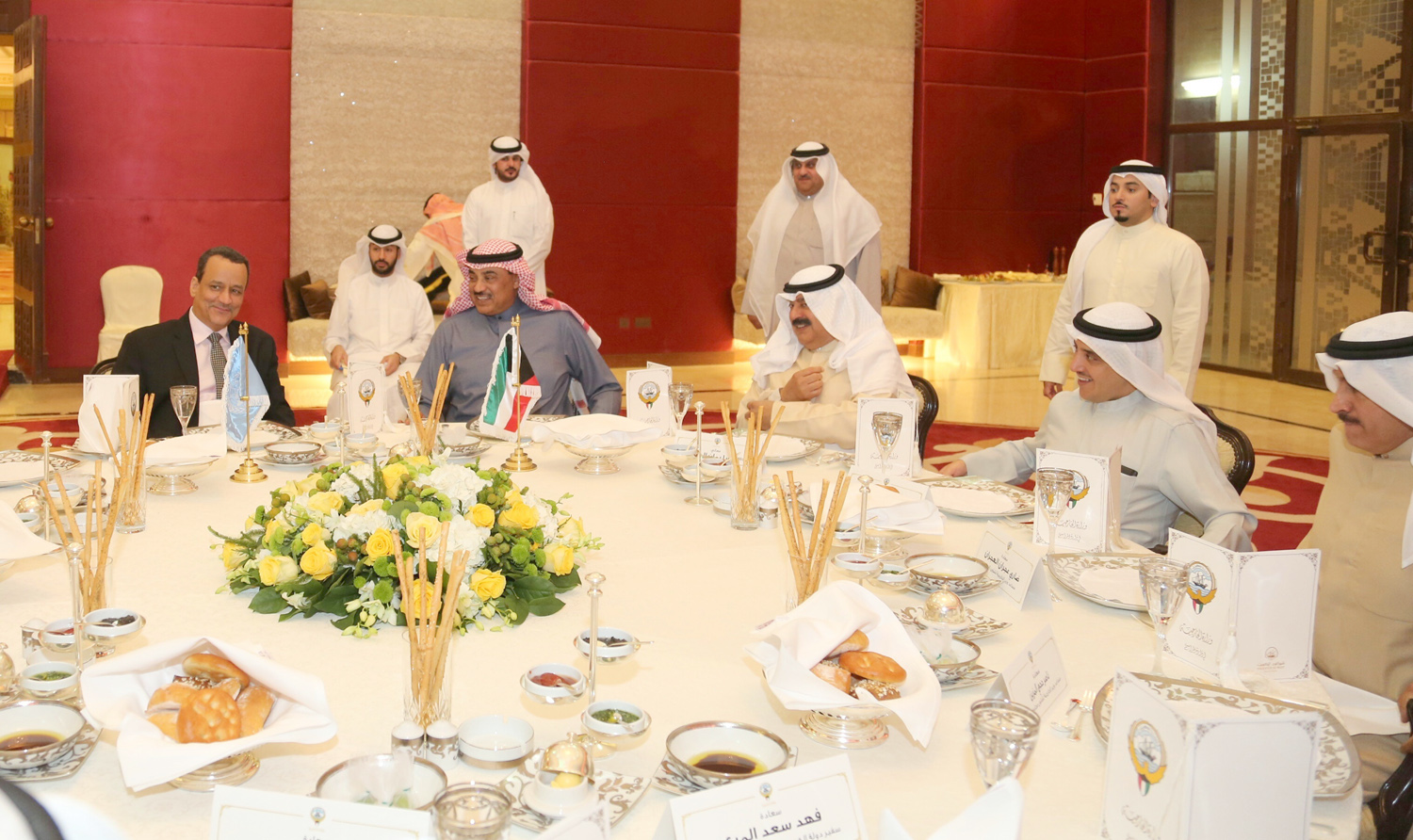
The restaurant the investors had chosen sat in the business district of the city, the kind of place where privacy is the primary luxury. Dark wood, soft lighting, tables far enough apart that conversations stay contained. The three men were already seated when Daniel and Veronica arrived — a deliberate choice, he suspected, to let them walk in rather than wait.
Khalid, the eldest, rose to greet them. His two associates followed. Introductions were made in English, pleasantries exchanged. Veronica shook hands, said she was pleased to meet them, sat down beside Daniel and picked up her menu with the ease of someone completely at home.
The first course passed pleasantly enough. Travel, weather, the city. The investors were sophisticated men who knew how to fill time with conversation while revealing nothing of what they’d come to say.
The shift came with the second course.
The investors began speaking in Arabic.
This was not, Daniel understood, accidental. It was the same move he’d seen in business settings before — retreat into a shared language to speak openly, to assess, to say the things that weren’t meant for the other side of the table. They were certain, clearly, that neither he nor his wife could follow.
“The hotel is not performing,” Khalid said, addressing his associates more than Daniel. “We invested in renovation. We see no return. The numbers are worse than before we became involved.”
Daniel answered in Arabic — his, developed during years working in the Gulf, was functional if not fluent. He explained the seasonal factors. The broader economic pressures. The plans he was developing for the next quarter. He heard his own arguments and they sounded thin to him, like explanations that had been true once and had since been worn smooth from repetition.
“We have heard plans,” the second man said. “Plans do not service debt.”
“The market conditions—”
“Other properties in this city are not struggling the same way. The conditions are the same for all of them.”
Daniel felt the conversation shifting beneath him. The third man, who had said almost nothing all evening, was watching him with an expression that was not unkind but was entirely without hope.
“We need guarantees,” Khalid said. “Concrete ones. Otherwise, we begin the process of recovering our investment.”
Daniel opened his mouth.
And Veronica set down her fork.
She did it without drama. Just the quiet sound of silver against china, and then she turned to face the three men, and she spoke.
In Arabic. Clear, fluent, confident Arabic.
The table went silent in the way that tables go silent when something unexpected has just happened and no one has yet decided what to do with it.
“Gentlemen,” she said, and her voice was perfectly level, “the problem is not the hotel. The problem is the strategy.”
No one moved.
“You invested in physical renovation. Walls, floors, fixtures. What you did not invest in — what no one has invested in — is positioning. This hotel has been trying to compete in a market it was never suited for. Mass tourism. Discount aggregators. Travelers who book on price and leave no loyalty. That market is saturated and the margins are terrible. It’s the wrong fight.”
She paused briefly and reached for her water glass before continuing.
“The property has a different value entirely. Its size, its location, its renovation — these are exactly right for a different kind of client. Business travelers. Private events. Executives who need discretion and quality and don’t want to be in a building with four hundred tourists. That market pays three to four times the nightly rate and books in advance and comes back.”
One of the investors leaned forward slightly.
“What you need is a format change, not a rescue,” she continued. “Close two floors. Convert them to premium long-stay apartments — there is consistent demand for furnished executive apartments in this district and almost no high-quality supply. Take the remaining floors to a reduced, curated inventory. Raise rates significantly. Launch a private business dining program — not the hotel restaurant, something separate, invitation-only, marketed through corporate channels.”
She set her glass down.
“I have a degree in hospitality management from a university in Dubai. For the past fourteen months I have been working in this hotel, and I have watched these decisions being made from the inside. I know what the problems are because I see them every day.”
The room was completely quiet.
“Give us ninety days. Not to explain why things haven’t worked. To implement what will. You won’t see a refund. You’ll see a return on what you’ve already invested, and a case for the additional development that this property can genuinely support.”
She finished. She picked up her fork and returned to her meal as if she had simply made an observation about the weather.
The three investors looked at each other.
It was Khalid who spoke first. His voice had changed — the coldness from earlier in the evening was gone, replaced by something more careful, more interested.
“Why,” he said, looking at Veronica directly, “are you working as a maid?”
She considered the question without apparent embarrassment.
“Because sometimes you need to understand something from every level before you can understand it completely,” she said. “You learn things on the ground floor that you can’t see from the top.”
A pause.
“And because no one had asked me anything different until tonight.”
The dinner ended differently than it had begun. The investors stayed for two more hours. The conversation moved from guarded to engaged to genuinely interested. Veronica spoke when she had something to add and listened carefully when she didn’t, and Daniel sat beside her and tried to keep up with what was happening.
On the drive back to the hotel, he was quiet for a long time.
“How long have you been there?” he finally asked. “Working here.”
“Fourteen months.”
“And in fourteen months, none of what you said tonight — you never said any of it.”
“No one asked.”
He looked at her profile in the dark of the car. “I’m asking now.”
She turned to look at him. “Your problem isn’t the investors. It isn’t even the season. You’ve been trying to make this hotel into something it was never going to be. You renovated the building, but you didn’t renovate the idea of what it was for.”
“And you know what it should be for.”
“I’ve been watching it for fourteen months. Yes.”
She had a proposal drafted within a week. She wrote it after her shifts, in her room, and when she placed it on Daniel’s desk it was forty-two pages. It covered the floor conversion plan with projected costs and revenue timelines. It outlined the premium apartment model with comparable market data from three other cities. It included a launch strategy for the private business dining program, a revised pricing structure, a staffing reorganization, and a twelve-month financial projection broken into ninety-day milestones.
Daniel read it twice that day and once more the following morning.
He called Khalid that afternoon.
The investors signed an expanded agreement ten days after the dinner.
Daniel called Veronica into his office on a Monday morning and offered her the position of Director of Strategy. He said it plainly, without ceremony, because the situation didn’t call for ceremony — it called for honesty. He told her he should have noticed her sooner, and that he was sorry he hadn’t, and that he’d like to make up for the time that had been wasted.
She accepted with the same composure she’d shown throughout. No theatrics. No apparent satisfaction at being vindicated. Just a calm yes, and a list of things she wanted to begin working on immediately.
The changes came quickly once someone with the right authority was making them.
The top two floors came offline within thirty days. The conversion to premium apartments began immediately — Veronica had already identified a contractor, already priced the materials, already had a design concept that matched what she knew the market expected. The first apartments were available for booking six weeks later. They were fully occupied within a month of opening.
The remaining floors went through a quiet transformation. Half the rooms were taken off the main booking platforms. Rates increased significantly. The hotel stopped competing for the guests it couldn’t afford to host profitably and started focusing on the ones it could.
The private business dining program launched in the third month. Veronica managed it personally in the early weeks, establishing the relationships with the corporate clients who would make it work. The waiting list for tables began forming in the fifth week.
At the six-month mark, occupancy in the retained rooms had doubled. Revenue per available room had nearly tripled. The creditors stopped calling. The investors sent a letter — formal, professional, and warm in the particular way that warmth looks when it comes from people who deal in numbers.
Daniel told the story publicly for the first time at an industry conference the following autumn. He told it plainly, without making himself the hero of it, because there wasn’t room for that in an honest telling.
He’d been under pressure and had made a reckless decision — he’d asked an employee he’d never properly looked at to play a role at a dinner that would determine whether his business survived. He’d told her to stay quiet and let him handle it. He’d added, he admitted to some audience laughter, that he hoped she knew how to use a fork and knife.
What happened instead was that she’d walked into that dinner, listened to the investors explain in Arabic why they were leaving, and responded in Arabic with a restructuring plan that changed the trajectory of everything.
The lesson, he said, was not complicated. He’d been so focused on the problems he could see — the numbers, the investors, the pressure — that he’d stopped being able to see anything else. Including the person who’d been right beside him for over a year, watching everything, understanding everything, waiting for someone to ask.
Veronica was in the audience. Someone from a business publication asked her afterward what she’d been thinking at that dinner table, in the moment before she spoke.
She was quiet for a moment, the way she was quiet before she said anything worth hearing.
“I’d been thinking it for fourteen months,” she said. “I just hadn’t had a reason to say it out loud yet.”
“Were you nervous?”
“No.” A brief pause. “I knew what I was talking about. That tends to help.”
There is a version of this story where the point is the twist — the maid who speaks Arabic, the surprise reveal, the looks on everyone’s faces. That version is satisfying in a simple way.
But the more you sit with it, the more the real story reveals itself.
Veronica had spent fourteen months in that hotel. She had cleaned those rooms and walked those floors and watched those decisions from the ground level every single day. She had the education, the experience, the analysis, and the answer. She had all of it, assembled and ready, for over a year.
And none of it had been used, because no one in a position to listen had thought to ask.
This is not an unusual story. It happens in offices and hotels and hospitals and schools, in every industry and every country, constantly. People with genuine expertise and real vision working in roles that don’t ask for it, waiting — not always consciously, not always patiently — for someone to finally look up and say: what do you think?
Sometimes the moment never comes. Sometimes it comes too late. Sometimes it comes in the strangest possible way — a panicked employer, a dinner he can’t cancel, a wife he doesn’t have, and a maid he’s never actually seen.
Veronica walked into that dinner because a desperate man needed a warm body in a chair beside him.
She walked out having saved his hotel.
Not because she’d been waiting for that moment. Not because she’d been maneuvering toward it. Simply because when the moment arrived, she was ready for it. All those months of watching and thinking and understanding had been preparation she hadn’t known she was making.
And when she was finally asked — even in the strangest, most roundabout way a person can be asked — she answered.
That’s the whole story.
The hotel is full now. The investors are satisfied. The premium apartments have a waiting list. The business dining program has been written up in two trade publications.
And Daniel, when people ask him what changed, tells them the truth.
He stopped looking past the people right in front of him.
He just wishes it hadn’t taken a dinner reservation to figure that out.

Adrian Hawthorne is a celebrated author and dedicated archivist who finds inspiration in the hidden stories of the past. Educated at Oxford, he now works at the National Archives, where preserving history fuels his evocative writing. Balancing archival precision with creative storytelling, Adrian founded the Hawthorne Institute of Literary Arts to mentor emerging writers and honor the timeless art of narrative.