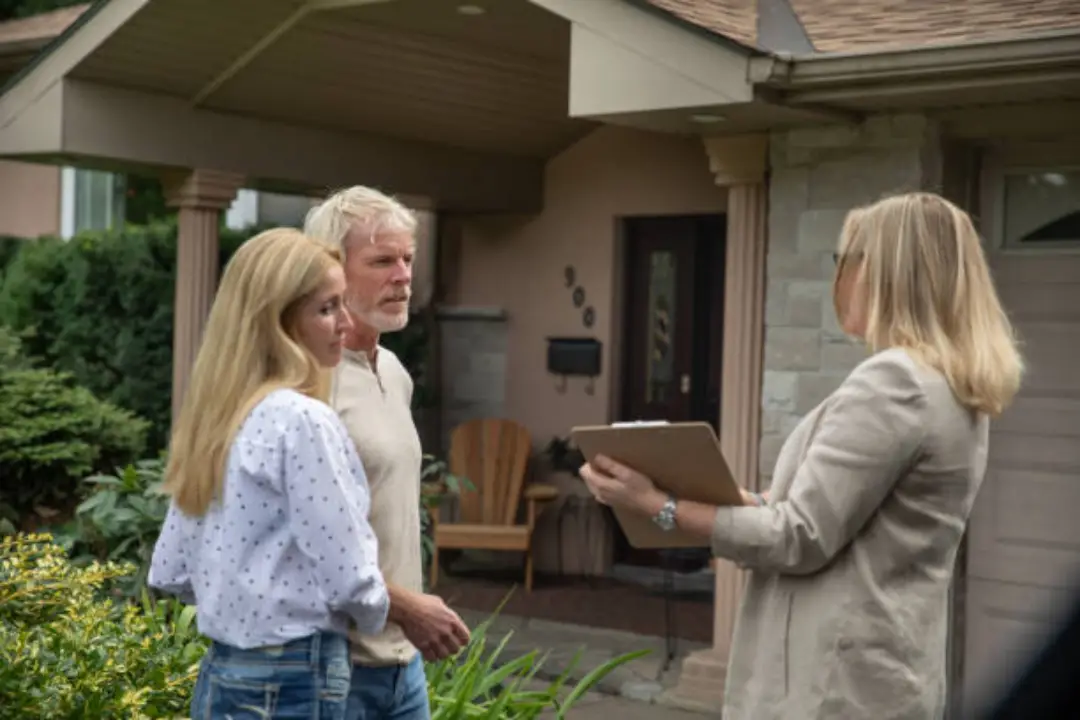
The phone call came on a Friday evening while I was reviewing case files at my kitchen table, still in my work clothes, my shoes kicked off somewhere near the door. I’d just won a difficult housing rights case that afternoon—a family of four saved from wrongful eviction—and I was riding the quiet satisfaction that comes from doing work that actually matters. My mother’s name lit up the screen, and something in my gut tightened before I even answered.
“Sher, we need to discuss the house,” she said without preamble, her voice carrying that clipped, businesslike tone she used when decisions had already been made and my input was merely theatrical.
I set down my pen, already sensing this conversation would require my full attention. “What about it?”
“Your sister needs a place to live. Her divorce was finalized last month, and she can’t afford to stay in their house. Your father and I have decided that she and Amanda will move into your grandmother’s house.”
The words landed like stones in still water, each one sending ripples of disbelief through my chest. I stood up, my exhaustion evaporating into pure adrenaline. “What do you mean you’ve decided? That house belongs to me. Grandma left it to me in her will.”
“Don’t be difficult, Sher.” My mother’s voice sharpened with impatience. “You don’t even live there. It’s sitting empty while your sister and your niece have nowhere to go. Family helps family.”
“I’m not being difficult. I’m stating a legal fact. The house is mine. I pay the taxes, the insurance, the maintenance. I can’t just hand it over because you’ve decided Stephanie needs it.”
“We’re not asking you to give it away,” she countered, her voice rising. “We’re telling you that the family needs to redistribute assets based on current needs. Stephanie has a child to consider. What do you have? A career that keeps you too busy to even use the property.”
The implication that my life was somehow less valuable because I didn’t have children wasn’t new, but it still cut deep. I took a breath, trying to stay calm. “Has Stephanie looked for apartments? Considered downsizing? There are options besides taking my house.”
“Your father’s already spoken with Martin.” She referenced our family attorney with the confidence of someone who believed lawyers were simply tools to legitimize whatever they wanted. “There are provisions in your grandmother’s will about the property being used as a primary residence, which you’re not doing.”
This was a lie, and I knew it. I’d read that will so many times I could recite passages from memory. There were no such provisions. My grandmother had left me the house unconditionally, a final gift from the only person in my family who’d ever truly seen me.
“Mom, that’s not true. The will is clear—”
“Don’t tell me what is and isn’t true, Sher.” Her voice hit that shrill pitch that signaled the end of rational discussion. “You’ve always been selfish, always thinking about yourself instead of the family. Your sister needs this house. You have forty-eight hours to get any personal items you want out of there. After that, Stephanie is moving in.”
Before I could respond, my father’s voice cut in—he’d been listening on another extension. “Sher, this isn’t up for debate. The decision has been made. Stephanie needs the house more than you do. This is about doing what’s right for the family.”
“But this isn’t legal. You can’t just decide to give away my property—”
“We can, and we have,” he replied with the cold finality of someone accustomed to having his pronouncements accepted without question. “Martin is drawing up the papers now. If you fight this, you’ll only hurt your sister and your niece. Is that really what you want—to deprive a child of a stable home because you’re clinging to sentiment?”
The manipulation was so transparent it would have been laughable if it weren’t being wielded against me by my own parents. I felt the old familiar tug—that conditioned response to doubt myself when they pushed, to wonder if maybe I was being unreasonable.
Then I thought of my grandmother’s hands guiding mine as we painted those blue shutters when I was twelve. I thought of the weekends spent in that kitchen, learning to make her apple pie from scratch. I thought of the sunroom she’d converted into a study space for me during law school, surrounding me with her plants and her unconditional belief in my abilities.
“I need to speak with Martin directly,” I said, buying myself time to think.
“He’s away for the weekend,” my father replied too quickly. “The papers will be ready Monday, but Stephanie needs to move in sooner. Your mother already told you—forty-eight hours, Sher. Be reasonable for once in your life.”
The call ended abruptly. I stood in my kitchen, still holding my phone, feeling the ground shift beneath everything I thought I knew about my family. Within minutes, my phone buzzed with a text from Stephanie.
I know this is hard for you, but I really need this right now. Amanda and I have nowhere else to go. Mom and Dad said you never use the house anyway. I promise I’ll take good care of it.
The false sympathy coupled with the presumption that this was already settled made something inside me crystallize into cold determination. I was a housing rights attorney, for God’s sake. If anyone should know how to protect their own property, it was me.
I spent that night at my kitchen table, but not wallowing in shock or grief. I was building a case file. I pulled up every document related to the house—the deed with my name alone on it, my grandmother’s will with its clear bequest, property tax records showing three years of payments from my account, insurance policies, maintenance receipts. I organized everything chronologically, creating what would essentially be my defense if this went to court.
At midnight, I emailed Jackie, a colleague who specialized in estate law. By one AM, she’d confirmed what I already knew: my parents had zero legal ground to stand on. She also warned me that if they gained physical access to the house and moved Stephanie in, it could create a messy situation requiring formal eviction proceedings.
“Don’t let them get a foot in the door,” she wrote.
By two AM, I had a complete strategy mapped out, along with a timeline for the next forty-eight hours. I would need to work quickly and quietly, without tipping my hand to my family. They assumed I would roll over as I’d always done, that I would prioritize keeping the peace over protecting what was mine.
They were about to discover how wrong they were.
Saturday morning, I called a locksmith who advertised emergency weekend services and scheduled him for nine AM. Next, I contacted a security company that a former client had recommended. They specialized in rapid deployment and could have a basic system installed by Saturday afternoon. Then I called my friend Thomas, a police officer in the suburb where the house was located, and explained the situation. He agreed to be present Sunday evening when my family would likely attempt their illegal takeover.
By noon on Saturday, I was driving to the house with determination coursing through my veins. I’d packed storage bins in my car to collect the most precious family heirlooms—my grandmother’s photo albums, her jewelry, the hand-quilted blanket she’d made when I was born, the wooden box containing all the letters I’d written to her during college and law school. While I had no intention of surrendering the house, I wasn’t going to risk these irreplaceable items.
As I pulled into the driveway, I saw with relief that no one from my family had arrived yet. The house stood peaceful in the spring sunshine, the garden beginning to bloom just as it did every year, constant and dependable in ways my family had never been.
The locksmith arrived promptly, and within an hour, every external door had a new lock. I chose a keypad entry system for the front door that would allow me to grant or revoke access remotely and track who entered when. The security team arrived as the locksmith left, working efficiently to install cameras at all entry points and motion sensors throughout. By late afternoon, I could monitor the entire property from my phone.
While the security team worked, I carefully packed the items I couldn’t bear to lose. Each thing I touched reminded me of my grandmother’s wisdom and unwavering love. The pearl necklace she wore for special occasions. The first edition books we’d read together. The gardening journal where she’d documented forty years of planting cycles, each entry in her careful handwriting.
“Never let anyone diminish your light,” she used to tell me. “Stand your ground when you know you’re right.”
I could almost hear her voice encouraging me as I worked, validating my decision to fight for what she’d given me.
Just as I was preparing to leave, my phone rang. Stephanie.
“Hey, I’m thinking of coming by tomorrow morning to start measuring for curtains and furniture placement. Would nine work for you?”
Her casual tone, as if we were discussing coffee rather than her illegal occupation of my property, made my blood pressure spike.
“I’m not going to be there tomorrow,” I replied evenly. “And we need to discuss this situation before any plans are made.”
“What is there to discuss? Mom and Dad already told you what’s happening. I need the house. You don’t. It’s simple.”
The entitlement was staggering. “Nothing about this is simple, Stephanie. The house is legally mine. Grandma left it to me for a reason.”
“Only because you were her favorite,” she snapped, the façade cracking to reveal the resentment beneath. “You always got special treatment from her. And now you’re going to deny my daughter a home out of spite.”
“This isn’t about favoritism or spite. It’s about respecting Grandma’s wishes and property law. You can’t just take someone’s house because you want it.”
“Watch me,” she retorted, and hung up.
I stood in my grandmother’s entryway—my entryway—and felt a strange calm settle over me. For years, I’d tried to earn my parents’ approval, accepting their criticism and dismissal as somehow deserved. But this situation had clarified something fundamental. Their behavior wasn’t my fault, and I didn’t have to accept it anymore.
Saturday evening, my phone lit up with notifications. Stephanie was texting photos of furniture with commentary about her “new house.” Each message felt like a deliberate provocation.
Thinking of painting the living room sage green. What do you think?
Do you still have Grandma’s dining table? Amanda and I won’t need something that big.
Mom said you might want the china cabinet. Let me know. Otherwise we can sell it.
The audacity of discussing selling my grandmother’s possessions as if they were already hers made my hands shake. I didn’t respond. Engaging would only suggest this was a negotiation, when in reality, there was nothing to negotiate.
Around eight PM, my mother called. I let it go to voicemail, but she called again immediately. On the third attempt, I answered.
“Why aren’t you responding to your sister’s messages?” she demanded.
“Because I have nothing to say about plans that aren’t going to happen. The house is mine, and Stephanie is not moving in.”
“So you’re going to fight us on this, after everything we’ve done for you.”
The irony would have been funny if it weren’t so painful. What had they done for me, exactly? My education I’d paid for myself. My career they dismissed as inconsequential. My achievements were never quite good enough.
“I’m not fighting anyone. I’m simply protecting what’s legally mine. Stephanie needs to find another solution.”
My father’s voice cut in. “Sher, listen to me. I’ve spoken with Martin, and we’ve found precedent for contesting the will based on your grandmother’s mental state in her final months.”
The accusation made me see red. “That’s not only false, it’s slanderous. Grandma was sharp as a tack until the end. Any doctor would confirm it. You’re threatening to destroy her reputation to get your way.”
“I’m telling you what will happen if you continue being unreasonable,” he said coldly. “Fighting this will be expensive and embarrassing. Is that really what you want?”
“You seem to be confusing me with someone who’s intimidated by legal proceedings,” I replied, my attorney instincts kicking in. “I know exactly what would happen if you tried to contest the will. It wouldn’t go the way you think.”
The conversation ended badly, but I felt stronger for holding my ground.
Sunday morning brought an email from my father with an attached “family agreement” about the “temporary reassignment” of the house. The document was amateur at best, legally nonsensical at worst, yet presented with the confidence of someone who’d never been told no.
By midday, extended family members had been recruited to the pressure campaign. Aunt Dorothy called to say I should “do the right thing.” My father’s brother texted his disappointment in my “lack of family solidarity.” Cousins I hadn’t spoken to in years suddenly had opinions.
Each call, each text, each manipulative tactic only strengthened my resolve. These were the same dynamics that had made me feel small and powerless throughout childhood. But I wasn’t a child anymore.
At three PM, my doorbell rang. My apartment’s security camera showed my parents and Stephanie on the porch, with little Amanda in tow—using my five-year-old niece as an emotional weapon.
When I let them up, the strategy was immediately clear. My mother wore wounded disappointment like a costume. My father carried a folder of dubious documents. Stephanie had brought Amanda to tug at my heartstrings.
“We wanted to talk in person,” my mother began. “Clear the air before tomorrow.”
“There’s nothing to clear. The house isn’t available for Stephanie.”
“Aunt Sher, are we going to live in the house with the big tree swing?” Amanda asked innocently, clearly coached.
Before I could respond, Stephanie jumped in. “Yes, sweetie. The house that Great-Grandma wanted us to have.”
The blatant lie made my blood boil, but I kept my composure. I handed Amanda my tablet with a child-friendly app, removing her from the manipulation.
“What’s unnecessary is using a child as emotional leverage,” I said. “This isn’t going to work—none of it. The guilt trips, the threats, the pressure campaign. The house is mine, legally and morally.”
My father slid a document across my counter. “This is formal notice of our intent to challenge the will.”
I glanced at it, recognizing it as essentially meaningless—no legal standing, no official letterhead, not even a proper attorney signature. “This isn’t worth the paper it’s printed on. And if Martin is actually involved in this scheme, he should know better.”
“You’re threatening our family attorney now?” my mother asked incredulously.
“I’m stating facts. The house is mine and will remain mine.”
My father, unaccustomed to having his authority questioned, turned an alarming shade of red. “Be prepared for what comes next.”
“I’m always prepared,” I replied. “Are you?”
After they left, I leaned against my closed door and breathed deeply. There would be no peaceful resolution. They were committed to taking what was mine by any means necessary.
But I was ready.
Monday morning, I took the day off work and parked down the street from the house where I could watch the driveway. I had a stack of legal documents on the passenger seat—the deed, the will, the letter from my grandmother’s attorney, and the emergency restraining order I’d filed first thing that morning, which had been granted due to the clear threat of illegal entry.
Thomas had texted to confirm he and his partner would arrive at ten AM, exactly when I expected my family to make their move.
At nine-thirty, my phone buzzed with a security alert. Motion detected. I opened the app to see my father circling the house, testing door handles, peering in windows. Finding them locked, he made a phone call, gesturing animatedly.
Twenty minutes later, a moving truck pulled up, followed by my mother’s SUV. Stephanie got out, marched to the front door, and tried her key with visible confusion when it didn’t work.
I texted Thomas that it was time, then drove to the house and parked directly behind the moving truck, blocking it in.
As I stepped out of my car, three faces turned to me in surprise.
“Finally decided to do the right thing,” my mother said, her voice dripping sarcasm.
“I’m here to make sure the right thing happens,” I replied calmly.
Thomas’s patrol car pulled up. He and his partner, Officer Rivera, approached professionally.
“What’s going on here?” my father demanded, drawing himself up to full authoritative height.
“Miss Warren asked us to be present while she addresses a potential trespassing situation,” Thomas explained, giving no indication we were friends.
“Trespassing? We’re her family,” Stephanie scoffed.
“This property belongs to Sher Warren,” Officer Rivera stated, examining the documentation I’d provided earlier. “She has not granted permission for anyone to enter. This is a civil matter that can become criminal if you attempt unlawful entry.”
“This is ridiculous,” my mother sputtered. “Sher, call off these officers immediately.”
“A family matter involving an attempted illegal seizure of my property,” I clarified, “which is why I’ve also obtained a temporary restraining order preventing any of you from entering without my express written permission.”
I handed copies of the restraining order to each of them, watching disbelief spread across their faces.
“You got a restraining order against your own family?” Stephanie’s voice rose to a shriek. “Have you lost your mind?”
“On the contrary, I’m thinking more clearly than I have in years. This house belongs to me. Grandma left it to me in her will. You have no legal right to move in, regardless of what Mom and Dad promised you.”
My father, studying the restraining order, looked up with narrowed eyes. “This won’t stand. I called Martin this morning. He’s preparing paperwork to challenge the will.”
“Is he?” I pulled out my phone. “That’s interesting, because I spoke with Martin an hour ago. Would you like to hear what he said?”
I pressed play on the recording I’d legally made of my conversation with our family attorney.
“For the record, I never advised the Warren family that there were grounds to contest Elaine Warren’s will. The will is legally sound, and Sher Warren is the sole rightful owner of the property at 42 Maple Street. I have not prepared, nor will I prepare, any documents challenging this fact. If Harold or Nancy Warren have claimed otherwise, they have misrepresented my professional opinion.”
The color drained from my father’s face. My mother looked from him to me in confusion. Stephanie stood frozen, reality finally penetrating her entitled assumptions.
“You lied?” my mother asked my father, her voice small.
“He was being overly cautious,” my father blustered, but the confidence was gone. “There are other attorneys—”
“No reputable attorney would take this case,” I interrupted. “The will is ironclad. Grandma was of sound mind. There are no conditions allowing for ownership transfer.”
“So what now?” Stephanie asked, tears forming. “Amanda and I have nowhere to go. We gave up our apartment.”
For a moment, I felt a flicker of sympathy. But sympathy didn’t give her the right to take what was mine.
“You have options, Stephanie. Short-term rentals, apartments. I can provide a list. But this house is not one of those options.”
“After everything we’ve done for you,” my mother began, “this is how you repay us?”
“They’re not homeless because of me,” I stated firmly. “They’re homeless because you promised them something that wasn’t yours to give. You created this situation.”
My father, finally accepting reality, said tersely, “Let’s go.”
As they turned to leave, Officer Rivera spoke up. “For clarity, the restraining order prohibits entry without Miss Warren’s written permission. Any attempt would result in immediate legal consequences.”
“We understand,” my father said stiffly, guiding my tearful sister away.
I watched their vehicles disappear around the corner, feeling a complex mix of emotions—relief that my plan had worked, sadness about the irreparable damage to family relationships, anger at how far they’d been willing to go.
But mostly, I felt peace.
Thomas approached as his partner returned to the patrol car. “You okay?”
“I’m better than okay,” I replied, looking up at my grandmother’s house—my house—standing solid despite the storm. “For the first time in a long time, I think I’m exactly where I need to be.”
The days following the confrontation brought a storm of emotional fallout. My phone buzzed with messages ranging from rage to tearful pleas from various family members who’d heard my parents’ version of events.
Then, a week later, I received an unexpected email from Martin with attached documents that shocked me. My parents had been trying to take the house since the moment my grandmother died—three years ago, immediately after her passing. They’d consulted multiple attorneys, all of whom had refused. Stephanie’s divorce was merely a convenient pretext for a plan they’d been developing all along.
The revelation was devastating but also liberating. This had never been about Stephanie’s needs. It had been about control—my parents’ inability to accept that my grandmother had made a decision they disagreed with.
I sought therapy to process the betrayal, working with someone who specialized in family trauma. She helped me see the patterns that had shaped our family dynamics for decades—the golden child and scapegoat roles, the narcissistic system, the emotional manipulation.
“Your grandmother was the one healthy influence in your life,” she observed. “She recognized your worth and wanted to protect you by giving you something that couldn’t be taken away. By defending her gift, you’re honoring not just her wishes, but the healthy love she represented.”
As weeks passed, the communications from my family gradually slowed. My mother attempted a casual invitation to Sunday dinner as if nothing had happened. I declined.
“What happened wasn’t a simple misunderstanding,” I told her. “It was a calculated attempt to defraud me of my property. I need time to process that betrayal.”
“You’ve always been so dramatic,” she sighed. “Family disagreements happen.”
“This wasn’t a disagreement. It was an organized campaign involving lies, manipulation, and emotional blackmail. That’s not something I can forget over pot roast.”
Meanwhile, I began spending more time at the house—my house. I cleared out the guest room and started staying there several nights a week. The commute was longer, but the peace I felt within those walls was worth it.
I tended the garden as my grandmother had taught me, watching perennials push through soil in their eternal cycle. I cooked in her kitchen, slept under her quilts, and felt her presence everywhere.
Six months later, I decided to sell my downtown apartment and move permanently into the house. I painted the sunroom warm yellow. Refinished the hardwood floors. Updated the kitchen while preserving vintage elements my grandmother loved. Each change was a deliberate affirmation that this space was mine to shape.
The garden became my sanctuary. Following my grandmother’s journal, I planted the same varieties she’d loved, adding a few of my own choices. There was something profoundly healing about working the soil, witnessing cycles of growth that mirrored my own journey.
Gradually, I built a community. Neighbors who’d known my grandmother welcomed me. I invited colleagues for dinner parties. Joined the local historical society my grandmother had been active in. Started a small scholarship fund in her name for law students from difficult family backgrounds.
Three months after the confrontation, I received a letter from Stephanie—reflective, almost humble.
“I owe you an apology,” she wrote. “I was so caught up in my own problems that I never considered what the house meant to you, or that what Mom and Dad asked me to participate in was wrong. Since everything happened, I’ve been thinking about our family and how we treated you. It wasn’t fair, and I’m sorry.”
I read it several times, letting the words sink in. It wasn’t magical reconciliation, but it was acknowledgment—a small recognition of truths denied for too long.
I wrote back, thanking her and wishing her well. We weren’t ready to rebuild our relationship, but perhaps someday we could create something healthier.
My parents were different. My father sent one final threatening letter. My response, drafted with Jackie’s help, included copies of the emails Martin had provided proving their long-standing intentions. There were no further communications from him.
My mother occasionally sent cards on holidays, never acknowledging the conflict. I returned the gifts but kept the cards in a box—unable to throw them away, equally unable to pretend her denial was acceptable.
The hardest lesson was accepting that family doesn’t always mean unconditional love. Sometimes family relationships are the most conditional of all, requiring conformity in exchange for belonging.
But recognizing this truth was ultimately liberating. I could stop trying to earn approval that would never be freely given. Instead, I focused on building connections based on mutual respect—friends who’d supported me, colleagues who’d covered my caseload, neighbors who’d welcomed me.
These formed my chosen family, bound not by blood but by choice and shared values.
Six months to the day after the confrontation, I hosted a garden party. The peonies were in full bloom, the weather perfect, the house more beautiful than ever. As guests enjoyed the space my grandmother had created, I felt her presence strongly, nodding in approval.
Later, as twilight fell and the last guest departed, I sat on the porch swing listening to the familiar creaks of the old house settling for the night.
The pain hadn’t disappeared. Grief for family relationships I’d lost—or perhaps never truly had—would always be part of me. But alongside it was profound peace, a sense of having honored both my grandmother’s legacy and my own worth.
The house stood solid around me, sheltering me as it had sheltered generations of women before me. In protecting it, I’d learned to protect myself—to establish boundaries that preserve dignity and peace.
Sometimes the family we choose becomes more important than the family we’re born into. My grandmother taught me to stand tall in the face of injustice.
And in honoring her home, I finally learned to honor myself.
The blue shutters we’d painted together when I was twelve still frame the windows. The garden still blooms each spring. The hardwood floors still creak in that familiar way. And within these walls, I’ve finally found what I was searching for all along—not just a house, but a home where I’m allowed to be fully, completely, unapologetically myself.
That, more than any legal victory, is my grandmother’s greatest gift to me.

Adrian Hawthorne is a celebrated author and dedicated archivist who finds inspiration in the hidden stories of the past. Educated at Oxford, he now works at the National Archives, where preserving history fuels his evocative writing. Balancing archival precision with creative storytelling, Adrian founded the Hawthorne Institute of Literary Arts to mentor emerging writers and honor the timeless art of narrative.