Rain in Madrid doesn’t wash anything clean. It only spreads the stain.
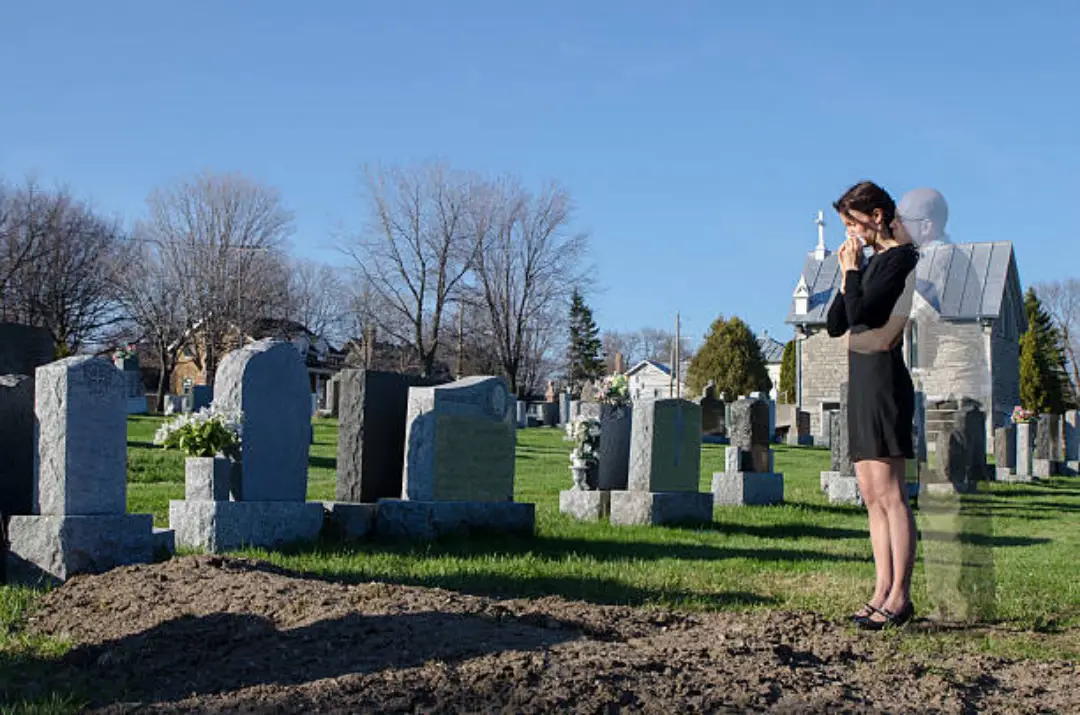
That November morning arrived the color of a bruise, the sky low and swollen, the kind of gray that settles into your bones before you’ve stepped outside. I stood at the edge of my mother’s grave in La Almudena cemetery with my heels sinking slowly into the mud and my hands folded over the hard, enormous curve of my belly. Eight months pregnant. The weight of the child inside me was the only thing that felt real, the only anchor I had to the physical world while the rest of it slid sideways beneath my feet.
They were still lowering the coffin.
It was a simple pine box, which was what my mother had requested in the single page of handwritten notes she had left with her doctor — not because we couldn’t afford better, she had written, but because the wood would return to the earth faster, and she had always believed in returning things to where they came from. I had honored this without fully understanding it. I had honored most things about my mother without fully understanding them. She was a woman of extraordinary quiet, the kind of quiet that feels like peace when you’re inside it and reveals itself, much later, as something more deliberate.
The priest was finishing the final prayer. The chrysanthemums on the casket were already wilting in the rain, petals going translucent at the edges. My back ached with the specific, grinding persistence of a body that has been carrying a significant weight for months and has run out of patience for it.
Beside me, Marco checked his watch.
I registered this the way you register small indignities when you’ve been registering them for five years — not with shock, but with the quiet, accurate addition of it to a running internal count. Marco had a particular talent for communicating his priorities through gesture rather than language, which gave him a kind of deniability. He hadn’t said anything contemptuous. He had only looked at his watch at his mother-in-law’s graveside, while they were still lowering the coffin. There was technically nothing wrong with that.
“We need to go,” he said quietly, his voice carrying the tone of mild inconvenience.
“They haven’t finished,” I said.
“Elena.” That single syllable, with all the patience wrung out of it.
I kept my eyes on the coffin. On my mother’s name carved into the simple wood. On the earth that was about to cover a woman I had not known as completely as I had believed, which was a grief layered on top of the ordinary grief, the way storms stack.
Then I felt something land against my stomach.
Not placed. Not handed to me. Dropped, from a short distance, so that my automatic maternal response — both hands flying to protect the pregnancy — caught it before I understood what it was.
A damp envelope. Already beginning to soften in the rain.
“What is this?” My voice came out strange, scraped thin.
“Divorce papers,” Marco said, with the exact tone he used when explaining something self-evident. “I’m not inheriting your debts. I’m not inheriting whatever mess your mother left behind. I’ve already sold the apartment — you have three days to vacate. Sofia will be moving in tomorrow.”
Sofia.
The name arrived like a physical impact. Sofia, who had sat beside me at prenatal appointments because Marco was frequently unavailable. Sofia, who had helped me select the small yellow blanket folded in the nursery we had made together in the apartment Marco had, apparently, already sold.
“You’re doing this here,” I said. It wasn’t a question. I needed to say the words to confirm that the reality I was occupying was actually what it appeared to be.
“The baby will grow up poor,” Marco said, with the casual finality of a man stating a weather forecast. “Like you did. I won’t live that life.” He paused. “Goodbye, Elena.”
He turned and walked toward the car idling at the cemetery gate. Through the rain, I could make out a shape in the passenger seat. Even from that distance, I could see the particular way her hair fell.
I stood at my mother’s graveside holding the damp divorce papers with both hands — both hands still shaking from the reflex of catching them — and I watched Marco’s car disappear into the gray. A contraction moved through me, sharp enough that I had to press one hand flat against my abdomen and breathe through it slowly. It passed. I stood up straighter.
I would not collapse here. Not at this grave. Not in front of the receding taillights of a car carrying the woman my husband had been sleeping with while I selected yellow blankets.
I was still standing, still breathing, still upright, when a tall man in a precisely fitted dark suit stepped quietly from the tree line and came to stand beside me. He held a black umbrella over us both — over me, really, since he angled it entirely in my direction — and he looked at my mother’s grave with an expression I recognized as genuine, which is to say it was the expression of a person who has actually lost something rather than the expression of a person performing loss.
He stood in silence for a full minute before speaking. I noted this. Most people cannot tolerate silence at gravesides. They fill it because they’re frightened of what it contains. This man was not frightened of it.
“Mrs. Elena,” he said finally. “My name is Alessandro Ricci. I was your mother’s attorney for thirty-one years. When you’re ready, there are things you need to know.”
My name is Elena Martínez. I am — I was, at the time of that morning — a secondary school mathematics teacher in Madrid, a profession that had earned me moderate contentment and insufficient money and the particular satisfaction of watching students understand things they had previously believed were beyond them. I had married Marco Vega five years earlier at twenty-eight, in a ceremony that my mother had attended in a pale blue dress and the slightly watchful expression I had attributed at the time to a mother’s natural anxiety and now understood was something more specific than that.
I had grown up in a modest apartment in the Chamberí district. My mother, Isabella, had been a chemistry teacher before she retired. We had not been poor, precisely, but we had been careful. We clipped coupons. We took vacations by train to places within several hours of Madrid. We mended things before we replaced them. My mother had a talent for making small spaces feel complete, for arranging a table or a bookshelf in a way that made the modest look considered. I had assumed this was temperament.
It was, I would learn, a choice.
Alessandro’s office occupied a discreet floor of a glass building in the financial district — the kind of address that doesn’t advertise itself because its clients don’t require advertising. He walked me to a private boardroom with a mahogany table and a window overlooking the city in the rain. He poured tea before he said anything of substance, which I later understood was strategic — the small, caring gesture before the significant information, giving the nervous system something manageable to process first.
“Your mother,” he began, “was not, as you believed, a retired chemistry teacher of modest means.”
I looked at him.
“She was the silent founding partner of Aura Bioscience.”
The name moved through me with the particular quality of things that are simultaneously familiar and impossible. Aura Bioscience was one of Europe’s largest pharmaceutical companies. Their cancer treatment protocols were taught in medical schools across three continents. Their headquarters were in Zurich. Their name was on research that had extended lives in ways that appeared, from the outside, like straightforward corporate success rather than what it actually was, which was thirty years of accumulated scientific work originating, in significant part, in the mind of a woman who clipped coupons in a Chamberí apartment.
“That’s not possible,” I said.
“She patented three synthetic molecular compounds in 1987,” Alessandro said. “Working from a rented laboratory on evenings and weekends. The patents were held under a corporate structure she established for precisely this purpose — to keep the assets entirely separate from her personal life.” He paused. “Those compounds are now foundational to four of Aura’s primary product lines. The current valuation of her holdings is approximately nine hundred and twenty million euros.”
The number did not feel real. Numbers of that scale rarely feel real when stated in a quiet room to a woman who has just been handed divorce papers at her mother’s graveside. They feel like numbers in a film — too large to have weight, too abstract to land.
“She hid this,” I said. “From me. My entire life.”
“She protected you from it,” Alessandro said carefully. “There is a distinction she was very clear about. She had watched money hollow out her own family — the inheritance disputes, the relationships that became transactional, the children who grew up understanding their value in terms of what they would eventually receive. She wanted none of that for you. She wanted you to build a life that was yours, on terms you had earned, so that when you received what she had left, you would know how to hold it.” He folded his hands. “She was very deliberate about this. She spoke about it often in our meetings.”
I sat with this for a while. The tea cooled in front of me. Outside, the rain continued its work on the city.
“Does Marco know?” I asked.
“No one does,” Alessandro said. “The corporate structure she used is exceptionally complex. Seventeen separate holding entities across four jurisdictions. Your mother was thorough.” He opened a second folder. “But Marco has made his own situation considerably worse through means entirely separate from this.”
He placed photographs on the table with the measured precision of a man who has made a career of presenting difficult evidence clearly.
Casino surveillance. Multiple venues, multiple dates. Marco in the particular posture of a man who has lost more than he intended and is trying to recover it with money he doesn’t have.
Hotel receipts charged to credit cards in my name. The dates corresponded to occasions when Marco had told me he was traveling for work.
Loan documents. Several of them, with my signature in a form that bore no relationship to my actual handwriting.
“He has accumulated approximately five hundred thousand euros in gambling debt,” Alessandro said. “He has addressed part of this through fraudulent borrowing against your joint accounts and forged documents bearing your name. He believes the divorce will allow him to exit this situation cleanly, taking what he can from the marital assets and leaving the debt structure to collapse in your name.”
I looked at the photographs for a long time.
There is a specific quality to the moment when you understand that someone you loved has not simply failed to love you adequately but has actively worked against you with intention and calculation. It is not simply hurt. It is the disorientation of discovering that the map you have been using to navigate a significant portion of your life was made by someone who wanted you to get lost.
“What happens now?” I asked.
“That,” Alessandro said, “is entirely up to you.”
For the two weeks that followed, while Marco presumably assumed I was navigating grief and homelessness in some diminished quarter of the city, I was in Alessandro’s conference room.
I learned the corporate structure of what my mother had built — not passively, not at a summary level, but actually learned it, the way a mathematics teacher learns a new domain: systematically, from first principles, asking questions until the structure was clear in my mind and not simply present on paper in front of me. I read financial statements. I reviewed contracts. I listened, with Alessandro’s legal guidance, to recordings his investigators had recovered of phone conversations between Marco and Sofia in the weeks following the funeral.
“She’s probably in a shelter by now,” Sofia said in one, laughing in the particular way of someone who finds another person’s suffering amusing rather than merely unfortunate.
“Her mother died with nothing,” Marco replied. “The teacher’s pension won’t cover her rent. She has no one.”
I listened to these recordings without flinching, which surprised me. I had expected them to break something. Instead, each word seemed to add a layer to something that was forming in me, the way cold adds layers to ice — each degree of temperature making the structure more solid rather than more fragile.
Pain, properly metabolized, becomes something else. I was metabolizing.
Alessandro had anticipated the shape of what would happen. Marco was still legally my husband. He had received notice of the will reading — a standard legal requirement — and had arrived at the attorney’s office on the appointed day in a suit I recognized, the one he saved for occasions where he wanted to communicate that he was a person of significance.
He saw me and took half a step back.
I was wearing a black Givenchy suit that Alessandro’s assistant had helped me locate, tailored for the final weeks of pregnancy, precise and unambiguous in the language of its construction. I had worn my grandmother’s pearl earrings. My hair was arranged without fuss. I was nine months pregnant and the most composed I had felt in longer than I could calculate.
Marco recovered quickly — he had always been quick. He took his seat with the practiced ease of a man who believes the outcome of the proceeding will favor him and is here primarily to witness the confirmation of what he already knows.
Alessandro opened the reading with the professional calm of someone who has conducted ten thousand moments like this and understands that the document itself, read clearly, is more powerful than any dramatization.
“I, Isabella Martínez,” he read, “being of sound mind and acting in full legal capacity, do hereby bequeath one hundred percent of my holdings in Aura Bioscience, including all associated patents, the Tuscan estate at Montalcino, the Madrid property portfolio, and all other assets documented in Schedule A, to my daughter, Elena Martínez, absolutely and without condition.”
Marco went very still.
Alessandro continued reading. The documents were detailed and the legal language was precise and the picture that emerged, as clause followed clause, was of a woman who had anticipated every possible challenge to what she was constructing and had addressed each one with the thoroughness of a scientist who understood that the difference between a compound that holds and one that fails is the rigor of its construction.
Marco leaned toward me somewhere in the middle section. His voice dropped to the register he had always used when he wanted something — warm, slightly urgent, calibrated to the frequency of intimacy.
“Elena,” he said. “The divorce — I was wrong. I was frightened. We can resolve this. We’re still a family. The baby—”
I removed my hand from the table.
“Please continue,” I said to Alessandro.
Alessandro continued.
The prenuptial agreement, which Marco had signed without reading — I knew this because he had told me at the time that reading it was unnecessary, that it was only a formality, that he trusted me — contained, among its provisions, a clause specifying that infidelity as documented by evidence would nullify any claim to marital assets. The clause had been included at my mother’s insistence, which Marco had not known because Marco had not read the document he signed.
“Additionally,” Alessandro read, “documentation pertaining to fraudulent financial activity, including forged instruments and unauthorized use of marital credit facilities, has been compiled and will be submitted to the appropriate authorities upon conclusion of this reading.”
The door opened.
Two officers entered with the particular unhurried confidence of people who know exactly where they’re going and what they’re there to do.
Marco’s voice, when he understood what was happening, was nothing like the voice I had heard for five years. That voice had been managed, modulated, always one step ahead of its own intentions. This one was stripped of management entirely. He said my name in a way that was not a greeting or an address but something more desperate, the sound of a person discovering that the floor they have been standing on was not what they believed.
Sofia, who had been sitting at the back of the room, moved toward the side exit. I stood and intercepted her before I had consciously decided to do so.
My grandmother’s necklace was at her throat. A fine gold chain with a small pendant, nothing dramatic — the kind of thing whose value is entirely in what it represents rather than what it costs. Sofia had borrowed it the previous spring for a friend’s engagement party and had, apparently, not found an occasion to return it.
I unclasped it with steady hands.
“This belongs to me,” I said.
She looked at me with something I recognized, after a moment, as the specific expression of a person who has just understood the full shape of the situation they’re in.
I turned and walked back to the table and sat down.
Marco’s voice receded down the hallway as the officers took him toward the elevator. The sound of it diminished in stages, and then the elevator doors closed, and the silence in the room was the most complete silence I had heard in months.
Alessandro poured more tea. I accepted it.
Thirteen days later, in a private clinic in the Salamanca district, I held my son for the first time. He was born on a Thursday morning, which was a day my mother had always called a good day to begin anything — far enough from the start of the week to have momentum, close enough to the end to feel like accomplishment. I don’t know if she had actually believed this or had simply said it often enough that it had become a family truth, but standing in the delivery room holding Leo, I found I was glad it was Thursday.
He had my mother’s hands. Long fingers, the kind that look like they’re reaching for something even at rest. I told him this while the nurses moved around us doing their efficient, kind work. I told him his grandmother had been a chemist and a teacher and a woman of extraordinary patience who had spent thirty years building something she intended him to have. I told him she had been right about everything she had been certain of, and careful about everything she had been uncertain of, and that the combination of these two qualities was the closest thing to a philosophy I had ever witnessed lived rather than stated.
He looked at me with the unfocused, absolute attention of a newborn who is processing the fact of existence, which seemed, in that moment, exactly the right response to everything I was saying.
Marco received five years, reduced to three on appeal. I did not attend the trial. I submitted the documentation my attorney required and did not attend, because there was no version of that proceeding that needed my presence, and I had decided early on that I would direct my attention toward what I was building rather than what I was leaving behind.
The Tuscan estate at Montalcino became the thing I had not expected it to become: a place I actually wanted to be.
I had assumed I would find it overwhelming — the scale of it, the formal gardens, the olive grove my mother had apparently maintained through a local property management firm without ever once mentioning to me that she owned an olive grove in Tuscany. I had assumed the size of it would feel like a statement I hadn’t made and wasn’t sure how to inhabit. Instead, the first weekend I spent there with Leo and my colleague Pilar, who had been my closest friend since university and who had driven me home from the cemetery on the day of the funeral and not asked me questions until I was ready to answer them — the first weekend there, sitting on the terrace in the afternoon light with an infant asleep against my chest and a glass of wine from the neighboring vineyard and the Tuscan hills doing what Tuscan hills do, which is to exist with a completeness that makes your own interior landscape feel, briefly, less complicated — I understood what my mother had been protecting.
Not the money. The life that becomes possible when the money is used correctly.
I kept my teaching position for the first eighteen months, partly because I wasn’t ready to leave it and partly because it seemed important to understand, from the inside, what continuity felt like before I altered it. I taught my classes, I managed Leo’s care with the help of a woman named Rosario who had the specific, invaluable quality of treating a child with genuine attention rather than professional efficiency, and I spent my evenings and weekends learning what it meant to be responsible for nine hundred and twenty million euros in pharmaceutical assets.
Alessandro was patient with my learning curve, which was substantial. He was also honest about when my instincts were wrong and when they were right, which was more valuable than patience. By the second year, I had developed enough fluency with the company’s operations that I could participate in board discussions without deferring everything to the advisors around me. By the third year, I was running them.
The company’s head of research, a Belgian immunologist named Dr. Verheyden who had known my mother for fifteen years and who was the person in the organization who most clearly understood what she had actually built and why, became the person I most consistently learned from in those early years. She had been the one to brief me, in our first working meeting, on the specific scientific contributions my mother had made — not in the abstract terms of corporate legacy but in the exact, technical terms of which molecular problems she had solved and why those solutions mattered.
“She never wanted credit,” Dr. Verheyden told me. “She wanted the work to survive. She said once that the compound would still work whether or not anyone knew who had synthesized it, and that was what mattered.”
I had thought about this for a long time afterward. It seemed to me to explain something fundamental about my mother — not why she had hidden what she built, exactly, but why hiding it had not cost her the thing that it cost other people. The secrecy had not diminished her because the thing she cared about was not recognition. The work was real regardless of whether anyone attributed it to her. She had built in the condition of that reality, and it had been enough.
I stood on a stage at Aura Bioscience’s annual research gala in my third year as the company’s executive director, in a room full of scientists and investors and the kind of press coverage that attaches itself to narratives of unexpected succession. Leo was with Rosario. The Givenchy suit had been replaced by something in deep red that I had chosen myself from a designer I had found through my own research rather than an assistant’s recommendation, which was a small thing but felt, privately, like the right kind of small thing.
The press had given me a nickname — La Señora de Hierro, the Iron Lady of Pharmacy — which I found both slightly amusing and slightly reductive, as most nicknames assigned by people who haven’t read the primary sources tend to be. What they meant by it was that I had not been broken by what had happened to me. What they didn’t understand was that the not-breaking was not a function of hardness. It was a function of what my mother had given me, which was not money but the understanding that the life you build from your own work cannot be taken from you by someone else’s cruelty. It can only be interrupted, temporarily, which is a different thing entirely.
I stepped to the microphone.
“My mother used to tell me,” I said, “that the most dangerous thing you can be is invisible. Not because invisibility makes you powerless — she was proof that it doesn’t. But because invisibility lets other people write the story of who you are, and they will always write it to suit themselves.”
The room was very quiet in the way rooms go quiet when people sense they’re hearing something that matters.
“She chose to be invisible for thirty years so that I would not have to be. So that I could build a life on values rather than on access, and then receive what she had built once I understood how to hold it.” I paused. “The people who abandoned me at her graveside believed they knew what I was worth. They had made their calculation. They were not wrong about the number they saw — they were wrong about the number they couldn’t see.”
I thought about Leo asleep at home. About the olive grove in Montalcino and the afternoon light on the Tuscan hills. About the compound my mother had synthesized in a rented laboratory on weekends thirty years ago, which was currently extending the lives of people in seventeen countries who would never know her name and whose lives were no less extended for not knowing it.
“My mother taught me that real wealth is the compound you’ve built that keeps working after you’re gone,” I said. “Not the money. The work. The values. The people who inherit what you actually made rather than just what you left.”
I raised my glass.
“She built in conditions no one could see. She built in silence. She built so that what she made would survive anything that came after it. And she was right.”
I thought about rain in Madrid and a pine coffin and a man dropping papers onto a pregnant woman’s stomach at her mother’s graveside because he had run the numbers and found her insufficient.
I thought about what he had miscalculated.
“We are seeds,” I said. “What they bury is not always what grows.”
The applause came up around me like weather, warm and moving. I stood in it and let it land, and I thought of my mother in her Chamberí apartment, clipping coupons, watching me do my homework at the kitchen table, knowing exactly what she had already made and choosing, again, to wait.
She had always known what I was worth.
She had been waiting for me to know it too.

Ethan Blake is a skilled Creative Content Specialist with a talent for crafting engaging and thought-provoking narratives. With a strong background in storytelling and digital content creation, Ethan brings a unique perspective to his role at TheArchivists, where he curates and produces captivating content for a global audience.
Ethan holds a degree in Communications from Zurich University, where he developed his expertise in storytelling, media strategy, and audience engagement. Known for his ability to blend creativity with analytical precision, he excels at creating content that not only entertains but also connects deeply with readers.
At TheArchivists, Ethan specializes in uncovering compelling stories that reflect a wide range of human experiences. His work is celebrated for its authenticity, creativity, and ability to spark meaningful conversations, earning him recognition among peers and readers alike.
Passionate about the art of storytelling, Ethan enjoys exploring themes of culture, history, and personal growth, aiming to inspire and inform with every piece he creates. Dedicated to making a lasting impact, Ethan continues to push boundaries in the ever-evolving world of digital content.