Not Yet
The text from my father arrived like sleet — small, cold, late.
We’re doing a small Thanksgiving this year. Just your sister Hannah, her husband, and their kids. Hope you get it. — Dad
It landed on my screen at 6:12 a.m., the hour my ranch in Wyoming turns the world cobalt and lets the antelope own the fields for five more minutes before the light takes over and reminds everything it is being watched.
I stood on the timber porch with a mug and watched frost knit the meadow shut. Wind came down from the Absarokas the way it always does in November — with the specific authority of something that has been doing this for ten thousand years and that does not require your acknowledgment. The lodgepole pines made the sound they make.
I typed back: Enjoy yourselves.
Put the phone face down on the porch rail. Let the cold make my lungs hurt. It is a trick I learned after my first company failed — let your body remind you there are places where you are still alive.
My name is Charlie Price. I am thirty-five years old and I own a data encryption company called TitanLock that processes security infrastructure for three hospital chains, two retail giants, and a federal agency whose name appears in a contract I cannot discuss. I have a steel-and-glass loft in Chicago that looks like a spreadsheet from the inside and a ranch outside Cody, Wyoming, where the sky makes deals with no one.
The ranch is worth nine million dollars.
My family did not know about the ranch.
This is the story of the Thanksgiving I hosted instead of the one I was excluded from, and what happened when the photographs appeared, and why the photographs were not the point.
Part One: The Making of the Middle Child
Before the ranch and the photographs and the text that arrived like sleet, there was the childhood, and the childhood deserves to be described accurately because everything else proceeds from it.
My sister Hannah is three years older than me and has always been, in my family’s accounting, the primary investment. Not because she was more loved — I believe my parents loved both of us and I have never revised this belief, which requires more generosity than it sounds like — but because she was more legible to them. She spoke the language they understood, which was the language of conventional achievement in visible forms: the Juilliard discussions and the debate team nationals and the firm she eventually ran, steady and respectable.
I spoke a different language. The language of soldering the night before a robotics contest until my fingers smelled like pennies and burned plastic. The language of a voice-command drone built at seventeen in my bedroom, which was greeted with neat the way you say neat about a moderately interesting piece of information that does not require you to change what you were doing.
Caltech sent the fat envelope. That’s a long way from home, my father said. If you’re sure about all the tech stuff, my mother added, her eyes already on the calendar for Hannah’s recital. My sister texted proud of you, bro, and that was the complete extent of the occasion.
I am not telling you this as a complaint. I am telling you this as context, because the context is what produced the specific discipline that produced TitanLock and the ranch and the ability to stand on a timber porch at six in the morning and read a text that excluded me from Thanksgiving and feel, beneath the cold clarity of it, something that was not quite hurt and not quite resolved.
What I felt, standing on the porch with the antelope in the meadow and my father’s text face down on the rail, was the specific sensation of a pattern completing itself. Not for the first time. Just, finally, at the scale where I could see the whole pattern clearly rather than only the part nearest to me.
Part Two: The First Company
I want to tell you about the first company because the first company is the part of the story that most people skip when they tell stories like this, and skipping it produces the wrong understanding of how the second company happened.
At twenty-six I had an idea for a logistics optimization platform that I believed in with the specific intensity of a person who has been sitting with an idea for three years and who has finally understood it well enough to build it. I quit my job at a software firm where I had been doing excellent work that other people were attaching their names to, and I started the company in an apartment with a radiator that made steam taste like defeat.
It failed in fifteen months. Fifty thousand dollars in debt and the specific shame of a person who has been told, implicitly and explicitly, that risk is not something he is wired for and who has now provided evidence for that position.
I called my father and asked for ten thousand dollars to keep the servers running. I want to be clear about what I was asking for: not a gift, a loan, the kind of support that might have produced a different outcome for a company that, in retrospect, had a fundamental product problem that ten thousand dollars would not have fixed but that I did not know this yet and that I was asking my father to bet on me.
He said what he said. I warned you, son. Not everyone is wired for risk. Your sister’s running her own firm. Steady. Respectable.
After I hung up, I sat in my apartment and I let the anger leave the room so I could hear myself breathe, which is the only useful thing to do with anger before you know what you need to do with the situation that produced it.
I took a job. Three years of being the person who tightens the bolts that other people loosen to feel important. When you have been trying to earn your place long enough, you develop a specific skill set — the ability to see what a system needs rather than what it wants to present, the ability to fix things without requiring that the fixing be attributed.
I quit at thirty-one and built TitanLock.
Part Three: TitanLock
I am not going to tell you the full technical story of TitanLock, because the full technical story requires a different kind of document than this one. What I will tell you is the shape of it.
It was a data encryption platform designed to solve a specific problem that existed in the infrastructure of large institutions — healthcare systems, retail companies, government agencies — and that the existing solutions were solving incompletely. I had identified the problem during my three years of employed work, in the specific way that you identify problems when you are fixing things without requiring attribution: you see what is actually wrong rather than what the people who own the problem want to believe is wrong.
I worked for two years on the architecture before I wrote a line of product code. This was unusual and it was correct. The architecture is everything in encryption — if the foundation has a flaw, the flaw is in every instance of the thing the foundation supports, and the flaw will be found by someone who does not have your interests at heart.
The first contract was a hospital chain in the midwest. The second was a regional retail operation. The government contract came in year four and required eighteen months of security clearance processes that I experienced with the specific patience of someone who has learned to let the timeline be what it needs to be.
I told my family very little during this period. I had tried, in the early years of TitanLock, to share the progress — a contract here, a milestone there — and the response had been the response it had always been, which was keep trying in the tone of someone encouraging a toddler on a balance bike, and how’s the tech thing going before the conversation moved to something more interesting.
I stopped sharing. Not from bitterness — from the specific efficiency of someone who has understood that not everything requires an audience while it is being built.
I bought the ranch in year three of TitanLock, when the hospital chain contract had produced the liquidity for a significant acquisition and the government contract was in its preliminary stages and I understood, for the first time, that the thing I had built was going to produce resources I had not previously had to think about.
I did not tell my family about the ranch.
Part Four: The Ranch
The property is outside Cody, Wyoming — eleven thousand acres of high-altitude ranchland with the Absaroka range as its western wall and the quality of a place that existed before human beings arrived and that will exist after, that receives human occupation with the specific indifference of things that have a longer timeline than you do.
The main lodge is built from timber taken from the property, with stone fireplaces and windows designed to make the relationship between interior and exterior continuous rather than interrupted. There are four additional structures — the guest cabins, each of which sleeps four, the equipment barn, the staff quarters, and the small structure I use as an office when I am in residence, which has a desk and a satellite connection and a window that faces the Absarokas.
I have six full-time staff on the property — a ranch manager named Del who has been working Wyoming ranches for thirty years and who operates with the specific authority of a man who knows what needs to be done and does it without requiring anyone to tell him, a cook named Maria whose food has the quality of someone who learned to cook from a person who believed cooking was love made edible, two wranglers, and two staff who manage the property’s maintenance and operations.
I have been on the property every Thanksgiving for four years. This is, for me, the specific holiday of the ranch — November in Wyoming has the quality of the world preparing itself for something, the meadows going amber and then silver with frost, the elk coming down from the elevation, the specific cold that is not threatening but clarifying.
I have spent those Thanksgivings largely alone, or with Del and Maria and the wranglers, which is a form of community that suits the place and the season.
This year, I had other plans.
Part Five: The Guest List
After my father’s text and my response and the cold morning on the porch, I went inside and I sat at the desk in my office with the window facing the Absarokas and I thought about who I had been excluding by not telling anyone about the ranch.
This required honesty. The not-telling had been, for four years, a form of protection — the specific protection of something being built from the interference that came with visibility. But it had also been, I understood in the honesty of the November morning, a form of withholding that I had been applying to people who had not been the ones to make me feel excluded.
I made a list.
Not the list of people who would be most impressed by the ranch — that was not the list. The list of the people who had been the peripheral characters in the family’s story, the ones who had sat at the tables where I sat, who had been present for the same dynamics I had been present for, who had been — in the specific way of middle children and quiet cousins and the people who arrive and refill the ice bucket and tighten the router — the ones who kept things working without being the story.
The list included my cousin Marcus, who had been the other quiet one at family gatherings for thirty years — a high school science teacher in Ohio who had the specific quality of someone who has decided that his work is good work and who does not require anyone else to confirm this, and who had been sitting on the carpet with me through many holidays while the main event happened elsewhere.
It included Marcus’s wife Jennifer, who was a nurse and who had the quality of a woman who has spent her career in the specific discipline of paying attention to what is actually happening with a person rather than what they are presenting.
It included my great-aunt Rosie, who was eighty-one and who had been my grandmother’s sister and who had been at every family gathering I could remember in the specific role of the person who noticed what was actually happening and who said something about it when others did not, which had made her, in the family’s accounting, difficult, and which made her, in mine, essential.
It included three former colleagues from the early TitanLock years — people who had worked alongside me in the twenty-hour days and who had dispersed to their own companies and their own lives and who I had stayed in contact with in the low-maintenance way of people who genuinely like each other and who do not require frequent demonstration of that liking.
And it included, because she was someone who had been in my life for two years and who had the specific quality of someone who sees the thing clearly rather than the performance of the thing, a woman named Adaeze who had been my partner since the government contract came through and who had been to the ranch twice and who had said, the first time she saw it: This is what you’ve been building toward.
Fourteen people. Not a large Thanksgiving. The right Thanksgiving.
I called Del. I told him what I needed. He said he’d have Maria start planning the menu and that he’d open the guest cabins and that the elk had been coming through the north meadow regularly and that the weather looked clear.
I sent invitations — calls and texts, one by one — to the fourteen people on the list.
Every one of them said yes.
Part Six: The Week Before
I arrived at the ranch on the Sunday before Thanksgiving to find Del had prepared the property with the specific thoroughness of someone who takes hospitality as seriously as he takes the land.
The main lodge was lit and warm. Maria had been cooking for two days — not the meal itself, but the preparations, the stocks and the brines and the specific work that produces food that tastes like something rather than something assembled. The guest cabins were opened and heated and each had a small arrangement of the things the season produces — dried grasses and pinecones and the specific color palette of a Wyoming November.
My guests arrived over three days. Marcus and Jennifer drove from the Denver airport and arrived on Wednesday afternoon. Rosie flew into Cody and Del picked her up, which produced, when she arrived, the specific combination of an eighty-one-year-old woman who has never been on a Wyoming ranch encountering the scale of the place for the first time.
She stood on the timber porch and looked at the Absarokas and said: Well, Charlie. You’ve been busy.
The three former colleagues arrived Wednesday evening. Adaeze had come two days before to help with the preparations, not because she had been asked to but because she had understood what the week was and had wanted to be part of the building of it.
By Wednesday night, the lodge was full of the specific warmth of people who have chosen to be somewhere together, which is different from the warmth of people who have been assigned to the same occasion.
Part Seven: Thanksgiving
I want to tell you about Thanksgiving at the ranch, because the event itself is the center of the story and it deserves to be described.
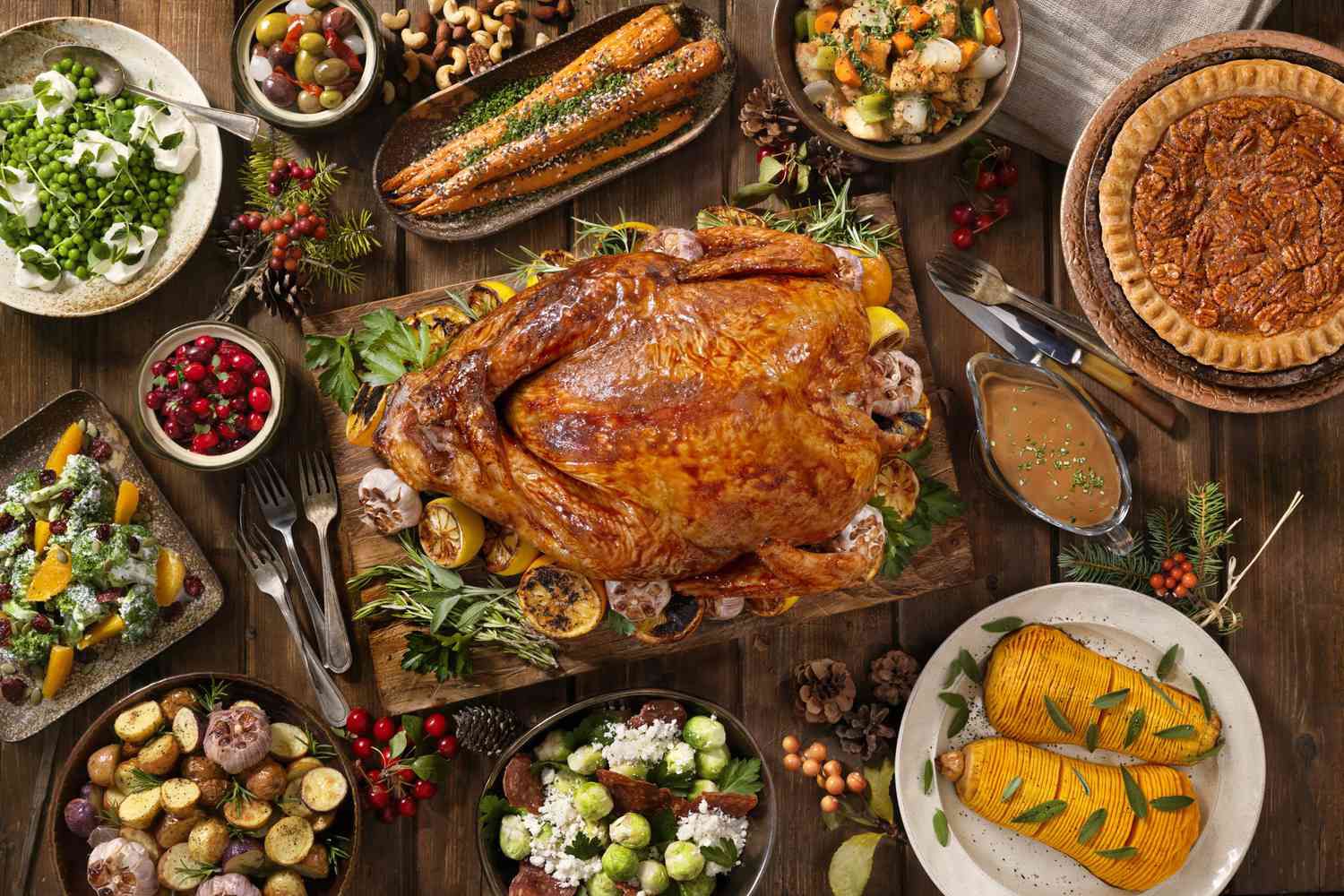
Maria cooked for eight hours. Not the desperate cooking of someone who is trying to produce an impressive meal — the confident cooking of someone who has been doing this for thirty years and who produces food that communicates its origins, that tastes like Wyoming in November, like the land and the season rather than like a photograph of a meal.
We ate at the long table in the main lodge, with the windows showing the Absarokas and the frost on the meadow and the last light doing what the last light does in Wyoming at the end of November, which is produce the specific quality of beauty that does not require anyone to point it out.
Del and Maria and the wranglers joined us at the table. This was not a gesture or a statement — it was how I had always done it at the ranch, because the people who work a piece of land are as much a part of it as the land itself, and a meal that excludes them is a smaller meal than it needs to be.
Rosie sat at my right. She had the quality, over dinner, of someone who is fully present — not performing presence but simply occupying it, attending to the specific people around her with the complete attention of someone who has been doing this for eighty-one years and who has not gotten tired of people.
She leaned toward me at one point during the meal and said: Your family has no idea about any of this, do they.
“No,” I said.
“Are you going to tell them?”
“I hadn’t planned to,” I said.
She was quiet for a moment, with the quality of someone who is considering whether to say the thing she is thinking.
“Tell them,” she said. “Not for them. Because the keeping of it is starting to cost you something.”
I thought about this.
Marcus gave a toast. He is not a man given to speeches — he is a man given to showing up and staying and doing the quiet work, and his toast reflected this. He said: To the people who were always in the room, even when they weren’t the story.
Every person at the table understood exactly what he meant.
Part Eight: The Photographs
Adaeze took photographs throughout the week. Not the performed photographs of someone documenting an occasion for an audience — the natural photographs of someone who pays attention to what is actually happening and who has the specific eye that sees the moment before it completes itself.
She posted them on the Saturday after Thanksgiving. Not to make a statement — because they were beautiful, because the ranch in November is beautiful, and because beauty does not require a strategy.
The photographs showed the lodge with the Absarokas behind it. The long table with fourteen people around it. Del and Maria and the wranglers. Rosie with a glass of wine, looking at the mountains with the expression of someone for whom the beauty is registering completely. Marcus and Jennifer walking through the frost meadow with the specific ease of people who are exactly where they want to be. The elk that had come through the north meadow on Thursday morning, close enough to the lodge windows to be photographed without a telephoto lens.
The tag on the photographs named the property.
My father’s cousin Martha, who follows Adaeze on social media, saw the photographs on Saturday evening. She texted my father.
My father called me at nine that night.
Part Nine: The Call
He said my name the way he had said my name throughout my childhood — Charlie — which contained, in the specific inflection of that particular evening, none of the distraction that usually accompanied it. He was completely present, which was unusual.
“Is that your ranch?” he said.
“Yes,” I said.
“You own that?”
“Yes,” I said.
He was quiet for a moment.
“For how long?”
“Three years.”
Another pause. The quality of a man who is understanding that there is a version of his son’s life that he has not known about, and that the not-knowing was not accidental.
“You didn’t tell us,” he said.
“No,” I said.
“Why?”
This was the question, and I had been thinking about how to answer it since Rosie had told me to tell them, since the toast Marcus had given, since the Saturday morning I had watched the photographs go up and understood what was coming.
“Because I spent thirty-five years building things and telling you about them,” I said. “And the telling produced keep trying and your tech thing and a ten-thousand-dollar loan I shouldn’t have had to ask for. I stopped telling because the telling was costing more than the not-telling.”
He was very quiet.
“The robotics contest,” I said. “The drone. Caltech. TitanLock. Every time something happened, there was a reason it wasn’t quite the main story. Hannah’s solo was flawless. Hannah’s debate team. Hannah’s firm, steady and respectable.” I paused. “I’m not angry at Hannah. I want to be clear about that. But I am saying what happened.”
“I know what happened,” he said.
This surprised me. Not the words — the quality of them. He said it with the specific quality of a man who has been knowing something without saying it for a long time and who is saying it now because the occasion has made not saying it impossible.
“I know what happened,” he said again. “I didn’t say it. I should have said it.”
Part Ten: My Father
I want to tell you what followed the call, because what followed was not a resolution and was not a confrontation and was the actual thing, which was more complicated than either.
My father asked if he could come to Wyoming. Not for Thanksgiving — that had passed. He asked if, in the spring when the ranch was something different than the November version of it, he could come.
“Yes,” I said.
“And tell me about the company,” he said. “Not the summary. The real version.”
I told him the real version. Not in one call — over several calls, over the following weeks, the real version that had never been fully told because the telling had always been met with the wrong response and the wrong response had eventually produced no telling at all.
He listened with the specific attention of a man who is paying a debt he has been owing for a long time and who knows the debt is real and who is paying it in the only currency available, which is attention.
He said, partway through one of the calls: “I didn’t do right by you.”
Not: I tried my best. Not: You have to understand the situation. Just: I didn’t do right by you.
“No,” I said. “You didn’t.”
“I’m sorry,” he said.
“I know,” I said.
This is not a complete repair. Twenty-two years of robotics certificates sliding under bills and keep trying said to balance-bike toddlers and a ten-thousand-dollar loan request answered with I warned you, son — these things are not repaired in several phone calls, and I was not pretending they were.
What they were was the beginning of something different from what we had had, which was the only beginning available, and I accepted it as that.
Part Eleven: Hannah
Hannah called two days after my father. She is not a bad person — I want to say this clearly, because Hannah has been the story rather than the storyteller and the difference matters. She did not ask to be the primary investment. She did not make the choices my parents made. She occupied the role that was given to her and she occupied it with genuine excellence, which I have always respected even when the excellence was being used, implicitly, as the standard by which my different excellence was being measured.
She said: “Why didn’t you tell me?”
“I told everyone what I was doing,” I said. “The responses I got taught me to tell less.”
“I always said I was proud of you,” she said.
“You said proud of you, bro in a text when I got into Caltech,” I said. “And that was the end of that scene. I don’t say this to be cruel. I say it because that was the full extent of what the occasion got.”
She was quiet.
“At your wedding,” I said, “I poured punch and tightened my tie and fixed the thermostat so the cake wouldn’t melt. I don’t know if you knew that.”
“I didn’t know that,” she said.
“I know you didn’t,” I said. “That’s the thing, Hannah. It wasn’t malicious. Nobody decided to exclude me. It was a pattern that happened without anyone deciding it, and then it kept happening because it had always happened and nobody examined it.”
“And you built a nine-million-dollar ranch in Wyoming without telling anyone,” she said.
“Yes,” I said.
There was a pause, and then Hannah did something that surprised me — she laughed. Not the uncomfortable laugh of someone managing an awkward moment, but the real laugh, the one I remembered from when we were kids before the pattern had fully established itself.
“That’s actually incredible,” she said. “And also completely insane.”
“Yes,” I said.
“Can I come to Wyoming?” she said.
“Yes,” I said. “In the spring. When Dad comes.”
Part Twelve: What the Ranch Is
I want to end by telling you what the ranch actually is, because I have described its physical qualities and its financial value and the Thanksgiving that happened there, and the thing itself deserves a description that is more than those elements.
The ranch is what the lodgepole pines keep telling me about when I think I have seen it all.
Not yet.
Not yet is the thing the ranch is. It is the thing I built in the years when the response to my building was keep trying said to a balance-bike toddler, and it is the thing I kept building past the point where the response mattered, and it is what I arrived at when I stopped building for the approval and started building for the building itself.
I have been thinking about what Rosie said — the keeping of it is starting to cost you something — and about whether she was right, and I have concluded that she was right in the way that eighty-one-year-old women who pay attention are right, which is completely and without negotiation.
The keeping had cost me the ability to be known by my family. Not the approval — I had stopped needing the approval somewhere in the TitanLock years, when the contracts arrived regardless of whether anyone at home was asking. What I had lost by the keeping was the possibility of being known, which is different from being approved of and which matters for different reasons.
I am thirty-five years old. I have a company that protects the data of institutions that serve millions of people. I have a ranch where the antelope own the fields in the early morning and the Absarokas are the western wall and Maria cooks food that tastes like the land.
I have a father who is coming in the spring to see the real version.
I have a sister who laughed the real laugh and asked if she could come.
I have Marcus and Jennifer and Rosie and Del and Maria and fourteen people who sat around a long table on Thanksgiving and understood the toast without needing it explained.
And I have Adaeze, who saw what I was building toward before I had fully seen it myself, and who posts photographs that are beautiful without asking the beauty to be anything other than what it is.
The text from my father arrived like sleet — small, cold, late.
The ranch received it the way the ranch receives everything.
With the specific indifference of a place that has a longer timeline than the moment, and with the specific beauty of a place that does not require anyone to point it out.
Enjoy yourselves, I had typed.
And I did.
THE END
Ethan Blake is a skilled Creative Content Specialist with a talent for crafting engaging and thought-provoking narratives. With a strong background in storytelling and digital content creation, Ethan brings a unique perspective to his role at TheArchivists, where he curates and produces captivating content for a global audience.
Ethan holds a degree in Communications from Zurich University, where he developed his expertise in storytelling, media strategy, and audience engagement. Known for his ability to blend creativity with analytical precision, he excels at creating content that not only entertains but also connects deeply with readers.
At TheArchivists, Ethan specializes in uncovering compelling stories that reflect a wide range of human experiences. His work is celebrated for its authenticity, creativity, and ability to spark meaningful conversations, earning him recognition among peers and readers alike.
Passionate about the art of storytelling, Ethan enjoys exploring themes of culture, history, and personal growth, aiming to inspire and inform with every piece he creates. Dedicated to making a lasting impact, Ethan continues to push boundaries in the ever-evolving world of digital content.