My Son Stopped Me at My Granddaughter’s Wedding With a Clipboard — So I Made One Phone Call
I arrived early, the way I always do.
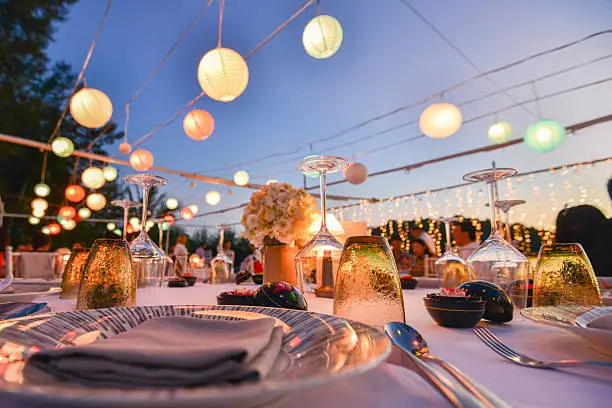
It’s a habit from a long life of knowing that the people who matter show up before they’re needed, not after. The estate was already beautiful — a white tent glowing on the lawn, hydrangeas lined in precise rows, a string quartet warming up near the entrance with the tentative, careful notes of musicians who haven’t quite found their rhythm yet.
I walked the stone path with my gift tucked under one arm and my pearls at my throat and told myself to breathe. This day wasn’t about me. It was about Sophie. And whatever complicated feelings I carried about how the last several months had gone — the unanswered calls, the invitation process I’d been strangely kept away from, the gradual drift I’d felt but hadn’t been able to name — I was going to set all of that aside and be present for my granddaughter’s wedding.
Then Avery stepped into the entryway with a clipboard in his hands and his eyes fixed on the page like it might offer protection.
“Mom,” he said, careful as a man walking on ice, “you’re not on the list. There must’ve been a mix-up.”
The words weren’t loud. They didn’t need to be.
A few nearby guests slowed their pace. A camera lowered. Someone laughed at something a few feet away — too bright, too loud, too precisely timed — as if the moment could be erased if no one acknowledged it directly.
I kept my voice soft. “It’s okay, sweetheart. Big day. Lots of moving pieces.”
Avery didn’t step aside. He didn’t quite meet my eyes.
“Let’s talk after,” he murmured.
So I nodded, the way you nod when you’re keeping yourself together through sheer force of will, and I turned around. I walked back down the stone path with my shoulders held steady. I climbed into the waiting car and watched the estate gates close behind me like the day had made its decision and I wasn’t part of it.
The driver — a young man named Marcus who’d been perfectly pleasant on the way there — glanced at me in the rearview mirror.
“Everything alright, ma’am?”
“Change of plans,” I said quietly. “Could you take me home, please?”
He nodded without asking anything further, and I was grateful for that.
The drive back to the city was forty minutes.
I sat in the back seat watching the landscape change — manicured estates giving way to suburbs giving way to the dense, familiar streets I’d called home for thirty years. I didn’t cry. I wasn’t ready to cry yet. I was still in the part where you simply sit with what’s happened and let it become real.
I thought about the first time I held Sophie. She was born during a February ice storm and I’d driven two hours on roads that had no business being driven on, because I was going to be there when my granddaughter came into the world and nothing was going to stop me. She was small and red-faced and absolutely furious about being born, which told me immediately she had good instincts about the hardness of the world.
She’d cried that afternoon at my exclusion, I was certain. Or maybe she hadn’t. Maybe she’d been fine with it. That was the part I didn’t know yet, and not knowing felt worse than almost anything else.
In my apartment, the city lights blinked on like nothing had happened.
I set my purse down. I placed the gift on the kitchen counter — an antique locket I’d found at an estate sale two years earlier, something Sophie had admired during a visit when she was still the kind of granddaughter who visited. Something I’d held onto, knowing one day I’d find the right moment to give it to her.
Then I opened the cream folder I’d been carrying for months.
The one I’d kept, if I’m being honest with myself, because some part of me had learned to be careful.
The folder held contracts. Invoices. Signed confirmations on expensive letterhead.
Venue: Riverside Estate. Forty-two thousand dollars for the grounds, the tent, the chairs, the tables.
Catering: Laurent & Associates. Thirty-eight thousand for five courses, cocktail hour, late-night dessert bar, service for one hundred and eighty guests.
Flowers: Botanica Design. Fifteen thousand for ceremony arrangements, centerpieces, the bridal bouquet, the installation pieces Sophie had shown me in a magazine with barely contained excitement eighteen months ago.
Music. Photography. Invitations. Cake. Rentals. Transportation. Hotel blocks for out-of-town guests.
At the bottom of the last page, in clean black ink, the total: $127,350.
Every contract signed in my name. Every deposit drawn from my account.
Because eighteen months ago, Avery had come to me nervous and hesitant and said Sophie had her heart set on a certain venue and they couldn’t quite make the numbers work. And I had said yes without hesitation, because she was my granddaughter and I loved her and I wanted her day to be everything she’d dreamed of.
“You’re the best, Mom,” Avery had said, hugging me in my kitchen. “Sophie’s going to be so happy.”
I’d believed him. Why wouldn’t I?
The truth is, I’d been believing him for a long time.
The MBA I’d funded when his company wouldn’t sponsor him — eighty-five thousand dollars. The down payment on his house when he and Lauren couldn’t quite make the numbers work — sixty thousand. Sophie’s private school tuition across twelve years of elementary and middle and high school — a hundred and twenty thousand dollars, more or less, depending on how you count the extras.
I could afford it. Richard had been a successful patent attorney who invested wisely, and when he died eight years ago he left me comfortable. More than comfortable. And I loved my family without reservation. When they needed something, I helped. That was simply who I was.
But somewhere in those years, help had become expectation. Gratitude had calcified into entitlement. The shift was so gradual I’d almost missed it — the way the calls came more often when something was needed and less often when something wasn’t. The way appreciation, when it arrived, felt slightly obligatory. The way I’d been edged out of conversations and planning processes and events that I was nonetheless expected to fund.
I’d noticed. I’d told myself it wasn’t what it looked like. I’d told myself families go through difficult seasons and things would find their balance again.
And now I was standing in my kitchen holding a folder of contracts totaling $127,350, and I had just been turned away at the gate of the wedding those contracts had made possible.
I picked up my phone.
Martin Kowalski answered on the second ring, which is one of the things I’ve always valued about him.
“Amelia! How’s the wedding? Is Sophie a beautiful bride?”
I paused. “Martin, I need a letter drafted tonight.”
He went quiet in the particular way that good attorneys do when they’re listening for the real sentence underneath the one you just said.
“What kind of letter?”
“The kind that clarifies responsibility,” I said. I was surprised by how steady my voice was. “I’m no longer the financial guarantor for any wedding contracts. Future billing and authorization requests go to Avery. In writing. Effective immediately.”
A beat of silence.
“Are you sure?” he asked, gently.
I looked at my signature on the bottom of every page. My name, printed neatly in the places where trust had simply been assumed.
“Yes,” I said. “I’m sure.”
“Tell me what happened.”
I told him. Briefly, without embellishment. The stone path. The clipboard. The words you’re not on the list. The gates closing behind me.
Martin swore quietly. “Amelia, I’m so sorry.”
“Don’t be sorry. Just draft the letter. I want it sent tonight — email to all vendors with contracts in my name. Clear language that I am withdrawing as guarantor and that all future communications and financial obligations rest with Avery Michael Patterson.”
“That’s going to cause significant disruption,” he said carefully. “The wedding is tomorrow.”
“I know.”
“Some vendors may refuse to proceed without confirmed payment.”
“I know.”
“Amelia—”
“Martin.” I made my voice gentle but final. “I was not permitted to attend my granddaughter’s wedding. The wedding I financed. They made their choice clearly. Now I’m making mine clearly. I’m no longer responsible for an event I’m not welcome at.”
He was quiet for a moment. “I’ll have it to you within the hour.”
“Thank you.”
“And Amelia?” A pause. “You’re doing the right thing.”
I wasn’t certain I believed him. But I appreciated that he said it.
The letter arrived at 8:47 PM. Professional, clear, utterly final. I read it three times.
Then I approved it.
Martin sent it to twenty-three vendors, all of them expecting to provide services the following afternoon.
I poured a glass of wine and sat by the window watching the city lights.
My phone rang at 9:15. Avery’s name on the screen.
I let it ring twice. Three times. Then I answered.
“Mom,” he said, voice tight and fast, “what did you send out tonight? I’ve had six vendors call me in the last hour asking about payment. The florist wants confirmation by midnight or they’re pulling out. The caterer is threatening to cancel. What is happening?”
“I’m no longer the financial guarantor for Sophie’s wedding,” I said calmly. “I thought that should be made clear to everyone involved.”
“You can’t just do that. Not the night before—”
“I can do exactly that. And I have. All the contracts include guarantor withdrawal clauses. Martin made sure of that when I signed them.”
“But why? What — what happened? Did I do something?”
I closed my eyes briefly. “You told me I wasn’t on the list, Avery. At my granddaughter’s wedding. The wedding I paid for.”
“That was Lauren’s decision. Her family has strong feelings about—”
“About what? About me?”
He hesitated. “About keeping the ceremony intimate. Immediate family.”
“I am immediate family. I’m Sophie’s grandmother.”
“I know, but Lauren’s mother felt that since her side is so large, and space is limited—”
“Space is not limited. I rented an estate for one hundred and eighty guests. There is more than enough space.”
“It’s complicated—”
“It isn’t complicated, Avery.” My voice was quiet but very steady. “Your wife’s family wanted me excluded. You agreed. And now you’re calling me because the vendors I hired and paid deposits to want confirmation that someone is going to pay them.”
“So you’re punishing Sophie? On her wedding day?”
The accusation landed hard.
“No,” I said, and something in my voice sharpened. “I’m not punishing anyone. I’m declining to financially support an event I’m not permitted to attend. If Lauren’s family felt so strongly about my exclusion, they’re welcome to step in and cover the costs.”
“Mom, they don’t have that kind of money—”
“Neither do you,” I said. “Which is why you asked me to pay for it in the first place. But here is what you need to understand: my financial support and my presence are not separate things. You don’t get to take my money and exclude me from the family. That is not how this works.”
“I didn’t exclude you! I said we’d talk after—”
“After the wedding I wasn’t allowed to attend? After you’d gotten what you needed from me?” I heard my voice rising and made a conscious choice to bring it back down. “Avery, I’ve spent eighteen months planning and paying for this wedding. I’ve spent hundreds of thousands of dollars over the years supporting you and your family. And today I was turned away at the gate like a stranger who didn’t have an invitation.”
“It wasn’t personal—”
“It was entirely personal.” I stopped, took a breath. “Here’s what’s going to happen. You’re going to call those vendors back and confirm that you are now responsible for payment. And you’re going to figure out how to handle the financial obligations for a wedding you planned but cannot afford.”
“We’ll lose everything,” he said, and his voice cracked. “The venue, the flowers, the food — Sophie’s entire wedding will fall apart.”
“Then you should have considered that before excluding the person funding it.”
“Mom. Please. I’m begging you. Don’t do this to Sophie. She’s innocent in all of this.”
I thought about Sophie. The little girl who used to spend weekends with me and tell me about her dreams and her fears and her plans. Who hadn’t called me in six months. Who apparently had been fine with my exclusion.
“Sophie is twenty-four years old,” I said. “Old enough to make her own choices. She chose to allow my exclusion. Now she lives with the consequences of that choice.”
“This is cruel—”
“Cruelty,” I said, “is excluding your mother from a family event she paid for. What I’m doing is setting a boundary. Those are different things.”
I hung up.
My hands were shaking, but I felt something I hadn’t expected: a kind of clarity. Not satisfaction — there was nothing satisfying about any of this. But the particular steadiness that comes from finally doing the thing you’ve needed to do for a long time.
The texts came in waves. Avery, increasingly desperate. Then Lauren — Avery’s wife, from whom I’d barely heard in months — a message about a terrible misunderstanding and could we please talk.
I didn’t respond to any of them.
I ran a bath. I poured a second glass of wine. I tried not to think too hard about what the morning would bring.
The calls started at eight the following morning.
Vendors, one by one, with the same message: without payment guarantee, they couldn’t proceed. The caterer. The florist. The photographer. The venue coordinator. All of them professional, some of them genuinely apologetic, all of them doing exactly what any reasonable businessperson would do when $38,000 or $42,000 or $15,000 in services had no confirmed payment behind them.
I was honest with each of them. I had been excluded from the wedding I’d paid for. My son was now the responsible party. No, I didn’t know if he could secure funds. Yes, I understood the difficult position this put them in. No, I couldn’t in good conscience step back in without certain conditions being met first.
Every one of them withdrew.
At eleven, there was a knock on my door.
I looked through the peephole and saw Avery and Sophie standing in my hallway.
Sophie, who should have been having her hair and makeup done for a two o’clock ceremony, was standing in jeans and a sweatshirt with her eyes red from crying.
I opened the door.
“Grandmother,” she said, and her voice broke on the word.
I stepped aside and let them in.
We stood in my living room — Sophie crying, Avery exhausted and hollow-eyed, me waiting with my hands folded.
“Grandmother, please.” Sophie’s voice was unsteady. “I’m so sorry. I didn’t know you weren’t on the list. Mom said she was handling it and I just — I didn’t check. I should have checked. I should have called you. I should have made sure you were included.”
“Why didn’t you?” I asked. Gently, but honestly.
“I don’t know,” she whispered. “I got so caught up in the planning and making everyone happy that I stopped thinking about who actually mattered. And you matter. You’ve always mattered. I’m so sorry.”
I looked at my granddaughter — this person I’d loved since before she could speak, who I’d driven through an ice storm to meet, who I’d invested in and believed in and quietly worried about across twenty-four years.
“Sophie,” I said, “do you know how much this wedding cost?”
She shook her head.
“Over $127,000. Entirely paid by me. Because your father asked for help and I wanted your day to be beautiful.”
Her eyes widened. “I didn’t know it was that much.”
“Did you ask?”
“No,” she admitted.
“Did you thank me?”
She started crying harder. “No.”
“Did you invite me?”
“I thought you were invited. I thought—” She stopped. “I thought someone else had taken care of it and I didn’t verify. I didn’t make sure.”
I looked at Avery. “And you?”
“I’m sorry, Mom,” he said, and he sounded like the boy I’d raised. Stripped of all the adult composure and the careful management. Just my son. “I should have fought for you. I should have questioned Lauren’s family. I failed you. I failed you badly.”
“Yes,” I said. “You did.”
The room was quiet for a long moment.
“Here’s what I’ll do,” I said finally. “I’ll reinstate my guarantee. The wedding will proceed.”
Sophie’s face lit up with relief so intense it looked like it might hurt.
“On one condition.”
They both stilled.
“I attend. Front row, center seat, acknowledged as Sophie’s grandmother — by name, without qualification, without the people who wanted me excluded having any say in where I sit or whether I’m visible. No more complications. No more exclusions.”
“Yes,” Sophie said immediately. “Of course. Absolutely. Yes.”
I looked at Avery.
“I’ll handle Lauren and her family,” he said. “You’ll be there. I promise.”
“And one more thing,” I said. “After today, we’re having a family conversation about what financial support means and what it doesn’t entitle anyone to. About respect and gratitude and making sure no one in this family ever feels what I felt yesterday walking back down that path.”
“Agreed,” Avery said. He meant it — I could hear that he meant it.
I picked up my phone.
“Martin. Reinstate the guarantees. The wedding is back on.”
I arrived at 1:30, thirty minutes before the ceremony.
This time, Avery was waiting at the entrance of the stone path.
Not with a clipboard.
With his arm extended.
“May I escort you to your seat, Mom?”
I looked at my son — this complicated, imperfect, genuinely remorseful man I had raised and loved and been disappointed by and would love again tomorrow regardless — and I took his arm.
“You may,” I said.
He walked me to the front row. Center seat. He sat beside me.
Lauren was three seats down, her jaw set in a way that said she was unhappy about the turn of events and had chosen, for now, to be quiet about it. Her mother looked furious.
I didn’t particularly care.
When Sophie came down the aisle, she looked like everything a bride is supposed to look like and also like herself — real and nervous and luminous in the specific way people are luminous when something they’ve wanted for a long time is finally happening. She scanned the front row and found my face, and she smiled at me.
Not the polished smile she was wearing for the photographs. The real one. The one I recognized from when she was seven.
I smiled back.
The ceremony was everything I’d hoped it would be when I’d signed those contracts eighteen months ago. The tent glowed. The flowers were perfect. The quartet played beautifully. The vows were specific and personal and made several people cry in the honest, helpless way that good vows do.
And at the reception, when Sophie stood to give her speech, she looked across the room and found me in the crowd.
“Most of all,” she said, and her voice carried clearly through the tent, “I want to thank my grandmother. For this beautiful day. For eighteen months of invisible work I never properly acknowledged. And for teaching me something today that I needed to learn — that love and family require more than just showing up when it’s convenient. They require making sure everyone feels seen and valued and included.” She paused. “Thank you, Grandmother. I love you.”
The applause was warm and long.
Lauren’s mother did not join in.
I did. And Sophie was looking at me when she took her bow, and that was enough. That was more than enough.
Three days later, I invited them to my apartment for the conversation I’d asked for.
Avery, Lauren, Sophie, and her new husband David. My kitchen table, which has seen thirty years of difficult conversations and would survive this one too.
I laid out every contract. Every invoice. Every payment confirmation.
“This is what support looks like,” I said. “Not in the abstract. In actual numbers, on actual paper.”
They looked at it. I don’t think any of them had ever seen it laid out this way before.
“I gave this money because I love you,” I continued. “Not because I expected anything in return except what any person in a family reasonably expects — to be included. To be acknowledged. To have my presence valued at least as much as my financial contribution.”
“We understand,” Avery said.
“I need to know that’s true. Because what happened last Saturday cannot happen again. Not the exclusion, and not the assumption that I’ll absorb it quietly and keep funding whatever comes next.”
“It won’t,” Sophie said. “I promise. Grandmother, I promise.”
Lauren was quiet for most of the meeting. When she did speak, it was careful and somewhat stilted, the words of someone making an effort they’re not entirely comfortable making. But she was there. She was trying.
That was something.
We talked for three hours. About money and what it means. About gratitude as an active practice rather than a feeling you wait to experience. About the difference between being loved and being used, and how both can be happening at the same time without anyone intending it.
It wasn’t comfortable. Important conversations rarely are.
That was six months ago now.
Avery calls me twice a week. Real conversations — not just calls placed when something is needed. We talk about his work and mine, about things we’ve been reading, about his father’s memory, about nothing in particular. I didn’t realize how much I’d missed just talking to him until we started doing it again.
Sophie visits monthly, usually with David. They stay for dinner and we sit at my kitchen table and she tells me about her new life, which is unfolding the way new lives do — imperfectly, with occasional panic, with more joy than she expected.
Lauren is making an effort. It’s still somewhat awkward. Perhaps it always will be. But effort, genuinely made, is not nothing.
I haven’t given them any money in six months. Not as punishment — I’ve made that clear. But they haven’t asked, and I think that’s meaningful. I think they’re figuring out how to build things themselves, the way Avery’s father and I once did, without a safety net making every risk feel manageable.
Last month, Avery’s car broke down. He called me, and the call itself was different — no preamble, no building toward the ask, just: “Mom, I’m in a bit of a bind. Could I borrow some money for repairs? I’ll pay you back in two months.”
Could you hear the difference in that sentence? The direct question. The specific timeline. The word borrow rather than help. I could hear it clearly.
“Of course,” I said. “How much do you need?”
I transferred it that afternoon.
He sent it back sixty days later, exactly as promised, with a card that said simply: Thank you, Mom. I love you.
The antique locket is on Sophie’s dresser. She wears it most days, she tells me. Inside is a photograph of the two of us from when she was seven, sitting on my porch in the summer, laughing at something neither of us can remember. She texted me a photo of it a few weeks after the wedding.
Thank you for everything, Grandmother. Especially for teaching me that love requires presence, not just presents.
I cried when I read it. Not the kind of crying that comes from loss or humiliation or the long exhaustion of being taken for granted. The other kind. The kind that means something has been repaired.
Here is what I know now that I wasn’t entirely sure of before last September:
Kindness is not the same as unlimited access. Love is not the same as an open account. Being generous with the people you love does not mean accepting whatever they give you in return.
I spent years believing that support meant absorbing whatever came — the distance, the drift, the casual diminishment — because that was what family required. I told myself it was generosity. I told myself it was patience.
It was neither, in the end. It was just the slow surrender of my own standing in a family I’d helped build.
The morning I made that phone call, I wasn’t certain I was doing the right thing. I wasn’t certain of anything except that I had been turned away at the gate of my granddaughter’s wedding, and that something had to change, and that the only person with the power to change it was me.
What happened next was chaos, yes. Phones ringing through the night. Vendors pulling out one by one in the morning hours. My son standing in my hallway looking like everything he’d built was collapsing.
And my granddaughter, in jeans and a sweatshirt, saying I’m sorry, Grandmother. I should have checked.
That sentence was worth more to me than all the flowers and five-course dinners and crystal glassware in the world. That was what I’d actually been waiting for, all those months of distance and drift.
Not a formal thank you. Not a plaque or a mention in a program.
Just: I should have checked. You matter. You’ve always mattered.
I’m not just the woman who pays for things.
I am the woman who drove through an ice storm to meet her granddaughter on the first day of her life.
I am the woman who held that family together, in ways visible and invisible, for thirty years.
I am Sophie’s grandmother.
And I have a seat at the table.
Front row, center.
That’s where I belong.
And now, finally, everyone knows it.

Lila Hart is a dedicated Digital Archivist and Research Specialist with a keen eye for preserving and curating meaningful content. At TheArchivists, she specializes in organizing and managing digital archives, ensuring that valuable stories and historical moments are accessible for generations to come.
Lila earned her degree in History and Archival Studies from the University of Edinburgh, where she cultivated her passion for documenting the past and preserving cultural heritage. Her expertise lies in combining traditional archival techniques with modern digital tools, allowing her to create comprehensive and engaging collections that resonate with audiences worldwide.
At TheArchivists, Lila is known for her meticulous attention to detail and her ability to uncover hidden gems within extensive archives. Her work is praised for its depth, authenticity, and contribution to the preservation of knowledge in the digital age.
Driven by a commitment to preserving stories that matter, Lila is passionate about exploring the intersection of history and technology. Her goal is to ensure that every piece of content she handles reflects the richness of human experiences and remains a source of inspiration for years to come.