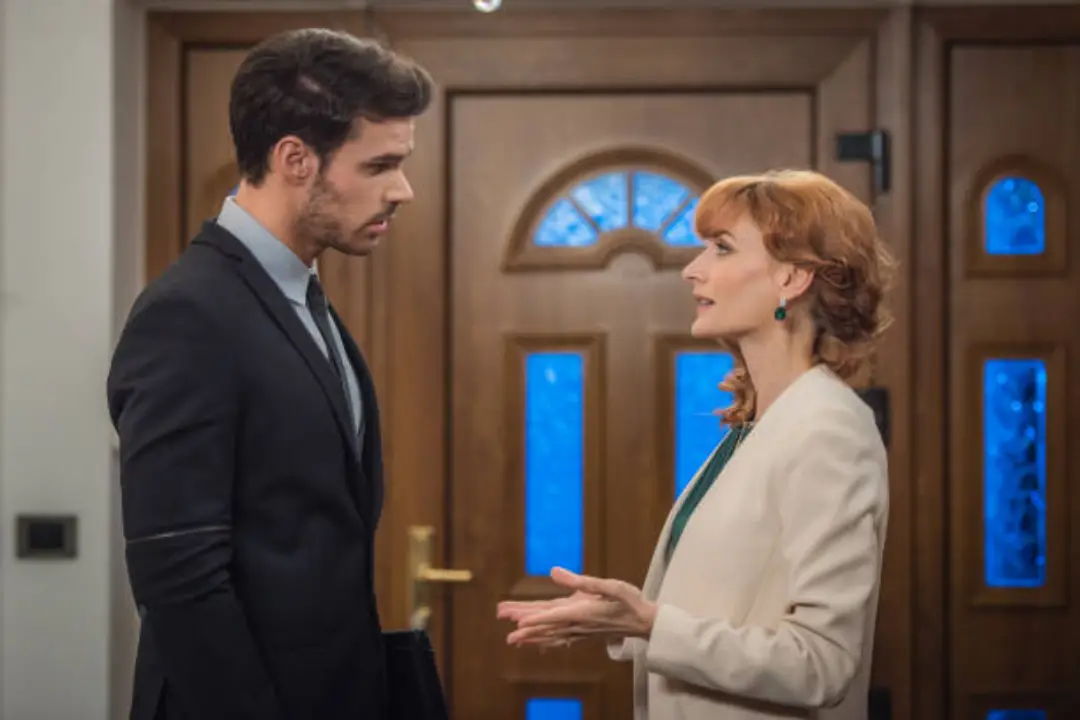
I stood beside Melissa’s casket with my fingers interlaced so tightly my knuckles had gone white, the ache in my hands somehow grounding me when everything else felt like it was dissolving into fog. The chapel smelled like lilies and floor polish, that particular combination of artificial freshness and old wood that seems to exist only in funeral homes. Every well-meaning “she’s in a better place” landed like sand in my throat, the words meaningless because the only place I wanted her was here, alive, making terrible puns while she gardened or falling asleep on my shoulder during movies she’d insisted on watching.
I kept glancing at the back doors, watching for our daughter Brooke to slip in late, flushed and apologetic, to take my arm and help me stand through this impossible day. The front row held a clean rectangle of empty space where she should have been sitting—between me and her mother’s sister Caroline, who kept reaching over to squeeze my hand like she could transfer strength through touch alone.
Melissa’s coworkers from the pediatric clinic filled three rows, their scrubs exchanged for dark dresses but their faces still carrying that particular exhaustion that comes from caring for sick children all day. Neighbors I’d known for twenty years sat behind them, the same people who’d brought casseroles and offers to mow the lawn when Melissa’s treatments had gotten too intense for her to manage the house. The Hendersons from next door. Paula from down the street who’d driven Melissa to chemotherapy appointments when I couldn’t leave work. Jerry from the corner house who’d shoveled our driveway all winter without being asked.
They were all here. Everyone except Brooke.
My phone vibrated in my jacket pocket, the buzz loud enough that Caroline gave me a disapproving glance. I ignored it at first—whoever it was could wait, nothing was more important than these final moments with my wife. But it buzzed again, insistent, and when I finally pulled it out with shaking hands, my daughter’s name glowed on the screen.
Relief flooded through me for exactly one breath. She was calling to explain, to say she was running late, to ask which entrance to use. I stepped toward the back of the chapel, holding the phone to my ear.
“Dad,” Brooke’s voice came through, and behind it I could hear restaurant noise—laughter, clinking glasses, the cheerful chaos of celebration. “We’re already at Jason’s dad’s birthday dinner. We can’t make it.”
The words didn’t make sense at first. I looked back at the casket, at the blown-up photo of Melissa smiling in her garden that someone had placed on an easel, at the program in my hand with her dates printed in elegant script.
“Your mother is gone,” I whispered, trying to make her understand what was happening. “The service is happening right now.”
She exhaled with a sound that was pure irritation, as if I were being deliberately difficult. “Stop being dramatic, Dad. Mom would’ve wanted us to keep living. She wouldn’t want us to miss important family events.”
“This is your mother’s funeral,” I said, my voice breaking on the last word. “Her funeral, Brooke. You’re supposed to be here.”
“Jason’s dad turned sixty,” she replied with the kind of certainty that allowed no argument. “It’s a milestone birthday. It’s family.”
Family. The word echoed in my head as I looked again at that empty seat in the front row, at Melissa’s sisters dabbing their eyes with tissues, at the hospice volunteers who’d sat with my wife during her final weeks and had shown up today to honor her memory.
“We’ll visit the grave later this week,” Brooke was saying. “It’s not like Mom will know the difference.”
I couldn’t speak. My throat had closed entirely. Through the phone, I heard Jason’s voice in the background, calling for her, and then she was gone—”I have to go, Dad, everyone’s waiting for me”—and I was standing in the back of the chapel holding a silent phone while the pastor began reading from Ecclesiastes about there being a time for everything, including a time to die.
I made it through the service on autopilot. I shook hands and accepted condolences and thanked people for coming. I listened to Caroline’s eulogy about her younger sister, about Melissa’s terrible singing voice and her beautiful heart, about how she’d always put everyone else first. I watched them lower the casket into the ground and I threw a handful of dirt that hit the polished wood with a sound like finality itself.
And through it all, I kept looking for Brooke. Some irrational part of my brain insisted she’d show up, that she’d realize what she was missing, that she’d come running across the cemetery grass in inappropriate heels to tell me she was sorry, so sorry, she’d made a terrible mistake.
She never came.
After the burial, people gathered at our house—my house now, I corrected myself, no longer ours. The kitchen counter filled with food I had no appetite for. People shared memories of Melissa that made me laugh and cry simultaneously. I found myself telling the story about how we’d met—at a hospital fundraiser where she’d bid on a “romantic dinner for two” in the silent auction and then asked me, a complete stranger standing next to her, if I wanted to split it since she’d accidentally bid too much wine.
“That was Melissa,” Caroline said, raising a glass. “Always turning mistakes into adventures.”
I wanted to tell Brooke that story. To remind her that her mother had been more than a sick woman in a hospital bed, more than someone who’d inconveniently died during birthday party season. But when I checked my phone, there were no messages, no apologies, nothing.
Around nine PM, after the last guests had left and I’d convinced Caroline I didn’t need her to stay, I sat in the quiet house surrounded by sympathy cards and leftover casserole. Melissa’s reading glasses sat on the side table next to her favorite chair. Her coffee mug—the one that said “World’s Best Nurse” that Brooke had given her for Mother’s Day years ago—waited by the sink.
The silence felt like pressure, like the house was holding its breath. I couldn’t stay there. Without thinking it through, I grabbed Melissa’s pearl earrings from my dresser—the ones her grandmother had given her, the ones she’d always said would go to Brooke someday—along with the funeral program and my car keys.
Brooke lived twenty minutes away in a townhouse that Jason’s parents had helped them buy. I’d been there maybe three times, always feeling like an intruder in their carefully curated space of white furniture and abstract art. As I pulled up to their driveway, I could see warm light spilling from the windows, could hear music playing inside.
Jason answered my knock with a whiskey glass in one hand and that particular smirk he wore when he thought he was being clever. He was wearing the expensive watch Brooke had bought him for Christmas—purchased, I happened to know, with money she’d borrowed from Melissa and never repaid.
“Hey, Mr. Parker,” he said, his tone casual, as if I’d stopped by to borrow a ladder instead of showing up on the night I’d buried my wife.
“Brooke needs to come home,” I said, trying to keep my voice steady. “Tonight. We need to talk about what happened.”
He leaned against the doorframe, blocking my view of the interior. “She’s busy. We’re having people over.”
I could see past him now—candles on the dining table, half-eaten birthday cake, three or four couples lounging on furniture that probably cost more than my car. They’d come straight from the birthday dinner to continue the celebration, and no one seemed troubled by the fact that Brooke’s mother had been buried a few hours earlier.
“Move,” I said, trying to step around him.
Jason didn’t budge. His smirk widened slightly. “Or what, old man?”
“Jason, what’s going on?” Brooke appeared behind him, cheeks flushed from wine or laughter or both. She wore a dress I’d never seen before, something expensive and celebratory. Her makeup was perfect. Nothing about her suggested she’d spent any part of this day in grief.
“Your mother’s funeral was today,” I said, hating how my voice shook. “You weren’t there. You chose a birthday party over saying goodbye to the woman who gave you life.”
“Dad, don’t start,” she said, her tone sharp with warning. “Not here. Not in front of everyone.”
“Then come outside. Come talk to me.”
“You don’t control me,” she snapped, and I saw Jason’s hand move to her lower back, proprietary and smug.
I reached for her arm—not grabbing, just touching, the kind of gentle contact I’d used a thousand times when she was a child, trying to guide her attention back to something important. “Brooke, please. I need you to understand—”
Her palm flashed up faster than I could react. The slap landed sharp and hard across my left cheek, the sound of it cutting through the music inside. For one frozen second, everyone in that townhouse went absolutely still. Then Jason’s smirk widened into something uglier, something triumphant, like I’d finally been put in my place.
“Don’t touch me,” Brooke hissed. “Don’t show up at my home making demands. Your guilt trip doesn’t work anymore.”
I stood there tasting blood where my teeth had caught the inside of my cheek. My face burned. My eyes burned. Some distant part of my brain catalogued the scene like evidence—the wine glasses visible behind them, the birthday cake, the music still playing something upbeat and inappropriate, the casual cruelty of people who’d decided grief was optional.
I walked back to my car without saying another word. My hands shook so badly it took three tries to get the key in the ignition. I drove home through streets that blurred with tears I refused to let fall until I was safely inside my empty house.
That night, I sat at the kitchen table where Melissa and I had shared thousands of meals, where we’d done homework with Brooke when she was small, where we’d planned vacations and argued about money and made up over midnight ice cream. I opened my laptop and pulled up the will we’d updated five years ago when Melissa’s diagnosis had first come back.
It was simple, straightforward. Everything split evenly between Brooke and a few charitable donations. The house, the retirement savings, Melissa’s life insurance policy that she’d insisted on maintaining even when the premiums had gotten expensive during treatment.
I stared at Brooke’s name until the letters blurred. My hand found a pen.
And then my phone rang.
The screen showed Carla Nguyen, my attorney. I’d left her a voicemail earlier that day, still thinking this was a temporary blowup, something that grief would eventually soften into reconciliation. Now my cheek throbbed where my daughter had struck me, and the house felt like it had lost all its oxygen.
“Tom, I’m so sorry about Melissa,” Carla said, her voice gentle. “I got your message. Do you want to come in tomorrow?”
“I need to change my will,” I said. The words came out flat, emotionless. “Tonight, if possible.”
There was a pause. “Is Brooke okay?”
“No,” I said. “And neither am I.”
Carla agreed to meet me at her office before her staff arrived the next morning. I didn’t sleep that night—just sat in the dark living room, still wearing my funeral suit, watching the hours tick by.
At six-thirty AM, I was in Carla’s office with the door closed, the early morning light just beginning to filter through the windows. She’d brought coffee and a legal pad, and she listened without interrupting while I described everything—the phone call during the funeral, the birthday dinner, Jason blocking my way, Brooke’s words and Brooke’s hand connecting with my face.
When I finished, Carla set down her pen and looked at me with the kind of direct compassion that comes from years of helping people navigate their worst moments.
“What are you trying to protect?” she asked.
I looked down at my wedding ring, still on my finger out of habit and love and the inability to imagine taking it off. “Melissa and I built a life slowly,” I said. “We started with nothing—she was a new nurse, I was teaching high school history. We bought our first house with money we’d saved in coffee cans. We drove the same cars for fifteen years. We put ourselves through night school to get better degrees so we could give Brooke opportunities we’d never had.”
My voice caught. “The life insurance policy? Melissa kept paying for it even when her treatments got expensive, even when I said we should let it lapse. She said she wanted to make sure I’d be taken care of, that Brooke would have something. She died worrying about everyone else.”
I met Carla’s eyes. “I don’t want that sacrifice drained by people who treat me like an obstacle. Who celebrate while she’s being buried. Who think love is something you can schedule around birthday parties.”
Carla nodded slowly. “Then we structure it so it’s about stewardship, not revenge. Because spite looks good in the moment but falls apart in court. Protection holds up.”
We spent three hours crafting a new estate plan. Instead of a simple will, we created a trust—something that would outlast my death and continue making decisions according to principles Melissa and I had shared.
The bulk of the estate would fund a nursing scholarship in Melissa’s name at the local community college, specifically for single parents and older students returning to education—the kind of people Melissa had always championed. A significant portion would go to the hospice program that had helped her maintain dignity and comfort during her final weeks, providing music therapy and grief counseling for families who couldn’t afford it.
Brooke would still receive support, but not as a windfall she could spend on watches for Jason or furniture to impress their friends. The trust would make distributions only for education, housing, or legitimate medical needs, paid directly to schools, landlords, or healthcare providers. No cash. No lump sums. No opportunities for Jason—named specifically in the document—to get his hands on a single dollar.
But Carla pushed me to include something I hadn’t initially considered: conditions that were about rebuilding relationship, not just restricting money.
“If you want Brooke to understand what she did wrong, consequences alone won’t teach her,” Carla said. “Give her a path back.”
So we added requirements: Brooke would need to attend grief counseling for at least six months with a licensed therapist, not because she was being punished but because she clearly hadn’t processed her mother’s death in any healthy way. She’d need to meet quarterly with an independent financial advisor who would help her understand the difference between building wealth and burning through someone else’s sacrifice. And she’d need to maintain what the document called “respectful contact”—no harassment, no physical violence, no threats.
If she violated these terms, if she tried to contest the trust or pressure me to change it, her share would immediately roll into the scholarship and hospice fund. Everything.
“It’s enforceable,” Carla confirmed. “And it gives her what she actually needs, even if it’s not what she wants.”
We also created documentation requirements—I would keep a journal of our interactions, save text messages, record dates and witnesses for any concerning incidents. Not because I wanted to build a case against my daughter, but because I’d learned that people who feel entitled to inheritance often rewrite history to justify their behavior. If Brooke later claimed this was all a misunderstanding, that I was being cruel or irrational, there would be evidence.
On my way home, I stopped at the bank and opened a safe deposit box. Inside, I placed Melissa’s pearl earrings, the signed trust documents, and a letter I’d written in plain language that morning:
Brooke, I love you. I’m not cutting you off out of cruelty. I’m refusing to be hit, dismissed, or used as an ATM by people who couldn’t bother to show up when your mother died. Melissa deserved better than what you gave her. So do I. If you want a relationship with me, I’m here. If you want to understand why I made these choices, I’ll explain. But if all you want is money, you’re going to be disappointed. Love, Dad.
For three days, my phone stayed silent. No calls, no texts, no acknowledgment that anything unusual had happened. Then, on Thursday morning, Brooke texted as if the funeral and the slap and everything between had simply evaporated: Need the garage opener. Jason wants to store his motorcycle there for winter.
I stared at the message, reading it multiple times to make sure I understood correctly. She wanted access to my property—to the house she hadn’t visited during her mother’s illness, hadn’t come to during the funeral—so her husband could store his recreational vehicle.
My hands shook as I typed back: Come Sunday at 2 PM. We need to talk.
The reply was immediate: Just leave it on the porch.
Sunday at 2, I repeated. Or not at all.
Sunday arrived with cold autumn rain that matched my mood. I’d spent the previous days cleaning the house, not because it needed it but because I needed something to do with my hands. I’d put away Melissa’s medications, boxed up her clothes for donation, left her reading glasses on the side table because I wasn’t ready to erase every trace of her yet.
At 2:12 PM—Brooke had never been punctual—a car pulled into my driveway. Through the window, I watched Brooke and Jason get out, both of them wearing sunglasses despite the overcast sky. They walked up the steps with the casual entitlement of people collecting something they’d already paid for.
I met them at the door.
“The opener?” Brooke asked, skipping any greeting.
“After we talk,” I said. “Come inside.”
They followed me into the living room, and I watched Brooke’s eyes scan the space with something that might have been discomfort. Melissa’s absence was everywhere—the empty mug by her favorite chair, the throw blanket folded the way she’d always liked it, the book she’d been reading still marked with a receipt she’d used as a bookmark.
Brooke sat on the couch with her phone in her hand, already typing something. Jason remained standing, arms crossed, projecting impatience.
“Do you remember calling me during your mother’s funeral?” I asked.
Brooke’s shoulders tensed. “Dad, don’t start this again.”
“I’m not doing this to punish you,” I said carefully. “I’m doing it because you hit me. Because you chose a birthday party over saying goodbye to the woman who gave birth to you, who loved you even when you were being cruel, who spent her last months worrying about whether you’d be okay after she was gone.”
Jason snorted. “You grabbed her arm. She was defending herself.”
“I touched her arm,” I corrected him, my voice steady. “The way a father does when he’s trying to reach his daughter. And she responded with violence.”
Brooke’s eyes flicked to the hallway wall, where photos documented her childhood—Melissa holding her as a red-faced newborn, our beach trip when she was seven, her high school graduation where she’d hugged us both and cried with joy.
I placed the letter on the coffee table between us, the envelope marked with her name. “I’ve updated my estate plan. I thought you should know.”
Jason leaned forward immediately. “You changed the will?”
“Yes. Most of it now funds a nursing scholarship in your mother’s name and supports the hospice program that helped her die with dignity. Brooke still has a share, but it’s in a trust. No lump sum. No cash you can spend on motorcycles or furniture or whatever else seems important this week.”
Brooke’s face went pale. “That money was supposed to be mine.”
“It was never owed to you,” I said gently. “It was something your mother and I hoped to give—to help you build a stable life, not fund a lifestyle you can’t actually afford on your own.”
Jason’s voice rose. “This is spite. This is you being vindictive because she had other commitments—”
“This is protection,” I interrupted, looking at him directly. “The trust can pay for education if Brooke wants to finish her degree. It can help with housing if she needs it. It will cover medical emergencies. But it won’t reward cruelty, and it won’t fund your hobbies.”
“So what,” Brooke said, her voice shaking, “you’re just cutting me off completely?”
“No. I’m setting boundaries that your mother should have set years ago but didn’t because she loved you too much to see how entitled you’d become.” I paused. “The trust has conditions. You’ll need to attend grief counseling—real counseling, with a licensed therapist. You’ll need to meet with a financial advisor. And you’ll need to have a respectful relationship with me. No violence. No harassment. No demands.”
“And if I refuse?” she asked.
“Then the money goes entirely to charity, and you figure out life on your own. Which, frankly, might be the best thing that could happen to you.”
The room went quiet except for the rain against the windows. Jason was staring at me with naked hatred, probably calculating exactly how much money his plans had just lost. But Brooke was looking at her phone, at the dark screen that reflected her own face back at her.
“What do you want from me?” she asked finally, her voice small.
“An apology,” I said. “Real counseling. And a promise that you’ll never raise your hand to me again.” I took a breath. “If you want a relationship with your father, I’m here. I will always be here. But if all you want is a payday, I’m done.”
Jason stood up. “This is bullshit. You can’t blackmail her into—”
“Stop,” Brooke said suddenly, cutting him off. Her voice cracked. “Just stop.”
She looked at me, really looked at me, for the first time since walking in. “I hate that Mom’s gone. I didn’t know where to put it. The anger, the fear, all of it. And when you called during the dinner, I just… I couldn’t deal with it. So I pretended it wasn’t happening.”
“I understand that,” I said quietly. “Grief is terrible and confusing and it makes people do things they wouldn’t normally do. But it’s not an excuse to hurt the people who love you.”
Brooke’s eyes filled with tears. “I can’t believe she’s really gone.”
“I know. Neither can I.”
She reached for the envelope with shaking hands, slid it into her purse without opening it. “I’ll do the counseling,” she said. “Alone. Without him.”
Jason started to protest, but she held up a hand. “No. This is between me and my dad. You need to stay out of it.”
They left a few minutes later, without the garage opener, without the victory they’d come expecting. I watched them drive away through the rain, and for the first time since Melissa died, I felt like I could breathe properly.
The house was quiet, but it wasn’t the suffocating silence of defeat. It was the peaceful quiet of a space that had been defended, of boundaries that had finally been drawn.
I picked up Melissa’s photo from the mantle—her smile bright in the garden she’d loved, dirt under her fingernails and joy in her eyes. “I hope I did the right thing,” I whispered to her. “I hope you understand.”
And in the silence, I could almost hear her voice, warm with approval: “You protected what we built. That’s what love looks like when it has to be strong instead of soft.”
Six weeks later, I received a text from Brooke: Started counseling. Therapist says I’ve been avoiding grief by staying busy. She’s probably right. Can we have coffee sometime? Just the two of us?
I stared at the message for a long time before responding: How about Saturday at 10? The place on Maple Street where your mom and I used to go.
Okay, she wrote back. Then, after a pause: I’m sorry, Dad. I’m really sorry.
It wasn’t enough. Not yet. Words are easy; change is hard. But it was a beginning.
And sometimes, when you’ve lost everything else, a beginning is exactly what you need.

Ethan Blake is a skilled Creative Content Specialist with a talent for crafting engaging and thought-provoking narratives. With a strong background in storytelling and digital content creation, Ethan brings a unique perspective to his role at TheArchivists, where he curates and produces captivating content for a global audience.
Ethan holds a degree in Communications from Zurich University, where he developed his expertise in storytelling, media strategy, and audience engagement. Known for his ability to blend creativity with analytical precision, he excels at creating content that not only entertains but also connects deeply with readers.
At TheArchivists, Ethan specializes in uncovering compelling stories that reflect a wide range of human experiences. His work is celebrated for its authenticity, creativity, and ability to spark meaningful conversations, earning him recognition among peers and readers alike.
Passionate about the art of storytelling, Ethan enjoys exploring themes of culture, history, and personal growth, aiming to inspire and inform with every piece he creates. Dedicated to making a lasting impact, Ethan continues to push boundaries in the ever-evolving world of digital content.