The Day My Son Came Home
The sharp scent of industrial-strength floor cleaner burned my nostrils as I knelt on the cold hardwood, scrubbing the same stubborn spot I’d been working on for the past twenty minutes. My knees throbbed with a deep, persistent ache that had become so familiar I barely noticed it anymore. Pain had a way of becoming background noise when you lived with it long enough.
The bucket beside me was half-empty, the water already turned a murky gray from the dirt I’d cleaned from floors that had been spotless to begin with. My hands were raw and cracked, the skin around my knuckles split from the harsh chemicals and constant work. They trembled as I moved the brush in small, methodical circles, but stopping wasn’t an option. I had learned that lesson the hard way, learned it so thoroughly that the knowledge was now embedded in my bones.
In this house—my house, technically, though it hadn’t felt like mine in years—resting was considered laziness. And laziness was always punished.
The punishment wasn’t physical, not exactly. It was subtler than that, more insidious. It came in the form of heavy sighs and rolled eyes, of comments delivered in a tone that dripped with disappointment. “I suppose we’ll just have to live with dirty floors, then.” “Some people just don’t take pride in their homes anymore.” “I don’t know what we’ll do if guests come over and see this place looking like a disaster.”
The guests never came, of course. But the threat of their judgment hung in the air like a sword ready to drop.
I had cleaned these floors so many times over the past three years that I could trace every scratch in the wood with my eyes closed, could tell you exactly where the grain changed direction near the fireplace, could point out the tiny dent by the bookshelf where Alex had dropped his favorite toy truck when he was four years old.
That memory—Alex at four, giggling as he pushed that bright red truck across these same floors—made my chest tighten. I pushed it away quickly. Dwelling on the past only made the present harder to bear.
On the sofa behind me, positioned in the living room like royalty holding court, my daughter-in-law Laura and her mother Diane sat comfortably. Their legs were crossed elegantly, steaming cups of coffee held delicately in manicured hands. I could hear them talking in low voices punctuated by soft laughter, the kind of intimate conversation between mother and daughter that I’d once imagined having with Laura myself.
That fantasy had died quickly.
Every few minutes, one of them would lift their feet just slightly—not bothering to actually stand up or move to another room—so I could wipe the floor underneath them. They did it without looking at me, without pausing their conversation, as naturally as someone might swat away a fly.
To them, I wasn’t family. I wasn’t even really a person anymore. I was furniture—something useful and functional, expected to serve silently and never complain. An appliance that occasionally needed to be reminded of its purpose.
I heard the distinct click of a coffee cup being set down on the end table—not on a coaster, I noticed with a small spike of anxiety. That would leave a ring. I’d have to clean it later, which meant I’d have to ask permission to use the furniture polish, which would lead to a conversation about how careless I was with household products, how I went through supplies too quickly, how I didn’t understand the value of money.
It was easier to just clean it quietly when they weren’t looking.
The afternoon light slanted through the windows, casting long shadows across the floor I was cleaning. Outside, I could see my small garden struggling to survive. I wasn’t allowed to tend it anymore—Laura said it made the yard look “messy and unkempt”—and the neglect showed in the drooping flowers and overgrown weeds.
That garden had been my joy once. Alex and I had planted it together when he was seven, his small hands patting soil around tomato seedlings while I taught him about patience and growth and nurturing living things. Now it was dying slowly, and I could only watch from windows I wasn’t allowed to keep open because drafts were wasteful and drove up the heating bill.
Then I heard it.
The front door opening.
My heart dropped into my stomach like a stone into deep water.
I instinctively lowered my head and scrubbed faster, my movements becoming frantic. If the floor wasn’t absolutely spotless, if there was even a hint of streaking or dampness in the wrong places, Laura would raise her voice. She’d sigh that particular sigh that meant I’d disappointed her again, that I was making her life difficult, that she didn’t know why she bothered trying to maintain standards in a house with someone so incompetent.
The verbal lashing that would follow could last hours. Days, if her mother joined in.
I braced myself for it, my shoulders hunching protectively.
“Mom?”
The sound of that voice stopped my heart completely.
I knew that voice. I would know it anywhere, would recognize it in a crowd of thousands, in a storm of noise, even after years of silence and distance. That voice had called me “Mama” when it was high and childish, had called me “Mom” through the turbulent teenage years, had called me on crackling international phone lines to say “I’m okay, I’m safe, I love you” from half a world away.
It was a voice I hadn’t heard in person for five years.
Slowly—terrified that my ears were deceiving me, that this was some cruel trick my exhausted mind was playing—I lifted my head.
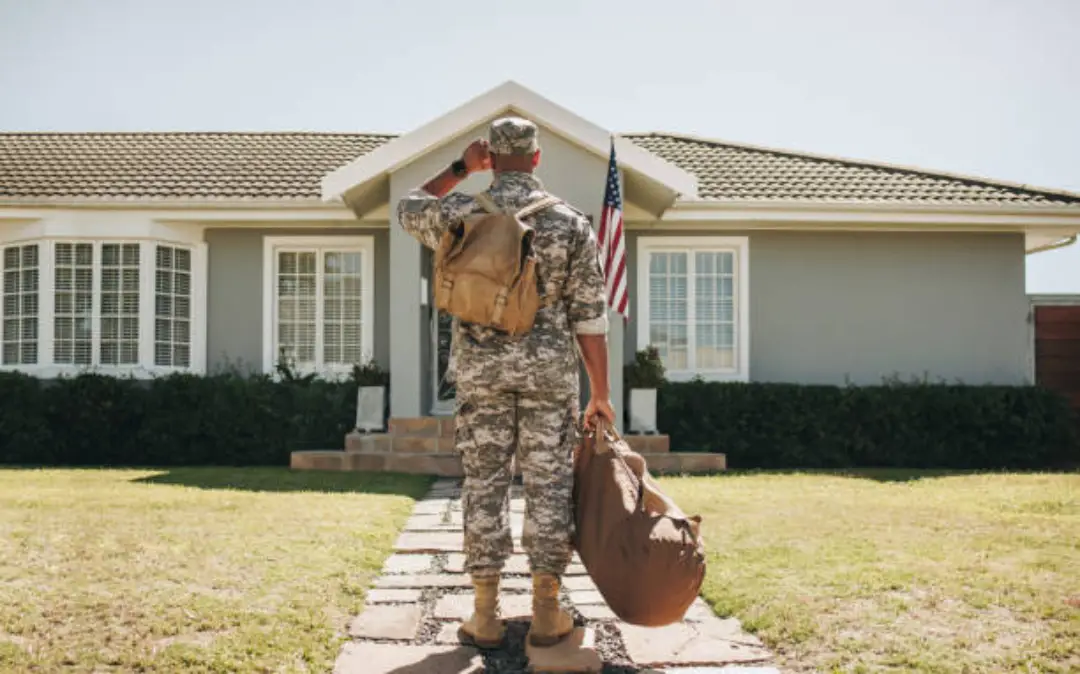
A man stood in the doorway, his silhouette backlit by the afternoon sun streaming through the open door behind him. He was dressed in a military uniform that had clearly seen better days, the fabric dusty and creased from long travel. A heavy backpack hung from one broad shoulder. His posture was straight and disciplined, the bearing of someone who’d learned to stand at attention and never quite forgotten how.
But his eyes were tired. So deeply, profoundly tired.
It was my son.
Alex.
My Alex, who had enlisted when he was twenty-two with stars in his eyes and patriotic fire in his heart. My Alex, who had been deployed overseas for five long years. My Alex, who had left me in the care of his new wife, promising she would take care of me, promising I wouldn’t be alone, promising everything would be fine.
My Alex, who had called less and less frequently as the years passed, his voice growing more distant with each brief conversation. Who had stopped responding to my carefully worded letters that never mentioned how things really were because I didn’t want to burden him while he was in danger. Who had become more of a memory than a real person, someone I’d begun to fear I might never see again.
And now he was here. Standing in the doorway. Real and solid and home.
His face shifted through several expressions in rapid succession as his eyes adjusted to the indoor light and he really saw the scene before him.
The relief of coming home—that initial bright joy of finally being back in familiar space—vanished like water hitting hot oil. It was replaced by confusion, then concern, then something that looked like dawning horror as his gaze traveled from me to the two women on the couch and back again.
His eyes took in everything: my faded, stained apron that had once been cheerful yellow but was now a sad, grayish color from too many washings. My hair, streaked with more gray than he’d remember, pulled back in a messy knot because I wasn’t allowed to “waste time” on personal grooming when there was work to be done. My position on the floor, knees pressed against the hard wood, my posture the universal language of servitude.
The bucket of dirty water. The scrub brush clutched in my raw hands. The way I’d instinctively hunched my shoulders when the door opened, bracing for criticism or punishment.
And behind me, two women sitting in comfort, feet up, coffee cups in hand, not a care in the world.
“Mom…” The word came out barely above a whisper, rough with an emotion I couldn’t quite identify. “Is that really you?”
I opened my mouth to speak, but no words came. What could I say? How could I explain the past three years in a single sentence? How could I tell him that the life he’d left me to had slowly, methodically stripped away my dignity until I’d almost forgotten I’d ever had any?
The silence in the room was deafening.
Laura’s mother Diane—who had moved into “my” house six months after Alex deployed, claiming Laura needed family support—leaned back casually against the sofa cushions and placed her feet deliberately on the coffee table. The gesture was calculated, making absolutely certain I understood that my work wasn’t finished, that I still had surfaces to clean before I’d earned the right to rest.
She sipped her coffee slowly, her eyes meeting Alex’s with a look that somehow managed to be both innocent and challenging.
“You’re back earlier than we expected,” Laura said, her voice pitching higher than normal, nervous energy making her words tumble out too quickly. She nearly spilled her coffee in her haste to set it down, liquid sloshing dangerously close to the rim. “We thought you were coming next week. Your last email said—”
“I caught an earlier transport,” Alex said, but he wasn’t looking at her. His eyes were locked on me, and I saw his jaw clench, saw the muscle jumping in his cheek the way it used to when he was a boy trying very hard not to cry.
He took a step forward, then another, moving slowly like he was approaching something fragile that might shatter if startled.
Then he did something that made my heart break and heal simultaneously.
Alex knelt down.
Right there on the floor I’d been scrubbing. His uniform pants soaking up the dampness I’d just cleaned. His military-issue boots leaving fresh marks on the wood I’d been working so hard to perfect.
He knelt down and gently—so gently, as if I were made of spun glass—took both of my hands in his.
The moment his fingers closed around mine, I felt him flinch. My skin was rough as sandpaper, the texture of someone who’d spent years doing manual labor without protection or care. My knuckles were swollen and red, several of them split and weeping. My nails were broken and ragged. These weren’t the soft hands that used to ruffle his hair and smooth band-aids over his childhood scrapes.
These were the hands of someone much older than fifty-three. Someone who’d been worn down to the bone.
“What is going on here?” His voice was low and shaking, each word carefully controlled. I recognized that tone. He was using every ounce of his military training to stay calm, to not explode, to assess the situation before acting.
But I could hear the fury underneath, coiled tight and ready to strike.
“Oh, Alex, don’t make such a fuss,” Diane said quickly, forcing brightness into her voice. “Your mother likes to stay busy. You know how older women are—they need purpose, need to feel useful. Cleaning is good for her. Keeps her active, keeps her involved. We’re actually doing her a favor, really, giving her responsibilities.”
The way she said “older women” made it sound like I was ancient, decrepit, one foot in the grave instead of barely past middle age.
“She volunteered,” Laura added, her voice taking on that defensive edge I knew so well. “We never forced her to do anything. She offered to help out around the house, and we accepted. That’s all.”
Alex didn’t respond to either of them. His attention was entirely on me, his eyes searching my face for answers I couldn’t give him with words.
He looked at my hands again, really looked at them, turning them over gently to see the damage on both sides. Then his gaze traveled around the room, taking in details he’d missed in his initial shock.
The spotless floor that gleamed even in the fading afternoon light. The immaculate sofa where two women sat in perfect comfort. The coffee table without a single water ring or dust mote. The meticulously organized bookshelf, the fluffed throw pillows, the vacuum marks still visible in the carpet of the adjacent room.
Then he looked at me again. At the exhaustion carved into lines around my eyes. At the way my shoulders curved inward as if trying to make myself smaller. At my knees, visible below my rolled-up pants, bruised deep purple and yellow.
At the fear in my eyes—fear that I might say the wrong thing, cause a scene, embarrass everyone, make things worse for myself.
Something shifted in his expression. Something hardened and crystallized, like molten metal poured into a mold and left to set into something unbreakable.
Then Alex did something that no one in that room expected.
Still kneeling on the floor beside me, he wrapped his arms around my shoulders and pulled me into an embrace.
Not a quick, perfunctory hug. Not a polite greeting between family members who haven’t seen each other in a while.
A real embrace. The kind he used to give me when he was a little boy afraid of thunderstorms, when nightmares had chased him from his bed and only my arms could make the world safe again. The kind that said you are precious to me, you are irreplaceable, I will protect you with everything I have.
His body shook as he held me. I felt hot tears landing on my shoulder, soaking through my thin shirt.
“Forgive me, Mom,” he said, his voice breaking completely, all military composure abandoned. “Please forgive me for leaving you alone. Forgive me for trusting the wrong people. Forgive me for not seeing, for not asking the right questions, for not calling more often. I didn’t know… God help me, I swear I didn’t know.”
His arms tightened around me, and I felt five years of unshed tears rising in my throat. When was the last time someone had held me like this? When was the last time someone had touched me with gentleness instead of dismissive indifference?
When was the last time I’d felt like I mattered?
I couldn’t hold back anymore. I buried my face in his shoulder and wept, my body shaking with sobs I’d been suppressing for so long they felt like they might tear me apart.
The room was deathly silent around us.
Laura shifted uncomfortably on the couch. Diane set her coffee cup down with a sharp clink that sounded unnaturally loud. Neither of them spoke. What could they say? What excuse or justification could possibly explain this scene to a son who’d just discovered his mother being treated like unpaid domestic staff in her own home?
After a long moment, Alex pulled back slightly. He helped me to my feet with careful hands, supporting my weight because my knees had gone stiff and painful from kneeling so long. He steadied me when I swayed, staying close until he was sure I wouldn’t fall.
Then he turned to face his wife and mother-in-law.
The man who turned was no longer the tired soldier who’d walked through the door hoping for a warm welcome and a soft bed. This was someone else entirely. Someone whose eyes had gone flat and cold, whose voice dropped into a register I’d never heard him use before.
This was the man who’d learned to give orders in combat situations. The man who’d seen things that would haunt him forever and come out the other side harder than steel.
“Alex, honey, let’s talk about this rationally,” Laura started, standing up quickly, her voice taking on that placating tone she used when she wanted to smooth things over. “You just got home. You’re tired. You’re not thinking clearly—”
“I’m thinking very clearly.” His voice was quiet. Calm. Absolutely final.
He walked toward them with measured steps, and something in his bearing made both women shrink back slightly. He reached out and took each of them firmly by the arm—not roughly, not violently, but with unmistakable purpose and authority.
He guided them, not giving them a choice in the matter, toward the front door that still stood open from his arrival.
“Get out of my house,” he said.
“Your house?” Diane sputtered, finding her voice and her indignation simultaneously. “This is Laura’s house too! You can’t just throw us out! We live here!”
“This is my mother’s house,” Alex corrected, his voice still that same deadly calm. “The house I grew up in. The house my father left to her when he died. The house that you’ve apparently been treating as your personal resort while turning the owner into your servant.”
“That’s not what happened!” Laura protested, trying to pull away from his grip and failing. “She wanted to help! She offered! We never forced—”
“You never forced?” Alex’s laugh was bitter and harsh. “No, I suppose you didn’t hold a gun to her head. You just took advantage of a lonely woman whose son was overseas, who had no one to turn to, who was probably so desperate for companionship and family that she’d agree to anything to keep you from leaving her completely alone.”
He had reached the door now, and he gently but firmly guided both women onto the front porch.
They tried to argue, their voices rising in pitch and volume.
Laura was saying something about her rights as his wife, about community property, about how she couldn’t believe he was choosing his mother over her after everything they’d been through.
Diane was threatening to call her lawyer, to make sure everyone knew what kind of man he really was, to ruin his reputation.
Alex listened to none of it. He simply held up one hand, and the authority in that gesture—the command presence he’d developed leading men and women in situations far more stressful than this—made them both fall silent.
“One more word,” he said quietly, but every syllable carried the weight of absolute certainty, “and I call the police. I will show them the state of my mother’s hands. The bruises on her knees. I will have them take statements from neighbors about what they’ve observed. I will press charges for elder abuse, for exploitation, for whatever crimes my mother’s lawyer can think of. And yes,” he looked directly at Laura, “she will have a lawyer. The best I can afford.”
He paused, his eyes hard.
“I’ve seen war,” he continued, his voice dropping even lower. “I’ve seen cruelty in forms you couldn’t imagine in your worst nightmares. I’ve seen what people are capable of when they think no one is watching, when they think they won’t face consequences.”
He gestured back toward the house, toward me still standing in the living room, visible through the open door.
“And what you’ve done to my mother, in her own home, while I was gone and couldn’t protect her? That’s worse than anything I saw overseas. Because you did it to someone who trusted you. Someone who opened her home to you. Someone who was family.”
The door swung closed with a solid, final thud that seemed to reverberate through the entire house.
For a moment, Alex just stood there with his hand on the door, his shoulders rising and falling with deep breaths. Then he turned back to face me.
The hardness melted from his expression instantly, replaced by such profound sorrow and guilt that I wanted to comfort him the way I used to when he was small.
“I’m here now,” he said, crossing the room to me in three long strides. His hands were gentle again as he helped me toward the sofa—the sofa I hadn’t been allowed to sit on in months. “You will never kneel in your own home again. You will never scrub floors like a servant. You will never be treated as anything less than the incredible woman who raised me.”
He eased me down onto the cushions with such care, as if I might break. Then he knelt in front of me—not in servitude, but to be at eye level—and took my damaged hands in his again.
“Tell me everything,” he said. “And I mean everything, Mom. Don’t protect anyone. Don’t minimize what happened. I need to know the truth.”
So I told him.
I told him about the first few months after he deployed, when Laura had seemed genuinely caring, when we’d had real conversations and I’d thought maybe we could build something like a mother-daughter relationship.
I told him about when her mother Diane had arrived “for a visit” that somehow became permanent, and how the dynamic had shifted immediately.
I told him about the gradual escalation—small requests for help that became expectations, expectations that became demands, demands that became my entire existence.
I told him about being told that I ate too much, took up too much space, cost too much money. About how my bedroom had slowly been repurposed, my belongings moved to a small storage room in the basement where I now slept on a cot.
I told him about the budget they’d put me on for groceries—my own groceries, bought with my own money—and how I usually went without so they could have the foods they preferred.
I told him about not being allowed to answer the phone in case I “said something embarrassing” or “gave the wrong impression to his military friends.”
I told him about the locked thermostat, the restricted shower times, the requirement that I ask permission before using anything in the house that I’d lived in for thirty years.
I told him everything, and with each revelation, I watched his face grow harder, his jaw clench tighter, his hands grip mine with barely controlled fury that I knew wasn’t directed at me.
When I finished, my voice hoarse from talking, he was quiet for a long time.
Then he stood up and walked through the house, really looking at it for the first time. I followed him with my eyes as he opened doors, checked rooms, saw the evidence of everything I’d described.
He found my “bedroom” in the basement—the cot with its single thin blanket, the cardboard boxes containing my clothes and personal items, the tiny space heater that barely worked.
He found the locked cabinet in the kitchen where they’d stored “their” food separately from the basic staples I was allowed.
He found the schedule posted on the refrigerator—my schedule, listing my daily chores in fifteen-minute increments from 6 AM to 10 PM.
When he came back upstairs, his eyes were red.
“Pack a bag,” he said. “Whatever you need for a few days. We’re leaving.”
“Leaving? But this is—”
“Your house. I know. And we’ll deal with that. But right now, tonight, I don’t want you sleeping here. I don’t want you in a place that holds these memories. I have a hotel room near the base for debriefing. You’re coming with me. Tomorrow, we’ll figure out the next steps.”
That night, Alex kept his word. He packed a small bag for me, helped me into his rental car, and drove us to a hotel near the military base where he was stationed.
He got us a two-bedroom suite and ordered room service—real food, good food, the kind I hadn’t tasted in years. He watched to make sure I ate, gently encouraging me when shame and years of being told I was eating too much made me hesitant.
Then he ran me a bath in a tub that didn’t have a timer, with hot water that didn’t run out after five minutes, and left me alone to soak for as long as I wanted.
When I emerged, wrapped in a hotel robe that was softer than anything I’d worn in years, he had medical supplies laid out on the coffee table.
“Let me see your hands,” he said.
I hesitated, embarrassed by the damage, but he was insistent. He cleaned and bandaged the worst of the cracks and cuts with the practiced efficiency of someone who’d performed field medicine. Then he examined my knees, his expression growing darker at the deep bruising.
“We’re seeing a doctor tomorrow,” he said. It wasn’t a suggestion.
“Alex, I’m fine—”
“You’re not fine, Mom. And pretending you are doesn’t help anyone. We’re seeing a doctor, getting you checked out properly, documenting these injuries. Just in case.”
“In case of what?”
“In case Laura tries to claim any of this is normal. In case she tries to fight what happens next.”
I didn’t ask what was going to happen next. I was too tired, too emotionally wrung out. Instead, I just nodded.
Alex helped me to the bedroom—the one with the king-sized bed and the pile of pillows and the thick duvet. He pulled back the covers, waited while I climbed in, then tucked the blanket around me like I used to do for him when he was small.
“Sleep as long as you need,” he said, leaning down to kiss my forehead. “I’ll be right in the next room if you need anything. Anything at all, okay? And Mom?”
“Yes?”
“You’re safe now. I promise you’re safe.”
I fell asleep within minutes, the first deep, dreamless sleep I’d had in years.
The next few weeks were a whirlwind of activity.
Alex found me a lawyer—a fierce woman named Patricia who specialized in elder abuse cases and who looked at my documented injuries with a rage that matched my son’s.
She filed for a restraining order against both Laura and Diane, which was granted immediately once the judge saw the photographs and medical reports.
Alex filed for divorce, citing abandonment and abuse. Laura tried to fight it, claimed she was entitled to half of everything. But Patricia was ruthless, pointing out that the house belonged to me, that Alex had never added Laura’s name to any significant assets, and that her abuse of his mother while he was deployed constituted grounds for fault-based divorce that would leave her with nothing.
The proceedings were ugly. Laura’s lawyer tried to paint me as a willing participant, as someone who’d chosen to do housework because I had nothing else to do. But we had witnesses—neighbors who’d seen me taking out trash in the middle of winter without a coat because I “hadn’t earned break time yet.” A postal worker who’d heard Diane berating me for forgetting to water plants. A former friend of mine who testified that she’d tried to visit multiple times but been turned away at the door by Laura, who claimed I was “too busy” or “not feeling well.”
In the end, Laura signed the divorce papers. Diane moved back to her own home three states away. And I got my house back.
But more importantly, I got my life back.
Alex took a month of leave to help me recover and rebuild. He threw away the schedule on the refrigerator, burned it actually, in a small ceremony in the backyard. He painted over the walls where they’d hung their preferred artwork, replacing it with the family photos that had been relegated to the basement. He bought me a new bed—a real bed, with a good mattress and soft sheets.
He cooked for me, forcing me to sit and be served, reversing our roles until I slowly remembered that I was allowed to rest, allowed to be cared for, allowed to take up space.
We planted the garden again together, our hands in the soil side by side like when he was seven. The tomatoes we planted that spring were the sweetest I’d ever tasted.
Slowly, I healed. My hands recovered. The bruises faded. The constant knot of anxiety in my stomach began to loosen.
But more than the physical healing, something deeper changed.
I remembered who I was. Not just Alex’s mother, not just someone’s servant, but myself. A woman who’d raised a good man. A woman who’d survived loss and loneliness and abuse. A woman who was stronger than she’d realized.
Alex eventually had to return to duty, but this time was different. This time, I had a support system in place—friends who checked on me, a therapist who helped me process the trauma, a house that felt like mine again.
And Alex called. Not occasionally, but regularly. He video chatted every weekend. He sent care packages. He made sure I knew that I wasn’t alone, would never be alone again.
One year after he came home and found me on my knees, we sat together in the garden on a warm spring evening. The vegetables were thriving. The flowers were blooming. The house behind us was filled with light and life again.
“Thank you,” I said quietly. “For coming home when you did. For seeing what I couldn’t say.”
Alex reached over and took my hand—healed now, soft again from months of being properly cared for.
“I should have seen it sooner,” he said. “Should have asked better questions, should have listened to what you weren’t saying in your letters.”
“You couldn’t have known.”
“Maybe. But I know now. And I swear to you, Mom, you will never be invisible again. Not to me. Not to anyone.”
He squeezed my hand gently.
“You taught me what it means to protect the people you love. You showed me that strength isn’t just about physical power—it’s about showing up, about standing firm, about refusing to let the people you care about be diminished.”
He smiled, that familiar smile that reminded me of the little boy he’d been.
“I’m just returning the favor.”
We sat there as the sun set, painting the sky in shades of orange and pink, and for the first time in years, I felt completely at peace.
My son was home. Not just physically, but really home—present, attentive, protective.
And I was home too. In my house, in my garden, in my life.
Safe, valued, and loved.
The way it always should have been.
The way it would be from now on.

Adrian Hawthorne is a celebrated author and dedicated archivist who finds inspiration in the hidden stories of the past. Educated at Oxford, he now works at the National Archives, where preserving history fuels his evocative writing. Balancing archival precision with creative storytelling, Adrian founded the Hawthorne Institute of Literary Arts to mentor emerging writers and honor the timeless art of narrative.